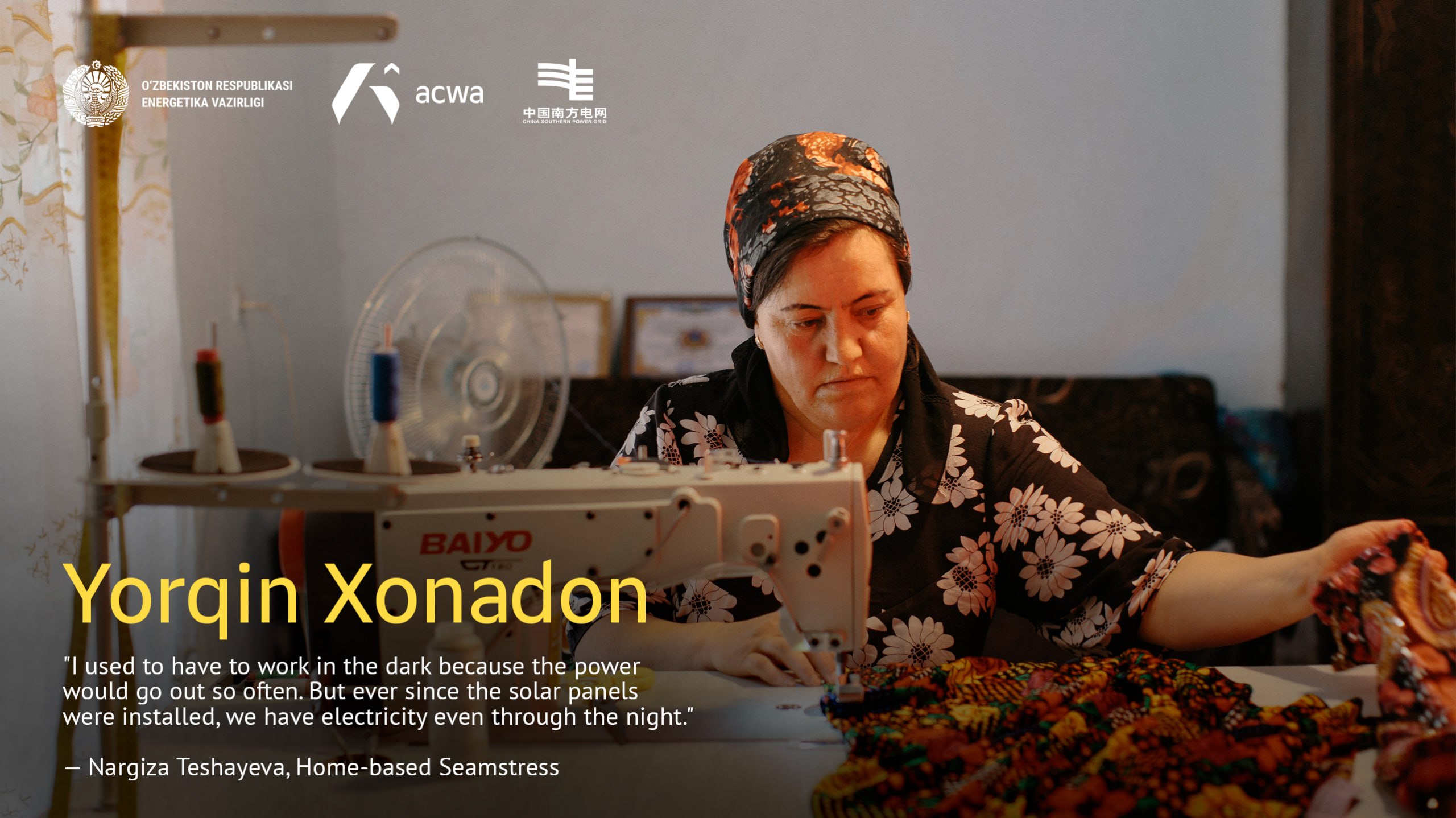
A $20 million solar-panel program in Uzbekistan has so far provided 1,580 homes and 334 public institutions with free electricity-generating systems. A further 1,197 households are expected to receive the equipment by May 2027.
The program, known as Yorqin Xonadon (“Bright Home”), is being implemented by Uzbekistan’s Ministry of Energy, Saudi energy company Acwa, and China Southern Power Grid International. According to information provided to The Times of Central Asia by Acwa, the initiative was launched in April 2023. About 65% of the new installations are intended for Karakalpakstan, an autonomous republic in northwestern Uzbekistan that has been severely affected by the drying of the Aral Sea.
Each home receives solar panels with a capacity of approximately 3 kilowatts (kW) and a battery with a storage capacity of 4.8 kilowatt-hours (kWh). During the day, the system generates electricity, while stored energy can be used in the evening or when sunlight is insufficient. How well this setup meets a particular family’s needs depends on its electricity consumption and the season.
Program participants can reduce their electricity bills and receive payments for surplus power supplied to the grid. According to the Ministry of Energy, more than 45,000 people received a total of 209.2 billion soums (approximately $17.8 million) for electricity supplied to the grid in 2025.
While the initiative could help recipients reduce their electricity bills, its contribution to the country’s overall energy needs will be small.
The 2,777 household installations planned under the program would together provide about 8.3 megawatts (MW) of generating capacity. Based on the country’s solar potential, these systems could generate approximately 12–13 million kWh annually, less than 0.02% of the 86.7 billion kWh produced nationwide in 2025. The estimate excludes installations at public institutions, for which capacity figures have not been provided.
Uzbekistan’s electricity consumption is rising, while natural gas remains the country’s main source of power. Large solar and wind farms generated 10.5 billion kWh of electricity in 2025. Although Yorqin Xonadon will make only a small contribution to national electricity generation, it could help thousands of low-income households reduce their energy bills.