The authorities in Tajikistan have been ringing the alarm bells over events in neighboring Afghanistan for more than three decades.
The Tajik government did so again after violence broke out along a small section of the Tajik-Afghan border in the last months of 2025, and specifically called on the Collective Security Treaty Organization (CSTO) for assistance. The CSTO has responded, but the promised aid has yet to arrive as Tajikistan continues to seek stronger border defenses.
The Perennial Border Problem
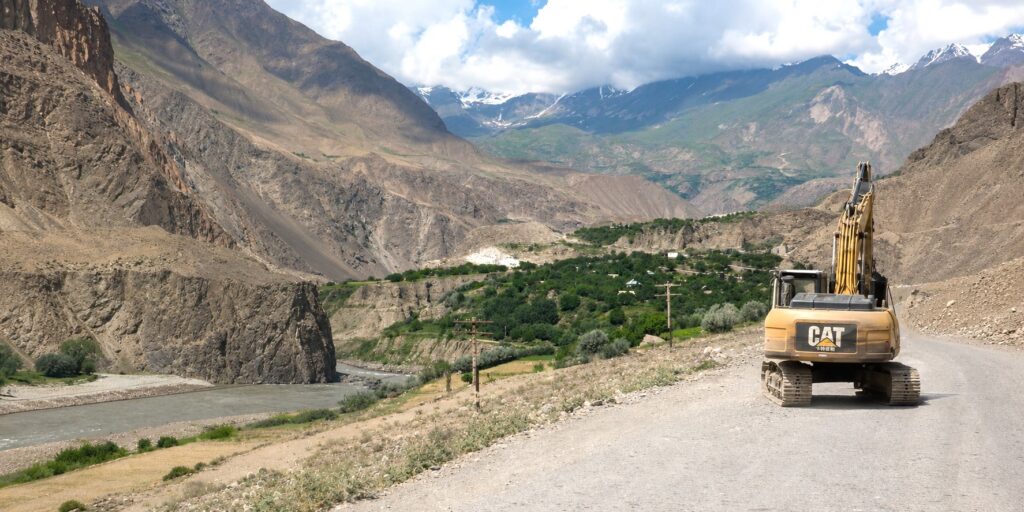
There had been unrest in Afghanistan since the late 1970s, long before Tajikistan became independent in late 1991, and the instability along Tajikistan’s approximately 1,360-kilometer border with Afghanistan has continued ever since. Most of the border area is mountainous and sparsely inhabited, making it ideal for narcotics and weapons smuggling.
Weapons smuggling was a huge problem during Tajikistan’s 1992-1997 civil war, when weapons were being brought back and forth across the Afghan frontier to fuel civil conflicts in both countries.
From the first day of Tajikistan’s independence until June 2005, Russian border guards helped keep watch on Tajikistan’s Afghan frontier.
At least several hundred Russian and Tajik border guards, and Tajik and Afghan smugglers and militants have been killed along the Tajik-Afghan border in the last 35 years.
Many countries worried about Tajikistan’s border problems with Afghanistan. Neighbors such as China, the other Central Asian states, and not so far away, Russia did not want narcotics or militants from Afghanistan reaching their countries. In the mid- and late-1990s, the Taliban push through Afghanistan to the Central Asian border increased these neighbors’ concerns.
After the September 11, 2001 terrorist attacks in New York and Washington, the United States and its allies used facilities in Central Asia to support troops in Afghanistan.
All these countries, and more, contributed to Tajikistan’s border defenses in some way, either by simply donating housing materials or winter uniforms, or providing security monitoring equipment and weaponry. It has never been enough to totally stem the border problems, but the security aid Tajikistan received is far more than the country could ever have allocated for that purpose from its state coffers.
Emomali Rahmon was Tajikistan’s president in the late 1990s when the Taliban first seized power in Afghanistan. Rahmon viewed the Taliban as a threat, and Tajikistan’s policies toward the Afghan militant group reflected that.
Rahmon’s opinion of the Taliban did not change when they regained power in 2021, and despite the other Central Asian states establishing a dialogue and trade ties with the Taliban, Tajikistan has been slow to engage the returned rulers of Afghanistan.
In June 2024, Rahmon’s eldest son and heir apparent, Rustam Emomali, told a meeting of the CSTO’s Parliamentary Assembly Council that “Afghanistan has once again become a breeding ground for terrorism.”
Emomali said more than 1,000 radical madrassahs had been established in Afghanistan, some in areas close to Tajikistan’s border, and that these religious schools were also preparing suicide bombers.
A Turbulent End to 2025
In late August 2025, Tajik border guards in the Shamsiddin Shohin district reportedly exchanged gunfire with Taliban fighters on the other side of the Pyanj River that separates the two countries.
At least one Taliban fighter was killed and four others wounded.
The cause of the shootout was never clear, though suspicions were that it was related to gold-mining operations, legal and illegal, that are being carried out on both sides of the river.
This incident was particularly notable because, after the shooting stopped, a group of Tajik border guards crossed into Afghanistan for talks with local officials and Taliban fighters.
There were reports of another gun battle happening between Tajik border guards and Taliban troops in late October, not far from where the August shooting occurred. Reports mentioned casualties on both sides, but did not give any figures or provide any details as to the cause.
Then in November, on the Tajik side of the border, five Chinese workers were killed and four others wounded in two separate attacks from the Afghan side.
The first attack on November 26 included a commercial drone with explosives hitting a gold-mining site in the Shamsiddin Shohin district that killed three Chinese workers and wounded two others. The second occurred in the Darvaz district, which neighbors the Shamsiddin Shohin district to the east.
Gunfire from the Afghan side of the border on November 30 killed two Chinese road workers and wounded two others. It caused China to temporarily withdraw its workers from the Tajik border area and prompted the Tajik government to call on the CSTO for help.
Threat Assessment
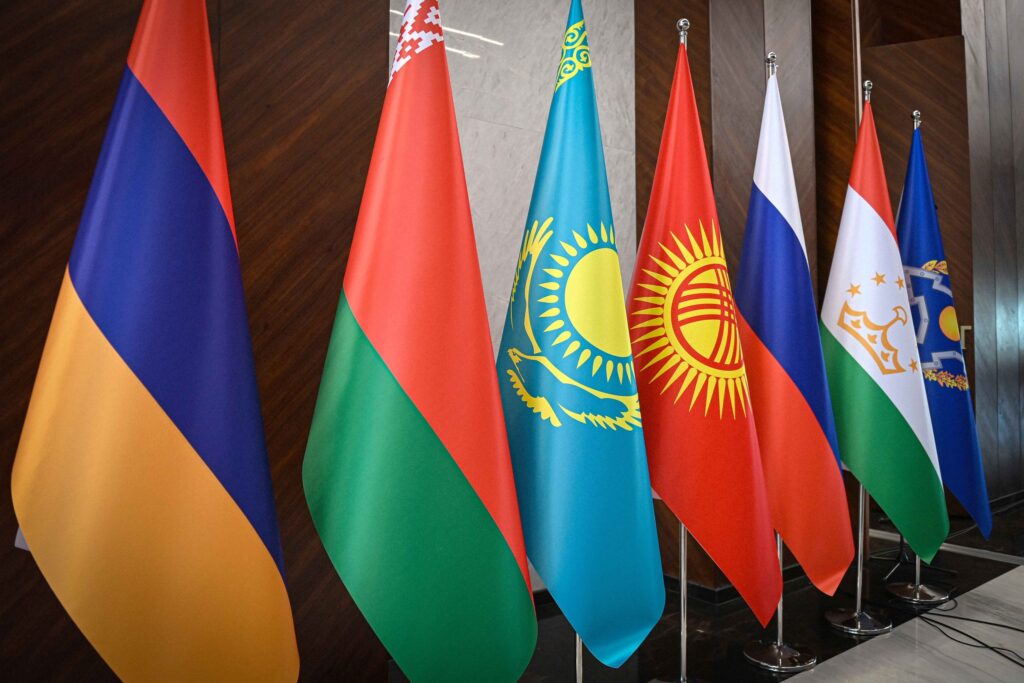
Tajikistan is a CSTO member along with Belarus, Kazakhstan, Kyrgyzstan, and Russia.
Rahmon met in Dushanbe with CSTO Secretary General Taalatbek Masadykov on April 10, 2026, where he emphasized the need to implement CSTO decisions on responding to security threats. The organization had already approved a program to strengthen the Tajik-Afghan border in November 2024.
In June, the CSTO appeared ready to accelerate assistance to Tajikistan. Viktor Vasilyev, the chairman of the CSTO Permanent Council, said the organization was particularly concerned about gunfire from the Afghan side of the border being directed into Tajikistan.
“Despite steps taken by Russia and several Central Asian states to establish contact with the authorities in Kabul, the security situation remains complex,” Vasilyev said.
However, Vasilyev also devoted much attention to other CSTO matters, such as increasing indications that Armenia would suspend its membership in the organization, tensions between Belarus and Ukraine, and NATO maneuvers.
In late August, Masadykov told TASS in an interview that the first shipment of armaments and military equipment would arrive in Tajikistan in the autumn.
On October 21, Masadykov said the first stage of sending military assistance to Tajikistan, which he explained involved customers in Tajikistan selecting suppliers and agreeing on order amounts, was complete. The second stage was already underway, with the first shipments of weapons and equipment expected to arrive in Tajikistan before the end of the year.
Masadykov also mentioned the military shipment being sent to Tajikistan would “in no way” be a threat to Afghanistan or its people. He didn’t detail which weapons or military equipment Tajikistan will soon receive, but the pace of assistance may be a disappointment to the Tajik government.
The Tajik authorities have long been seeking stronger defenses to deter people on the Afghan side of the border from launching attacks or trying to illegally cross into Tajikistan. There were several more incidents along the Tajik-Afghan border in December 2025 and January 2026, and some border guards were killed.
For the Tajik government, accustomed to receiving substantial security aid in response to its concerns, this is probably more than a temporary letdown. The CSTO is a Russian-led organization, and Russia is currently the only country that officially recognizes the Taliban government in Afghanistan. While Russia might be the only country to give official recognition to the Taliban, others are at least doing business with the current government in Afghanistan.
Uzbekistan’s National Statistics Committee released figures on October 21 that show Afghanistan is Uzbekistan’s third largest export market, behind Russia and China.
The Tajik authorities continue to look at Afghanistan as a security problem, and it is, but perhaps not as much as it has been in the past.
Other governments appear less concerned about threats from Afghanistan, and the pace of CSTO military assistance could be a sign that Tajikistan’s worries about its southern neighbor are not shared to the same extent by the international community.
The CSTO might continue to hype the potential threat from Afghanistan to help justify its own existence, but the next time Dushanbe needs to strengthen its Afghan border, it might fall more heavily on Tajikistan itself to do whatever needs to be done.