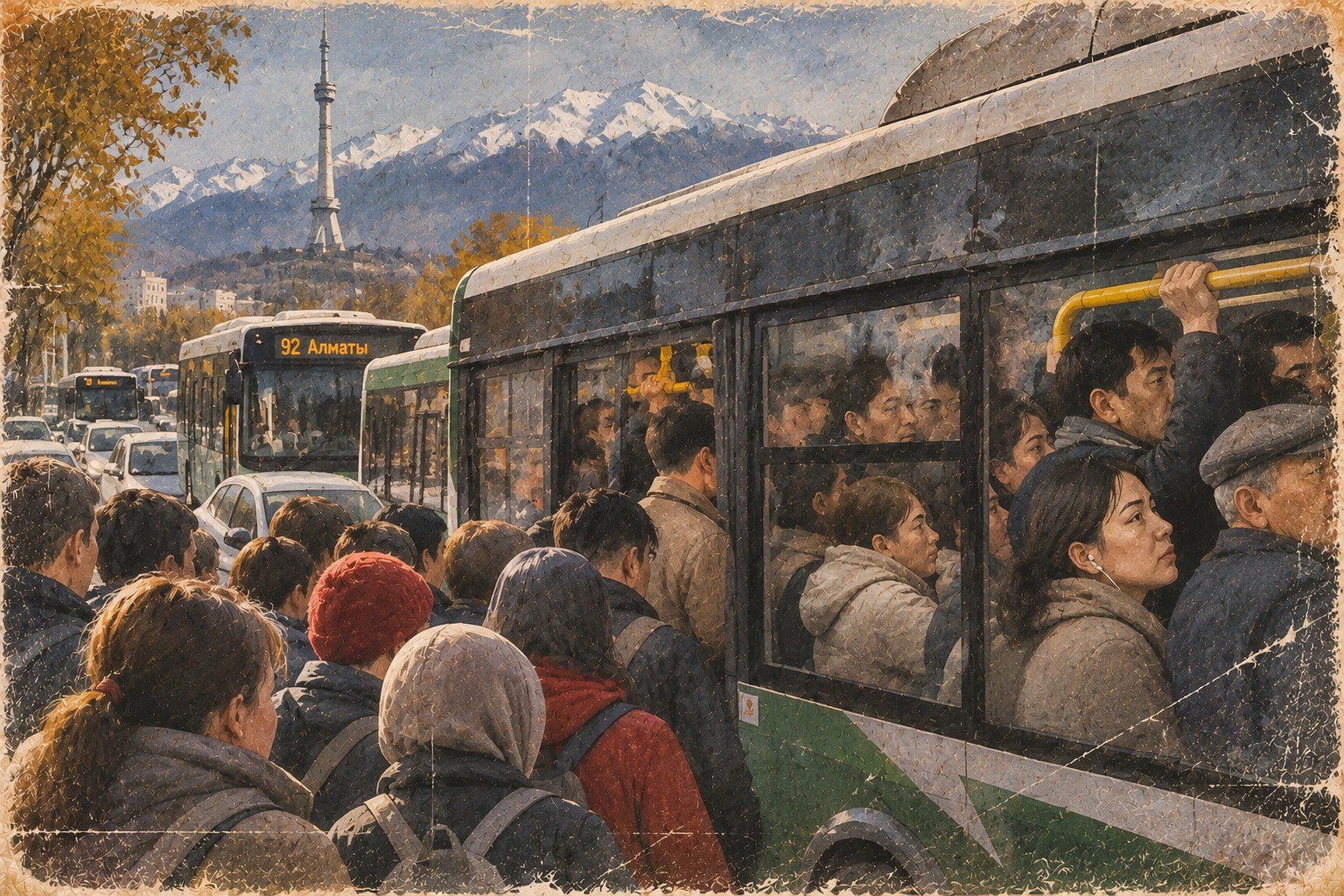
The Kazakh authorities’ grand plans to turn Almaty and its picturesque surroundings into Central Asia’s next tourist mecca have run headlong into a public transportation crisis this fall. Almaty residents have been flooding social media with photos and videos of overcrowded buses and trolleybuses, saying they have not seen anything like this since the 1990s. But a closer look at the problem suggests that the current chaos is largely man-made.
Almaty is a university city, so residents have long been accustomed to several months of crowded conditions each year. Public spaces, inexpensive cafés, and public transportation all become noticeably busier. For years, however, people in Almaty have generally avoided blaming newcomers for the city’s infrastructure problems, preferring to put up with the inconvenience.
This year, though, that tolerance has been put to a serious test. By October, residents had realized that ignoring the elephant in the room was becoming increasingly absurd. Journalists began picking up complaints from social media and amplifying residents’ grievances.
One of the most widely circulated images in mid-October showed a young woman’s leg trapped in a bus door as she tried to squeeze aboard. City officials responded like firefighters trying to contain a blaze of public outrage. They blamed traffic congestion for throwing buses off schedule and acted as though the problem was limited to just one or two routes.
Roadwork commissioned by the Almaty authorities themselves has added to the disruption. Officials have also pointed to fare evasion, claiming that more than 30% of passengers during rush hour were not paying their fares.
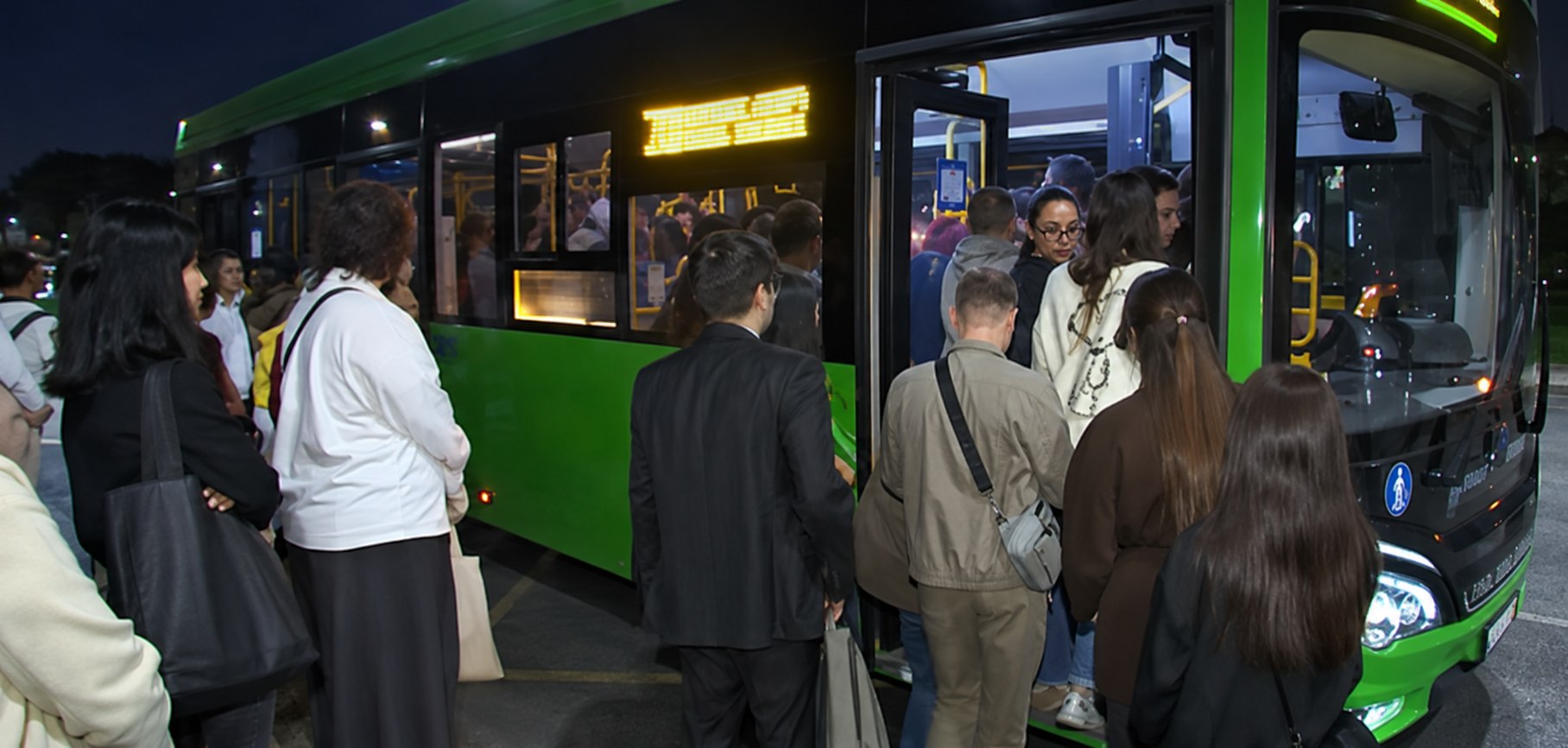
Buses are often full to capacity.
“Fare payments are also used to calculate how many buses are needed on a route. Currently, 3,238 public transportation vehicles operate in Almaty every day,” Almaty’s Department of Road Traffic and Public Transport Management explained.
On November 5, officials insisted that the number of buses in service had not fallen, although they acknowledged cutting the number of journeys by 20–30% during off-peak hours. They again blamed traffic congestion and claimed that more than 40% of passengers were not paying their fares.
These explanations failed to satisfy Almaty residents who regularly pay their fares. They had already uncovered a document that had previously escaped public attention.
It turned out to be the city’s public transportation tariff commission minutes, published on the department’s website. They record meetings through August 7, 2026, and the commission’s approval of reductions in planned bus deployments and journeys across city routes “in accordance with consultants’ recommendations.”
“The reductions were made in accordance with international practices. The number of vehicles deployed on city routes was reduced by up to 20% on weekdays, 10% on Saturdays, 25% on Sundays, and 35% on public holidays. The number of round trips on city routes was reduced by 10–20% on weekdays, 5–10% on Saturdays, 12.5–25% on Sundays, and 17.5–35% on public holidays,” the document states.
As if that were not enough, another revealing document surfaced: an October 22, 2026, publication by the Committee of Internal State Audit of Kazakhstan’s Ministry of Finance, titled “When Billions Never Make It Onto the Road: Results of the State Audit in Almaty.”
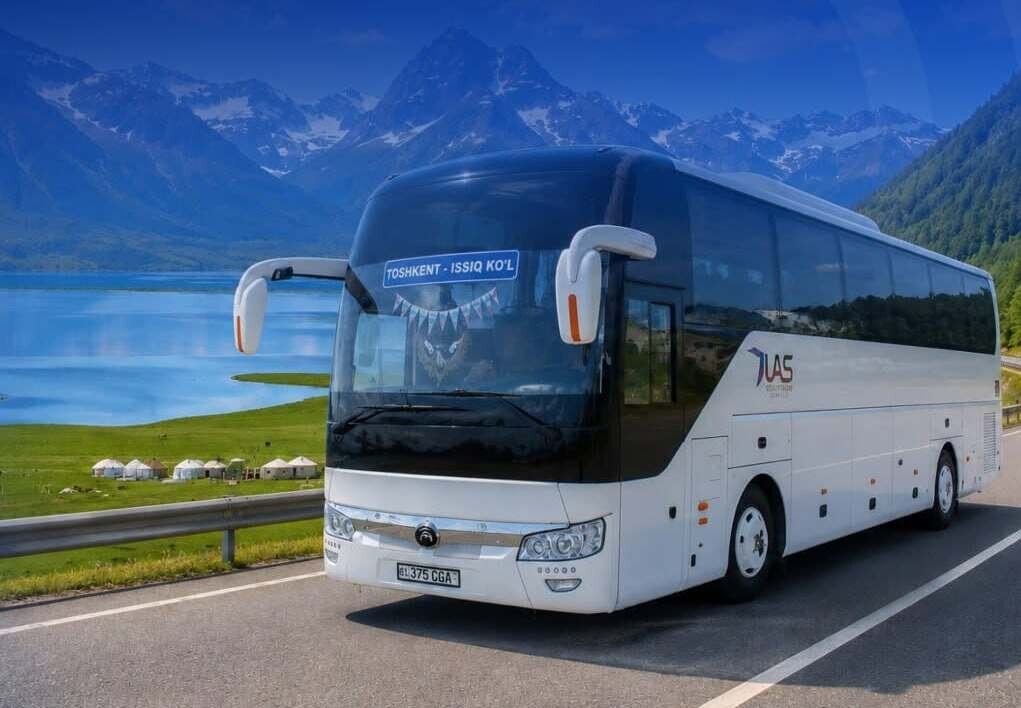
The committee reported the findings of an unscheduled review of Almaty’s budget expenditures. In late 2025, the city spent more than 50 billion tenge (about $110 million) on public transportation vehicles.
“At the same time, a significant portion of the buses already paid for, worth more than $72.9 million, are still not operating in Almaty and remain at the supplier’s premises in the city of Saran. This raises a legitimate question: if these vehicles were purchased for Almaty residents, why have they still not entered service months after being paid for in full?” the committee’s publication states.
The auditors ordered the city’s transport department to address the violations and consider holding those responsible to account.
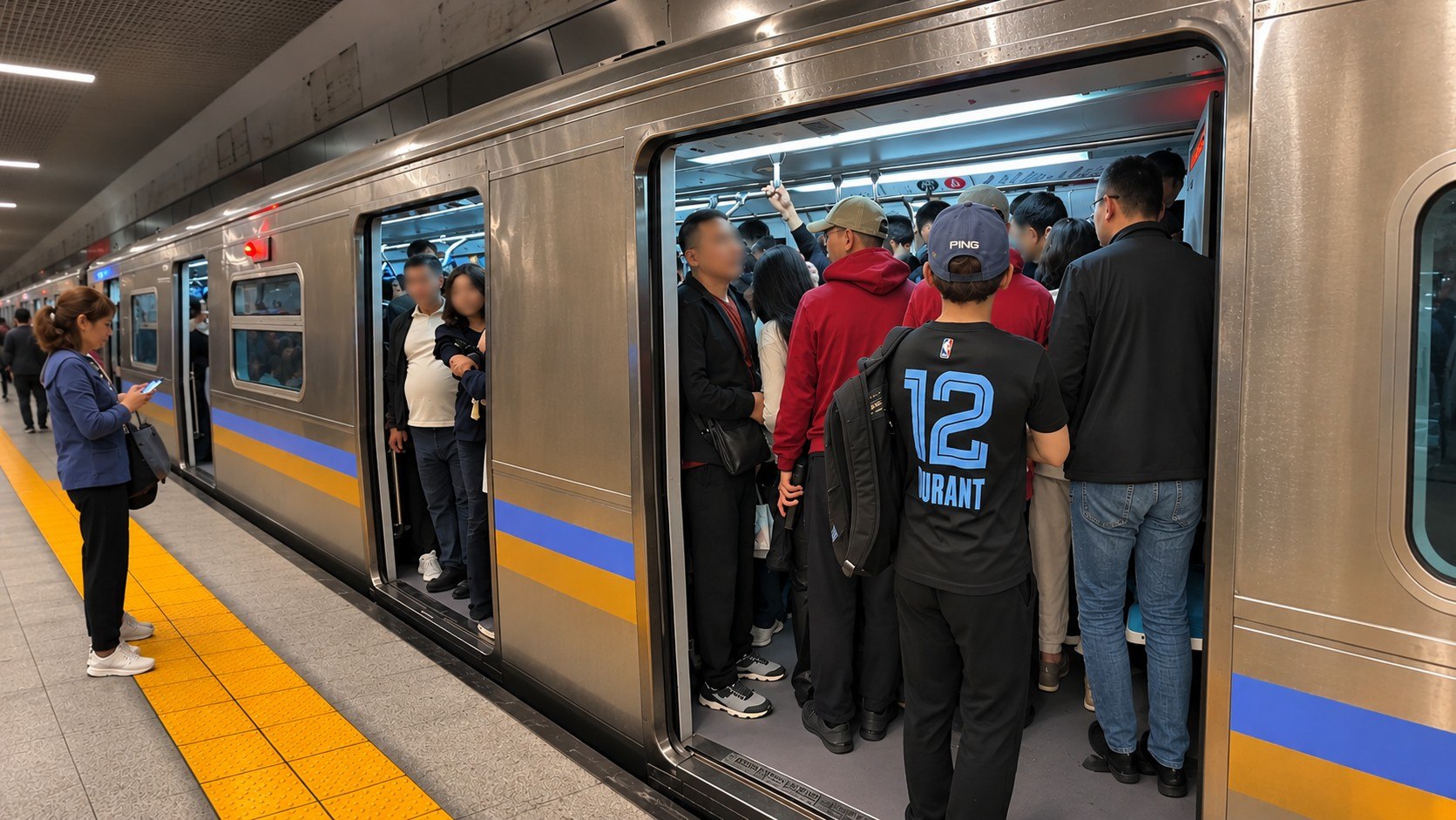
Customers squeeze on board the Almaty Metro at rush hour.
In early November, a notice warning of cuts to bus services in Almaty began circulating on social media. Dated October 21, it had been sent to Almaty Mayor Darkhan Satybaldy by the Almaty Association of Passenger Transport Operators.
The document expressed concern over “systematic delays in subsidy payments for socially significant passenger transportation services on city routes.” It claimed that the delays had seriously undermined operators’ financial position, leaving them in debt to suppliers of fuel, spare parts, and other essential resources.
“In light of the above, we hereby formally notify you that unless the outstanding subsidy payments are settled … starting November 2, 2026, operators will be forced to reduce the number of buses deployed on city and suburban routes to 30% of planned service levels,” the document states.
According to the association, private bus companies had been receiving only 70% of their subsidies since January, and the outstanding amount had exceeded 15 billion tenge (about $33.1 million).
“What they paid us every month was just enough to cover wages, fuel and lubricants, diesel, gas, electricity, and taxes. There was nothing left for development. Operators now owe suppliers more than $33.1 million. At this point, that money doesn’t even belong to the operators anymore – it belongs to their suppliers. Debts have accumulated for fuel, electricity, and loan payments,” Yerlan Adilov, the association’s chairman, told Vlast.
The cuts were more than an empty threat. On November 2, private operators deployed around 70% of their planned buses, according to one company director interviewed by BES.media. The city authorities, meanwhile, have said that the overall number of buses in service has not fallen.
We can therefore identify three factors behind the current crisis in Almaty’s surface public transportation system, a crisis likely to worsen as weather conditions deteriorate. The city administration itself approved reductions in planned services across city routes; buses worth $72.9 million are sitting idle instead of carrying passengers; and private operators struggling with unpaid subsidies have reduced the number of buses they deploy.
All three are entirely man-made, bureaucratic problems. This is no natural disaster. But there is another troubling question: could this crisis eventually be used to justify raising public transportation fares?
Calls for higher fares are hardly new. A journey on Almaty’s public transportation currently costs 120 tenge (about $0.26), a fare unchanged since August 2024. For example, oil and gas industry specialist Olzhas Baidildinov argued a year ago that fares should be around 500 tenge (about $1.10), more than four times the current price. In his view, government subsidies in the sector are opaque, inherently prone to corruption, and fail to deliver any improvement in service quality.
“Public transportation fares in Astana and Almaty should be around $1.10 (break-even fares of approximately $0.99 were previously mentioned during maslikhat sessions). In Almaty alone, around $200 million was allocated last year to subsidize bus transportation. Do you see the quality? What this sector needs is market-based pricing and transparent competition,” said the expert, referring to discussions in local elected councils, or maslikhats.
He also believes passengers should pay different fares depending on the distance traveled.
“There is no common sense or economic logic in someone traveling three stops paying the same fare as a passenger riding from one end of the route to the other for an hour and a half. I propose eliminating non-market, opaque subsidies to bus operators and allowing market forces to determine fares. Sooner or later, we’ll end up there anyway,” Baidildinov argued.
Almaty’s authorities insist that higher fares are not under consideration. But if they are eventually presented as the solution, residents will have every right to ask why they should pay more for a system that the authorities themselves have helped to undermine.
For now, the “customer” – the people of Almaty – is being left to “ripen” amid merciless overcrowding, while tens of millions of dollars’ worth of new buses sit idle.
The views expressed in this article are those of the author and do not necessarily reflect the official policy or position of the publication, its affiliates, or any other organizations mentioned.