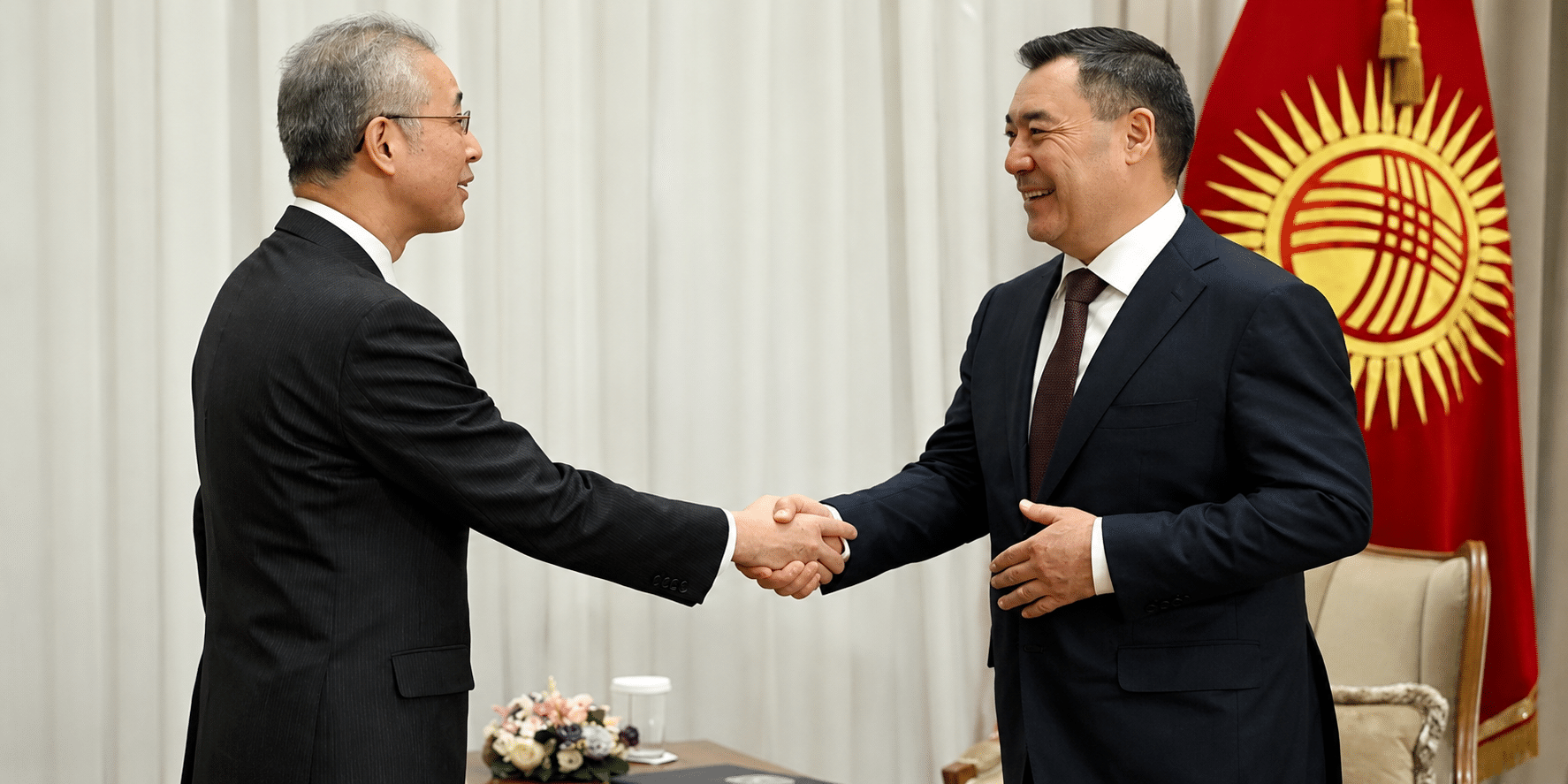
In an interview with AKI.TV, Japan’s Ambassador to the Kyrgyz Republic, Ryuichi Hirano, said that Japan intends to move its longstanding relationship with Kyrgyzstan toward a broader economic partnership based on shared interests.
Ambassador Hirano pointed to Kyrgyzstan’s growing economic and diplomatic weight. “I know that Kyrgyzstan’s economy is growing rapidly. Moreover, Kyrgyzstan is strengthening its presence in the international community, particularly as a prospective new member of the UN Security Council,” he said. Kyrgyzstan was elected to a non-permanent Security Council seat on June 3, 2026 for the 2027–2028 term, and will serve on the Council for the first time.
Economic data for Kyrgyzstan has been robust in recent years. Official figures put Kyrgyzstan’s real GDP growth at about 11.1% in 2025, the second consecutive year above 11% and well above the 2025 forecasts of the International Monetary Fund and the Asian Development Bank.
Ambassador Hirano stressed the need for more reciprocal cooperation. “I believe we already have a solid foundation for developing our bilateral relations on a mutually beneficial basis, and I would like to do my part to advance them,” he said.
President Sadyr Japarov’s visit to Japan gave fresh impetus to deepening bilateral relations. On December 20, 2025, he met Prime Minister Sanae Takaichi, and the two leaders signed a joint statement on the further development of relations through mutually beneficial cooperation. In the interview, Ambassador Hirano said he attended the meeting and described it as productive and positive. The statement builds on the 2023 Joint Statement on Friendship and Comprehensive Partnership in the New Era, signed during Japarov’s November 2023 visit to Japan.
The agenda has since shifted toward trade, investment, and commercial opportunities. Japan’s recorded exports to Kyrgyzstan reached ¥13.01 billion (US$82.1 million) in 2025, while imports from Kyrgyzstan totaled ¥79.2 million (US$ 505,000). Bilateral trade therefore remains small and heavily weighted toward Japanese exports, which leaves considerable room for diversification and growth, especially on the Kyrgyz side.
Five areas stand out for the emerging partnership: critical minerals, including antimony and silicon; energy, especially hydropower and renewable electricity; transport infrastructure; agriculture and food processing; and digital technologies, satellite applications and education.
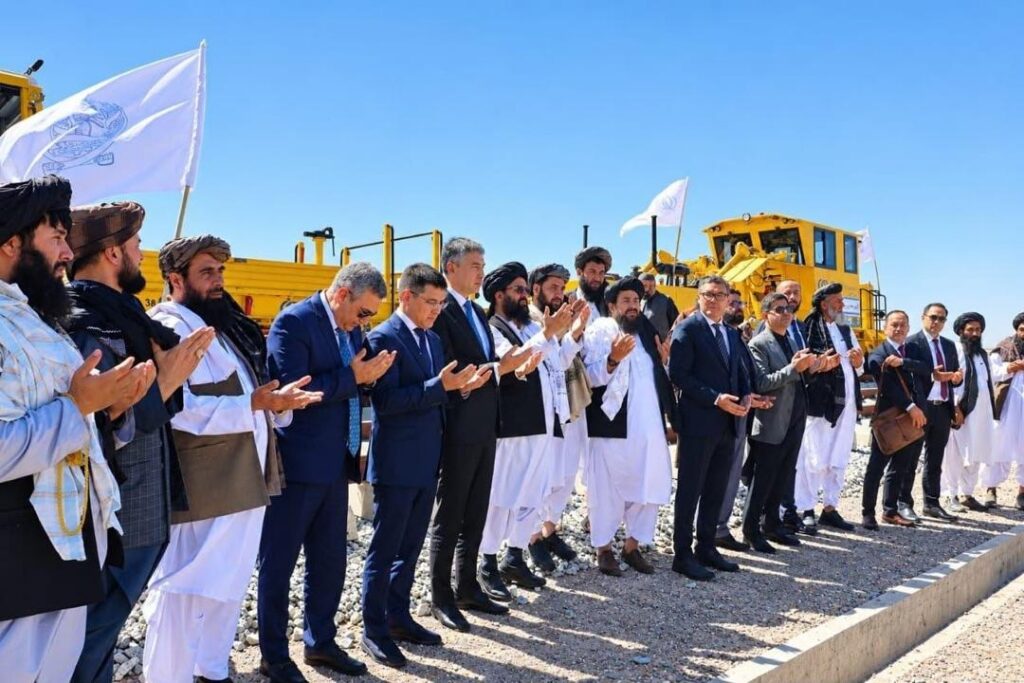
Transport connectivity also has a regional dimension. The Tokyo Declaration adopted at the Central Asia plus Japan summit in December 2025 made stronger links between Central Asia and international markets a priority, including support for the Trans-Caspian International Transport Route. Kyrgyzstan’s role in the China–Kyrgyzstan–Uzbekistan railway, with tunnels now under construction, could strengthen its position not only in trade between China, Central Asia and Europe, but also in trade with Japan.
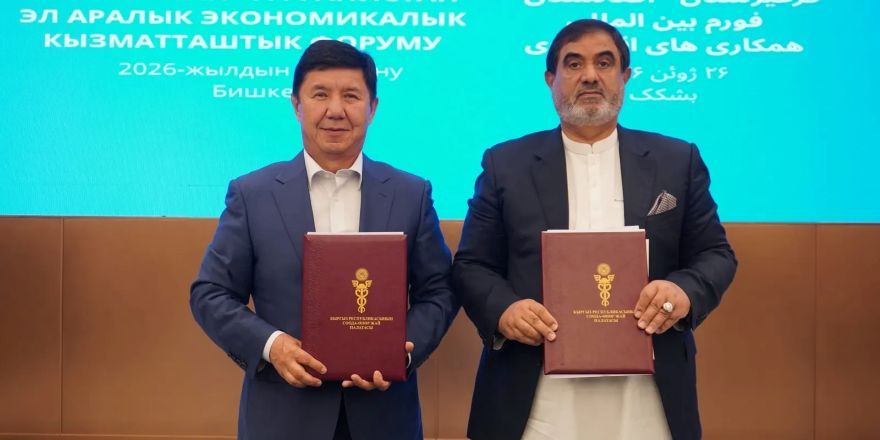
While not mentioned directly by Ambassador Hirano, stronger institutional groundwork is also being laid. Japan and Kyrgyzstan signed a new double-taxation agreement on December 19, 2025. It entered into force on July 26, 2026, although most of its provisions apply from January 1, 2027. At their December meeting, the two leaders also agreed to establish an intergovernmental commission on trade, economy, culture and human exchange. They said they wanted to conclude a bilateral investment treaty as early as possible.
Japanese technical assistance and grants remain substantial: in December 2025, Japan committed ¥6.845 billion (US$44 million) in new grant aid for projects in energy, transport, healthcare, and human-resource development. Japanese private investment, meanwhile, remains at an early stage, and several announced business initiatives are still at the memorandum, planning, or feasibility stage.
Japan established diplomatic relations with Kyrgyzstan on January 26, 1992, within months of the country’s independence. According to Japan’s Ministry of Foreign Affairs, cumulative Japanese official assistance through fiscal year 2023 totaled approximately ¥100.15 billion (US$710.2 million), made up of loans, grants, and technical cooperation.
Japan is seeking to move its relationship with Kyrgyzstan beyond three decades of development assistance towards a wider economic and strategic partnership driven increasingly by private-sector cooperation. Then-Foreign Minister Yoriko Kawaguchi anticipated this broader engagement when she launched the Central Asia plus Japan Dialogue (CA+JAD) in August 2004, more than a decade before Washington introduced its C5+1 initiative under Secretary of State John Kerry in the Obama administration.
With Kyrgyzstan’s growing economic confidence and openness to outsiders, President Japarov is pursuing a larger international role with an increasing emphasis on partnerships built on trade, investment, and shared economic interests. Japan has noticed Bishkek’s new attitude, and Ambassador Hirano is actively working to move Kyrgyz-Japanese relations forward.