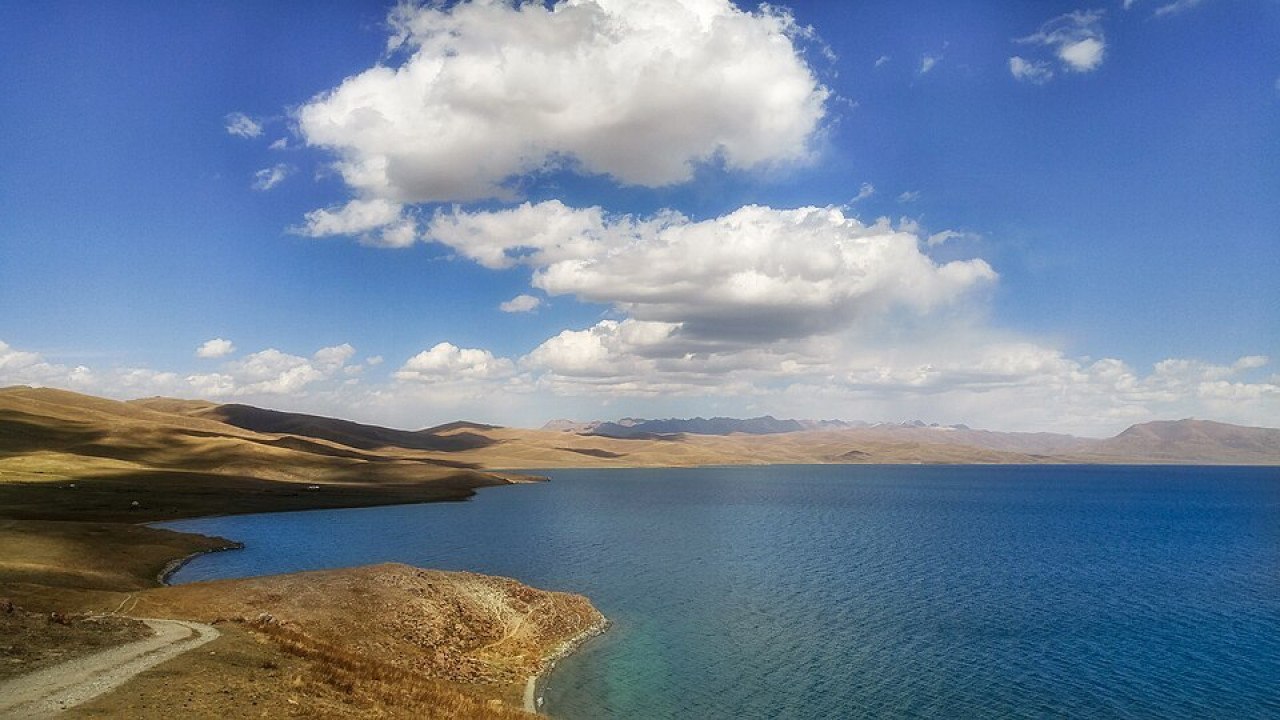
On November 16, Kyrgyzstan’s Cabinet of Ministers approved measures to implement the moratorium on commercial fishing in lakes Issyk-Kul and Son-Kul. The ban took effect on July 21, 2026, and will remain in place until July 21, 2029. The government says the restrictions are intended to help fish populations recover.
Authorities will suspend the issuance of commercial fishing permits for the duration of the moratorium. The ban also covers the transport, sale, storage, purchase, and export of fish from the two lakes. Recreational and sport fishing remain allowed. Fish may also be caught for scientific research, fish stock assessments, restocking programs, and efforts to manage populations of native species that are not commercially fished.
The Cabinet directed the Ministry of Water Resources, Agriculture and Processing Industry to regularly stock both lakes with young Issyk-Kul trout and ludoga whitefish. The ministry must also stock the lakes with young common carp and carry out annual efforts to control overabundant native fish species in Son-Kul. Scientists will assess fish stocks during spawning in spring and summer, with further assessments during autumn spawning. The ministry must report to the presidential administration on the implementation of the resolution by December 30 each year.
The Institute of Biology at Kyrgyzstan’s National Academy of Sciences reported an increase in the Issyk-Kul dace population during the previous moratorium, which began in 2023. Recreational anglers had also noticed the increase, according to the academy, which provided no figures. Poaching remains a threat to fish stocks. In October 2025, inspectors removed about 500 meters of illegally installed fishing nets from Lake Issyk-Kul in a single raid.
In October 2025, the Cabinet imposed a similar three-year ban on seven reservoirs, including Toktogul and Kirov. The exceptions include cage fish farming and recreational and sport fishing.
While restricting commercial fishing in its lakes and reservoirs, Kyrgyzstan is also seeking to expand fish farming. According to the ministry, the country’s fish farms produced 19,500 metric tons of fish for sale in 2025. Rainbow trout accounted for 17,100 metric tons.
The ministry and the Food and Agriculture Organization of the United Nations launched a project in May to help local fish farms raise and sell rainbow trout and carp.
At a November 3 meeting in Moscow, Kyrgyz Deputy Prime Minister Erlist Akunbekov and Russian Deputy Prime Minister Dmitry Patrushev discussed another fish farming project in Kyrgyzstan. It aims to increase annual fish production to 60,000 metric tons by 2035 and create up to 1,500 jobs.
Akunbekov and Patrushev separately discussed setting up a joint venture to catch fish and other aquatic resources in Russia’s exclusive economic zone and process the catch. The proposed venture would aim to harvest up to 78,000 metric tons annually. Kyrgyzstan is seeking annual fishing quotas from Russia. Akunbekov said access to that catch would help Kyrgyzstan produce its own feed for local fish farms. Kyrgyzstan and Russia have yet to say who would do the fishing or where the catch would be processed.