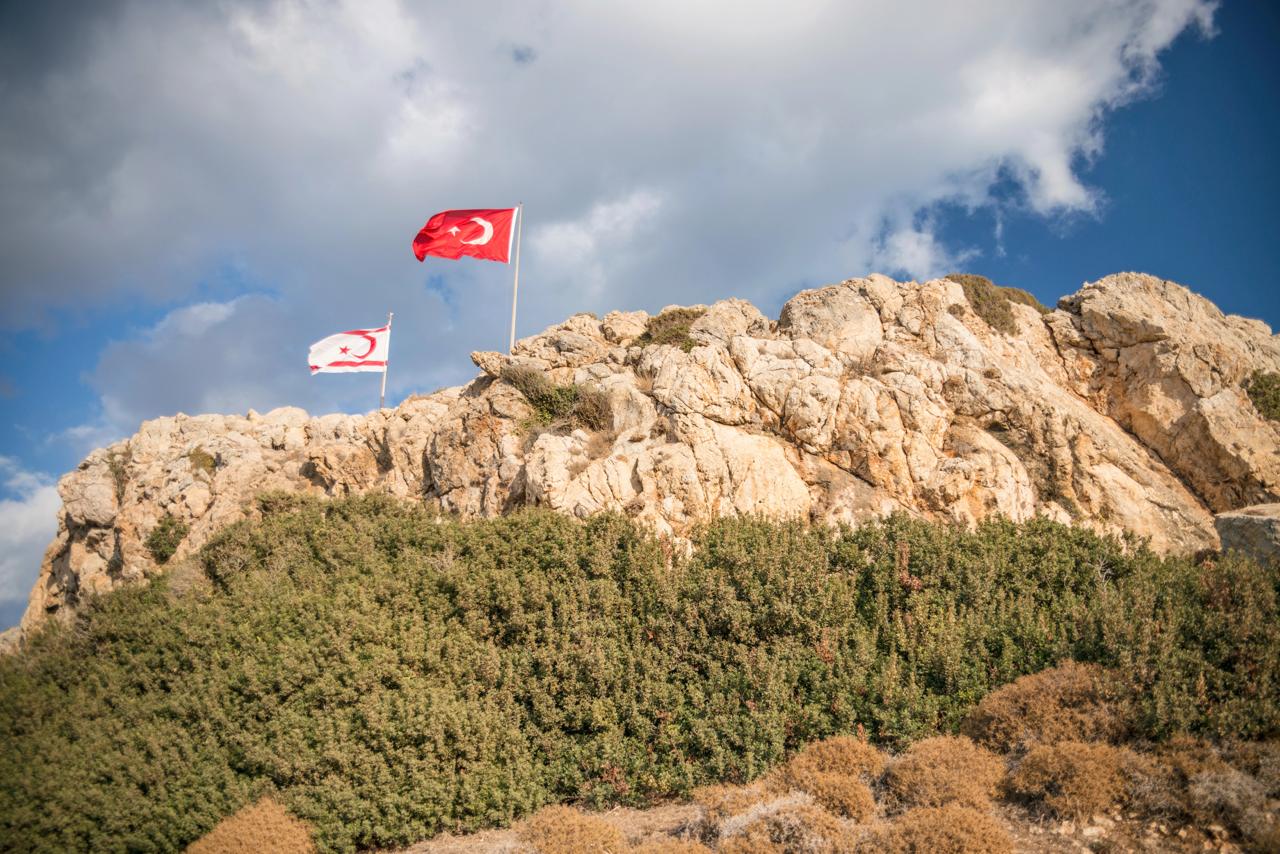
Northern Cyprus has become a microcosm of Turkish foreign policy, a space where Ankara combines military presence, the ideology of “Turkic brotherhood,” and economic leverage. For Turkey, this territory is not merely a long-standing geopolitical dispute but a laboratory for a new diplomatic model centered on the vision of a “great Turkic world.”
As noted by Stratfor, despite the decisive victory of Republican Turkish Party leader Tufan Erhürman in the October 19, 2025, presidential elections in the self-declared Turkish Republic of Northern Cyprus (TRNC), a candidate who supports renewed negotiations with the Republic of Cyprus and advocates for a federal model, Ankara has shown no intention of revising its entrenched two-state doctrine. Analysts suggest Turkey may apply economic pressure and diplomatic isolation, including suspension of subsidies and credit lines, should Erhürman attempt to implement a federal solution.
Concurrently, Turkey is lobbying for the TRNC’s recognition within the Organization of Turkic States (OTS), aiming to set a symbolic precedent: if Turkic-speaking nations will not support each other, who will? For Central Asia, this initiative reflects Ankara’s commitment to unifying the Turkic world under its political leadership, extending far beyond cultural solidarity.
Political Implications for Central Asia
Turkey’s push to incorporate the TRNC into the OTS shifts the organization from a cultural bloc to a geopolitical instrument. Should Northern Cyprus gain observer status, Ankara will likely expect symbolic support from its Turkic partners.
This poses a significant dilemma for Central Asian states. Aligning with Turkey could be perceived by Western actors as a breach of international law, while maintaining neutrality might be viewed as a rejection of Turkic unity. Kazakhstan, Uzbekistan, and Turkmenistan have so far emphasized adherence to international law and sovereignty. At the April 2025 EU-Central Asia summit in Samarkand, these states jointly reaffirmed UN Security Council resolutions from the early 1980s, which declared the TRNC’s independence and all related separatist actions legally invalid.
Kyrgyzstan may face a more delicate challenge due to its deep humanitarian and educational ties with Turkey.
Northern Cyprus thus serves as a litmus test for Turkic integration: how closely can nations align without compromising their political autonomy?
Economic and Energy Dimensions
Cyprus plays a strategic role in Turkey’s energy policy, linking the Caspian region, the Caucasus, and the Eastern Mediterranean. Turkish control over Northern Cyprus bolsters its influence over maritime logistics, offshore gas development, and export corridors.
This holds direct relevance for Central Asia. A stronger Turkish position in the Mediterranean enhances its leverage over energy transit routes from the Caspian to Europe, particularly in relation to the Trans-Caspian pipeline and the Middle Corridor.
Over time, Ankara is expected to use energy infrastructure as a tool for political engagement, promoting an “economy of Turkic solidarity”, offering mutual benefits, but often tied to strategic conditions.
Security and Military Presence
The TRNC functions as a prototype for Turkey’s military protectorate model, a way to retain control while presenting itself as a guarantor of stability. This model is echoed across the Turkic region through Turkey’s expanding military partnerships with Azerbaijan, Kazakhstan, Uzbekistan, and Kyrgyzstan.
Northern Cyprus operates as a “security showroom,” illustrating the perceived benefits of alliance with Turkey. Yet deeper military ties with Ankara may provoke unease in Moscow and Beijing, which view a consolidated Turkic defense bloc as a threat to their regional interests. As such, Turkey is emerging not just as a partner, but as an assertive strategic actor vying for regional leadership.
Ideological and Symbolic Dimensions: The “Turkic Nation”
In Turkish political discourse, Cyprus is framed not simply as a territory, but as a symbol. The refrain “Türkiye never left its friends” encapsulates Ankara’s ideological expansion, casting solidarity as a willingness to support even unrecognized entities.
In Central Asia, this message is conveyed subtly, through cultural programs, religious initiatives, and media outreach. If TRNC recognition within the OTS becomes a reality, it could set a precedent for prioritizing ethnic unity over international norms. This would be particularly problematic for Kazakhstan and other multiethnic societies, potentially undermining foundational principles of their foreign policy. In such a shift, Turkey would position itself less as an economic ally and more as an ideological coordinator.
Forecast: Navigating Between Solidarity and Sovereignty
In the medium term, Turkey is expected to continue advocating for the TRNC’s inclusion in the OTS, using both economic incentives and diplomatic persuasion. Kazakhstan will likely uphold its stance as a mediator and proponent of international law, while Ankara intensifies its influence through humanitarian and cultural engagement across the region.
Should tensions between Turkey and the EU or the US escalate, Central Asia could serve as a strategic rear base for Ankara, further enhancing Turkey’s interest in the region. However, overly assertive pressure from Turkey risks pushing some states closer to China or Russia as counterweights. Turkey will thus need to balance economic and symbolic tools with diplomatic finesse.
Final Assessment
For Ankara, Northern Cyprus represents more than a geopolitical dispute; it is a test case for constructing a new political order based on identity rather than legality. If Turkey succeeds in legitimizing the TRNC within the OTS, it will redefine Turkic integration as a geopolitical enterprise rather than a cultural one.
For Central Asia, this marks a critical juncture. The region must remain engaged in Turkic cooperation without becoming subsumed into a Turkish-led geopolitical project. Kazakhstan, in particular, bears responsibility as a stabilizing force, asserting that genuine unity can only be achieved through mutual respect for sovereignty and adherence to international norms.
Northern Cyprus is not merely a territory, it is a symbol of how far Turkey is prepared to go to assert leadership, and of how resolutely the Turkic nations will defend their own space for independent decision-making.