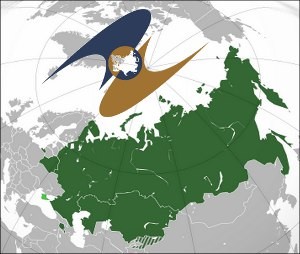
BISHKEK (TCA) — When asked what countries are friendly and can support their country in a difficult time, the majority of respondents that participated in population surveys in seven countries (five Eurasian Economic Union member countries, Tajikistan and Moldova) named the CIS region. The population of Tajikistan, Kyrgyzstan, and Kazakhstan express the highest trust in their CIS neighbors for the sixth year in a row (95%, 94% and 90%, respectively).
The Eurasian Development Bank’s (EDB) Integration Barometer polls have been conducted yearly since 2012 as a joint project by the EDB Centre for Integration Studies and Eurasian Monitor, an international partnership.
Russia continues to be perceived as the most “friendly country” by all respondents, named by an average of 76% of them in the six surveyed countries. Kazakhstan goes second (31%) and Belarus third (21%). The EEU countries and Tajikistan demonstrate a high level of mutual trust as seen by their population. This is an important prerequisite to strengthen the Union and its attractiveness to the current and potential member states, according to the poll.
During the period of 2016-2017, in Kazakhstan, the indicator of trust in Uzbekistan grew by 9 percentage points (to 24%, the relations between the countries begin to improve), in Turkey and China by 7 percentage points (to 18% and 16%, respectively), in Belarus by 6 percentage points (to 41%), and in the Kyrgyz Republic by 5 percentage points (to 33%, the highest score over the six years of surveys).
The Russian citizens consider Belarus (61%) and Kazakhstan (54%) as the friendliest foreign political partners. Armenia replaced China in the third place (an increase by 4.5 percentage points, to almost 40%). The perception of India’s friendliness declined by 12 percentage points (to 17%). The Russian population gained more trust in Uzbekistan (by 4 percentage points, to 26% – the highest indicator over the six years of surveys), Moldova (by 5.5%, to 21%, another record high) and Turkey (by 4 percentage points, to 7%).
According to the poll, the EEU member states (Armenia, Belarus, Kazakhstan, Kyrgyzstan, and Russia) and Tajikistan have the world’s highest density of mutual social ties: between 51% and 80% (except Russia) of their populations said they have ties with relatives, friends and colleagues from the CIS countries that they maintain continuously. The highest figures in 2017 were recorded in Kyrgyzstan (80%), Armenia (79%) and Tajikistan (66%). In Russia, 31% of the population maintain social ties in neighboring CIS countries. This indicator is also high compared to the average size of the population.
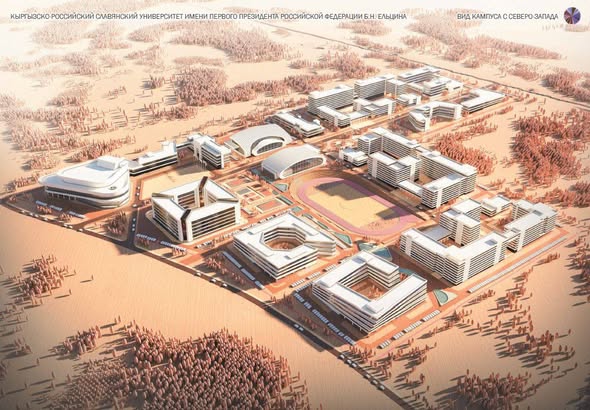
However, the people’s interest in education offered by neighboring EEU countries is declining. The region’s population most often prefer studying abroad, primarily in the EU, rather than in neighboring CIS countries.
“A single educational space forms the basis for cooperation in key economic sectors – mechanical engineering, energy generation and transport. The training of future teachers promotes the knowledge of Russian as the language of interethnic communication. Innovative instruments are needed to improve the mobility of students and teachers so as to change the situation,” Evgeny Vinokurov, Director of the EDB Centre for Integration Studies, comments.
Eurasian Development Bank (EDB) is an international financial institution founded by Russia and Kazakhstan in January 2006 with the mission to facilitate the development of market economies, sustainable economic growth, and the expansion of mutual trade and other economic ties in its member states. EDB’s charter capital totals US $7 billion. The member states of the Bank are Armenia, Belarus, Kazakhstan, Kyrgyzstan, Russia, and Tajikistan.