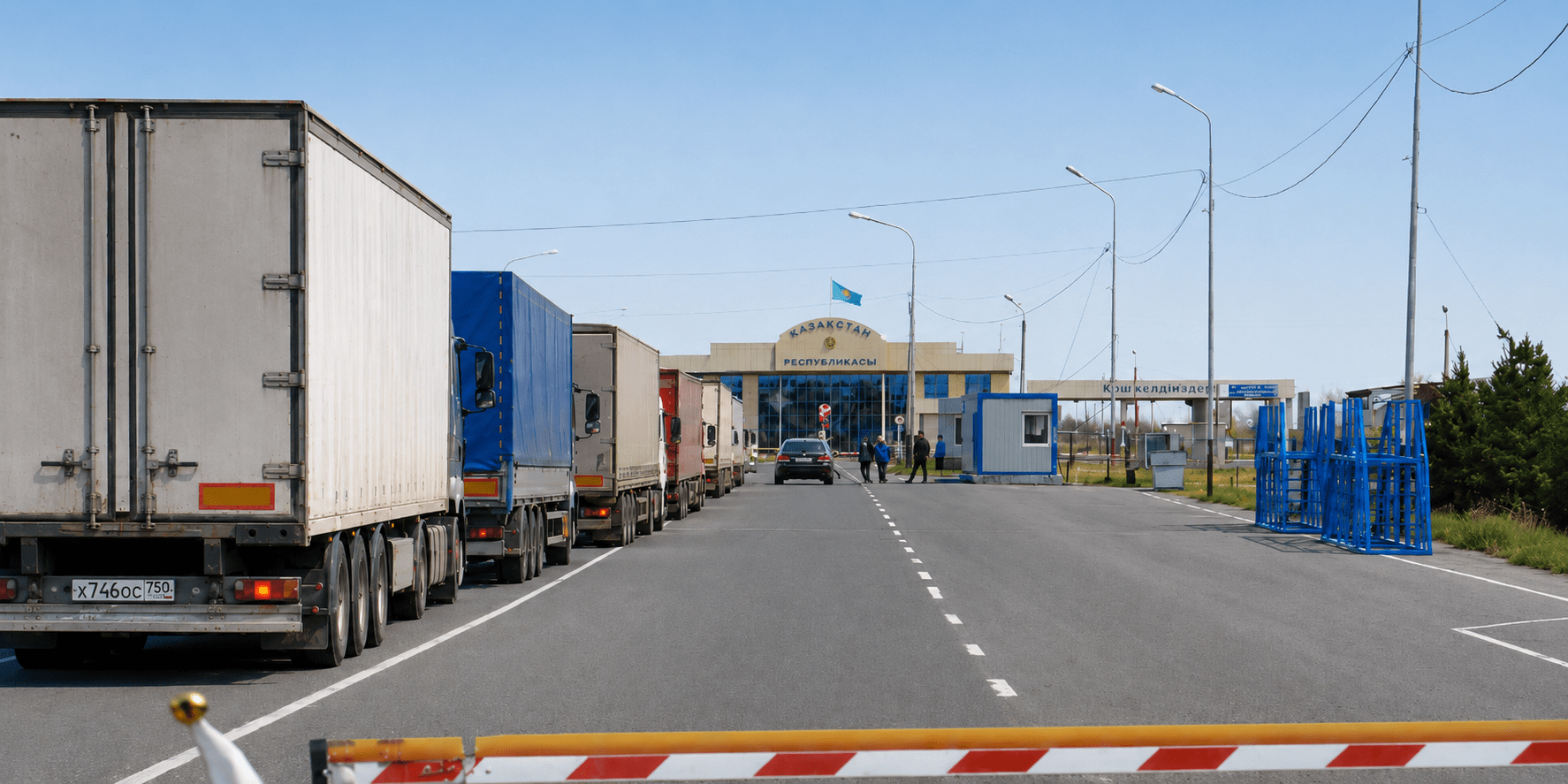
A truck crossing into Kazakhstan through a northern border post can be declared as carrying 18 tonnes of wheat while hauling as much as 40 tonnes. Grain Union analyst Evgeny Karabanov described that gap as part of the country’s problem with undeclared Russian grain.
Astana’s answer is a six-month ban on most wheat imports from July 27. The measure may curb grey-market loads and support domestic farmers, but it also risks reopening a trade dispute with Russia and deepening the gap between the Eurasian Economic Union’s promises and daily commerce.
Agriculture Minister Aidarbek Saparov’s order covers wheat arriving by road, water, and rail from EAEU members and other countries. Poultry farms, grain processors, licensed elevators, and the state Food Contract Corporation may still import by rail. Wheat imported for poultry farms and grain processors cannot be resold inside Kazakhstan or abroad. Rail transit through Kazakhstan remains exempt.
The government says the ban will support local producers and secure sales. Deputy Agriculture Minister Azat Sultanov said Kazakhstan has large carryover stocks that need storage. “The decision was taken to stimulate the domestic market,” he said in June.
The order names every foreign supplier, but its commercial impact will fall mainly on Russia. In January, the Grain Union forecast about one million tonnes of wheat imports during the September 2025 to August 2026 marketing year. Karabanov said practically all of that grain would come from Russia.
Cheap wheat crosses a long shared border into Kazakhstan’s main grain belt. That can lower costs for millers and poultry farms, but it also undercuts growers before they sell their harvest. The ban shifts that pressure rather than removing it.
Baimurat Group CEO Daniyar Kuanshaliyev called the measure a “crude administrative intervention” that could raise raw-material prices. He argued that reduced competition for wheat could leave processors paying more while traders and exporters compete for the same domestic stocks.
Karabanov takes a less alarmed view. “We generally oppose various bans and restrictions,” he said, but the rail exemptions should limit the number of businesses harmed. He said the clearest cost could be higher transport charges, since trucks are often cheaper than trains for journeys under 500 kilometres.
Kazakhstan imposed a broad wheat ban in 2024 after Russian grain continued entering despite earlier controls. TCA’s reporting on the earlier grain dispute found that more than 1.1 million tonnes had arrived in six months before Astana tightened the rules. Russia then restricted Kazakh grain and other agricultural products, citing phytosanitary concerns. Exporters said the effects spread beyond the stated products. “Trucks loaded with those products are being turned away at the border,” Karabanov told Reuters in October 2024.
The cycle continued in 2025. Russia reinstated restrictions on Kazakh wheat, flaxseed, and lentils from April, while allowing sealed rail transit. The Grain Union said Moscow had lifted one set of restrictions the previous day, then introduced a new ban with altered terms.
That history does not prove Moscow will retaliate this time. Kazakhstan’s order is country-neutral and preserves supplies to approved processors. Yet previous countermeasures often arrived through plant-health rules, certificate disputes, and border controls rather than openly declared retaliation.
The wider problem lies inside the EAEU. In theory, the bloc exists to provide for the free movement of goods, services, capital, and labor across Armenia, Belarus, Kazakhstan, Kyrgyzstan, and Russia. The treaty entered into force in 2015, building on a customs union that had removed routine checks at internal borders.
Kazakhstan holds the EAEU chairmanship in 2026, and President Kassym-Jomart Tokayev began the year by calling for the removal of internal trade barriers and more predictable transport links. Contradictions surfaced in March as Kazakhstan’s chairmanship promoted a barrier-free market, while members added national controls.
The wheat order typifies these contradictions. Kazakhstan is protecting farmers from cheaper imports while allowing selected industries to keep buying foreign grain. Russia has used similar exceptions and temporary bans, while Kyrgyzstan and Belarus have also challenged restrictions imposed by partners.
The Eurasian Economic Commission can identify barriers and convene negotiations, but it has struggled to stop national protection measures being implemented when prices or food security become politically sensitive. Trade disputes now affect goods ranging from food to road cargo, despite the common-market rules.
Duty-free trade, shared customs rules, and labor mobility mean the EAEU still has value. Kazakhstan depends on Russia as a market and transit route, while Russian businesses sell heavily into Kazakhstan. A ten-year review found rising trade despite repeated disputes.
The wheat ban, however, shows how the union now functions through exceptions. For northern Kazakhstan’s farmers, fewer cheap truckloads will support crop prices, while millers pay more for rail deliveries. Rail transit will remain exempt, but the argument over what an EAEU common market should provide is growing harder to contain.