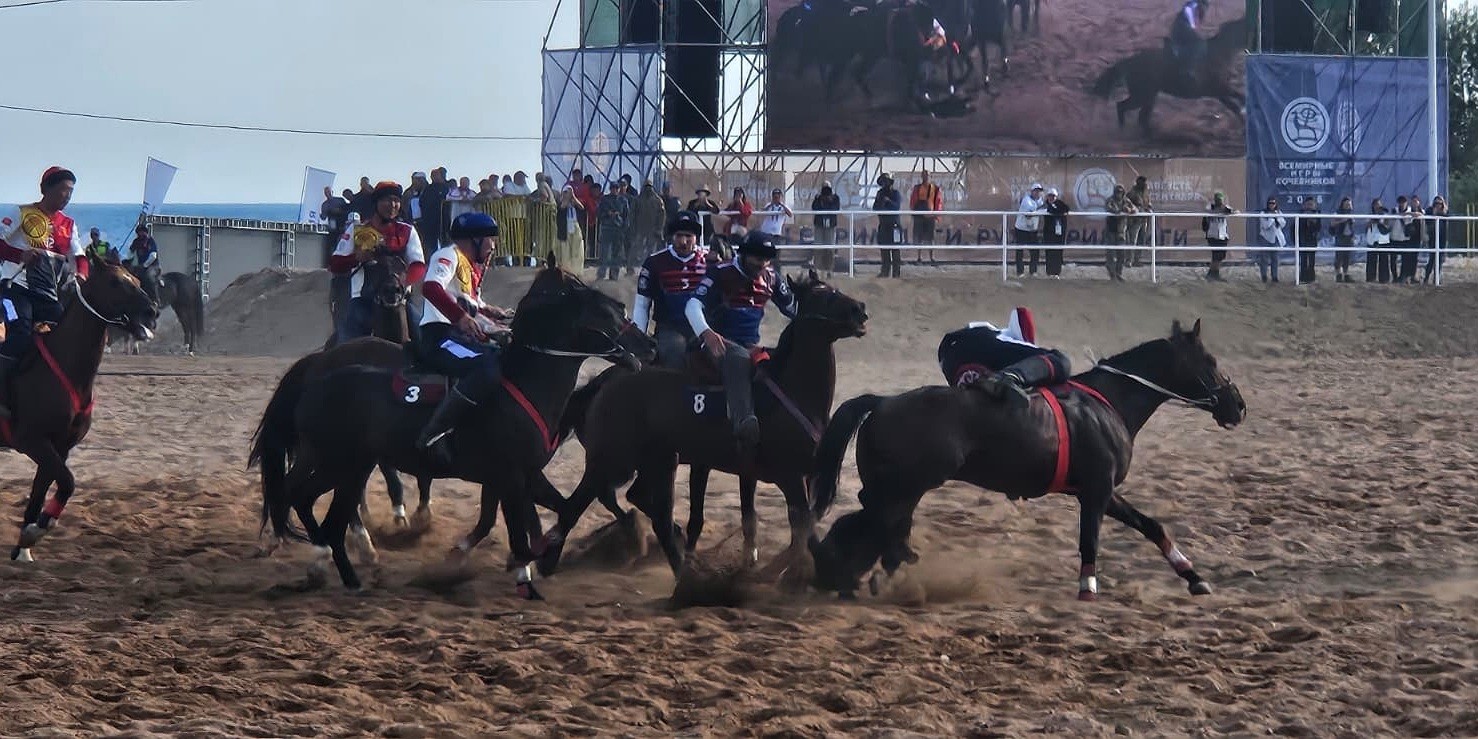
Two years after Kazakhstan beat Team USA in Astana, the Americans again faced a World Nomad Games host in kok boru. Kyrgyzstan won 16–7 at the Cholpon-Ata Kok Boru Arena on Wednesday, but the U.S. riders were a markedly different proposition from the side that failed to score in 2024.
Kok boru, whose name means “gray wolf,” occupies a special place in Kyrgyz culture. UNESCO added it to the Representative List of the Intangible Cultural Heritage of Humanity in 2017, recognizing its place in the country’s cultural identity, while the arena commentator repeatedly described the sport as a point of national pride. Tradition traces the game to mounted hunters fighting for possession of a wolf killed while protecting livestock, an old practice later developed into a team contest.
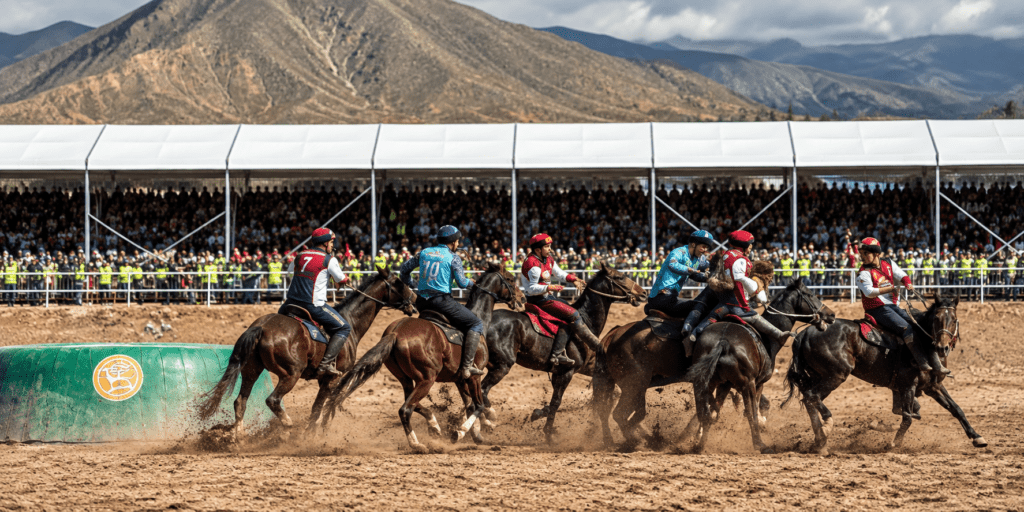
The modern game uses a prepared headless goat carcass, which a rider must carry across the field and get into the opposing tai kazan, the raised circular goal at either end. Kyrgyzstan restored the real carcass for these Games after Kazakhstan used a synthetic rubber serke in Astana, making the object’s weight and bulk unmistakable whenever a rider leaned almost to the sand to seize it.
Under the current rules, four riders from each team compete on the field during three 15-minute periods. The carcass normally weighs 30–32 kilograms, and although riders may press one another with their bodies or use their horses to nudge for position, striking is prohibited.
Team USA started strongly, trading scores with Kyrgyzstan early and holding its own in the scrums for possession. Horses pressed flank to flank in what could look like an impossible embrace as riders bent low into the crush. When one came free with the goat held against the saddle, the tangle opened immediately into a gallop toward the tai kazan.
Nurzhan Melisbek uulu opened the scoring for Kyrgyzstan after just 23 seconds, but Team USA answered and kept the opening exchanges close. By the middle of the first period, Kyrgyzstan had begun finding more openings and closed it 7–2.
During the first break, Ennio Morricone’s theme from Sergio Leone’s A Fistful of Dollars played over the speakers in what appeared to be a nod to the American cowboys. The Americans returned to the field with renewed energy and scored almost immediately, with the board soon showing 8–3. Kyrgyzstan did not loosen its grip for long, but neither did the second period become the one-way procession seen in Astana. The hosts added five points to the Americans’ three, taking the cumulative score to 12–5.
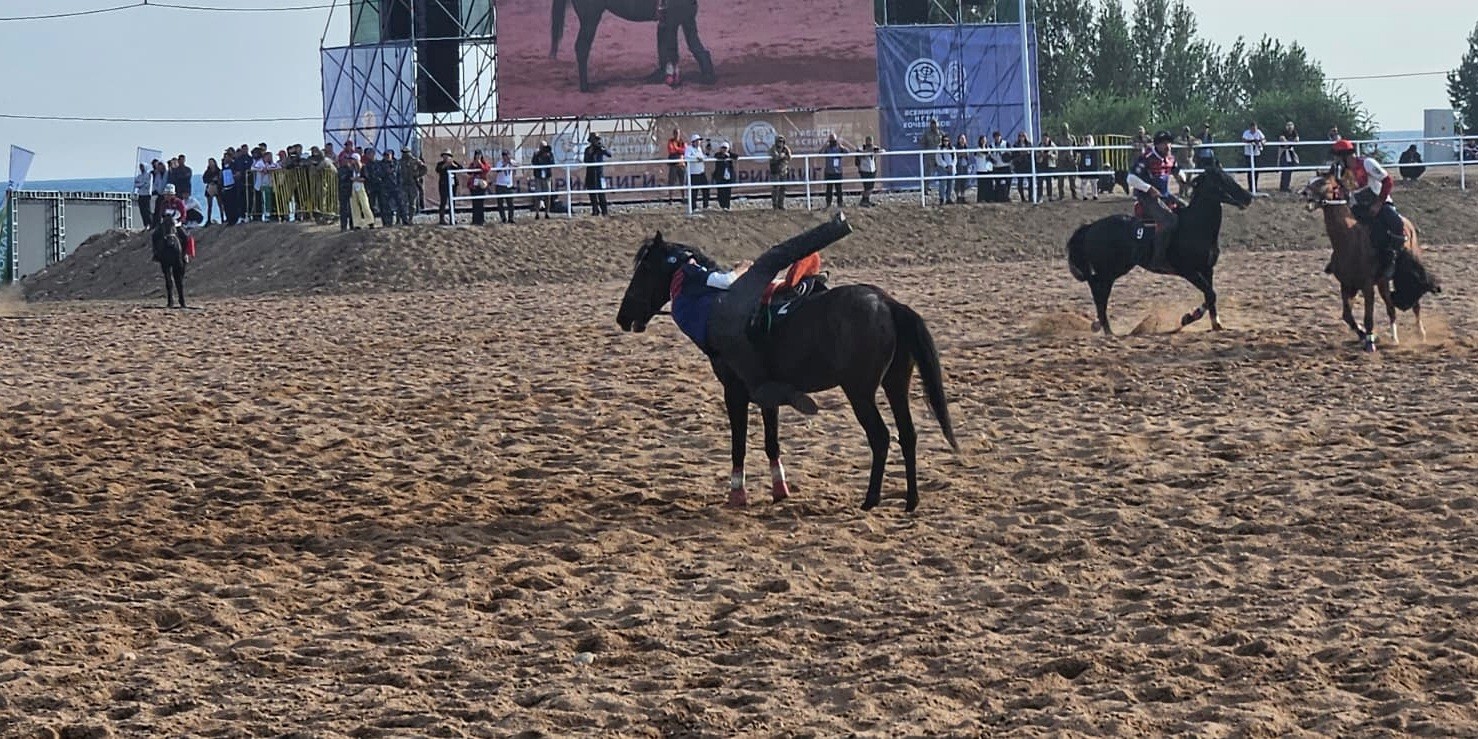
During the second period, U.S. No. 33 Zanen Pitts fell from his horse but quickly recovered.
No. 2 Nick Willert was also back with Team USA, two years after explaining in a 2024 interview with The Times of Central Asia that the Americans combined techniques learned from Central Asian players with Western horsemanship. Finding suitable horses and having enough time to become familiar with them, he said, had always been a major difficulty for the team.
Kyrgyzstan controlled the third period and won it 4–2. Aydarkan Anarbekov led Kyrgyzstan with four points, while Kiyaz Niyazov and Aitbek Zholdoshbek uulu scored three apiece. U.S. captain Ladd Howell accounted for six of the Americans’ seven points.
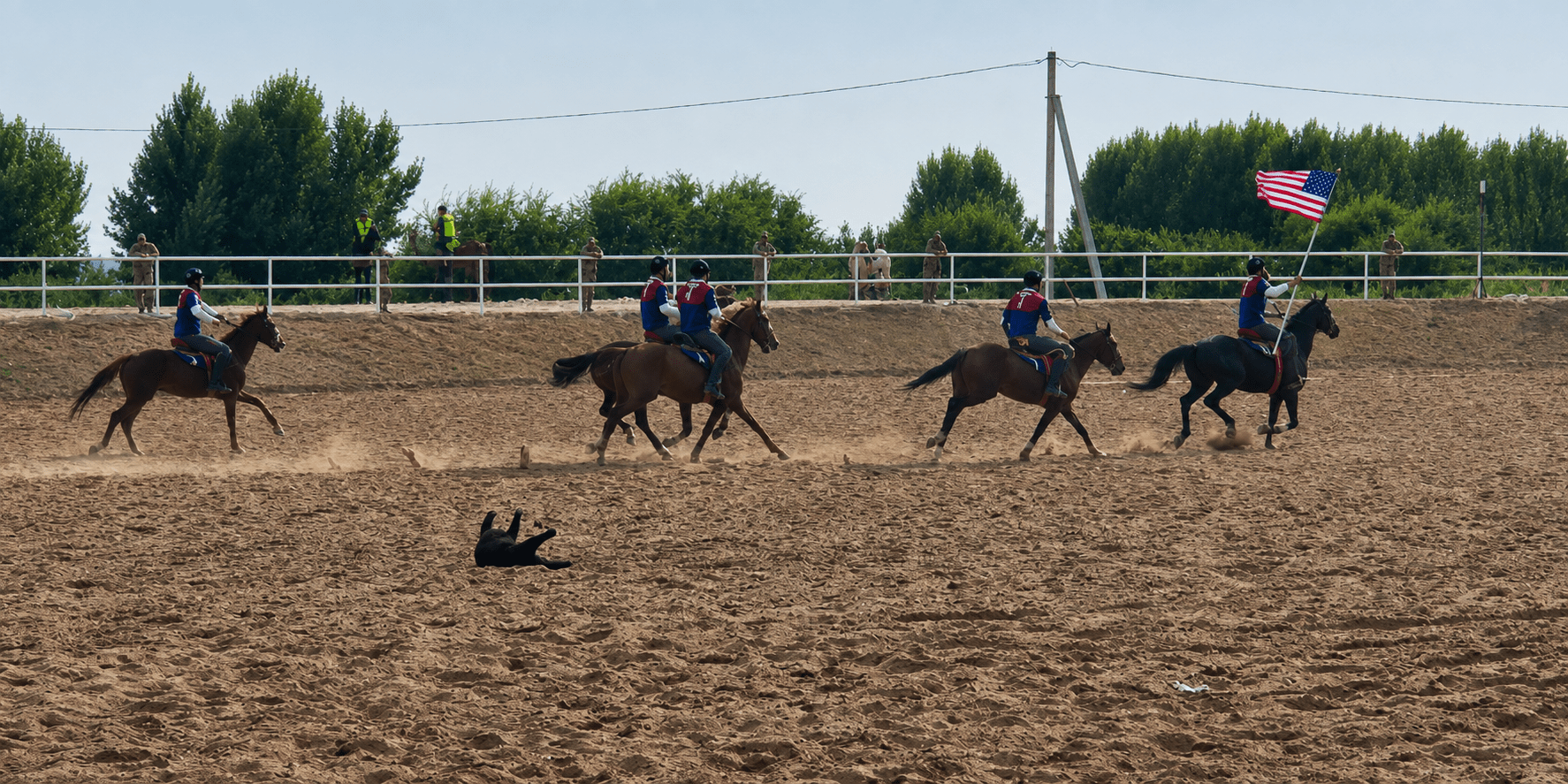
The Americans first entered kok boru at the World Nomad Games in Kyrgyzstan in 2016, when their opening match ended in a 17–7 defeat to Krasnoyarsk. China beat them 20–4 the following day before Kazakhstan completed their tournament with a 15–5 victory. It was an improvised beginning for a team of American horsemen entering a game that most had barely played before arriving in Central Asia.
They returned in 2018 and again lost heavily to a team representing Russia’s Krasnoyarsk region before putting nine points past Kazakhstan in a 20–9 defeat, at the time their highest score against one of the sport’s major powers. The U.S. kok boru team did not compete when the Games moved to Turkey in 2022.
Astana brought them back in 2024, when host Kazakhstan beat the American side 18–0. Against Turkey, however, the U.S. took a 1–0 lead before Turkey equalized by the end of regulation. Neither side scored during 10 minutes of sudden-death overtime, sending the match to a bullit, a one-on-one shootout in which one rider carries the serke toward the tai kazan while an opponent gives chase from behind. Turkey won 2–1 in the first recorded World Nomad Games kok boru match to be decided this way.
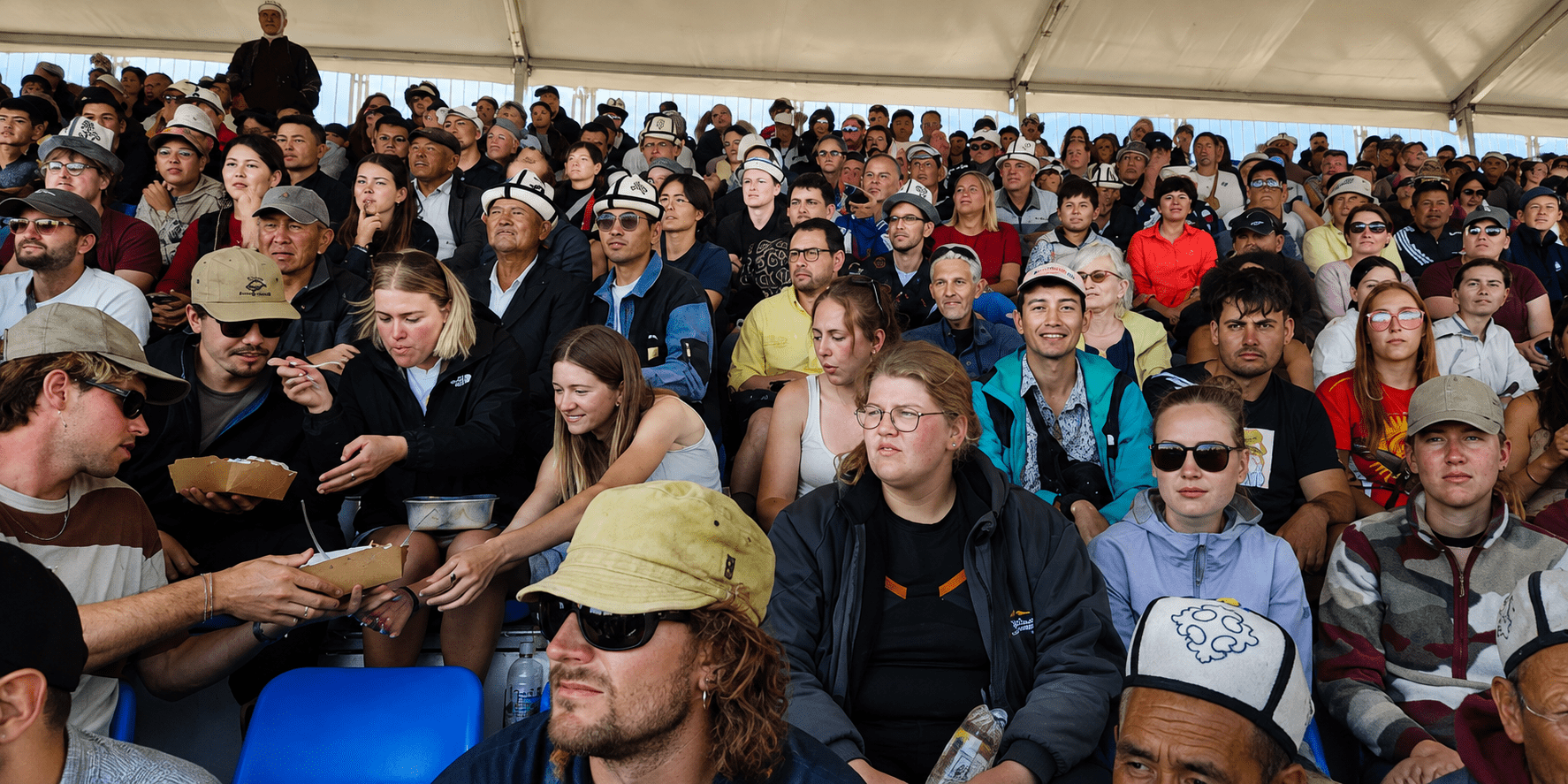
The packed stands remained enthralled as Kyrgyzstan pulled clear. A substantial group of U.S. supporters was visible among the growing Western tourist presence at the Games, while local spectators appeared no less absorbed by American riders who were ultimately emblematic of the West within a sport held so proudly by Kyrgyzstan.
The commentator also briefly drew attention to Team USA’s improvement. Kyrgyz national team player Nurbek Yusupov reached a similar conclusion after the first period, telling Kabar that the Americans had learned the sport well and had “noticeably improved.”
The early American teams were coached by Kyrgyz player Mirlan Srazhdinov, who died during a match in March 2025. Howell and other U.S. players visited his family shortly before this year’s Games.
The team’s repeated journeys to Central Asia are now the subject of an Otter House feature documentary that remains in production, following the American cowboys as they compete in a sport for which there is still little established infrastructure at home.
In Astana, much of the fascination lay in seeing the American cowboys take the field at all. They were still a curiosity in Cholpon-Ata, but this time they scored in every period against the host nation.
Wednesday’s game was part of Group A, which also includes Russia and Uzbekistan. Russia beat Uzbekistan 9–3 in the group’s other opening match, while Tajikistan defeated Hungary 22–4 in Group B.
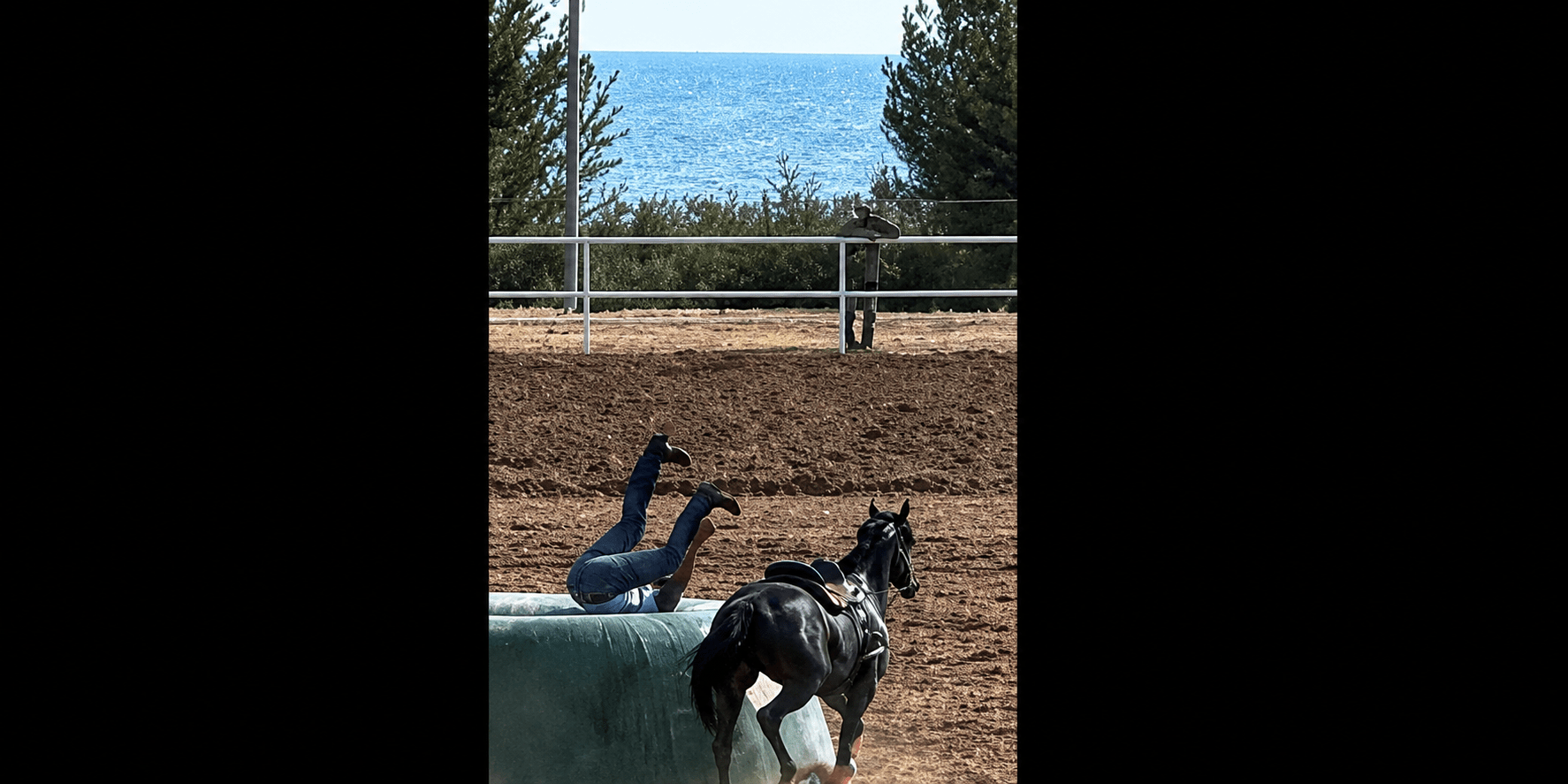
Image: Karen and Howard Bowland
Kyrgyzstan next faces Uzbekistan at 15:00 on September 3, while the United States plays Russia at 16:05. The kok boru tournament continues through September 6. The schedule gives both teams little time to recover before returning to the sand.
For more from our World Nomad Games 2026 special coverage, click here.