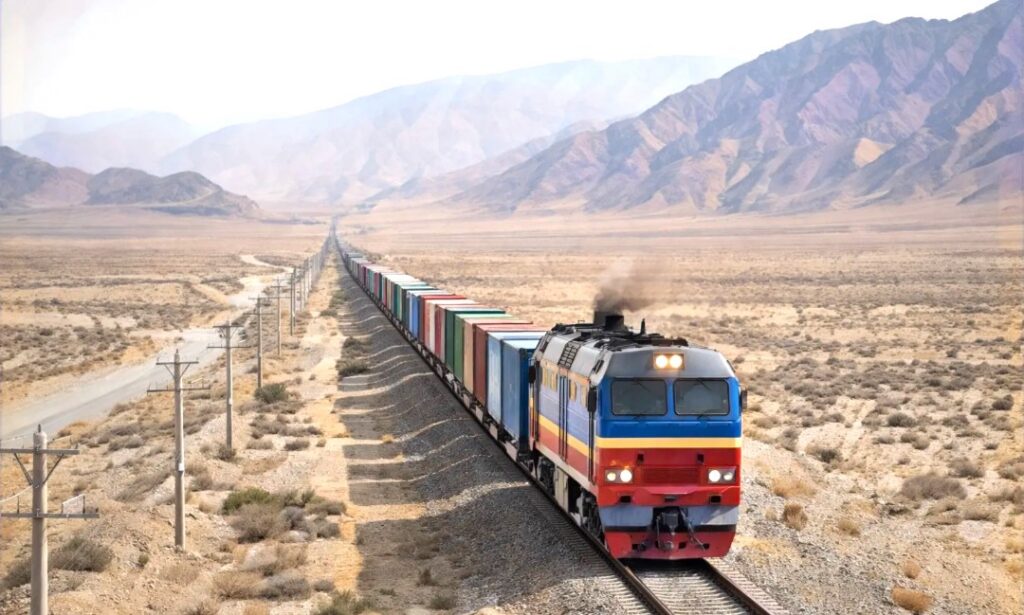
Kyrgyzstan’s rail transport sector is showing sustained growth after years of stagnation. By the end of 2025, the state-owned railway operator Kyrgyz Temir Zholu reported transporting 10 million tons of cargo, the highest volume in the company’s history.
Just a few years ago, the country’s annual rail freight volume hovered around 7 million tons. The turning point came in 2022, and by 2024, the figure had already reached 9.2 million tons. Surpassing the 10 million ton milestone in 2025 has further solidified the sector’s recovery.
Kyrgyz Temir Zholu acknowledged that prior to 2022, the national railway industry was largely unprofitable and in urgent need of systemic modernization. Early reforms focused not on major infrastructure projects but on managerial and institutional restructuring.
“The main focus was on digitalizing processes, minimizing human error, preventing corruption, reducing costs, revising regulatory frameworks, and modernizing repair facilities and railway infrastructure,” the company stated.
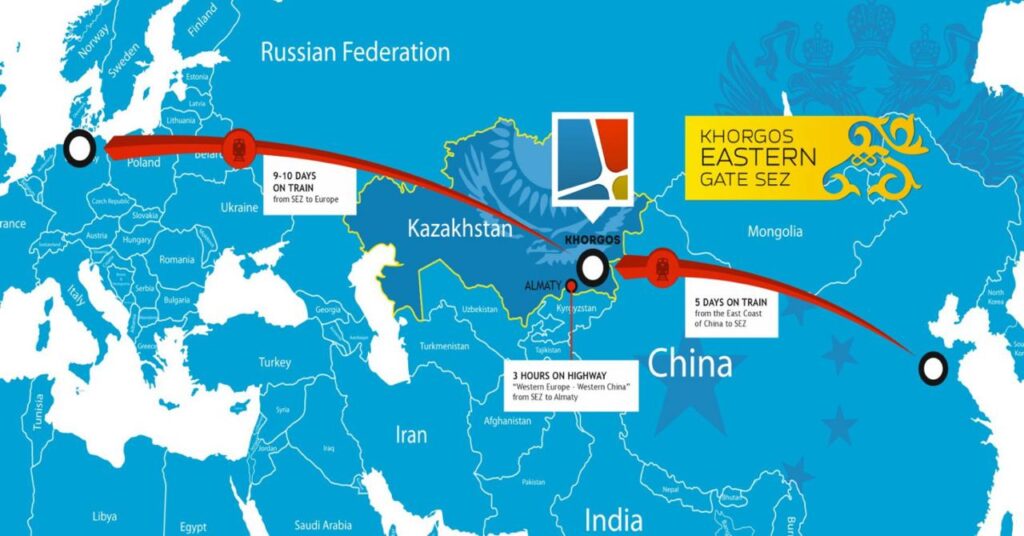
International partnerships have also played a key role in revitalizing the sector. Under its development strategy, Kyrgyzstan opened additional multimodal transport corridors between China and Europe, significantly enhancing the country’s transit potential.
Despite its growth, Kyrgyzstan’s railway network remains one of the most compact in the region. It spans just 425 kilometers and includes 28 operational stations, divided into two geographically isolated segments: north and south.
The northern section, 323.4 kilometers long, connects Rybachye station (in Balykchy) with Turksib in Kazakhstan and serves as a vital corridor for freight headed to Russia and other members of the Eurasian Economic Union. The southern section, 101 kilometers in length, links Kyrgyzstan with Uzbekistan’s rail network.
“Both sections serve strategically important roles by ensuring Kyrgyzstan’s integration with regional transport systems and facilitating international trade,” Kyrgyz Temir Zholu noted.
The growth in freight turnover has been accompanied by an ongoing digital transformation. A key milestone was the development and implementation of the Unified Transport Process Model software system, which consolidates every stage of freight transport, from planning to execution, into a single digital platform.
Further momentum is expected from the construction of the China-Kyrgyzstan-Uzbekistan railway, which is already underway. Authorities view the project as a long-term catalyst for boosting Kyrgyzstan’s transit capacity and strengthening its role in Eurasian logistics chains.