• KGS/USD = 0.01144 0%
  • KZT/USD = 0.00213 0%
  • TJS/USD = 0.10456 0.19%
  • UZS/USD = 0.00008 0%
  • TMT/USD = 0.28490 0%
  • KGS/USD = 0.01144 0%
  • KZT/USD = 0.00213 0%
  • TJS/USD = 0.10456 0.19%
  • UZS/USD = 0.00008 0%
  • TMT/USD = 0.28490 0%
  • KGS/USD = 0.01144 0%
  • KZT/USD = 0.00213 0%
  • TJS/USD = 0.10456 0.19%
  • UZS/USD = 0.00008 0%
  • TMT/USD = 0.28490 0%
  • KGS/USD = 0.01144 0%
  • KZT/USD = 0.00213 0%
  • TJS/USD = 0.10456 0.19%
  • UZS/USD = 0.00008 0%
  • TMT/USD = 0.28490 0%
  • KGS/USD = 0.01144 0%
  • KZT/USD = 0.00213 0%
  • TJS/USD = 0.10456 0.19%
  • UZS/USD = 0.00008 0%
  • TMT/USD = 0.28490 0%
  • KGS/USD = 0.01144 0%
  • KZT/USD = 0.00213 0%
  • TJS/USD = 0.10456 0.19%
  • UZS/USD = 0.00008 0%
  • TMT/USD = 0.28490 0%
  • KGS/USD = 0.01144 0%
  • KZT/USD = 0.00213 0%
  • TJS/USD = 0.10456 0.19%
  • UZS/USD = 0.00008 0%
  • TMT/USD = 0.28490 0%
  • KGS/USD = 0.01144 0%
  • KZT/USD = 0.00213 0%
  • TJS/USD = 0.10456 0.19%
  • UZS/USD = 0.00008 0%
  • TMT/USD = 0.28490 0%

Viewing results 541 - 546 of 12375

Analysis: Three Decades of Parliamentary Reform in Central Asia — and What Changed

Kazakhstan’s President Kassym-Jomart Tokayev announced his reform plans on January 20, including structural changes to the government. Arguably, one of the least consequential of those changes is replacing the current bicameral parliament with a unicameral parliament. Across Central Asia, over the last 35 years, parliaments have repeatedly switched from unicameral to bicameral parliaments, or vice versa, the number of deputies has increased and decreased, and in some cases, parallel bodies have come into existence and later disappeared. Kazakhstan When the Soviet Union collapsed in late 1991, each of the former republics, including the Central Asian countries of Kazakhstan, Kyrgyzstan, Tajikistan, Turkmenistan, and Uzbekistan, had a unicameral, republican Supreme Soviet elected in 1990. These Supreme Soviets continued functioning after independence until 1994, and in the case of Kyrgyzstan and Tajikistan, until 1995. In Kazakhstan, in December 1993, the majority of the 360 deputies in the Supreme Soviet voted to dissolve the body. In March 1994, there were elections to the new parliament (Supreme Kenges) that had 177 seats. During the tumultuous year of 1995, the parliament was dissolved by then-President Nursultan Nazarbayev, who ruled by decree until snap parliamentary elections in December of that year. However, on August 29, 1995, voters approved a new constitution in a national referendum. That constitution created a bicameral parliament with 67 deputies in the Mazhilis, the lower house, and 50 deputies in the Senate, 10 of them directly appointed by the president. Deputies to the Mazhilis were chosen in popular elections. Senators were chosen in indirect elections involving deputies from local, provincial, and municipal councils of large cities. In the snap parliamentary elections of October 1999, 10 seats were added and chosen by party lists, while the original 67 continued to be contested in single-mandate districts. That structure lasted until 2007. Constitutional amendments adopted in late May that year increased the number of seats in the Mazhilis to 107, of which 98 were to be chosen by party lists. Nazarbayev’s Nur-Otan party won all 98 of the party list seats in the August elections. The remaining nine representatives came from the Assembly of Peoples of Kazakhstan, a group representing the various ethnic groups in Kazakhstan that Nazarbayev created in 1995. Eight additional members of the Assembly were given seats in the Senate. The Assembly held its own elections to fill those seats. Kazakhstan conducted a constitutional referendum in June 2022, in part aimed at mollifying discontent that lingered from the mass unrest in early January that year, which left 238 people dead. Some amendments stripped away powers in the executive branch that had accumulated during the 28 years Nazarbayev was president, and more power was given to parliament. Another amendment removed the nine Mazhilis seats reserved for members of the Assembly of Peoples of Kazakhstan. One amendment reduced the number of Senate members appointed by the president back to 10, after it had been raised to 15 under a 2007 amendment. Kyrgyzstan A referendum in Kyrgyzstan on constitutional amendments in October 1994 created a bicameral...
Kazakh Science Ministry Expands Strategic Partnership with AstraZeneca

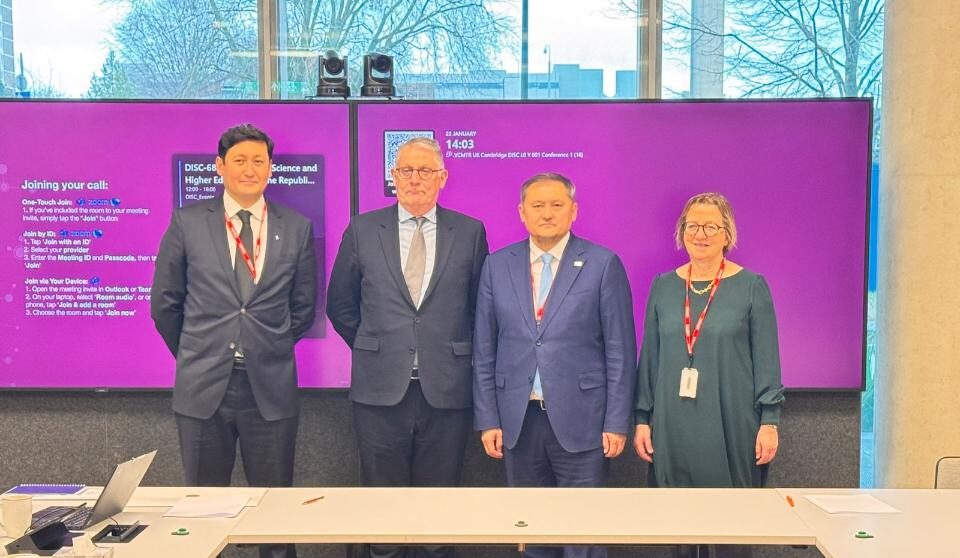
Kazakhstan has entered a new phase of cooperation with British-Swedish pharmaceutical giant AstraZeneca, expanding the partnership beyond healthcare into science, education, and innovation. On January 26, Minister of Science and Higher Education Sayasat Nurbek visited AstraZeneca’s Discovery Centre in Cambridge, the company’s largest global research and innovation hub, where a memorandum of understanding was signed with AstraZeneca Kazakhstan. According to the ministry, the agreement paves the way for new areas of collaboration aimed at strengthening national scientific capacity, introducing advanced medical technologies, and enhancing the long-term sustainability of Kazakhstan’s healthcare system. The partnership will focus on several strategic areas: Real-World Data (RWD) and Real-World Evidence (RWE): Development of advanced data analytics tools to support scientific research, clinical decision-making, and evidence-based healthcare policy. Expansion of the Young Health Program: Prevention of non-communicable diseases among youth and the promotion of responsible health behaviors. Sustainable Development and Economic Diversification: Joint initiatives in environmental protection, green technologies, and sustainable business practices. Early Diagnosis and Healthcare Resilience: Implementation of modern screening methods, specialist training, and development of diagnostic infrastructure. Nurbek highlighted that the memorandum creates new opportunities to integrate research, education, and real-world clinical practice. “It is important not only to develop fundamental science, but also to ensure the transfer of advanced technologies and data into everyday medical practice. This partnership strengthens Kazakhstan’s scientific and biomedical potential,” he said. AstraZeneca has steadily expanded its operations in Kazakhstan in recent years. In April 2024, the Ministry of Healthcare, the Almaty city administration, national investment agency Kazakh Invest, and AstraZeneca signed an agreement on the contract manufacturing of biotechnological products. The initiative supports Kazakhstan’s strategic goal of increasing the share of domestically produced medicines to 50%. In July 2024, AstraZeneca and the state pharmaceutical distributor SK-Pharmacy signed a long-term agreement on local production and technology transfer. According to Maria Shipuleva, CEO of AstraZeneca Kazakhstan, the company’s innovative medicines will be produced at the Nobel Almaty Pharmaceutical Factory. The production portfolio includes treatments for diabetes, chronic heart failure, chronic kidney disease, multiple forms of leukemia, and cancer therapies for breast, ovarian, prostate, and pancreatic cancers.

Switzerland Backs Winter Tourism Development in Kyrgyzstan

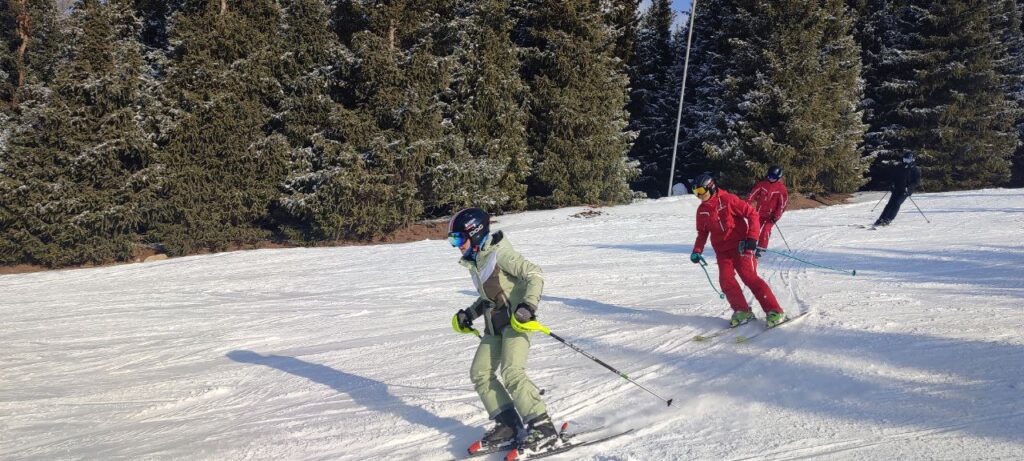
Switzerland is providing practical support to Kyrgyzstan in developing its winter tourism sector, with a strong focus on training professional staff. A program for ski instructor training is currently underway in the city of Karakol, Issyk-Kul region, with Swiss backing. Switzerland's ambassador to Kyrgyzstan, Sirocco Meserli, recently visited a cross-country skiing training session, a sport that has seen systematic development in Kyrgyzstan since 2022. According to Swiss diplomats, specialists from Switzerland have arrived to train Kyrgyz instructors and sports school coaches in modern international methods tailored for children, adults, and tourists. The initiative is part of the Sustainable Winter Tourism project, funded by the Swiss government. The final stage of this year’s training sessions with Swiss experts is currently taking place. [caption id="attachment_42787" align="aligncenter" width="300"] @TCA[/caption] Meserli stated that the program covers skiing techniques, instructional methods, tourist engagement, and safety protocols. “Infrastructure development is important, but qualified personnel who can provide a high level of service and a positive tourist experience play a decisive role,” he said. The project introduces international training standards for instructors at the Admission, Aspirant, and Instructor levels, commonly used in alpine skiing and snowboarding training globally. The Swiss side has emphasized the project’s long-term goals: not only to train instructors but also to lay the foundation for winter sports as a sustainable economic sector, fostering growth in tourist traffic, job creation, and service offerings during the winter season. [caption id="attachment_42788" align="aligncenter" width="300"] @TCA[/caption] Kyrgyz experts see high potential in this area. Approximately 94% of Kyrgyzstan’s territory is mountainous, and new ski resorts are actively being developed across the country. “Skiing is becoming popular. Young people are eager to learn. All instructors speak Kyrgyz, Russian, and English, and demand for training has grown significantly,” ski instructor Daniyar Toichbek told The Times of Central Asia. Karakol remains Kyrgyzstan’s primary ski destination. During the winter season, numerous rental shops operate in the city, where a full set of ski equipment can be rented for about $35, making winter recreation accessible to both locals and international visitors.

Uzbek Chess Surges at Elite Tata Steel Event in Netherlands

Uzbek grandmasters Nodirbek Abdusattorov and Javokhir Sindarov lead in the standings after the half-way mark in the prestigious Tata Steel Chess Tournament, currently underway in the Netherlands. Abdusattorov is in the top position with five and a half points after key victories in the Masters category, benefiting in the sixth round from a blunder by world champion Gukesh Dommaraju that cost the Indian a rook and led him to resign soon afterward. Abdusattorov then beat top seed Vincent Keymer of Germany in the seventh round, though he lost in the next game to Anish Giri of the Netherlands. The Uzbek grandmaster has won four games and drawn three times. Sindarov is unbeaten in second place with five points, after two wins and six draws. Hans Niemann of the United States is third in the standings with four and a half points. Players get one point for a win, half a point for a draw and zero points for a loss. The Tata Steel tournament, one of the toughest chess events of the year, runs from January 16 to February 1 in the seaside town of Wijk aan Zee. Round nine starts on Tuesday. There are a total of 13 rounds.

Tajikistan Reports Strong 8.4% Economic Growth in 2025

Tajikistan’s economy grew by 8.4% in 2025, according to official data released by the country’s statistical authorities, marking one of the strongest growth rates in Central Asia last year. President Emomali Rahmon announced the figure during a year-end address to parliament, saying gross domestic product reached approximately 173 billion somoni, or about $18.8 billion. Official data shows growth was driven primarily by industry, construction, agriculture, and services. The Statistical Agency under the President of Tajikistan reported that industrial production increased by more than 20% year-on-year, supported by mining, metallurgy, cement production, and food processing. Construction activity also expanded, reflecting continued state investment in roads, housing, and energy infrastructure. Authorities highlighted ongoing work on the Rogun hydropower project as a central pillar of economic policy. The dam is expected to secure the domestic electricity supply and boost exports once fully operational, particularly to neighboring markets. Remittances remained a key contributor to economic growth in 2025. Transfers from Tajik migrant workers, most of whom are employed in Russia, rose during the year, supporting household consumption and helping offset external economic pressures. According to the World Bank, remittances have accounted for a very large share of Tajikistan’s GDP, with personal remittances near 48% of GDP in recent years, leaving the economy highly exposed to labor market conditions abroad. Foreign trade turnover also increased. Exports of electricity, metals, and agricultural products rose, while imports of machinery, fuel, and construction materials expanded alongside investment activity. Regional media reported that China, Russia, and neighboring Central Asian states remained Tajikistan’s main trading partners in 2025. Despite the strong headline growth, international financial institutions have continued to flag structural weaknesses. The International Monetary Fund has warned that sustaining high growth will require reforms to improve governance, strengthen the banking sector, and expand the role of the private sector in the economy. Analysts also note that rapid growth partly reflects a low statistical base and heavy reliance on state-led investment. Job creation in higher-value sectors remains limited, contributing to continued labor migration and leaving the economy vulnerable to external shocks. The government has set similarly ambitious targets for 2026, with officials emphasizing industrialization, infrastructure development, and energy exports. Whether Tajikistan can maintain its pace of growth while addressing long-standing structural constraints will remain a key test for the country’s economic trajectory in the coming years.

Oil Eclipse: Power Cuts Expose Fragility of Western Kazakhstan’s CPC-Linked Energy System

Production at the Tengiz oil field in Kazakhstan is set to resume, according to the Ministry of Energy, which has been monitoring the situation since January 18. The restart does not, however, represent a full return to pre-shutdown production levels. While the disruption had no immediate impact on global oil prices, which continued to decline at the time of the outage, it triggered widespread electricity restrictions across western Kazakhstan. On January 21, Brent crude futures fell by 79 cents (1.22%) to $64.13 per barrel, while West Texas Intermediate dropped by 64 cents (1.06%) to $59.72 per barrel, Reuters reported. By then, production at Tengiz had already been suspended for three days, with sources indicating that the downtime would continue for another seven to ten days. From January 20, local authorities in Atyrau and Mangistau regions reported systemic electricity supply restrictions, including altered street-lighting schedules in Atyrau to conserve power, amid reduced gas deliveries to regional generators. The Ministry of Energy did not publicly respond to this until January 22, when, in a statement, it confirmed that gas turbine units at Tengiz were shut down on January 18. At the direction of Minister Erlan Akkenzhenov, his deputy was dispatched to oversee the situation on the ground. A special commission was established to investigate the incident, including representatives from the State Energy Supervision and Control Committee, the Atyrau Region Akimat’s Energy Department, KEGOC JSC, and Tengizchevroil LLP. No official explanation for the shutdown has yet been provided. However, some Kazakh energy experts have publicly speculated about a possible link to recent Ukrainian drone attacks on the infrastructure of the Caspian Pipeline Consortium (CPC), which plays a vital role in exporting Kazakh oil. Oil and gas analyst Olzhas Baidildinov drew a connection between the attacks and cascading effects on domestic energy supply: “They hit the CPC; exports declined, followed by oil production. Gas production declined along with oil. Gas is essential for electricity generation in western Kazakhstan,” he said. Baidildinov added that imported gas and electricity from Russia helped prevent more severe outages, though the energy crunch underscores longstanding vulnerabilities in Kazakhstan’s infrastructure. Baidildinov also referred to recent criticism from President Kassym-Jomart Tokayev, who at the 5th session of the National Kurultai voiced dissatisfaction with the energy sector, signaling potential personnel changes. On January 26, the Ministry of Energy announced that production at Tengiz would restart “in the near future,” and, at 4 a.m., the second-generation plant resumed operations, initiating raw material flows from the Royal field. “The current flow to the ZVP is 2,500 tons per day. Specialists are systematically increasing the supply of multiphase flow (oil and gas) to reach design capacity. At Tengiz, all technical and human resources have been mobilized to inspect energy facilities and power distribution systems,” the ministry stated. Officials emphasized that restoration efforts are under constant oversight. “TCO remains committed to ensuring reliable production and will increase volumes in stages, as infrastructure readiness and safety have been confirmed.” While the ministry has yet to publicly acknowledge...