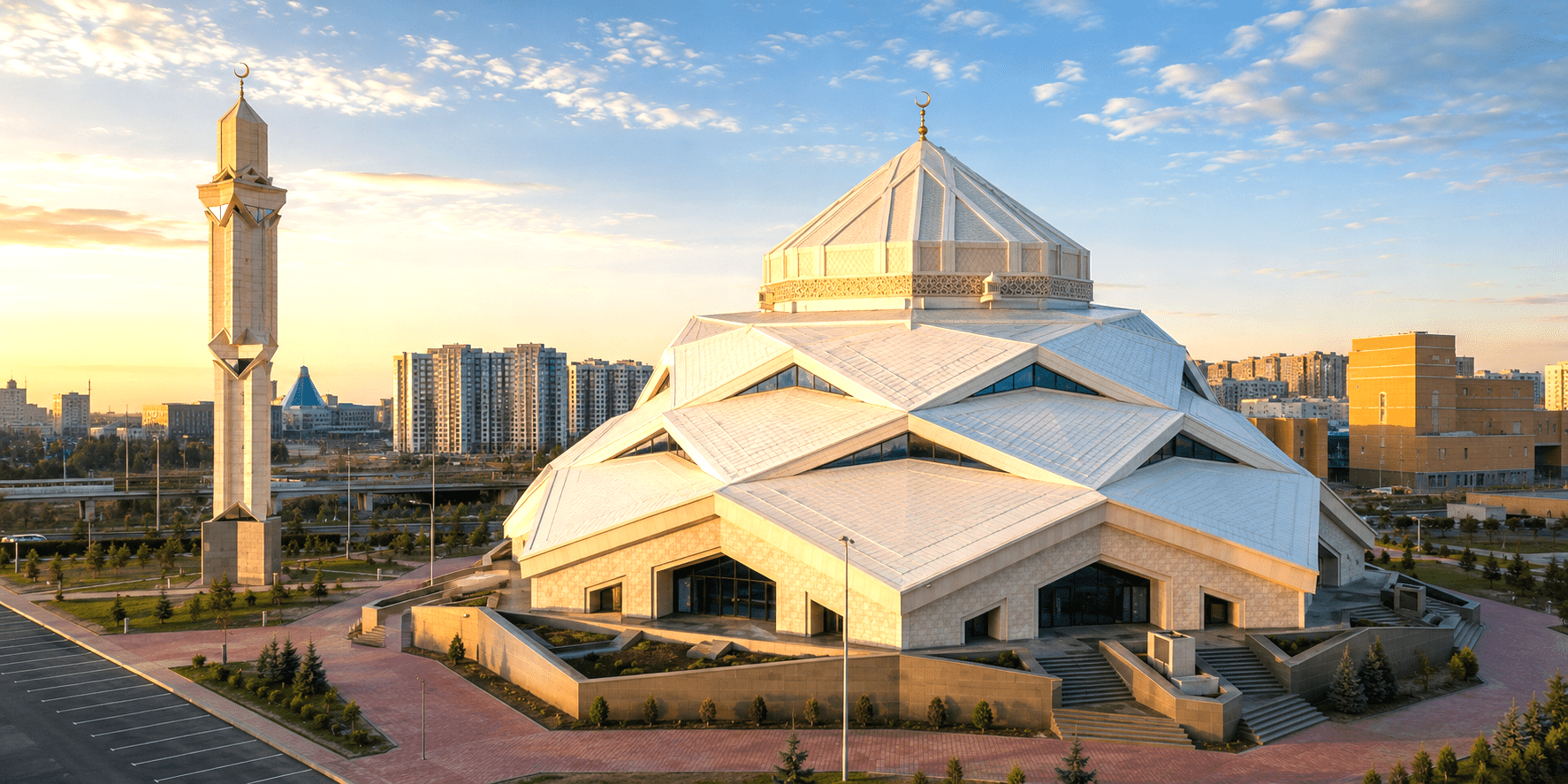
Walking into the Flower of God Mosque in Astana, I was struck not by its grand domes or elaborate decoration, but by the experience of the space itself. Light filtered through the structure in unexpected ways, the interior unfolded gradually, and the building created a sense of calm. It made me wonder: can architecture express cultural meaning without directly reproducing traditional architectural symbols?
This question is becoming increasingly important for Kazakhstan. Over the past two decades, the country has transformed its urban landscape through ambitious construction projects. New airports, museums, universities, financial centers, and religious buildings have reshaped cities, particularly Astana. As Kazakhstan seeks to position itself as a modern state connecting Europe and Asia, architecture has become one of the most visible expressions of national identity.
Yet a fundamental challenge remains unresolved: how can architecture be modern while also expressing what it means to be Kazakh?
National ornaments appear on glass facades and stylized references to the yurt shape public buildings. While these references are familiar and visually recognizable, they do not necessarily create meaningful architecture. Cultural identity cannot simply be attached to a building like decoration.
This approach reflects what architects often describe as direct design: the use of recognizable forms and symbols to communicate meaning. Domes, arches, ornaments, and historical references immediately signal cultural identity because they are easy to recognize. Such architecture can create a strong visual connection to heritage, but relying solely on symbolism risks becoming superficial.
An alternative approach focuses not on reproducing historical forms but on interpreting the values behind them. Instead of asking how a building should look, architects ask how it should feel. Meaning emerges through light, space, movement, and human experience.
Astana’s architectural landscape offers several examples of how national identity has been translated into built form.
The Baiterek Monument offers perhaps the clearest example of symbolic architecture in Kazakhstan. Drawing on the legend of the Tree of Life and the Samruk bird, it transforms a national myth into a physical structure that is immediately recognizable. Its meaning is communicated directly through form and narrative, making it one of the country’s most powerful architectural symbols.
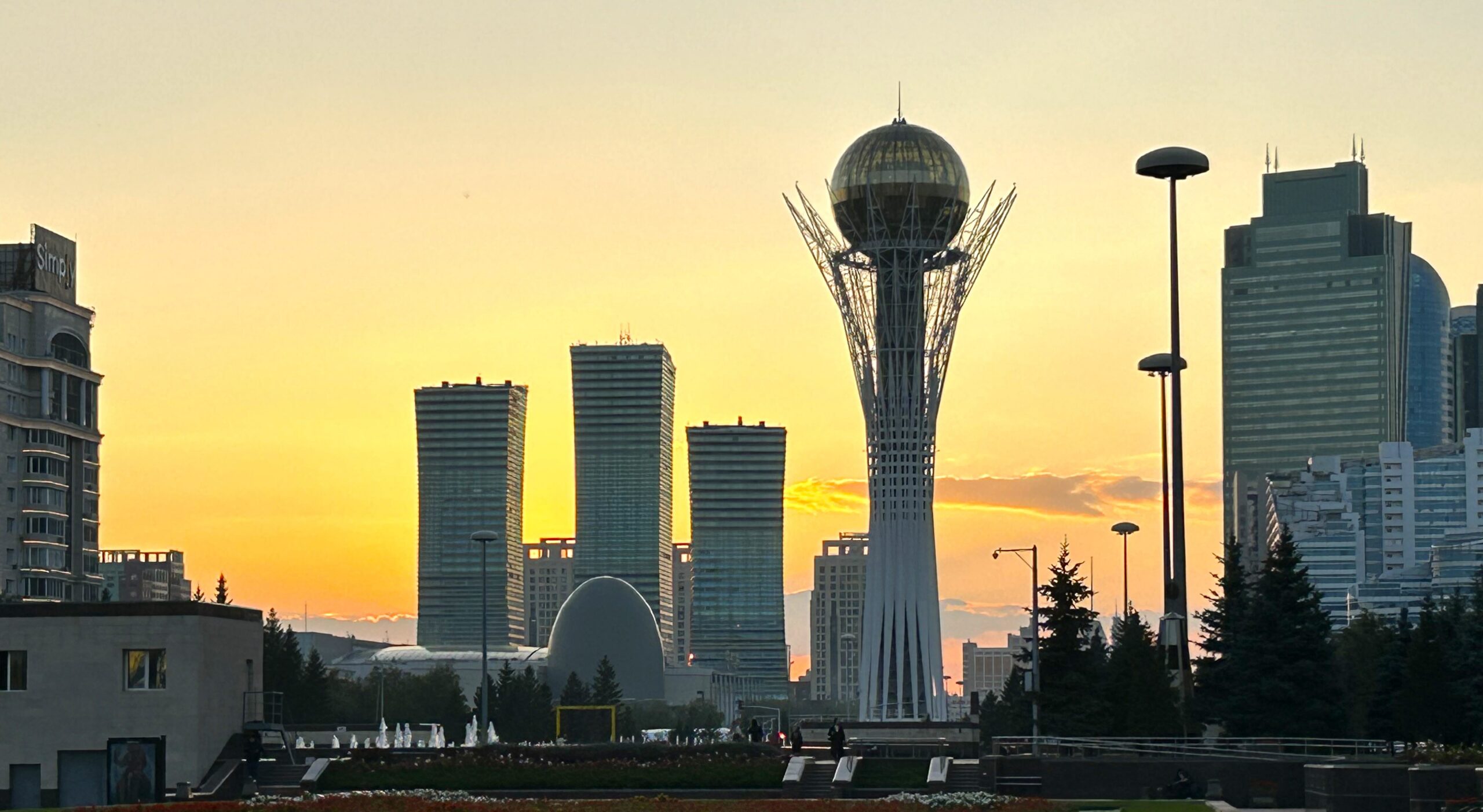
Baiterek, Astana; image: TCA
Yet the monument also raises an important question. While visitors can easily recognize the symbolism, do they experience the myth itself? Does the ascent through the tower evoke the journey up the Tree of Life, or does the golden sphere create the sensation of entering the sacred egg of the Samruk bird? The symbolism is clearly represented, but the extent to which it is translated into a spatial experience remains open to interpretation.
Khan Shatyr occupies a unique place in Kazakhstan’s architectural landscape. Its tent-like form directly references the nomadic heritage of the steppe, making it one of the country’s most recognizable cultural symbols. Yet the project also raises an important question: is reproducing a familiar image enough to convey a cultural experience?
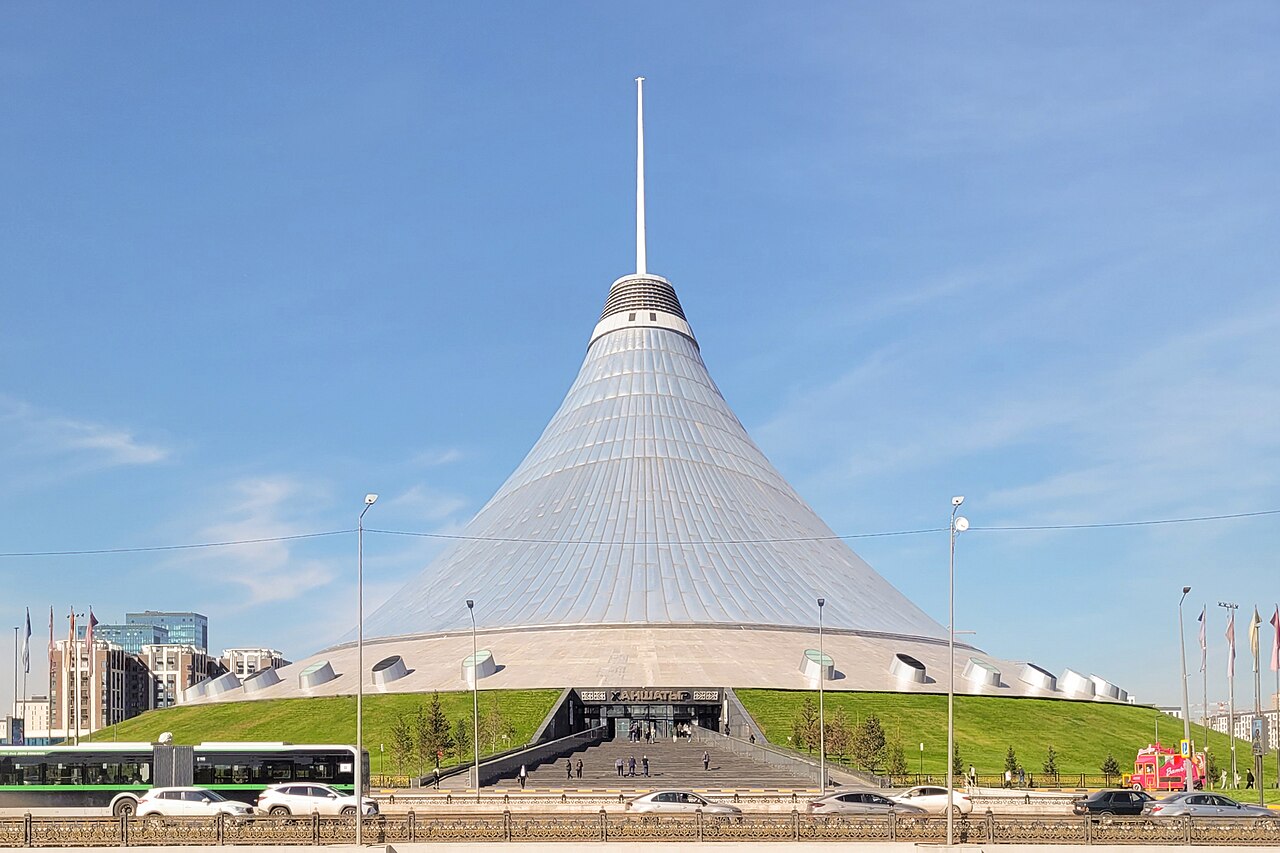
Khan Shatyr, Astana; image: Bgag
Despite its obvious reference to the traditional yurt, the interior of Khan Shatyr is organized more according to the logic of a contemporary shopping and entertainment center than the spatial principles of a nomadic dwelling. The building successfully transforms a national symbol into an architectural icon, but it also illustrates the limits of that approach. Visitors are invited to recognize the image of the tent, but not necessarily to experience the social and spatial qualities that made it meaningful.
The question, then, is what happens when architecture begins not with a symbol, but with the values, experiences, and relationships that the symbol once represented.
The Flower of God Mosque offers a different approach. Here, cultural meaning is woven into the organization of space, the movement of light, and the experience of worship itself.
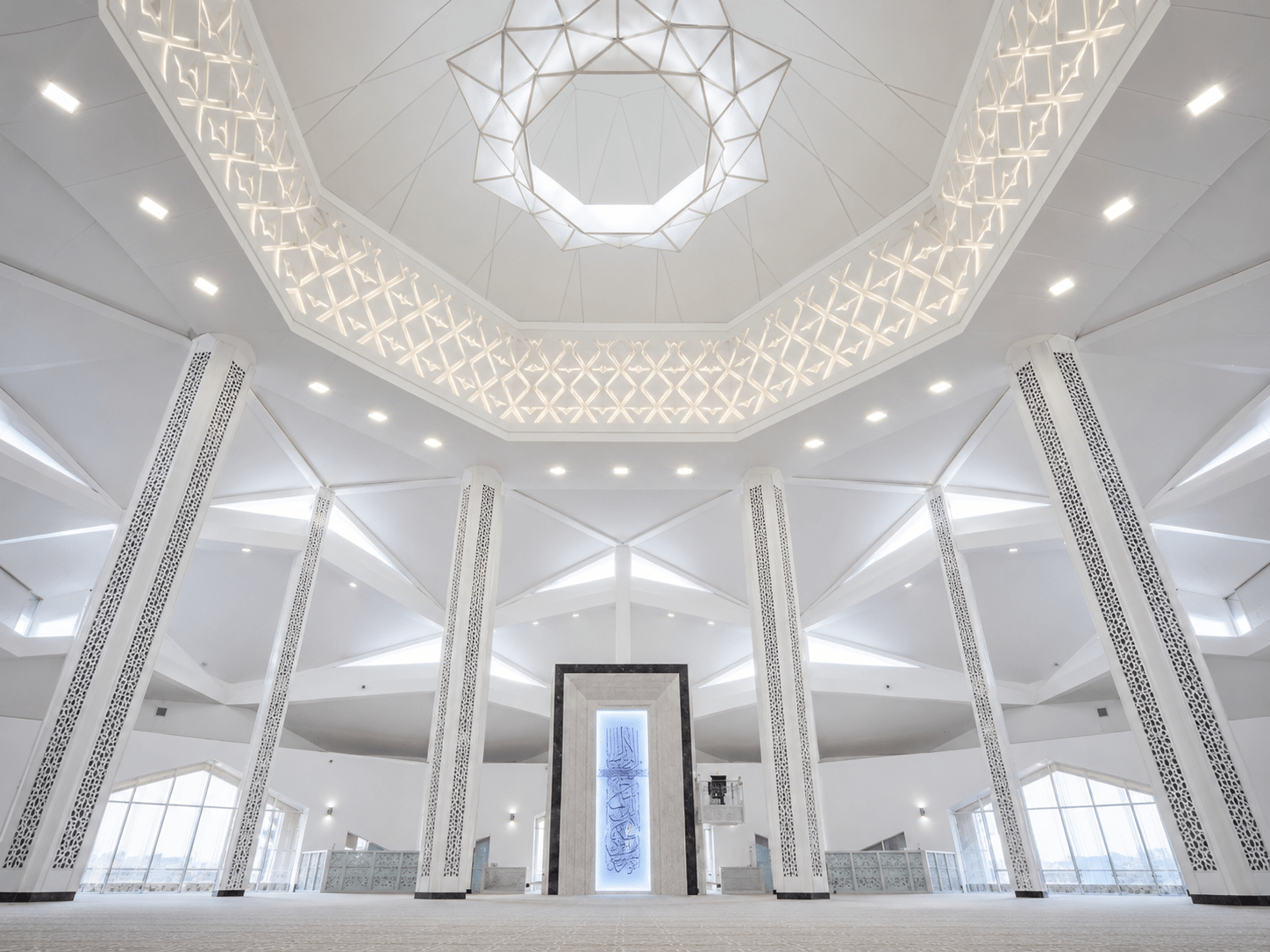
The Flower of God Mosque, Astana; image: TCA
At the heart of the design is a centralized octagonal prayer hall surrounded by a series of geometric layers and faceted petals that radiate outward like a flower opening toward the sky. Rather than functioning as decoration, the geometry organizes the entire spatial experience. Every axis, structural element, and enclosing surface reinforces the centrality of the prayer space and creates a strong sense of unity, focus, and contemplation.
The petal-like structure allows natural light to enter from multiple directions, shaping an atmosphere of spiritual reflection throughout the day. The planes of the petals also accommodate photovoltaic panels, enabling the mosque to generate renewable energy. In this way, the flower is not merely a symbol but an architectural system that integrates geometry, light, structure, and sustainability. The project demonstrates how cultural meaning can emerge from the performance of a building as much as from its appearance, translating ideas of growth, harmony, and reverence for nature into both spatial experience and environmental responsibility.
The challenge of balancing tradition and innovation is not unique to Kazakhstan. One particularly compelling example can be found in Dubai’s Mosque of Mohamed Abdulkhaliq Gargash, designed by Dabbagh Architects. The idea is to focus on the spatial and functional meanings of traditional elements in Islamic architecture. The architects sought to create a gradual transition from the distractions of the material world to a state of contemplation and prayer.
Through a carefully sequenced series of outdoor and indoor spaces, changing qualities of natural light, and subtle shifts between public and sacred zones, the building prepares worshippers for a spiritual experience. Traditional Islamic geometry and calligraphy remain present, but they are reinterpreted in a different way. The project demonstrates how architecture can preserve cultural and religious meaning by translating values such as reflection, connection to the divine, and preparation for worship into contemporary spatial experience.
Kazakhstan has an opportunity to develop a similar architectural language. Nomadic culture contains ideas that remain highly relevant today: adaptability, mobility, hospitality, connection to nature, and efficient use of resources. These qualities can inspire contemporary architecture in ways that go beyond ornamentation.
Rather than replicating the shape of a yurt, architects could create gathering spaces that reflect the social role of the shanyrak as a place of community and exchange. Instead of applying decorative patterns to facades, buildings could express the openness of the steppe through spatial continuity and stronger relationships between interior and exterior environments. The logic of nomadic mobility could inspire flexible public spaces, modular construction systems, and adaptable structures designed to respond to changing urban needs.
As Kazakhstan continues to define its place in the world, architecture will play an important role in shaping how the nation presents itself.
The future of Kazakhstan’s architectural identity may lie not in reproducing historical forms, but in translating the enduring values of the steppe into contemporary spaces. When architecture moves beyond symbols and focuses on experience, culture becomes something people do not simply see, but genuinely feel.