• KGS/USD = 0.01144 0%
  • KZT/USD = 0.00212 0%
  • TJS/USD = 0.10454 -0.1%
  • UZS/USD = 0.00008 0%
  • TMT/USD = 0.28571 0.28%
  • KGS/USD = 0.01144 0%
  • KZT/USD = 0.00212 0%
  • TJS/USD = 0.10454 -0.1%
  • UZS/USD = 0.00008 0%
  • TMT/USD = 0.28571 0.28%
  • KGS/USD = 0.01144 0%
  • KZT/USD = 0.00212 0%
  • TJS/USD = 0.10454 -0.1%
  • UZS/USD = 0.00008 0%
  • TMT/USD = 0.28571 0.28%
  • KGS/USD = 0.01144 0%
  • KZT/USD = 0.00212 0%
  • TJS/USD = 0.10454 -0.1%
  • UZS/USD = 0.00008 0%
  • TMT/USD = 0.28571 0.28%
  • KGS/USD = 0.01144 0%
  • KZT/USD = 0.00212 0%
  • TJS/USD = 0.10454 -0.1%
  • UZS/USD = 0.00008 0%
  • TMT/USD = 0.28571 0.28%
  • KGS/USD = 0.01144 0%
  • KZT/USD = 0.00212 0%
  • TJS/USD = 0.10454 -0.1%
  • UZS/USD = 0.00008 0%
  • TMT/USD = 0.28571 0.28%
  • KGS/USD = 0.01144 0%
  • KZT/USD = 0.00212 0%
  • TJS/USD = 0.10454 -0.1%
  • UZS/USD = 0.00008 0%
  • TMT/USD = 0.28571 0.28%
  • KGS/USD = 0.01144 0%
  • KZT/USD = 0.00212 0%
  • TJS/USD = 0.10454 -0.1%
  • UZS/USD = 0.00008 0%
  • TMT/USD = 0.28571 0.28%

New U.S. Ambassador to Kazakhstan to Build “Momentum” on Trade, Diplomacy

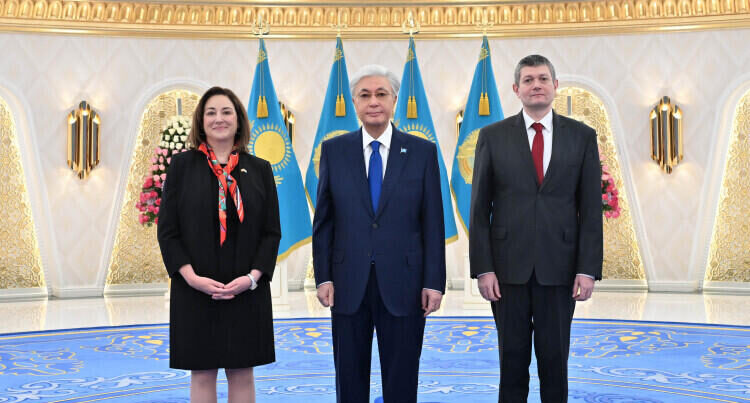
Julie Stufft, the new U.S. ambassador to Kazakhstan, is a career diplomat who has said her goal is to ensure that U.S. companies in the Central Asian country have not just an “even playing field” but are also “the partners of choice” in a region where Russia and China are the dominant trading partners.

Stufft, who made those remarks during her confirmation hearing in the U.S. Congress in July, presented her credentials to President Kassym-Jomart Tokayev of Kazakhstan in Astana on Friday. She has previously worked on COVID-19 travel policies and U.S. visa processing worldwide and was most recently deputy assistant to the president and executive secretary of the National Security Council. Stufft has served as deputy chief of mission in the U.S. Embassies in Moldova and Djibouti, and was also a diplomat in Russia, Ethiopia, and Poland.

One of Stufft’s daughters, Nora, is a student at the U.S. Air Force Academy in Colorado.

After the credentials ceremony in Astana, Stufft said Tokayev and U.S. President Donald Trump have a “very close relationship” and that there was impetus for further collaboration between Kazakhstan and the United States.

“We have so much momentum from President Tokayev´s recent visit to Washington that we have to build on this,” Stufft said in reference to a November summit hosted by Trump and attended by the leaders of Kazakhstan, Kyrgyzstan, Tajikistan, Turkmenistan, and Uzbekistan.

The meeting focused on securing big trade deals as well as U.S access to minerals in Central Asia that are critical to energy and other industries. Another U.S. goal is to counter the longstanding influence of Russia and China in Central Asian countries, whose leaders seek to balance their relationships with the big powers.

Last month, in another round of diplomatic outreach, Trump invited Tokayev and President Shavkat Mirziyoyev of Uzbekistan to attend the G20 summit in Miami later this year.

In addition to holding large reserves of critical minerals, Kazakhstan is a top uranium producer and a major oil exporter. China and Russia are its biggest overall trading partners. While U.S. trade with Kazakhstan is relatively small in comparison, the relationship is growing.

“My goal as ambassador, if confirmed, would be to make sure that U.S. companies have an even playing field so that they can do investment in Kazakhstan, and also that U.S. companies are the partners of choice in Kazakhstan, instead of Chinese or other companies,” Stufft said in her confirmation hearing last year.

The previous U.S. ambassador to Kazakhstan, Daniel Rosenblum, resigned from the post in January 2025.

Insider’s View – Primary Healthcare 2030: Why Uzbekistan Is Shifting from Hospitals to Prevention and Local Care

For decades, health systems across the world have followed a familiar path: investing in hospitals, expanding specialized care, and treating disease when it becomes severe. Yet evidence from both high- and middle-income countries increasingly shows that this model is costly, inefficient, and poorly suited to today’s disease burden. Uzbekistan’s health reform agenda through 2030 reflects this global rethinking by placing primary healthcare and prevention at the center of the system.

The logic is straightforward. The more health problems are resolved at the primary care level, before complications arise, the less pressure there is on hospitals, and the lower the overall cost of care. This principle underpins the World Health Organization’s approach to Universal Health Coverage (UHC) and is now explicitly shaping Uzbekistan’s national strategy. According to the report, “A reformed service delivery system in Uzbekistan should be able to manage about 80% of the population’s outpatient and 85% of inpatient health needs at the primary health care/district level.”

The cost of a hospital-centered model

Noncommunicable diseases (NCDs) are the main driver behind this shift. In Uzbekistan, as in many countries in the WHO European Region, cardiovascular disease, diabetes, cancer, and chronic respiratory conditions account for the majority of premature mortality. WHO assessments note that the burden of these conditions is rising and that health systems built around inpatient treatment tend to intervene too late, when care is most expensive, and outcomes are poorest.

Economic estimates cited in national policy discussions place annual losses associated with NCDs at around $1 billion. These losses are not limited to public spending; they include foregone productivity, long-term disability, and avoidable premature deaths. Without early detection of hypertension, elevated blood glucose, and cholesterol at the primary care level, health systems end up financing complications rather than preventing disease.

Diabetes illustrates this dynamic clearly. International projections show a steady rise in adult diabetes prevalence in Uzbekistan through 2045. The most cost-effective interventions, including routine screening, lifestyle counseling, and continuous follow-up, are delivered through primary healthcare. Dialysis, stroke rehabilitation, and complex inpatient care are not.

Uzbekistan 2030: from strategy to system design

Uzbekistan’s National Health System Strategy 2030 translates this logic into concrete system objectives. Developed with support from the World Bank and international partners, the strategy emphasizes integrated service delivery, strengthened family medicine, and expanded preventive services throughout the country.

A central performance objective is resolving the majority of patient needs at the primary healthcare level. This is not about convenience alone; it is about reallocating resources toward early intervention and chronic disease management, while allowing hospitals to focus on cases that genuinely require inpatient treatment.

Prevention is being operationalized through specific policy instruments. The strategy includes expanded access to preventive services and micronutrient support, particularly for children and vulnerable groups, with an expected reduction in the prevalence of selected infectious and noncommunicable conditions. This marks a shift from abstract commitments to prevention toward interventions with measurable public health impact.

Progress toward UHC provides additional context. According to WHO and World Bank reporting, Uzbekistan’s UHC service coverage index increased from the mid-50s in 2000 to the mid-70s by 2021, reflecting expanded access to essential health services. The next phase of progress depends less on hospital capacity and more on the quality, accessibility, and continuity of primary care.

Financial protection and primary care

Uzbekistan’s UHC commitments through 2027 include raising service coverage further and reducing out-of-pocket spending, which remains high by international standards. Such a reduction is unlikely without a strong primary care system and a clearly defined, guaranteed benefits package. Otherwise, households continue to rely on self-treatment, private services, or hospital admissions, all of which drive out-of-pocket costs upward.

Recent reforms to outpatient medicine coverage illustrate how primary care can improve financial protection. Under new arrangements, the State Health Insurance Fund reimburses essential medicines for priority NCDs at the primary healthcare level, initially piloted in Syrdarya region and now expanding nationwide. WHO Representative in Uzbekistan, Dr. Asheena Khalakdina, described this reform as one that “paves the way for greater affordability and equitable access to essential medicines” and noted its importance for improving treatment adherence and outcomes.

Institutional reform: making primary care the entry point

Regulatory reforms adopted in 2025 reinforce this strategic direction. A presidential resolution on healthcare reform outlines a reorganization of service delivery so that primary healthcare becomes the main entry point into the system, supported by updated referral pathways and financing mechanisms.

WHO Europe has described Uzbekistan’s reform trajectory as one that provides “practical guidance and timely recommendations on how to proceed with the health system reform rollout,” emphasizing the importance of sequencing, institutional clarity and workforce readiness.

Policy dialogues hosted by the Ministry of Health and WHO have also focused on human resources for health, particularly the training and deployment of family doctors and nurses, who are critical to effective community-level prevention and chronic disease management.

Global lessons: prevention works

Uzbekistan’s approach aligns closely with international experience. The Declaration of Alma-Ata, adopted in 1978, stated that primary healthcare “forms an integral part both of the country’s health system… and of the overall social and economic development of the community.”

Subsequent experience has reinforced this principle. Countries that invested consistently in primary care and prevention achieved sustained reductions in avoidable mortality and financial hardship. Thailand’s UHC reform, built on a strong primary care network and a guaranteed benefits package, sharply reduced out-of-pocket spending over two decades. Brazil’s Family Health Strategy demonstrated that team-based primary care with household outreach could significantly reduce infant mortality at the municipal level. Even highly digitalized systems, such as Estonia’s, show that continuity and coordination anchored in primary care improve efficiency and patient outcomes.

From hospitals to health

The lesson across countries and income levels is consistent: prevention and primary healthcare deliver durable health gains at a lower cost than hospital-centered systems. For Uzbekistan, Primary Healthcare 2030 is not a rejection of hospitals, but a rebalancing of the system. Hospitals remain essential, but only when primary care is strong enough to prevent avoidable admissions.

As WHO Europe leadership has repeatedly emphasized, achieving UHC requires sustained political commitment, integrated service delivery, and a focus on equity and quality across the life course. With NCDs driving the majority of deaths, continuing to prioritize hospital expansion without investing in primary care would mean paying more to treat consequences rather than causes. The shift toward prevention, early detection, and local care is therefore not only a health reform but a fiscal, social, and economic necessity.

Kyrgyzstan Sets Higher Capital Thresholds for Commercial Banks

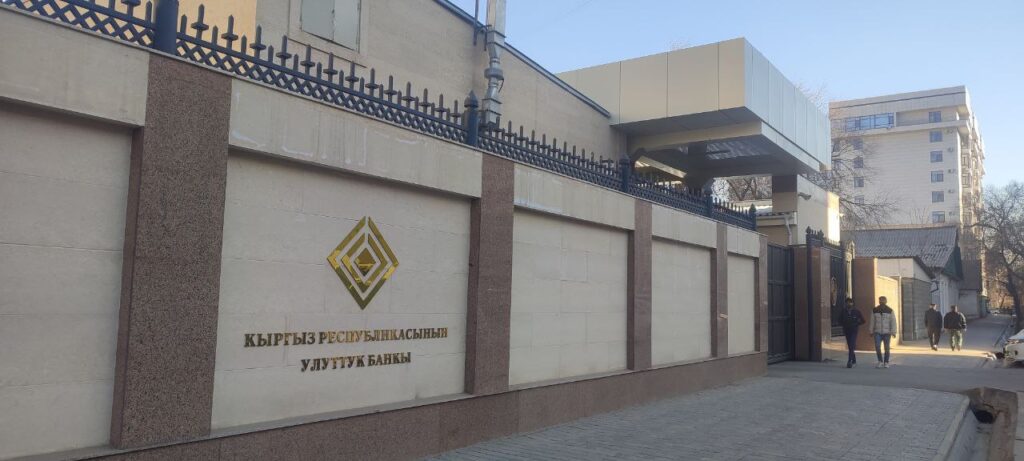
The National Bank of the Kyrgyz Republic (NBKR) has approved new minimum capital requirements for commercial banks, including foreign bank branches, which will take effect in January 2026. Under the revised regulations, the minimum authorized capital must reach $34.5 million by 2030.

The central bank stated that the increase is intended to foster a more resilient and stable banking sector. To mitigate the impact on existing financial institutions, the capital thresholds will be raised incrementally over the coming years.

According to the schedule, commercial banks must raise their authorized capital to:

  • $9 million by July 1, 2026
  • $11.5 million by July 2026
  • $17.1 million by July 2027
  • $23 million by July 1, 2028
  • $28.6 million by July 1, 2029
  • $34.5 million by July 2030

Systemically important banks, defined as the largest players in the market, will face stricter standards. These institutions must raise their authorized capital to $91.5 million. If designated as systemically important, a bank will have one year to meet the authorized capital requirement and three months to bring its regulatory capital in line, according to the NBKR.

Previously, the minimum authorized capital for commercial banks stood at $9.1 million, and $22.8 million for systemically important institutions. The NBKR said the revised requirements reflect the growth of both the national economy and the banking sector.

The banking industry in Kyrgyzstan is expanding rapidly. As of the end of October 2025, the sector’s total assets reached $12.8 billion, an increase of 38% since the beginning of the year. Customer deposits climbed to $9.1 billion, marking a 35% rise. The growth is largely attributed to higher interest income from loans.

There are currently 21 commercial banks and 306 branches operating across the country.

Uzbekistan’s International Reserves Hit Record $66.3 Billion

Uzbekistan’s international reserves surged in 2025, rising by $25.1 billion to reach a record $66.3 billion as of January 1, 2026, according to the Central Bank of Uzbekistan. This 61% increase compared to the start of the year was primarily driven by rising global gold prices, although foreign currency reserves also grew significantly.

In December alone, gold and foreign exchange reserves increased by $5.08 billion, an 8.3% month-on-month gain. This marks the highest reserve level since the Central Bank began publishing official statistics in 2013.

Gold remained the dominant contributor to the increase. According to the Central Bank, the value of gold in the country’s reserves rose by more than $4.23 billion in December, reaching $55.09 billion. The physical volume of gold holdings also expanded, growing from 12.2 million to 12.6 million troy ounces, an increase of 0.4 million ounces in just one month.

Earlier in 2025, Uzbekistan’s gold strategy diverged from global trends. In September, the World Gold Council reported that Uzbekistan was the only country to record net gold sales. While most central banks were increasing their reserves, the Central Bank of Uzbekistan reduced its holdings during that period.

U.S. Expands Visa Bond Policy for Kyrgyzstan, Tajikistan and Turkmenistan

The United States has expanded a visa bond policy that increases the upfront cost of short-term travel for citizens of Kyrgyzstan, Tajikistan, Turkmenistan, and dozens of other countries. Under the policy, applicants for B-1 and B-2 business and tourism visas may be required to post bonds of $5,000, $10,000, or $15,000. The State Department set out the latest rules and the country list on its visa bond policy page.

The program now covers nationals from 38 countries. In Central Asia, it was applied to Turkmenistan on January 1, and is scheduled to extend to Kyrgyzstan and Tajikistan starting from January 21. The bond is refundable when travelers follow visa terms and leave on time, but it can tie up large sums for the duration of a trip and may put U.S. travel beyond reach for many applicants.

Turkmenistan, where emigration is tightly controlled, sees low numbers of its citizens entering the United States. Department of Homeland Security data for Fiscal Year 2024 indicates that the total number of Turkmen nationals issued B-1/B-2 visas to the U.S. was 1,759. Tajikistan, meanwhile, saw 1,772 visas granted, and Kyrgyzstan 9,625. By way of comparison, Saudi Arabia saw over 54,000 visas granted.

The expansion has already triggered public pushback in Kyrgyzstan. In a post on X on Thursday, Edil Baisalov, the deputy chairman of Kyrgyzstan’s Cabinet of Ministers and a prominent ally of President Sadyr Japarov, urged the Kyrgyz authorities to review visa-free access for U.S. citizens. Kyrgyzstan currently allows U.S. travelers to enter without a visa for stays of up to 30 days.

“I believe that we should initiate a review of our visa-free regime for U.S. citizens following the new visa requirements announced yesterday by the State Department, under which Kyrgyz citizens are required to pay a visa deposit of up to $15,000 when submitting visa applications,” Baisalov wrote. “Visa policy is a matter of parity and mutual respect. If such high barriers are introduced for our citizens, we cannot pretend that nothing has happened.”

Baisalov did not specify precisely what changes Kyrgyzstan might pursue, and any escalation risks provoking a dispute with a far stronger partner. The remarks also come as Kyrgyzstan and other Central Asian governments seek closer engagement with President Donald Trump’s administration while managing competing pressures from Russia and China.

The measure is a setback for Kyrgyz efforts to ease travel barriers with the United States. Kyrgyz Foreign Minister Zheenbek Kulubaev raised visa issues with U.S. Deputy Secretary of State Christopher Landau during a meeting on the sidelines of the U.N. General Assembly in New York in September.

So far, Tajikistan has not matched Kyrgyzstan’s public stance, with no prominent statement appearing on Tajik government channels addressing the bond requirement or signaling reciprocity. Discussion has instead focused on what the new U.S. rules mean for applicants, the implementation timeline, and the bond amounts that may be set at the interview stage.

For Turkmenistan, the requirement adds another hurdle to an already narrow path to U.S. travel. The country’s internal controls and the difficulty of obtaining U.S. visitor visas mean the new deposits will likely concentrate travel among an even smaller group of applicants with significant accessible funds.

The bond policy also creates logistical constraints for those required to post deposits. Bonded travelers must enter the United States through designated airports rather than any international gateway. The designated airports are Boston Logan, John F. Kennedy International Airport in New York, Washington Dulles, Newark, Atlanta, Chicago O’Hare, and Los Angeles, along with Toronto Pearson and Montréal–Trudeau in Canada.

The visa bond program has expanded rapidly, with the list of countries subject to visa bonds growing from 13 to 38 as part of a wider tightening around immigration and visa compliance, including steps aimed at deterring overstays. In Fiscal Year 2024, Mexico recorded 52,083 B-1/B-2 overstays, Venezuela 19,041, and Haiti 15,981, compared with 643 for Kyrgyzstan, 140 for Tajikistan, and 320 for Turkmenistan, according to U.S. Customs and Border Protection data. Although the three Central Asian countries affected send relatively few visitors to the United States, their inclusion reflects a focus on overstay rates by percentage rather than raw overstay numbers.

For applicants, the requirement adds uncertainty late in the process. The bond is imposed only after an applicant is found otherwise eligible, but it can still function as a practical barrier. In economies where access to dollars is limited and household savings are constrained, securing a large refundable deposit at short notice may prove impossible. Even when returned, a bond can tie up funds for months and add financial strain to travel that already carries substantial costs.

As the January 21 implementation date approaches for Kyrgyzstan and Tajikistan, the visa bond policy is likely to remain a point of diplomatic tension, even as its most direct consequences are felt by travelers weighing whether U.S. travel remains financially viable.

Uzbekistan Hosts 336 U.S. Companies

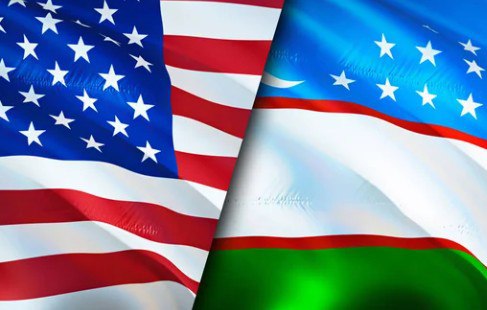
As of December 1, 2025, Uzbekistan is home to 336 enterprises with U.S. capital participation, according to data released by the National Statistics Committee. The figures reflect the growing presence of American businesses in Uzbekistan amid ongoing efforts to strengthen bilateral economic ties.

Of the total, 146 are joint ventures, while 190 are fully foreign-owned enterprises. Tashkent city accounts for the majority, hosting 237 companies, a testament to its role as Uzbekistan’s primary financial and commercial hub. Tashkent region follows with 31 companies, while Samarkand region hosts 19.

Other regions with U.S.-capital enterprises include Bukhara (8), Kashkadarya and Navoi (6 each), Fergana and Jizzakh (5 each), Andijan, Syrdarya, and the Republic of Karakalpakstan (4 each), Namangan and Khorezm (3 each), and Surkhandarya (1).

The latest data comes amid a broader institutional push to enhance Uzbekistan-U.S. economic cooperation. In November 2025, the government launched the Uzbekistan-U.S. Business and Investment Council, a new platform aimed at deepening trade and investment ties. The initiative was formalized by presidential decree on November 12, following agreements reached during President Shavkat Mirziyoyev’s official visit to Washington for the C5+1 summit.

In a further step to facilitate business and tourism links, Uzbekistan introduced a visa-free regime for U.S. citizens starting January 1, 2026, allowing stays of up to 30 days.