• KGS/USD = 0.01144 0%
  • KZT/USD = 0.00210 0%
  • TJS/USD = 0.10454 -0.1%
  • UZS/USD = 0.00008 0%
  • TMT/USD = 0.28571 0.28%
  • KGS/USD = 0.01144 0%
  • KZT/USD = 0.00210 0%
  • TJS/USD = 0.10454 -0.1%
  • UZS/USD = 0.00008 0%
  • TMT/USD = 0.28571 0.28%
  • KGS/USD = 0.01144 0%
  • KZT/USD = 0.00210 0%
  • TJS/USD = 0.10454 -0.1%
  • UZS/USD = 0.00008 0%
  • TMT/USD = 0.28571 0.28%
  • KGS/USD = 0.01144 0%
  • KZT/USD = 0.00210 0%
  • TJS/USD = 0.10454 -0.1%
  • UZS/USD = 0.00008 0%
  • TMT/USD = 0.28571 0.28%
  • KGS/USD = 0.01144 0%
  • KZT/USD = 0.00210 0%
  • TJS/USD = 0.10454 -0.1%
  • UZS/USD = 0.00008 0%
  • TMT/USD = 0.28571 0.28%
  • KGS/USD = 0.01144 0%
  • KZT/USD = 0.00210 0%
  • TJS/USD = 0.10454 -0.1%
  • UZS/USD = 0.00008 0%
  • TMT/USD = 0.28571 0.28%
  • KGS/USD = 0.01144 0%
  • KZT/USD = 0.00210 0%
  • TJS/USD = 0.10454 -0.1%
  • UZS/USD = 0.00008 0%
  • TMT/USD = 0.28571 0.28%
  • KGS/USD = 0.01144 0%
  • KZT/USD = 0.00210 0%
  • TJS/USD = 0.10454 -0.1%
  • UZS/USD = 0.00008 0%
  • TMT/USD = 0.28571 0.28%

Tajikistan to Connect with China’s Telecommunications Network

According to RFE/RL’s report on November 17th, Tajikistan unveiled intentions to integrate with China’s telecommunications network as part of efforts to enhance internet accessibility in the country, which is ensconced in mountainous terrain and lacks direct access to the sea. This move aligns with the expanding influence of Beijing in Central Asia.

Despite recent progress, Tajikistan still grapples with one of the world’s slowest internet services, routing all traffic through a government-controlled center. As disclosed by the state news agency Khovar, the initiative coincides with the construction of a highway linking Dushanbe, the nation’s capital situated in the western region, to a town bordering China.

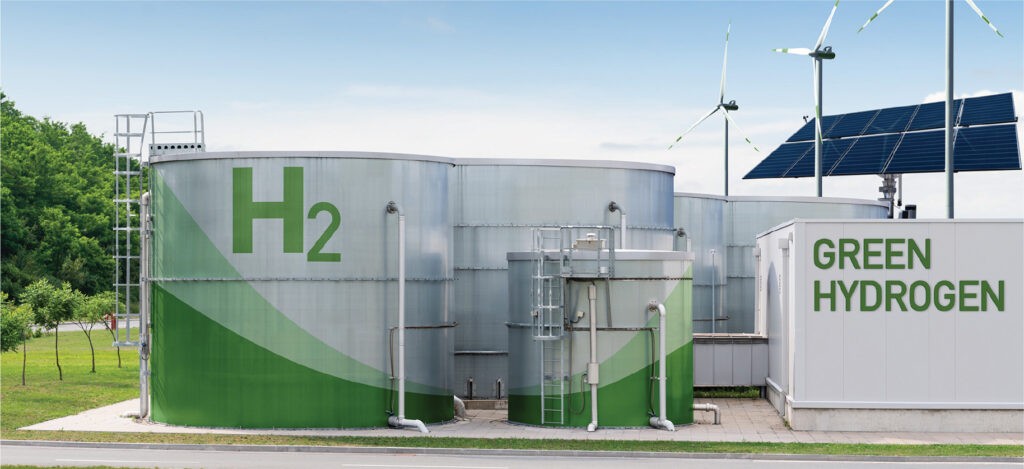
ACWA Power to Build Green Hydrogen Plant

The Ministry of Investment, Industry and Trade of Uzbekistan on July 10 hosted negotiations between Minister Laziz Kudratov and Mohammad Abunayyan, Chairman of the Board of ACWA Power. The parties discussed implementation of the company’s current portfolio of projects in Uzbekistan and prospects for expansion of investment cooperation in energy and chemical industry, the Uzbek ministry said.

Today the investment portfolio of the Saudi company in Uzbekistan includes 8 projects with a total cost of over 6.8 billion USD and design capacity of more than 5.5 GW. It was emphasized that the success of the company plays an important role in promoting Uzbekistan as a comfortable investment destination and a leading center for introduction of renewable energy sources in the Central Asian region.

Constructive exchange of views was held on topical issues relating to implementation of current projects on construction of a combined cycle power plant in Syrdarya region with a capacity of 1.5 GW, wind power plants in Bukhara region and Republic of Karakalpakstan with a total capacity of 2.6 GW and solar power plants in Samarkand and Tashkent regions with a capacity of 1.4 GW. An agreement was reached to take a set of practical measures to ensure accelerated commissioning of the projects.

A number of new initiatives were considered separately. Thus, the parties welcomed the completion of necessary procedures and reaching new agreements on the project of construction of a plant for the production of “green” hydrogen, with a capacity of 3 thousand tons per year. The start of construction works is scheduled for the fall of this year.

In addition, a discussion was held on the prospects for accelerating the project of localization of equipment production for wind turbines. Each of the parties stressed that the implementation of this project in Uzbekistan will significantly expand the geography and volume of renewable energy sources and increase the availability of these technologies in the domestic market.

Turkmenistan Observes World Day Against Human Trafficking

On July 30th, Turkmenistan observed the World Day Against Trafficking in Persons, a significant event supported by public associations across the country in collaboration with the International Organization for Migration (IOM). Commemorated annually as per the UN General Assembly’s resolution, this day serves as a global reminder of the grave issue of human trafficking.

Under the theme, “Reach every victim of trafficking, leave no one behind,” various initiatives were organized in multiple regions, emphasizing the crucial need to combat trafficking and support its victims.

In Ashgabat, the Public Association Yenme orchestrated an event titled, “Stop Human Trafficking.” This gathering saw the active participation of 42 young activists and volunteers. Through interactive sessions, the attendees delved into discussions highlighting the pivotal role of safe and regulated migration in preventing human trafficking. The event incorporated educational tools such as the screening of the video, “5 Facts About Human Trafficking,” and an engaging interactive game called, “Degrees of Risk.” Participants received informative booklets and souvenirs to further disseminate awareness.

Simultaneously, the Ynamly Egindesh Economic Society, operating a hotline in Ashgabat, conducted an awareness-raising event focusing on the multifaceted risks leading individuals into the peril of human trafficking. Emphasizing the vulnerability of various population groups to exploitation by traffickers, discussions revolved around strategies to enhance the efficacy of anti-trafficking measures. Attendees were briefed on the “Vaccination Against Stereotypes” project and society’s efforts in preventing trafficking.

Turkmenabat witnessed an impactful exhibition organized by the Public Association Taze Zaman. The display featured drawings and cartoons created by residents of Lebap province, educating individuals about the dangers and aftermath of irregular migration and human trafficking. Supported by the city administration, the event also distributed informational materials and products themed around combating trafficking, courtesy of IOM in Turkmenistan.

According to The Exodus Road, Turkmenistan ranks among the five worst countries in the world for human trafficking.

Leaders of Tajikistan and Iran Deliberate on Bilateral Relations in Dushanbe

The November 8th meeting between the presidents of Tajikistan and Iran marks a significant stride toward repairing the previously strained relationship between the two nations. Held in Dushanbe, Tajikistan’s capital, the talks between President Emomali Rahmon and President Ebrahim Raisi covered crucial areas of mutual interest and cooperation. Among the agreements reached during this encounter, a standout is the agreement on visa-free travel for citizens of both countries, underscoring the deep linguistic and cultural bonds that unite them.

Moreover, both leaders signed memorandums of understanding focusing on transportation, the establishment of free economic zones, and collaborative efforts to combat drug trafficking. This joint approach in tackling shared challenges underscores a shared dedication to bolstering the security and prosperity of both nations.

President Raisi’s visit is widely seen as an effort to thaw the previously frosty relations between Tajikistan and Iran. Strains emerged after Tajikistan’s 2015 decision to outlaw the Islamic Renaissance Party of Tajikistan, an action that Iran did not endorse. Nonetheless, the recent discussions and agreements suggest a potential pivot in diplomatic ties between the two nations. As highlighted by by RFE/RL’s Tajik Service, this development could herald the beginning of a new phase in Tajik-Iranian relations.

Kazakhstan and Uzbekistan to Bring Mutual Trade to $10 Billion

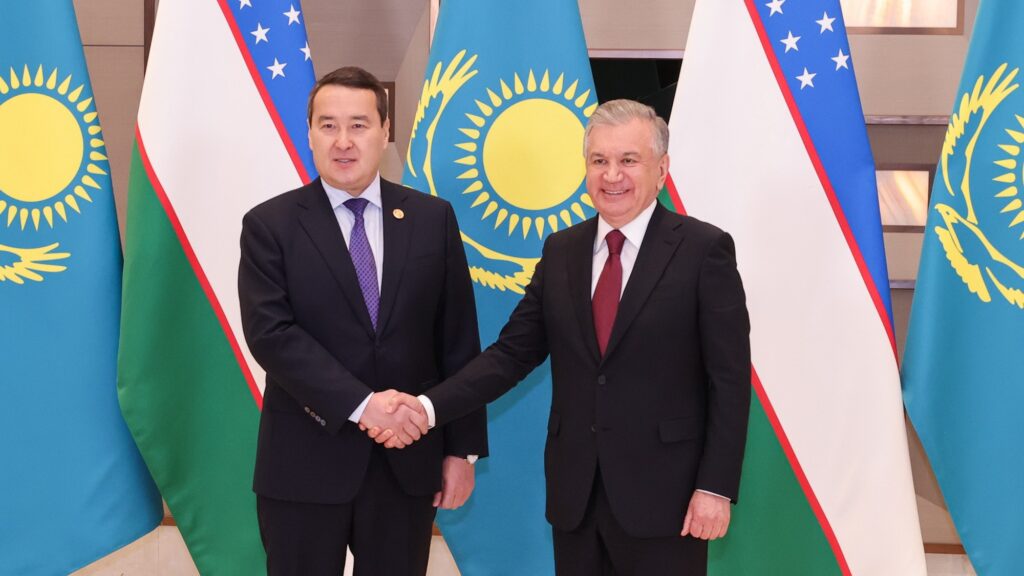
On November 9th, Alikhan Smailov, the Prime Minister of Kazakhstan, made an official visit to Tashkent, Uzbekistan, for the 16th summit of the Economic Cooperation Organization. Prior to the event, he met with the President of Uzbekistan, Shavkat Mirziyoyev.

During their meeting, Smailov extended warm greetings from the President of Kazakhstan, Kassym-Jomart Tokayev, and highlighted the strong strategic partnership between the two nations, based on trust and mutual understanding3.

Smailov pointed out that “Uzbekistan is one of the largest trade partners of Kazakhstan. Our countries account for about 70% of all trade in Central Asia. At the end of last year, trade turnover increased by 30%, and for the first time reached the milestone of $5 billion. We are actively working to bring mutual trade to $10 billion”.

Mirziyoyev reciprocated the sentiment, noting that the strategic agreements between Kazakhstan and Uzbekistan were being systematically realized across various sectors, including trade, transportation, and water management5. He added, “All issues we have are moving forward; I think there is not a single unresolved issue. In terms of trade, the projects we have agreed on with the President of Kazakhstan will help us reach new frontiers”.

In line with these discussions, Arman Shakkaliev, Kazakhstan’s Minister of Trade and Integration, and Laziz Kudratov, Uzbekistan’s Minister of Investment, Industry and Trade, signed an agreement to regulate the activities of the International Centre for Industrial Cooperation “Central Asia”7. This center, set to be established on the border of the two countries, will house production sites, warehouses for goods and equipment storage, and transport infrastructure. The aim is to expedite cargo delivery and reduce logistics costs.

The Industrial Cooperation Centre is expected to stimulate the creation of new production facilities and jobs, aid in the processing of agricultural and industrial products, and provide logistics services for goods transportation. It’s hoped that the centre will enhance transport efficiency and expedite customs clearance processes.

The signing of this agreement is a practical step towards the realization of the project. The launch of the Industrial Cooperation Centre is poised to serve as a catalyst for the further development of international trade and economic integration between Kazakhstan and Uzbekistan. It’s also projected to contribute to increasing bilateral trade turnover to up to $10 billion.

World Bank Announces New Country Partnership Framework for Kyrgyzstan

In a press release on its website, on October 31st the World Bank announced a new five-year Country Partnership Framework (CPF) for the Kyrgyz Republic that defines the strategic focus of the World Bank’s engagement with the country around job creation, natural resource management, and improving human capital outcomes. The CPF lays out a selective and flexible program for World Bank assistance.

“The World Bank has been a trusted partner of the Kyrgyz Republic for the last 30 years”, said Kyrgyz Republic’s Minister of Finance, Almaz Baketaev. “The new Country Partnership Framework responds to the Kyrgyz Republic’s National Development Strategy to 2040 and the National Development Program for 2022-2026. The new partnership strategy will reinforce the efforts of the Cabinet of Ministers to modernize the economy, promote inclusive growth, and build a more prosperous future for all”.

“The World Bank is proud to support the Kyrgyz Republic’s ambitious and well-articulated reform agenda”, said Tatiana Proskuryakova, the World Bank’s Regional Director for Central Asia. “Under our new Country Partnership Framework, we will support the country’s economic transformation with policy advice, technical assistance, and planned project financing of around $500 million. New investments will focus on the key priority sectors of energy, water, and agriculture to create a better and more sustainable future for the citizens of the Kyrgyz Republic”.

The new CPF is centered around three core pillars aimed at delivering tangible development outcomes: increasing private sector-led job creation; improving access to sustainably managed natural resources, and enhancing human capital and economic empowerment of vulnerable population groups. The CPF also includes a strong focus on key global challenges including strengthening climate resilience and reducing emissions; closing the gender gap; supporting jobs and economic transformation; strengthening institutions; and reducing fragility risk.

The World Bank’s Board of Executive Directors also approved $5 million for the technical assistance of Kambarata-1 Hydropower Plant Project. This assistance aims to support the Cabinet of Ministers of the Kyrgyz Republic in updating the Feasibility Study of the Kambarata-1 Hydropower Plant (HPP) Project, enhancing its environmental and social sustainability, and strengthening its financial and commercial frameworks.

Kambarata-1 HPP is expected to be among the most cost-effective projects for expanding clean energy resources across the Kyrgyz Republic and Central Asia. It has the potential to address the country’s energy security challenges, generating significant revenues from energy exports whilst also improving downstream HPP operations and water management.

“The Kambarata-1 HPP is a critically important project that has the potential to bring huge benefits in clean energy generation, regional cooperation, water security, and environmental safeguards across Central Asia”, said World Bank Regional Director for Central Asia, Tatiana Proskuryakova. “The World Bank’s technical assistance will help the Cabinet of Ministers of the Kyrgyz Republic use the country’s abundant hydropower potential for the benefit of the people and region, while strengthening the governance and financial sustainability of the energy sector”.

“Kambarata-1 is a transformative greenfield regional hydropower project that will power the clean energy future of the Kyrgyz Republic and Central Asia”, added World Bank Country Manager for the Kyrgyz Republic, Naveed Hassan Naqvi. “This technical assistance will help to develop the project in a sustainable and profitable way, thereby enabling the mobilization of the necessary financing surrounding it”.