• KGS/USD = 0.01144 0%
  • KZT/USD = 0.00212 0%
  • TJS/USD = 0.10432 -0.29%
  • UZS/USD = 0.00008 0%
  • TMT/USD = 0.28490 0%
  • KGS/USD = 0.01144 0%
  • KZT/USD = 0.00212 0%
  • TJS/USD = 0.10432 -0.29%
  • UZS/USD = 0.00008 0%
  • TMT/USD = 0.28490 0%
  • KGS/USD = 0.01144 0%
  • KZT/USD = 0.00212 0%
  • TJS/USD = 0.10432 -0.29%
  • UZS/USD = 0.00008 0%
  • TMT/USD = 0.28490 0%
  • KGS/USD = 0.01144 0%
  • KZT/USD = 0.00212 0%
  • TJS/USD = 0.10432 -0.29%
  • UZS/USD = 0.00008 0%
  • TMT/USD = 0.28490 0%
  • KGS/USD = 0.01144 0%
  • KZT/USD = 0.00212 0%
  • TJS/USD = 0.10432 -0.29%
  • UZS/USD = 0.00008 0%
  • TMT/USD = 0.28490 0%
  • KGS/USD = 0.01144 0%
  • KZT/USD = 0.00212 0%
  • TJS/USD = 0.10432 -0.29%
  • UZS/USD = 0.00008 0%
  • TMT/USD = 0.28490 0%
  • KGS/USD = 0.01144 0%
  • KZT/USD = 0.00212 0%
  • TJS/USD = 0.10432 -0.29%
  • UZS/USD = 0.00008 0%
  • TMT/USD = 0.28490 0%
  • KGS/USD = 0.01144 0%
  • KZT/USD = 0.00212 0%
  • TJS/USD = 0.10432 -0.29%
  • UZS/USD = 0.00008 0%
  • TMT/USD = 0.28490 0%

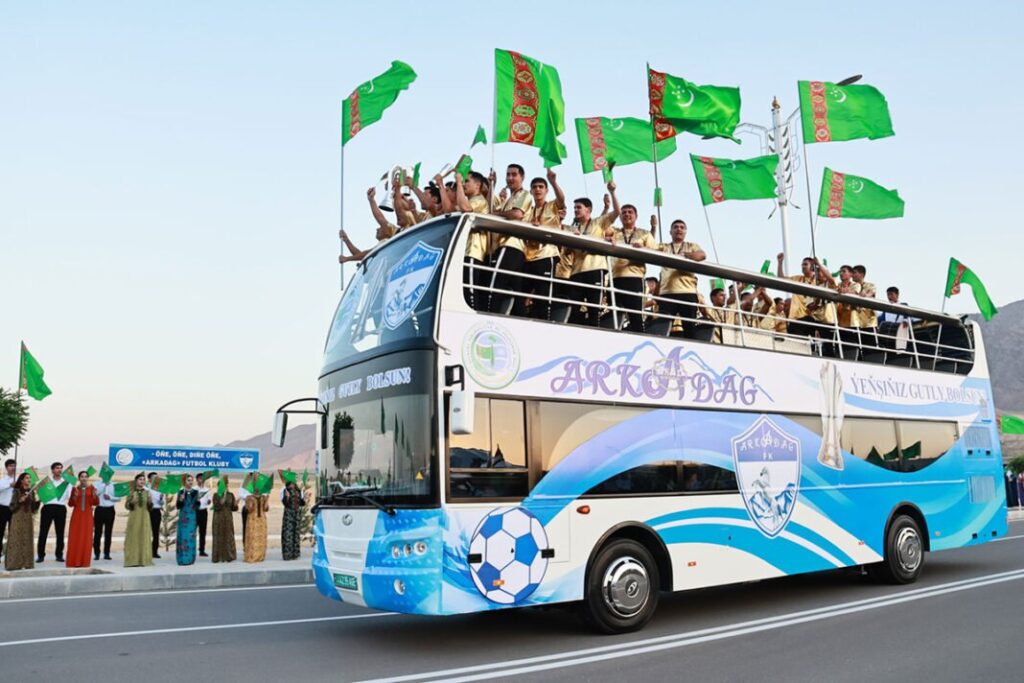
Turkmenistan’s Arkadag to Face Cristiano Ronaldo’s Al-Nassr in AFC Champions League

Turkmenistan’s Arkadag football team has drawn Saudi Arabia’s Al-Nassr, one of the favorites to win the AFC Champions League, in the round of 32. The Riyadh-based club features global football icon Cristiano Ronaldo.

The play-off stage draw was held on December 30 in Kuala Lumpur. Arkadag could have faced Jordan’s Al-Hussein or the UAE’s Al-Wasl, but the outcome proved more challenging. Al-Nassr, widely considered a top contender for the title, will now travel to Ashgabat for a critical away match.

Cristiano Ronaldo has been with the Saudi club for three seasons but has yet to play a match in Central Asia. In both 2023 and 2025, Al-Nassr shared a group with Tajikistan’s Istiklol. However, in each case, the matches in Dushanbe occurred late in the group stage, with Al-Nassr having already secured qualification, prompting the club to rest its key players.

The upcoming encounter may break that pattern. As the first match of a two-legged tie, Al-Nassr is unlikely to underestimate its opponent.

Arkadag, the reigning AFC Challenge League champion, has established itself as a formidable home team, maintaining an unbeaten record since its founding. In last season’s Challenge League playoffs, Arkadag defeated India’s East Bengal 2-1 and Kuwait’s Al-Arabi 3-0 on home turf.

In this season’s AFC Champions League, the team has continued its strong form, securing a 1-0 win over Bahrain’s Al-Khalidiya and drawing 1-1 with both Uzbekistan’s Andijan and Qatar’s Al-Ahli.

For Al-Nassr, the match represents an away challenge against a little-known but dangerous opponent. Arkadag’s home advantage, unwavering support from local fans, and spotless home record make the team a serious threat, even for a club boasting global superstars.

The first-leg match is scheduled for February 10 or 11 in Turkmenistan, with the return leg set for February 17 or 18 in Saudi Arabia.

Arkadag is Central Asia’s sole representative in the AFC Champions League round of 32. However, the region will also be represented in the AFC Challenge League playoffs, with Kyrgyzstan’s Muras United advancing to the next stage.

The Ashgabat fixture may become not only the highlight of Turkmenistan’s football winter, but also a rare opportunity for Central Asian fans to witness one of the world’s greatest players compete on regional soil.

Uzbekistan to Launch Islamic Finance Services in 2027

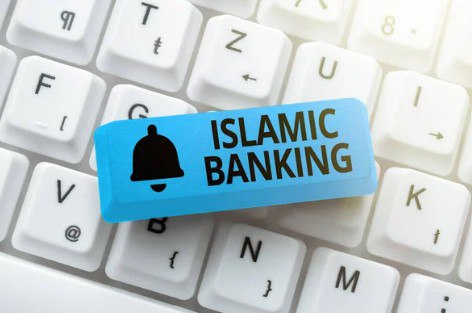
Uzbekistan plans to introduce Islamic finance services at a national level, with the first offerings set to launch in 2027. According to the updated draft of the Uzbekistan 2030 development strategy, at least three commercial banks are expected to provide Sharia-compliant financial services by the end of the decade.

The strategy outlines the creation of a legal and institutional framework to support Islamic finance, beginning with one commercial bank in 2027 and expanding to three banks by 2029-2030. The initiative will be financed through the banks’ own resources, with the Central Bank designated as the lead regulatory authority.

This initiative follows earlier legislative steps aimed at diversifying Uzbekistan’s financial system. In September 2023, the Legislative Chamber of the country’s parliament, the Oliy Majlis, passed a draft law on Islamic banking in its first reading, a milestone in the country’s push toward financial innovation and inclusion.

As previously reported by The Times of Central Asia, the draft legislation includes amendments to the Tax Code, Civil Code, and other legal statutes. It introduces formal definitions for Islamic banks, Sharia-compliant operations, investment deposits, and relevant regulatory standards.

Central Bank Deputy Chairman Abrorkhuja Turdaliev has emphasized that the reforms go beyond removing legal obstacles. In comments to local media, he highlighted the need to establish institutional mechanisms, including specialized Sharia councils, audit and accounting frameworks, and a dedicated tax regime, to ensure the system functions in accordance with Islamic financial principles.

In an interview with Spot, Turdaliev stated that the Central Bank expects up to ten Islamic banks to be operating in Uzbekistan by 2030. In addition, several traditional banks, including three state-owned institutions, are expected to launch Islamic “windows” to provide Sharia-compliant services alongside conventional products.

Kazakhstan Considers Lowering Retirement Age for Shepherds and Herders

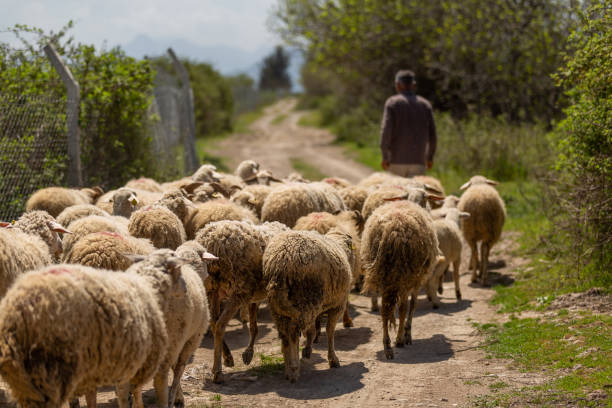
Kazakhstan is developing a package of social measures aimed at attracting and retaining personnel in the livestock industry, including a proposal to lower the retirement age for shepherds and herders.

The initiative was discussed during a meeting of the Public Council under the Ministry of Agriculture, which reviewed the draft Comprehensive Plan for the Development of Agribusiness in the Livestock Sector for 2026-2030. The plan is designed to increase production, improve productivity, and enhance the sector’s export potential.

A key focus of the draft is addressing staffing shortages in rural livestock farming, which the ministry has identified as a systemic challenge.

According to the Ministry of Agriculture, the proposed support measures include reducing the retirement age for shepherds and herders, providing deferrals from military service, and prioritizing educational grants for their children. Specific retirement age parameters have not yet been disclosed. Currently, men in Kazakhstan retire at 63 and women at 61, with a gradual equalization planned from 2031.

At present, certain groups, including mothers of large families, workers in hazardous occupations, military personnel, law enforcement officers, and victims of nuclear testing, are eligible for early retirement.

Deputy Minister of Agriculture Amangali Berdalin also announced plans to launch long-term preferential loans at 6% per annum for the purchase of breeding stock for all types of farm animals.

Additionally, 5% interest loans are planned to support working capital without sector-specific limitations. These funds can be used for purchasing feed, fuel and lubricants, veterinary drugs, and covering other ongoing production expenses.

To reactivate underused pastures, a unified loan product at 6% is being developed to support transhumance livestock farming. All loan programs will be backed by state guarantees.

The expansion of social and financial support for livestock farming comes amid rising export performance in the industry. As previously reported by The Times of Central Asia, Kazakh meat producers exported more products in the first ten months of 2025 than in all of 2024.

The Trump Factor: Why Central Asia Has Remained Silent on Iran’s Protests

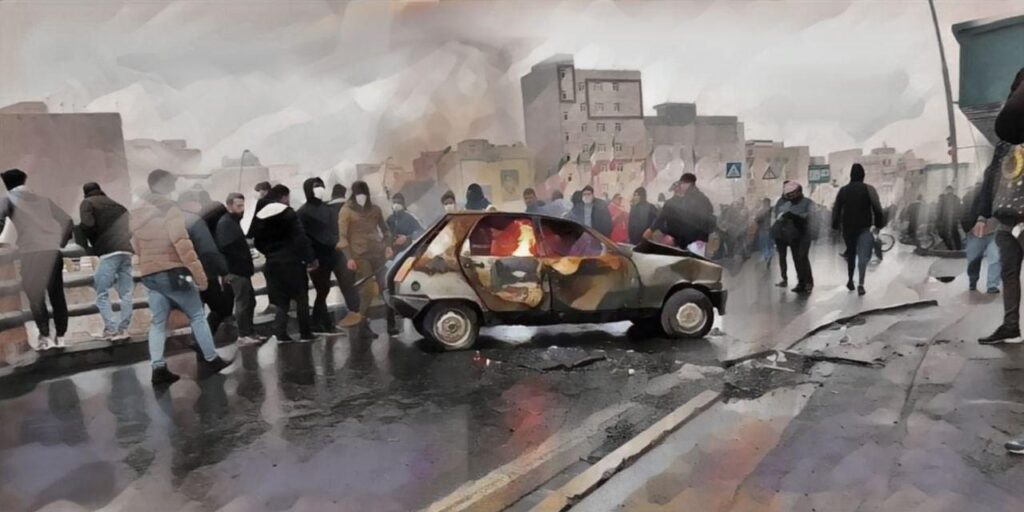
The wave of protests that erupted in Iran in late December and spread to at least 27 of the country’s 31 provinces has become the largest since 2022, when mass demonstrations followed the death of 22-year-old Mahsa Amini in the custody of Iran’s morality police. The unrest has raised new concerns across the region about political stability, energy markets, and the risk of external intervention.

Rights monitors say protests have been reported in hundreds of locations nationwide, with death and detention tolls still contested. Human rights groups and independent monitoring organizations estimate that dozens of people have been killed and more than 2,000 detained, while Iranian officials have offered varying accounts and blamed violence on what they describe as “rioters.”

In Kazakhstan, observers are drawing comparisons to the country’s own January 2022 unrest, officially labeled an attempted coup that ended in a violent crackdown. But beyond the parallels with Kazakhstan’s ‘Qantar’ events, analysts are focusing on the wider implications, particularly the potential impact of Iran’s domestic turmoil on global oil markets.

For Kazakhstan, the stakes are heightened by the country’s reliance on hydrocarbon exports and the sensitivity of global energy markets to supply shocks. Any sharp change in Iranian output, even if temporary, could place downward pressure on prices and complicate budget planning for oil-dependent economies across Central Asia.

Kazakh financial analyst Rasul Rysmambetov has voiced concern that unrest in Iran could trigger a surge in oil production aimed at funding social spending, a move that could drive down global oil prices and harm Kazakhstan’s oil-dependent economy.

“Iran could add half a million barrels a day within six months and cause oil prices to collapse, but it would not do so casually. The Middle East is very sensitive and knows how to negotiate. Still, if the protests persist, Tehran might ramp up production to finance social needs. [This would be] painful for Kazakhstan. If Venezuela is a bear cub, then Iran is a grizzly bear in the bushes with its oil,” Rysmambetov warned on his Telegram channel.

While political unrest typically raises oil prices by increasing supply risk, analysts note that Iran’s response could be atypical. Faced with fiscal pressure, Tehran may opt to increase production to stabilize revenues, a move that would push prices lower despite heightened instability.

Iran’s chronic social issues, exacerbated by inflation and the collapse of the national currency, have fueled public discontent for more than a decade. While the Iranian authorities acknowledge the severity of the economic crisis and have conceded that some demands are legitimate, they have also warned of further hardships. On January 5, the judiciary announced that no leniency would be shown toward those detained during the protests.

Russian experts, meanwhile, have framed the unrest in geopolitical terms. Irina Fedorova of the Russian Academy of Sciences’ Institute of Oriental Studies cited renewed sanctions, critical shortages of water and electricity, and foreign interference as the root causes. However, she dismissed the likelihood of regime change, pointing to disunity among opposition factions.

“The difference this time is that protesters are openly chanting monarchist slogans and demanding the overthrow of the Islamic regime. There’s even been talk of restoring the previous system. Another first is the president’s offer to negotiate, but he was quickly contradicted by Supreme Leader Ali Khamenei, who said protest is allowed, but not demands for regime change. So, there will be no dialogue,” said Michael Borodkin, an Israeli researcher and Iran expert who runs the Telegram channel Oriental Express.

Borodkin argued that if President Donald Trump does not follow through on threats of U.S. intervention if repression continues, the Iranian regime is likely to crush the uprising.

The “Trump factor,” analysts say, is less about immediate action than about uncertainty. Trump’s warnings that Washington could intervene if Iranian authorities escalate violence have injected an external risk into an already volatile situation, prompting governments in the region to avoid public positions that could later prove costly.

This uncertainty appears to be influencing the muted response from Central Asian governments. Despite clear signals from Washington about potential U.S. intervention in Iran, leaders in the region, like their Russian counterparts, have avoided public statements directly addressing the protests. Moscow has limited itself to standard diplomatic expressions of concern.

That silence extends to other flashpoints as well. There has been no official reaction from Central Asia in response to the targeted extraction of Venezuelan President Nicolás Maduro, another crisis intertwined with Trump’s reasserted foreign policy posture.

The timing is awkward for regional diplomacy. Just weeks earlier, Iran had sought to deepen engagement with Central Asia, presenting itself as a stable partner despite mounting internal pressure and renewed sanctions. During a December visit by Iranian President Masoud Pezeshkian to Astana and Ashgabat, Tehran pushed plans to strengthen trade and economic cooperation with Central Asian partners, with a focus on transport, logistics, and industrial sectors.

It now seems that plans for regional cooperation with Iran may be indefinitely shelved amid growing geopolitical uncertainty.

Kazakhstan’s Renewable Energy Share Reaches 7% in National Energy Mix

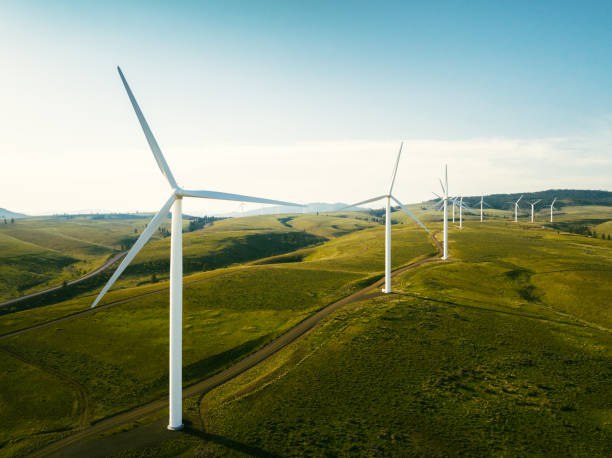
By the end of 2025, renewable energy sources (RES) accounted for 7% of Kazakhstan’s electricity generation, up from 6.43% the previous year. This modest but steady increase was driven by the commissioning of nine new RES facilities with a combined capacity of 503 MW, including wind, solar, and hydroelectric power plants.

While Kazakhstan still lags behind global leaders in the energy transition, it is considered one of Central Asia’s most institutionally structured and balanced markets for green energy development.

The country currently operates 162 renewable energy facilities with a total installed capacity of approximately 3.5 GW. The sector remains diversified: 67 wind farms, 49 solar power plants, 43 hydropower facilities, and three biogas stations contribute to the overall mix.

A key driver of Kazakhstan’s renewable energy expansion is its auction-based model for project selection, which enhances transparency and attracts private investment. Under the 2024-2027 plan, the government aims to deploy 6.7 GW of new renewable capacity, of which around 4 GW had already been allocated by December 2025. The participation of international players, including Total Eren, Masdar, China Power International Holding, and China Energy, has bolstered the sector’s technological and financial resilience.

In comparison, Uzbekistan has emerged as the region’s most dynamic renewable energy market, focusing on large-scale solar and wind projects led by foreign investors. Although the share of renewables in Uzbekistan’s energy mix remains below 10%, its annual capacity additions have outpaced Kazakhstan’s in absolute terms.

Unlike Kazakhstan’s market-based approach, Uzbekistan’s model relies more heavily on large, state-structured contracts, which speeds up implementation but limits competition and diversification. Total investment in Uzbekistan’s renewable sector is estimated at roughly $6 billion, with key backing from the European Bank for Reconstruction and Development (EBRD), the World Bank, and the International Finance Corporation (IFC).

Kyrgyzstan and Tajikistan formally lead the region in renewable energy share due to their reliance on hydropower, which accounts for 80-90% of their electricity generation. However, this heavy dependence makes their energy systems highly vulnerable to seasonal and climatic fluctuations.

Turkmenistan remains the regional outlier, with a power sector almost entirely reliant on natural gas despite significant solar potential. Renewable projects there are limited and largely experimental.

In this context, Kazakhstan occupies an intermediate position, between the hydropower-heavy economies of Kyrgyzstan and Tajikistan and the fast-growing but centralized market of Uzbekistan. Its relatively low starting share in renewables is offset by a stable institutional framework, competitive project selection, and strong international participation.

Kazakhstan’s targets, to raise renewable energy’s share to 15% by 2030 and to 50% by 2050, are ambitious but feasible, provided green energy development remains aligned with investments in base-load generation.

Japarov Credits Mirziyoyev’s in Resolving Kyrgyzstan-Tajikistan Border Dispute

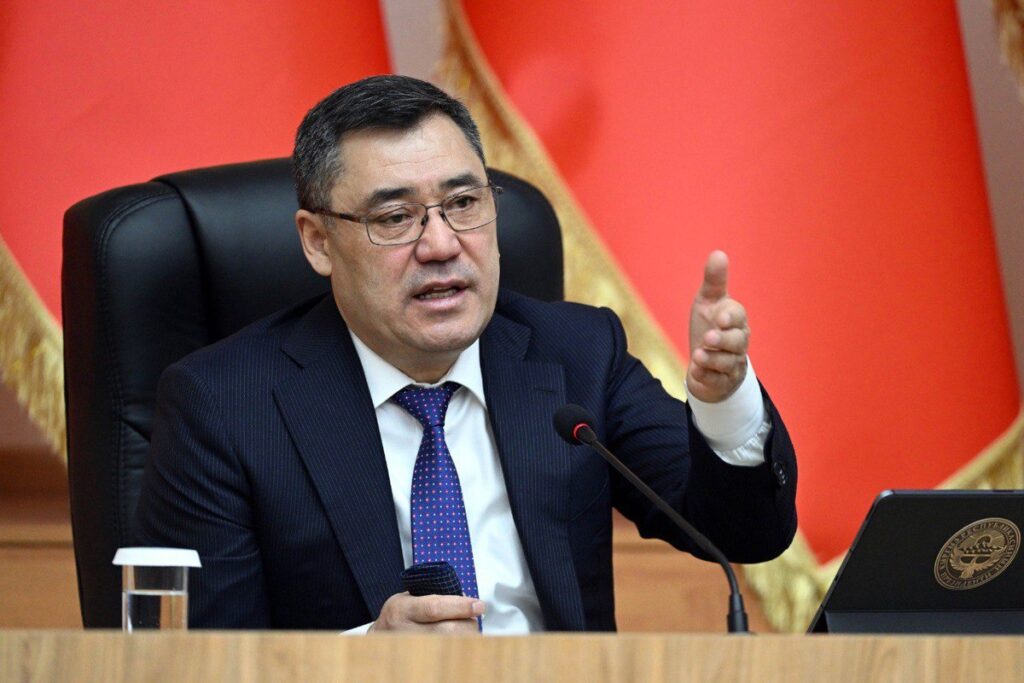
Kyrgyz President Sadyr Japarov has detailed how the long-standing border conflict with Tajikistan was resolved, citing direct diplomacy, enhanced military capabilities, and crucial regional mediation. His remarks came during the second part of the documentary President, aired on Kyrgyzstan’s Region TV.

Japarov recounted that after the deadly clashes along the Kyrgyz, Tajik border in April 2021, he opted to visit Dushanbe for direct talks with Tajik President Emomali Rahmon, despite opposition from some members of his inner circle, including State Committee for National Security Chairman Kamchybek Tashiyev. The negotiations, which lasted ten hours, ended without immediate results.

“We talked for many hours, but at that time we could not reach an agreement,” Japarov recalled in the film.

The 2021 conflict, triggered by disputes over infrastructure near the Kyrgyz village of Kok-Tash, exposed significant weaknesses in Kyrgyzstan’s defense capacity. The two-day confrontation involved heavy weaponry, including mortars, armored vehicles, and helicopter gunships. Official figures reported 54 fatalities, hundreds of injuries, and mass civilian displacement.

Japarov said the violence spurred a modernization of the Kyrgyz military. The country began acquiring advanced equipment, including Turkish-made Bayraktar Akıncı and Aksungur drones. By the time renewed clashes broke out in September 2022, the president claimed that the balance of power had shifted.

“By then, the forces were already equal, and we had begun to gain air superiority,” he said.

Despite these developments, Japarov stressed that diplomacy ultimately brought resolution, and credited Uzbek President Shavkat Mirziyoyev with playing a pivotal role. “At summits, I told Rahmon, ‘Let’s sit down and talk.’ At first he refused. The second time, he agreed,” Japarov stated. “I must say that the role of Uzbekistan’s President Shavkat Mirziyoyev was very significant. He persuaded us not to miss the moment and to reach an agreement. That’s how we sat down and resolved the border issue.”

Kyrgyz Foreign Minister Jeenbek Kulubaev supported this view, describing Mirziyoyev as a regional leader who consistently urged neighbors to resolve disputes peacefully. He noted that Mirziyoyev had warned unresolved conflicts risk deterring both investors and tourists, who often see Central Asia as a single, interconnected region.

Kyrgyzstan and Tajikistan officially signed a border delimitation agreement on March 13 of last year, following a preliminary signing on March 31 in Khujand during a trilateral meeting involving the leaders of Kyrgyzstan, Tajikistan, and Uzbekistan.