• KGS/USD = 0.01144 0%
  • KZT/USD = 0.00196 -0%
  • TJS/USD = 0.10899 -0%
  • UZS/USD = 0.00008 -0%
  • TMT/USD = 0.28490 0%
  • KGS/USD = 0.01144 0%
  • KZT/USD = 0.00196 -0%
  • TJS/USD = 0.10899 -0%
  • UZS/USD = 0.00008 -0%
  • TMT/USD = 0.28490 0%
  • KGS/USD = 0.01144 0%
  • KZT/USD = 0.00196 -0%
  • TJS/USD = 0.10899 -0%
  • UZS/USD = 0.00008 -0%
  • TMT/USD = 0.28490 0%
  • KGS/USD = 0.01144 0%
  • KZT/USD = 0.00196 -0%
  • TJS/USD = 0.10899 -0%
  • UZS/USD = 0.00008 -0%
  • TMT/USD = 0.28490 0%
  • KGS/USD = 0.01144 0%
  • KZT/USD = 0.00196 -0%
  • TJS/USD = 0.10899 -0%
  • UZS/USD = 0.00008 -0%
  • TMT/USD = 0.28490 0%
  • KGS/USD = 0.01144 0%
  • KZT/USD = 0.00196 -0%
  • TJS/USD = 0.10899 -0%
  • UZS/USD = 0.00008 -0%
  • TMT/USD = 0.28490 0%
  • KGS/USD = 0.01144 0%
  • KZT/USD = 0.00196 -0%
  • TJS/USD = 0.10899 -0%
  • UZS/USD = 0.00008 -0%
  • TMT/USD = 0.28490 0%
  • KGS/USD = 0.01144 0%
  • KZT/USD = 0.00196 -0%
  • TJS/USD = 0.10899 -0%
  • UZS/USD = 0.00008 -0%
  • TMT/USD = 0.28490 0%
08 December 2025

Urban Night Almaty: Creative Communities and the Future of Central Asia

Ecology, entrepreneurship, and innovation in urban life were the central themes of Urban Night Almaty, a one-day festival held last Saturday in Kazakhstan’s largest city.

The event sought to answer a key question: Can small-scale initiatives and grassroots communities meaningfully improve life in a metropolis? Organizers and attendees alike believe they can.

The festival drew together a wide array of participants, recycling advocates, artists, artisans, confectioners, cosmetics producers, startup founders, writers, journalists, students, sociologists, urbanists, architects, and entrepreneurs, each contributing to a shared vision of sustainable, inclusive urban development.

@Eduard Galeev

“Each of us lives in our own information bubble, and events like this push us to step outside of it. We’re all different, but we can achieve something together,” said ecologist Pakizat Sailaubekova. “Looking at the people who came to the festival and how moved they are, it’s inspiring.”

Discussion and Decision-Making

Urban Night Almaty was organized around several thematic zones. One area was dedicated to public discussions on technology, education, and ecology.

Bekežan Kaigaliev, founder of Food Recycling and Aquajem, presented on the use of fly larvae to process organic waste in large cities. Alexey Kupriakov, founder of the Green Workout movement, shared ideas on integrating eco-friendly practices into urban planning.

Zhuldyz Saulbekova, CEO of the Almaty Air Initiative, spoke about technological solutions for combatting air pollution and chronic smog.

@Eduard Galeev

Other panels focused on educational innovation. Journalist and PR expert Anuarbek Zhalel, alongside Nursultan Amirkhan, product manager at Daryn.online, discussed promoting startups and integrating new tools in learning environments.

A separate session brought together alumni of U.S. internship programs. Among them were athlete and IT specialist Aina Dosmakhambet, lawyer Zhibek Karamanova, and Yerzhan Nauruzbayev, a Forbes 30 Under 30 honoree with professional experience across three continents.

Practice and Inspiration

Beyond the panels, attendees participated in workshops and creative performances. Highlights included a sports-themed cleanup organized by Kupriakov and an urban exploration of Almaty led by the GoroZhanym project.

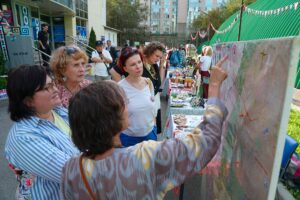
An eco-themed market showcased small-scale producers offering food, toys, jewelry, souvenirs, and hygiene products. Many entrepreneurs shared stories of how their ventures, though modest in scale, contribute to making Almaty cleaner and more future-oriented.

@Eduard Galeev

“We often speak in terms of global problems, but it’s essential to respect action at the micro level,” said political analyst Dosym Satpaev. “Thanks to social media, even the smallest project can gain traction. The more of these we have, the stronger our creative economy becomes. These are the foundations for national stability, development, and retaining talent.”

Satpaev also hosted a futurology session addressing the challenges and prospects artificial intelligence presents for Central Asia.

The festival concluded with a tұsaуkeser ceremony, a Kazakh tradition that involves cutting a symbolic cord representing a newborn’s first steps. The cords, handcrafted by members of the Niti Dobra movement (which supports premature infants), symbolized renewal and the strengthening of ties between citizens and their city.
@Eduard Galeev

Regional Reach

“Our goal is to create a platform uniting entrepreneurs, startups, and those committed to transforming cities for the better,” said Elmira Karmanova, the festival’s organizer. “Urban Night Almaty is just the beginning, next week, we’ll bring the festival to Bishkek, followed by Dushanbe, Samarkand, and Ashgabat.”

Urban Night Almaty was held as part of the Go Viral program with support from the U.S. diplomatic mission in Kazakhstan.


Kyrgyz Government Opens Islamic Academy to Strengthen Religious Education

On September 15, Kyrgyzstan inaugurated a state-funded Islamic Academy in the town of Tokmok, approximately 60 kilometers east of Bishkek. Established by presidential decree, the institution is designed to accommodate 400 students and aims to offer structured training in Islamic theology, as well as courses in Islamic finance and banking.

Speaking at the opening ceremony, President Sadyr Japarov emphasized that global threats of extremism and radicalism, including in Central Asia, underscore the need for “objective, scientifically grounded religious education aligned with traditional Islamic values”.  He stated that the academy would serve as a regional hub for training imams and promoting spiritual development.

Japarov also urged Kyrgyz youth to pursue religious education domestically, arguing that the academy removes the necessity of studying abroad.

The launch comes amid increasingly stringent state regulation of religious activity. In January 2025, Japarov signed amendments to the Law “On Freedom of Religion and Religious Associations,” introducing restrictions on face coverings in public offices, coercion in religious conversion, ceremonies in closed institutions, and political or foreign-funded religious activities.

As of 2024, Kyrgyzstan had 3,593 mosques and 220 registered religious schools, most of them located in the southern Osh region.

Shared Values, Shared Voices: An Interview With Spain’s Ambassador to Kazakhstan

In recent years, cultural cooperation between Spain and Kazakhstan has gained new momentum. Although the two countries are separated by a vast geographical distance, their cultural ties are growing closer through shared values. The Embassy of Spain in Kazakhstan has implemented a number of major projects in this regard. TCA spoke with the Ambassador of Spain to Kazakhstan, Luis Martínez Montes.

TCA: It’s been several months since you became the Ambassador to Kazakhstan. What aspects of our culture do you enjoy?

LMM: In fact, this is my second diplomatic posting to Kazakhstan. The first was from 1999 to 2002, when Spain opened its embassy in Almaty before moving to Astana. Twenty-five years later, I’ve returned as Ambassador to a country I consider my second home. There are so many things I love about Kazakhstan, including its nature and its gastronomy, that it’s hard to choose. But if I had to pick one, it would be the people, especially the younger generations.

I spend much of my time visiting schools and universities, where I see a tremendous energy and thirst for knowledge among Kazakh students. I organize weekly lectures, debate clubs, and informal lunches at my residence with students and Kazakh intellectuals. Their conversations enrich me and help me better understand the direction this country is taking.

TCA: You once mentioned that you visited the Mausoleum of Khoja Ahmed Yasawi. What impression did it leave on you?

LMM: I visited Turkistan in 1999, and I have a memorable anecdote from that trip. While visiting the mausoleum, the local guide found out I was from Spain and enthusiastically mentioned Ibn Arabi, the great Sufi poet from Al-Andalus [the name for Spain during its Islamic period]. She spoke of him as a near-contemporary of Ahmed Yasawi.

I’m grateful for that moment because it was through this cultivated Kazakh woman who could recite at length poems by both Sufi sages that I developed my lifelong admiration for Ibn Arabi. I found it truly fascinating that two poets, Ibn Arabi and Khoja Ahmed Yasawi, living at opposite ends of the Eurasian continent, could produce such profound and beautiful poetry, inspired by the same spiritual quest for God.

TCA: Abai Kunanbayuly, like Cervantes, elevated a nation’s literature and culture. We translated Cervantes into Kazakh many years ago, and Don Quixote has been reprinted many times. We also heard that Abai’s works have been translated into Spanish. How has the Spanish readership received him?

LMM: As you know, the late Pope Francis, who was from Argentina, quoted Abai more than a dozen times at the opening of the Seventh Congress of Leaders of World and Traditional Religions in 2022. Some works by Abai were translated into Spanish in 2020 by María Sánchez Puig, who received the Order of Dostyk for her work in bringing Kazakh literature closer to Spanish-speaking audiences. Another project is currently underway to translate selections from Abai’s Book of Words into Spanish this year.

We’re also developing the first Kazakh-Spanish dictionary to make it easier for our students to learn Kazakh and vice versa. In addition, in 2016, a collection of contemporary Kazakh poetry translated by Justo Jorge Padrón was published in Spanish.

TCA: Is it correct that Spain’s interest in Kazakhstan began in the Middle Ages?

LMM: Spanish awareness of Kazakhstan dates back to medieval times. The first visual representation in the West of the Silk Road appears in the Catalan Atlas, created in 1375 in the Crown of Aragon, one of the formative kingdoms of Spain. It included a detailed image of the Golden Horde Khan, Jani Beg, with his distinctive flag. Then, in the early 15th century, the Spanish ambassador Ruy González de Clavijo visited Central Asia during the time of Timur. He wrote an extraordinary book about the region, which became a best-seller in Europe after being printed and translated into several languages.

TCA: How can Kazakhstan become better known in Spain? Are there projects in this regard?

LMM: Today, the Kazakh embassy in Madrid does excellent work promoting modern Kazakhstan in Spain. There is also an institution called Casa Kazaja, which brings together Kazakh citizens in Spain with Spaniards interested in Kazakhstan. They facilitated the participation of more than thirty Spanish athletes in the World Nomad Games held in Astana last year. It was the fourth-largest Western delegation, and participants were deeply impressed by the quality of the organization and the hospitality of the Kazakh people.

As for current initiatives, the opening of the Atlético de Madrid Academy in Kazakhstan will have a major impact in Spain as well. In addition, two important cultural events this year will further raise Kazakhstan’s profile in Spain. First, Kazakh superstar Dimash will perform in Barcelona this November and also hosted a fan and media conference there on June 1.

The second is very exciting: the first Spanish-Kazakh co-production of a major feature film, under the auspices of Netflix. The movie, titled La Tregua (The Truce), is based on the true story of several hundred Spanish prisoners who ended up in the Karlag [labor camp] during Stalin’s time. The director is Miguel Ángel Vivas (known for directing Money Heist for Netflix), and the cast includes Spanish actors Miguel Herrán (Money Heist) and Arón Piper (Elite), alongside Kazakh stars Dina Tasbulatova, Altynai Nogerbek, Sergey Ufimtsev, and Farabi Akkozov. The film is now in its final editing phase.

TCA: In your country, football is not just seen as a game but is respected as an art form. Teams like Real Madrid, Atlético de Madrid, or Barcelona are prime examples of this. How has this phenomenon contributed to the development of Spanish culture and the economy?

LMM: You are right. Football in Spain is a mixture of religion and art. It’s also big business. Real Madrid is the world’s most profitable football club (valued at $6.6 billion), Barcelona is third ($5.6 billion), and Atlético de Madrid is twelfth ($1.6 billion). When it comes to sporting victories, Real Madrid is undoubtedly the best club in football history, with a record 15 UEFA Champions League titles. Overall, Spanish clubs have won the most European titles (20), followed by English clubs (15) and Italian clubs (12). As a disclaimer, I must confess that I’ve been a fan of Barcelona since childhood, even though I was born in Madrid. So, you can imagine my happiness that Barcelona FC won La Liga this year.

Regarding the Spanish national team, Spain has been the most successful football nation of the 21st century: winning the World Cup in 2010, three European Championship titles (2008, 2012, and 2024, in addition to an earlier one in 1964), and one Nations League. Spain is also the country with the most European Championship titles overall (4), followed by Germany (3), and the only one to have won three major championships in a row (2008, 2010, 2012).

Football is therefore one of Spain’s greatest exports. In this regard, I’m pleased to share with your readers that this summer, one of Spain’s top teams, Atlético de Madrid, will open the Atlético de Madrid Football Academy near Almaty in partnership with the Doscar Group. The Academy will train hundreds of Kazakh and Central Asian children and teenagers aspiring to become professional players. Its facilities, which I’ve personally visited, are state-of-the-art and will include a modern residence, boarding school, gyms, six training pitches, and a stadium with 10,000 seats. The best students will also have the opportunity to continue training in Madrid. We want to help Kazakhstan become a football powerhouse, not only in the region but globally.

Inflation in Kazakhstan “Eating Away” at Incomes: Authorities Struggle for Answers

Inflation in Kazakhstan is continuing to erode household incomes, driven by the country’s dependence on imports, rising utility tariffs, and increasing tax burdens. While living costs soar, wages remain sluggish, forcing many families to allocate most of their earnings to essentials such as food, medicine, and utilities.

Rising Prices, Stagnant Wages

As of August, annual inflation had reached 12.2%, and experts warn it could climb even higher by year’s end. The National Bank’s original 2025 inflation target of 5% has proven to be overly optimistic. “This is a negative, sad trend. It shows that not enough measures have been taken. That it was necessary to tighten monetary policy earlier. It was necessary to contain inflation risks,” said Ramazan Dosov, chief analyst at the Association of Financiers of Kazakhstan.

The National Bank’s base rate, its primary instrument for controlling inflation, currently stands at 16.5%. Financier Rasul Rysmambetov notes that the rate is unlikely to be lowered in the near future. However, high interest rates also reduce access to loans for businesses, curbing investment. Despite frequent government statements about inflation-control measures, experts argue that artificial price regulation offers only temporary relief.

In his September 8 address to the nation, President Kassym-Jomart Tokayev acknowledged the severity of the issue, stating, “Today, the main problem is high inflation, which is eating away at economic indicators and household incomes. There is no ready-made solution to this problem.” Tokayev called for coordinated efforts across government agencies.

At the beginning of 2025, Kazakhstan’s average monthly salary was reported at 424,200 KZT (about $800), reflecting a 24% increase over the previous year. However, this figure obscures wide regional disparities. In many areas, typical monthly salaries range between 180,000 and 230,000 KZT ($330-430). Per capita income reached 194,000 KZT ($362), up 17% from early 2023, but not enough to keep pace with inflation. According to kazkredit.kz, average families now spend up to 95% of their income on day-to-day expenses. In 2023, 52% of income went toward food; that figure has risen to more than 54% in 2025.

Halyk Finance, cited by inbusiness.kz, reports that more than half of Kazakhstan’s workers earn below the national average. Salary data reveals stark income inequalities across sectors, with higher wages in mining, finance, and telecommunications, and significantly lower wages in agriculture, healthcare, and public administration. Analyst Arslan Aronov notes that although nominal wages increased by 11.3% in the second quarter of 2025 compared to the same period in 2024, real wage growth was effectively zero due to inflation.

Public sentiment reflects the strain. Economists at KZTnomika reported a slight easing of inflation expectations in August 2025, but overall confidence in price stability remains low. Eighty-two percent of survey respondents reported rising food costs, with meat and dairy products leading the list. Among non-food items, medicines, clothing, and cleaning products were most frequently cited. For paid services, rising costs for housing, internet, mobile communication, and healthcare were prominent concerns.

Background and Analysis

Kazakhstan’s struggle with inflation is rooted in both external shocks and structural weaknesses in its economy. The country remains heavily dependent on imports for everyday goods, making local prices highly sensitive to global markets and exchange rates. This dependence has been magnified by its trade with Russia, where sanctions and supply disruptions have spilled over into Kazakhstan. The tenge’s depreciation – more than 13% against the US dollar in 2024 – has made imports more expensive, feeding directly into consumer price inflation. The International Monetary Fund has noted that inflation in Kazakhstan is “primarily imported,” with foreign price movements quickly transmitted onto households.

Domestic policy has compounded these pressures. In recent years, government social spending and wage hikes helped offset public discontent, but they also fueled demand without boosting supply. Economists argue that subsidies and benefits, while politically popular, tend to be inflationary in an import-reliant economy: more money in consumers’ hands often means higher spending on imported goods, which in turn weakens the tenge further. Credit expansion has also played a role, with consumer lending growing rapidly and pushing demand for food, housing, and services beyond domestic capacity.

The National Bank of Kazakhstan has responded with one of the highest base rates in the region. While this helps to cool demand, it also threatens investment and growth. Analysts warn of a policy dilemma: rates must remain tight to curb inflation, yet high borrowing costs risk slowing the economy. The government’s frequent resort to price controls, such as capping utilities or subsidizing essentials, offers only short-term relief. When these controls are lifted, prices often spike sharply.

Regional comparisons underline the scale of the problem. Kyrgyzstan and Uzbekistan have also battled double-digit inflation, but Kazakhstan’s rate remains among the highest in the CIS. Institutions like the OECD argue that sustained relief will require structural reforms: diversifying production, modernizing agriculture, and strengthening logistics to reduce reliance on imports.

The broader consequence is a steady erosion of real incomes. Even as wages rise on paper, inflation cancels out most gains, leaving families with little disposable income and risking a cycle of high inflation and weak purchasing power.

The Politics of Inflation

Political analyst Daniyar Ashimbayev has warned that ballooning social spending has made the national budget increasingly unsustainable. “Social spending, which has increased significantly over the past six years, partly to ensure political loyalty and partly to offset inflation, is now consuming the lion’s share of the budget,” he stated.

Although tax hikes were introduced in 2025, inflation continued to rise, which Ashimbayev attributes to the government’s economic policies. Ashimbayev predicts that in 2026, the effects of a new Tax Code, combined with further tariff increases and expanded budgetary obligations, will slow economic growth and diminish real incomes.

Rysmambetov, meanwhile, has called Tokayev’s directive to reduce inflation “unrealistic,” especially given the current approach to price controls. Kazakhstan imports many consumer goods from Russia, which remains under international sanctions, further complicating supply chains and pricing. The country’s dependence on raw material exports also limits its economic flexibility. Rysmambetov has proposed a more structural response, including the creation of an electronic goods catalog to track pricing and eliminate intermediaries in food and fuel markets. Long-term stability, he argues, will require a shift toward domestic production and broader economic diversification.

What Comes Next?

Despite these concerns, the Ministry of National Economy has pledged to hold inflation and utility rates in check through the end of 2025, with a new targeted inflation rate of 10-11%. For now, Kazakhstan’s battle with inflation underscores the delicate balance between short-term fixes and long-term reforms. Whether the government’s latest pledges will be enough to stabilize prices remains uncertain, leaving households and businesses braced for continued volatility through 2025.

Wheels of Influence: China’s Electric Vehicle Push in Central Asia

As domestic competition intensifies and protectionist barriers rise in Western markets, Chinese electric vehicle (EV) manufacturers are increasingly looking outward. One region emerging as a key destination is Central Asia, where China’s green tech ambitions align with local efforts to modernize and decarbonize transport systems. From affordable passenger cars aimed at private drivers to electric buses transforming public transit, Chinese EVs are quietly gaining traction across Kazakhstan, Uzbekistan, Kyrgyzstan, and Tajikistan.

Companies like Yutong are supplying e-buses for urban mobility, while fleets of electric taxis are beginning to appear in Dushanbe’s streets. This growing presence is more than just commercial – it signals a deeper shift in China’s regional engagement strategy, using clean technology as a vehicle for influence in a strategically contested space.

There is an upward trend in the import of electric vehicles from China to Central Asia, particularly in Kazakhstan and Uzbekistan. In 2024, Uzbekistan imported over 24,000 EVs, with Chinese manufacturers accounting for a staggering 99.5% of all imports. This marked an increase of more than 8,000 units compared to 2023 – nearly a 1.5-fold growth in just one year. A similar surge is visible in Kazakhstan. In 2023, the country imported around 6,875 Chinese EVs, but by 2024, although official figures are yet to be released, industry reports indicate a 36-fold increase in the sales of Chinese EVs year-on-year.

Drivers of Import: Policy and Perception

The surge in EV imports into Central Asia is driven by a convergence of motivations from both China and the region’s domestic policies. On the supply side, the rapid influx of Chinese EVs reflects a blend of strategic export redirection by Chinese automakers and receptive policy environments in the region. Faced with mounting trade restrictions and increasing regulatory pressure in Western markets, Chinese EV producers are pivoting toward emerging economies to safeguard growth. Central Asia has become a promising destination due to its untapped consumer base.

On the demand side, Central Asian governments are enacting supportive policies to accelerate the green transition, making EV imports more accessible. For example, Uzbekistan has removed both excise taxes and customs duties on imported electric vehicles, while Kazakhstan and Kyrgyzstan benefit from a Eurasian Economic Union ruling that extends duty-free EV imports until the end of 2025, creating a favorable environment for consumers and fleet operators.

In addition to these policy frameworks, a growing positive perception of Chinese EVs has emerged across the region. Chinese manufacturers are seen as offering a combination of affordability and quality, a crucial advantage in price-sensitive markets like Central Asia. For consumers and taxi fleet operators, the appeal goes beyond the sticker price – electric vehicles are significantly cheaper to operate. Unlike gasoline-powered cars that require frequent oil changes and filter maintenance, EVs offer lower long-term operating costs, making them a practical and economically attractive choice.

Beyond Exports: Assembling a Local Presence

However, China’s electric vehicle expansion in Central Asia goes beyond exports – it increasingly involves local production through joint ventures and assembly plants. In Uzbekistan, the state-owned UzAuto Motors launched a joint venture with Chinese EV giant BYD in 2023, marking one of the region’s most high-profile partnerships. Meanwhile, in Kyrgyzstan, a $115 million project is underway between local firms and China’s Hubei Zhuoyue Group to assemble both electric and internal combustion vehicles, including commercial and passenger models.

Tajikistan has also entered the EV manufacturing space through a joint venture with China aimed at producing around 1,500 electric vehicles per year. These partnerships show how Chinese companies are moving beyond simple exports by working closely with local industries, supporting domestic manufacturing goals in Central Asia while broadening their presence in the region.

China’s expanding role in Central Asia’s EV market brings a range of strategic advantages. First, it supports Beijing’s goal of diversifying export markets for its EV industry, while aligning with Central Asian governments’ policies to promote green transition, where EV adoption plays a key role. Second, local production offers Chinese companies practical benefits that cover avoiding tariffs and high logistics costs, accessing government incentives, and reducing the risk of political backlash tied to heavy import dependence.

Moreover, this growing EV-focused engagement is also deepening China’s broader economic footprint in the region. As Chinese EVs become more visible across Central Asia’s roads and charging networks, they may gradually displace Western and even Russian automakers. While Russian vehicles still enjoy popularity, particularly in the rural areas, the rise of Chinese EVs – supported by infrastructure development – signals a shift. Over time, this could further reduce Russia’s economic influence in a region where China is steadily consolidating its position.

Opportunities and Risks for Central Asia

For Central Asian countries, China’s EV expansion presents both opportunities and risks. On the environmental front, the growing presence of EVs helps reduce carbon emissions and supports national efforts to promote environmental sustainability. From an economic perspective, EV adoption can lower reliance on gasoline imports – particularly from Russia – helping to ease the region’s energy import burden. Moreover, the localization of EV production brings the promise of job creation and industrial growth. For example, the BYD-Uzbekistan joint venture has already generated 1,200 jobs in its initial phase, offering a boost to local employment.

These ventures also contribute to the development of skilled technicians, strengthening the region’s human capital over the long term. Furthermore, local manufacturing not only meets domestic demand but can also enable regional countries to become exporters of EVs and components. As local supply chains mature, cross-sector linkages – such as in electronics and logistics – could multiply the developmental impact.

Yet, this rapid influx of Chinese electric vehicles is not without its downsides for regional economies. An unbalanced transition toward EVs risks unsettling the existing automotive landscape, particularly in countries like Uzbekistan and Kazakhstan, where traditional internal combustion engine manufacturing plays a significant economic role. While joint ventures with Chinese firms may generate new jobs in EV assembly, the shift could simultaneously erode employment in conventional auto sectors – especially among suppliers of components such as gearboxes and powertrains that are largely obsolete in electric vehicle production.

Another key risk lies in the nature and depth of localization within Central Asian countries. If localization of Chinese EV production is limited to basic assembly or low-value component manufacturing, the region may end up serving primarily as an assembly hub rather than evolving into a fully developed manufacturing base. Such a shallow form of industrial participation could result in a technological lock-in, where local industries become dependent on imported high-value components – such as batteries, electric motors, and advanced electronic systems – which remain predominantly produced in China.

This imbalance risks skewing the region’s industrial development toward low-skill, low-value activities, thereby constraining long-term capacity building. Over time, this dynamic may cause Central Asian economies to become embedded in narrowly defined supply chains, reducing their ability to diversify industrial partnerships and build more autonomous, innovation-driven sectors.

Moreover, this path of limited localization could deepen structural dependence on China, adding another layer of asymmetry to the relationship. As a result, the flexibility of regional countries in shaping their economic and geopolitical choices vis-à-vis China may become increasingly constrained.

Attack on Uzbek Migrants in Vladivostok Prompts Diplomatic Response

An attack on Uzbek migrants in the Russian city of Vladivostok has drawn an official response from Uzbekistan’s diplomatic mission, following reports of violence and online footage showing the assault.

On September 13, a group of local youths reportedly attacked several migrants from Uzbekistan on the city’s Khabarovskaya street, according to Russian media outlet Vladivostok1. Eyewitnesses said the altercation began when the group began throwing stones at cars carrying the migrants. When the drivers got out to confront them, they were physically assaulted.

Several people sustained injuries in the incident. Videos circulated online show the assailants laughing, shouting, and encouraging each other to “hit” the migrants. In one clip, a driver attempts to defend himself with a scooter while demanding that one of the attackers drop a knife. Another migrant was pursued into a store and struck in the face. The individual recording the video acknowledged the presence of surveillance cameras but continued filming.

According to Vladivostok1, local police have launched an investigation. While no victims or witnesses initially came forward to file complaints, authorities believe the majority of the attackers were minors.

Uzbekistan’s Consul General in Vladivostok, Yusuf Qobiljonov, confirmed that the consulate had promptly contacted the injured citizens and provided legal support. Uzbek nationals have since submitted an official complaint to the Vladivostok Interior Department. Diplomatic notes have also been sent to the Russian Foreign Ministry’s regional office and the Prosecutor’s Office of Primorsky Krai, requesting appropriate legal action.

Qobiljonov stated that the case remains under the direct oversight of both Uzbekistan’s consulate and Russian law enforcement agencies. He urged media outlets to rely solely on official information from the Foreign Ministry and diplomatic representatives to prevent misinformation.

The incident follows a similar controversy earlier this year, when a video circulated showing a Russian citizen calling an Uzbek immigrant a “slave of the Russians.” That case also prompted Uzbekistan to issue a diplomatic note to the Russian government.