• KGS/USD = 0.01144 0%
  • KZT/USD = 0.00209 0%
  • TJS/USD = 0.10438 0%
  • UZS/USD = 0.00008 0%
  • TMT/USD = 0.28490 0%
  • KGS/USD = 0.01144 0%
  • KZT/USD = 0.00209 0%
  • TJS/USD = 0.10438 0%
  • UZS/USD = 0.00008 0%
  • TMT/USD = 0.28490 0%
  • KGS/USD = 0.01144 0%
  • KZT/USD = 0.00209 0%
  • TJS/USD = 0.10438 0%
  • UZS/USD = 0.00008 0%
  • TMT/USD = 0.28490 0%
  • KGS/USD = 0.01144 0%
  • KZT/USD = 0.00209 0%
  • TJS/USD = 0.10438 0%
  • UZS/USD = 0.00008 0%
  • TMT/USD = 0.28490 0%
  • KGS/USD = 0.01144 0%
  • KZT/USD = 0.00209 0%
  • TJS/USD = 0.10438 0%
  • UZS/USD = 0.00008 0%
  • TMT/USD = 0.28490 0%
  • KGS/USD = 0.01144 0%
  • KZT/USD = 0.00209 0%
  • TJS/USD = 0.10438 0%
  • UZS/USD = 0.00008 0%
  • TMT/USD = 0.28490 0%
  • KGS/USD = 0.01144 0%
  • KZT/USD = 0.00209 0%
  • TJS/USD = 0.10438 0%
  • UZS/USD = 0.00008 0%
  • TMT/USD = 0.28490 0%
  • KGS/USD = 0.01144 0%
  • KZT/USD = 0.00209 0%
  • TJS/USD = 0.10438 0%
  • UZS/USD = 0.00008 0%
  • TMT/USD = 0.28490 0%

Two Tajik Border Guards Killed in Attack Along Afghan Border

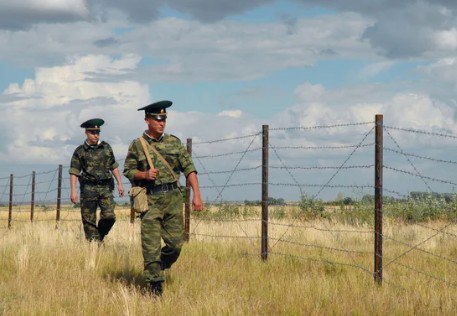
Tajikistan’s border troops have reported an armed incident along the country’s southern border with Afghanistan. While the attackers were neutralized during the confrontation, Tajikistan suffered casualties among its personnel.

According to the State Committee for National Security (SCNS) of the Republic of Tajikistan, the incident occurred late on December 23, 2025. Three armed individuals described as “members of a terrorist organization” attempted to launch an attack on border post No. 5 “Bo” of the 0341 “Sarchashma” detachment in the Shamsiddin Shohin district.

The intruders illegally crossed the state border at approximately 11:30 p.m. and entered Tajik territory. The following morning, at 11:15 a.m., Tajik border guards located the suspects. According to the official statement published by the Khovar news agency, the attackers refused to surrender and opened fire.

All three assailants were killed in the ensuing operation. Tajik security forces seized a significant cache of weaponry at the scene, including three M-16 rifles, a Kalashnikov assault rifle, three foreign-made pistols equipped with silencers, ten hand grenades, one pair of night vision goggles, explosives, and other combat gear.

Two members of the Border Troops of the SCNS, Zirekhbon Navruzbekov and Ismatullo Kurbonov, were killed in the clash. Authorities extended their condolences to the families of the fallen officers.

The SCNS noted that this was the third such incident in the past month involving armed incursions from Afghan territory. In a strongly worded statement, the border service criticized the Taliban authorities for failing to uphold their international obligations and repeated commitments to secure the border and prevent terrorist activity.

“These facts confirm that the Taliban government is demonstrating a serious and repeated inability and irresponsibility, in fulfilling its international obligations and consistent promises to ensure security and stability on the state border with the Republic of Tajikistan,” the statement read.

Tajikistan called on Afghan authorities to issue a formal apology and implement additional effective measures to secure the shared border.

According to Tajik officials, the border area is now stable, and an investigation into the latest incident is ongoing.

Two earlier attacks were reported on November 26 and 30, 2025, also originating from Afghan territory. In those incidents, five Chinese citizens were killed and three injured. The attacks targeted a mining company in the Shohin district and a construction company in the Darvaz district.

Tajikistan condemned the attacks and demanded that the Taliban arrest those responsible. The Afghan Foreign Ministry responded by stating that the attacks were intended to “create instability and mistrust between countries in the region.”

President Emomali Rahmon publicly condemned the incidents and ordered Tajik security forces to take decisive measures to restore stability and prevent further cross-border attacks.
Can the New Multimodal Route Become a Sustainable Corridor for Central Asia?

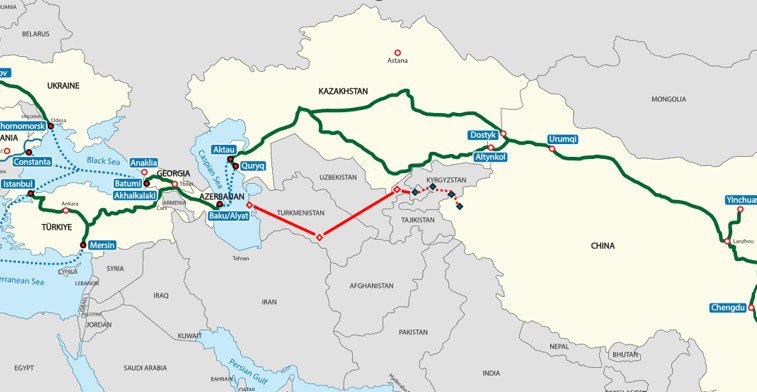
The launch of the China-Kyrgyzstan-Uzbekistan-Turkmenistan-Caspian multimodal corridor has generated significant interest as another attempt to expand Eurasian transport connectivity. A pilot shipment in the fall of 2025 demonstrated the technical feasibility of the new route: cargo transported from Kashgar, China, passed through Kyrgyzstan and Uzbekistan, reached Turkmenistan, and was then delivered to Azerbaijan via the Caspian Sea, continuing along the Baku-Tbilisi-Kars railway toward Europe.

Despite its evident geopolitical appeal, questions remain over the route’s long-term sustainability and commercial viability. The central question is whether this demonstration project can evolve into a regularly functioning transport corridor.

A Third Alternative Between the Northern and Middle Corridors

This multimodal route can be seen as a potential alternative to the two existing pathways: the northern route, China-Kazakhstan-Russia-Europe; and the Trans-Caspian International Transport Route (TITR), or Middle Corridor, which passes through Kazakhstan, the Caspian Sea, the South Caucasus, and Turkey.

The growing geopolitical risks along the northern route since 2022, combined with capacity limitations on the Caspian segment of the TITR, have spurred interest in a third option, a so-called “southern belt” traversing Kyrgyzstan, Uzbekistan, and Turkmenistan.

Each country along this route has its own strategic calculus. Uzbekistan is seeking to overcome its “double continental isolation” and elevate its role as Central Asia’s transit hub. Kyrgyzstan is aiming to monetize its geographic position between China and the Ferghana Valley. Turkmenistan is developing the port of Turkmenbashi as an alternative to the increasingly congested hubs of Aktau and Alat. China, meanwhile, continues to diversify its westward overland trade routes.

The Uzbek Factor: Geoeconomics vs. Logistics

From Tashkent’s perspective, this corridor aligns with its long-term transport strategy. Analysts frequently cite Uzbekistan’s ambition to transition from a landlocked to a “land-linked” state with direct access to China, the Caspian Sea, and southern routes to the Indian Ocean.

The new route offers Uzbekistan three strategic advantages: alternative access to China via Kyrgyzstan, enhanced status as a regional transit hub, and deeper transport cooperation with Turkmenistan, including potential joint development of the Turkmenbashi port.

However, when shifting from geopolitical ambition to logistical execution, serious limitations emerge, many outside Uzbekistan’s control.

Kyrgyzstan: A Bottleneck in the Chain

Documents from the Central Asia Regional Economic Cooperation (CAREC) program highlight the continued challenges facing multimodal transport in the region, namely slow transit, poor modal integration, border delays, and outdated logistics technologies.

Within this corridor, Kyrgyzstan remains the primary bottleneck. Approximately 82% of its foreign trade by weight is transported by road, making the route through this mountainous country highly seasonal, expensive, and unpredictable.

According to the International Road Transport Union, Kyrgyzstan’s transport system faces severe constraints from alpine terrain, avalanches, and impassable mountain passes that render winter transport nearly impossible in many areas. It is therefore unsurprising that, following the pilot shipment, no major logistics operators committed to shifting regular cargo to this route.

The Caspian Sea: Structural Constraints

The Caspian Sea leg, anchored by Turkmenbashi port, presents another critical challenge. The limitations here are systemic rather than national. Key issues include insufficient fleet capacity, the absence of regular liner services, inconsistent schedules, weather-related disruptions, and fragmented tariffs.

While the Turkmenbashi port is competitive in several respects, it cannot alone address vessel shortages or the lack of regional coordination. Without structural reforms, Caspian routes, including this new corridor, will continue to operate at suboptimal levels.

The CKU Railway: A Potential Game Changer

Some experts argue that the only transformational solution lies in completing the China-Kyrgyzstan-Uzbekistan (CKU) railway. This would reduce transport costs, enhance predictability, and eliminate seasonal constraints along the mountainous Kyrgyz section.

However, analysts caution that the CKU railway should be regarded as a regional connectivity project rather than a full alternative to the Northern or Middle Corridors. It would serve as a new axis of trade between China and Central Asia, rather than as a pan-Eurasian route.

The World Bank has categorized the CKU as a greenfield project in its “Middle Trade and Transport Corridor” report, highlighting financial and macroeconomic risks typical of infrastructure developments still in the design phase.

Geopolitics Outpaces Infrastructure

In its current form, the China-Kyrgyzstan-Uzbekistan-Turkmenistan-Caspian corridor reflects regional strategic ambitions more than infrastructure readiness. For Central Asia, diversifying transport routes has become essential to achieving geopolitical autonomy, yet infrastructure development still lags behind political aspirations.

This initiative is less about creating a fully functional Eurasian corridor and more about gradually shaping a new axis of regional connectivity. Its long-term economic sustainability will depend not on symbolic pilot shipments but on the participating countries’ ability to coordinate infrastructure investment, standardize logistics procedures, and align their strategic interests.

U.S. Logistics Companies Look to Kyrgyzstan for Talent and Digital Solutions

Kyrgyzstan recently hosted CABXPO-2025, an international business and logistics forum that highlighted the country’s growing role as a point of interaction between Central Asia and global logistics markets. Held with the participation of the High-Tech Park, the forum brought together more than 500 companies from across the region. The Park, operational for over a decade, has become a key pillar of Kyrgyzstan’s expanding digital economy.

One of the most notable aspects of CABXPO-2025 was the presence of senior executives and owners from major American freight companies. Their visit to Bishkek provided a platform for exchanging industry expertise, recruiting talent, exploring digital logistics solutions, and attracting Kyrgyz dispatchers to work with the United States freight market.

According to Chubak Temirov, Deputy Director of the High-Tech Park, the forum stood out for its inclusion of investors from Silicon Valley, who expressed interest in identifying promising IT startups in Kyrgyzstan and other Central Asian countries. Nevertheless, a large portion of attendees represented transport and logistics businesses, particularly those operating in the U.S. market.

Temirov noted that long-haul truck driving remains one of the most in-demand professions among Kyrgyz labor migrants heading to the U.S. and Europe. In recent years, several Kyrgyz nationals have successfully established their own transport companies in the U.S., managing fleets of hundreds of trucks. These examples of social mobility have become an important source of motivation for younger generations.

@TCA

At the expo, several American companies with Kyrgyz roots were actively recruiting. Many base their dispatch operations in Bishkek or Osh while managing freight movements across the U.S. Forum participants were able to enroll in two-month dispatcher training programs, with company representatives offering employment upon completion.

Aidar Abitov, a representative of a U.S.-based freight carrier, told The Times of Central Asia that his company operates more than 600 trucks and continues to expand. While the physical transportation takes place in the U.S., the company’s dispatch and technical support operations are located in Bishkek. Employees undergo training in areas such as cargo booking, transport coordination, and working with brokers, becoming official members of the U.S. company without leaving Kyrgyzstan. English proficiency remains a key requirement. The company’s medium-term goal is to support a fleet of 1,000 trucks.

The forum also drew attention to IT innovations from Kyrgyzstan and Uzbekistan. A team from Tashkent showcased real-time software for monitoring cargo and vehicle fleets. The system tracks truck locations, vehicle condition, and driver behavior, including signs of fatigue or drowsiness. According to the developers, their solutions are already in use by thousands of logistics companies in the U.S., managing tens of thousands of trucks.

One of the developers, Azimjon Akhmadjonov, told The Times of Central Asia that participating in CABXPO was primarily an opportunity to exchange ideas and build professional networks. He highlighted the role of such events in connecting Kyrgyz and Uzbek professionals working in the United States and in helping form a cross-border community of experts.

The Kyrgyz government has positioned forums such as CABXPO as part of its efforts to attract foreign investment, particularly in logistics and digital services. Ravshan Sabirov, head of the National Investment Agency, has said the country aims to improve investment conditions through clearer regulations, stronger investor protections, and longer-term partnership models.

Participants described CABXPO-2025 as further evidence that Kyrgyzstan is steadily positioning itself as a key player in the regional logistics and digital services ecosystem aimed at global markets.

Kyrgyzstan Signals Possible End to EU Aviation Ban

Kyrgyzstan says it is close to ending a near two-decade ban that has kept its airlines off European routes, after President Sadyr Japarov said the country has reached a “critical point” in efforts to leave the European Union’s air safety blacklist. The comments come as Kyrgyz officials push for international recognition of reforms in aviation oversight and airport infrastructure.

Japarov said Kyrgyzstan has been developing civil aviation “on its own initiative,” investing “billions of soms,” buying aircraft for domestic and international routes, and building new airports. He described the effort as a state priority and added: “Kyrgyzstan has reached a critical point in its exit from the European Union’s ‘blacklist’… with God’s help, the skies of Europe will open to Kyrgyzstan.”

The EU Air Safety List is the bloc’s mechanism for restricting airlines that, in the EU’s assessment, do not meet international safety standards. Airlines on the list are banned from operating “to, in and from the EU,” and the EU can also apply restrictions to all carriers certified in a country if national oversight is deemed inadequate, according to the European Commission’s official Q&A on the EU Air Safety List. Updates are prepared with support from the EU Air Safety Committee and the European Union Aviation Safety Agency (EASA), and are based on standards set through the International Civil Aviation Organization (ICAO), the Commission says.

Kyrgyz airlines have been on the EU list since 2006. The EU’s most recent comprehensive update, published on December 8, 2025, still includes Kyrgyzstan among the countries whose airlines are banned because of “a lack of safety oversight by the aviation authorities,” according to the Commission’s December 2025 materials and the linked EU Air Safety List documentation. Kyrgyz airlines would be allowed to apply for operations linked to the European Union if the country is removed from the EU Air Safety List. Any carrier seeking to fly to, from, or within the EU needs to meet European safety requirements, including obtaining Third Country Operator authorization from the European Union Aviation Safety Agency, according to the European Commission’s air safety rules.

Kyrgyzstan’s public messaging has framed the potential removal as an economic lever, with Japarov stating it would support tourism, attract investment, and improve the country’s international image. It could also lead to more direct scheduled flights between Kyrgyzstan and EU destinations, rather than relying on connections via third countries.

The EU has not announced a decision to remove Kyrgyzstan, and any change would require a formal update to the list after technical review. Past EU updates show that changes can cut both ways. In June 2025, for example, the Commission added all carriers certified in Suriname and Tanzania after identifying serious shortcomings in national oversight, in an official announcement on its Mobility and Transport site.

For now, Japarov’s statement signals confidence that Kyrgyzstan believes it has supplied the documentation and reforms the EU expects. Whether that will translate into removal will depend on the EU’s technical findings and the next formal update cycle of the Air Safety List.

Kazakhstan Deepens Kuryk Port on Trans-Caspian Transport Corridor

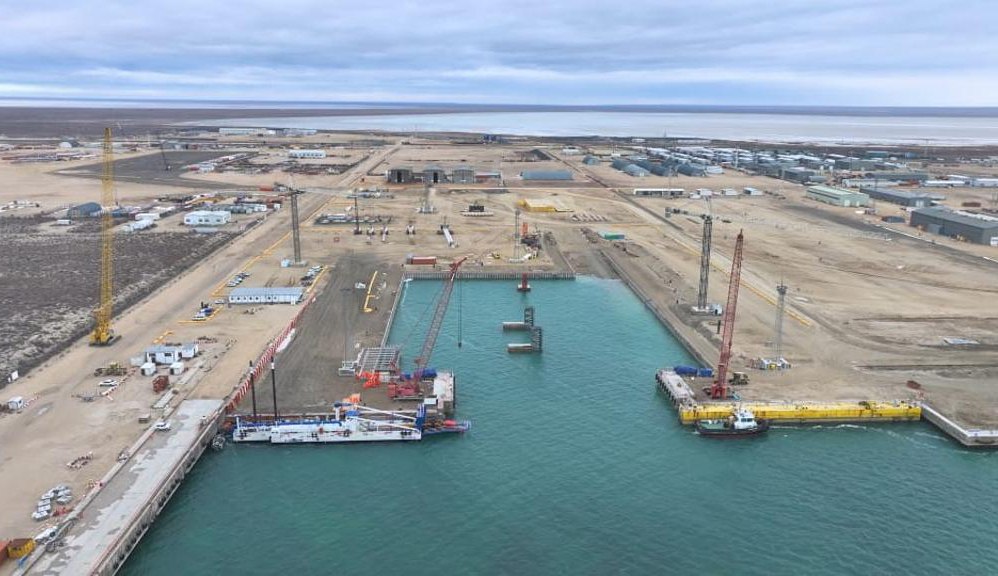
Kazakhstan has launched a strategic dredging project at the ERSAI industrial port, part of the Caspian Sea’s Kuryk Port, aimed at boosting its cargo-handling capacity and reinforcing its role as a key transit hub along the Trans-Caspian International Transport Route (TITR). Also known as the Middle Corridor, the TITR connects China to Europe via Central Asia and the South Caucasus.

According to the Ministry of Transport, the project will deepen the port’s waters and approach channel to five meters, enabling year-round navigation.

The initiative is fully financed by ERSAI, which is constructing its own Cutter Suction Dredger (CSD 650), named ERSAI 5, to carry out the dredging works between January and June 2026.

Dredging is a core component of ERSAI’s broader expansion strategy, which also includes launching a new container terminal and expanding shipbuilding and repair operations.

Located on the eastern coast of the Caspian Sea, south of the Aktau port, Kuryk’s ferry complex handles a variety of cargo, including grain, oil products, fertilizers, and chemicals. However, falling water levels in the Caspian have forced vessels to operate below full capacity to avoid grounding.

As of early 2025, the Caspian Sea’s water level had declined by roughly two meters since 2006, posing growing challenges for Kazakhstan’s maritime logistics.

In response, Kazakhstan has prioritized dredging efforts. In May 2025, the Ministry of Transport began deepening the Aktau port by 1.5 to 2 meters to expand its terminal capacity.

Kuryk has already undergone a previous phase of deepening, completed in November 2024, which increased the port’s depth to 7-8 meters.

The latest dredging project reflects Kazakhstan’s broader strategy to strengthen its maritime infrastructure and maintain the competitiveness of its ports amid shifting environmental and logistical conditions in the Caspian region.

Kazakhstan Becomes Regional Leader in AI Readiness

Kazakhstan has ranked 60th out of 195 countries in the Government AI Readiness Index 2025, published by the international analytical centre Oxford Insights, emerging as the leader in Central Asia for government preparedness to adopt and manage artificial intelligence. The ranking was highlighted by Kazakhstan’s Ministry of Artificial Intelligence and Digital Development.

The Government AI Readiness Index evaluates governments’ ability to apply AI across public administration, economic activity and social sectors, as well as to create conditions for its safe, responsible and sustainable use. The index covers 195 countries and is the only international ranking focused exclusively on the role of the state in fostering AI development.

Over the past year, Kazakhstan climbed 16 positions in the ranking, improving its standing from 76th place in the previous edition. Regionally, the country now leads all Central Asian states, reinforcing its reputation as one of the most advanced digital economies in the region. According to the ministry, the rise reflects strengthening institutional capacity, expanded infrastructure and the active integration of AI solutions in public services.

Kazakhstan’s strongest performance was in the Public Sector Adoption category, where it scored 73.59 points. This metric highlights the widespread use of digital technologies within government services, the development of egovernment platforms and the shift toward proactive digital interaction with citizens and businesses.

The Oxford Insights report notes that Kazakhstan’s competitive edge is rooted in its welldeveloped digital and telecommunications infrastructure. National digital platforms, high internet penetration and a mature ecosystem of egovernment services provide a strong foundation for scaling AI solutions nationwide. The report also cites the country’s political and managerial readiness: a suite of strategic policy documents, an emerging regulatory framework and sustained government focus on AI have enabled the development of a longterm and systematic national strategy.

Despite progress, both the report’s authors and the ministry identify key areas for further growth. The next phase of Kazakhstan’s AI ecosystem development will require accelerating the commercialisation of AI technologies, strengthening the private technology sector and startup ecosystem, and expanding business access to data and financing instruments.

Earlier this year, The Times of Central Asia reported that Kazakhstan launched the most powerful supercomputer in Central Asia, a cornerstone of its strategy to position AI as a driver of both local and global economic growth.