• KGS/USD = 0.01144 0%
  • KZT/USD = 0.00196 -0%
  • TJS/USD = 0.10899 -0%
  • UZS/USD = 0.00008 -0%
  • TMT/USD = 0.28490 0%
  • KGS/USD = 0.01144 0%
  • KZT/USD = 0.00196 -0%
  • TJS/USD = 0.10899 -0%
  • UZS/USD = 0.00008 -0%
  • TMT/USD = 0.28490 0%
  • KGS/USD = 0.01144 0%
  • KZT/USD = 0.00196 -0%
  • TJS/USD = 0.10899 -0%
  • UZS/USD = 0.00008 -0%
  • TMT/USD = 0.28490 0%
  • KGS/USD = 0.01144 0%
  • KZT/USD = 0.00196 -0%
  • TJS/USD = 0.10899 -0%
  • UZS/USD = 0.00008 -0%
  • TMT/USD = 0.28490 0%
  • KGS/USD = 0.01144 0%
  • KZT/USD = 0.00196 -0%
  • TJS/USD = 0.10899 -0%
  • UZS/USD = 0.00008 -0%
  • TMT/USD = 0.28490 0%
  • KGS/USD = 0.01144 0%
  • KZT/USD = 0.00196 -0%
  • TJS/USD = 0.10899 -0%
  • UZS/USD = 0.00008 -0%
  • TMT/USD = 0.28490 0%
  • KGS/USD = 0.01144 0%
  • KZT/USD = 0.00196 -0%
  • TJS/USD = 0.10899 -0%
  • UZS/USD = 0.00008 -0%
  • TMT/USD = 0.28490 0%
  • KGS/USD = 0.01144 0%
  • KZT/USD = 0.00196 -0%
  • TJS/USD = 0.10899 -0%
  • UZS/USD = 0.00008 -0%
  • TMT/USD = 0.28490 0%
08 December 2025

Cotton Deadlock: Why Tajikistan’s Farmers Are Working at a Loss

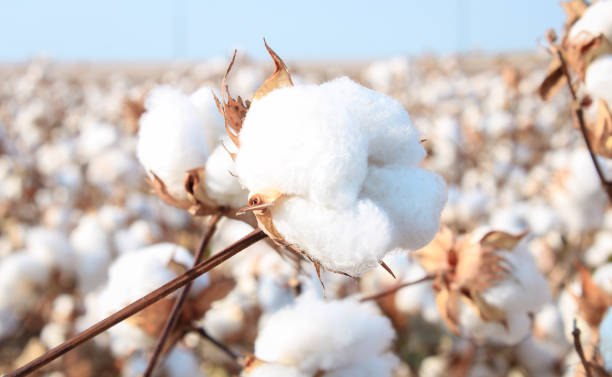
Tajikistan’s cotton farmers are facing a growing crisis: while global cotton prices remain high, local producers are forced to sell at rates below production cost, threatening the viability of an entire sector that once served as a strategic pillar of the national economy.

Farmers say they are currently paid just 6-6.5 TJS ($0.66-0.72) per kilogram for raw cotton, while the cost of production stands at 7-8 TJS ($0.77-0.88). Many now warn that without government intervention, the cotton industry is unsustainable.

Selling Below Cost

“If we don’t sell for at least 10 TJS ($1.10) per kilogram, we will go bankrupt. The production cost is simply too high,” said a farmer from Khamadoni district.

He estimates that it takes between 10,000 and 12,000 TJS ($1,100-1,320) to cultivate one hectare of cotton. Yet this season, even the most optimistic buyers offer well below that value.

In Khamadoni, the crisis is compounded by non-operational cotton ginning factories. Farmers were instructed in the spring to plant cotton, but come harvest time, they discovered there was no local processing infrastructure in place. Many are now searching for buyers in other districts, where prices remain equally unprofitable.

Despite official claims of “freedom of crop choice,” farmers say that in practice they face unspoken pressure from local authorities. Refusing to grow cotton can complicate land lease renewals or access to loans.

Intermediaries Reap the Profits

On the international market, cotton prices hover around $1.50-1.60 per kilogram. But Tajik producers remain disconnected from global buyers. Instead, they rely on a procurement system that disproportionately benefits intermediaries.

“Without subsidies and higher purchase prices, cotton farming will collapse. The current procurement system works in favor of intermediaries, not the farmers,” said economist Farrukh Saidov.

Labor costs add to the burden. Pickers are paid just 1.5 TJS ($0.16) per kilogram while many can earn up to 200 TJS ($22) a day in construction. This pay disparity is driving workers away from agriculture.

Uzbekistan Supports, Tajikistan Promises

In neighboring Uzbekistan, cotton production has become more viable thanks to government subsidies of 2.1 TJS ($0.23) per kilogram. Tajikistan offers no such support, leaving local farmers to operate at a loss.

On paper, however, the government has ambitious plans. The national strategy for the development of the cotton and textile industry through 2040 includes proposals for preferential loans, grants, tax breaks, and greater participation of farmers in setting factory prices.

Plans also call for establishing a national cotton and textile association, retraining agricultural specialists, and bringing in foreign experts. But on the ground, farmers say these promises remain unfulfilled. Video appeals shared widely on social media reflect growing desperation among rural communities.

“We are forced to sell cotton below cost. Without state support, this is a path to ruin,” one farmer said.

Experts agree that systemic reforms are urgently needed. These would include introducing subsidies, creating direct access to export markets, and eliminating unofficial crop mandates.

For now, cotton, once a key strategic industry, is fast becoming a symbol of Tajikistan’s broader agricultural dysfunction.


Recipes for Broken Hearts: Bukhara Hosts Its First Contemporary Art Biennale

The heat of Bukhara’s old city does little to deter the crowds. Tourists squeeze through narrow lanes, pausing in the shade of centuries-old madrasas or beneath towering minarets. This September, the heart of the UNESCO Creative City of Crafts and Folk Art is hosting something new: the inaugural Bukhara Biennale of contemporary art.

Running from September 5 to November 20, the biennale is already being hailed as one of Central Asia’s largest and most diverse art initiatives. Its title, Recipes for Broken Hearts, reflects both its ambition and tone, blending art, history, and community in a city long known for its spiritual and cultural heritage.


A Global Effort Rooted in Bukhara

The Bukhara Biennale is commissioned by Gayane Umerova, Chairperson of the Uzbekistan Art and Culture Development Foundation, which has played a pivotal role in preserving and promoting the country’s cultural legacy. Artistic director Diana Campbell sees the biennale as a continuation of Bukhara’s historic role as a center of learning and exchange.

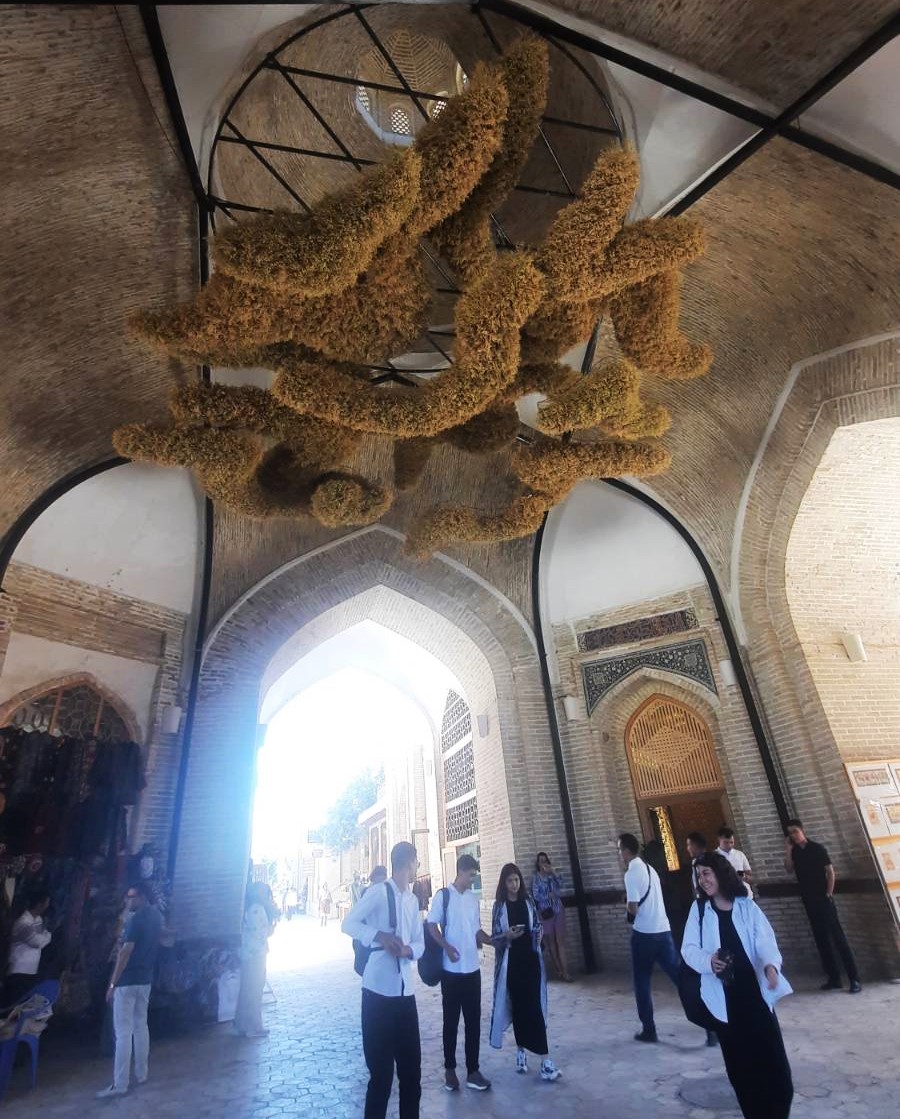
Isiriq (wild rue) is a traditional herbal medicine also widely used in purification rituals among Uzbeks. It is often burned or hung in homes to ward off misfortune and evil. In the installation, bunches of isiriq hanging from the roof appear to reflect this age-old custom; image: TCA, Sadokat Jalolova

“The heart’s creative power comes into view when we look to tenth-century Bukhara, a time and place that offer many ways of mending heartbreaks,” said Campbell. She referenced Bukhara’s legacy as the home of polymath Ibn Sina and a crossroads on the Silk Roads. “For more than a millennium, Bukhara has been a place where people gathered to seek knowledge, healing, and hope. We believe the city holds many extraordinary recipes in its heart.”

The biennale unfolds in the newly developed Bukhara Cultural District, where restored monuments are paired with modern design, featuring contributions from architects Wael Al Awar and landscape designer Günther Vogt.

From Jeddah to Bukhara: Palm Waste Becomes Structure

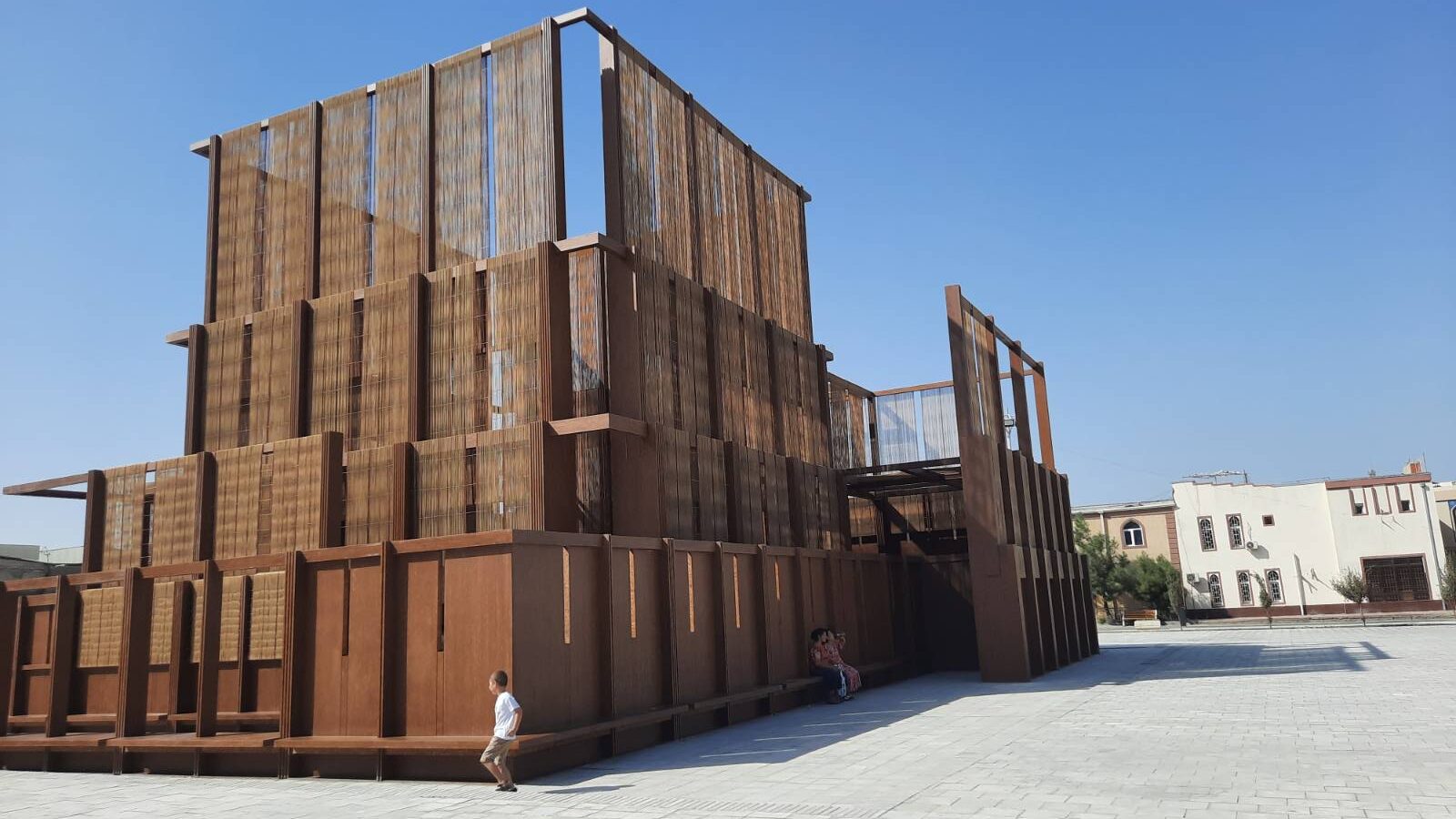
A highlight of the biennale is the AlMusalla Prize-winning installation, a reimagined musalla, or prayer space, constructed entirely from palm tree waste. Originally built in Jeddah, the structure has been transported to Bukhara as a symbol of sustainability and reuse.

AlMusalla Prize winning installation; image: TCA, Sadokat Jalolova

Christopher Blust, engineer at AKT II, explained the origins of the project: “We were inspired by the idea of courtyards as places of gathering. Even the Prophet Muhammad’s house in Medina began with a courtyard for prayer and community.”

Equally important, he said, was the material itself. “Palm fronds are discarded and often burned. We asked: Why not return to how these were used centuries ago? We shredded them, pressed them into boards, and created structural timber. This is the world’s first project to use palm waste in this way.”

Architect Nicolas Fayad of East Architecture Studio noted that their design was informed by Jeddah’s traditional materials, timber, mud, and stone, reinterpreted through modern technology. “Everything visible in this structure, the framework, screens, and mats, comes from a single source: the palm,” Fayad said.

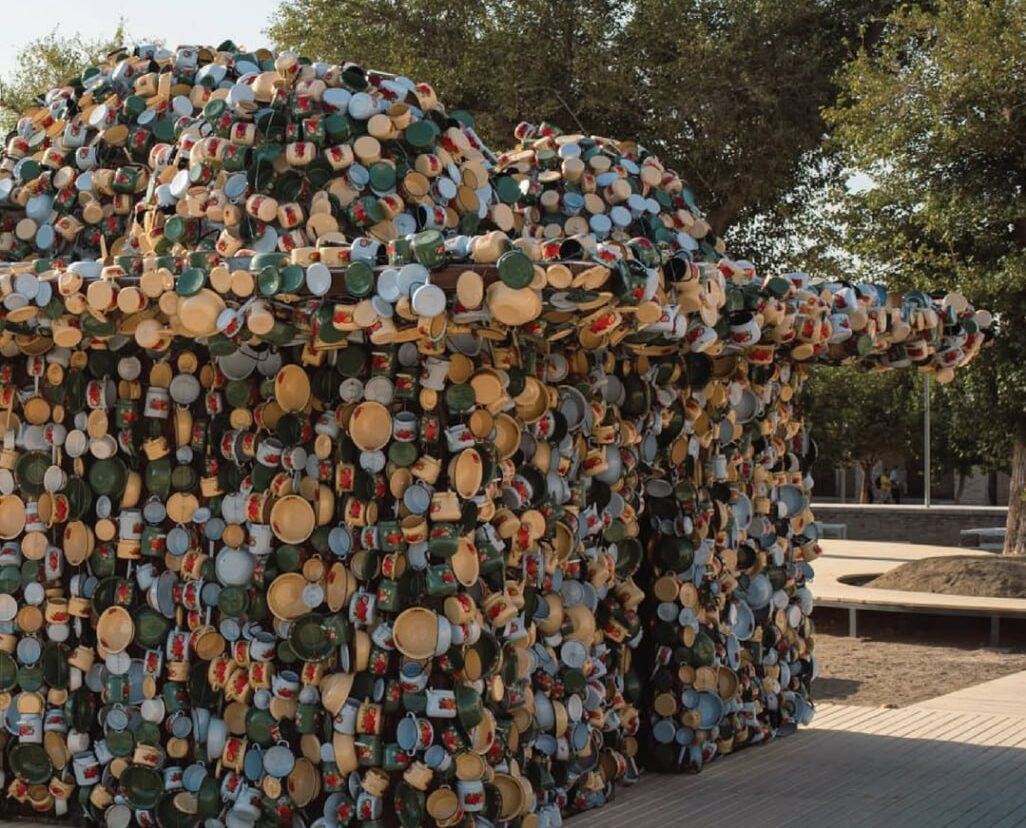
Crafted from everyday household objects, this installation portrays women occupied with countless kitchen tasks; image: ACDF Uzbekistan

Healing Cracks with Gold

Other works draw inspiration from Bukhara’s monuments. Master craftsman Bakhshullo Jumayev and his wife Muqaddasxon Jumayeva partnered with Belgian designer Hanna Militsich to repair cracks in the façade of the Khoja Kalon madrasa using golden threads, a technique inspired by the Japanese art of kintsugi.

“In Japan, they don’t discard broken vessels; they mend them with gold,” said Jumayev. “Inspired by that, we decided to patch the cracks in our heritage buildings with golden threads.”

Jumayev chose Khoja Kalon not just for its beauty but for personal reasons. He was born nearby, in the home of the renowned Bukharan gold embroiderer Rajab Oqsoqol. “We grew up walking barefoot around Khoja Kalon. This project fills me with joy,” he said.

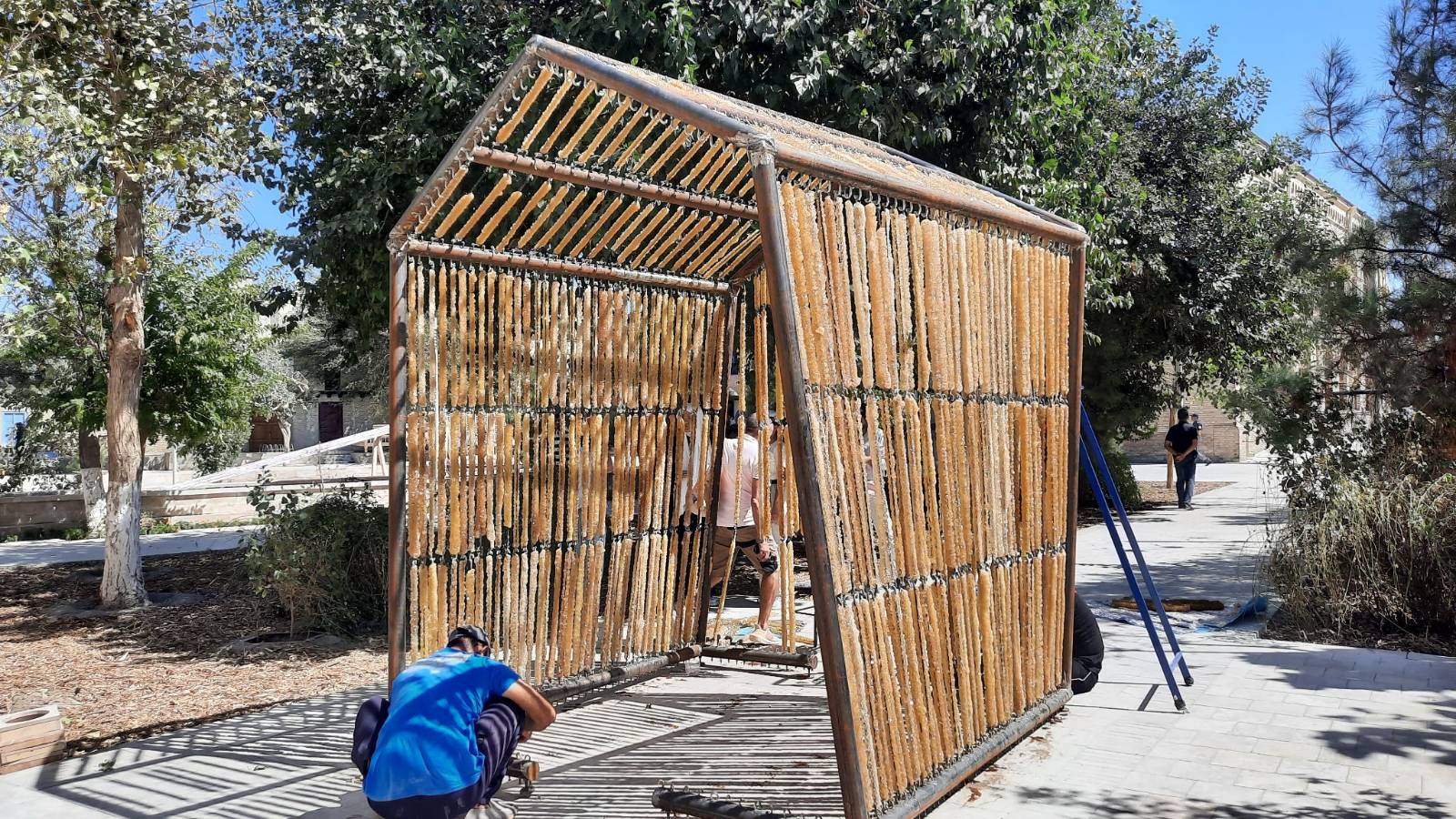
A small house made of novvot, or rock candy, appears to symbolize a life and family home filled with sweet memories; image: TCA, Sadokat Jalolova

The repairs took seven months to complete, and Jumayev emphasized that the work was both practical and symbolic. “The biennale aims to soothe aching hearts. We wanted to mend the cracks like applying a healing balm,” he said.

At 69, the sixth-generation artisan has trained more than 500 students, many now working globally. Participating in the biennale, he said, is “a dream come true.”

Voices of Women in Central Asia

Beyond installations, the biennale creates a platform for dialogue. On September 6, a panel titled Central Asian Women was held at the historic Gavkushon madrasa, focusing on the intersections of heritage, identity, and contemporary art.

An installation made of national Atlas fabric is designed to remind visitors of a bird, sending a message that women should be free to live without limits; image: TCA, Sadokat Jalolova

Organized with the support of ACWA Power, the session featured women artists from across the region. “Women play a strategic role in shaping business and cultural landscapes,” said Janona Ahmedova, Communications Director at ACWA Power Uzbekistan. “Through art and dialogue, we aim to amplify women’s voices as part of a sustainable future.”

Kazakhstan Emerges as Regional Leader in Medical Tourism

Kazakhstan has taken the lead in the post-Soviet space in terms of the rapid development of medical tourism, surpassing its closest regional competitors, according to Kristina Krivets, President of the Kazakhstan Medical Tourism Association.

Rapid Growth in Patient Numbers

The sector has experienced explosive growth in recent years. In 2022, when the association was first established, just 1,280 medical tourists were recorded. By 2023, that figure had jumped to 8,000 and by 2024, it reached 80,000.

“This is a very sharp increase, which shows that Kazakhstan is becoming a notable player in the region,” Krivets said.

According to the association, around 90% of foreign patients come from neighboring countries, Kyrgyzstan, Russia, Uzbekistan, plus nearby Tajikistan. The remaining 10% hail from countries such as the United States, Germany, Israel, Austria, and Switzerland.

The most in-demand services include reproductive medicine, dentistry, and aesthetic procedures. Kazakhstan offers these treatments at lower costs while maintaining acceptable standards of quality. In parallel, there is growing interest in more complex procedures such as cardiac surgery, neurosurgery, and radiation therapy for cancer.

The average bill for a foreign patient is approximately 1.5 million KZT ($2,780) for medical services alone. However, the total spending per patient is roughly ten times higher than that of a typical tourist, once accommodation, transportation, and additional services are factored in, underscoring the sector’s growing economic significance and its multiplier effect on related industries.

Meeting International Standards

Currently, nine clinics in Kazakhstan hold Joint Commission International (JCI) accreditation, seven in Astana and two in Almaty. While the accreditation process is costly and time-consuming, it is seen as essential for attracting international patients.

“Today, Kazakhstan ranks first in medical tourism in Central Asia. Our main competitor is Uzbekistan, but we have every reason to become a medical tourism hub not just for our neighbors, but for a broader international audience,” Krivets stated.

To help position Kazakhstan globally, the first international medical tourism exhibition, GlobalMedKZ, will be held in Astana on November 27-28. The event will focus on promoting the sector through information tours, social media campaigns, participation in international exhibitions, and consultations with foreign doctors.

“GlobalMedKZ will become a platform for Kazakhstan to be known to the whole world,” Krivets emphasized.

Legal Barriers Remain

Despite its rapid development, the sector still faces significant legal challenges. Krivets pointed out that medical tourism is not yet defined in Kazakh legislation.

“We are working with the Ministry of Health to include a definition in the Law ‘On Health,’ but ideally, a separate law on medical tourism is needed,” she said.

Visa access is not a major hurdle, as most citizens from countries in Eurasia can enter Kazakhstan without a visa. However, state medical institutions are currently prohibited from paying commissions to foreign agents, limiting efforts to attract more international patients.

Still, Krivets remains optimistic. “Medical tourism is a paid service that, with a well-structured system, can generate substantial revenue for the state. We see successful models in Turkey and South Korea, where it has become one of the most profitable sectors of the economy,” she said.

UK Gifts Kazakhstan a Copy of Rare 11th-Century Map

Kazakhstan’s National Center for Manuscripts and Rare Books has received a valuable addition to its historical archive, a facsimile of a unique medieval map of Central Asia, gifted by the British Embassy. The original is held at the Bodleian Library at Oxford University.

The map is a reproduction of the only known copy of Kitab al-Garib al-Funun wa Mulakh al-Uyun (The Book of Wonderful Sciences and Delights of the Eye), an anonymous 11th-century manuscript. Scholars believe the original work was produced in Egypt between the late 12th and early 13th centuries.

Among the notable features of the map is the depiction of the ancient city of Zhankent, referred to in Arabic sources as “Al-Karia al-Hadisa” (Zhana Qala), located in modern-day Zhetysu, Kazakhstan. Between the 8th and 11th centuries, Zhankent served as the capital of the Oghuz state, a confederation of 24 Turkic tribes. Several other historic cities in southern Kazakhstan are also identified on the map.

Digitized in full after its arrival at the Bodleian Library in 2002, the manuscript is now recognized as a valuable resource in the study of Islamic geography and medieval manuscript art.

Founded in the 14th century, the Bodleian Library is one of Europe’s oldest and largest academic libraries. It is named after Sir Thomas Bodley (1545-1613), an English diplomat and noted collector of manuscripts.

Kazakhstan’s own National Center for Manuscripts and Rare Books continues to expand its holdings. A recent expedition to the Abai region uncovered nearly 1,000 manuscripts from the 19th and 20th centuries, with 27 of those works, ranging from religious texts to early printed books, now integrated into the national collection. Notable additions include a work by Abdullah Rumi in Old Turkic, collections of hadiths, and publications printed in Kazan, Orenburg, and Ufa during the late imperial period.

In related cultural developments, The Times of Central Asia previously reported that, in late 2024, the British Library and the John Rylands Library in Manchester transferred more than 100 digitized manuscripts to Central Asian scholars. The collection includes rare works by Eastern luminaries such as Makhtumkuli Fargi, Alisher Navoi, and Fizuli.

Trump Reengages Central Asia Amid Tariffs and Rising Competition

In a bid that signals renewed U.S. interest in Central Asia, U.S. President Donald Trump on September 7, 2025, held what he described as a “great conversation” with Kazakhstan’s President Kassym-Jomart Tokayev.

Earlier in the week, Trump also spoke over the phone with Uzbek President Shavkat Mirziyoyev, with both sides highlighting plans to expand their strategic partnership. Commentators have noted that Trump’s rhetoric and transactional approach to foreign policy in his second term create both challenges and opportunities for sustained U.S. engagement in the region.

“Great Conversation” With Tokayev

As he departed the White House for the U.S. Open men’s final, President Trump told reporters, “We had a great conversation,” though he offered no further details on the substance of the discussion.

On Kazakhstan’s side, President Tokayev had reached out in July, expressing his openness to constructive trade talks following Trump’s imposition of 25% U.S. tariffs on Kazakh goods. In that July letter, Tokayev committed to “developing fair, predictable, and mutually beneficial trade relations.” He also emphasized his readiness for “constructive dialogue aimed at finding a rational solution.”

The exchange reflects the broader importance of the U.S.–Kazakhstan relationship, which extends far beyond tariffs. Since 2017, the two nations have maintained an “enhanced strategic partnership,” covering trade, security, and energy cooperation. Kazakhstan is the world’s largest uranium producer and a leading supplier to U.S. nuclear power plants, while American firms such as Chevron and ExxonMobil are deeply invested in the country’s vast oil fields. Strategically located between Russia, China, and Europe, Kazakhstan offers Washington a critical partner in promoting regional stability and developing alternative trade corridors traditionally reliant on Russian land. By engaging closely with Astana, the U.S. strengthens its foothold in Central Asia while securing vital resources and supporting Kazakhstan’s multi-vector diplomacy.

Strategic Outreach to Uzbekistan

Earlier the same week, Trump and Uzbekistan’s Mirziyoyev agreed to broaden their strategic partnership across economic, security, and cultural domains, the Uzbekistan press office reported. According to the office, Trump praised Uzbekistan’s “irreversible reforms” aimed at modernizing its economy and improving living standards, while Mirziyoyev lauded what he termed the “impressive results of the domestic and foreign policy” of the U.S. administration.

This extension of engagement to Tashkent comes against a backdrop of longstanding U.S. involvement in Uzbekistan, including trade under bilateral agreements since the mid-1990s and cooperation on border control and counter-terrorism programs. In late 2024, shortly before Trump’s second term began, Washington reaffirmed its support for Uzbekistan’s bid to join the World Trade Organization, with U.S. Trade Representative Katherine Tai announcing the completion of bilateral market-access negotiations. That same year, U.S. officials also underscored opportunities in critical minerals cooperation with Tashkent through the C5+1 diplomatic framework.

Beyond trade and security, Uzbekistan is strategically important as Central Asia’s most populous nation and a key transit hub between China, Russia, and South Asia. Closer U.S.–Uzbek ties complement Washington’s regional engagement with Kazakhstan, creating overlapping partnerships that strengthen American influence, promote economic diversification, and reinforce stability across Central Asia.

Why Now? Geopolitics, Tariffs, and Regional Recalibration

These calls come at a time when U.S. policy towards Central Asia is undergoing an unmistakable shift. In mid-2025, the Trump administration imposed sweeping new tariffs – including a 25% duty on Kazakh goods (excluding key raw materials) – unsettling regional partners and heightening concerns about supply-chain resilience and inflation. The Times of Central Asia has previously reported that Central Asia stands at a “critical crossroads” as disruptions hit regional supply chains and inflationary pressures rise.

Concurrent cuts to aid programs and soft power tools have also reduced Washington’s presence on the ground, with executive orders slashing 83% of USAID programs and massively downsizing U.S.-funded media.

At the April 2025 EU–Central Asia summit in Samarkand, Brussels unveiled a €12 billion (US$13.2 billion) Global Gateway package for infrastructure and green energy. Two months later, the China–Central Asia Summit in Astana produced wide-ranging agreements in energy, agriculture, and education, deepening Beijing’s role. Regional leaders also gathered in Tianjin for the largest Shanghai Cooperation Organization (SCO) summit to date, where China, Russia, India, and Iran advanced proposals for a development bank and expanded integration. With all five Central Asian presidents in attendance, the SCO projected itself as an alternative to U.S.-led frameworks.

Against this backdrop, Trump’s outreach to Kazakhstan’s Tokayev and Uzbekistan’s Mirziyoyev appears aimed at recalibrating Washington’s influence. Since January 2025, U.S. engagement has leaned heavily on tariffs, law-enforcement cooperation, and migration deals – including the deportation of 131 Uzbek nationals in April – while cutting aid programs to combat child labor in Uzbekistan. These moves signal a pivot from aid-driven diplomacy to transactional leverage. The question now is whether this toolkit can sustain U.S. influence in a region increasingly courted by Europe, China, and Russia.

Implications and outlook

The blend of tariffs, reduced assistance, and selective cooperation has complicated Washington’s regional engagement. For Kazakhstan, sustained dialogue with the U.S. could help ease trade tensions and safeguard critical exports, while for Uzbekistan, American backing for reforms and expanded commerce remains attractive even as aid channels have narrowed. With China and the European Union expanding their economic reach, Central Asian governments are increasingly interested in building deeper trade and investment ties with the United States – not only to reduce reliance on any single power, but also to secure access to technology, capital, and markets that support their long-term development strategies.

The United States stands to benefit from Central Asia’s energy reserves, mineral wealth, and strategic geography, but long-term relevance cannot be secured through tariffs and enforcement tools alone. Washington will need to find common ground with leaders in Kazakhstan, Uzbekistan, and beyond, offering practical avenues for closer economic and security cooperation. If framed around shared interests – from stable energy markets to counterterrorism and diversified trade – such cooperation can sustain U.S. influence while respecting Central Asia’s drive for autonomy in an increasingly multipolar world.

U.S. Deports 39 Uzbek Nationals, Thanks Uzbekistan for Cooperation

Several dozen citizens of Uzbekistan who didn’t have legal authorization to remain in the United States were deported from the U.S. to their home country over the weekend, the U.S. Embassy in Tashkent said

The embassy said the operation to return the 39 nationals concluded on Sunday and it thanked Uzbekistan’s government “for its close cooperation in facilitating U.S. deportation operations.”

Uzbekistan has collaborated with the United States on previous deportations of its citizens this year, funding a similar flight in April though it later said that its repatriated citizens should pay for their travel. 

In a sign of improving relations, U.S. President Donald Trump and President Shavkat Mirziyoyev of Uzbekistan spoke about working together on trade, security and other issues in a telephone conversation on Friday.

The Trump administration has conducted numerous deportation flights, many of them to Central America, as part of what it describes as an effort to secure U.S. borders. Critics describe the U.S. immigration crackdown as heavy-handed. Last week, hundreds of South Korean workers were arrested at a factory in the U.S. state of Georgia and the South Korean government said it would bring them home on a charter flight.