• KGS/USD = 0.01144 0%
  • KZT/USD = 0.00196 -0%
  • TJS/USD = 0.10899 -0%
  • UZS/USD = 0.00008 -0%
  • TMT/USD = 0.28490 0%
  • KGS/USD = 0.01144 0%
  • KZT/USD = 0.00196 -0%
  • TJS/USD = 0.10899 -0%
  • UZS/USD = 0.00008 -0%
  • TMT/USD = 0.28490 0%
  • KGS/USD = 0.01144 0%
  • KZT/USD = 0.00196 -0%
  • TJS/USD = 0.10899 -0%
  • UZS/USD = 0.00008 -0%
  • TMT/USD = 0.28490 0%
  • KGS/USD = 0.01144 0%
  • KZT/USD = 0.00196 -0%
  • TJS/USD = 0.10899 -0%
  • UZS/USD = 0.00008 -0%
  • TMT/USD = 0.28490 0%
  • KGS/USD = 0.01144 0%
  • KZT/USD = 0.00196 -0%
  • TJS/USD = 0.10899 -0%
  • UZS/USD = 0.00008 -0%
  • TMT/USD = 0.28490 0%
  • KGS/USD = 0.01144 0%
  • KZT/USD = 0.00196 -0%
  • TJS/USD = 0.10899 -0%
  • UZS/USD = 0.00008 -0%
  • TMT/USD = 0.28490 0%
  • KGS/USD = 0.01144 0%
  • KZT/USD = 0.00196 -0%
  • TJS/USD = 0.10899 -0%
  • UZS/USD = 0.00008 -0%
  • TMT/USD = 0.28490 0%
  • KGS/USD = 0.01144 0%
  • KZT/USD = 0.00196 -0%
  • TJS/USD = 0.10899 -0%
  • UZS/USD = 0.00008 -0%
  • TMT/USD = 0.28490 0%
08 December 2025

Opinion: Victory Day Parade Puts China’s Military Might and Alliances on Full Display

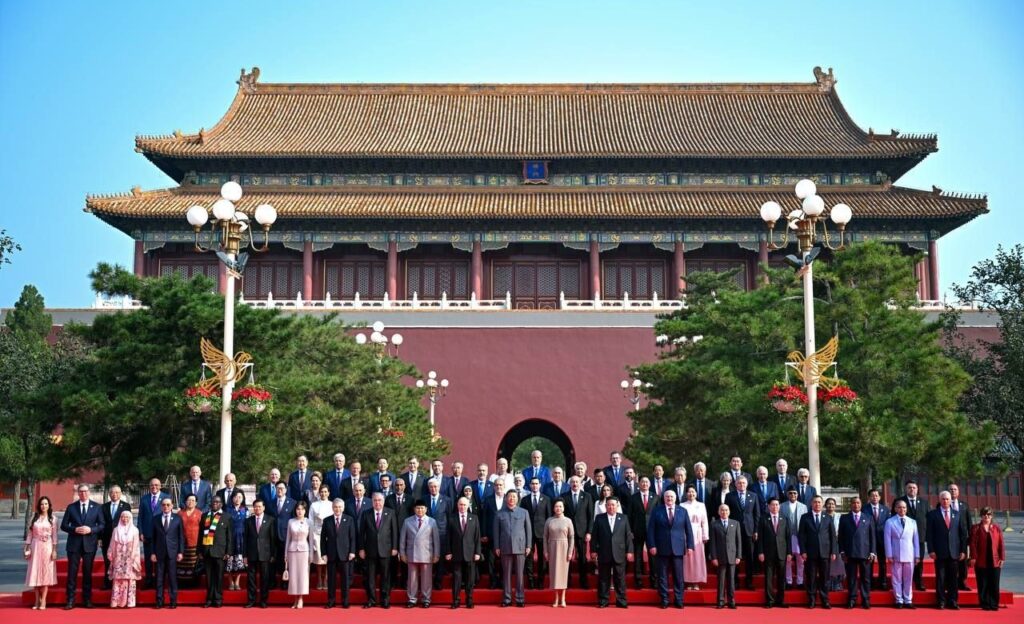
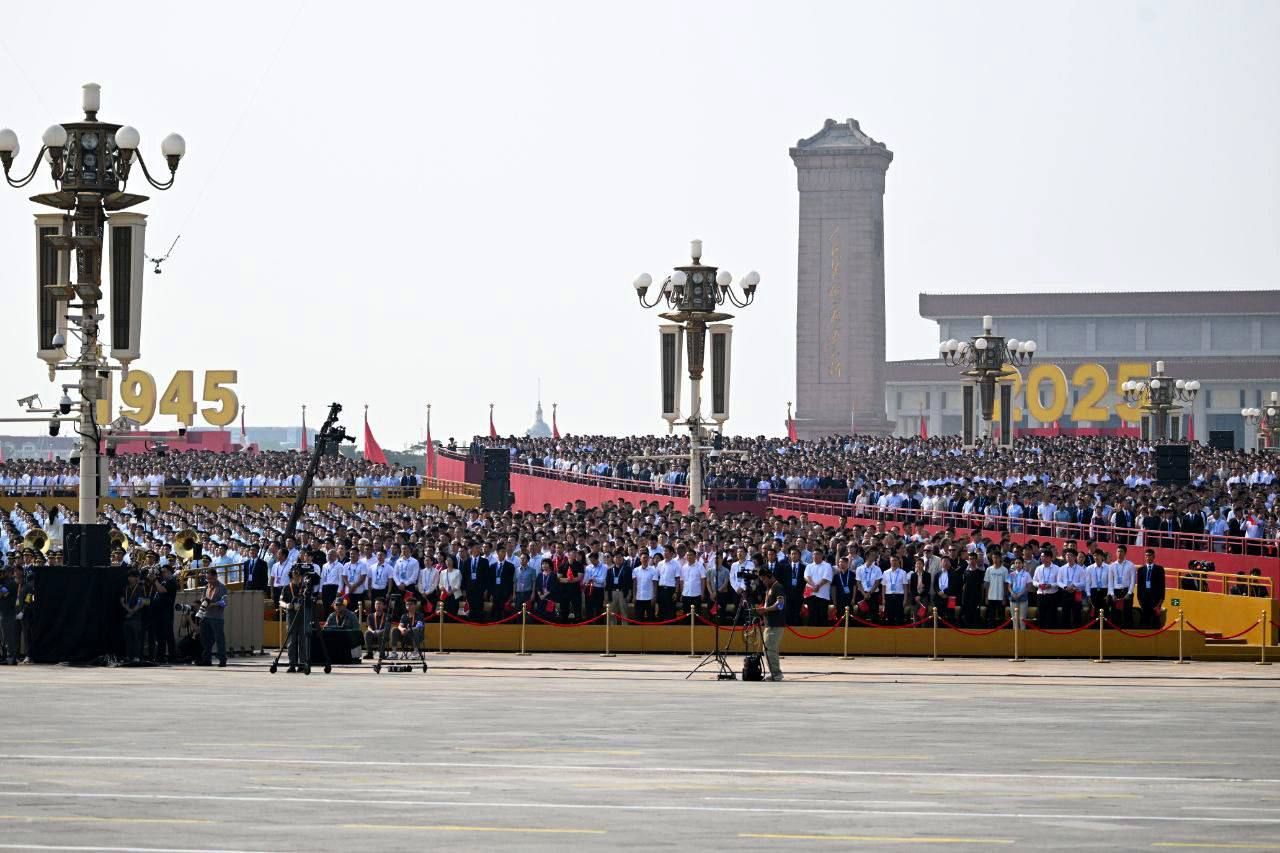
The Shanghai Cooperation Organization summit coincided with China’s lavish commemorations of the “80th anniversary of victory in the War of Resistance Against Japanese Aggression and the broader World Anti-Fascist War.” The culminating moment, a grand military parade, was followed by a formal reception hosted by President Xi Jinping for visiting foreign dignitaries. All five Central Asian heads of state attended the parade.

As the summit concluded, Xi seized the opportunity to issue a pointed warning to the West, particularly the United States and President Donald Trump, who had made it clear that he was closely following events in Tianjin and Beijing. In a post on Truth Social, Trump wrote, “Please give my warmest regards to Vladimir Putin and Kim Jong Un as you conspire against the United States of America.”

Kim Jong Un’s high-profile visit to Beijing, including a prolonged meeting with Putin, signaled the emergence of a visible military alignment between North Korea and Russia. This visit served as a strategic complement to China’s Victory Day display of military might.

Image: president.uz

For the first time, China publicly exhibited components of its strategic nuclear triad: the air-launched Jinglei1 missile, submarine-launched Julang3, and land-based ICBMs such as the Dongfeng61 and Dongfeng31 (and reportedly the DF5C). Analysts saw this as a deliberate signal to the U.S., regional powers like India and Russia, and potential international arms buyers, positioning China as a formidable strategic actor.

Also on display were China’s anti-drone “triad”, missile-gun systems, high-energy lasers, and high-power microwave weapons, highlighting advances in counter-drone technology. Additionally, the parade showcased hypersonic and cruise missiles, unmanned aerial and underwater systems, and even robotic dog units, demonstrating China’s futuristic military capabilities.

While noting the parade’s impressive visuals, analysts cautioned that the true readiness of many showcased systems, for example, torpedo drones or laser weapons, remains uncertain.

Image: president.uz

Diplomatically, the summit also reinforced Sino-Russian ties. Putin, who described relations with China as “unprecedentedly” close, and Xi signed over 20 bilateral agreements, including a major energy deal, Power of Siberia 2, a gas pipeline delivering 50 billion cubic metres annually to China via Mongolia.

Meanwhile, China announced a trial visa-free entry policy for ordinary Russian passport holders, effective from September 15, 2025, to September 14, 2026, allowing visits up to 30 days for tourism, business, or family purposes.

Together, the military spectacle and deepening diplomatic and people-to-people ties affirm Xi’s confidence as he prepares for crucial negotiations with President Trump, an unmistakable projection of strength and strategic resolve.

Kazakhstan’s Rare Earth Exports Under Political Spotlight as Strategic Role Grows

Kazakhstan’s rare earth metal exports are once again under scrutiny. On September 3, the leader of the Ak Zhol party in Kazakhstan’s parliament, Azat Peruashev, renewed his call for tighter control over rare earth exports. Peruashev formally urged the Minister of Industry and Construction, Ersaiyn Nagaspayev, to investigate and improve oversight after concerns that state control over ore shipments is increasingly being delegated to private labs without adequate verification.

Peruashev’s statement raised the alarm about the possible undervaluation of exports and the concealment of valuable trace metals, a practice that could deprive the state of critical revenues at a time of growing global demand for rare earth elements. “According to the law on precious metals and stones, the state authority is responsible for control over the import and export of ores and concentrates. But based on the official response from the Ministry of Industry, it appears that state control has effectively been delegated to laboratories hired by the subsoil users themselves. The government agency does not verify the accuracy of its data and limits itself to just receiving the documents,” Peruashev said.

The appeal marks the latest development in a controversy that first surfaced earlier this year. On March 7, The Times of Central Asia reported that Peruashev had submitted a formal parliamentary inquiry to Kazakhstan’s Anti-Corruption Service and the Ministry of Industry. That inquiry cited allegations from a former Kazakhmys lab assistant who claimed ore and concentrate exports were leaving the country without undergoing proper chemical analysis. According to the complaint, this practice allowed exporters to underreport the presence of rare earth and precious metals, artificially lowering shipment valuations to the benefit of powerful business interests.

Kazakhmys rejected suggestions of intentional wrongdoing, stressing that any rare metals recovered during processing were incidental and directed to the state enterprise Zhezkazganredmet. The company added that it welcomed greater state scrutiny and dialogue. Peruashev’s renewed demand, however, indicates that concerns remain unresolved, particularly around whether the government has sufficient oversight to prevent leakage or mismanagement in an industry viewed as of increasing strategic and economic importance.

A Geological Windfall

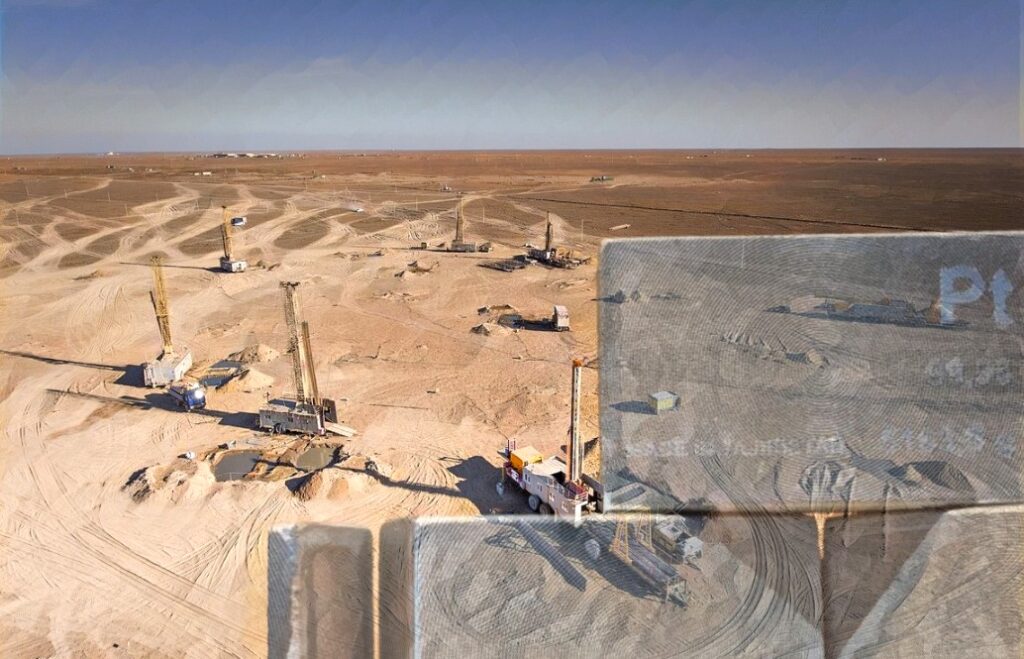
This renewed debate comes as Kazakhstan’s rare earth sector enjoys unprecedented global attention. In April, TCA reported the discovery of a massive new deposit in the Karagandy region, unofficially dubbed “Zhana Kazakhstan,” estimated at 20 million metric tons of ore containing neodymium, cerium, lanthanum, and yttrium. Officials said average concentrations reached 700 grams per ton, a figure that, if validated, would position Kazakhstan among the world’s top three in rare earth deposits.

In total, the government has identified 38 new mineral deposits, including 3.7 million tons of copper and nickel and 19 tons of gold. These discoveries are part of an ambitious exploration program that aims to expand mapped geological territory to 2.2 million square kilometers by 2026. For policymakers, the figures highlight both an opportunity and a dilemma: how to harness world-class reserves without falling into the trap of export dependence.

At Home and Abroad

International interest in Kazakhstan’s deposits is on the rise. A June 2025 opinion piece from the Atlantic Council argued that Kazakhstan could anchor Western efforts to diversify rare earth supply chains away from China, highlighting the country’s geological wealth, infrastructure, and multi-vector diplomacy. In August, a strategic partnership between the state company Tau-Ken Samruk and U.S.-based Cove Capital to explore deposits in the Kostanai region was announced, underscoring Kazakhstan’s role as a sought-after partner for countries eager to secure rare earth supply chains.

Kazakhstan’s exports of rare-earth minerals have nearly quintupled since 2020. Exports, including yttrium, neodymium, and dysprosium, rose sharply again in 2024, with China, which dominates global processing capacity, accounting for the overwhelming majority of purchases.

Domestically, meanwhile, the government is looking to modernize the industry. In August, Prime Minister Olzhas Bektenov chaired a high-level meeting to review development plans, which included new financing in refining and research. Investment in the rare-earth metals sector since 2018 has exceeded 67 billion tenge ($125 million), and the modernization of Zhezkazganredmet is a key priority.

Yet even as the industry expands, concerns about governance and environmental risks linger. A July investigation by Kursiv Media warned that Kazakhstan could repeat China’s mistakes if it fails to manage waste properly. The article highlighted the risks of toxic runoff, soil degradation, and poorly regulated chemical processing. These issues could undermine both environmental sustainability and social stability, especially in mining regions already burdened by ecological stress.

Oversight vs. Openness

This tension between opportunity and oversight is why Peruashev’s campaign resonates. The leader of Ak Zhol has framed the issue not merely as a matter of accounting, but as a question of national security and sovereignty. Rare earth elements, vital to clean energy systems, semiconductors, and advanced weaponry, are increasingly at the heart of global strategic competition, and mismanagement could weaken Kazakhstan’s position as it seeks to diversify away from overdependence on oil, gas, and traditional metals.

For now, the government’s position remains optimistic. Astana has welcomed foreign investment and scientific collaboration, whilst insisting that sovereign control over critical minerals will not be compromised. The latest parliamentary challenge, however, underscores a core issue: how to maximize the benefits of the nation’s rare earth wealth while maintaining investor confidence and geopolitical balance.

Ak Zhol’s demand for stricter oversight is unlikely to go ignored, but policymakers face a dilemma: too much control could stifle investment, while too little could leave Kazakhstan vulnerable to dependency and revenue leakage. But if reforms take hold and environmental and geopolitical risks are managed, Kazakhstan has the chance to turn its vast reserves into the foundation stone of long-term security and influence in a rapidly expanding global market.

Tajik Scientists Turn to Mountain Agriculture to Combat Climate Challenges

In Tajikistan’s remote Yagnob Valley, at more than 2,300 meters above sea level, scientists have launched a pioneering agricultural experiment to adapt to the realities of a changing climate. For the first time, experimental fields have been established in this high-altitude region to test the viability of dozens of crop varieties under mountain conditions.

The research, carried out by the Institute of Botany, Physiology, and Plant Genetics of the National Academy of Sciences of Tajikistan, has yielded promising results. All tested crops took root successfully, and new potato varieties produced harvests of up to 400 centners per hectare.

Testing Crops in the High Mountains

“Climate change forces us to seek unconventional solutions,” said Dr. Kurbonali Partoev, Doctor of Agricultural Sciences. “High-altitude zones with cooler temperatures, clean water, and fertile soils offer unique prospects for agricultural innovation.”

This spring, scientists delivered seeds of potatoes, corn, sunflowers, chickpeas, peas, wheat, pumpkins, sorghum, tomatoes, and cucumbers to a plot maintained by local farmer Nekmakhmad Safarov. The objective was to observe how common lowland crops respond to high-altitude growing conditions.

Following strict agronomic practices, applying fertilizers, watering, weeding, and monitoring plant development, researchers carefully tracked growth patterns and morphological changes.

Potato Yields Surpass Expectations

By August, the experimental site had become a thriving green expanse. Potato trials proved particularly fruitful, with more than 20 varieties from Tajikistan, Russia, and the Netherlands under evaluation.

New Tajik varieties, named Tajikistan, Faizi Istiklol, Akademiya Milli1, Mastcho, Faizobod, Rasht, and Nilufar, achieved yields of 300-400 centners per hectare. “This is a significant indicator confirming their potential,” said agricultural scientist Mavlon Kurbonov.

Russian varieties Sadon, Ariel, and Fasko yielded between 280 and 390 cwt/ha and were notably early-maturing, ripening 10 to 12 days ahead of others. Dutch varieties Picasso and Aladdin also performed well, reaching yields of up to 370 cwt/ha.

Genetic Potential in a Mountain Laboratory

Beyond yield, researchers observed an unusual abundance of flowering and the formation of seed berries among potato plants, traits enhanced by Yagnob’s cool, pest-free environment.

“This is an extremely valuable genetic trait that opens up wide possibilities for breeding,” Partoev explained. “Yagnob offers ideal conditions, clean air, spring water, and fertile soil. It is a natural laboratory.”

A Resource for the Future of Tajik Agriculture

Encouraged by the initial success, researchers plan to expand their trials, introduce new crop varieties, and deepen their scientific studies. They believe the Yagnob Valley could evolve into both a research hub and a model for climate-resilient agriculture.

“All the crops showed positive results. This encourages us to expand and innovate further,” Kurbonov concluded. “Yagnob has the potential to become a true natural laboratory for Tajikistan’s agricultural future.”

Kazakh and Chinese Universities Sign Over 20 New Cooperation Agreements

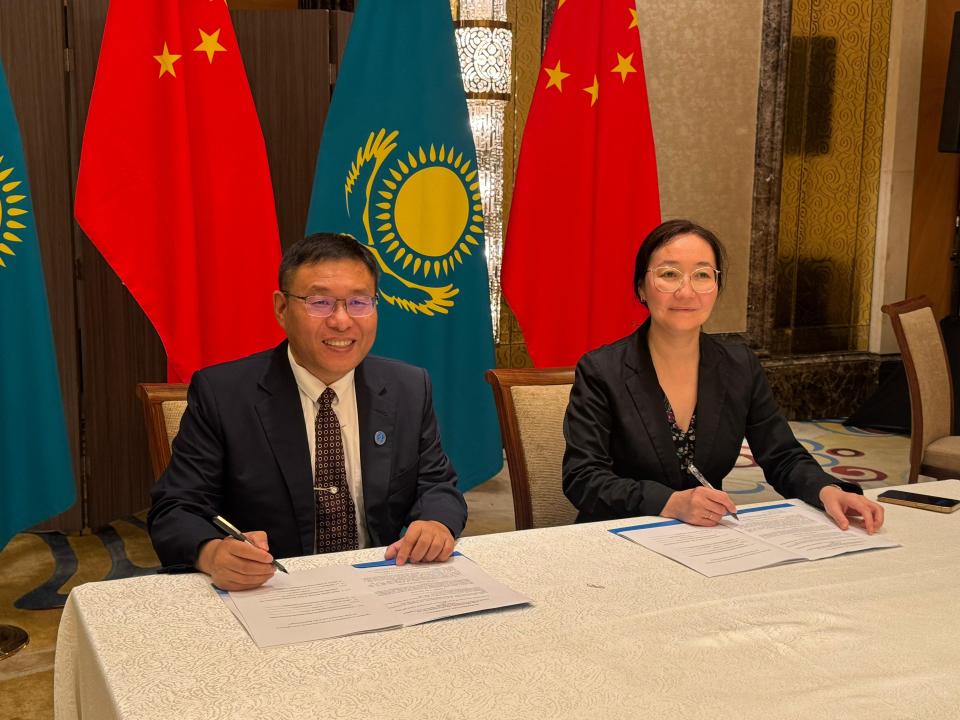
At the Kazakhstan-China Business Council meeting held in Beijing on September 2, leading universities from both countries signed more than 20 new agreements aimed at deepening cooperation in education, science, and innovation, according to the Kazakh Ministry of Science and Higher Education.

The wide-ranging agreements span areas such as artificial intelligence, robotics, water resource management, and dual degree programs, highlighting the growing strategic role of academic and research collaboration in the Kazakhstan-China partnership.

Among the most significant developments was the establishment of the Kazakh-Chinese Scientific and Technological Alliance on Spatio-Temporal Artificial Intelligence. The alliance includes the National Academy of Sciences of Kazakhstan, the Kazakh National Agrarian Research University, Zhejiang University of Technology, and Zhejiang Zhonghe Technology Co., Ltd. A joint laboratory will also be launched as part of the Belt and Road Initiative.

Al-Farabi Kazakh National University (KazNU) signed an agreement with Chinese investment and development firm Yuan Zhen to jointly design and produce unmanned aerial vehicles. KazNU also partnered with Jiangsu Huibo Robotics Technology Co., Ltd. to inaugurate the International Institute of Digital Technologies and Robotics, along with a Robotics Center dedicated to training the next generation of engineers.

In Almaty, the Technological University signed an agreement with Beijing Technology and Business University to create the Kazakhstan-China Center for Technology and Innovation Development. Meanwhile, the Kazakh National University of Water Resources and Irrigation and the North China University of Water Resources and Electric Power (NCWU) agreed to collaborate on sustainable water management.

In the digital sphere, Astana IT University signed a memorandum of cooperation with Tus-Holdings, a science park affiliated with Tsinghua University, focusing on information technology, artificial intelligence, and startup incubation.

Multiple institutions expanded joint academic offerings. Gumilyov Eurasian National University, Abylkas Saginov Karaganda Technical University, ALT University, and Uzbekali Zhanibekov South Kazakhstan Pedagogical University all signed agreements with top Chinese universities to launch dual bachelor’s and master’s degree programs.

In the energy sector, the Atyrau University of Oil and Gas and Liaoning Petrochemical University will establish the Kazakhstan-China International Engineering School and a joint international laboratory.

Additionally, Astana International University and Beijing Language and Culture University agreed to open a branch campus of the Chinese university in Kazakhstan.

These agreements underscore the strategic role of higher education and scientific cooperation in advancing Kazakhstan-China relations, particularly within the framework of the Belt and Road Initiative.

Uzbekistan Remembers Victims of Repression with Renewed Educational Focus

On August 29, a solemn ceremony was held at the Shahidlar Xotirasi alley in Tashkent to commemorate the Day of Remembrance for Victims of Repression, an annual event observed on the eve of Uzbekistan’s Independence Day.

The event honored the memory of over 100,000 innocent citizens who suffered during waves of political repression. Thousands were executed on fabricated charges, while many others were exiled, leaving deep scars on families and communities.

In recent years, Uzbekistan has taken steps to more fully acknowledge and document this painful history. More than 1,200 names of victims have recently been rehabilitated. The Museum of the Memory of Victims of Repression has been expanded with thousands of newly added archival documents, and regional museums dedicated to the memory of the repressed are being established across the country.

A major development this year is the establishment of the State Museum of Jadid Heritage in Bukhara. The opening coincides with the 150th anniversary of Mahmudkhoja Behbudi, a key figure in the Jadid movement, an early 20th-century reformist movement that sought to modernize Muslim society through education, journalism, and national consciousness.

Leaders of the Jadid movement, including Behbudi, Fitrat, Avloni, and Chulpon, were pioneers in opening secular schools, publishing newspapers, and founding institutions such as the Turkestan People’s University, now the National University of Uzbekistan. Nearly all of them fell victim to Stalin’s purges in the 1930s, and their works were banned for decades.

Students from Turkestan who studied in Germany in the 1920s also became targets of repression. President Shavkat Mirziyoyev has commented: “If those young men had returned, they could have transformed society. It is important that our youth know and take pride in such examples.”

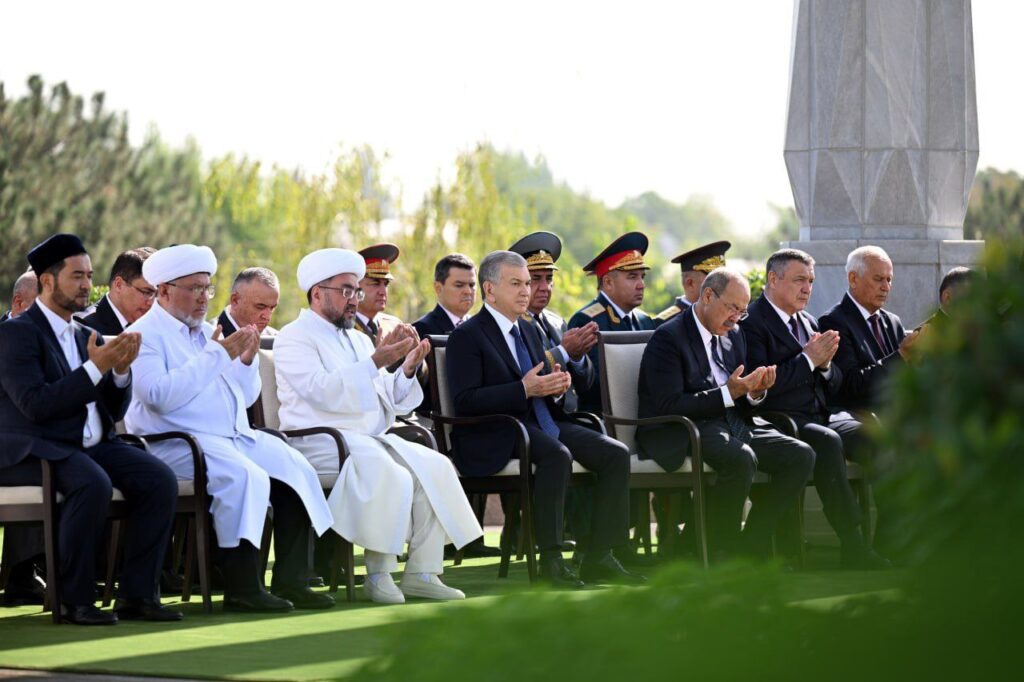
Under Soviet rule, it was long taboo to acknowledge that a site near the Bozsu Canal in central Tashkent concealed a mass grave of intellectuals executed during Stalin’s purges. At the initiative of previous leader Islam Karimov, a memorial complex and museum were established on the site, and August 31 was officially designated as the Day of Remembrance. The Shahidlar Xotirasi Memorial, inaugurated on May 12, 2000, near the Tashkent TV tower, includes a park, a museum, and a rotunda featuring a symbolic jade tombstone inscribed in Arabic, English, and Uzbek: “The memory of those who died for their country will live forever.”

Mirziyoyev has called for greater educational integration, through school curricula, media programming, and youth competitions. “Every year on the eve of Independence Day, we offer prayers in memory of our ancestors who gave their lives for freedom,” he said. “Their courage and sacrifice will always serve as an example for us.”

Kyrgyz Parliament Resumes Work After Summer Recess

Members of Kyrgyzstan’s parliament, the Jogorku Kenesh, have returned to work following a two-month summer recess, during which they engaged with constituents across the country. The new session began in the recently renovated parliament building, which reopened after three years of reconstruction.

“I am confident that this chamber will make the right and fair decisions that our country needs,” said Speaker of Parliament Nurlanbek Turgunbek uulu.

On the first day of the session, deputies approved the appointment of a new Minister of Labor, Social Security, and Migration. Lawmakers also proposed the establishment of a separate agency focused on migrant affairs, discussed a housing renovation initiative, and allocated additional funds for the CASA-1000 energy infrastructure project. Additionally, amendments to the Criminal Procedure Code were passed to strengthen protections for citizens during investigative procedures.

However, some public expectations remain unmet, particularly concerning the discussion of pressing regional issues. Speculation about the early dissolution of parliament continues to circulate, though deputies have dismissed these claims. “This will only happen if parliament itself decides so,” said Deputy Mirlan Samykozho.

Kyrgyzstan is scheduled to hold its next parliamentary elections next year.