• KGS/USD = 0.01144 0%
  • KZT/USD = 0.00192 -0%
  • TJS/USD = 0.10849 0.37%
  • UZS/USD = 0.00008 0%
  • TMT/USD = 0.28571 0.28%
  • KGS/USD = 0.01144 0%
  • KZT/USD = 0.00192 -0%
  • TJS/USD = 0.10849 0.37%
  • UZS/USD = 0.00008 0%
  • TMT/USD = 0.28571 0.28%
  • KGS/USD = 0.01144 0%
  • KZT/USD = 0.00192 -0%
  • TJS/USD = 0.10849 0.37%
  • UZS/USD = 0.00008 0%
  • TMT/USD = 0.28571 0.28%
  • KGS/USD = 0.01144 0%
  • KZT/USD = 0.00192 -0%
  • TJS/USD = 0.10849 0.37%
  • UZS/USD = 0.00008 0%
  • TMT/USD = 0.28571 0.28%
  • KGS/USD = 0.01144 0%
  • KZT/USD = 0.00192 -0%
  • TJS/USD = 0.10849 0.37%
  • UZS/USD = 0.00008 0%
  • TMT/USD = 0.28571 0.28%
  • KGS/USD = 0.01144 0%
  • KZT/USD = 0.00192 -0%
  • TJS/USD = 0.10849 0.37%
  • UZS/USD = 0.00008 0%
  • TMT/USD = 0.28571 0.28%
  • KGS/USD = 0.01144 0%
  • KZT/USD = 0.00192 -0%
  • TJS/USD = 0.10849 0.37%
  • UZS/USD = 0.00008 0%
  • TMT/USD = 0.28571 0.28%
  • KGS/USD = 0.01144 0%
  • KZT/USD = 0.00192 -0%
  • TJS/USD = 0.10849 0.37%
  • UZS/USD = 0.00008 0%
  • TMT/USD = 0.28571 0.28%
11 December 2025
Uncategorized

Kyrgyzstan and Afghanistan Aim to Boost Trade and Economic Ties

Kyrgyzstan and Afghanistan have agreed to open trading houses in each other’s countries as part of a broader effort to deepen bilateral trade and economic cooperation.

The agreement was reached on August 13 during the visit of an Afghan delegation to Bishkek, led by Nooruddin Azizi, Acting Minister of Industry and Commerce of the Islamic Emirate of Afghanistan.

Azizi met with the Kyrgyz Minister of Economy and Commerce, Bakyt Sydykov. The two ministers signed a roadmap for future cooperation, along with a memorandum of understanding focused on enhancing trade and economic ties.

Sydykov described the visit as a significant step toward strengthening bilateral relations and highlighted Kyrgyzstan’s interest in exploring new, mutually beneficial areas of cooperation. He noted that the two countries hold considerable potential for expanding trade.

Discussions also touched on digitalization, with the Kyrgyz side offering to share its experience in the sector with Afghan partners.

According to Afghanistan’s Ministry of Industry and Commerce, the two countries recorded $66 million in bilateral trade during the last solar year (March 2024-March 2025), with Afghan exports accounting for $7 million of that figure. Key Afghan exports to Kyrgyzstan include aluminum and copper utensils, pressure cookers, carpets, fruits, and vegetables.

In January-February 2025 alone, Kyrgyzstan exported $11.5 million worth of petroleum products to Afghanistan, according to Kyrgyz media.

Trade between the two countries has seen an uptick following Kyrgyzstan’s September 2024 decision to remove the Taliban from its list of prohibited organizations. The Kyrgyz Ministry of Foreign Affairs said the move was aimed at promoting regional stability and fostering constructive dialogue.

On September 6, 2024, then-Chairman of the Cabinet of Ministers Akylbek Japarov met with Afghanistan’s Chargé d’Affaires in Kyrgyzstan, Nurullah Amin, to discuss ways to advance bilateral relations. The Kyrgyz side expressed interest in enhancing trade and transport links, jointly developing Afghan mineral resources, and cooperating in energy, industry, and agriculture.

Uncategorized

Kazakhstan to Freeze Minimum Wage in 2026 Despite Earlier Promises

Kazakhstan will maintain its current minimum wage of 85,000 KZT per month (approximately $157) in 2026, Deputy Prime Minister and Minister of National Economy Serik Zhumangarin confirmed at a recent press conference.

This announcement contradicts earlier statements made in June by Minister of Labor and Social Protection Svetlana Zhakupova, who indicated that the government intended to raise the minimum wage from January 1, 2026. Finance Minister Madi Takiev had even suggested a possible increase to just over 90,000 KZT ($166). However, Zhumangarin stated that the proposed adjustment has been scrapped.

“We currently have no plans to increase the minimum wage. As of today, it remains at 85,000 KZT, and we are not considering an increase at this time,” he said.

Zhumangarin noted that while pensions and benefits are indexed annually to inflation, the government has allocated 800 billion KZT ($1.4 billion) in the 2026 budget to cover these costs. Takiev added that while calculations had been made for a potential increase, “given the current situation,” the decision was made to leave the wage unchanged.

The minimum wage was last raised in January 2024, from 70,000 KZT ($135 at the time) to its current level. Some members of parliament have called for a broader review of the minimum wage, the minimum subsistence level, and the structure of the official food basket.

In response to a reporter’s question, Zhumangarin acknowledged that he himself could not live on 85,000 KZT per month under current market conditions but stressed that the issue must be approached cautiously.

According to the Ministry of Labor, approximately 170,000 people in Kazakhstan currently earn the minimum wage, while another 160,000 earn around 100,000 KZT monthly. As of the first quarter of 2025, the total number of employed individuals in the country stood at 9.3 million.

Over the summer, AMANAT parliamentary faction leader Yelnur Beisenbayev criticized government statistics, particularly the official average salary figure of 423,000 KZT ($830).

“In our country, three million people earn around 200,000 KZT, of whom 1.8 million live on the minimum wage of 85,000 KZT. So the question arises: who earns 423,000? I believe the government calculates it like this: if Asan earns 1 million KZT, and Yessen and Usen earn 100,000 each, then the average among them is 400,000,” he remarked.

Kyrgyzstan Parliament’s Secret Polygamy Law Repeal Blocked by President Japarov

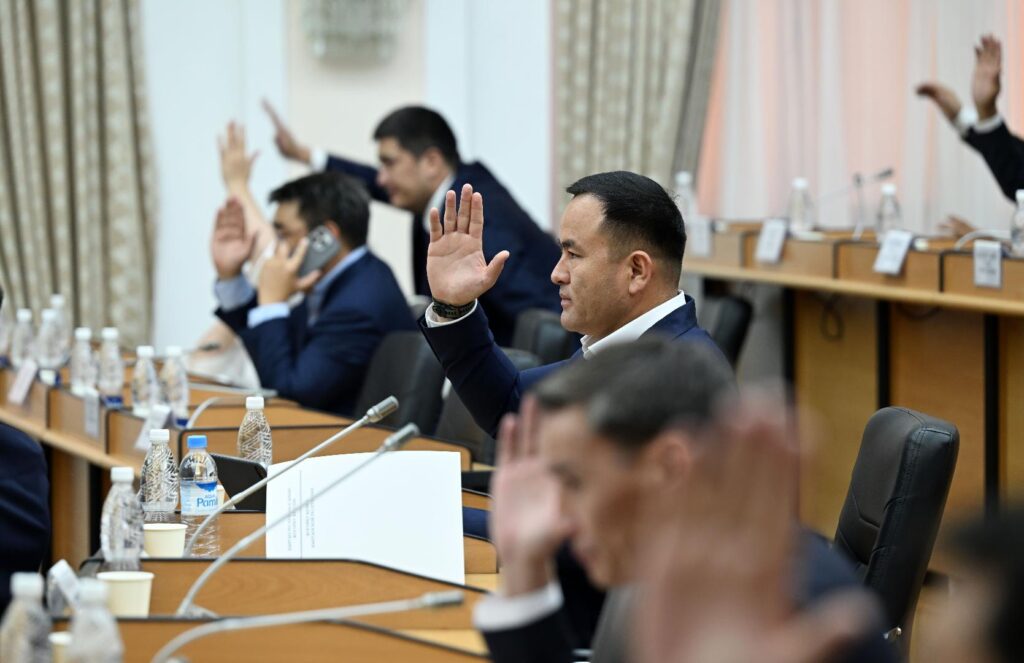
On June 25, 2025, Kyrgyzstan’s parliament, the Jogorku Kenesh, voted to repeal Article 176 of the Criminal Code, which criminalizes polygamy. The initiative was debated behind closed doors, without public hearings, and only came to light after the bill was submitted to President Sadyr Japarov for approval.

According to the presidential administration, Japarov returned the bill for further revision. Before doing so, he sought official assessments from several key state bodies, including the Ombudsman’s Office, the Prosecutor General’s Office, the National Agency for Religious Affairs, the National Academy of Sciences, the Ministry of Justice, and the Constitutional Court.

These institutions concluded that the proposal was incompatible with Kyrgyzstan’s Constitution and its international commitments, including the Convention on the Elimination of All Forms of Discrimination against Women (CEDAW) and the Convention on the Rights of the Child (CRC).

In an explanatory note, the president stated that retaining criminal liability for polygamy “demonstrates a commitment to the principles of gender equality and the rule of law, protects women and children from legal and social inequality, and contributes to strengthening the institution of the family.”

Under the current law, polygamy in Kyrgyzstan is classified as a minor offense. It is punishable by a fine ranging from 50,000 to 100,000 KGS (approximately $570 – $1,140), and criminal proceedings can only be initiated at the request of the victim. The Family Code permits only one officially registered marriage, and the civil registry office is not authorized to record second or subsequent unions.

Uncategorized

Tajikistan and Flanders Explore Closer Ties in Industry, Tourism, and Trade

A delegation from the Belgian region of Flanders is currently visiting Dushanbe for official meetings aimed at expanding cooperation with Tajikistan. The visit, which began on August 11 at the invitation of the Dushanbe city authorities, will continue through August 16. The Flemish delegation is led by Jill Willems Suetens, head of the Protocol and Administrative Department.

Focus Areas: Industry, Innovation, and Investment

Talks are centered around collaboration in the light and textile industries, mechanical engineering, pharmaceuticals, food production, and artificial intelligence. Tourism and trade, meanwhile, have been highlighted as key priorities.

The Belgian side has been invited to take part in upcoming events organized by the Ministry of Industry and the Dushanbe Invest 2025 International Investment Forum, scheduled for October.

During their visit, the Flemish representatives have held meetings with senior officials from the Dushanbe city administration, the Ministry of Industry and New Technologies, the State Committee for Investment, the National Academy of Sciences, the Committee for Tourism Development, the Chamber of Commerce and Industry, the Smart City State Unitary Enterprise, and the International University of Tourism and Entrepreneurship.

The State Committee for Investment presented Tajikistan’s potential to foreign investors, emphasizing tourism and trade as sectors with high growth prospects.

To gain a deeper understanding of the country’s history and culture, the delegation is also visiting prominent sites such as the National Museum, the Kohi Navruz palace complex, the Central Mosque, the Plov culinary center, the Mehrgon market, the Gissar Fortress, and the Varzob region. The cultural itinerary aims to promote Tajikistan’s tourism offerings and foster deeper exchange.

Flanders: An Economic Powerhouse

Flanders is one of Belgium’s primary industrial and commercial hubs and is home to the country’s largest ports, Antwerp, Bruges, Ghent, and Ostend. The region has a population of 6.8 million, comprising 58% of Belgium’s total population.

In 2024, Flanders ranked 15th globally by export volume. Its main export commodities include chemical products, pharmaceuticals, transport vehicles, textiles, machinery, fruit, plastics, and precious stones.

Trade between Tajikistan and Flanders surpassed €108 million in 2024. Tajikistan accounted for €102.36 million in exports, while Flanders exported €5.73 million worth of goods to Tajikistan.

State Workers in Turkmenistan Once Again Forced to Fund Cotton Harvest

As the cotton harvest begins in Turkmenistan, reports from the independent outlet turkmen.news indicates that the annual season is once again marred by forced labor practices.

Pay or Work the Fields

In Lebap and Mary provinces, state employees, including teachers, doctors, and workers from the Turkmenabat silk production association and a local knitwear factory, are being compelled to contribute financially toward the harvest. The daily levy stands at 30 manats (approximately $1.50).

Since August 3, similar demands have reportedly extended to medical and educational staff in Mary province. As in previous years, state workers are frequently presented with a coercive “choice”: pay for a replacement harvester or work in the fields themselves. Some avoid field labor by sending their children in their place.

Reform Promises Fall Short

In 2024, the Turkmen government, in cooperation with the International Labour Organization, unveiled a roadmap for eradicating forced labor in the cotton industry. The plan outlined key measures to safeguard workers’ rights and address systemic abuses.

Despite this, rights groups, including the Turkmen Initiative for Human Rights, the Progres Foundation, and the Cotton Campaign, warn that little can change while the state maintains total control over the cotton supply chain, from seed distribution to raw cotton procurement. These organizations argue that genuine reform requires guarantees of free speech and the right to organize, allowing citizens to report abuses and form independent trade unions.

In reality, however, workplace union leaders are reportedly tasked with collecting money from employees and organizing labor schedules. Experts note that this top-down mobilization underscores the state-driven nature of the system, perpetuating a cycle of coercion rather than addressing its root causes.

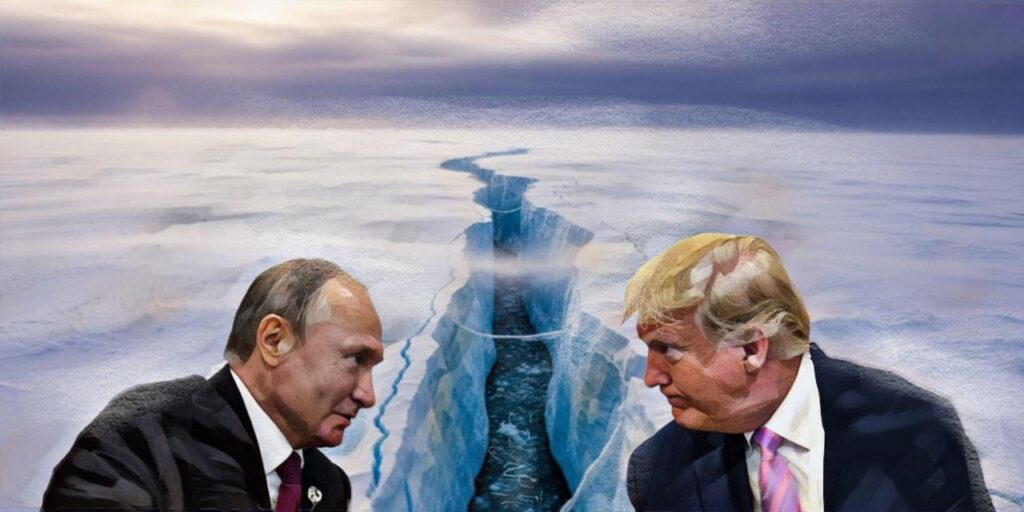
Trump–Putin Talks in Alaska: What Could They Mean for Central Asia?

As U.S. President Donald Trump prepares to meet Russian President Vladimir Putin at the Joint Base Elmendorf-Richardson, located just outside of Anchorage, Alaska, hopes and anxieties are reverberating across Central Asia. Trump has signaled that securing a ceasefire in Ukraine is his top priority, warning of “very severe consequences” for Moscow if Putin refuses to halt the war.

For the five former Soviet republics of Central Asia, these peace talks carry high stakes. Any truce or breakdown could ripple into their economies and strategic calculus. The war has already fundamentally changed Central Asia’s strategic positioning, accelerating diversification away from Russian dependence. With Trump and Putin poised to negotiate, Central Asian leaders are mindful that all possible outcomes – a ceasefire, a prolonged conflict, or a major power realignment – could each reshape the region’s economic fortunes and foreign policy choices.

Central Asian Stances on the Ukraine War

All five Central Asian governments have officially maintained neutrality on the Ukraine conflict. On the first UN General Assembly resolution of March 2, 2022, Kazakhstan, Kyrgyzstan, and Tajikistan abstained, while Uzbekistan and Turkmenistan did not vote. On subsequent resolutions, Uzbekistan abstained alongside Kazakhstan, Kyrgyzstan, and Tajikistan; Turkmenistan continued not to vote. None has recognized Russia’s claims to Ukrainian territory.

Seated beside Putin at a plenary session of the St. Petersburg International Economic Forum in June 2022, referring to them as “quasi-state territories,” President Kassym-Jomart Tokayev of Kazakhstan refused to recognize the independence of the so-called Donetsk and Lugansk People’s Republics. “Modern international law is the United Nations Charter,” Tokayev stated. Despite maintaining ties with Russia, Kazakhstan has boosted its engagement with China, Turkey, and Europe during the conflict.

Whilst publicly affirming that it will comply with Western sanctions on Russia, Kazakhstan has stated that it will continue to prioritize its economic interests, vowing not to “blindly follow” such measures when they harm its domestic industries. “Kazakhstan will continue to comply with the sanctions but will pursue a balanced policy to minimize the impact on its own economy,” Deputy Prime Minister Serik Zhumangarin said in August 2024.

Uzbekistan has adopted a similar “balanced and neutral” approach to the war in Ukraine. In March 2022, then-Foreign Minister Abdulaziz Kamilov stated that Uzbekistan “recognizes the independence, sovereignty and territorial integrity of Ukraine, and does not recognize the Luhansk and Donetsk People’s Republics.” Despite Kamilov leaving his position shortly after making this statement, the nation’s position appears largely unchanged.

Calling for an immediate end to “hostilities and violence,” Tashkent has expanded links with Turkey, China, and the EU. According to a U.S. State Department report from 2024, “Uzbekistan formally committed to adhering to U.S. and EU sanctions and trade restrictions on Russia.”

Kyrgyzstan has continued to maintain a close economic relationship with Moscow while abstaining from all key United Nations resolutions concerning the Ukraine war. President Sadyr Japarov has said the country “adheres to a neutral position” and that exports to Russia are civilian in nature.

In January 2025, Kyrgyzstan’s Keremet Bank was designated by the U.S. Treasury’s Office of Foreign Assets Control for facilitating sanctions evasion, effectively freezing its U.S. assets and prohibiting U.S. persons from transacting with it. U.S. officials alleged that since the summer of 2024, Keremet Bank had been facilitating cross-border transactions for Russian financial institutions, including Promsvyazbank – a player in Russia’s defense sector – which has been under U.S. sanctions since early 2022. Following the U.S. Treasury’s designation of Keremet Bank, several major Kyrgyz banks, including Bakai Bank, Demir Bank, Optima Bank, and Keremet itself, curtailed or suspended transactions with Russian institutions.

Tajikistan has remained largely silent on the Ukraine conflict, offering only broad appeals for peace and “efforts to find political and diplomatic ways to resolve the Ukrainian crisis.”

On February 11, 2025, Chairman of the State Committee on Investment and State Property Management Sulton Rakhimzoda confirmed the receipt of an official U.S. letter urging the enforcement of sanctions targeting several Russian companies operating in Tajikistan, specifically naming Gazpromneft‑Tajikistan, a major fuel supplier in the country. A subsidiary of Russia’s Gazprom Neft, Gazpromneft Tajikistan is the country’s dominant energy supplier, operating gas stations and controlling a large share of its fuel distribution network. Legal analysts warn that companies or banks cooperating with this entity could face secondary sanctions, although Tajikistan itself is not at risk of sovereign sanctions. Tajik officials have stated that the issue is under review, while insisting that any restrictions will not disrupt domestic fuel supplies.

Turkmenistan has consistently upheld its constitutionally mandated policy of “permanent neutrality,” a status endorsed by the UN in 1995. According to a U.S. Congressional report from 2023, this “translates in practice to foreign policy isolationism.”

While avoiding involvement in international conflicts – including the Ukraine war – Turkmenistan has sought to secure stable energy export routes, such as the February 2025 deal to begin shipping natural gas to Turkey through Iran, underlining its economic emphasis on stable markets. There are fears in Turkmenistan, however, that its gas swap deals could become collateral damage following the Israeli-Iran conflict.

Economic Fallout: Oil, Inflation, and Trade Winds

The war in Ukraine has triggered soaring energy and food prices. By late 2022, median inflation across emerging Europe and Central Asia had surged to 15.9%, marking its highest level in 20 years, driven by spikes in fuel and grocery costs. A peace agreement has the potential to ease these pressures by helping to stabilize global markets.

Oil and gas prices play a significant role in shaping Central Asia’s economic balance. Producers like Kazakhstan benefit from elevated prices, while importers such as Kyrgyzstan and Tajikistan face higher costs. In March 2025, oil prices fell sharply, with Brent crude dropping by about $7 per barrel to around $70/bbl, as investor sentiment weakened over global economic prospects and reports that OPEC+ might ease production cuts despite geopolitical tensions. In August 2025, prices fluctuated again, with analysts projecting that they may “head toward the low $60s per barrel by the end of this year.” Lower energy prices would relieve inflationary pressure on consumers in importing countries but reduce export earnings for top producers such as Kazakhstan and Turkmenistan.

Remittances remain another critical economic link. Millions of Central Asians work in Russia, and their remittances are vital to domestic consumption. Despite the conflict, remittance inflows have stayed strong: Kyrgyzstan alone recorded $1.367 billion during the first five months of 2025 – a 16% increase over the same period in 2024 – reflecting resilience in migrant incomes despite ongoing geopolitical uncertainty. However, a September 10 deadline is looming for the potential mass expulsion of migrants from Russia.

Sanctions, Trade Corridors, and Tariffs

Since Russia invaded Ukraine, a growing share of Eurasian trade has been rerouted via Central Asia. Incidents of backdoor trade, the re-exporting of dual-use goods such as electronics and machinery through Central Asian intermediaries to Russia have emerged, resulting in the sanctioning of entities involved and warnings being issued to regional governments. Russian imports from Kazakhstan and Kyrgyzstan have surged since 2022, as shown through think-tank analysis documenting large re-export spikes: Kyrgyzstan’s exports to Russia increased in volume by 250% in 2022, Kazakhstan’s by 39%, and Uzbekistan’s by 77% between 2021 and 2023 –  much of it re-exports of goods not produced locally.

Meanwhile, the war has accelerated the rise of the Trans-Caspian Middle Corridor, an alternative route bypassing Russia. Freight volumes jumped from around 600,000 tons in 2021 to 1.5 million in 2022, and then soared to over 4.1 million tons in the first 11 months of 2024 – a 63% year-on-year increase. Central Asian governments have indicated that they intend to maintain and expand these diversified transport links even if peace returns, viewing them as a permanent strategic gain.

Currently, U.S. tariffs on Central Asia include a baseline 10% duty on exports from Kyrgyzstan, Uzbekistan, Tajikistan, and Turkmenistan, while Kazakhstan has faced a 25% customs duty since August 1. Because most of Kazakhstan’s U.S.-bound commodities – such as oil, uranium, and silver – are exempt, however, the headline rate has hit a relatively small slice of shipments. Nevertheless, it has raised compliance costs for non-resource exporters and prompted the Kazakh government to lobby the U.S. to soften the impact. Region-wide, tariffs are unlikely to upend total trade volumes but could redirect supply chains and financing, especially if the U.S. pursues threatened 100% “secondary” tariffs tied to Russia.

Scenarios: Ceasefire, Prolonged War, or Realignment

A ceasefire or peace deal would likely stabilize energy and food prices, reduce the risks posed by secondary sanctions, and affirm Central Asia’s policy of neutrality, while also empowering the region to strengthen its role as a trade and mediation hub by leveraging newly developed transport corridors and drawing fresh investment interest. However, while the Middle Corridor should persist as a politically backed, upgraded alternative thanks to ongoing Kazakh–Turkish investment, should peace normalize trade, many shippers are expected to shift part of their volumes back to the cheaper, higher-capacity northern route via Russia.

In contrast, a prolonged conflict would keep markets volatile and sanctions pressure high – forcing harder policy choices about re-exports – yet it could simultaneously diminish Moscow’s capacity to exert any coercive influence, providing Central Asia more space to pursue independent alignments and expand ties with countries like China and Turkey.

Finally, a major power realignment – for instance, an outcome to the summit that heavily favors Ukrainian – could accelerate the region’s movement away from Russia, enhancing cooperation with Western powers, Turkey, and China. Conversely, a perceived Russian victory might prompt renewed pressure on Central Asia, though even then, China is poised to reinforce its influence through investment and infrastructure leadership.

Looking Ahead

Whatever the Alaska summit brings, Central Asia will adapt, using its geography and multi-vector diplomacy to protect sovereignty and extract benefits. From new Silk Roads to recalibrated tariffs, the ripple effects of any Trump–Putin handshake will be felt from the Caspian to the Pamirs for years to come.