• KGS/USD = 0.01144 0%
  • KZT/USD = 0.00210 0%
  • TJS/USD = 0.10563 0%
  • UZS/USD = 0.00008 0%
  • TMT/USD = 0.28530 0%
  • KGS/USD = 0.01144 0%
  • KZT/USD = 0.00210 0%
  • TJS/USD = 0.10563 0%
  • UZS/USD = 0.00008 0%
  • TMT/USD = 0.28530 0%
  • KGS/USD = 0.01144 0%
  • KZT/USD = 0.00210 0%
  • TJS/USD = 0.10563 0%
  • UZS/USD = 0.00008 0%
  • TMT/USD = 0.28530 0%
  • KGS/USD = 0.01144 0%
  • KZT/USD = 0.00210 0%
  • TJS/USD = 0.10563 0%
  • UZS/USD = 0.00008 0%
  • TMT/USD = 0.28530 0%
  • KGS/USD = 0.01144 0%
  • KZT/USD = 0.00210 0%
  • TJS/USD = 0.10563 0%
  • UZS/USD = 0.00008 0%
  • TMT/USD = 0.28530 0%
  • KGS/USD = 0.01144 0%
  • KZT/USD = 0.00210 0%
  • TJS/USD = 0.10563 0%
  • UZS/USD = 0.00008 0%
  • TMT/USD = 0.28530 0%
  • KGS/USD = 0.01144 0%
  • KZT/USD = 0.00210 0%
  • TJS/USD = 0.10563 0%
  • UZS/USD = 0.00008 0%
  • TMT/USD = 0.28530 0%
  • KGS/USD = 0.01144 0%
  • KZT/USD = 0.00210 0%
  • TJS/USD = 0.10563 0%
  • UZS/USD = 0.00008 0%
  • TMT/USD = 0.28530 0%

Hungary’s Political Shift Puts Central Asia Partnerships Under Scrutiny

Hungary’s political transition following the defeat of Viktor Orbán’s party and his resignation as prime minister is drawing attention not only in the EU and the United States, but also in Central Asia, where Budapest has built growing energy and investment ties. The key question is whether the policy of cooperation with Central Asia developed under Orbán will continue under the new leadership.

In recent years, under Orbán, Budapest has actively developed its Central Asian foreign policy, primarily driven by the desire to find alternatives to Russian energy supplies. That push reflects Hungary’s long-standing reliance on Russian oil and gas, which has shaped its search for alternative suppliers beyond Europe. Resource-rich Kazakhstan, Uzbekistan, and Turkmenistan became natural partners for diplomatic engagement.

Orbán succeeded in building trust-based relationships with the presidents of the Central Asian republics, grounded in what Hungary’s Minister of Foreign Affairs, Péter Szijjártó, described as “sincere friendship” in an interview with Uzbek media.

“In Hungary, we have always viewed Central Asia as one of the fastest-growing regions in the world, with enormous potential. Our efforts to build these relations did not begin today, but decades ago,” he said.

Hungary became the first Central European country to sign a strategic partnership with Kazakhstan in 2014. Currently, the Kazakhstan-Hungary Business Council is in operation, along with a joint agricultural direct investment fund. In 2024, bilateral trade approached $200 million, and from January to August 2025, it grew by another 22.1%, exceeding $164.6 million. Hungarian investments in Kazakhstan’s economy have surpassed $370 million, while the current investment portfolio includes 16 projects worth about $700 million in engineering, agriculture, and logistics.

These links also intersect with wider efforts to expand east–west transport routes through the Caspian region, offering Hungary indirect access to Central Asian energy and trade flows.

In May 2025, Uzbekistan’s President Shavkat Mirziyoyev held talks with Orbán in Budapest, where both sides highlighted rising trade volumes and a joint investment portfolio of about $500 million. Hungary’s OTP Bank entered into Uzbekistan’s financial market in 2023, acquiring a 73.71% stake in Ipoteka Bank, becoming its principal owner and the majority shareholder of the country’s fifth-largest bank.

As early as 2019, Hungary had intensified cooperation with Turkmenistan. After talks at the Turkmen Foreign Ministry, Szijjártó told the media that Hungary views Turkmenistan as an important country from the perspective of European security.

“We very much hope that Turkmenistan’s gas resources will be integrated into the overall energy flow of Central Europe,” he said.

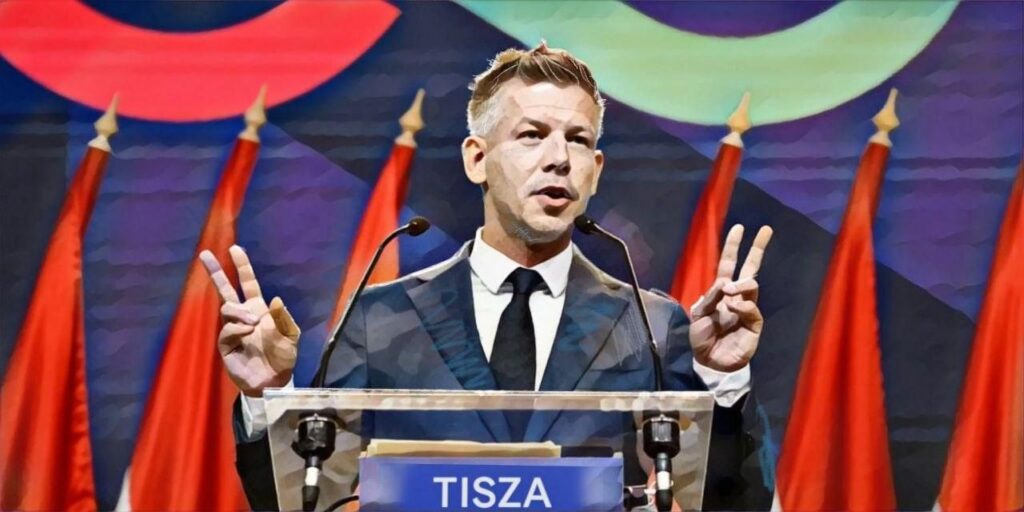
However, uncertainty remains over whether this policy direction will continue under Orbán’s successor, Péter Magyar. Oil and gas analyst Oleg Chervinsky has suggested that political changes in Hungary could affect cooperation with Kazakhstan’s national company KazMunayGas (KMG).

Chervinsky notes that, having secured a constitutional majority in parliament, Magyar has a mandate to “implement reforms in both foreign and domestic policy [which could] reshape the constitutional structure of the right-wing populist authoritarian system built around Orbán.”

The analyst points to Hungary’s oil and gas company MOL Group, which in recent years has actively expanded cooperation with KMG, as a key pillar of this cooperation.

“In addition to its partnership with KMG within Ural Oil & Gas LLP (the Rozhkovskoye field in West Kazakhstan Region), KMG and MOL signed a framework agreement for oil supplies to Hungary. The first shipment was dispatched in August 2025 from the port of Novorossiysk to Croatia, and then via the Adria pipeline,” Chervinsky noted, a route that allows crude shipped from the Black Sea to reach Central Europe without transiting Russian territory. “It is quite obvious that MOL will be reformed, including in terms of personnel, under Hungary’s new prime minister. What priorities will he set for the new management of the oil company?”

However, most experts remain confident that the diplomatic nous of Kassym-Jomart Tokayev will make it possible to establish constructive relations with Hungary’s new leadership.

Urazgali Selteev, director of the Institute of Eurasian Integration, said Kazakhstan typically maintains pragmatic relations regardless of political changes abroad.

“The key point is that he is legitimate and elected by the people,” Selteev stated, noting that Hungary’s incoming prime minister understands the rules of international politics.

Selteev added that Magyar “emerged from the existing political class… Therefore, there will be no abrupt or radical steps.”

Magyar himself has indirectly confirmed this logic by expressing his intention to maintain pragmatic relations with Russia, according to reporting by Interfax. Like Orbán before him, he does not support Ukraine’s accelerated accession to the European Union. That position broadly aligns with existing Hungarian policy, suggesting continuity on key external issues despite the political transition. According to his party, Tisza, the issue of Ukrainian membership should be decided only after a referendum.

For now, it remains unclear how far Hungary’s new leadership will adjust the foreign policy approach developed under Orbán. For Central Asian partners, the immediate question is whether existing energy, investment, and transport cooperation will continue without disruption.


Contemporary Theater in Kazakhstan: Between Tradition and Experiment

Contemporary theater in Kazakhstan is undergoing a period of active development, balancing the preservation of cultural heritage with the search for new forms of expression. The Times of Central Asia spoke with Abai Kazbayev, an actor at the Zhambyl Regional Russian Drama Theater who is currently studying acting and directing, about how the theater scene is evolving, the challenges faced by actors and directors, and why experimentation has become essential.

TCA: Tell us about yourself. How did your journey into theater begin, and what influenced your decision to become an actor?

Abai: I entered the profession through my love of cinema. At first, I took part in crowd scenes, and then I became fascinated with the filmmaking process itself. To deepen my involvement, I joined a private theater on the recommendation of friends. There, I had the opportunity to work with Saulius Varnas from Lithuania, as well as with professionals such as Marat Amirayev and Altynshash Shayakhmetova.

Today, I’m studying acting and directing at university, while also working at the Zhambyl Regional Russian Drama Theater.

TCA: How do you assess the current state of contemporary theater in Kazakhstan?

Abai: If we distinguish contemporary theater from traditional formats, most such productions are concentrated in Almaty. In other cities, theater tends to follow a more academic style, although there are exceptions.

Personally, I’m drawn to how contemporary theaters reinterpret and reimagine classical works. This approach attracts both new and more discerning audiences.

TCA: What makes Kazakhstani theater distinctive compared to that of other countries?

Abai: Its uniqueness lies in the combination of cultures. We have European forms, ballet and opera, alongside contemporary interpretations, including those inspired by Bulat Ayukhanov.

On the one hand, there are traditional productions about khans and batyrs; on the other, there are stories such as that of a boxer in Almaty in the 1980s, a stage adaptation of Martin Scorsese’s Raging Bull.

TCA: How can contemporary theater preserve national traditions while remaining engaging for younger audiences?

Abai: Through experimentation. For example, last year in Taraz, a sound drama based on Alexander Grin’s novella Scarlet Sails was staged. It offered a new interpretation: some lines were delivered in Kazakh, and Captain Grey’s song was also performed in Kazakh.

It was an attempt to reflect Kazakhstan’s multiculturalism. Interestingly, the production was staged by students from GITIS in Russia. I believe such experiments help attract younger audiences while preserving national traditions.

TCA: How important are elements of national culture, language, music, and folklore in today’s productions?

Abai: There’s currently a broader trend across the arts of returning to cultural roots, and theater is no exception. Every culture seeks self-identification. In cinema, folklore characters are widely used, particularly in the horror genre. In the theater, however, folklore tends to remain within traditional productions and is often treated with a sense of reverence.

At the same time, it is worth mentioning the ballet Aldar Köse at the Abai Kazakh National Theater of Opera and Ballet in Almaty.

TCA: How do you view experimental productions and contemporary interpretations of classical works?

Abai: Positively. Of course, there should be limits, but experimentation is essential to understanding how far we are willing to go.

TCA: Has the audience changed in recent years? Has it become more demanding?

Abai: It’s difficult for me to judge, as I’ve only been in the profession for a few years. However, I can share an example: a production staged by Saulius Varnas was considered too complex and surreal for Almaty audiences; some people left during the first half, perhaps because they didn’t understand it.

Today, it might be received differently. There is a noticeable increase in young people’s interest in the arts.

TCA: What challenges do theaters in Kazakhstan face today, financial, organizational, or creative?

Abai: In the regions, financial difficulties are probably the main issue due to smaller audiences. In Almaty, this problem is less pronounced, largely thanks to an influx of creative young people. Overall, there are more theaters there, especially private and contemporary ones.

TCA: How easy is it for younger directors and actors to bring their ideas to the stage?

Abai: It depends on how willing they are to work on themselves consistently. I can speak more confidently about acting than directing.

TCA: Do digital technologies and social media influence the development of theater?

Abai: Absolutely. It is a new reality that affects every sphere, from small cafés to theaters.

TCA: How do you see the future of Kazakhstani theater in the next 10-15 years?

Abai: We already have strong directors, such as Galina Pyanova, the artistic director of ARTiSHOCK Theater, one of the leading representatives of contemporary theater in Kazakhstan. I believe that in 10-15 years, there will be more theaters like this. At least, I hope so. ARTiSHOCK itself will likely grow into something even larger.

Central Asia Holds Back on Hungary Election as Orbán Era Ends

Central Asian governments have still yet to issue public statements on Hungary’s election, which brought an end to Viktor Orbán’s 16-year tenure. Hungary’s National Election Office published official updates after the April 12 vote, with Orbán conceding defeat after preliminary results indicated a landslide victory for Péter Magyar’s Tisza party. European leaders responded quickly, but no comparable messages have appeared on the main official channels in Astana, Tashkent, Bishkek, Dushanbe, or Ashgabat.

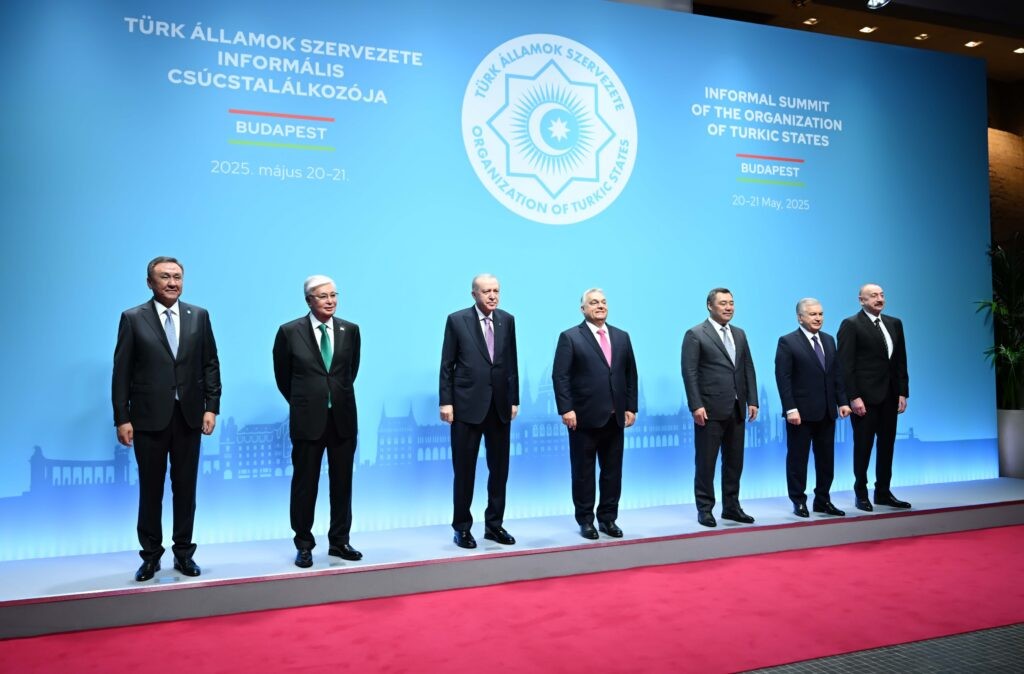
The absence is not a breach of diplomatic protocol. Governments often wait for formal certification or initial contacts before issuing congratulations after parliamentary elections. Yet Hungary occupies a distinct place in Central Asia’s external relations. It is an observer in the Organization of Turkic States, and President Kassym-Jomart Tokayev attended the informal OTS summit in Budapest, where Viktor Orbán hosted regional leaders and promoted closer ties. Hungary has presented itself as a bridge between Central Asia and the European Union, with regular high-level exchanges and expanding economic links.

Recent precedent underscores the contrast. Following Hungary’s 2022 election, Kazakhstan’s Akorda said Kassym-Jomart Tokayev sent Viktor Orbán a congratulatory telegram on April 4, the day after the vote, and Uzbekistan reported that President Shavkat Mirziyoyev phoned Orbán on April 14, 2022 to offer his congratulations. No similar outreach has been made public so far in 2026.

The delay reflects a period of adjustment rather than a clear shift. Orbán’s government had cultivated close personal and political ties with Central Asian leaders, and Budapest played an active role in advancing cooperation through the Turkic framework. A new Hungarian administration may recalibrate those priorities as it seeks to strengthen relations within the EU, creating uncertainty for partners that had relied on Hungary as a consistent advocate in Europe.

For now, the silence signals caution. Central Asian governments appear to be waiting for the formal transition in Budapest and for early indications of the new government’s foreign policy. If statements follow in the coming days, the current pause will look procedural. If it continues, it will carry more weight as a sign of recalibration in a relationship that had been unusually close.

Tajikistan Didn´t Qualify for World Cup, But Its Young Players Are Winning

Uzbekistan have qualified for this year’s FIFA World Cup, while Tajikistan didn’t make it to the tournament. But their fortunes were reversed in a Central Asian junior event, suggesting that Tajik football is poised for a brighter future.

Coached by Jafar Akhmedov, Tajikistan’s team won the Central Asian Football Association U17 championship on Monday, securing the title with a 0-0 draw with second-placed Uzbekistan in Tashkent.

Tajikistan was top of the field with 10 points, while Uzbekistan had eight. Previously, Tajikistan’s team beat Turkmenistan (5-1), Kyrgyzstan (4-0) and Afghanistan (3-2).

Two players on the Tajik team were recognized individually by the tournament. Bihisti Rajabzod was awarded the prize of most valuable player, or MVP, and the top scorer was Sioyosh Nazarov with four goals.

The headquarters of the Central Asia Football Association, a sub-group of the Asian Football Confederation, is in Dushanbe, Tajikistan. Its six members are Afghanistan, Iran, Kyrgyzstan, Tajikistan, Turkmenistan and Uzbekistan. Kazakhstan has been a member of the Union of European Football Associations, or UEFA, since 2002.

Uzbekistan will compete in the World Cup for the first time this year and faces Colombia, Portugal and Democratic Republic of Congo in Group K. Uzbekistan’s team is led by coach Fabio Cannavaro, captain of Italy’s winning team in the 2006 World Cup in Germany.

Tajikistan turned in some solid performances in World Cup qualifying games, including a 1-1 draw against Saudi Arabia and a 3-0 win over Pakistan. Although Tajikistan didn’t manage to qualify for this year’s expanded tournament, it has qualified for the AFC Asian Cup in Saudi Arabia next year.

Kazakhstani Neurosurgeon Galymzhan Issabekov on Brain Research in Berlin

In an era of globalization, science has become an increasingly borderless field dedicated to advancing human well-being. This is especially evident in neuroscience, where ongoing discoveries are deepening understanding of the human brain, one of the body’s most complex and least understood organs, while shaping the future of medicine. Among the emerging researchers in this field is Kazakhstani neurosurgeon and PhD scholar Galymzhan Issabekov.

Issabekov is part of a new generation of scientists building international careers in research and medicine. His academic path began at Peking University, where he received medical training and developed a strong foundation in research. He later completed a residency in functional neurosurgery in Beijing, combining clinical practice with scientific work and focusing in particular on hemispherectomy, a complex procedure used to treat severe pediatric epilepsy.

From G.Issabekov’s personal archive

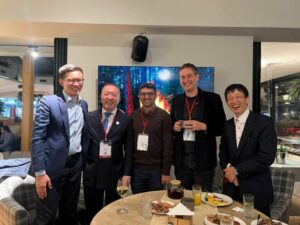
Seeking further professional development, Issabekov continued his training in Japan. With support from the Takeda Science Foundation, he joined Tokyo Women’s Medical University as a fellow, working alongside neurosurgeon Professor Takaomi Taira. This period was instrumental in shaping his research interests and integrating him into the international scientific community.

He is currently based in Berlin, where he conducts research at Charité University Hospital. His work focuses on improving deep brain stimulation (DBS), an advanced therapy used to treat Parkinson’s disease. The procedure involves implanting electrodes in deep brain structures to regulate abnormal neural activity.

As Issabekov explains, some DBS procedures are performed while the patient is conscious. During these operations, neurophysiologists monitor electrical brain activity in real time, providing neurosurgeons with highly precise, navigation-like guidance. This enables the accurate placement of electrodes in extremely small regions such as the subthalamic nucleus. Experienced specialists can even identify these areas through the distinct patterns, or “sounds,” of neuronal signals, reflecting a high level of surgical precision.

Together with his colleagues, Issabekov is developing a new intraoperative protocol that allows for simultaneous brain stimulation and real-time monitoring of neural responses. Previously, combining these processes posed significant technical challenges. The new method is expected to offer deeper insight into the mechanisms of DBS and support more individualized treatment approaches.

The research team has reached an important stage, with initial findings now being prepared for publication. Early results indicate strong potential for meaningful scientific advances.

Despite working abroad, Issabekov maintains close ties with Kazakhstan’s academic community. He is co-founder and vice president of the Global Central Asian Science and Technology (CAST) Association, which connects more than 150 researchers from Kazakhstan and across Central Asia in over 30 countries. The organization supports early-career scientists by facilitating international placements and promoting global collaboration.

“Many Kazakh researchers abroad are willing to contribute to the development of science in their home country,” Issabekov said. “What has been missing is a structured platform to connect them. Our association aims to fill that gap. We also help participants in the Bolashak program, particularly within the ‘500 Scientists’ initiative, find suitable research institutions and laboratories overseas.”

Beyond his scientific work, Issabekov highlights a broader issue faced by many Kazakhs living abroad: preserving cultural identity. In multicultural environments, maintaining language, traditions, and values can be challenging, yet remains essential.

“National identity goes beyond language or customs, it reflects a person’s worldview,” he said. “Wherever you are, it is important not to lose a sense of who you are. Living abroad, you inevitably become an informal representative of your country.”

From G.Issabekov’s personal archive

In his own family, this principle is applied in everyday life. His children are growing up bilingual, speaking both Kazakh and English, while staying connected to their cultural heritage. “Consistency matters,” he noted. “Regularly speaking your native language, observing traditions, and passing on cultural values can have a lasting impact.”

Comparing education systems worldwide, Issabekov points to distinct national strengths: discipline and work ethic in China, respect and teamwork in Japan, creativity and independence in the United States, and structure and academic autonomy in Germany. In his view, Kazakhstan would benefit from adopting a balanced approach that integrates these qualities while preserving its own cultural identity.

Issabekov’s story reflects the value of persistence, scientific inquiry, and international collaboration. Through his work on the brain’s signaling systems, he is contributing to advances in medicine and is part of a new generation of Kazakhstani scientists working on the global stage.

IMF Warns of Risks for Rapidly Growing Kyrgyz Economy

Kyrgyzstan continues to record strong economic growth and rising per capita income. At the same time, elevated inflation above the National Bank’s 5%-7% target range, rapid credit expansion, strong wage growth, and high liquidity point to signs of economic overheating, requiring timely macroeconomic policy adjustments. These are the key points of an International Monetary Fund (IMF) statement following consultations with Kyrgyz authorities in Bishkek between March 18 and April 1.

The IMF noted that after recording fiscal surpluses between 2023 and 2025, the overall fiscal balance is projected to shift into deficit in 2026, reflecting higher public-sector wages and increased capital spending.

The mission also emphasized that monetary policy should remain focused on bringing inflation back within the National Bank’s target range. Strengthening the central bank’s independence and governance remains critical to safeguarding price stability. Repeated transfers of National Bank profits to the state budget, while capital remains below statutory thresholds, risk undermining institutional credibility and the effectiveness of monetary policy. The IMF urged the authorities to uphold the provisions of the constitutional law governing the National Bank and to suspend regular profit transfers until capital is adequately restored.

According to the IMF, Kyrgyzstan’s banking sector is stable, well capitalized, and liquid. However, nonperforming loans remain elevated, and rapid credit growth could increase vulnerabilities if macroeconomic conditions deteriorate.

The mission stressed that structural reforms remain essential to support sustainable and inclusive growth. These should focus on strengthening governance, reducing the state’s role in the economy, and fostering private-sector-led development. Key priorities include reforming state-owned enterprises, improving the business environment and competition, strengthening the rule of law and anti-corruption efforts, and addressing informality and labor market rigidities.

According to the National Statistical Committee, Kyrgyzstan’s gross domestic product (GDP) grew by 11.1% in 2025, while inflation reached 9.4%.

The government aims to sustain economic growth under the National Development Program through 2030, targeting average annual GDP growth of 8%, total GDP of at least $30 billion, and GDP per capita of $4,500.

The Asian Development Bank (ADB) also forecasts continued strong growth, projecting GDP expansion of 8.9% in 2026 and 8.4% in 2027, following 11.1% growth in 2025. Growth is expected to moderate as construction and trade normalize, although domestic demand will remain the main driver, supported by resilient remittance inflows and sustained investment under the National Development Program.

ADB projects inflation to rise to 10.3% in 2026 before easing to 8.5% in 2027, driven by strong domestic demand and planned increases in electricity and heating tariffs.

Concerns about overheating are not new. A July 2025 meeting at the Kyrgyz Ministry of Economy and Commerce highlighted structural imbalances, including a widening gap between income growth and labor productivity, rising inflation, labor shortages, increased public spending, and rapid growth in consumer lending.

Economist Azamat Akeneev told 24.kg that sustainable growth is not possible without improvements in labor productivity and exports. “If the economy grows through consumption and government spending rather than competitiveness and expansion into foreign markets, sooner or later an adjustment phase will follow,” he said, warning that overheating could lead to recession, currency depreciation, and social instability.

These concerns come amid a deterioration in Kyrgyzstan’s external trade performance. According to the National Statistical Committee, exports fell by 20.3% in January 2026, while imports rose by 6.1%. The trend continued throughout 2025, when exports declined by 44.5% and imports increased by 3.9%. Total foreign trade turnover reached $15.8 billion, down 10.2% compared to 2024.

Arsen Imankulov, another expert cited by 24.kg, said that a moderate economic slowdown, or “cooling,” should not be seen as a setback but rather as a strategic adjustment.