• KGS/USD = 0.01144 0%
  • KZT/USD = 0.00209 0%
  • TJS/USD = 0.10438 0%
  • UZS/USD = 0.00008 0%
  • TMT/USD = 0.28490 0%
  • KGS/USD = 0.01144 0%
  • KZT/USD = 0.00209 0%
  • TJS/USD = 0.10438 0%
  • UZS/USD = 0.00008 0%
  • TMT/USD = 0.28490 0%
  • KGS/USD = 0.01144 0%
  • KZT/USD = 0.00209 0%
  • TJS/USD = 0.10438 0%
  • UZS/USD = 0.00008 0%
  • TMT/USD = 0.28490 0%
  • KGS/USD = 0.01144 0%
  • KZT/USD = 0.00209 0%
  • TJS/USD = 0.10438 0%
  • UZS/USD = 0.00008 0%
  • TMT/USD = 0.28490 0%
  • KGS/USD = 0.01144 0%
  • KZT/USD = 0.00209 0%
  • TJS/USD = 0.10438 0%
  • UZS/USD = 0.00008 0%
  • TMT/USD = 0.28490 0%
  • KGS/USD = 0.01144 0%
  • KZT/USD = 0.00209 0%
  • TJS/USD = 0.10438 0%
  • UZS/USD = 0.00008 0%
  • TMT/USD = 0.28490 0%
  • KGS/USD = 0.01144 0%
  • KZT/USD = 0.00209 0%
  • TJS/USD = 0.10438 0%
  • UZS/USD = 0.00008 0%
  • TMT/USD = 0.28490 0%
  • KGS/USD = 0.01144 0%
  • KZT/USD = 0.00209 0%
  • TJS/USD = 0.10438 0%
  • UZS/USD = 0.00008 0%
  • TMT/USD = 0.28490 0%

Chinese Firm Begins Construction of Wind Farm in Kazakhstan

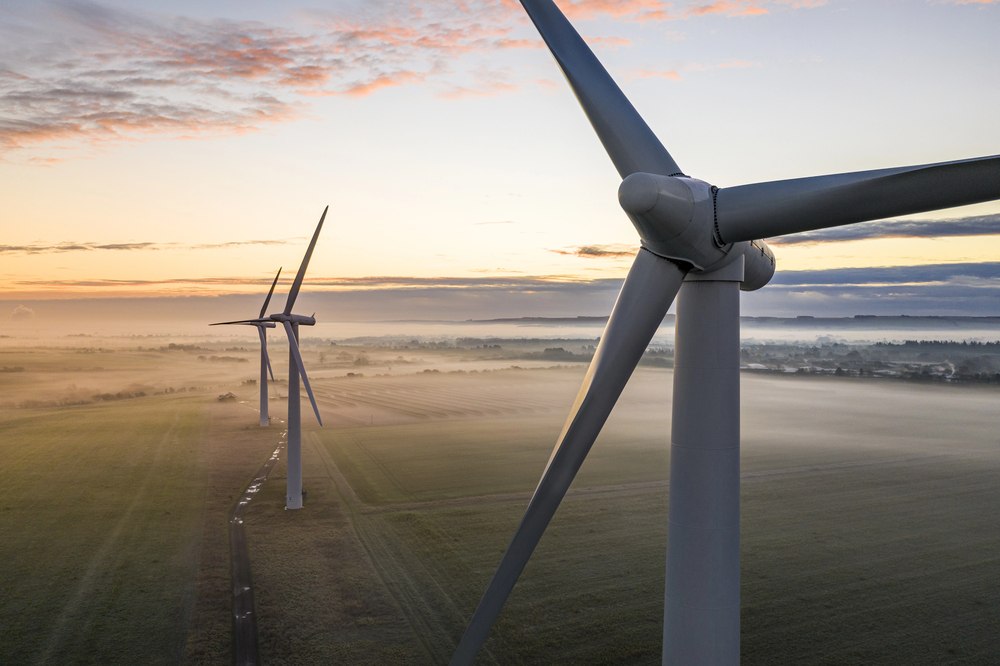
China’s State Power Investment Corporation has begun construction of a 1 GW wind farm in northern Kazakhstan. The project, located near the city of Ekibastuz in the Pavlodar region, is being implemented jointly with Pavlodar Green Energy LLP under agreements signed with the Energy Ministry on January 29.

According to the ministry, foreign direct investment in the project will total approximately $1.2 billion, with commissioning scheduled for 2029.

The wind farm will include a 300 MW energy storage system designed to stabilize electricity output and support Kazakhstan’s unified power grid. Once operational, the facility is expected to generate around 3.4 billion kWh of electricity annually.

The project is also projected to reduce greenhouse gas emissions by up to 2 million tonnes of CO₂ per year.

In 2025, renewable energy generation reached 8.6 billion kWh, exceeding official targets by 19.4%. Renewables accounted for 7% of total electricity output, up from 6.43% in 2024.

Kazakhstan currently operates 162 renewable energy facilities with a combined capacity of approximately 3.5 GW. In 2026, authorities plan to increase renewable output to 8.8 billion kWh through the launch of 10 new projects, including wind, solar, and hydropower plants.

Despite growth in renewables, Kazakhstan remains heavily dependent on coal and natural gas. Total electricity generation stood at 123.1 billion kWh in 2025 and is expected to rise to 126.5 billion kWh in 2026.

The government is also advancing plans to add 7.6 GW of coal-fired generation capacity, supported by reserves estimated at over 33 billion tonnes.

At the same time, Kazakhstan aims to increase the share of renewables to 15% by 2030 and 50% by 2050, alongside plans to update legislation on alternative energy and hydrogen development.

The Times of Central Asia previously reported that Kazakhstan is launching a large-scale investment program in the energy sector. By 2030, the country plans to attract at least $15.5 billion for the development of coal-fired power generation. The corresponding national project has been approved by the government.

Chinese Company Plans to Build Solar Power Plant in Tajikistan

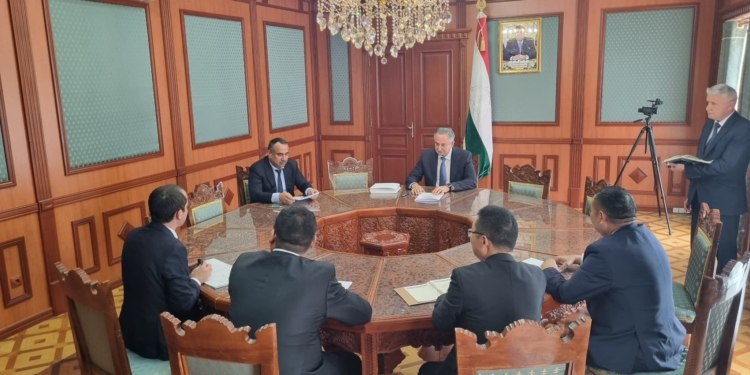
Authorities in Tajikistan’s Khatlon region are in talks with a Chinese company over the construction of a 500-megawatt solar power plant, a project that could significantly reshape the region’s energy landscape.

The proposal was discussed at a meeting between Khatlon regional head Davlatali Said and representatives of the Chinese company SETS.

For a region where power outages remain a persistent issue, the project could mark an important step forward. With population growth and rising energy demand placing increasing strain on the existing grid, authorities are turning to alternative energy sources. Regional officials expect the plant to help reduce electricity shortages and improve environmental conditions.

The Chinese side has expressed readiness to invest in the project and introduce modern technologies. The company reportedly has experience implementing similar energy projects, including in Central Asia.

Although the project remains at the discussion stage, the parties are already considering key aspects of implementation, including construction timelines and personnel training. If agreements are finalized, the solar power plant in Khatlon could become one of the largest renewable energy projects in Tajikistan.

Uzbekistan and Russia Focus on Trade and Transit at Termez Meeting

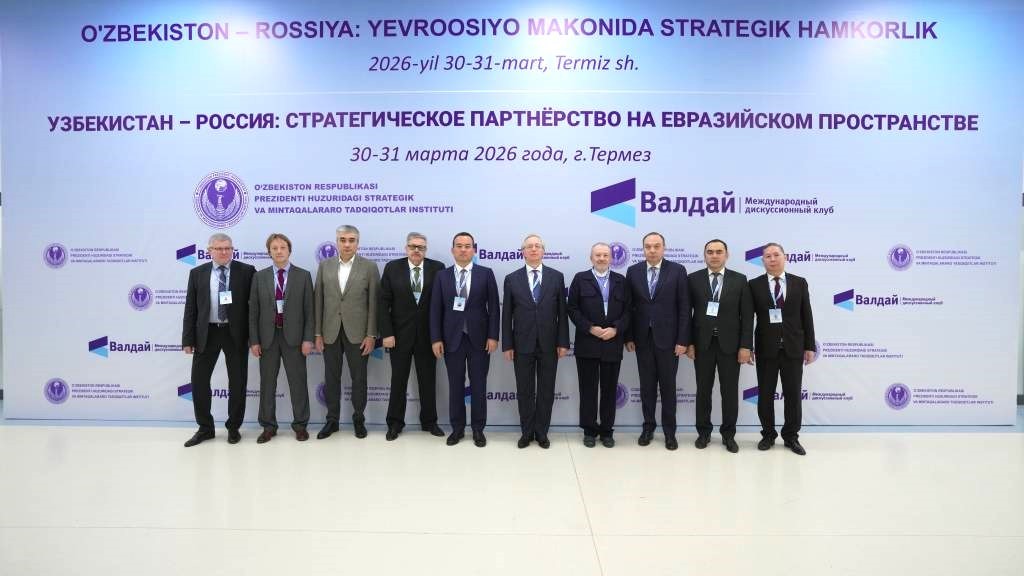
Uzbekistan and Russia used a conference in Termez on March 30–31 to highlight the breadth of their relationship, from trade and industrial projects to transport links and regional planning. The meeting was organized by Uzbekistan’s Institute for Strategic and Regional Studies and Russia’s Kremlin-linked policy forum, the Valdai Discussion Club. Participants included Russian Deputy Foreign Minister Mikhail Galuzin, Uzbek Deputy Foreign Minister Bobur Usmanov, ISRS director Eldor Aripov, Russian Ambassador Alexei Yerkhov, and other Uzbek and Russian officials, analysts, and business representatives.

The meeting comes at a time of shifting regional dynamics, as Central Asian states recalibrate ties with Russia while managing new economic and political pressures from multiple directions.

Termez sits by the Friendship Bridge on Uzbekistan’s border with Afghanistan and has become one of Tashkent’s main platforms for trade, logistics, and diplomacy aimed southward. The conference program focused on transport, infrastructure, interregional ties, and industrial cooperation, so the location matters. This aligns Uzbekistan’s relationship with Russia with a wider push for new routes across Eurasia and toward South Asia.

The economic backdrop is also substantial. Official Uzbek figures put bilateral trade with Russia at around $13 billion in 2025, making Russia Uzbekistan’s second-largest trading partner after China. Uzbek reporting says that trade has grown sharply since 2017, with Russian investment in Uzbekistan approaching $5 billion. Officials have described the relationship as moving beyond simple trade toward industrial cooperation, technological partnerships, and longer value chains.

The conference emphasized the growing role of direct regional links. Uzbek officials highlighted more than 200 regional initiatives worth over $4 billion and identified Tatarstan as a key partner in industry, petrochemicals, engineering, information technology, and education. Projects linked to the Himgrad industrial park model and branches of Kazan Federal University in Uzbekistan show how cooperation now extends through regions, universities, and industrial zones, not just central governments.

Energy remains a key part of the relationship. As previously reported by The Times of Central Asia, on March 24, Uzbekistan and Russia advanced work on Uzbekistan’s planned nuclear power project in the Jizzakh region. Uzbekistan’s nuclear agency, Uzatom, and Russia’s Rosatom signed new documents and began initial concrete works for a small-capacity unit, describing the step as moving the project into a new implementation phase.

Transit formed another major part of the agenda. Uzbek reporting states that participants discussed modernizing northern routes and developing a southern route through Afghanistan toward ports on the Indian Ocean. This fits Uzbekistan’s longer effort to turn Termez into a logistics hub for Afghan and South Asian trade. The city hosts the Termez International Trade Center, designed to simplify border trade and business access.

The timing also reflects wider regional pressures. TCA previously reported that the war involving Iran is placing a strain on southern routes and increasing the importance of alternative corridors. In that context, a Russia–Uzbekistan meeting focused on trade and transport in Termez underscores how both countries are linking bilateral cooperation to shifting regional logistics.

The meeting in Termez did not produce a major treaty or a single headline project. It showed instead that Uzbekistan is expanding practical cooperation with Russia across trade, industry, energy, and transport while maintaining a broader multi-vector foreign policy. It also highlighted Termez as a key node where Uzbekistan’s ties with Russia connect to its wider ambitions in Afghanistan and South Asia.

Actor Rauan Akhmedov on Cinema in Kazakhstan and Why He Has No Interest in Hollywood

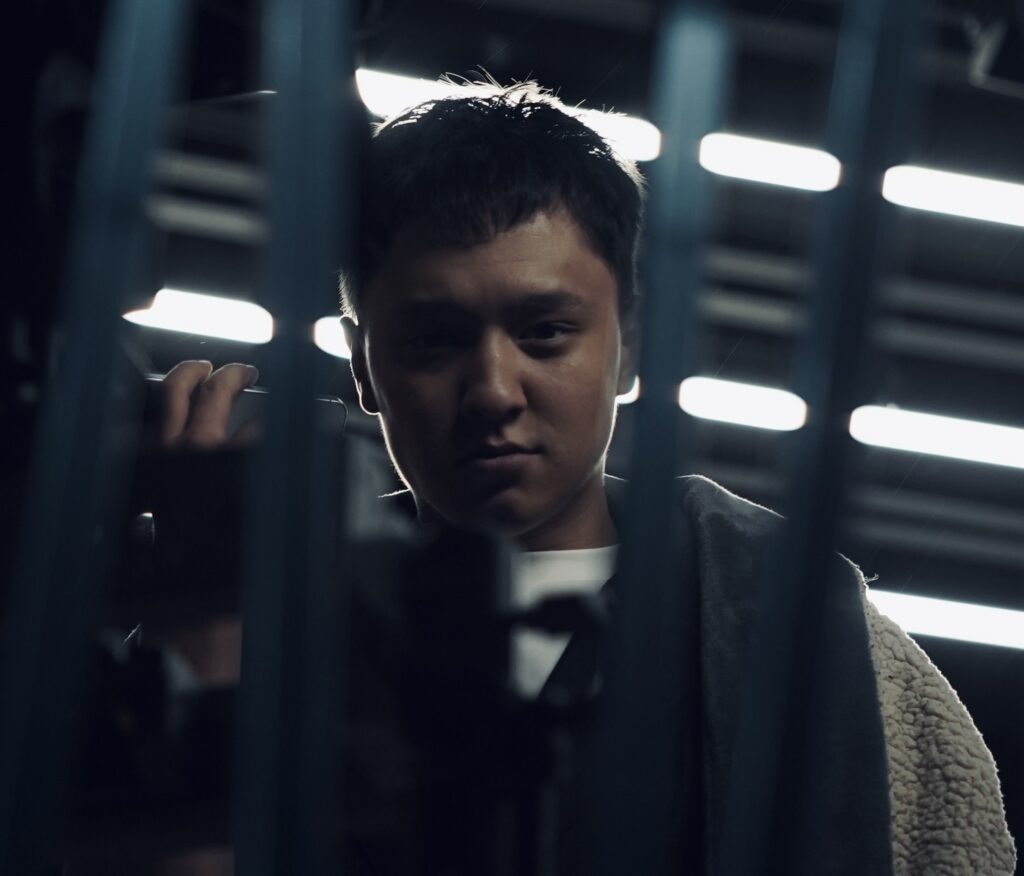
Rauan Akhmedov is one of Kazakhstan’s most sought-after young actors. Despite his rapidly rising career and growing international interest in Kazakh cinema, the 22-year-old says his priority is to continue developing within the domestic industry.

In an interview with The Times of Central Asia, he discusses the state of cinema in Kazakhstan, the role of personal experience in his acting, and why tradition and modernity are not mutually exclusive.

TCA: Your breakthrough came with Black Yard, directed by Dias Bertis. Is it true he noticed you while you were filming a small cameo in the series The Player?

Rauan: Yes. I came to the audition, and we were rehearsing a scene with another candidate, I think he was reading for a doctor. We weren’t getting it right, so at some point the director stepped away. I then suggested to my scene partner that we try a different approach. Dias overheard us, came over, and said, “Switch roles.” We did, and he decided I should take the part. Apparently, he liked my performance, and later he invited me to Black Yard.

TCA: You have three films coming out this spring. Is the Kazakhstani film industry becoming overcrowded? Do you feel the urge to work abroad?

Rauan: Not yet. I want to follow my own path and realize my potential here. I believe Kazakhstani cinema can reach a very high level. I don’t dream about Hollywood. If I ever end up there, I want it to be through a Kazakhstani project.

It’s important for me to stay at home, the language, the culture, the people. I want to grow here and contribute to the development of cinema in my country. Especially as audiences abroad are beginning to take an interest in our films. We haven’t conquered the world yet, but we’re improving all the time. Kazakhstan has strong potential.

TCA: Would you describe yourself as a patriot?

Rauan: Yes. I respect our filmmakers. When someone succeeds, when a film performs well at the box office, I’m genuinely pleased, even if it’s not my project. I think that once we overcome internal divisions and start supporting one another, we can achieve a great deal.

TCA: Many films are now being shot in the Kazakh language. Does that give Kazakh-speaking actors a competitive advantage?

Rauan: Probably. But in my view, that’s natural. Every country produces films in its own language. We are Kazakhs, who else will make films in Kazakh? At the same time, I respect all languages, Russian, English, Chinese.

The more languages you know, the broader your perspective.

TCA: You often portray characters from the 1990s, even though you were born in the 2000s. How do you research that period?

Rauan: Partly through my parents. But it’s not that long ago, you can find a lot online, and I experienced some of it myself. For example, we had a rotary phone at home. We often used a VCR to watch home videos, family celebrations, my parents’ wedding. I saw how young they were, how their wedding looked, and even footage from when I was brought home as a newborn.

TCA: What films and cartoons did you grow up watching?

Rauan: We watched everything on DVD. One of my favorites is Brother Bear. Also Open Season, Madagascar, Ice Age, generally, classic Hollywood animation.

TCA: When you read a script, can you immediately tell whether it’s strong?

Rauan: Usually, yes. The script that impressed me most was The Verdict. When I read the story about the men who took judges hostage because they disagreed with a court ruling, I immediately felt it was a strong project, and it turned out that way.

TCA: Black Yard can be interpreted as a story about children’s grievances towards their parents. Do you agree?

Rauan: I think so. No matter how hard you try, children will eventually express their grievances. My parents are divorced, and I found that difficult as a child. It hurt; I felt angry and wronged. But life isn’t perfect, it’s a decision made by two adults.

The divorce rate in Kazakhstan is high now, and it’s almost seen as normal, although in reality it’s a serious issue.

TCA: Does that personal experience influence your work?

Rauan: Yes, to some extent. Through my roles, I’ve worked through things I couldn’t fully articulate before. Working with a psychologist also helped. I realized I had a strong need for my father’s approval, I wanted him to say, “You’re doing great.”

Now I try to give that to myself. In a way, I’ve become my own source of support.

TCA: What is your relationship with your father like now?

Rauan: It varies. Sometimes we’re close, sometimes less so. He’s going through a difficult period, but I think he’ll get through it.

TCA: And are you closer to your mother?

Rauan: Yes. She’s proud of me. She invested a lot in my brother and me and made sure we received a good education. We’re close in age, he’s a year and a half older. We started university in the same year. He studied biotechnology, and I studied acting. They now live in Shymkent. My brother works with drones and runs his own business.

I love that city, it’s my home. But professionally, I feel I’ve outgrown it. It’s a place I want to return to, but not one where I can continue developing.

TCA: Social media has significantly changed actors’ lives. Does it create additional temptations?

Rauan: Yes, but I don’t want to live that way.

A fast-paced lifestyle is draining, not just physically, but emotionally. Over time, the spark fades. It becomes about chasing quick dopamine hits, and that’s exhausting. Research shows that constant exposure to this kind of stimulation affects mental health. It creates the illusion of experience, you feel as though something has happened, but in reality, it hasn’t.

That makes it harder to build real relationships. In my view, that’s unhealthy.

TCA: You come across as a fairly traditional person.

Rauan: I wouldn’t describe myself as strictly conservative, but I believe traditions exist for a reason.

For example, I recently learned about the custom of hanging sheep vertebrae at the entrance to a yurt. Many people assume it symbolizes strength, but in fact it had a practical purpose. It signaled that there was a newborn inside, so visitors should not enter, to avoid bringing in infections. It’s important to understand that traditions are not just symbolic, they often have practical logic behind them.

I’m open-minded, and I value that in others. I have a simple test: can I sit down with this person and have a quiet cup of tea? If so, then there’s a connection.

Kyrgyzstan Moves Toward Power Consolidation Ahead of 2027 Election

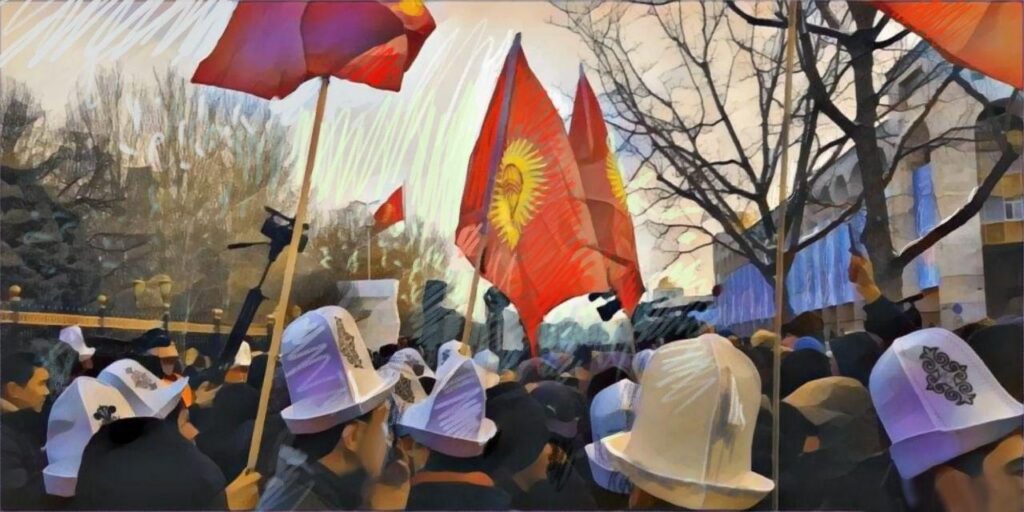
Kyrgyzstan has changed leaders more often than any other country in Central Asia, with power shifts since independence driven by both elections and unrest. With less than ten months remaining before the next presidential vote on January 24, 2027, recent political developments suggest the authorities are now moving to consolidate control well ahead of the contest.

Against this backdrop, Russian political analyst Arkady Dubnov, citing sources in Kyrgyzstan, has suggested that recent political decisions, including the sudden removal of Kamchybek Tashiyev on February 10, may be linked to efforts to manage regional and institutional tensions within the country. In particular, discussions since that decision have focused on the long-standing dynamics between northern and southern elites. This dynamic has historically shaped political competition in the country.

Recent personnel changes within state institutions have targeted individuals previously associated with former officials. Such administrative reshuffling is not uncommon ahead of major political milestones, including elections, and may reflect efforts to consolidate governance structures ahead of the upcoming election cycle.

Kyrgyz political analyst Kanat Nogoybaev, speaking to a Kazakhstani outlet, commented on a petition signed by a group of public figures calling for early presidential elections. He noted that such initiatives typically reflect broader political maneuvering within elite circles. Since the petition was signed, some reports indicate that several individuals connected to this petition have faced legal scrutiny, though details remain unclear.

President Sadyr Japarov has addressed the removal of Tashiyev, emphasizing the importance of maintaining stability within state institutions and avoiding internal divisions among public servants.

“I believe that by making a swift decision, I ensured stability within the system,” Japarov said in earlier remarks, stressing that unity within government structures remains a priority.

Separately, there have been discussions in political circles regarding the review of past high-profile legal cases. Former Jogorku Kenesh (parliamentary) deputy Iskhak Masaliev has suggested reassessing certain cases from recent years.

One such case involves journalist Makhabat Tazhibek kyzy, whose legal proceedings have attracted significant public attention. In March, the Supreme Court remanded her case for retrial, and her pretrial detention was changed to house arrest. The case is part of a broader investigation involving media professionals detained in January 2024 on charges related to public unrest. Judicial proceedings in these cases remain ongoing.

Economic developments have also intersected with recent political discussions. Investigations involving the state company, Kyrgyzneftegaz, have led to the detention of several individuals, including company executives and former officials. The Kyrgyz authorities have stated that these actions are part of broader efforts to ensure transparency and accountability in the management of state assets.

Officials from the State Tax Service have addressed the case, noting that new conditions allowed for a comprehensive audit of the company. Subsequent legal actions were taken following the findings. These developments add an economic dimension to the broader political shifts underway.

In parallel, Kyrgyzneftegaz has announced a general shareholders’ meeting scheduled for April 16 in Kochkor-Ata. The agenda includes governance changes, amendments to internal documents, and financial restructuring measures.

While the authorities continue to emphasize stability and institutional continuity, recent developments have prompted closer scrutiny of how political and administrative changes may shape Kyrgyzstan’s leadership landscape ahead of 2027.

Melting Glaciers Becoming an Increasing Threat to Central Asia’s Resources

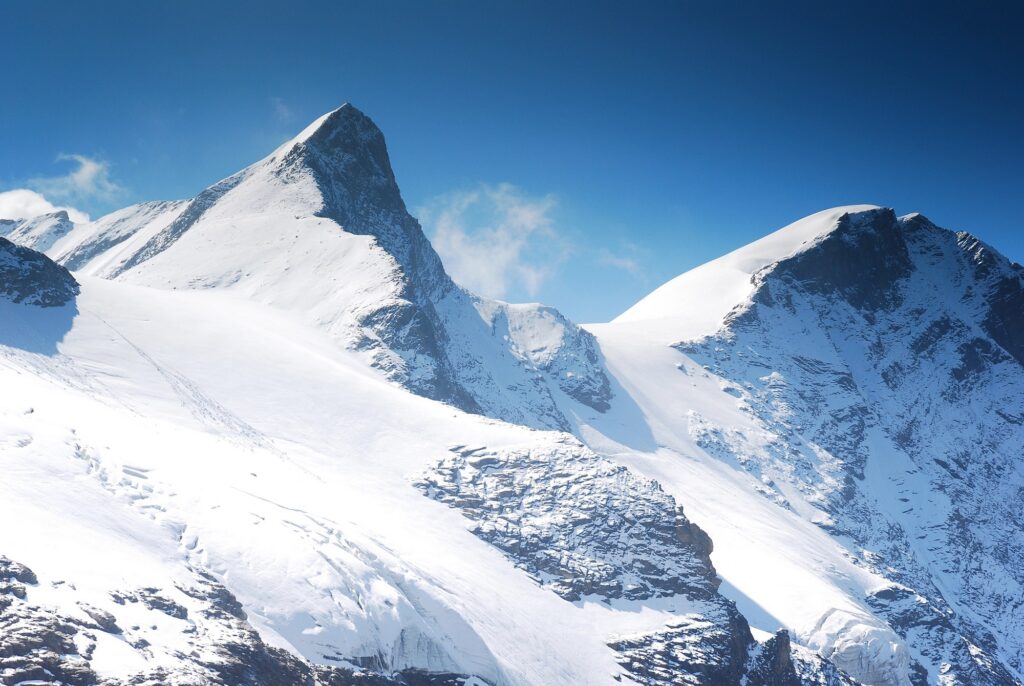
Glacier melt in Central Asia is becoming increasingly critical, posing risks to water resources, economic stability, and regional security. In response, countries in the region are strengthening coordination and launching new scientific and policy initiatives.

According to the UN, glaciers in the world’s mountainous regions are shrinking at an unprecedented rate. Rising temperatures are leading to a longer warm season and a shorter winter, accelerating the process of degradation.

Glaciers remain a key element of the global water system: they account for about 70% of freshwater reserves, and nearly two billion people depend directly on these resources. In addition, they perform an important climatic function by reflecting solar radiation and limiting the warming of the Earth’s surface.

Central Asia is already facing the consequences of climate change. The region is under increasing pressure from rising temperatures, droughts, and dust storms.

Tajikistan remains particularly vulnerable. According to President Emomali Rahmon, of the approximately 14,000 glaciers that the country once had, more than 1,000 have already disappeared, and their total volume has shrunk by nearly a third. Yet it is these glaciers that account for over 60% of the region’s water resources.

In Kyrgyzstan, the area of glaciers has decreased by approximately 16% over the past 50-70 years. President Sadyr Japarov previously warned that, if current trends continue, a significant portion of them could disappear by the end of the 21st century, posing a threat to millions of residents in the region.

In response to the growing crisis, at Tajikistan’s initiative, the UN General Assembly declared 2025 the International Year of Glacier Conservation. The official launch took place on March 21 in New York and coincided with the first World Glacier Day.

At an international conference in Dushanbe, the Dushanbe Declaration was adopted, expressing concern over the accelerated loss of glaciers, snow cover, and permafrost.

The document highlights the potentially “irreversible consequences” for ecosystems and the economy.

The five countries of Central Asia are also developing joint adaptation mechanisms. Key measures include monitoring the condition of glaciers, creating a unified regional registry, and coordinating water policy.