• KGS/USD = 0.01144 0%
  • KZT/USD = 0.00196 -0%
  • TJS/USD = 0.10899 -0%
  • UZS/USD = 0.00008 -0%
  • TMT/USD = 0.28490 0%
  • KGS/USD = 0.01144 0%
  • KZT/USD = 0.00196 -0%
  • TJS/USD = 0.10899 -0%
  • UZS/USD = 0.00008 -0%
  • TMT/USD = 0.28490 0%
  • KGS/USD = 0.01144 0%
  • KZT/USD = 0.00196 -0%
  • TJS/USD = 0.10899 -0%
  • UZS/USD = 0.00008 -0%
  • TMT/USD = 0.28490 0%
  • KGS/USD = 0.01144 0%
  • KZT/USD = 0.00196 -0%
  • TJS/USD = 0.10899 -0%
  • UZS/USD = 0.00008 -0%
  • TMT/USD = 0.28490 0%
  • KGS/USD = 0.01144 0%
  • KZT/USD = 0.00196 -0%
  • TJS/USD = 0.10899 -0%
  • UZS/USD = 0.00008 -0%
  • TMT/USD = 0.28490 0%
  • KGS/USD = 0.01144 0%
  • KZT/USD = 0.00196 -0%
  • TJS/USD = 0.10899 -0%
  • UZS/USD = 0.00008 -0%
  • TMT/USD = 0.28490 0%
  • KGS/USD = 0.01144 0%
  • KZT/USD = 0.00196 -0%
  • TJS/USD = 0.10899 -0%
  • UZS/USD = 0.00008 -0%
  • TMT/USD = 0.28490 0%
  • KGS/USD = 0.01144 0%
  • KZT/USD = 0.00196 -0%
  • TJS/USD = 0.10899 -0%
  • UZS/USD = 0.00008 -0%
  • TMT/USD = 0.28490 0%
08 December 2025

Kazakhstan’s Oil Exports to Germany Drop Sharply in June

Kazakhstan’s oil exports to Germany via the Druzhba pipeline fell by 1.4 times in June 2025 compared to May, according to new data from KazTransOil.

Supply Targets vs. Delivery Volumes

In June, KazTransOil transported 160,000 tonnes of crude oil to Germany through the Russian Transneft pipeline network, down from 230,000 tonnes in May. The shipments were delivered to the Adamova Zastava entry point on the German border.

KazTransOil has not yet disclosed its supply plans for July.

Despite the recent dip, Kazakhstan plans to export 1.5 million tonnes of oil to Germany in 2025, mirroring the 2024 target. In 2023, the volume reached 993,000 tonnes.

Kazakhstan’s Energy Minister Erlan Akkenzhenov stated in May that Astana is in talks with partners to potentially increase the annual supply to 2.2 million tonnes. His predecessor, Almasadam Satkaliyev, had earlier voiced similar intentions, indicating the figure could be raised to 2 million tonnes if demand from Germany rises. President Kassym-Jomart Tokayev has also expressed readiness to boost exports.

Deepening Energy Ties

Kazakhstan launched regular oil deliveries to Germany through Druzhba in 2023 as part of its broader strategy to diversify export routes. The first shipment was dispatched in February of that year.

KazTransOil received a 2023 quota from Transneft for 1.2 million tonnes of oil, and in August, Karachaganak Petroleum Operating (KPO), operator of the Karachaganak field, announced plans to maintain that volume in 2024.

In June 2023, KazMunayGas signed a supply agreement with Rosneft Deutschland GmbH for monthly deliveries of 100,000 tonnes to the PCK Raffinerie in Schwedt, Germany. The contract involved KazMunayGas Trading AG as the seller and Rosneft Deutschland, one of the refinery’s co-owners, as the buyer.

Why Use the Druzhba Pipeline?

The Druzhba pipeline originates in Samara, Russia, and branches into two routes after Bryansk and Mozyr: the northern branch runs through Belarus to Poland and Germany, while the southern route passes through Ukraine to Hungary, Slovakia, and the Czech Republic.

Following Germany’s decision to halt imports of Russian oil in early 2023, capacity became available within the Druzhba system. Kazakhstan capitalized on this opening, with oil shipments technically routed through Russia’s Transneft network under intergovernmental agreements.

Germany, in its search for alternatives to Russian crude, has turned to Kazakhstan as a reliable supplier. Technical compatibility with the Druzhba pipeline and Kazakhstan’s neutral foreign policy have made it a strategic energy partner.

The Turkic States Are Quietly Building a Geoeconomic Power Base

The Organization of Turkic States (OTS) has spent the past years assembling itself not through declarations or summit communiqués, but through shared transport and logistics, harmonized customs procedures, and coordinated capital flows. What began in 2009 as the Turkic Council, a lightly institutional and rhetorically cohesive forum for shared identity, has evolved, following its 2021 transformation into the OTS, into a logistical and regulatory organism. Its under-the-radar evolution has been systematized through agreed documents, deployed capital, and materialized infrastructure. The OTS has entered a phase of procedural coordination and structural intent. Its cooperation is now practical, strategic, and functionally embedded.

This evolution has not followed a single arc, nor has it merely responded to outside pressures. Instead, it has progressed through an uneven sequence of internal adjustments, sometimes slow and technical, sometimes accelerated by external jolts such as the recent disruption in Azerbaijani–Russian relations. But such jolts only intensified a trajectory already underway. Member states had been converging long before this most recent bilateral crisis by aligning their policies, testing instruments, and developing the practical grammar of multilateral coordination. The current phase of renewed cooperation is not a reactive surge but a prepared transition that expresses an underlying structural shift in Eurasian geoeconomics at large.

Digital Infrastructure and Networked Cooperation

If there is a single domain where institutional convergence becomes immediately visible, this would be digital logistics. Once-fractured national processes — disjointed customs systems, mismatched permits, bureaucratic duplication — have begun to fold into a shared administrative architecture (including eTIR, eCMR, and ePermit) structured by international conventions that have been adapted to fit the particular alignments now emerging in the Turkic sphere.

These procedures are no longer pilot projects but live systems. They digitize paperwork, synchronize border procedures, and build the kind of operational rhythms that trade corridors need in order to function. Negotiations continue, meanwhile, on a Free Trade in Services Agreement, targeted not at deregulation but at harmonization, viz., the alignment of technical and professional standards across a disparate set of economies. Kazakhstan and Azerbaijan, for example, are already piloting a Simplified Customs Corridor. Its eventual integration with the multimodal Uzbekistan–Türkiye axis is not a matter of if, but of how soon.

Official observer states to the OTS are also beginning to move, with Hungary being the clearest case. Its $100 million injection into the Turkic Investment Fund made headlines, but the real story is downstream: Hungarian infrastructure now receives Azerbaijani gas via Türkiye. That is not diplomacy; that is energy dependence, structurally routed. Turkmenistan, long the holdout, has started to engage, first through planning meetings and now through signed agreements. Its ports, once idle in regional plans, are being fitted into the wider Caspian logistics network. The Turkish Republic of Northern Cyprus (TRNC), formally recognized only by Türkiye, is also a functional participant through educational exchanges, shared language, and soft institutions.

Reciprocal Trade and Development

The shift underway is as much geographic as it is institutional. Central Asia is no longer on the margins of the OTS project but is becoming its frame, with Uzbekistan and Kazakhstan leading the transition. In 2023, bilateral trade between the two passed the $5 billion mark. Both sides expect to double that by 2028. Trade figures, however, are not the point; rather, the point is what lies beneath them: aligned tariffs, a joint investment fund already over $250 million, and operational industrial zones in Shymkent and Tashkent that bind the two economies together at the level of physical plant and labor mobility.

Uzbekistan and Azerbaijan have taken it further. Together, they have launched a $500 million fund to back joint hard-asset infrastructure, including a logistics center in Samarkand and a proposed petrochemical plant in Navoi. Kyrgyzstan has taken another route. It is not the largest actor, but it has served as a testbed for customs reforms, digital permitting, and early eCMR adoption. Its reward has been a 60% rise in trade with OTS members. Turkmenistan, once detached, is now offering unused port capacity and quietly participating in feasibility studies for the China–Kyrgyzstan–Uzbekistan (CKU) railway.

Türkiye, for its part, remains everywhere. In 2023, Turkish firms signed contracts exceeding $2.2 billion across Central Asia, covering construction, textiles, and light manufacturing. These are labor-absorbing sectors that embed Turkish capital still more deeply in the region’s employment ecosystems, not to mention its social-stability calculus. What is consolidating itself in this space is not a bloc or an alliance, but a logistical and institutional meshwork, emerging from administrative coordination, co-located infrastructure, and other commitments.

Energy Coordination and Financial Convergence

Energy came first, and it remains the deepest stratum. Before the OTS had a name, Azerbaijani gas was already flowing west. The Trans-Anatolian Natural Gas Pipeline (TANAP, from its Turkish initials) carries into Türkiye for domestic consumption as well as for re-export into the European grid. Now, Kazakhstan and Turkmenistan are exploring new routes, new off-takes, and new roles in the energy economy of the region. Azerbaijan is coordinating with them to enter the electricity export sector through feasibility studies for a submarine cable to Europe.

The Turkic Investment Fund was launched in 2023 with an initial capital of $500 million provided by its five founding members: Azerbaijan, Kazakhstan, the Kyrgyz Republic, Türkiye, and Uzbekistan. Following the accession of Hungary as the sixth member, the Fund’s authorized capital increased to $600 million. A strategic platform dedicated to impactful investments, innovative solutions, and regional integration, TIF is small by global standards but structurally bold, with a mission grounded in shared growth, sustainable development, and long-term regional cooperation. Projects under consideration range from a green hydrogen facility in Uzbekistan to a logistics terminal in western Kazakhstan.

A Council of Central Banks is under design with the policy goal of harmonizing currency regimes and macro-prudential rules across the region. Hungary, still nominally an observer, is adjusting its fintech regulations to stay in sync. Banks in Kyrgyzstan and Uzbekistan have begun partnerships with Turkish and Azerbaijani institutions. This evolution should not be misconceived as a financial bloc; it is becoming a zone of interoperable monetary systems, wiring a regional financial nervous system into place, segment by segment.

Human Capital and Functional Differentiation

Beyond the infrastructure, the joint ventures, and the funding, something slower but more decisive is happening. The capacity to sustain these projects is also being developed: human capital, vocational integration, and institutional depth. Over two million small and medium enterprises across the region are now in touch with the Union of Turkic Chambers and Commodity Exchanges (TOBB), which links them to a platform providing legal services, licensing support, and training across national lines. The TOBB acts as an umbrella organization for local and national chambers of commerce, industry, and commodity exchanges, with the intention of reinforcing the private sector’s unity and solidarity, professional discipline, and ethical business practices.

Education is adapting in parallel. Universities in Türkiye, Kazakhstan, and Uzbekistan are collaborating on scholarship programs — not just in theory, but in applied fields: law, logistics, engineering. In Kazakhstan, the Turan Special Economic Zone (SEZ) has fused technical training with economic function. Customs officers, project managers, logistics coordinators — are being trained where the work happens. Uzbekistan is building out the same model.

Across this network, roles are beginning to settle. Türkiye still leads in construction and defense. Azerbaijan holds the energy core and manages logistical throughput. Kazakhstan is increasingly the financial and infrastructural organizer. Uzbekistan is assembling industrial capacity. Kyrgyzstan is serving as a laboratory for digital services. Turkmenistan keeps its traditional position in hydrocarbons. Hungary provides the bridge to EU regulatory terrain. The TRNC contributes through its universities. This composite is what late 19th-century sociologists called the “division of labor” and what mid-20th-century political scientists called “functional differentiation”.

From Adjacency to Centrality

The OTS is not a single system, but it is also no longer a rhetorical idea. Its coherence is being produced in situ, not by design but through friction and iteration. Once institutional structures reach this level of entanglement, what holds them together is no longer aspiration but interdependence. What binds this system together is not any uniformity, but rather the very friction that has settled into structure. Across sectors and states, the OTS is producing coordination without centralization, alignment without hierarchy. Its coherence is not yet formal, but it is already operational. The region is ceasing to be “adjacent” to other regions; it is asserting its own “centrality” through autonomous integration and external networking.

Kazakhstan Launches Central Asia’s Most Powerful Supercomputer

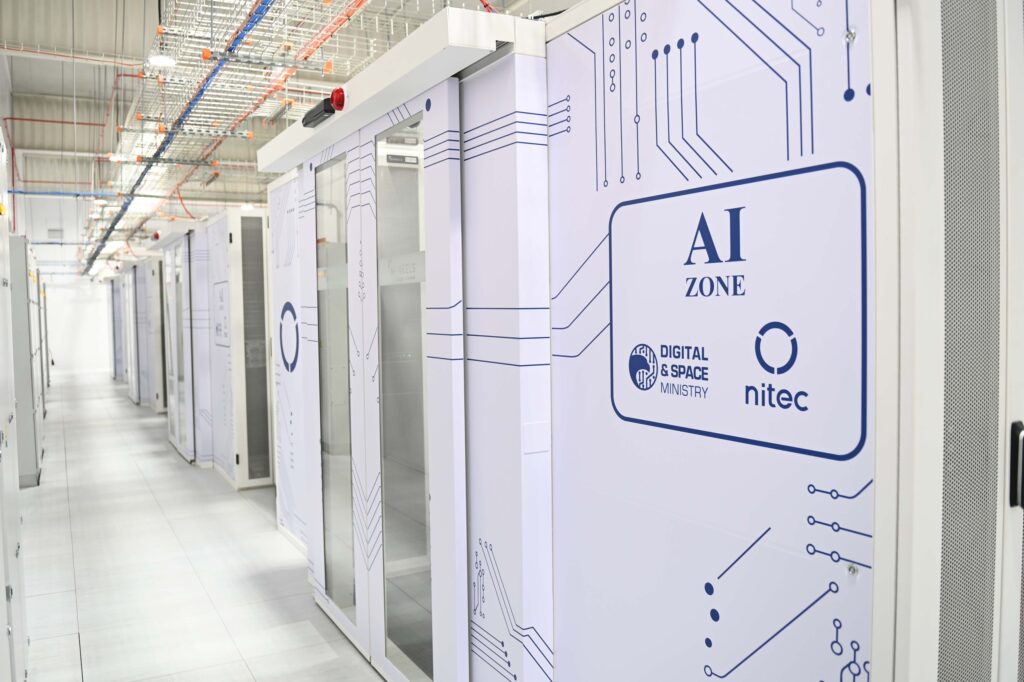
Kazakhstan has officially launched the most powerful supercomputer in Central Asia, marking a significant milestone in its push for digital sovereignty. President Kassym-Jomart Tokayev attended the inauguration ceremony at the new data center operated by the Ministry of Digital Development, Innovation, and Aerospace Industry.

According to the presidential press service, the computing cluster, built on NVIDIA H200 graphics processors, can deliver up to 2 exaflops (two quintillion operations per second) of performance, making it the region’s most advanced high-performance computing system.

Tokayev emphasized that the launch will catalyze digital transformation across key sectors of the Kazakh economy. The system will be accessible to startups working in neural networks, universities, research institutions, and both public and private sector enterprises.

“Having our own high-performance infrastructure will accelerate the adoption of artificial intelligence, reduce dependence on foreign IT resources, and ensure the country’s technological sovereignty,” said Zhaslan Madiev, Minister of Digital Development.

Boosting Domestic Capabilities

Madiev noted that many Kazakh companies, including fintech firms and startups, currently rely on foreign cloud providers such as Amazon and Google for computing resources. This dependence leads to capital outflows and heightens risks related to data security. He added that local engineers have received specialized training, and full operational control of the supercomputer will be transitioned to Kazakhstani specialists over the next five years.

During his visit to the National Computer Center, Tokayev was introduced to a range of domestic digital initiatives in fields such as healthcare, education, governance, and urban infrastructure. These include:

  • SmartCity Astana: A project aimed at creating a digital twin of the capital, incorporating over 100,000 AI-enabled surveillance cameras for real-time threat detection and public safety monitoring.
  • AlemLLM: A large language model customized for local linguistic and cultural contexts.
  • AI Kitap: An adaptive learning platform that offers personalized digital education based on student levels and preferences.
  • Baspana Hub: A digital ecosystem for real estate, integrating government services, property evaluations, a marketplace, and renovation support.

Tokayev also viewed presentations from emerging Kazakhstani tech startups. Among them was Surfaice.pro, a construction technology firm founded by Kazakhstani entrepreneurs in Silicon Valley. The company operates in five U.S. states and has raised $1.5 million in funding from Big Sky Capital and Shadow Ventures.

A Strategic Investment in Digital Sovereignty

As previously reported by The Times of Central Asia, the launch of the supercomputer aligns with Kazakhstan’s broader ambition to become a regional technology hub. It was developed under a strategic partnership between the Ministry of Digital Development and UAE-based Presight AI Ltd.

With its enhanced digital infrastructure and growing ecosystem of AI innovation, Kazakhstan is positioning itself at the forefront of high-performance computing and artificial intelligence in Central Asia.

Tackling Corruption in Kazakhstan: The Latest Trends

As previously reported by The Times of Central Asia, anti-corruption efforts are a cornerstone of President Kassym-Jomart Tokayev’s agenda. Court-ordered funds confiscated from corrupt officials have been used to finance public infrastructure: over the past three years, 150 billion tenge have been allocated to build 89 schools. On June 30, Tokayev signed a decree dissolving the country’s standalone Anti-Corruption Agency and transferring its functions to the National Security Committee (NSC), in what officials described as a move to modernize and streamline public administration.

A recent analysis by Ranking.kz sheds light on the latest trends, identifying the institutions most often entangled in scandals and criminal investigations.

Corruption Reaches Across All Levels

Between January and May 2025, the Kazakh authorities charged 640 individuals with corruption-related offenses, representing a 3% decrease compared to the same period in 2024. However, the number of identified offenders rose to 464, up 4.3% from 445 last year.

During the same period, 405 individuals were referred to the courts, an increase of 9.2% year-on-year. The largest number of defendants were employees of Akimats and their subordinate departments, totaling 66 individuals, though this figure is one-third lower than in 2024. In addition, 49 police officers, 16 employees from the Ministry of Finance, 11 from the Ministry of Agriculture, and 7 from the Criminal Executive Committee under the Ministry of Internal Affairs were brought to court.

Notably, three regional akims were among those referred to court this year, compared to just one in the same period last year. One judge was also prosecuted. In total, 57 individuals from 12 different ministries faced judicial proceedings, up slightly from 54 last year. However, the data does not encompass all divisions; for instance, the figures for the Ministry of Internal Affairs include only selected departments.

Bribery Remains the Most Common Offense

Bribery continues to be the most prevalent form of corruption, with 167 recorded cases in the first five months of 2025, a 27.5% increase from the previous year. Internal affairs personnel were the most frequently detained for bribery (22 cases), followed by local government officials (13 cases) and employees of the Ministry of Finance (9 cases).

In terms of the number of individuals involved, bribery accounted for 99 people. Corruption-related fraud followed, with 71 cases documented, rounding out the top three categories of offenses.

Kazakhstan in Global Perspective

Kazakhstan ranked 88th out of 180 countries in the 2024 Corruption Perceptions Index published by Transparency International, scoring 40 out of 100. This position is shared with North Macedonia, Suriname, and Vietnam. The index, based on assessments from organizations such as the World Bank and the World Economic Forum, ranks countries from 0 (most corrupt) to 100 (least corrupt).

According to the same report, 17% of Kazakhstani citizens who accessed public services in the previous year admitted to paying bribes. By way of comparison, in Denmark and Finland, the top-ranked countries, only 1% of citizens reported such experiences.

Within the Commonwealth of Independent States (CIS), Kazakhstan ranks third, behind Armenia (63rd) and Moldova (77th). However, everyday corruption is reportedly more widespread in both countries, affecting 19% of service users in Armenia and 22% in Moldova.

Other regional rankings include Ukraine (105th), Belarus (114th), Uzbekistan (121st), and Kyrgyzstan (146th). Russia and Azerbaijan are tied at 153rd, followed by Tajikistan (164th) and Turkmenistan (165th).

Kazakhstan and China Boost Rail Trade via Middle Corridor Agreement

Kazakhstan and China have signed a renewed strategic agreement to strengthen rail connectivity and increase freight volumes along the Trans-Caspian International Transport Route (TITR), also known as the Middle Corridor.

At a ceremony in Beijing, Kazakhstan Temir Zholy (KTZ) and China State Railway Group concluded a new Agreement on Comprehensive Strategic Cooperation, replacing the framework established in 2014. The updated agreement reflects evolving priorities in railway transport and logistics between the two countries.

According to KTZ, the agreement aims to reinforce Kazakhstan’s role as a key logistics hub between East and West and expand the Middle Corridor’s capacity as an alternative trade route linking China and Europe.

Surging Freight Volumes and Strategic Exports

Rail freight between China and Kazakhstan continues to grow rapidly. From January to May 2025, cargo volumes reached 14.2 million tons, an 11% increase compared to the same period last year. Grain exports, in particular, surged by 46% to 1.6 million tons, underscoring Kazakhstan’s expanding role not only as a transit state but also as a supplier of strategic commodities such as agricultural products and raw materials.

This growth aligns with Kazakhstan’s broader economic goals of trade diversification and regional integration.

Zhetysu Terminal: A Key Infrastructure Milestone

A critical component of the strengthened transport network is the Zhetysu container terminal in Almaty, inaugurated on June 10. Jointly developed by Kazakhstan and China, the terminal is expected to serve as a central logistics hub for the consolidation and distribution of Chinese cargo transported via rail and road.

As previously reported by The Times of Central Asia, the terminal is positioned to become a key platform for transshipment along the TITR, further enhancing its competitiveness as a vital link in East-West trade flows.

Strategic Implications for the Region

As Kazakhstan accelerates transport infrastructure modernization and strengthens rail cooperation with China, the newly signed agreement is anticipated to deliver long-term benefits for regional connectivity, supply chain resilience, and Eurasian trade corridors.

The enhanced focus on the Middle Corridor comes amid global efforts to diversify trade routes and reduce dependence on traditional corridors through Russia, reinforcing the geopolitical and economic significance of Kazakhstan’s transport strategy.

Uzbekistan Rejects UN Allegations in Gulnara Karimova Case

The government of Uzbekistan has formally rejected allegations by the United Nations Human Rights Council’s Working Group on Arbitrary Detention concerning the case of Gulnara Karimova, the eldest daughter of the country’s late president, Islam Karimov. The UN body had earlier declared that Karimova’s 2014 detention was arbitrary and lacked a legal basis.

In a response published by Uzbekistan’s National Center for Human Rights, the government asserted that all criminal proceedings against Karimova were conducted in full compliance with national legislation and international obligations, including the International Covenant on Civil and Political Rights.

“The government is concerned that the Working Group formed its opinion based on one-sided and subjective information provided by the source, while Uzbekistan’s official response was not taken into account due to procedural deadlines,” the statement read. “This approach undermines the principles of impartiality that UN bodies must observe.”

Legal Process and Rights of the Defendant

According to the statement, Karimova had access to legal counsel throughout the legal process. She retained the right to choose or be appointed a lawyer, to review case materials, to appeal court decisions, and to consult privately with her legal representative.

The government rejected claims that she had been subjected to extended house arrest without due process or that she faced a so-called “kitchen trial.” Officials maintained that all procedures and hearings were held lawfully. “At present, she has the right to appeal court decisions as provided by law,” the statement noted.

Authorities also dismissed any suggestion that the prosecution was politically motivated. “All actions by law enforcement and judicial authorities were based solely on legal and factual grounds confirming the defendant’s guilt, and were unrelated to her economic activities, political status, or views,” the statement read.

Karimova was convicted of tax evasion, money laundering, illegal appropriation of state property, fraud, and other serious crimes. According to the government, these actions resulted in significant financial losses to the state. Officials stated that all verdicts were supported by evidence and issued by competent courts.

International Cooperation and Asset Repatriation

The statement also drew attention to the 2022 agreement between Uzbekistan and Switzerland to establish the Vision 2030 Fund, financed by assets previously associated with Karimova. The fund supports Uzbekistan’s national reform agenda and the UN Sustainable Development Goals and is administered through the UN Multi-Partner Trust Fund.

In closing, the government reaffirmed its commitment to international human rights obligations and expressed its willingness to maintain constructive dialogue with UN mechanisms. “The government reserves the right to defend its reputation in international institutions and to convey reliable information to all interested parties,” the statement concluded.