• KGS/USD = 0.01144 0%
  • KZT/USD = 0.00212 0%
  • TJS/USD = 0.10523 0%
  • UZS/USD = 0.00008 0%
  • TMT/USD = 0.28530 0%
  • KGS/USD = 0.01144 0%
  • KZT/USD = 0.00212 0%
  • TJS/USD = 0.10523 0%
  • UZS/USD = 0.00008 0%
  • TMT/USD = 0.28530 0%
  • KGS/USD = 0.01144 0%
  • KZT/USD = 0.00212 0%
  • TJS/USD = 0.10523 0%
  • UZS/USD = 0.00008 0%
  • TMT/USD = 0.28530 0%
  • KGS/USD = 0.01144 0%
  • KZT/USD = 0.00212 0%
  • TJS/USD = 0.10523 0%
  • UZS/USD = 0.00008 0%
  • TMT/USD = 0.28530 0%
  • KGS/USD = 0.01144 0%
  • KZT/USD = 0.00212 0%
  • TJS/USD = 0.10523 0%
  • UZS/USD = 0.00008 0%
  • TMT/USD = 0.28530 0%
  • KGS/USD = 0.01144 0%
  • KZT/USD = 0.00212 0%
  • TJS/USD = 0.10523 0%
  • UZS/USD = 0.00008 0%
  • TMT/USD = 0.28530 0%
  • KGS/USD = 0.01144 0%
  • KZT/USD = 0.00212 0%
  • TJS/USD = 0.10523 0%
  • UZS/USD = 0.00008 0%
  • TMT/USD = 0.28530 0%
  • KGS/USD = 0.01144 0%
  • KZT/USD = 0.00212 0%
  • TJS/USD = 0.10523 0%
  • UZS/USD = 0.00008 0%
  • TMT/USD = 0.28530 0%

What’s Holding Back Kazakhstan’s Air Transport Market?

Kazakhstan’s aviation industry has posted steady growth in recent years. Over the past four years, passenger and cargo traffic have risen by more than 36% and 23% respectively, with an actively expanding route network.

The state’s aviation development strategy prioritizes infrastructure upgrades, improved safety standards, and expanded international cooperation. Yet, despite these advances, several systemic barriers continue to prevent Kazakhstan from realizing its potential as a Central Asian aviation hub.

These challenges were discussed at the New Silk Way International Transport and Logistics Business Forum and the annual TransLogistica Kazakhstan 2025 exhibition. Experts agree that Kazakhstan’s air transport market ranks among the fastest-growing globally, driven in part by geopolitical shifts that have boosted the volume of Chinese and European transit flights through its airspace.

Industry Trends and Infrastructure Expansion

A major airport modernization effort is underway, targeting key cities such as Astana, Almaty, Aktobe, Shymkent, and Karaganda. Renovations have already been completed in Aktau, Pavlodar, and Balkhash, while new terminals have opened in Almaty, Kyzylorda, and Shymkent. New airports are under construction in Kenderli, Zaisan, Katon-Karagai, and Arkalyk. Total investment in infrastructure has exceeded $2.9 billion.

According to the Civil Aviation Committee, in 2025, Kazakh airlines transported a record 15 million passengers and 171,000 tons of cargo. Transit flights accounted for 414 million aircraft-kilometers. Deputy Chairman Sarsen Zharylgasov has stated that the country now operates 56 domestic routes, up 9% year-on-year, and maintains air links with 30 countries.

International Routes and Regional Competition

In 2025, 33 new international routes were launched, connecting Kazakhstan to cities including Budapest, Munich, Cairo, Shanghai, Phuket, and Delhi. Currently, 140 international routes operate under the Open Skies policy, which has applied to 15 airports since 2019.

Looking ahead to 2026, new routes are planned to major global hubs, such as Singapore, Tokyo, Rome, Vienna, and New York. The long-anticipated direct U.S. flight hinges on a successful completion of the FAA’s CAT-1 audit, following Kazakhstan’s passage of the preliminary technical assessment in August 2024. The 2022 air transport agreement between the U.S. and Kazakhstan remains a key step toward this goal.

Air Astana plans to operate the route using a Boeing 787 Dreamliner, though delivery has been delayed to Q2 2026 due to production backlogs.

Meanwhile, Uzbekistan is ramping up its own ambitions. During President Shavkat Mirziyoyev’s 2025 visit to the US, Tashkent signed a deal with Boeing for 22 Dreamliners. Analysts suggest this could intensify regional competition and enhance Uzbekistan’s appeal as a transit hub.

Airport Bottlenecks and Tariff Issues

Despite progress in large cities, many regional airports remain hampered by chronic underinvestment and outdated tariff policies. According to Zharylgasov, tariffs at several airports have not been updated in over two decades.

“We are working to completely deregulate tariffs, but the Agency for the Protection and Development of Competition does not yet support us,” he noted.

Eliminating state control over airport tariffs could introduce market-based pricing, attract investors, and improve profitability, particularly for regional hubs.

Digitalization Drives Efficiency

Digital transformation is another key priority. Kazakhstan is implementing the E-Freight, API/PNR, and E-Doc-Airport systems and preparing to launch Face ID and digital passenger insurance programs.

The E-Freight system, now active at 18 airports and 20 airlines, has replaced 20 paper documents with digital alternatives, slashing cargo processing times from one day to one hour.

In 2025, Almaty Airport handled 850,000 passengers via its new Q-Gate automated passport control system, eliminating the need for manual inspection. Similar systems are set to be deployed in Astana, Aktobe, Aktau, Atyrau, and Shymkent by late 2026.

Cargo Hub Ambitions

Kazakhstan’s airspace lies along one of the busiest cargo corridors between Asia and Europe. More than 200 aircraft cross its territory daily, yet the existing infrastructure remains insufficient.

Even Almaty, the country’s largest airport, can only handle three to four aircraft at once. Astana and Karaganda manage just one to two.

“Every hour of aircraft downtime means added costs for both carriers and customers,” said Pavel Chistyakov, partner at IEC International.

Building robust hub infrastructure and expanding cargo capabilities is critical for maximizing Kazakhstan’s multimodal logistics potential. Chistyakov emphasized the need to identify which flights could make technical stops to generate new revenue streams.

Establishing a National Cargo Carrier

Kazakhstan plans to launch its first national cargo airline by 2026, based on KTZ Express, a subsidiary of Kazakhstan Temir Zholy (KTZ).

Gamir Zhumatayev, director of KTZ Express’s multimodal transport department, highlighted that the global air cargo market is growing at 4% annually. Kazakhstan aims to capture a share of that growth, leveraging its geographic position.

The Asian e-commerce market reached $2.6 trillion in 2024 and is projected to hit $3.8 trillion by 2028. A national cargo carrier could help integrate Kazakhstan into global logistics chains.

Fuel Supply Constraints

Jet fuel shortages remain a critical bottleneck. Domestic production from the country’s three refineries does not meet demand, leaving the industry reliant on imports.

From January 1, 2026, jet fuel imports will be exempt from VAT and import duties. Simultaneously, the government aims to boost production to 1.5 million tons annually by 2030. Still, for a country that holds 3.2% of global oil reserves, fuel dependency poses a strategic vulnerability.

To address long-term structural issues, Kazakhstan is working with the International Civil Aviation Organization (ICAO) to develop the Civil Aviation Master Plan 2050. The strategy outlines plans for infrastructure, regulation, and safety improvements, alongside efforts to fully leverage the country’s position at the crossroads of global air routes.

Kazakhstan’s aviation sector is growing steadily. But to become a true regional hub, the country must tackle long-standing issues, reforming tariffs, modernizing infrastructure, and enhancing regulatory effectiveness. Only through comprehensive reform, from deregulation to digitalization, can the industry take off to its next altitude.

Moscow International Relations University Opens Branch in Astana

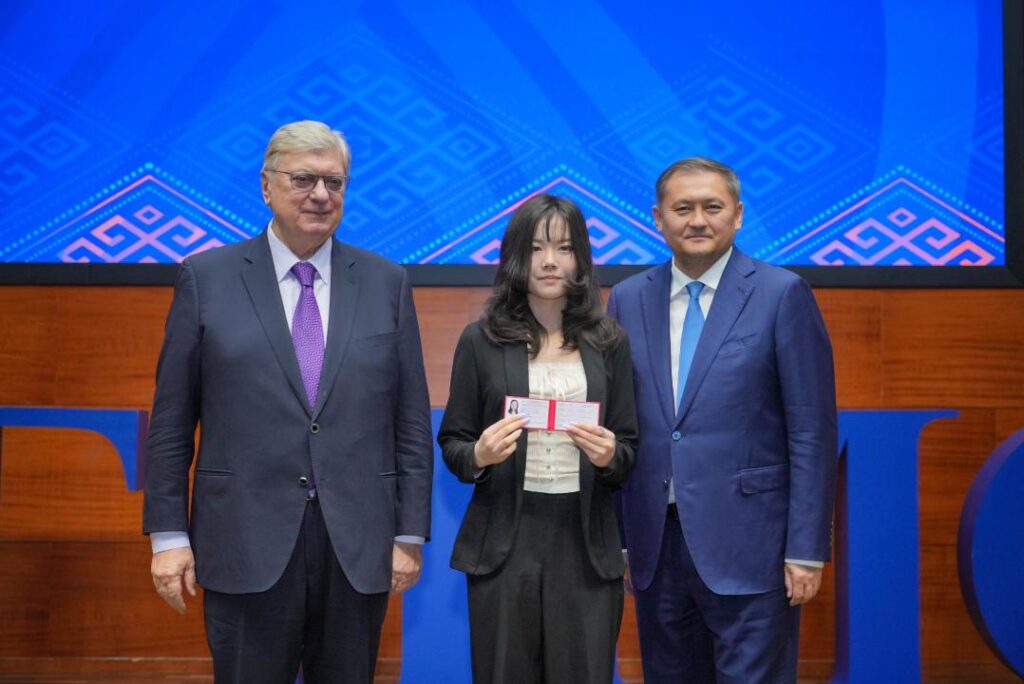
The Moscow State Institute of International Relations (MGIMO), a leading Russian university affiliated to Russia’s Ministry of Foreign Affairs, has officially opened a branch at L.N. Gumilyov Eurasian National University in Astana.

On November 1, the inaugural class of 103 students at the new MGIMO Astana campus received their student ID cards from Kazakhstan’s Minister of Science and Higher Education, Sayasat Nurbek, and MGIMO Rector Anatoly Torkunov.

According to Torkunov, the academic programs at the Astana branch are designed to train specialists for key sectors of Kazakhstan’s economy, business, and international relations.

Kazakhstan’s Ministry of Science and Higher Education reported that MGIMO Astana currently offers two undergraduate programs, World Mineral Resources and Energy Markets and Analysis and Modeling of Socioeconomic and Business Processes, as well as two master’s programs: Financial Economics and Financial Technologies and Multilateral Institutions and Management of Global Technological Development.

Artem Malgin, director of the MGIMO Astana branch, noted that undergraduate students will spend two semesters studying in Moscow, while master’s students will study there for one semester. Courses at the branch are taught by faculty from both MGIMO and the Eurasian National University.

MGIMO Astana is the university’s second international campus. Its first overseas branch, MGIMO Tashkent, opened in Uzbekistan and currently offers six undergraduate and graduate programs tailored to the local academic context and taught by MGIMO faculty.

UN Women and ACWA Power Partner to Advance Gender Equality in Uzbekistan

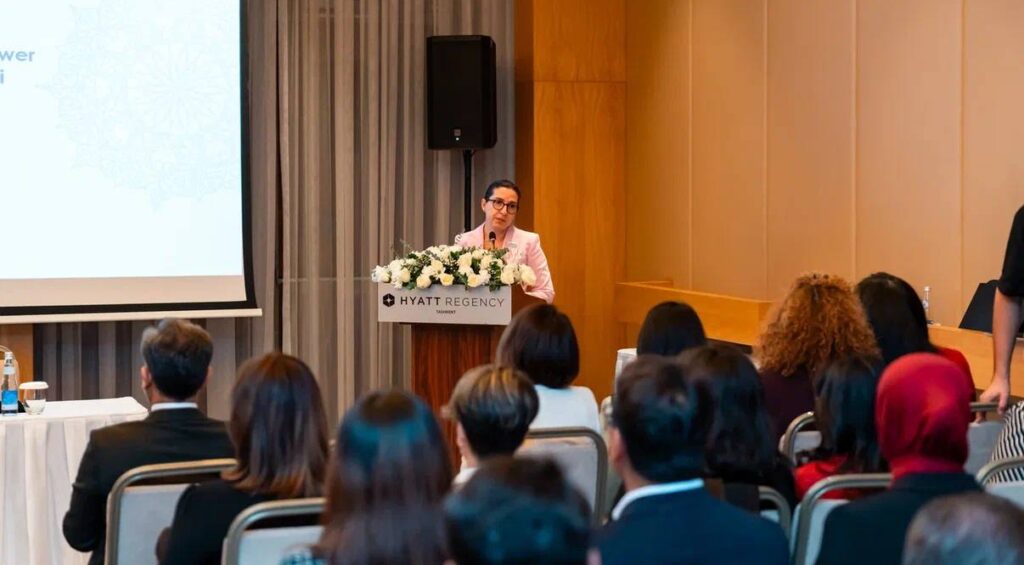
UN Women and ACWA Power Uzbekistan have signed a landmark agreement to promote women’s empowerment, marking the first-ever collaboration between a United Nations agency and a private company in Uzbekistan.

As part of the 12-month partnership, ACWA Power will contribute $50,000 to support initiatives under UN Women’s Economic Empowerment (WEE) programme. The project seeks to strengthen women’s participation in education and the labor market through gender equality training, leadership development, and the launch of a pilot Gender Equality Curriculum at Shirin College. It also includes capacity-building in gender-based violence prevention and the organization of a national Women’s Empowerment Forum.

Image: ACWA Power

UN Women, which officially began operations in Uzbekistan in May 2025, will provide technical expertise and training to support national gender equality goals. ACWA Power, Uzbekistan’s largest investor in renewable energy, will oversee project implementation and funding.

The partnership aligns with Uzbekistan’s ongoing national reform agenda, particularly the Strategy for Achieving Gender Equality 2030 and the National Programme for Increasing the Activity of Women in Economic, Political, and Social Life (2022-2026). These initiatives aim to create equal opportunities and broaden women’s participation in education, public service, and the economy.

Image: ACWA Power

“Partnering with UN Women allows us to advance concrete initiatives that promote safer workplaces, fairer opportunities, and stronger representation of women in Uzbekistan,” said Dr. Jon Zaidi, Country General Manager of ACWA Power Uzbekistan. “By investing in training, curricula, and leadership development, we aim to help embed practices that benefit institutions, companies, and communities alike.”

“This partnership demonstrates how private sector engagement can accelerate progress on gender equality,” added Ceren Guven Gures, Head of the UN Women Central Asia Liaison Office and Representative of the UN Women Kazakhstan Country Office. “With ACWA Power’s support, we will expand opportunities for women and strengthen protections in education and the workplace.”

Tajikistan Improves Ranking in U.S. Human Trafficking Report

Tajikistan has improved its standing in the U.S. State Department’s 2025 Trafficking in Persons (TIP) Report, moving up from the Tier 2 Watch List to Tier 2. This designation means the country still does not fully meet the minimum standards for the elimination of human trafficking under U.S. legislation, but is making significant efforts to comply.

According to the report, released on the State Department’s official website, Tajikistan’s progress reflects expanded anti-trafficking efforts in 2024. Authorities initiated 57 criminal cases related to human trafficking, down slightly from 60 in 2023 but the number of identified victims surged from 47 to 272. Of these, 238 were victims of forced labor, and 34 were victims of sexual exploitation.

In the first half of 2025 alone, Tajik law enforcement registered 39 new cases, including five involving the sale of children.

Tajikistan’s shift to Tier 2 signals a positive trajectory. However, the report notes persistent shortcomings. Authorities, for instance, often fail to clearly distinguish between labor exploitation and sexual violence, frequently conflating these with irregular migration or illegal adoption cases.

Despite an official ban, the report highlights that schoolchildren and university students in Tajikistan continue to be mobilized for cotton harvesting under the guise of “hashar” or community work days.

The TIP Report also raises concerns about coercive recruitment tactics used in military conscription, though it does not elaborate on specific methods.

Refugees and stateless individuals are another focus of concern. According to the report, some citizens of Afghanistan and Bangladesh have been subjected to forced labor at construction sites in Tajikistan. U.S. estimates indicate that more than 12,000 refugees and asylum seekers live in the country, the majority of whom are Afghan nationals.

Tajikistan’s Criminal Code criminalizes human trafficking-related offenses such as kidnapping, trafficking in persons, the sale of minors, and the use of children in the production of pornography. It also covers crimes such as organizing illegal migration, forging documents, and misusing official seals and stamps.

While the U.S. report acknowledges improvements in victim identification and data collection, it emphasizes that Tajikistan must strengthen victim protection measures, improve transparency in investigations and expand its prevention strategies to continue advancing in the global anti-trafficking effort.

Uzbekistan Introduces Visa-Free Travel for U.S. Citizens Starting January 2026

Uzbekistan will implement a visa-free regime for U.S. citizens beginning January 1, 2026, according to a presidential decree signed on November 3, 2025. The announcement was reported by UzA, the country’s official state news agency.

Under the new policy, American citizens will be permitted to stay in Uzbekistan for up to 30 days without a visa from the date of entry. The measure aims to strengthen trade, economic, cultural, and humanitarian ties between the two countries, while also enhancing tourism.

Since 2021, Uzbekistan has allowed visa-free entry for tourists aged 55 and older from the United States and several other nations, with a maximum stay of 30 days, according to Kun.uz. The expansion of this policy to include all U.S. citizens marks a major step in promoting bilateral travel and business engagement.

The proposal to lift visa requirements for U.S. nationals was first introduced in May 2025 through a presidential decree focused on boosting foreign tourist inflows. The same document instructed the Ministry of Foreign Affairs to initiate negotiations with Washington on easing visa conditions for Uzbek citizens traveling to the United States.

In a related development, the Uzbek government recently extended visa-free entry to citizens of six more countries, Bahrain, Qatar, Kuwait, Oman, Saudi Arabia, and Jordan, following a Cabinet of Ministers decision issued on October 21.

Bishkek City Hall Tightens School Meal Oversight After Mass Food Poisoning

A mass food poisoning incident at a Bishkek school has prompted city authorities to intensify oversight of school meal programs. Eighty children and four adults were affected after consuming shawarma (flatbread wraps filled with grilled meat) prepared with allegedly poor-quality ingredients, according to the Bishkek City Hall.

The Bishkek Center for Hygiene and Epidemiology has launched an inspection of all schools in the capital. Dozens of children sought medical care, reporting symptoms such as nausea, vomiting, abdominal pain, and diarrhea.

Twelve individuals were hospitalized, while the remaining victims are receiving outpatient treatment. The school cafeteria involved has been shut down pending an epidemiological investigation.

Deputy Mayor of Bishkek Victoria Mozgacheva met with the school’s director and underscored the zero-tolerance policy for violations of the approved meal plan and sanitary protocols.

“All general education institutions in the capital, regardless of their ownership, have been ordered to strictly follow the approved meal regulations,” the mayor’s office stated. “Any deviation from the menu, which is approved in consultation with medical and epidemiological experts, is strictly prohibited.”

Preliminary findings suggest the source of the poisoning may have been improperly handled chicken used in the shawarma served.

In response, Bishkek authorities have instructed schools to tighten food quality control measures. The Ministry of Health of Kyrgyzstan has also initiated legislation to ban the sale of unhealthy food products in close proximity to schools.