• KGS/USD = 0.01144 0%
  • KZT/USD = 0.00196 -0%
  • TJS/USD = 0.10896 -0%
  • UZS/USD = 0.00008 0%
  • TMT/USD = 0.28571 0.28%
  • KGS/USD = 0.01144 0%
  • KZT/USD = 0.00196 -0%
  • TJS/USD = 0.10896 -0%
  • UZS/USD = 0.00008 0%
  • TMT/USD = 0.28571 0.28%
  • KGS/USD = 0.01144 0%
  • KZT/USD = 0.00196 -0%
  • TJS/USD = 0.10896 -0%
  • UZS/USD = 0.00008 0%
  • TMT/USD = 0.28571 0.28%
  • KGS/USD = 0.01144 0%
  • KZT/USD = 0.00196 -0%
  • TJS/USD = 0.10896 -0%
  • UZS/USD = 0.00008 0%
  • TMT/USD = 0.28571 0.28%
  • KGS/USD = 0.01144 0%
  • KZT/USD = 0.00196 -0%
  • TJS/USD = 0.10896 -0%
  • UZS/USD = 0.00008 0%
  • TMT/USD = 0.28571 0.28%
  • KGS/USD = 0.01144 0%
  • KZT/USD = 0.00196 -0%
  • TJS/USD = 0.10896 -0%
  • UZS/USD = 0.00008 0%
  • TMT/USD = 0.28571 0.28%
  • KGS/USD = 0.01144 0%
  • KZT/USD = 0.00196 -0%
  • TJS/USD = 0.10896 -0%
  • UZS/USD = 0.00008 0%
  • TMT/USD = 0.28571 0.28%
  • KGS/USD = 0.01144 0%
  • KZT/USD = 0.00196 -0%
  • TJS/USD = 0.10896 -0%
  • UZS/USD = 0.00008 0%
  • TMT/USD = 0.28571 0.28%
09 December 2025

Jessica Lynn’s Concerts in Ashgabat: A New Chapter in Turkmenistan’s Cultural Landscape

Ashgabat, Turkmenistan, July 2025 – American country-rock artist Jessica Lynn will perform in Turkmenistan’s capital, Ashgabat, on July 5 and July 6, marking a rare cultural exchange between the country and the West. This event offers a glimpse into Turkmenistan’s gradual shift towards engaging with global culture, even as the country remains cautious in its diplomatic and cultural openness. For the residents of Ashgabat, Jessica Lynn’s performance presents an opportunity to experience live music from a genre not often seen in this part of the world—a blend of American country, rock, and pop influences that are popular across the United States but less familiar in Turkmenistan. As noted by the U.S. Embassy in Turkmenistan, these concerts symbolize a key moment in strengthening cultural diplomacy.

A Milestone for Turkmenistan’s Cultural Diplomacy

Jessica Lynn’s two concerts will take place at two significant venues in Ashgabat: the Turkmenistan Cinema Concert Hall and the Arkaç Shopping and Entertainment Center, both emblematic of the country’s urban modernization. The concerts, open to the public on a first-come, first-served basis, come at a time when Turkmenistan is slowly embracing a more open stance towards foreign cultural influence. While the country has long been known for its cultural isolation, recent leadership under President Serdar Berdimuhamedov has shown a willingness to engage selectively with the outside world, particularly in the fields of art and entertainment. These concerts serve as a cultural milestone, not just because of Jessica Lynn’s genre-defying music, but also as part of Turkmenistan’s broader strategy to position itself as a more modern and internationally engaged country. By inviting a Western artist like Jessica Lynn, the government is signaling its intent to introduce international music into a society where such influences were once heavily restricted. According to the Turkmenistan State News Agency, the government’s outreach is part of its gradual integration into global culture.

Why Country-Rock? The Shared Themes Between Turkmen and American Music

The choice of country-rock for this cultural exchange might seem unexpected, but there are surprising similarities between Turkmen folk music and American country music. Both musical traditions place a strong emphasis on storytelling, with lyrics often centered around love, hardship, national pride, and life in rural communities. Turkmen folk music, which has been passed down through generations, is known for its rich oral traditions and its focus on personal and communal narratives. The dutar, a two-stringed instrument, plays a key role in many of these traditional songs, but the central theme—narrating stories of daily life and personal experiences—echoes the storytelling style that defines much of American country music. This connection between storytelling traditions is explored in a Nomads Life article about the influence of Western music on Turkmen artists, highlighting how both cultures value narrative as a central element of their music.

Much like the country ballads of artists like Johnny Cash and Dolly Parton, Turkmen folk songs depict struggles, resilience, and deep connections to the land. For example, Turkmen songs often tell tales of life on the steppe, which resonates with country music’s focus on the rural American experience. These shared emotional themes of longing for home, connection to nature, and personal resilience create a natural bridge between the two musical cultures. As explored in an analysis by Oriented Opinion, these common themes provide fertile ground for cross-cultural understanding.

A New Generation’s Engagement with Global Music

For many in Turkmenistan, especially the younger generation, Jessica Lynn’s concert will offer a rare opportunity to experience live Western music in a country where foreign cultural influences have only recently begun to take hold. While Turkmenistan remains a highly controlled society, there has been a marked shift in how the country engages with international culture. Events like Lynn’s concerts, though still exceptional, are becoming more common, reflecting a gradual loosening of cultural restrictions. The performances will likely appeal to a young, cosmopolitan audience that is increasingly exposed to global pop culture through the internet, social media, and state-sponsored events. This shift towards greater cultural openness is in line with recent developments noted in reports by the Turkmenistan State News Agency that discuss the country’s increased cultural exchange and participation in international festivals.

This engagement with Western music is not just about the novelty of a foreign artist performing in Ashgabat; it also reflects a growing cultural exchange where Turkmen audiences can appreciate global art forms while still maintaining a strong sense of national identity. As Turkmenistan opens its cultural borders, such performances represent an intersection of tradition and modernity, where global influences are carefully blended with local customs.

Cultural Diplomacy Through Music: A Steady Approach

The significance of Jessica Lynn’s concerts goes beyond entertainment. They represent cultural diplomacy in action, with music serving as a soft power tool that helps to build connections and foster mutual understanding. The U.S. Embassy in Turkmenistan has highlighted the concerts as part of its broader efforts to strengthen people-to-people ties between the two nations. Music, as a universal language, has long been recognized for its ability to transcend political and cultural boundaries. For Turkmenistan, hosting an American artist is a way to project a more modern, outward-facing image, while also maintaining control over the kinds of foreign influences that enter the country. This cultural diplomacy approach is reflected in previous reports from the U.S. Embassy in Turkmenistan and its ongoing commitment to fostering these types of exchanges.

While the concerts are small in scope, they fit within a larger trend of cautious internationalization. Turkmenistan has hosted various Western musical acts in recent years, and these events serve as stepping stones towards greater cultural engagement. Hosting Jessica Lynn is another carefully managed step that shows the country’s willingness to engage with international culture, but always on its own terms.

Looking Ahead: What Do These Concerts Mean for Turkmenistan’s Future?

Jessica Lynn’s performances are part of a broader movement within Turkmenistan to gradually modernize while still adhering to its cultural and political values. As the country slowly embraces more international influences, it will be interesting to see whether these cultural exchanges will expand beyond music into other areas such as film, literature, or visual arts. As Turkmenistan continues to open up, the influence of international music will play an important role in shaping its future cultural direction.

For now, the concerts represent a rare opportunity for cultural interaction, and for Jessica Lynn, it’s an uncommon chance to perform in a country that remains relatively closed off from the global stage. Her music, rooted in the storytelling tradition that resonates deeply with Turkmen folk music, will undoubtedly strike a chord with audiences in Ashgabat, while offering a fresh perspective on American country-rock.

In the long term, events like these may play a role in shaping Turkmenistan’s cultural future—a future where controlled openness and international collaboration continue to define the nation’s approach to cultural engagement. For now, as Jessica Lynn takes the stage in Ashgabat, she’ll be part of a quiet revolution in Turkmenistan’s cultural landscape, one that celebrates both tradition and global connection.

AIIB and Tajikistan Sign First Grant Agreement for Obigarm–Nurobod Road Project

The Asian Infrastructure Investment Bank (AIIB) and Tajikistan have signed a $2.04 million Project-Specific Window (PSW) Grant Agreement to support the Obigarm–Nurobod Road Project – Long Bridge and Approaches. This marks AIIB’s first PSW grant, a significant milestone in its efforts to mobilize blended finance for development impact.

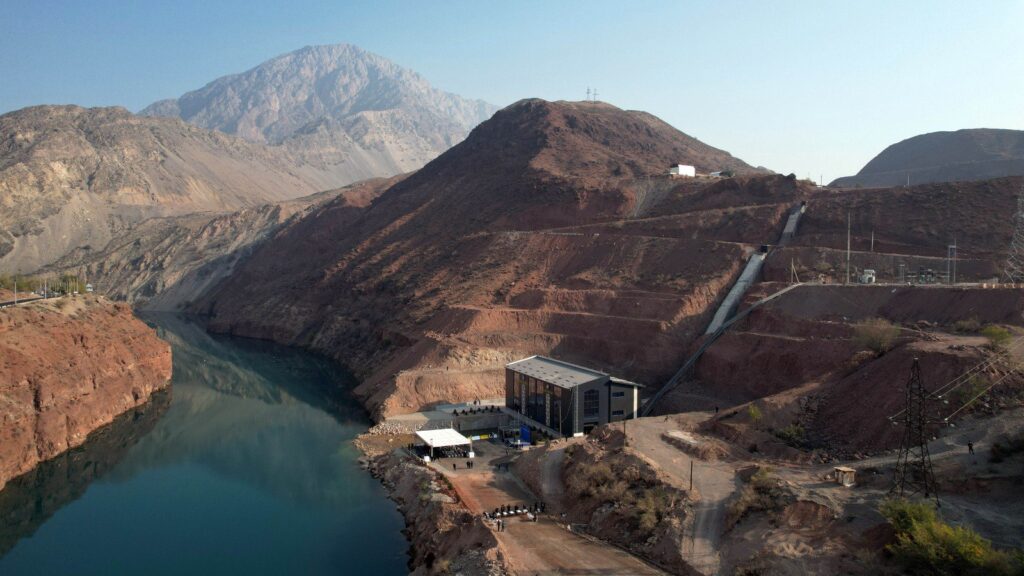
The Obigarm–Nurobod Road Project aims to restore critical connectivity along a 75-kilometer section of the M41 Highway in central Tajikistan. This section, located in the mountain range north of the Vahdat River Valley, was disrupted by the reservoir impoundment of the Rogun Hydropower Plant. The project is expected to enhance regional connectivity and improve access for communities in the affected areas.

The agreement was signed at AIIB Headquarters in Beijing by Fayziddin Qahhorzoda, Tajikistan’s Minister of Finance, and Konstantin Limitovskiy, AIIB’s Chief Investment Officer. Representatives from the China International Development Cooperation Agency (CIDCA), which funds the grant, also attended the ceremony.

“This first PSW grant is an important step in AIIB’s journey to scale impact through blended finance,” said Limitovskiy. “By combining infrastructure investment with local skills development and inclusive programming, we aim to deliver long-term benefits for communities, especially women and youth in project-affected areas.

The PSW grant, funded by CIDCA, will focus on strengthening local capacity and promoting inclusive development. Key initiatives include:

  • Technical and Vocational Training: Programs for infrastructure professionals and construction workers.
  • Community Training Centers: Facilities aimed at empowering women through skills development.
  • Entrepreneurship Support: Initiatives to improve livelihoods and promote economic empowerment in affected areas.

Latest Baikonur Launch Pays Tribute to 1975 Apollo-Soyuz Mission

In July 1975, millions of people watched on television as a U.S. Apollo spacecraft docked with a Soviet Soyuz capsule in a crewed mission in orbit that symbolized collaboration between the two superpowers at the height of Cold War enmity.

That remarkable moment 50 years ago is being commemorated on a Soyuz rocket carrying a Russian cargo spacecraft that launched from the Baikonur Cosmodrome in Kazakhstan – early on Friday, Baikonur time – and is scheduled to reach the International Space Station after a two-day trip. The spacecraft is loaded with more than 2.5 tons of fuel, drinking water, food, medicine, science equipment, and other supplies for the crew on the station.

The Soyuz rocket currently heading to the ISS is painted white and blue and has an emblem marking the anniversary of the Soyuz-Apollo docking, which was the first international space mission. It had begun on July 15, 1975, when two Soviet cosmonauts launched from Baikonur and, hours later, three American astronauts blasted off from Cape Canaveral, Florida. The Russians and the Americans connected in space two days later, shaking hands, exchanging gifts, and sharing a meal.

The show of comity in space contrasted with the intense competition between the two global rivals that was known as the “space race,” which included the Soviet launch of the Sputnik satellite into orbit in 1957 and the Apollo 11 landing of American astronauts on the moon in 1969.

“I really believe that we were sort of an example … to the countries. We were a little of a spark or a foot in the door that started better communications,” Apollo astronaut Vance Brand had said, according to a NASA account of the Apollo-Soyuz mission.

Tensions between Russia and the United States escalated after Moscow launched a large-scale invasion of Ukraine in 2022, though relations improved after U.S. President Donald Trump took office for a second term in January. The U.S. and Russian space agencies have continued to collaborate over the course of the protracted war.

Roscosmos, the Russian space agency, refers to the cargo spacecraft currently in orbit as Progress MS-31, while the U.S. agency NASA uses the term Progress 92 because it’s the 92nd Russian resupply craft to launch in support of the International Space Station since its construction began in 1998. The Apollo-Soyuz mission has been described as a precursor of the ISS project.

Spanish Artist Jaume Plensa Unveils “Nades” Sculpture for Almaty Museum of Arts

A new 12-meter sculpture titled Nades, created by internationally acclaimed Spanish artist Jaume Plensa, has been unveiled in Almaty. Commissioned specifically for the future Almaty Museum of Arts, the piece was presented during a special ceremony attended by the museum’s founder, Kazakhstani entrepreneur and arts patron Nurlan Smagulov.

“We dreamed of having a work of art next to the museum that would become an important part of Almaty. Nades is the embodiment of female strength, dignity, and beauty,” Smagulov said.

The sculpture portrays the head of a young woman with closed eyes and two long braids, a nod to the traditional image of a Kazakh girl. According to Plensa, the work is based on a real face that was scanned and then abstracted into a universal symbol.

“I work with real people, I scan their faces and transform the image until their individuality disappears. I want every viewer to recognize themselves in them. These faces become mirrors,” Plensa explained.

Born in Barcelona in 1955, Plensa is known for his monumental public sculptures installed in cities around the world. His notable works include Water’s Soul (2020, Jersey City), Julia (2018, Madrid), Roots (2014, Tokyo), Soul (2011, Singapore), and Alchemist (2010, MIT, Boston).

The Almaty Museum of Arts, Kazakhstan’s first private contemporary art museum, is set to open in September 2025. It will showcase a collection of over 700 works from Kazakhstan, Central Asia, and beyond, all curated from Smagulov’s personal collection.

Chinese Firm to Invest $600 Million in Waste-to-Energy Plants in Kazakhstan

China’s Hunan Junxin Environmental Protection Co. Ltd. plans to invest $600 million in constructing three waste-to-energy plants in Kazakhstan. The project was the focus of a meeting on July 3 between Azamat Kozhanov, Deputy Chairman of the Board at Kazakh Invest, and Dai Daoguo, Chairman of Hunan Junxin’s Board of Directors.

According to Dai, the initiative will go beyond waste incineration to establish an integrated technological ecosystem. Plans include green data centers powered by the energy produced, training facilities, and smart waste management systems.

“Our goal is not just to build plants, but to implement an innovative approach to waste handling,” Dai said. “We aim to bring technologies to Kazakhstan that integrate recycling, energy generation, and digitalization. I’m confident this will be a major contribution to the region’s sustainable development and environmental safety.”

Kozhanov highlighted the importance of large-scale, environmentally focused projects that promote technology localization and sustainable energy. “We see strong potential for joint implementation of green projects that meet international standards. Junxin’s experience, including successful initiatives in China and Kyrgyzstan, can contribute significantly to the development of green infrastructure in our cities,” he said.

Hunan Junxin is already active in Kyrgyzstan, where it is implementing similar projects in Bishkek and Osh. As previously reported by The Times of Central Asia, on June 10, the company began construction of a $95 million solid waste incineration facility in Osh, Kyrgyzstan’s second-largest city. The plant will convert municipal waste into electricity and heat.

In Bishkek, the company is building a solid waste recycling facility at the city’s sanitary landfill. Initially, the facility will process 1,000 tons of waste per day, with plans to expand capacity to 3,000 tons. Completion is scheduled for December 2025.

Uzbekistan and Azerbaijan Forge $1B Trade Vision

President Shavkat Mirziyoyev of Uzbekistan arrived in Baku on July 2 for a state visit at the invitation of Azerbaijani President Ilham Aliyev. He was received at the airport by Deputy Prime Minister Yagub Eyyubov and other senior officials, with an official reception taking place at the presidential residence in Zagulba. 

A Thirty-Year Economic Partnership

During bilateral talks, Presidents Mirziyoyev and Aliyev reaffirmed their commitment to enhancing the strategic partnership between Uzbekistan and Azerbaijan as the two nations mark 30 years of diplomatic ties. “Never in history have our relations been at such a high level as they are today,” said Mirziyoyev.

Economic cooperation was a key focus of the discussions. Trade between the two countries has increased by 25% over the past year, and there are now approximately 300 joint ventures with a combined project portfolio valued at $4 billion. The leaders agreed to a new goal of boosting bilateral trade and investment to $1 billion annually by 2030. A comprehensive cooperation program was adopted to facilitate this, covering sectors such as industry, infrastructure, agriculture, healthcare, tourism, and banking.

Advancing Transport and Logistics Links

Significant progress was reported in the transport and energy sectors. The two presidents welcomed the growth of cargo transit along the Trans-Caspian International Transport Route, also known as the “Middle Corridor.” Uzbek cargo volumes on the route rose by 25% in 2024, surpassing one million tons, a development supported by the launch of a new electronic permit system in March. The leaders also committed to accelerating work on a joint green energy export initiative targeting European markets.

Institutionalizing Strategic Ties

Several bilateral documents were signed to formalize cooperation. These included a roadmap for implementing the 2023 Treaty on Alliance Relations through 2029, as well as agreements in environmental protection, science, higher education, and industry for the 2025-2026 period. Additional deals addressed agriculture, food security, social protection, maritime navigation, and municipal partnerships. New sister-city agreements were signed between Tashkent and Sumgayit, and between Navoi and Gabala.

At a joint press briefing, Mirziyoyev lauded Azerbaijan’s efforts to restore its UN-recognized territorial integrity, stating, “You have fulfilled the long-standing dream of your father and every citizen of Azerbaijan.” He also praised infrastructure development in formerly disputed territories of Nagorno-Karabakh and described Azerbaijan as a “reliable ally and strategic partner.” The two leaders emphasized their shared positions on regional and global issues and pledged continued coordination in international forums. Mirziyoyev reaffirmed Uzbekistan’s commitment to the diplomatic resolution of conflicts.

Cultural Diplomacy and Symbolism

The visit featured symbolic and cultural highlights. In Baku’s Ag Sheher district, the presidents laid the foundation for Uzbekistan Park, a 4.5-hectare space celebrating Uzbek culture and architecture. They also inaugurated Uzbekistan’s new embassy in Baku, which includes halls named after different Uzbek regions, with Mirziyoyev proposing to name one of the halls after Karabakh as a gesture of friendship.

The two leaders later toured the Sea Breeze resort complex on the Caspian coast, part of the broader Caspian Riviera tourism project. A similar development, Sea Breeze Uzbekistan, is being considered near Tashkent by private investors.

On July 3, Mirziyoyev and Aliyev attended the 17th summit of the Economic Cooperation Organization (ECO) in Aghdam, Karabakh. They visited the restored Imaret complex, including the mausoleum of Panah Ali Khan, founder of the Karabakh Khanate. The visit concluded with a cultural event titled Zafar (Victory), featuring music and Karabakh horse performances. The leaders agreed to deepen collaboration in trade, logistics, education, and culture, and announced a series of joint cultural and youth events this fall to commemorate 30 years of bilateral ties. Mirziyoyev expressed confidence that the outcomes of the visit would enhance the prosperity of both nations.

A Shifting Geopolitical Landscape

Since 2022, particularly after the Second Karabakh War, Azerbaijan has pursued a policy of geopolitical multi-vectorism, intensifying ties with Turkey, Israel, the European Union, and the Central Asian states. In 2024-2025, Baku’s relationship with Moscow soured due to shifts in the South Caucasus power balance and the downing of an Azerbaijan Airlines flight over Kazakhstan, said to have been caused by accidental Russian ground fire. As previously reported by The Times of Central Asia, in January, Aliyev stated that the “guilt for the deaths of Azerbaijani citizens in this accident lies with the representatives of the Russian Federation. We demand justice, we demand punishment of the guilty.” Against this backdrop, Uzbekistan has emerged as a key ally for Azerbaijan on its eastern flank.

Uzbek-Azerbaijani relations exemplify the evolving geopolitical architecture of Eurasia, where regional powers are seeking greater autonomy, a balanced approach to global powers, and the increasing assertion of national identity. The growing partnership between Uzbekistan and Azerbaijan strengthens both countries’ positions on the international stage and elevates the Trans-Caspian corridor as a strategic priority in Eurasian policy.