• KGS/USD = 0.01143 -0%
  • KZT/USD = 0.00192 -0%
  • TJS/USD = 0.10820 0.19%
  • UZS/USD = 0.00008 0%
  • TMT/USD = 0.28575 0%
  • KGS/USD = 0.01143 -0%
  • KZT/USD = 0.00192 -0%
  • TJS/USD = 0.10820 0.19%
  • UZS/USD = 0.00008 0%
  • TMT/USD = 0.28575 0%
  • KGS/USD = 0.01143 -0%
  • KZT/USD = 0.00192 -0%
  • TJS/USD = 0.10820 0.19%
  • UZS/USD = 0.00008 0%
  • TMT/USD = 0.28575 0%
  • KGS/USD = 0.01143 -0%
  • KZT/USD = 0.00192 -0%
  • TJS/USD = 0.10820 0.19%
  • UZS/USD = 0.00008 0%
  • TMT/USD = 0.28575 0%
  • KGS/USD = 0.01143 -0%
  • KZT/USD = 0.00192 -0%
  • TJS/USD = 0.10820 0.19%
  • UZS/USD = 0.00008 0%
  • TMT/USD = 0.28575 0%
  • KGS/USD = 0.01143 -0%
  • KZT/USD = 0.00192 -0%
  • TJS/USD = 0.10820 0.19%
  • UZS/USD = 0.00008 0%
  • TMT/USD = 0.28575 0%
  • KGS/USD = 0.01143 -0%
  • KZT/USD = 0.00192 -0%
  • TJS/USD = 0.10820 0.19%
  • UZS/USD = 0.00008 0%
  • TMT/USD = 0.28575 0%
  • KGS/USD = 0.01143 -0%
  • KZT/USD = 0.00192 -0%
  • TJS/USD = 0.10820 0.19%
  • UZS/USD = 0.00008 0%
  • TMT/USD = 0.28575 0%
14 December 2025

Kyrgyzstan Approves Plan to Achieve Carbon Neutrality by 2050

On July 3, Kyrgyzstan’s Cabinet of Ministers approved the Concept for Achieving Carbon Neutrality of the Kyrgyz Republic along with the action plan for its initial implementation phase.

The approval marks a significant step in the country’s climate policy, setting long-term guidelines for sustainable development and signaling Kyrgyzstan’s political commitment to global climate goals.

The concept outlines a phased transition to a carbon-neutral economy, targeting key sectors such as energy, transport, industry, agriculture, waste management, and forestry. It aims to reduce greenhouse gas emissions, promote renewable energy, enhance energy efficiency, restore forest ecosystems, adopt digital and innovative technologies, and integrate climate risk into state planning processes.

The government sees the concept as a foundation for attracting climate finance, creating green jobs, and ensuring environmental security for future generations. It also reinforces Kyrgyzstan’s status as an active and responsible participant in the international climate framework under the Paris Agreement.

Kyrgyzstan has pledged to achieve carbon neutrality by 2050, a commitment first announced by President Sadyr Japarov at the 2021 World Leaders Summit during the UN Climate Change Conference in Glasgow. The country has also set a target to reduce greenhouse gas emissions by 44% by 2030.

Kazakhstan Considers “Green” Tax on Plastic Packaging

Azhar Sagandykova, a deputy in Kazakhstan’s Mazhilis, has proposed introducing a “green” tax on non-environmentally friendly packaging. She announced the initiative during the IX Eurasian Business Forum Green Energy & Waste Recycling Forum (GEWR-2025).

The proposed tax would apply to packaging materials that are difficult to recycle or non-biodegradable, such as polyethylene terephthalate (PET) bottles, plastic bags, and other polyethylene-based containers.

“It is time to seriously consider introducing a green tax on non-environmentally friendly packaging and directing the funds collected towards the development of waste recycling,” Sagandykova stated.

According to the United Nations Development Programme (UNDP), Kazakhstan produces approximately 4.5 million tons of waste annually. Of this, 80% is generated by the municipal sector, while 20% comes from industry, healthcare, and other sectors. Only about 26% of the total waste is recycled. These figures were confirmed by Zhomart Aliyev, Kazakhstan’s Deputy Minister of Ecology and Natural Resources, who also addressed the forum.

Speaking on the sidelines of the event, Aliyev commented on the complexities of implementing such a tax. “It is very difficult to say at this stage what a green tax on a particular product should look like. It could affect virtually all sectors of the economy. We have begun preparatory work, but it is still at an early stage. We need to calculate the figures for the whole country in detail,” he said.

In addition to the tax proposal, Sagandykova advocated for a dedicated law on waste management to clarify responsibilities, define infrastructure needs, and introduce government incentives.

“The existing Environmental Code contains a number of vulnerabilities and does not cover all aspects of waste management. Therefore, within the framework of a working group in the Mazhilis, we intend to review the systemic approach to solving this problem,” she explained.

During the summer, deputies plan to collect proposals from businesses, environmentalists, and civil society stakeholders. These suggestions will inform a draft bill to be discussed in the fall.

Aliyev added that the government is already working on a comprehensive waste management concept, excluding radioactive waste, which remains under the jurisdiction of the Atomic Energy Agency. The concept, commissioned by the prime minister, is expected to be finalized by September, when a decision will be made on whether a standalone waste management law is necessary.

As previously reported by The Times of Central Asia, Kazakhstan had aimed to phase out plastic packaging and tableware by 2025. However, due to a lack of sufficient alternatives in domestic production, the government was forced to abandon the timeline.

How Can Britain Benefit From the Middle Corridor?

On July 2nd, a roundtable held at the House of Lords, the upper chamber of the British parliament, brought together diplomats, trade envoys, logistics professionals, and academics to promote the Middle Corridor – the overland route connecting China to Europe via Kazakhstan, the Caspian Sea, Azerbaijan, Georgia, and Turkey.

The session aimed to highlight the strategic and economic case for British involvement in the corridor. However, in a crowded political landscape, the pitch struggled to gain airtime. On the same day, British economic minister Rachel Reeves shed tears in parliament’s lower chamber, sparking fears of political instability, and, a few miles away, the Wimbledon tennis season had just begun. In short, Westminster and the British media were elsewhere.

Nonetheless, speakers made their case for the corridor’s importance to China-Europe freight. The Middle Corridor has gained attention as an alternative to the Northern Corridor – a rail network that runs from China through Kazakhstan, Russia, and Belarus, all members of the Eurasian Economic Union (a shared customs zone). The Northern route could, in theory, deliver goods from China to Europe in as little as ten days. But its viability has been damaged by Russia’s invasion of Ukraine and the sanctions regime that followed.

Since then, cargo traffic along the Middle Corridor has surged. “Before the war in Ukraine, 99% of goods travelled along the northern corridor, and just 1% along the Middle Corridor,” said Dr Chris Brooks, Global Director of Risk, Quality and Compliance at Bertling Logistics. “Now it’s about 90% along the Middle Corridor.”

In raw numbers, the increase has been stark. Back in 2021, cargo volume transported through the Middle Corridor was around 800,000 tonnes; that stood at 4.5 million tonnes at the end of 2024.

“It is never going to be an alternative to the maritime route,” Brooks said, estimating that even with major investment, capacity would top out at around 16,000 tonnes per month, which is dwarfed by maritime trade between China and Europe, which totals around 800,000 tonnes a month.

However, he did call the route a “strategic insurance policy,” citing its neutrality, flexibility, and compliance with Western sanctions. For automotive, electric, and fast-moving consumer goods (FMCG) with short shelf lives, the route will prove particularly useful.

“Whether you’re going through the Red Sea or around the Cape of Good Hope, maritime typically takes anything between 35 and 52 days. The Northern Russian corridor is 10 to 20 days. The Middle Corridor can actually do similar.”

But Brooks added that infrastructure and the weather remain limiting factors, meaning that lead times are anything between 14 and 45 days, with some shipments taking up to two months.

“We have as many as 400 trucks queuing up… not because of customs – they’re just queuing to get onto the ferry from Baku to Kazakhstan… Drivers are waiting anything from one week to one month,” he said, adding his concerns that the corridor also has limited capacity to move large cargo.

Image: middlecorridor.com

Many speakers called for a long-term commitment to addressing these infrastructure issues, with fears that as soon as relations with Russia improve, the corridor will be swiftly abandoned. “We need to look at the Middle Corridor not only as a commercial corridor, but also as a strategic corridor,” said Arzu Abbasova of the Royal United Services Institute. “European stakeholders ought to engage… not only when it’s geopolitically convenient, but also [for] the long haul.”

Abbasova also highlighted the corridor’s east-west imbalance: “If a truck driver is only getting its goods from China and then comes back empty, then that raises the costs for the logistics companies.”

British officials have expressed their support in principle. Lord Alderdice, Britain’s Trade Envoy to Central Asia, said in comments to Kazakh media that the corridor offers “a promising area for UK collaboration, expertise, and investment.” Dr Afzal Khan, Trade Envoy to Turkey, noted that the discussion coincided with active UK-Turkey free trade negotiations and called Turkey a key link in strengthening ties across Central Asia.

Britain’s concrete commitments remain limited, however. While the EU has pledged €10 billion through its Global Gateway initiative, the UK has yet to announce specific funding or projects. The event featured little participation from British industry or the financial sector, a fact not lost on the Central Asian delegations.

Ambassador of the Republic of Kazakhstan to the United Kingdom, Magzhan Ilyassov

Kazakhstan’s ambassador, Magzhan Ilyassov, expressed concern that the country not be seen merely as a transit zone. “In the U.S., there are the flyover states – Nebraska, Omaha, and Idaho,” Ilyassov said. “We don’t want to be a passed-by country on that route from China to Europe because we’re in the middle. We are a country with huge potential.” The ambassador added that Kazakhstan is seeking value-added partnerships, including in processing rare earths and industrial materials.

From a European perspective, the timing of those remarks raised eyebrows. Just weeks before the event, Kazakhstan had awarded a nuclear power plant contract not to France’s EDF but to Russia’s Rosatom, a decision that led to questions about the country’s willingness to receive Western investment that risked putting it on a collision course with Moscow.

Still, despite the obstacles, there is definite enthusiasm on both sides for increased collaboration.

Dr Assylbek Nurgabdeshov of Heriot-Watt University, who moderated the session, concluded by reiterating the corridor’s potential. “With effective coordination, high-quality human capital, and strategic investment, trade volumes could triple and transit times be halved by 2030,” he said, stressing that the UK is well-placed to support logistics, education, and infrastructure development across the region.

For now, however, little of that opportunity is being grasped. With British political attention decidedly short-termist, the strategic opportunities risk passing London by.

The backdrop to the roundtable made that much clear. Long queues formed outside Parliament as attendees, including ambassadors and executives, waited under the summer sun to clear security. Inside, the event began late and ended abruptly, with guests being ushered out to make way for the next session on the Lord’s packed agenda. Some did at least manage to grab as many scones as they could make off with, but the cheese and pickle sandwiches went untouched.

More Than a Quarter of Tajikistan’s Population Lives Below the Poverty Line – World Bank Report

Tajikistan continues to make gradual progress in reducing poverty, but over 25% of the population still lives on less than $3.65 a day, according to the World Bank’s newly released Poverty, Prosperity, and Planet Report 2024.

Revised Poverty Line and Structural Vulnerabilities

The World Bank recently raised the extreme poverty threshold from $2.15 to $3.00 per day, adjusting for updated purchasing power parity. Under the international poverty line of $3.65 per day, approximately one in four Tajik citizens remains in poverty.

Globally, around 700 million people, 8.5% of the world’s population, live on less than $2.15 per day. The report highlights that economies reliant on remittances and imports are particularly vulnerable. Tajikistan fits this profile, with a large portion of its population employed in the informal sector, especially agriculture, and limited coverage by social assistance programs.

National statistics show a decline in the domestic poverty rate from 26.3% in 2022 to 23.5% in 2023, with forecasts indicating a possible drop to 21.3% this year. Nonetheless, the country’s poverty rate remains high by international standards.

Rural Poverty and Social Disparities

Poverty in Tajikistan disproportionately affects rural areas, where 80% of the poor reside. Around 70% of adults living in poverty lack vocational education. Vulnerable groups include women, large families, single-parent households, and children, many of whom require sustained, targeted social support.

In comparison with its neighbors, Kyrgyzstan has the region’s highest poverty rate by national standards at 29.8%, while Uzbekistan reports 11.2% and Kazakhstan 3.7%. Less than 5% of Kazakhstan’s population lives below the international poverty line. Turkmenistan continues to withhold poverty-related data.

Climate Change Adds to Economic Pressures

The report warns that climate change further exacerbates poverty risks. From 2000 to 2020, temperatures in Central Asia rose by an average of 1.23°C, and regional glaciers shrank by 30%. For Tajikistan, where glaciers are the primary source of freshwater, these developments pose a growing threat to agricultural sustainability and food security.

Nonetheless, the report acknowledges progress in adaptation efforts. Tajikistan is implementing precision farming technologies and modernizing water management practices, which have improved crop yields while reducing water usage in arid regions.

The World Bank emphasizes that without structural reforms, including quality job creation, expanded support systems, and sustainable income protection, millions in Tajikistan will remain at risk, despite the appearance of macroeconomic stability.

Kazakhstan Confronts Major Data Leak in High-Stakes Security Crackdown

A detective thriller worthy of a Hollywood script is quietly playing out in the daily lives of Kazakhstani citizens, one with implications for nearly every household. At its core lies the largest leak of personal data in Kazakhstan’s history, unfolding across Almaty and Astana. The incident touches on something deeply personal: data that could be weaponized by fraudsters for illicit gain.

Sixteen Million Records Exposed

In early June, the Telegram channel SecuriXy.kz, known for its cybersecurity reporting, revealed a massive breach of Kazakh citizens’ personal data. “A CSV file containing the personal data of Kazakh citizens, containing 16.3 million lines, has been discovered. The table contains the following fields: Last name, First name, Middle name, Gender, Date of birth, ID number, IIN [Bank Identification Number], Mobile phone number, Work phone number, Home phone number, Citizenship, Nationality, Address, Confirmed address, Start and end dates of residence,” the channel stated.

The analysis identified 16,302,107 records, 16.9 million unique phone numbers, and 15,851,699 unique individual identification numbers (IINs), the number of citizens whose information had been compromised.

“The ‘address’ field often contains the addresses of dental clinics, polyclinics, the Tax Committee, universities, and other organizations,” the channel noted. The leak included highly sensitive personal data such as contact details and IINs, which the channel warned could be used for: “Phishing, social engineering, document forgery, and telephone fraud.”

The data appears to have been compiled over a significant period. SecuriXy.kz reported that, “Most of the records were entered into the system after 2011,” with over two million added in 2022 alone. Data from 2023-2024 also appears, underscoring the leak’s relevance.

The revelation sparked swift reactions from officials. The Ministry of Digital Development, Innovation, and Aerospace Industry (MCIAI) released a statement confirming an investigation in collaboration with law enforcement and intelligence agencies. “It should be noted that the initial analysis indicates that the information may have originated from private information systems. No hacker attacks or leaks of personal data from state information systems have been recorded at this time. It is premature to draw final conclusions or confirm the accuracy of the information until the investigation is complete,” the ministry stated, adding that similar past incidents often involved outdated data compiled by service sector firms or microfinance institutions.

“The ministry is monitoring the situation,” the authorities concluded. “Additional information will be posted after the investigation is complete.”

Cybersecurity experts, however, were less dismissive. Enlik Satieva, vice president of the TSARKA Group, a cybersecurity firm affiliated with the government, stressed the seriousness of the breach. “These are not just names,” she stated. “The published database contains the most important personal data of citizens. In particular, it includes surnames, first names, patronymics, gender, dates of birth, IINs, citizenship, nationality, residential addresses, registration and residence periods, as well as mobile, home, and work phone numbers.”

Satieva suggested that some of the data may have been sourced from medical organizations, and that the leak might stem from a specific entity or multiple sources linked through IINs.

Criminal Case and Contradictions

On June 18, Digital Development Minister Zhaslan Madiyev reiterated to journalists in the Mazhilis that the leaked data was not current.

“This is not recent data; there has been no hacking of recent state databases. This is most likely ‘historical’ data that was previously leaked and is now available on the darknet. When it appears on any Telegram channels, we block it, and there have been minor updates to this data. This data dates back to May 1, 2024, and there have been no recent leaks,” he said.

One day later, Deputy Prosecutor General Galymzhan Koigeldiyev confirmed the opening of a criminal case.

Though officials have attempted to downplay the leak, enforcement agencies were already at work. On June 9, prior to the public revelation, Kazakhstan’s cybercrime department and the National Security Committee dismantled a network selling personal data online.

“The information was obtained from state databases and distributed through Telegram channels, including to individual debt collection companies. More than 140 people have been detained, including the owners of the company and the channel administrators. Five suspects were arrested. During searches of the debt collection companies, more than 400 items of computer and other electronic equipment were seized,” Zhandos Suinbay, head of the Interior Ministry’s cybercrime unit, stated.

High-Profile Arrests: The ‘Big Fish’

In a separate but potentially related case, the Financial Monitoring Agency announced the arrest of senior officials during the handover of a $75,000 bribe in Almaty. The detainees were identified as Ruslan Omarov, general director of First Credit Bureau LLP, Akmaidi Sarbasov, head of the Labor Resources Development Center, and former first deputy labor minister, and Daulet Argyndykov, former head of the same center and ex-deputy health and social development minister.

Journalist Mikhail Kozachkov, often a source for insider law enforcement information, linked the arrests to the data leak. According to Kozachkov, the Almaty Economic Investigation Department discovered that the state-owned Center for Labor Resources Development under the Ministry of Labor had long provided privileged access to citizens’ private information.

“This body collects data on Kazakh citizens, including financial information such as pension contributions, benefits, social status, and employment contracts,” Kozachkov wrote, alleging that Omarov’s company systematically bribed officials to gain early access to this data.

“That is why the prosecutor’s office agreed to charge the head of this company, Ruslan Omarov. He is suspected of systematically bribing the management of the Labor Resources Development Center. He was detained while transferring money,” Kozachkov stated. “The case mentions a sum of $80,000. In exchange for this money, the subsidiary of the Ministry of Labor provided the First Credit Bureau with the ability to quickly obtain all the necessary information about citizens’ finances in order to quickly compile credit files. To do this, the First Credit Bureau organized a clever connection via VPN, which allowed the private company to obtain all the relevant information before its competitors. The credit files that were subsequently created were sold to second-tier banks, which is how they made their money.”

A Calculated Information War?

Given the timing and coordination of arrests and disclosures, some analysts speculate that the leak may have served as cover for a broader operation.

The sudden rise in fraudulent activities following the data leak has stirred public concern. Meanwhile, the high-profile arrests occurred with minimal backlash, possibly because the government had already laid out a narrative justifying the crackdown. As the state seized control of the narrative, any resistance from powerful financial players appeared blunted.

Had the state failed to explain its actions in advance, albeit through unofficial channels, it risked losing control of the information war. Instead, it appears to have outmaneuvered both insiders and external critics by shaping the public discourse early.

Turkmenistan’s Diplomatic Moves Amid Iran-Israel Tensions

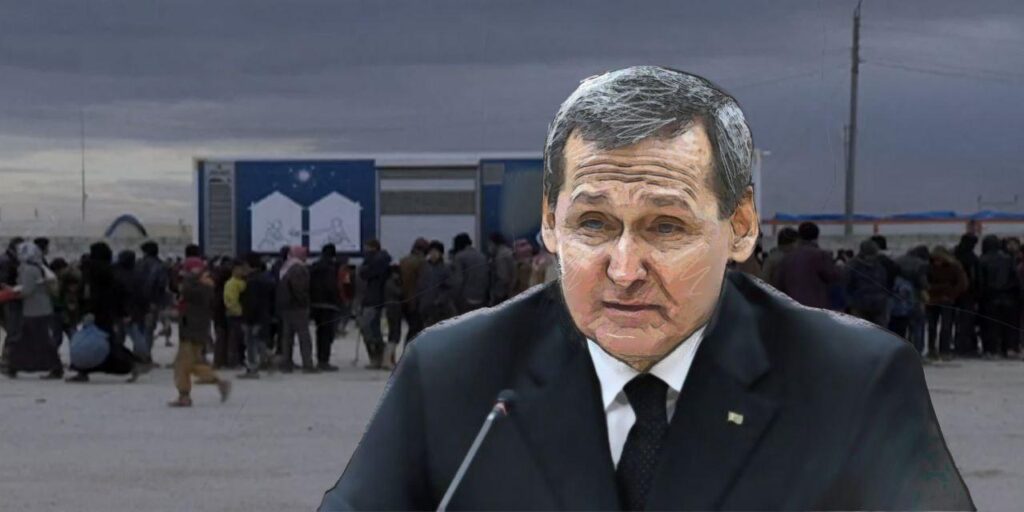
One of the elements most highlighted by the recent military confrontation between Israel and the U.S. on one side and Iran on the other is the geographical relevance of Central Asia to the situation. This is particularly true in the case of Turkmenistan, a country that shares a border of almost 1,200 kilometers with Iran. During the most intense days of the conflict, in a particularly unusual move, Turkmenistan opened its borders to foreign citizens seeking to escape from Iranian territory, which was under Israeli air strikes at the time.

On the diplomatic front, there have also been several high-level meetings and talks involving Turkmenistan; just after his meeting in Moscow with Russian President Vladimir Putin, the Iranian Foreign Minister, Abbas Araghchi, travelled to Ashgabat for a meeting with his Turkmen counterpart, Rashid Meredov. The day after, Meredov had a telephone conversation with U.S. Secretary of State Marco Rubio, and Russian Foreign Minister Sergey Lavrov arrived in Ashgabat for a meeting with the Turkmen leader, Serdar Berdimuhamedov.

Focusing primarily on the mutual isolation of Turkmenistan and Iran, Luca Anceschi, Professor of Eurasian Studies at the University of Glasgow, gave The Times of Central Asia his interpretation of these developments: “In my opinion, there is a fundamental issue, which is Turkmen isolation. When we see a small shift, we think that things are changing, but nothing changes. The second isolation is that of Iran, which in this case is not intentional. The reality we have seen in recent days is that Iran is isolated at the regional level. Russia has made it clear that Iran is expendable, and has not given reassuring answers. We see that there is an attempt to remedy this forced isolation on the part of Iran. To get out of these regional arrangements, they have tried to go everywhere, including Ashgabat.”

Operational agreements on the energy side are certainly weighing on Tehran’s desire to reassure Turkmenistan about the stability of the theocratic regime that rules Iran. These agreements are particularly useful to Iran in meeting the energy needs of the northern part of the country, which is remote and poorly connected to the south, where the country’s main natural gas fields are located. According to Temur Umarov, a Fellow at the Carnegie Russia Eurasia Center, “Since 2022, Turkmenistan’s visibility in Eurasian politics has certainly increased, and this is also the result of geopolitical changes that have taken place in the region in recent years,” Umarov told TCA. “What happened in Iran further increases Ashgabat’s visibility, but it was coincidental that Lavrov’s visit to Turkmenistan took place during the clash between Israel and Iran, as it was part of a wider tour of the region by the Russian Foreign Minister.”

Another aspect that should be considered is the change in tone on the part of Turkmen diplomacy, which at first glance appears much more assertive than in the past. A few weeks ago, Ashgabat issued a very harsh statement regarding Trump’s decision to include Turkmenistan among the countries subject to travel bans, and, at least according to Iranian media reports, during the meeting between Araghchi and Meredov, the latter referred to Israel as a “Zionist regime.”

Anceschi remains cautious on this point, too. “We are used to such low levels of diplomatic activism on the part of Turkmenistan that even the smallest reaction risks being overestimated,” he told TCA. “As for the reaction to the U.S. decision, cynically speaking, the fact that there is one less destination for Turkmenistan is to the regime’s advantage. With regard to Meredov’s definition of Israel, I think it is the Iranian regime that has used that term.”

This interpretation is also shared by Umarov. “I believe that Turkmenistan wants to maintain stable relations with Israel as well as with Iran,” he told TCA. “Ashgabat is therefore trying to balance its close relationship with Iran, especially on the commercial front, without breaking ties with Israel, with whom Turkmenistan has a stable relationship.”

Umarov also links Turkmenistan’s decision to open its border to allow the escape of some thousand foreign nationals, mainly from Central Asia, to its political proximity to Iran: “Many countries have asked Turkmenistan to facilitate the passage of people wishing to leave Iran, and Ashgabat has agreed both because of its cooperation with Tehran, and to seek international attention at a time when other Central Asian republics are receiving a lot of it.”

On this point, Anceschi favors a more pragmatic approach. “I think that the border between Iran and Turkmenistan is less impermeable than we generally think. We saw this with Covid, which most likely entered Turkmenistan from Iran, even though the Turkmen regime has always denied its presence in the country. I therefore think that Ashgabat’s decision is a matter of practical expediency, making official a border permeability that already exists in practice.”

In the case of Turkmenistan, it is always difficult to understand which dynamics are temporary and which represent long-term changes. This largely stems from the nature of the Turkmen regime, which has always relied on international isolation to maintain its internal stability. Given its proximity to an unstable Iran, however, this could slowly be starting to change.