• KGS/USD = 0.01144 0%
  • KZT/USD = 0.00196 -0%
  • TJS/USD = 0.10904 0%
  • UZS/USD = 0.00008 0%
  • TMT/USD = 0.28490 0%
  • KGS/USD = 0.01144 0%
  • KZT/USD = 0.00196 -0%
  • TJS/USD = 0.10904 0%
  • UZS/USD = 0.00008 0%
  • TMT/USD = 0.28490 0%
  • KGS/USD = 0.01144 0%
  • KZT/USD = 0.00196 -0%
  • TJS/USD = 0.10904 0%
  • UZS/USD = 0.00008 0%
  • TMT/USD = 0.28490 0%
  • KGS/USD = 0.01144 0%
  • KZT/USD = 0.00196 -0%
  • TJS/USD = 0.10904 0%
  • UZS/USD = 0.00008 0%
  • TMT/USD = 0.28490 0%
  • KGS/USD = 0.01144 0%
  • KZT/USD = 0.00196 -0%
  • TJS/USD = 0.10904 0%
  • UZS/USD = 0.00008 0%
  • TMT/USD = 0.28490 0%
  • KGS/USD = 0.01144 0%
  • KZT/USD = 0.00196 -0%
  • TJS/USD = 0.10904 0%
  • UZS/USD = 0.00008 0%
  • TMT/USD = 0.28490 0%
  • KGS/USD = 0.01144 0%
  • KZT/USD = 0.00196 -0%
  • TJS/USD = 0.10904 0%
  • UZS/USD = 0.00008 0%
  • TMT/USD = 0.28490 0%
  • KGS/USD = 0.01144 0%
  • KZT/USD = 0.00196 -0%
  • TJS/USD = 0.10904 0%
  • UZS/USD = 0.00008 0%
  • TMT/USD = 0.28490 0%
08 December 2025

Tajikistan and Central Asia Face Escalating Water Crisis

Central Asia is emerging as one of the regions most vulnerable to drought, according to the latest Global Drought Outlook published by the United Nations.

A Region Under Climate Pressure

The report highlights a persistent rise in average annual temperatures, diminishing snow cover, and accelerated glacier retreat, particularly in the mountainous regions of Tajikistan and Kyrgyzstan, as key drivers of water insecurity.

“Climate change is accelerating glacier retreat… This poses a long-term threat to the region’s water security,” the report states.

Tajikistan, which holds over 60% of Central Asia’s glaciers, plays a critical role in the region’s hydrology.

Agriculture on the Brink

The first sector to suffer from prolonged drought is agriculture, which underpins food security across Tajikistan, Uzbekistan, and Turkmenistan. Most agriculture in these countries relies on outdated irrigation systems ill-equipped to handle evolving climate conditions.

According to the Food and Agriculture Organization (FAO), the global incidence of droughts rose by 29% between 2000 and 2023. In Central Asia, this trend has resulted in declining crop yields, income losses, and forced livestock sales.

In Tajikistan’s Khatlon and Sogd regions, farmers experience income drops of 15-30% during dry years. Despite generating more than 60% of the region’s freshwater through glaciers and high-altitude rivers, Tajikistan struggles with its own water shortages. Nearly 60% of water is lost due to leakage in dilapidated canals, compounded by inefficient water management. Rural communities are particularly affected, with thousands of families lacking regular access to clean water.

Hydropower and Economic Risks

Tajikistan relies on hydropower for over 90% of its electricity. However, inconsistent snowfall and prolonged summer droughts have drastically lowered reservoir levels, threatening national energy stability. More than half of the country’s 14,000 kilometers of irrigation canals require modernization.

From 2000 to 2016, drought-related economic losses in Central Asia exceeded $2 billion. In 2023 alone, Tajikistan incurred $5.4 million in damages due to power shortages.

Droughts are also impacting public health, employment, and migration. Natural disasters annually affect around 1.4 million people in Uzbekistan and 500,000 in Kazakhstan and Tajikistan. By 2050, drought-related losses are expected to reach 1.3% of regional GDP annually, with up to five million climate migrants projected.

Regional and Global Responses

Tajikistan, a signatory to the UN Convention to Combat Desertification, is pursuing land restoration and sustainable water management projects. Under the ISCAUZR-2 initiative (Central Asian Initiative on Sustainable Land Management), the country secured nearly $1.5 million to support sustainable agricultural practices.

Efforts include the development of fruit tree nurseries, installation of drip irrigation systems, construction of freshwater reservoirs, and deployment of monitoring sensors at water sources. Agroforestry techniques and drought-resistant crop varieties are also being introduced.

Despite these initiatives, the region continues to face rising temperatures, Asia has already surpassed a +1.04°C increase and Tajikistan has lost more than 1,000 glaciers. An estimated 10 million people across Central Asia lack sustainable access to safe drinking water.

Natural phenomena increasingly compound one another: droughts cause dust storms, which in turn accelerate glacier melt.

The UN report warns that without systemic investment in water infrastructure, enhanced agricultural resilience, and deeper regional cooperation, Central Asia will confront severe socio-economic disruption. It stresses that urgent action is needed at both national and international levels to address the looming water crisis.
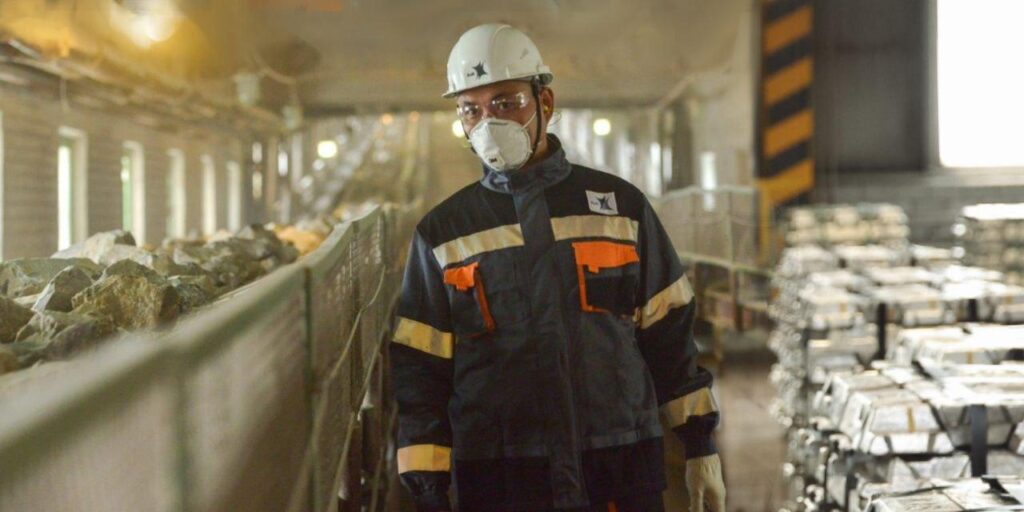

Kazakhstan Eyes Entry into Global Gallium Market

The Eurasian Resources Group (ERG) is set to invest in gallium production and intensify exploration for copper and other critical minerals, aiming to position Kazakhstan as a key player amid rising global demand for strategic resources.

Kazakhstan to Become World’s Second-Largest Gallium Producer

ERG has announced a $20 million investment to launch gallium production in Kazakhstan, beginning in 2026. The metal, which will be extracted from bauxite ore, primarily used in alumina production, is targeted for supply to OECD countries.

“ERG plans to become a significant player in the global gallium market, starting production in 2026 with the prospect of expanding volumes to 15 metric tons per year,” said the group’s CEO, Shukhrat Ibragimov.

Gallium is a critical mineral in high-tech industries, including semiconductors, radar systems, and aerospace navigation. It is listed as a strategic material by both the United States and the European Union.

According to the U.S. Geological Survey, global gallium production reached 760 tons in 2023, with China dominating the supply. Following Beijing’s imposition of export restrictions on gallium, germanium, and antimony in December 2023, Western nations have been seeking alternative sources. Kazakhstan may now fill part of that void.

Expanding Copper Prospects

In tandem with its gallium ambitions, ERG is ramping up copper exploration efforts. At the AMM-2025 mining and metallurgical forum in Astana, ERG Exploration, a subsidiary of ERG, announced a significant copper discovery in the Karaganda region.

“We have completed drilling 51 wells, copper ore has been discovered in 42 of them, with copper content in some samples reaching 6.7%,” said Zaura Kunanbayeva, ERG Exploration’s senior geologist.

The Karabas site is estimated to contain over 250,000 tons of copper, with the potential to yield up to 1 million tons of ore. Additional finds include molybdenum, lead, zinc, and silver. A final assessment is expected in the second half of 2025.

Tin Reserves Reassessed

ERG has also reported revised figures for the Syrymbek deposit in North Kazakhstan, believed to be the world’s largest undeveloped tin reserve. Following a revaluation, tin reserves increased to 286,000 tons, while copper reserves were updated to 55,000 tons.

“The price of tin has doubled in five years and recently reached $33,000 per ton. The project’s proximity to China, the world’s largest tin consumer, makes it strategically valuable,” said Aida Alzhanova, Deputy Head of Strategy at Solidcore Eurasia.

Government Support and Foreign Investment

At the same forum, Deputy Minister of Industry and Construction, Iran Sharkan, highlighted that more than $820 million has been invested in geological exploration since 2018. The government aims to expand the country’s exploration area from 1.9 to 2.2 million square kilometers by 2026.

“As a result, we have seen a 33% increase in domestic copper processing and a twofold increase in gold ore production over the past 10 years. Kazakhstan has entered the top 20 countries globally in terms of gold reserves,” Sharkan noted.

Kazakhstan’s mining sector is also attracting international attention. In May, Australian company C29 Metals Limited signed a joint exploration agreement with Astana-based Bask International Group Ltd, further demonstrating growing global interest in the country’s mineral wealth.

From Coasters to Code: Bermet Koshoeva’s Leap into Tech Entrepreneurship

Five years ago, spotting Kyrgyz tech entrepreneurs in global accelerators was almost unheard of. Even locally, tech founders were rare. Fast forward to today, and it feels like Kyrgyz innovators are making their mark, especially at Antler. Last year, the global startup accelerator welcomed several Kyrgyz founders in its Vietnam and Malaysia cohorts. Among them is Bermet Koshoeva, a marketing professional turned tech entrepreneur with her startup, Onion.

An Unconventional Path

Koshoeva’s path to becoming a founder is far from traditional. Her early years followed a familiar trajectory, earning a Bachelor’s degree in Business Administration from Turkey’s Fatih University and working in marketing roles. Things took a unique turn when she pursued a Master’s degree in Agriculture through the prestigious Erasmus Mundus Programme, studying in Denmark and France. The agricultural focus was symbolic, as both her father and grandfather worked in the sector. However, Koshoeva’s studies steered her in a different direction.

During her Master’s thesis, Koshoeva had her first entrepreneurial experience. While exploring investment opportunities, she stumbled upon the potential for sellers on Amazon. With an initial investment of $1,000, she started selling mug coasters and managed to turn it into $2,500.

“When my studies were coming to an end, I wondered what I would do next and how I would earn a living,” Koshoeva told The Times of Central Asia. “I wasn’t emotionally ready to jump into a full-time job after such an intense academic experience, so I decided to invest in something.”

Her Amazon success, combined with her professional marketing background, established Koshoeva as a local marketing expert. She shared her expertise as both a professional consultant and an educator, teaching marketing at the American University of Central Asia and serving as the Head of Creative Business at Compass College, the first art and design college in Central Asia.

Onion’s Mission

Koshoeva founded Onion in October 2024, originally envisioning it as a platform for collecting and analyzing qualitative research data, such as interviews and surveys. This aligned closely with her marketing background. However, a pivotal experience at Antler Malaysia in April 2025 led her to refine Onion’s focus. During the accelerator program, she pivoted to addressing AI-powered search optimization.

The new direction positions Onion in a rapidly evolving space as search trends shift away from traditional Google results to AI-driven tools like ChatGPT and Perplexity. These emerging tools are still refining their contextual accuracy, but they represent the future. Onion helps brands become visible in these AI-powered searches, ensuring they appear when it matters most.

Challenges and Vision

Although Antler Malaysia eventually decided not to invest in Onion, Koshoeva is determined to push forward. Her analytical skills, honed over years of market research, are guiding her through this emerging niche.

“In recent years, I’ve conducted extensive market analyses across various industries, including IT and SaaS,” Koshoeva told TCA. “Through research, I’ve identified a promising niche that’s only beginning to take shape. While not everyone sees its potential yet — even Antler wasn’t ready to invest — I’m confident this space will grow and transform the way marketers operate.”

The Road Ahead

For Koshoeva, this is just the beginning. She plans to continue building and refining Onion, confident in the potential of her chosen space. Her entrepreneurial spirit and vision are among the reasons why Kyrgyz founders like her are increasingly making their mark on the global tech scene.

Kyrgyzstan’s Parliament Advances Restrictive Version of Media Law

Kyrgyzstan’s parliament has ignored more than two years of work by a special commission and adopted a new media law that preserves restrictions on the registration of media outlets. The version parliament passed in its second and third readings on June 25 requires the mandatory registration of all media outlets, including online publications.

The Cabinet of Ministers is given exclusive powers to determine the procedure for registration, re-registration, and the termination of media activities.

Back to Square One?

There were strong objections from media freedom and rights groups to the mandatory registration of media outlets, including online sites, when the draft bill was introduced nearly three years ago.

Since Sadyr Japarov was elected president in January 2021, pressure on independent media outlets has been building.

The presidential administration said Kyrgyzstan’s current media law, which dates back to 1992, was outdated, and submitted a draft of a new media law in September 2022. International and domestic criticism was so strong that the bill was withdrawn, and eventually, a commission with representatives of the media community, including independent media outlets, the government, civil society, and legal experts, was formed.

The draft just approved by parliament was the sixth version of the bill, and, until June 16, it stated that registration for media outlets would be voluntary. On June 16, however, when the Kyrgyz parliament’s Committee on Social Policy was reviewing the bill, four Members of Parliament, Aibek Matkerimov, Ilimbek Kubanychbekov, Ernis Aidaraliev, and Sovetbek Rustambek uulu, introduced amendments.

One of these changes removed voluntary registration for media outlets and replaced that with a clause specifying that a media outlet could only disseminate information after its registration with the Justice Ministry had been confirmed.

The Media Action Platform of Kyrgyzstan, a coalition of media outlets and journalists, complained that the changes introduced by the four deputies negated those that had already been reached after negotiations. The Media Action Platform of Kyrgyzstan also questioned why deputies “who did not participate in the working group, were not present at the parliamentary hearings, and have no professional relationship with the media sphere,” were allowed to propose those amendments.

These objections were apparently ignored when deputies voted on June 25.

The Fate of Foreign-Sponsored Media

Another of the changes from the four deputies stated, “a foreign citizen, stateless person, or foreign legal entity, as well as companies with more than 35% foreign participation, cannot act as founders of media and television organizations.”

That replaces an article in the earlier text that set foreign participation at 50% or more and said only that they “cannot be founders of television organizations.”

There are some 2,740 media outlets registered in Kyrgyzstan, and only a handful receive more than 35% of their funding from foreign sources. One is Radio Azattyk, the Kyrgyz service of the U.S. congressionally-funded Radio Free Europe/Radio Liberty (RFERL).

Most of Kyrgyzstan’s presidents have expressed a dislike of Azattyk at one time or another, though the outlet continues to enjoy popularity in Kyrgyzstan according to various surveys.

President Japarov has made his views on Azattyk known several times. In comments to the state media outlet Kabar in January 2024, for example, Japarov claimed Azattyk opposed seeing him come to power. “Who knows,” he said, “maybe they received orders to be against [me] from their foreign owners.” Japarov has also claimed that people in his country “began to hate Azattyk…” and do not believe information that originates “from their chiefs, who finance them from the outside.”

During the Kyrgyz-Tajik border clashes in mid-September 2022, Azattyk posted a report that included comments from Tajik officials and civilians. Kyrgyzstan’s Ministry of Culture said the report contained false information and ordered Azattyk to remove the report from its website. When Azattyk refused, the Culture Ministry ordered Azattyk’s website to be blocked inside Kyrgyzstan, then days later froze Azattyk Media’s bank account in Kyrgyzstan.

In April 2023, a Kyrgyz court upheld the Culture Ministry’s order to shut down Azattyk, and the outlet’s operation remained suspended until July of that year, when Azattyk removed the “disputed video.”

The draft law that was just passed could mean the end of Azattyk, at least in the form in which it has existed since its establishment in 1953.

Away from the Debate

Among the countries of Central Asia, Kyrgyzstan long had the best situation for media, but that has been changing rapidly since Sadyr Japarov was elected president in January 2021. In its annual World Press Freedom Index, Reporters Without Borders ranked Kyrgyzstan 72nd in 2022, 122nd in 2023, 120th in 2024, and in 2025, the country dropped to the 144th position.

Bolot Temirov, the host of the YouTube channel Temirov Live, was expelled from Kyrgyzstan in November 2022. Temirov Live reported on government corruption and had just released a program on shady business deals involving family members of Kyrgyzstan’s security chief when its office was raided in January 2022, and Temirov was detained.

In January 2024, police detained eleven former and current journalists from Temirov Live, including Temirov’s wife, Makhabat Tajybek-kyzy. In October, a court sentenced Tajybek-kyzy to six years in prison and another journalist, Azamat Ishenbekov, to five years. Two other journalists were sentenced to three years of probation, whilst the other seven were found not guilty and released.

Also in January 2024, police raided the office of independent news outlet 24.kg, and its office was closed. Authorities charged the outlet with spreading war propaganda in its coverage of events in Ukraine. In March 2024, ownership of 24.kg was transferred to Almasbek Turdumamatov, who is close to the government.

A Kyrgyz court ordered the closure of independent media outlet Kloop in February 2024. Kloop had a reputation for uncovering corruption in Kyrgyzstan, including the corrupt practices of state officials.

One of the last major independent media outlets, Kaktus.media, is facing financial problems after being sued by privately-owned Vecherny Bishkek for running a story that the latter was about to shut down.

Japarov still needs to sign the bill into law, and has previously sent the draft back for review after facing stiff opposition. However, the eleventh-hour amendments introduced by the four deputies are an ominous sign, giving the impression that someone wanted to undo the results of previous compromises just prior to parliament’s vote.

Kazakh Lawmakers Propose Remote ID System for Drones

Yelnur Beisenbayev, a deputy of the Mazhilis, the lower house of Kazakhstan’s parliament, has submitted a formal inquiry to Prime Minister Olzhas Bektenov and Defense Minister Dauren Kasanov, proposing the introduction of a mandatory Remote ID system for drones weighing 250 grams or more.

Beisenbayev noted that while drones of this weight class, especially those equipped with cameras or sensors, are already subject to mandatory registration in Kazakhstan, enforcement remains weak. Drones weighing up to 15 kilograms can still be purchased freely and used without registration, posing a potential threat to public safety.

“This sector, which plays a key role in technological development, must be regulated carefully to prevent its misuse for criminal purposes,” Beisenbayev stated.

He illustrated the potential danger with a hypothetical scenario: a toy drone flying above a mass event such as a concert or football match. “In such situations, evacuation of thousands of spectators would be impossible, and the consequences could be catastrophic,” he warned. He urged the government to tighten both administrative and criminal liability for the unauthorized assembly and use of drones.

Drawing on international examples, Beisenbayev highlighted the United States, where every drone weighing 250 grams or more is required to have a “digital passport” that includes its serial number, coordinates, and the operator’s data. Similar regulations exist in the European Union, Australia, the United Kingdom, and Canada, where drones must carry unique digital markings and flight recorders (“black boxes”).

He proposed that Kazakhstan adopt similar measures, including licensing for drone manufacturers, mandatory digital marking of key drone components, and stricter penalties for violations, especially at mass events.

Currently, the Aviation Administration of Kazakhstan oversees the registration of unmanned aircraft systems. UAVs with a maximum take-off weight of 250 grams or more, or any drone capable of collecting personal or confidential data, must be registered. Drones with a take-off weight of 750 kilograms or more require state registration.

The proposal comes amid recent drone-related incidents near Kazakhstan’s border with Russia. Several UAV crashes have occurred in the West Kazakhstan region, with the Ministry of Defense later confirming the aircraft may have been launched from a Russian test site. As The Times of Central Asia previously reported, in mid-June, debris suspected to be from a drone was also discovered in the Karakiyan district of the Mangistau region.

China’s “Used” Car Exports to Central Asia Raise Questions Over Trade Practices

China has recently surpassed Japan to become the world’s largest automobile exporter. Yet behind this headline lies a controversial trade tactic: the mass export of brand-new vehicles categorized as “used.” Since 2019, this strategy has become a key component of China’s vehicle trade with regions including Central Asia, Russia, and the Middle East.

A Reuters investigation has revealed that these so-called “zero-mileage used cars” are new vehicles that are briefly registered in China to obtain domestic license plates, then exported abroad without being driven. This approach allows automakers to classify the cars as “sold,” enabling local governments to boost export figures and manufacturers to reduce unsold inventory from an increasingly saturated domestic market.

“This is the outcome of an almost four-year price war that has made companies desperate to book any sales possible,” said Tu Le, founder of the Michigan-based consultancy Sino Auto Insights.

Local Governments Fuel the Export Boom

At least 20 provincial and municipal governments in China, including major industrial hubs like Guangdong and Sichuan, actively support this model. Local incentives include issuing additional export licenses, offering tax breaks, investing in export-related infrastructure, and providing free warehouse space near border zones

These measures align with national macroeconomic objectives and offer local officials a tool to demonstrate economic performance through export statistics.

Central Asia: A Strategic Destination

Central Asia has emerged as one of the primary destinations for these vehicles. Many of the exported models are gasoline-powered, as China pivots to electric vehicles (EVs) domestically. Nonetheless, EVs, often heavily subsidized at the production stage, are also part of the export mix.

William Ng, international director at Chongqing-based Huanyu Auto, reported strong profits in 2022-2023. “We were able to earn 10,000 yuan ($1,400) in profit on an electric sedan purchased for 40,000 yuan by selling it in Central Asia,” he told Reuters.

However, Ng warned that the market is becoming oversaturated. “Small dealers and even livestreamers are getting involved. They used to sell wine or vases, now they’re selling cars. This is chaos.”

Industry Pushback and Regulatory Scrutiny

Despite short-term export gains, several Chinese automotive leaders have expressed unease. Zhu Huarong, chairman of Chang’an Auto, warned that the practice could tarnish the global image of Chinese carmakers.

Xing Lei, founder of AutoXing, echoed this sentiment. “How many [sales] are real or inflated? No one knows,” he said, pointing to a growing distrust of industry data.

Importing nations are starting to react. Russia has banned zero-mileage used cars from brands that already have authorized dealerships in the country. Jordan and several Middle Eastern countries have tightened regulations, redefining what qualifies as a “used” vehicle to close loopholes.

These moves reflect mounting concern over what some consider a “dumping” strategy, flooding foreign markets with low-cost or subsidized vehicles that disrupt local competition and undercut domestic dealers.

Why the Practice Continues

China’s centrally managed economy allows for considerable leeway in how provinces achieve growth targets. Export volume, employment figures, and retail sales data are often tied to the promotion prospects of local officials. Within this framework, practices such as reclassifying new cars as “used” are tolerated as long as they boost economic indicators.

Although the long-term viability of this export model remains uncertain, for now it provides a release valve for China’s oversupplied auto industry and an accessible source of affordable vehicles for buyers in Central Asia.

This strategy also supports Beijing’s broader geopolitical aims. As the United States remains focused on the Israel-Iran conflict and Russia is preoccupied with the war in Ukraine, China and the European Union have become the most active external players in Central Asia, a region of growing strategic importance.