• KGS/USD = 0.01144 0%
  • KZT/USD = 0.00196 -0%
  • TJS/USD = 0.10899 -0%
  • UZS/USD = 0.00008 -0%
  • TMT/USD = 0.28490 0%
  • KGS/USD = 0.01144 0%
  • KZT/USD = 0.00196 -0%
  • TJS/USD = 0.10899 -0%
  • UZS/USD = 0.00008 -0%
  • TMT/USD = 0.28490 0%
  • KGS/USD = 0.01144 0%
  • KZT/USD = 0.00196 -0%
  • TJS/USD = 0.10899 -0%
  • UZS/USD = 0.00008 -0%
  • TMT/USD = 0.28490 0%
  • KGS/USD = 0.01144 0%
  • KZT/USD = 0.00196 -0%
  • TJS/USD = 0.10899 -0%
  • UZS/USD = 0.00008 -0%
  • TMT/USD = 0.28490 0%
  • KGS/USD = 0.01144 0%
  • KZT/USD = 0.00196 -0%
  • TJS/USD = 0.10899 -0%
  • UZS/USD = 0.00008 -0%
  • TMT/USD = 0.28490 0%
  • KGS/USD = 0.01144 0%
  • KZT/USD = 0.00196 -0%
  • TJS/USD = 0.10899 -0%
  • UZS/USD = 0.00008 -0%
  • TMT/USD = 0.28490 0%
  • KGS/USD = 0.01144 0%
  • KZT/USD = 0.00196 -0%
  • TJS/USD = 0.10899 -0%
  • UZS/USD = 0.00008 -0%
  • TMT/USD = 0.28490 0%
  • KGS/USD = 0.01144 0%
  • KZT/USD = 0.00196 -0%
  • TJS/USD = 0.10899 -0%
  • UZS/USD = 0.00008 -0%
  • TMT/USD = 0.28490 0%
08 December 2025

Kyrgyzstan’s Jewelry Industry Emerges from the Shadows

The jewelry industry in Kyrgyzstan is experiencing rapid growth, marked by a surge in exports, an expanded geographic reach, and a significant rise in foreign trade operations, according to official statistics.

According to the National Statistical Committee, Kyrgyz jewelers quadrupled the volume of foreign trade in jewelry made from precious metals during the first four months of 2025. This figure encompasses both exports and imports.

Approximately 100 kilograms of jewelry, valued at around $600,000, were exported. Export revenues increased fourfold compared to the same period in 2024. Meanwhile, imports reached 15.6 tons, worth $5.8 million, more than double the previous year’s figures. Russia and Italy were the primary destinations for Kyrgyz jewelry exports.

Business Legalization and Tax Incentives

Stalbek Akmatov, president of the Kyrgyz Jewelers’ Union, told The Times of Central Asia that this growth was driven by the industry’s formalization, which allowed jewelers to operate legally, pay taxes, and submit accurate reports.

“First of all, I would like to thank our authorities, the Jogorku Kenesh and the Cabinet of Ministers,” Akmatov said. “Recently, significant changes were introduced to the Tax Code and legislation concerning precious metals. Instead of three separate taxes, VAT, sales tax, and income tax, a single tax of 0.25% has now been implemented.”

Akmatov noted that the new tax policy has provided a substantial boost to production and exports, while significantly reducing the size of the shadow economy, which previously accounted for over 90% of the sector. Experts estimate that less than half the industry now remains informal.

Entry into the Kazakh Market

Kyrgyz jewelers are also exploring new markets. Akmatov highlighted that one company has already exhibited twice at a jewelry fair in Almaty and has begun selling products featuring national designs.

“The current volume of exports to Kazakhstan is small, just a few kilograms, but it’s only the beginning. The potential in this direction is enormous,” he told TCA.

Persistent Challenges: Scrap Gold and Regulation

Despite these advancements, challenges remain. One major issue is the high cost of scrap gold for local producers. As was the case five years ago, scrap gold is sold with a 5% markup over the London gold price, even though Kyrgyzstan annually produces several dozen tons of gold and even more silver.

Akmatov also pointed to restrictive regulations on the circulation of precious metals. “If gold could be traded freely like a currency, our sales would increase significantly,” he stated.

The Jewellers’ Union is currently in talks with the Ministry of Economy and Commerce on liberalizing precious metals circulation within the country.

How The New York Times Came to Publish an Obituary for Kazakh writer Mukhtar Auezov

While browsing old issues of The New York Times, we wondered: “Is there anything here about the Kazakhs or Kazakhstan?” One edition stood out, the June 28, 1961 issue. On page 35, alongside obituaries for several prominent figures, was one for our great writer, Mukhtar Auezov.

“Winner of Lenin Prize in 1959 for 2-Volume Work Dies Mukhtar O. Auezov, the Kazakh poet and philosopher whose two-novel work, ‘Abai’ and ‘The Road of Abai,’ earned a Lenin Prize two years ago, died yesterday in Alma-Ata.”

The article went on to note that Mukhtar Auezov was born and raised in the Shyngystau region (known today as the Abai District), and later wrote a major work about the life of Abai. It also mentioned that he studied at Leningrad University and authored numerous literary works. In 1960, Auezov visited several U.S. states as part of a Soviet writers’ delegation. Upon returning home, he expressed in interviews his admiration for the towering skyscrapers of New York City.

What pleased us even more was that The New York Times included a photograph of Auezov alongside the obituary. This shows that even in the 1960s, American literary circles recognized and took notice of a Kazakh writer. In other words, Auezov left a lasting impression on the American public. Other articles about him may have appeared in the U.S. press, but so far this obituary is the only one we have been able to find.

Mukhtar Omarkhanuli Auezov holds the distinction of being the first known Kazakh writer to set foot on American soil. His official visit was well covered by the U.S. press and known to the American public at the time. This likely explains why such a major publication honored him with a dedicated obituary, informing readers around the world of his passing. The gesture reflects a significant level of respect and recognition.

Mukhtar Auezov indeed visited the United States from February 17 to March 17, 1960, as part of a delegation of Soviet writers. This trip was part of the “Agreement Between the United States of America and the Union of Soviet Socialist Republics on Exchanges in the Cultural, Technical, and Educational Fields.” According to the agreement, four American writers visited the USSR in 1959, and in return, a Soviet delegation traveled to the U.S. in February/March 1960.

To give readers a closer look at his journey, we are sharing excerpts from Mukhtar Auezov’s diary, where he reflects on the trip. The entries were later published in a bilingual edition, Mukhtar Auezov: Impressions of America, in 2021, in both Kazakh and English.

Below are a few details from Auezov’s impressions of the U.S.:

That day we toured Washington, D.C. It’s a very beautiful city. No two houses look alike. Even the cars are all different, though there are many, they never repeat.

We visited the old part of the city, the area known as ‘Georgetown.’ All the houses here are old, yet highly stylish, elegant two-story homes. There is one house built in 1762, which they showed us.

After having lunch, we departed. The train station is large, though there’s only one. We boarded a train to New York. The cars are long, the floors carpeted, and all the seats are armchairs — thirty chairs arranged around a central rotating column. The entire train is like this. This is first class. In the third class, the chairs are in pairs. There’s a restaurant and a café-bar on board. The train was delayed because of the high number of passengers — it was Friday, and Saturday is a day off here, as is Sunday. Many people were traveling to New York. After four hours, we arrived late at night. We checked into the ‘Barbizon Plaza Hotel.’ The rooms are small but cozy. We’re on the 18th floor.

February 19

The Shakespeare Library – this is the largest library in the world. The director gave us a tour. We have a schedule here. We pay our own expenses for tours and research visits. There are many sources on British history from the 16th to the 12th centuries. We assist scholars. This theater represents a Shakespeare-era playhouse. It’s a replica of Shakespeare’s own theater (the stage has two levels, with curtains). Two-level stage, three rows of balconies with divan-style seating. The theater is a copy of the original Shakespeare theater. In the past, there were no roofs, no seats. The trap doors are long – actors would descend and shout from below; there were no curtains. This current theater was built in 1932.

Auezov in the U.S. with a Russian writer delegation; photo: abaicenter.org


Mukhtar Auezov in the American press; photo: abaicenter.org


U.S. Prosecutors Charge Two Tajik Nationals in Human Smuggling Operation

Two men from Tajikistan have been arrested and charged in Pennsylvania for allegedly smuggling people into the United States via the border with Mexico.

Federal prosecutors said the defendants were charged with trying to bring a foreign citizen into the United States for financial gain and also conspiring to bring other foreigners into the U.S. as part of the smuggling operation. If convicted, they face a maximum of 10 years in prison for each count.

“The indictment alleges that, as part of their conspiracy, the defendants assisted in smuggling Co-Conspirator #1 into the United States, and then received referrals through Co-Conspirator #1 to smuggle additional illegal aliens into the U.S.,” the U.S. Attorney’s Office for the Eastern District of Pennsylvania said in a statement on Tuesday.

The statement identified the defendants as Bekhzod Rakhmatov, 30, of Maineville, Ohio, and Munis Khojiev, 31, of Philadelphia. It said they had also illegally entered the United States.

Allegations against the suspects say that from about December 2022 to about May 2025, the two men worked to secure visas and passports for people who traveled through a number of countries with the aim of reaching the U.S.-Mexico border.

“The defendants solicited and received funds from, and on behalf of, illegal aliens, as payment for smuggling the illegal aliens into the United States,” federal prosecutors said.

The indictment comes as the U.S. cracks down on migration, including from some countries in Central Asia. Citizens from Turkmenistan face restrictions on travel to the United States under an order signed by President Donald Trump that bans or curbs the entry of nationals from 19 countries. The order took effect on June 9.

Kyrgyzstan has expressed concern about reports that it might be included in another group of countries that will possibly be subject to similar U.S. bans and restrictions.

Uzbekistan Showcases Digital Achievements, Calls for Global Cooperation at UN Public Service Forum

From June 23 to 25, Uzbekistan hosted the 2025 United Nations Public Service Forum (UNPSF) in Samarkand, welcoming over 1,000 delegates, including government officials, international experts, and representatives of global organizations. Under the theme “Five Years Until 2030: Accelerating Public Service Delivery for a Sustainable Future,” the forum emphasized the pivotal role of digital governance in advancing the UN Sustainable Development Goals.

Speaking at the opening ceremony, Minister of Digital Technologies Sherzod Shermatov described digitalization as a transformative shift in state-society relations. “Digitization is not merely about introducing new technologies. It is a new format of relations between the state and the people, based on trust, transparency, and mutual understanding,” he said.

Uzbekistan’s digital advancements were a central focus. In 2024, the country entered the “very high” category of the UN E-Government Development Index (EGDI) and joined the top “A” group in the GovTech Maturity Index, rising 37 positions. In a message delivered by Saida Mirziyoyeva, head of the Presidential Administration, President Shavkat Mirziyoyev highlighted that Uzbekistan had also climbed 24 spots in the EGDI and 17 in the International AI Readiness Index over the past year.

The national e-government portal, my.gov.uz, now provides more than 760 electronic services and serves over 11 million registered users. The integrated “Digital Government” platform connects 49 state agencies and over 216 information systems. To ensure accessibility, 208 public service centers across the country assist citizens without internet access.

Opening the forum on behalf of the president, Saida Mirziyoyeva stressed the pace of Uzbekistan’s reforms and the importance of inclusive governance. “The world is changing rapidly, and we in Uzbekistan are responding with active reforms,” she said, noting that women now comprise over 35% of civil servants. She also underscored the importance of youth participation and global partnerships, thanking institutions such as the Global Knowledge Center.

In his written address, President Mirziyoyev emphasized ongoing efforts to modernize public service through legislative and structural reforms. These include the adoption of a new civil service law in 2022, expanded social support programs, and the implementation of the mahallabay neighborhood-level service system. “We now deliver more than 700 public services online through a single-window platform,” he noted.

One of the forum’s key outcomes was the adoption of the Samarkand Ministerial Declaration, a roadmap for enhancing global public service delivery through inclusive, transparent, and technology-driven governance. The declaration calls for deeper international cooperation and knowledge-sharing in GovTech, artificial intelligence, and public sector innovation.

Forum sessions addressed a broad spectrum of issues, including digital inclusion, AI governance, innovation labs, and outreach to underserved populations. Delegates exchanged best practices and pledged to strengthen international partnerships to ensure equitable access to services worldwide.

For Uzbekistan, hosting UNPSF 2025 underscored both its rapid digital transformation and its role as an emerging leader in global digital governance. With tangible improvements in global indices and expanding access to public services, the country presented itself as a model of reform and a committed partner in advancing sustainable development.

Kazakh Archaeologists Uncover Scythian-Era Treasures

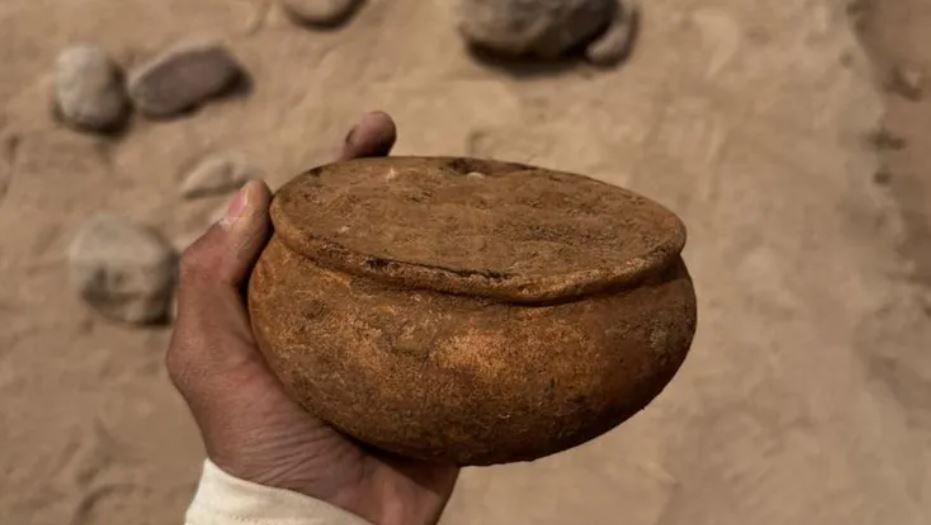
Archaeologists from Al-Farabi Kazakh National University have uncovered artifacts from the Scythian era in Kazakhstan’s Almaty region, including a rare gold ring weighing nearly eight grams.

A Symbol of Power and Authority

The excavations took place in the Uyghur district near the village of Togyzbulak and were led by Professor Dosbol Baigunakov, dean of the university’s history department. The team studied the Togyzbulak-1 and Togyzbulak-2 burial mound complexes, which contain more than 20 ancient burial sites.

Among the most notable discoveries were burial mounds No. 3 and No. 4, which contained the remains of a man and a woman, along with ceramic vessels, iron and stone artifacts, and gold jewelry. The standout find was a gold ring engraved with a lion, a symbol of strength and authority. Researchers believe the image combines human and animal traits, reflecting the spiritual worldview of the Saka tribes in the 3rd-4th centuries BC.

“These findings confirm that the territory of the modern Uyghur region was a cultural center of the Saka civilization,” the university said in a statement.

Ruins of a Burned City

Image: Al-Farabi National University

Separately, a potentially groundbreaking discovery has been made in the Zhetysu region. Olga Gumirova, executive director of the Petroglyph Hunters Foundation, reported the discovery of ruins from a medieval city previously known only through historical texts.

Archaeologists unearthed remnants of a tower, fragments of brick walls, and traces of fire, suggesting the city may have been destroyed during the Mongol invasion. While further research is ongoing, early comparisons are being drawn to the UNESCO World Heritage Sites of Talkhiz and Koylyk.

A month earlier, archaeologists from the Saryarka Archaeological Institute discovered 25 historical and cultural sites in the Shet district of the Karaganda region. These include burial mounds, necropolises, and complexes dating to the Bronze Age, Iron Age, and Middle Ages. According to the institute’s director, Alexei Kukushkin, this marks the beginning of an extensive research campaign, with formal dating pending excavation approvals.

The “Golden Man” and Buddhist Relics

One of the most significant archaeological discoveries in recent years is the 2018 find in the Tarbagatay district of East Kazakhstan, where over 3,000 gold artifacts were unearthed in a burial site. Led by renowned archaeologist Zainolla Samashev, the expedition found women’s bell earrings, gemstone necklaces, and ornate horse adornments dating to the 7th-8th centuries BC, treasures of exceptional artistic and historical value.

Another major discovery occurred in the Ayranada Gorge in the Merken district, where archaeologists found fragments of an ancient Buddhist temple and a carved stone head of Buddha.

Anna Krokosheva, senior researcher at the Museum of Ancient Taraz, noted that the find reinforces the region’s historical importance along the Silk Road. Despite the site’s remote location at over 3,000 meters above sea level, the artifacts are well-preserved and could enhance scientific and cultural tourism in southern Kazakhstan.

Tajikistan and Central Asia Face Escalating Water Crisis

Central Asia is emerging as one of the regions most vulnerable to drought, according to the latest Global Drought Outlook published by the United Nations.

A Region Under Climate Pressure

The report highlights a persistent rise in average annual temperatures, diminishing snow cover, and accelerated glacier retreat, particularly in the mountainous regions of Tajikistan and Kyrgyzstan, as key drivers of water insecurity.

“Climate change is accelerating glacier retreat… This poses a long-term threat to the region’s water security,” the report states.

Tajikistan, which holds over 60% of Central Asia’s glaciers, plays a critical role in the region’s hydrology.

Agriculture on the Brink

The first sector to suffer from prolonged drought is agriculture, which underpins food security across Tajikistan, Uzbekistan, and Turkmenistan. Most agriculture in these countries relies on outdated irrigation systems ill-equipped to handle evolving climate conditions.

According to the Food and Agriculture Organization (FAO), the global incidence of droughts rose by 29% between 2000 and 2023. In Central Asia, this trend has resulted in declining crop yields, income losses, and forced livestock sales.

In Tajikistan’s Khatlon and Sogd regions, farmers experience income drops of 15-30% during dry years. Despite generating more than 60% of the region’s freshwater through glaciers and high-altitude rivers, Tajikistan struggles with its own water shortages. Nearly 60% of water is lost due to leakage in dilapidated canals, compounded by inefficient water management. Rural communities are particularly affected, with thousands of families lacking regular access to clean water.

Hydropower and Economic Risks

Tajikistan relies on hydropower for over 90% of its electricity. However, inconsistent snowfall and prolonged summer droughts have drastically lowered reservoir levels, threatening national energy stability. More than half of the country’s 14,000 kilometers of irrigation canals require modernization.

From 2000 to 2016, drought-related economic losses in Central Asia exceeded $2 billion. In 2023 alone, Tajikistan incurred $5.4 million in damages due to power shortages.

Droughts are also impacting public health, employment, and migration. Natural disasters annually affect around 1.4 million people in Uzbekistan and 500,000 in Kazakhstan and Tajikistan. By 2050, drought-related losses are expected to reach 1.3% of regional GDP annually, with up to five million climate migrants projected.

Regional and Global Responses

Tajikistan, a signatory to the UN Convention to Combat Desertification, is pursuing land restoration and sustainable water management projects. Under the ISCAUZR-2 initiative (Central Asian Initiative on Sustainable Land Management), the country secured nearly $1.5 million to support sustainable agricultural practices.

Efforts include the development of fruit tree nurseries, installation of drip irrigation systems, construction of freshwater reservoirs, and deployment of monitoring sensors at water sources. Agroforestry techniques and drought-resistant crop varieties are also being introduced.

Despite these initiatives, the region continues to face rising temperatures, Asia has already surpassed a +1.04°C increase and Tajikistan has lost more than 1,000 glaciers. An estimated 10 million people across Central Asia lack sustainable access to safe drinking water.

Natural phenomena increasingly compound one another: droughts cause dust storms, which in turn accelerate glacier melt.

The UN report warns that without systemic investment in water infrastructure, enhanced agricultural resilience, and deeper regional cooperation, Central Asia will confront severe socio-economic disruption. It stresses that urgent action is needed at both national and international levels to address the looming water crisis.