• KGS/USD = 0.01143 -0%
  • KZT/USD = 0.00192 -0%
  • TJS/USD = 0.10820 0.19%
  • UZS/USD = 0.00008 0%
  • TMT/USD = 0.28575 0%
  • KGS/USD = 0.01143 -0%
  • KZT/USD = 0.00192 -0%
  • TJS/USD = 0.10820 0.19%
  • UZS/USD = 0.00008 0%
  • TMT/USD = 0.28575 0%
  • KGS/USD = 0.01143 -0%
  • KZT/USD = 0.00192 -0%
  • TJS/USD = 0.10820 0.19%
  • UZS/USD = 0.00008 0%
  • TMT/USD = 0.28575 0%
  • KGS/USD = 0.01143 -0%
  • KZT/USD = 0.00192 -0%
  • TJS/USD = 0.10820 0.19%
  • UZS/USD = 0.00008 0%
  • TMT/USD = 0.28575 0%
  • KGS/USD = 0.01143 -0%
  • KZT/USD = 0.00192 -0%
  • TJS/USD = 0.10820 0.19%
  • UZS/USD = 0.00008 0%
  • TMT/USD = 0.28575 0%
  • KGS/USD = 0.01143 -0%
  • KZT/USD = 0.00192 -0%
  • TJS/USD = 0.10820 0.19%
  • UZS/USD = 0.00008 0%
  • TMT/USD = 0.28575 0%
  • KGS/USD = 0.01143 -0%
  • KZT/USD = 0.00192 -0%
  • TJS/USD = 0.10820 0.19%
  • UZS/USD = 0.00008 0%
  • TMT/USD = 0.28575 0%
  • KGS/USD = 0.01143 -0%
  • KZT/USD = 0.00192 -0%
  • TJS/USD = 0.10820 0.19%
  • UZS/USD = 0.00008 0%
  • TMT/USD = 0.28575 0%
13 December 2025

Rosatom Selected to Build Kazakhstan’s First Nuclear Power Plant

Kazakhstan has announced that the Russian nuclear energy corporation Rosatom will take the lead in constructing the country’s first nuclear power plant. This landmark project, which was greenlit following a national referendum, signals Kazakhstan’s commitment to diversifying its energy sources and marks a significant step in its energy strategy following years of massive energy deficits, which are projected to reach 3.3 billion kWh in 2025.

The nuclear power plant will consist of two reactors and will be built near the village of Ulken, on the western shore of Lake Balkhash, approximately 400 kilometers northwest of Almaty. The plant is expected to have an electricity generation capacity of 2.4 gigawatts by 2035, meeting a significant portion of Kazakhstan’s future energy needs. This project will restore Kazakhstan’s nuclear power generation, which has been absent since the closure of the BN-350 reactor in 1999.

Rosatom’s selection follows a competitive bidding process that also included major international players, China National Nuclear Corporation (China), Électricité de France (France), and Korea Hydro & Nuclear Power (South Korea). The proposals were assessed based on criteria such as safety, cost, workforce training, nuclear fuel cycle cooperation, and social responsibility initiatives, with Rosatom’s proposal being deemed the most advantageous.

Both President Tokayev and the Kazakh Atomic Energy Agency had previously highlighted the importance of forming an international consortium for the project given Kazakhstan’s multi-vector foreign policy. Given current geopolitical events, it remains unclear whether other parties would join a consortium headed by Russia. Efforts are currently underway to secure state export financing from the Russian Federation as part of Rosatom’s proposal.

Kazakhstan is the world’s largest uranium producer but has relied heavily on coal-powered plants for electricity generation, supplemented by hydropower and an increasing shift toward renewables. The coal industry currently provides fuel for approximately 70% of the nation’s electricity generation. The nuclear power pivot in the country’s energy strategy is aimed at reducing Kazakhstan’s dependency on fossil fuels, enhancing energy security, and addressing environmental concerns. As previously reported by The Times of Central Asia, over the past two decades, air pollution levels in Kazakhstan have remained persistently high despite numerous reform pledges and reductions in specific emissions.

Economically, the plant is expected to improve Kazakhstan’s electricity supply reliability, support industrial growth, and create jobs in technology development, construction, and power plant operations. Speaking in January, former Minister of Energy Almasadam Satkaliyev stated that “By 2030, the NPP construction project will create around 5,000 jobs, peaking at approximately 10,000 jobs in 2032. Once operational, the first plant will provide at least 2,000 permanent positions.” The project also includes plans for the localization of equipment and workforce training, ensuring long-term capacity building.

Kazakhstan’s selection of Rosatom as the lead in its first nuclear power project reflects a strategic blend of technological ambition, international collaboration, and energy diversification. “Rosatom has been actively involved in Kazakhstan’s nuclear sector for years, including uranium mining and nuclear fuel cycle activities,” James Walker, CEO and Head of Reactor Development at NANO Nuclear Energy told The Times of Central Asia, emphasizing Rosatom’s “established presence [and] Russia’s geopolitical influence in Central Asia.”

The decision over who to partner with had been seen as a bone of contention in Kazakh political circles, with financial officials and economic policymakers reportedly leaning toward the China National Nuclear Corporation. Meanwhile, scientists, engineers, nuclear professionals, and technicians – who prioritize reliability and operational familiarity – were said to be lobbying for Rosatom, given Russia’s historical involvement in Kazakhstan’s nuclear sector.

In related news, Rosatom’s plans to build a nuclear power plant in Uzbekistan have been updated following talks between Russia’s Minister of Economic Development, Maxim Reshetnikov, and the Minister of Investments, Industry and Trade of Uzbekistan, Laziz Kudratov. “Last year, construction of a low-power nuclear power plant began, and [now] the leaders of the countries [have] reached an agreement to reformat the project and build a two-unit high-power plant and a two-unit low-power plant,” the Russian Ministry reported.

Kazakhstan Reshapes Its U.S. Partnership

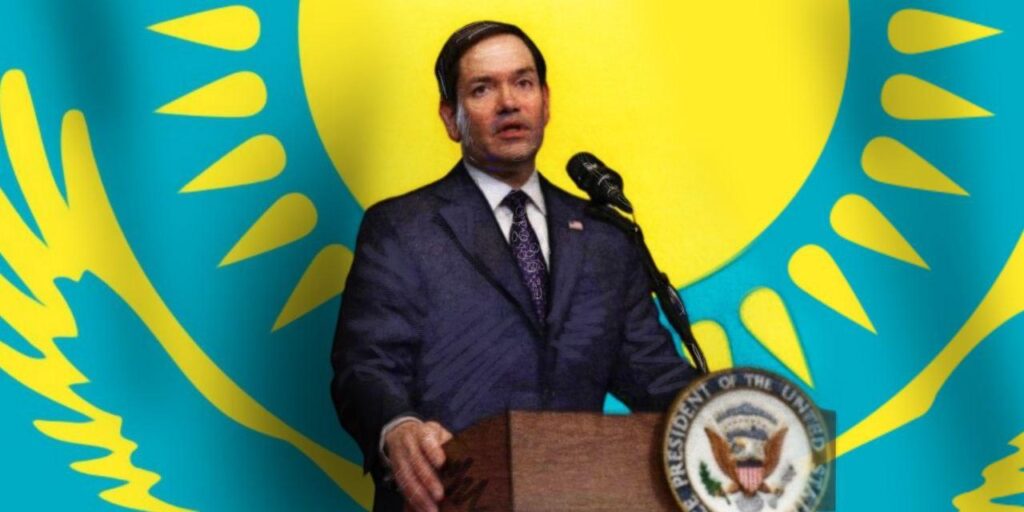
On June 12, U.S. Secretary of State Marco Rubio met with Kazakhstan’s Deputy Prime Minister–Foreign Minister Murat Nurtleu in Washington. According to the State Department readout, the American side reiterated its commitment to Kazakhstan’s independence, sovereignty, and territorial integrity while the two diplomats discussed the expansion of “opportunities for bilateral trade and investment” and the importance of “trusted infrastructure and a favorable regulatory landscape for U.S. companies in Kazakhstan.” Other policy issue-areas targeted for cooperation included the expansion of security cooperation, promotion of regional integration (through the C5+1 diplomatic platform), and exploration of commercial opportunities “particularly in the technology and critical minerals sectors.”

The bilateral meeting is an expression of deeper structural adaptation within a rapidly transforming international system. While U.S.-Kazakhstan relations were once characterized by only episodic contact and simple tactical cooperation, they have recently been reconstituted into a stable and operationally integrated bilateral relationship with system-wide relevance.

Trade between the United States and Kazakhstan reached $4.1 billion in 2023, a 30 percent increase from the year prior, with projections for 2025 surpassing $4.5 billion by mid-year. Long anchored in oil exports and machinery imports, the bilateral trade structure is now undergoing strategic deepening. Kazakhstan’s 12 percent share of global uranium reserves, alongside its emerging lithium sector and other rare earth elements, makes one of the most alluring partners in U.S. efforts to restructure supply chains and reduce overdependence on China, owing to its export reliability, geographic position between major powers, and regulatory openness to Western investment.

Kazakhstan, for its part, is demonstrating a granular grasp of what structural integration into global supply networks requires. Domestic reforms have included the modernization of investment regimes and coordinated institutional adjustments across ministries and frameworks such as the Astana International Financial Centre. Nonetheless, uneven rail capacity, limited downstream processing, and gaps in customs harmonization still pose material constraints to full Western alignment.

The C5+1 framework, launched in 2015 and revitalized since 2021, has matured into a semi-institutionalized platform for intra-regional coordination. Thanks partly to Kazakhstan’s initiatives, it now offers both practical counterweights to Russian influence and Chinese economic presence, including infrastructure collaboration and trade diversification, as well as symbolic ones like diplomatic visibility and regional leadership signaling.

More than a diplomatic forum, it reflects a broader regional strategy in which Central Asian states, led by Astana, seek to institutionalize a distinct strategic space through multilateral formats. This architecture enables selective cooperation on infrastructure, trade, and regulatory standards while preserving flexibility amid the competing pressures of a multipolar order.

Foreign Minister Murat Nurtleu has been instrumental in this conceptual and operational shift. After serving as Chief of Staff to the President from 2022 to 2023, he was appointed Deputy Prime Minister–Minister of Foreign Affairs in April 2023. His career trajectory—including postings at Kazakhstan’s UN Mission in Geneva (overlapping with Tokayev’s tenure as Director General of the UN Office in Geneva) and his leadership in Asia-Africa diplomatic affairs—reflects an evolving strategic mindset.

Nurtleu has emerged not merely as a representative of state policy but as a co-constructor of Kazakhstan’s new international roles. His orchestration of Kazakhstan’s presence within the C5+1 and the Minerals Security Partnership illustrates a pivot from transactional diplomacy to regime-building at the meso-institutional level. His focus on regulatory harmonization, risk assurance, and legal interoperability signals a shift toward durable diplomatic architectures designed to insulate Kazakhstan from systemic shocks. These industrial activities embed the country further into global value chains on structurally advantageous terms.

President Kassym-Jomart Tokayev’s decision to elevate the Kazakh language over Russian in official diplomatic discourse is more than symbolic; it asserts a sovereign voice in foreign policy. Within this context, the American reaffirmation of Kazakhstan’s independence, sovereignty, and territorial integrity during the Rubio–Nurtleu meeting acquires enhanced meaning. It signals not a perfunctory endorsement but a willingness to engage Kazakhstan as a co-architect of regional order—on equal footing, with shared responsibility for its future design.

Washington’s posture remains largely reactive, consistent with its historical pattern of episodic engagement and strategic underprioritization of Central Asia. American assistance to Central Asia is still overshadowed by China’s embedded financing and Russia’s historical-cultural entanglement. To shift the dynamic, the United States should scale the C5+1 platform into a genuinely cooperative instrument—capable of mobilizing coordinated investment, generating policy convergence in priority sectors, and building institutional memory. Moving beyond episodic summits toward task-specific working groups with operational mandates would signal a durable commitment to regional partnership.

Still, China’s related $44 billion trade volume with Kazakhstan in 2024 represents a “gravitational pull” that cannot simply be offset by rhetoric or isolated investments. Western engagement is gaining traction, but it still lacks the institutional persistence and physical imprint of Chinese capital.

U.S.-Kazakhstan relations, in their current form, offer a potential prototype for non-hegemonic partnership in a differentiated international order. Kazakhstan is not drifting into a Western orbit, nor is it tethered irrevocably to Eastern vectors. Instead, it is constructing a modular and antifragile statehood that integrates domestic reform with a multi-directional strategic orientation. For the United States, this bilateral relationship presents a choice: whether to treat Kazakhstan as a convenience within great-power competition or as a co-architect of a new regional logic. If the latter, what may emerge is not only a renewed U.S. presence in Central Asia but also a grounded yet agile diplomatic form capable of managing complexity without imposing hierarchy.


The views expressed in this article are those of the author and do not necessarily reflect the official policy or position of the publication, its affiliates, or any other organizations mentioned.

Opinion: The Engine of Turkic Integration – Why TURKPA Is No Longer “Just Talk”

On June 12, in Astana, the 14th Plenary Session of the Parliamentary Assembly of Turkic States (TURKPA) was held under the theme: TURKTIME: The Role of Parliamentary Diplomacy.

TURKPA has existed since 2008, but it is only now that the multifaceted activities of Turkic states are drawing close attention from external observers, first and foremost, from Russia. This is unsurprising since the driving forces behind Turkic initiatives are often Ankara and Astana. While Turkey promotes its national interests, Kazakhstan appears to play both of its powerful neighbors, Russia and China, against each other. Moscow, at times, does not hide its ire, hinting that its influence over Astana is diminishing in favor of Beijing. Kazakhstan’s President Kassym-Jomart Tokayev skillfully engages with China, securing benefits such as investments and a visa-free regime, which gives Kazakhstani carriers an advantage over their Russian and regional competitors.

TURKPA was officially founded a year before its ‘sister’ organization, the Organization of Turkic States, was established. The first proposal to create TURKPA was made by Kazakhstan’s President Nursultan Nazarbayev at the 8th Summit of Turkic Heads of States in November 2006.

Interestingly, TURKPA is also listed on the website of the Commonwealth of Independent States (CIS), although it includes Turkey, a country outside the CIS and a geopolitical rival to Russia, which dominates the organization.

Equally interesting is the composition of TURKPA and its governance structure. Its full members comprise Turkey, Kazakhstan, Azerbaijan, and Kyrgyzstan, whilst Hungary and Turkmenistan are observers. The day-to-day operations of the organization are managed by a Secretariat headquartered in Baku, and the Secretary General of TURKPA is always an Azerbaijani citizen. Strategic direction is provided through annual plenary sessions, which are presided over by the Speaker of Parliament of the country currently holding the Chair.

“The chairmanship rotates annually in alphabetical order according to the Latin alphabet,” explained Kazakh MP Aigul Kuspan.

This brings us to a curious contradiction that nobody focuses much upon. It is believed that Azerbaijan is Turkey’s proxy state in the South Caucasus and Central Asia. At the same time, Kazakhstan and Kyrgyzstan, to a lesser or greater degree, pursue a Russian policy in the region. As explained, in recent years Kazakhstan has also gravitated toward promoting Chinese interests. Thus, in practice, Turkey leads TURKPA through its own presidency and via Azerbaijan for two out of every four years, while Russia/China exert influence through Kazakh and Kyrgyz speakers in the other two.

In theory, this tug-of-war could have rendered both TURKPA and the OTS, where geopolitical tensions are similar, meaningless forums for routine summits. That was true until recently; however, now we observe a growing geopolitical subjectivity in Central Asia and a reorientation toward its own interests. Therefore, OTS summits and TURKPA plenaries have become more purposeful.

This is demonstrated by the words of President Kassym-Jomart Tokayev, who met with delegates of the 14th Plenary Session of the Parliamentary Assembly of Turkic States.

“Last year, Kazakhstan chaired the Organization of Turkic States. Under the motto ‘TURKTIME’, we implemented a number of important projects. About 100 events were organized that gave impetus to deepening Turkic integration. The 5th World Nomad Games were held in Astana, which introduced the world to the civilization of the Great Steppe. The approval of a single version of the Turkic alphabet can be called a historic event.”

Tokayev reminded everyone that, in addition to the official summits, OTS now also holds informal meetings, the first of which was held this year in Budapest, Hungary. Tokayev announced preparations for a second meeting and suggested Turkestan in Kazakhstan as its venue. Kazakhstan is clearly striving to maintain leadership in both the OTS and TURKPA and prevent Turkey from monopolizing Turkic diplomacy. Hungary, too, leans more toward Moscow than Ankara in its foreign policy.

So how are the OTS and TURKPA connected, apart from being ‘sister’ organizations? The structure is as follows: initiatives aimed at strengthening ties between Turkic countries are discussed and approved at OTS summits. There are six Turkic nations worldwide: Azerbaijan, Kazakhstan, Kyrgyzstan, Turkey, Turkmenistan, and Uzbekistan. Four of them are members of both OTS and TURKPA. Once initiatives are approved by OTS, TURKPA converts them into legislation by harmonizing the legal norms of Turkic states or by endorsing projects that bring these states closer together.

These initiatives cover a wide range of issues, from transport and logistics to culture and education. In the field of logistics and transport, the Middle Corridor or Trans-Caspian International Transport Route, a key link in China’s Belt and Road, comes back into focus. In culture and education, there are numerous initiatives, including a joint television platform, the promotion of Turkic cinema, and the unification of alphabets.

To an external observer, it is clear that centripetal processes are underway within the Turkic space, and Moscow is most likely worried that Turkey will become its center. But a view from the inside shows that all these processes started when the region became interesting to Beijing as a space for its new Silk Road. Without Chinese investment, both OTS and TurkPA would have remained platforms for “just talking.”


The views expressed in this article are those of the author and do not necessarily reflect the official policy or position of the publication, its affiliates, or any other organizations mentioned.

Uzbekistan Hosts Fourth Tashkent International Investment Forum, Seals $26.6 Billion in New Investment

From June 9-12, the Uzbek capital hosted the Fourth Tashkent International Investment Forum (TIIF), attracting more than 2,500 participants from 93 countries. Among the attendees were ministers, global corporate leaders, financial institutions, and economic experts. The forum served as a strategic platform for promoting Uzbekistan’s investment climate, advancing its reform agenda, and strengthening global partnerships.

Laziz Kudratov, Uzbekistan’s Minister of Investment, Industry and Trade, underscored the country’s progress as an emerging regional investment hub. “Over the last seven years, major reforms have been carried out to liberalize the economy, improve the business climate, and create favorable conditions for investors,” he stated. Uzbekistan has drawn more than $90 billion in foreign direct investment in recent years, contributing to a 6.5% GDP growth in 2024.

A Vision for 2030

The government’s “Uzbekistan 2030” development strategy aims to raise national GDP to $200 billion by the end of the decade. Foreign investment is central to achieving this target, and forums like TIIF are integral in showcasing Uzbekistan as a stable and attractive investment destination.

This year’s forum concluded with the signing of investment agreements worth $26.6 billion. Since TIIF’s inception in 2022, it has facilitated 357 investment deals valued at $44 billion. Of these, 57 projects have been completed, with 263 others in development.

Saudi Arabia led new investment commitments with $10.7 billion, followed by China ($7 billion), Russia ($5.5 billion), the UAE ($4.6 billion), Turkey ($3.6 billion), Germany ($3.4 billion), and France ($2 billion).

Rising Global Interest

Coinciding with the forum was the release of a new Investor Perception Report by Montfort Eurasia. The report highlights a threefold increase in interest from U.S. and UK investors in Central Asia and the Caucasus since 2023. Improved investor awareness and sectoral potential were cited as key drivers of this surge.

John Mann, Director at Montfort Eurasia, emphasized Uzbekistan’s potential: “One opportunity that stood out to me was mining. A new mining law passed earlier this year has created a solid framework for foreign companies, particularly those interested in critical minerals.”

Mann also identified pharmaceuticals, agriculture, and urban development as promising sectors, and stated that Uzbekistan’s geographic position is ideal for regional manufacturing hubs.

According to Montfort’s data, U.S. and UK investors now rate their understanding of the region at 7.36 out of 10, up from 4.92 in 2023. “There’s definitely been progress,” Mann noted. “More executives are showing interest in emerging markets, and there’s a better understanding of this region. However, concerns remain around investment security and political stability.”

Despite such concerns, 47% of surveyed investors expressed strong interest in Central Asia, up sharply from 15.5% last year. Leading sectors included industrial and manufacturing (63.5%), oil and gas (57.9%), and mining and natural resources (49.2%).

Regional Integration and Vision

In his address to the forum, President Shavkat Mirziyoyev highlighted that trade with neighboring countries has increased 3.5 times over the past eight years, reaching nearly $13 billion. To accelerate regional economic integration, he proposed developing a “Concept of an Integrated Region for Investment and Trade” in Central Asia.

“To our international partners, I say: it is time to create new financial tools to support regional projects,” Mirziyoyev said.

His proposal reflects a growing consensus among investors and policymakers: regional cooperation and infrastructure development are essential to sustaining long-term growth across Central Asia.

With its reform trajectory continuing and investor confidence growing, Uzbekistan appears poised to expand its role on the global investment map.

Colorado School of Mines to Open First International Campus in Kazakhstan

In 2026, the Colorado School of Mines will open its first international campus in Kazakhstan, marking a significant milestone in U.S.-Kazakhstan academic cooperation.

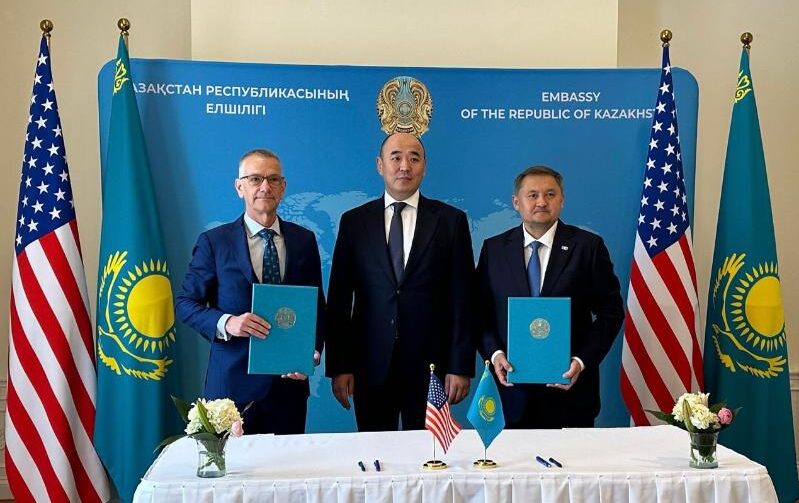
An agreement to establish the branch was signed between Kazakhstan’s Ministry of Science and Higher Education and the Colorado School of Mines, which currently ranks No. 1 globally in Mineral & Mining Engineering according to the QS World University Rankings 2025.

The new campus will be located in Zhezkazgan, the center of Kazakhstan’s geological industry, on the grounds of the newly established Ulytau Technical University. Instruction will be in English and will focus on four core bachelor’s degree programs: Mining, Geology and Geological Exploration; Geophysical Engineering; and Petroleum Engineering.

According to the Ministry, the project underscores Kazakhstan’s growing status as a destination for educational investment and knowledge transfer in technical fields.

“We have identified Kazakhstan as a priority country for partnership and development,” said John Bradford, Vice President of Global Initiatives at the Colorado School of Mines. “This agreement will allow us to elevate our collaboration and academic exchange.”

Earlier, the Colorado School of Mines signed a dual degree agreement with Kazakhstan’s Satbayev University in the fields of geology, petroleum engineering, and mining, which also includes joint research initiatives.

Once operational, the Zhezkazgan campus is expected to attract young professionals to the region, create new job opportunities, and train highly qualified specialists for both Kazakhstan’s domestic needs and the global labor market.

Russia Responds to Uzbekistan’s Concerns Over Police Treatment of Migrants

The Russian government has acknowledged Uzbekistan’s concerns regarding recent police actions targeting Uzbek nationals and is currently reviewing the matter, according to a statement by Russian Foreign Ministry spokesperson Maria Zakharova, as reported by state news agency TASS.

Zakharova confirmed that the Russian Foreign Ministry had received a formal diplomatic note from the Uzbek Embassy in Moscow, requesting explanations over reports of mistreatment during recent police operations. She said the contents of the note are being examined thoroughly and have been forwarded to the appropriate Russian authorities.

“We are studying the content of the note with full attention,” Zakharova said. “We maintain direct communication with our Uzbek partners, including through law enforcement channels. We are allies, and all such signals are taken seriously.”

Zakharova stated that Russia would provide Uzbekistan with verified and objective information following internal investigations. She also reaffirmed the strategic importance of bilateral ties. “Uzbekistan is our ally and strategic partner. We approach all issues in our bilateral relations with this in mind,” she said.

Tensions Over Police Conduct

The diplomatic exchange follows a statement earlier this week by Uzbek Foreign Ministry spokesperson Akhror Burkhanov, who expressed concern over the reported mistreatment of Uzbek citizens during recent police raids in Russia. In response, the Uzbek Embassy submitted a diplomatic note formally seeking clarification and legal assessment of the incidents.

The most prominent of these occurred on June 8 in the Strogino district of Moscow, where Russian law enforcement reportedly raided a dormitory housing migrants, including Uzbek nationals. Videos circulated by Russian media showed officers using force, with reports of beatings and verbal abuse. A similar incident was reported in St. Petersburg.

Uzbek officials emphasized that such conduct contradicts the “close and friendly” nature of Uzbek-Russian relations and called for a transparent review of law enforcement actions.

Uzbekistan’s Migration Agency stated that it is closely monitoring the situation. It confirmed that a small number of Uzbek citizens were detained due to documentation issues and are currently undergoing further checks.