• KGS/USD = 0.01144 0%
  • KZT/USD = 0.00193 -0%
  • TJS/USD = 0.10811 -0.28%
  • UZS/USD = 0.00008 0%
  • TMT/USD = 0.28490 0%
  • KGS/USD = 0.01144 0%
  • KZT/USD = 0.00193 -0%
  • TJS/USD = 0.10811 -0.28%
  • UZS/USD = 0.00008 0%
  • TMT/USD = 0.28490 0%
  • KGS/USD = 0.01144 0%
  • KZT/USD = 0.00193 -0%
  • TJS/USD = 0.10811 -0.28%
  • UZS/USD = 0.00008 0%
  • TMT/USD = 0.28490 0%
  • KGS/USD = 0.01144 0%
  • KZT/USD = 0.00193 -0%
  • TJS/USD = 0.10811 -0.28%
  • UZS/USD = 0.00008 0%
  • TMT/USD = 0.28490 0%
  • KGS/USD = 0.01144 0%
  • KZT/USD = 0.00193 -0%
  • TJS/USD = 0.10811 -0.28%
  • UZS/USD = 0.00008 0%
  • TMT/USD = 0.28490 0%
  • KGS/USD = 0.01144 0%
  • KZT/USD = 0.00193 -0%
  • TJS/USD = 0.10811 -0.28%
  • UZS/USD = 0.00008 0%
  • TMT/USD = 0.28490 0%
  • KGS/USD = 0.01144 0%
  • KZT/USD = 0.00193 -0%
  • TJS/USD = 0.10811 -0.28%
  • UZS/USD = 0.00008 0%
  • TMT/USD = 0.28490 0%
  • KGS/USD = 0.01144 0%
  • KZT/USD = 0.00193 -0%
  • TJS/USD = 0.10811 -0.28%
  • UZS/USD = 0.00008 0%
  • TMT/USD = 0.28490 0%
10 December 2025

Environmental Groups Criticize World Bank’s Decision on Rogun Dam Complaint

Environmental advocates have sharply criticized the World Bank’s decision to reject a request for a full investigation into Tajikistan’s Rogun Hydropower Plant, citing concerns over potentially severe environmental and social consequences for communities downstream along the Amu Darya river in Uzbekistan and Turkmenistan.

According to the international coalition Rivers without Boundaries, the World Bank’s Board of Executive Directors dismissed the complaint despite mounting evidence that the project could exacerbate water scarcity, degrade water quality, damage vulnerable ecosystems, and displace rural populations dependent on agriculture and access to clean water.

The complaint, filed earlier this year on behalf of affected communities, argued that the project’s environmental impact assessments were based on outdated data and non-binding verbal assurances from Tajikistan that the reservoir would not be operated at full capacity.

The World Bank’s Inspection Panel registered the complaint in April 2025 and, after conducting an initial review, including a fact-finding visit to Tajikistan in June, recommended a comprehensive investigation, citing a strong likelihood of harm. However, the Bank’s Board rejected that recommendation, asserting that only citizens of the country receiving Bank financing are eligible to request an investigation. This decision surprised observers, particularly given that the Bank had previously accepted similar complaints from Uzbekistan over the same project in 2010.

Environmental groups argue that the Board’s procedural reasoning allows it to ignore the project’s far-reaching transboundary impacts. Evgeny Simonov, a lead expert at Rivers without Boundaries, stated that the Inspection Panel’s own findings validated the downstream communities’ concerns. He accused the Bank of avoiding accountability by hiding behind technicalities.

Alexander Kolotov, director of the same coalition, said the ruling reveals a contradiction between the Bank’s public commitments to inclusive development and its actual response to cross-border grievances. He warned that dismissing downstream voices undermines the principles of equitable and participatory water governance.

Environmental experts also caution that the refusal to launch an investigation leaves no recourse for affected communities should their fears materialize. Potential long-term impacts include increased soil salinity, reduced agricultural productivity, and the erosion of traditional rural livelihoods.

The Rogun Alert coalition, an alliance of international environmental organizations, announced plans to continue monitoring the situation and to explore alternative mechanisms to protect the environmental rights of the region’s residents.

Previous assessments had warned that filling the Rogun reservoir could reduce water flows to the Amu Darya delta by 25% or more, with potentially devastating effects on ecosystems and the wellbeing of up to 10 million people in Uzbekistan and Turkmenistan.

Kazakh Chamber of Entrepreneurs Encourages Businesses to Launch Production Facilities in Prisons

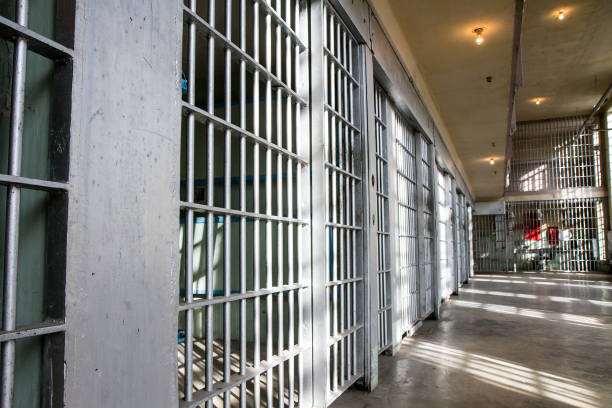
Kazakhstan’s National Chamber of Entrepreneurs “Atameken” and the Committee of the Penal System (CES) under the Ministry of Internal Affairs have discussed the potential for establishing private production facilities inside the country’s correctional institutions.

The initiative was presented during a meeting organized by Atameken, Kazakhstan’s largest business association, representing 1.4 million members across 203 industry associations. The discussion focused on practical mechanisms for facilitating business engagement with correctional institutions.

“It is important for businesses to understand the real opportunities and economic benefits of working with correctional facilities. The Chamber is prepared to support projects at every stage, offering both advisory and organizational assistance,” said Almat Askar, Managing Director of the Manufacturing Industry Department at Atameken.

According to Askar, Atameken is working with government agencies to develop mechanisms that encourage businesses to create jobs for inmates and set up production facilities within the industrial zones of correctional facilities.

Guldana Sharipova, Head of the Convict Labor Organization Department at the CES, noted that legislative amendments offering incentives for businesses are already in progress. “We are interested in companies not only launching operations within correctional facilities but also in hiring convicts to work outside the colonies,” she said.

According to the World Prison Population List, Kazakhstan ranked 89th out of 222 countries in 2024 in terms of the number of prisoners per 100,000 population. Approximately 35,000 individuals are held in 78 correctional institutions nationwide. Of these, about 23,000 are eligible to work, yet only slightly more than 12,000 are officially employed.

Currently, 280 private enterprises operate within the industrial zones of correctional institutions, employing 5,000 inmates. These facilities manufacture products ranging from workwear and building materials to furniture, souvenirs, and consumer goods.

This initiative comes alongside broader efforts by the Kazakh government to improve the business climate, including a recent reduction in inspections of private enterprises.

Two Major Reservoirs in Turkmenistan Dry Up Amid Intensifying Drought

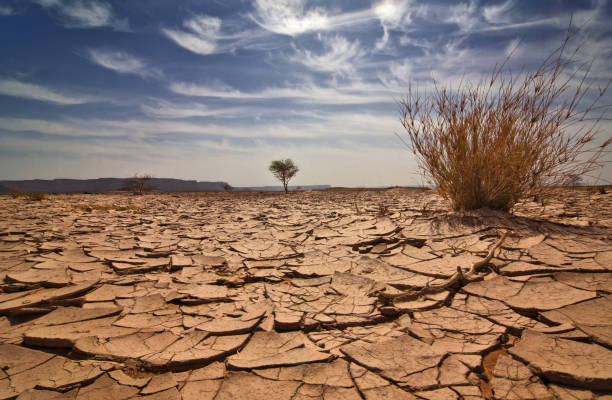
Turkmenistan’s Balkan region is facing a deepening drought, with two strategically important reservoirs, Mammetköl and Delili, completely drying up by mid-2025. Both reservoirs, fed by the Etrek (Atrek) River, have vanished from satellite imagery, underscoring the severity of the region’s water crisis.

According to meteorological reports, the reservoirs were not replenished during the winter months and rapidly lost their remaining water due to evaporation and filtration. The winter of 2024-2025 was exceptionally dry, and the spring brought no relief. With virtually no inflow from the now-dry Etrek River, the reservoirs were left to evaporate.

Mammetköl, built in 1964, had a total volume of 20.5 million cubic meters and a usable capacity of 17.9 million cubic meters. Delili, commissioned in 1970, had a capacity of 5.32 million cubic meters. Both were vital to irrigating farmland and sustaining livestock pastures in the Balkan region.

This is not the first time Mammetköl has dried up. During the prolonged drought of 2020-2023, the reservoir emptied in October 2021 and remained largely dry for nearly two years, with only brief periods of partial refilling. A rare flood event in August 2023, triggered by heavy rains in the Atrek’s upper reaches, temporarily restored water levels, but the relief was short-lived.

Data from the Etrek weather station show that from January to November 2025, normal precipitation levels were recorded only in February and March. The situation rapidly deteriorated not just in the Etrek basin but across other parts of Turkmenistan as well.

Reservoirs and rivers disconnected from the Amu Darya began to show signs of critical depletion in early 2025. The Murghab and Tedzhen rivers also reached dangerously low levels. By mid-year, many artificial reservoirs fed by the Atrek had dried out entirely. In autumn, the drought expanded into the Amu Darya basin, Turkmenistan’s largest and most vital waterway, further exacerbating the national water crisis.

Containerization in Kazakhstan: How Simple “Packaging” Could Transform the Economy

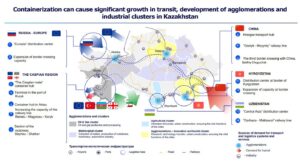
Containerization is rapidly becoming one of the most talked-about topics in Kazakhstan’s logistics sector. Amid surging transit traffic, the question is increasingly raised: why, despite clear potential, is the domestic market still underutilized? What’s holding Kazakhstan back from making containerization a cornerstone of its integration into global trade?

Currently, transport costs account for up to 30% of the final price of goods in Kazakhstan, nearly three times the global average of around 11%. Experts agree that a systemic transition to containerized transport could speed up delivery times, cut logistics costs, and boost the competitiveness of Kazakhstani products. Yet progress remains sluggish.

A Priority Still in Waiting

In September, President Kassym-Jomart Tokayev named the development of containerization as a strategic economic priority. Despite this, containers make up only 7% of domestic freight transport, less than half the global average of over 16%.

Meanwhile, transit volumes are surging. According to Kazakhstan Temir Zholy, the national rail company, container transit grew by 59% last year to 1.4 million twenty-foot equivalent units (TEU). The national target is 2 million TEU by 2030. Yet this growth is bypassing the domestic economy: Kazakhstan remains a transit bridge between China and Europe without yet unlocking containerization for its own industries.

Hidden Resources Still Untapped

Research by Russian consulting company Arthur Consulting suggests that Kazakhstan has the potential to containerize 50-55 million tons of domestic cargo, a volume capable of revitalizing the country’s entire logistics ecosystem.

So why hasn’t it happened? The reasons are well known.

First, infrastructure remains underdeveloped. Modern terminals capable of handling high volumes are lacking. Many transport routes lack essential repair facilities and service centers, meaning containers must often be returned without proper maintenance.

Second, there is a chronic shortage of containers and fitting platforms. This forces businesses to opt for cheaper, less efficient alternatives. Third, current tariffs make container transportation less attractive than road transport or covered railcars. Under such conditions, containerization appears more costly than beneficial. And lastly, there is a widespread lack of expertise. Some industrial players still don’t fully understand how to work with containers, optimize logistics, or implement modern transport solutions.

As a result, a significant portion of cargo is still transported the “old-fashioned way”, in covered railcars. This increases costs, extends delivery times, and limits access to multimodal transport routes.

Speaking at the New Silk Way transport and logistics forum, held in Almaty in September, Arthur Consulting partner Boris Poretsky described the sector as being “stifled” by systemic barriers. He emphasized the need for industrial companies to re-evaluate their logistics strategies. While nearly any cargo from bulk materials and liquids to heavy machinery can now be containerized, many exporters and consignees have yet to capitalize on the benefits.

Containers allow for door-to-door delivery without transshipment, reduce loading and unloading times, improve cargo safety, and offer maximum flexibility, whether by sea, rail, road, or even air.

@Dauren Moldakhmetov

A Global Shift

Worldwide, industries are rapidly adopting containerized logistics. The benefits are significant: 10-15% cost savings, reduced handling, greater cargo security, fewer supply chain disruptions, ESG compliance, and more efficient locomotive usage.

With urban growth, agglomeration, and the rise of e-commerce, demand for fast, reliable delivery is increasing. Containers are becoming the global standard.

Experts argue that containerization is no longer just a logistics tool. It is the infrastructural backbone of the modern economy.

Building a New Logistics Culture

Experts agree: Kazakhstan needs solutions from both the top down and the bottom up.

At the state level:

  • A national containerization strategy;
  • A reformed tariff policy;
  • Private investment in logistics infrastructure;
  • Integration with international transport corridors.

At the industry level:

  • Terminal and service base modernization;
  • Expansion of the national container fleet;
  • Localized production of containers and fitting platforms.

At the business level:

  • Investment in terminals and warehouses;
  • Digitization of logistics processes;
  • Shift to container-based delivery models.

If these steps are implemented in parallel, Kazakhstan could not only boost transit volumes but also establish a domestic containerized logistics economy that benefits shippers, exporters, and consumers alike.

Containerization isn’t just about packaging, it’s about speeding up trade. It makes Kazakhstani goods faster, cheaper, and more competitive in global markets.

In short, any serious discussion about economic modernization in Kazakhstan must include containers. They are a simple yet transformative tool capable of reshaping entire industries.

Air Astana Signs Memorandum for Delivery of 50 Airbus A320neo Aircraft

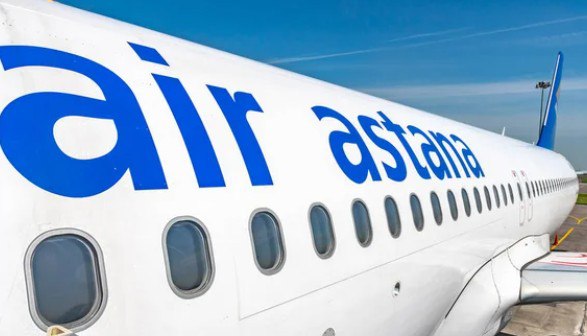
Kazakhstan’s national carrier Air Astana has signed a memorandum of understanding with Airbus for the delivery of up to 50 A320neo family aircraft. The agreement includes 25 firm orders and 25 options, according to a company press release.

The proposed purchase will comprise a mix of A320neo and A321neo models, with initial deliveries expected in 2031. Most of the aircraft will be A321LRs, long-range models on which Air Astana was among the first to introduce a premium cabin layout for long-haul routes to Europe and Asia. This new memorandum builds on an earlier agreement announced by the airline this month and remains subject to shareholder approval.

Air Astana CEO Peter Foster, who is set to step down in March 2026, noted that expanding the A320neo fleet will help the airline enhance operational efficiency and maintain high service standards. He added that these aircraft “have demonstrated excellent operational performance over many years” in the company’s fleet.

Air Astana introduced the A320ceo into its fleet in 2006 for domestic and regional routes across Central Asia and the Caucasus. The first A320neo joined the fleet in November 2016, followed by the A321LR in September 2019. The A321LRs are deployed on long-haul routes to Europe and Asia.

The Air Astana group currently operates 62 aircraft, 59 of which belong to the A320 family. These are utilized by both Air Astana and its low-cost subsidiary FlyArystan.

Earlier this year Air Astana also signed a contract with Boeing for the delivery of up to 15 Boeing 787-9 Dreamliners. That order brings the total Dreamliner portfolio to 18 aircraft, with deliveries scheduled between 2032 and 2035. The total catalog value of the fleet stands at approximately $7 billion.

The arrival of the first Dreamliners is tied to the planned launch of a direct route between Astana and New York.

Kazakhstan’s Golovkin Becomes World Boxing President

Gennadiy Golovkin, the two-time middleweight world champion and 2004 Olympic silver medalist for Kazkhstan, was named president of World Boxing at the federation’s inaugural congress in Rome on Sunday.

Golovkin, who has been president of Kazakhstan’s National Olympic Committee since last year, will lead the amateur boxing federation into the 2028 Olympic Games in Los Angeles. He succeeds Boris van der Vorst, a Dutch national who was the first president of World Boxing.

“I feel great. I feel more excited. Right now, we have a new team, new view,” Golovkin said after his election to the post. “I have a plan. I have ideas, so many. My goal is bringing boxing’s position back to a high level.”

The World Boxing federation was launched in 2023 to address concerns about transparency and governance in amateur boxing that had placed the future of the sport at the Olympics in doubt. That year, the International Olympic Committee, or IOC, expelled the International Boxing Association, the former governing body of amateur boxing, from the Olympic movement because of those corruption concerns.

World Boxing, the new amateur boxing federation, has been collaborating with the IOC and said that, by January of this year, it had approved membership applications from 60 national boxing federations around the world.

President Kassym-Jomart Tokayev congratulated Golovkin.

“He has become the first representative of Kazakhstan to lead an international federation of an Olympic sport,” Tokayev said. “This landmark achievement is a testament to the global recognition of Gennady Golovkin’s outstanding accomplishments and his great contribution to boxing worldwide.”