• KGS/USD = 0.01144 0%
  • KZT/USD = 0.00211 0%
  • TJS/USD = 0.10460 0.19%
  • UZS/USD = 0.00008 0%
  • TMT/USD = 0.28490 0%
  • KGS/USD = 0.01144 0%
  • KZT/USD = 0.00211 0%
  • TJS/USD = 0.10460 0.19%
  • UZS/USD = 0.00008 0%
  • TMT/USD = 0.28490 0%
  • KGS/USD = 0.01144 0%
  • KZT/USD = 0.00211 0%
  • TJS/USD = 0.10460 0.19%
  • UZS/USD = 0.00008 0%
  • TMT/USD = 0.28490 0%
  • KGS/USD = 0.01144 0%
  • KZT/USD = 0.00211 0%
  • TJS/USD = 0.10460 0.19%
  • UZS/USD = 0.00008 0%
  • TMT/USD = 0.28490 0%
  • KGS/USD = 0.01144 0%
  • KZT/USD = 0.00211 0%
  • TJS/USD = 0.10460 0.19%
  • UZS/USD = 0.00008 0%
  • TMT/USD = 0.28490 0%
  • KGS/USD = 0.01144 0%
  • KZT/USD = 0.00211 0%
  • TJS/USD = 0.10460 0.19%
  • UZS/USD = 0.00008 0%
  • TMT/USD = 0.28490 0%
  • KGS/USD = 0.01144 0%
  • KZT/USD = 0.00211 0%
  • TJS/USD = 0.10460 0.19%
  • UZS/USD = 0.00008 0%
  • TMT/USD = 0.28490 0%
  • KGS/USD = 0.01144 0%
  • KZT/USD = 0.00211 0%
  • TJS/USD = 0.10460 0.19%
  • UZS/USD = 0.00008 0%
  • TMT/USD = 0.28490 0%

Uzbekistan Jordan Relations Advance with Landmark State Visit

King Abdullah II of Jordan paid a state visit to Uzbekistan on August 25-26 at the invitation of President Shavkat Mirziyoyev. The visit, his first since the establishment of diplomatic relations, marked a milestone in bilateral ties and culminated in the signing of 15 agreements spanning politics, trade, investment, education, and culture.

A Historic Visit with Symbolic and Strategic Weight

Mirziyoyev welcomed King Abdullah with full ceremonial honors in Samarkand, including flag displays, a guard of honor, and performances of national songs and dances. The leaders visited prominent cultural sites, including the Shah-i-Zinda complex, Amir Temur’s mausoleum, and Registan Square, where the Jordanian monarch received an overview of Uzbekistan’s rich historical heritage.

King Abdullah also visited the tomb of Qutham ibn al-ʿAbbas, a revered early Islamic preacher in Samarkand. The Jordanian delegation toured the “Eternal City” cultural park, which showcases Uzbekistan’s traditional crafts, architecture, and customs.

Expanding Economic and Diplomatic Cooperation

The official program commenced on August 26 at the Congress Center in Samarkand. Following the ceremonial welcome, the leaders visited an exhibition of Uzbekistan’s export-oriented products. The showcase featured a range of goods from key industries such as pharmaceuticals, chemicals, mining, textiles, agriculture, IT, and jewelry. King Abdullah praised Uzbekistan’s industrial development and called for increased business-to-business collaboration.

During bilateral talks, the two sides agreed to elevate their relationship to a comprehensive partnership. Discussions focused on expanding political dialogue, boosting trade and investment, and strengthening cooperation in science, education, tourism, and culture.

To formalize the partnership, the two countries agreed to establish a joint intergovernmental commission and a business council by the end of the year, and to convene an Uzbek-Jordanian business forum. They also outlined plans for cooperation in smart agriculture, geology, healthcare, and the textile industry.

Broad-Based Agreements and International Alignment

Fifteen agreements and memoranda were signed during the visit, including:

  • An extradition treaty
  • A bilateral investment promotion agreement
  • A visa waiver agreement
  • Cooperation protocols in higher education, scientific research, agriculture, veterinary medicine, tourism, and standardization

The two leaders also reiterated their commitment to close coordination within international organizations, including the United Nations and the Organization of Islamic Cooperation.

Honoring Partnership and Future Prospects

In recognition of his role in strengthening bilateral ties, Mirziyoyev was awarded Jordan’s highest state honor, the Order of Al Nahda (“Renaissance”), presented personally by King Abdullah II.

“I accept this award with great honor, as a recognition of our joint efforts to expand multifaceted cooperation and a sign of friendship and respect for the people of Uzbekistan, who are laying the foundations for the Third Renaissance in our country,” Mirziyoyev said.

The visit concluded with a joint statement and mutual invitations for future high-level exchanges, reaffirming both countries’ shared ambition to elevate Uzbekistan-Jordan relations to a new strategic level.


Kyrgyz Schools Face Persistent Shortages of Teachers and Textbooks

Kyrgyzstan continues to face serious shortages of qualified teachers and school textbooks, according to Deputy Minister of Education Nadira Jusupbekova, who addressed the issue during a recent press conference in Bishkek.

Teacher Deficit in Key Subjects

As of the end of the last academic year, schools across the country were short 947 teachers, Jusupbekova reported. The most acute gaps are in mathematics, Russian language, and history, though a shortage of history teachers is a more recent development.

“The lack of mathematics teachers is particularly severe, especially in Bishkek,” she said. “Russian language comes next. We currently have teachers from Russia assisting us, and we’ve requested universities to increase training for mathematics and Russian language specialists.”

Ongoing Textbook Shortage

In addition to staffing challenges, many schools still lack adequate textbook supplies. Last year, the Ministry of Education admitted that general education schools were only 50% stocked with textbooks, forcing many students to rent materials.

This year, 744 million KGS (approximately $8.5 million) was allocated from the national budget for textbook production. These funds have been used to publish new English language textbooks for grades 3-9, with a total print run exceeding 1.9 million copies. Among them are 158,700 textbooks for grade 4, printed with support from the British Embassy.

Mathematics and science textbooks for grades 1-2 (over 1.2 million copies) have already been printed, with additional sets for grades 5 and 7 scheduled for release soon.

Textbooks for Russian language and literature, adapted by a working group in Kyrgyzstan, will be printed in Russia. They are expected to be delivered by October 2025.

Digital Platform Offers Interim Relief

To address the immediate textbook shortage, the Ministry has launched the Okuu Kitebi online platform, which provides access to all school textbooks in digital format. Future updates will integrate the platform with other educational systems, enabling students and teachers to download and use materials offline.

According to Okuu Kitebi Publishing House, the goal is to meet 110% of textbook demand in schools by 2030, with funding to continue coming from the national budget.

Kyrgyzstan Seeks German Investment in Green Energy, Logistics, and Tourism

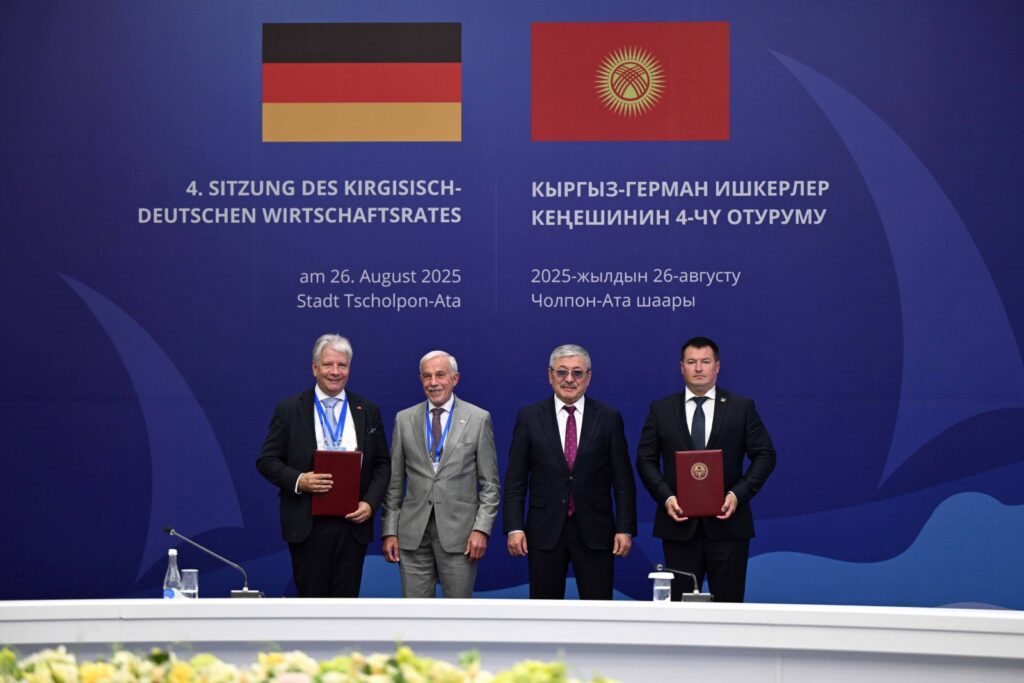
On August 26, the resort city of Cholpon-Ata on Lake Issyk-Kul hosted the Day of German Economy in Kyrgyzstan, alongside the 4th meeting of the Kyrgyz-German Business Council.

Opening remarks were delivered by Adylbek Kasymaliyev, Chairman of the Cabinet of Ministers of Kyrgyzstan, and Professor Reinhold Krämmel, Honorary Consul of Kyrgyzstan in Bavaria and Thuringia and Deputy Co-Chairman of the Business Council.

Calls for Green Investment and Innovation

Kasymaliyev highlighted Kyrgyzstan’s interest in attracting German investment and advanced technologies to modernize its industries, create jobs, and strengthen export potential. He identified key areas for cooperation, including renewable energy, green technologies, transport and logistics infrastructure, and the financial sector.

Environmental issues featured prominently in the discussions. Kasymaliyev further emphasized the threat of rapidly melting glaciers, which he said “requires the consolidation of efforts and joint initiatives.”

“We know Germany as one of the most active defenders of nature. Unfortunately, environmental problems are worsening each year. Glaciers in our mountains are melting and shrinking drastically. Addressing such critical issues requires joint efforts,” he said.

Youth and Education as Bridges of Cooperation

Kasymaliyev also underlined the importance of youth in Kyrgyzstan’s development and in strengthening bilateral ties. He noted a growing interest among young Kyrgyz citizens in the German language, culture, and vocational education, elements he described as forming the foundation for long-term partnership.

While acknowledging current progress, Kasymaliyev stressed that Kyrgyz-German economic relations have significant untapped potential.

New Agreements and Sectoral Priorities

Following the meeting, a memorandum of cooperation was signed between Kyrgyz Temir Jolu, the national railway company, and Rhenus SE & Co. KG to jointly explore logistics and transit infrastructure opportunities.

Kasymaliyev also held bilateral talks with Michael Harms, Executive Director of the Eastern Committee of the German Economy. He underscored Germany’s growing importance as a trade partner, noting that bilateral trade had nearly quadrupled between 2020 and 2024.

The Kyrgyz side presented several promising areas for German investment, including the IT sector, data center and logistics hub development, renewable energy and green hydrogen production, and mining.

“Kyrgyzstan is fully committed to supporting German companies interested in launching investment projects in our country,” Kasymaliyev stated.

Tourism Growth Highlighted

Tourism was also spotlighted as a rising sector of bilateral engagement. Germany is now among Kyrgyzstan’s top tourism partners, with more than 23,000 German visitors recorded in 2024, and over 10,000 arriving in the first half of 2025 alone.

Tajikistan’s Rogun Dam Delayed as World Bank Freezes Funding

The future of Tajikistan’s flagship infrastructure project, the Rogun Hydropower Plant, has been thrown into doubt as the World Bank and other development partners delay financing until the government fulfils key conditions, Nezavisimaya Gazeta reported. The move reflects growing concerns among environmental groups and downstream communities in Uzbekistan and Turkmenistan over the dam’s ecological risks to the Amu Darya River.

A Strategic Asset With Mounting Costs

The Rogun project, often hailed as Tajikistan’s greatest national undertaking, is central to the government’s ambitions for energy independence and regional electricity exports. But it also represents one of the country’s most significant financial liabilities.

Standard & Poor’s Global Ratings recently affirmed Tajikistan’s sovereign credit rating at “B/B” with a stable outlook, but cautioned that Rogun is so costly it may never generate sufficient returns. The agency warned that the project could push the national budget into deficit by the end of 2025.

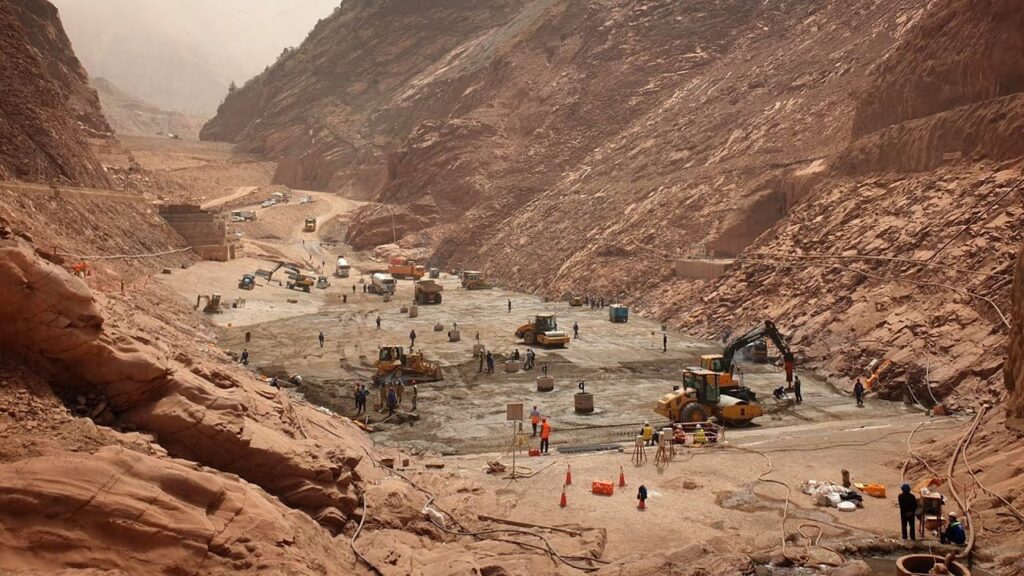
Construction of the dam began in 1976 under the Soviet Union but was suspended during Tajikistan’s civil war. Attempts to restart the project in the early 2000s stalled over disagreements with Russian partners. In 2016, the government relaunched the project with support from the World Bank, awarding the main construction contract to Italy’s Salini Impregilo (now Webuild). That same year, the Vakhsh River was diverted and dam construction resumed. Two turbines were commissioned in 2018 and 2019, but significant progress has since slowed.

To complete the plant, Tajikistan must install six additional turbines, raise the dam from its current 135 meters to the planned 335 meters, and secure an estimated $6.4 billion in new funding, roughly 40% of the country’s projected GDP for 2025.

Conditions for Continued Support

The World Bank has suspended further financing until Tajikistan presents a credible financing strategy that avoids unsustainable public debt, finalizes long-term electricity export agreements, and implements robust dam safety protocols. Without these conditions in place, the Bank has stated it cannot continue its support.

Environmental opposition to the project has also intensified. The international coalition Rivers without Boundaries has warned that filling the Rogun reservoir could reduce Amu Darya river flows by more than 25%, accelerating desertification and endangering the livelihoods of up to 10 million people in Uzbekistan and Turkmenistan.

Alexander Kolotov, a representative of the coalition, told Nezavisimaya Gazeta that the World Bank’s board is expected to review a report based on complaints filed by downstream communities, though no specific date has been set. Kolotov emphasized that Rogun poses one of the largest economic risks to Tajikistan and questioned whether international lenders should deepen their involvement.

Broader Economic Fragility

Tajikistan faces additional vulnerabilities. The country remains heavily reliant on remittances from labor migrants in Russia, lacks economic diversification, and is projected to lose its “least developed country” status in 2026, potentially curtailing its access to concessional aid and financing.

For now, the Rogun Hydropower Plant stands as both a symbol of national aspiration and a looming financial gamble. Whether it becomes a cornerstone of regional energy security or a cautionary tale of overambition remains uncertain.

Kazakhstan Looks East: What’s at Stake at the SCO Summit in China?

On Saturday, Kazakhstan’s President, Kassym-Jomart Tokayev, along with other Central Asian leaders, will travel to China for the Shanghai Cooperation Organization (SCO) summit. The visit comes amid China’s accelerating influence in the region, highlighting the summit’s growing geopolitical significance.

Four Strategic Days in China

Tokayev will visit China from August 30 to September 3 at the invitation of President Xi Jinping. High-level talks are planned, during which the two leaders will discuss deepening the Kazakh-Chinese strategic partnership.

Tokayev will also attend the SCO Plus summit in Tianjin from August 31 to September 1. On September 2, he will speak at a meeting of the Kazakhstan-China Business Council in Beijing and hold talks with the heads of major Chinese companies. On September 3, he will take part in commemorations marking the 80th anniversary of Victory in World War II.

Who Will Attend the Tianjin Summit?

This year’s gathering marks the 25th anniversary of the SCO. Leaders from over 20 countries and representatives from ten international organizations are expected to participate. The SCO currently includes ten member states: Kazakhstan, China, Kyrgyzstan, Belarus, India, Iran, Pakistan, Russia, Tajikistan, and Uzbekistan.

Particular attention is focused on Indian Prime Minister Narendra Modi, whose visit to China will be his first in seven years. Russian President Vladimir Putin also plans to attend. Leaders from Turkey, Malaysia, Indonesia, Mongolia, Azerbaijan, Armenia, Turkmenistan, and several other countries are also expected. According to China’s Foreign Ministry, this will be the largest SCO summit since the organization’s inception.

Why Tianjin? A Strategic Choice

Chinese analysts describe Tianjin as a strategic hub for the Belt and Road Initiative. They note its position where sea and land routes converge, the starting point of the China-Mongolia-Russia corridor, and a key link in the New Eurasian Land Bridge connecting China, Central Asia, and Europe. Its advanced infrastructure, experience in hosting international events, and open policies are seen as transforming it into a “super-hub.”

Tianjin has long contributed to SCO activities, particularly through the “Lu Ban Workshop” international education initiative. Currently, ten such workshops operate across SCO countries, training skilled technical personnel in fields aligned with labor market demands.

Analysts’ Perspectives

Western analysts quoted by Reuters say the summit will project a message of “Global South solidarity” and offer Russia an opportunity to achieve a “diplomatic coup” amid ongoing sanctions.

“Xi Jinping will want to use the summit to demonstrate how the American-led international order is weakening,” said Eric Olander, editor-in-chief of The China-Global South Project. “It’s a moment to show that all the White House’s efforts since January to counter China, Iran, Russia, and now India have not had the desired impact.”

China’s Expanding Role in Central Asia

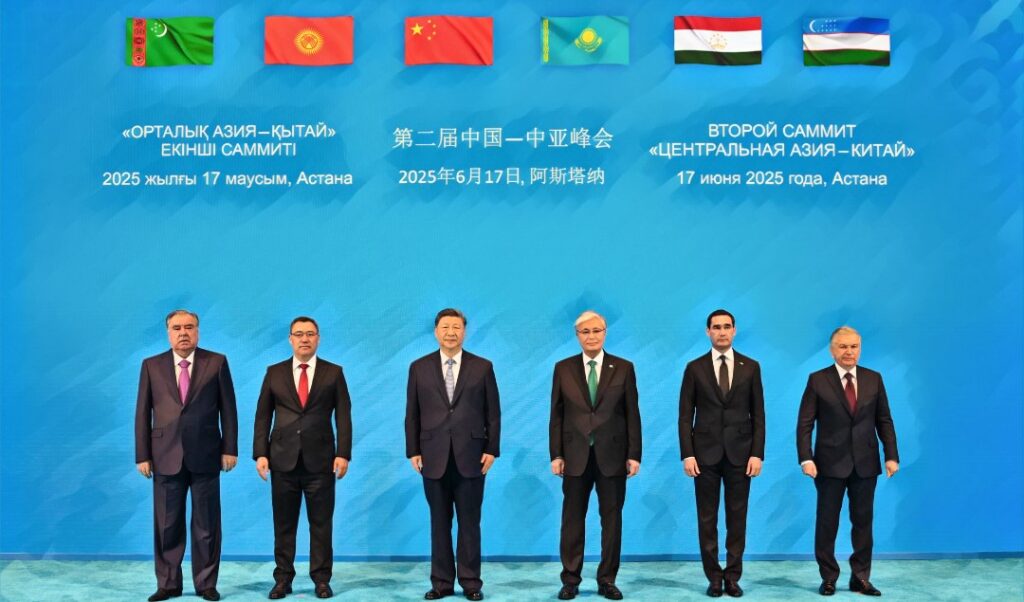
On June 16-17, President Xi Jinping visited Kazakhstan, where leaders of the five Central Asian states, Kazakhstan, Kyrgyzstan, Uzbekistan, Tajikistan, and Turkmenistan, signed the Astana Declaration at the second China-Central Asia summit. They also concluded an agreement on eternal good-neighborliness, friendship, and cooperation. In total, over 35 memoranda worth more than $17 billion were signed.

According to analyst Kanat Ospanov, this was President Xi’s sixth visit to Kazakhstan. In 2024, bilateral trade reached a record $30 billion, with Kazakhstani exports accounting for half of that figure. “This reflects China’s growing interest in domestic goods and the strengthening of Kazakhstan’s regional position,” Ospanov said.

China is also one of the largest investors in the Kazakh economy. “Sixty-three joint projects worth $10 billion have already been implemented, and another 60 are underway. The total investment portfolio exceeds $57 billion, covering more than 200 projects in sectors such as industry, energy, and logistics,” Ospanov added.

Turkmenistan to Designate Bolshoy and Maly Balkhan Mountains as Protected Areas

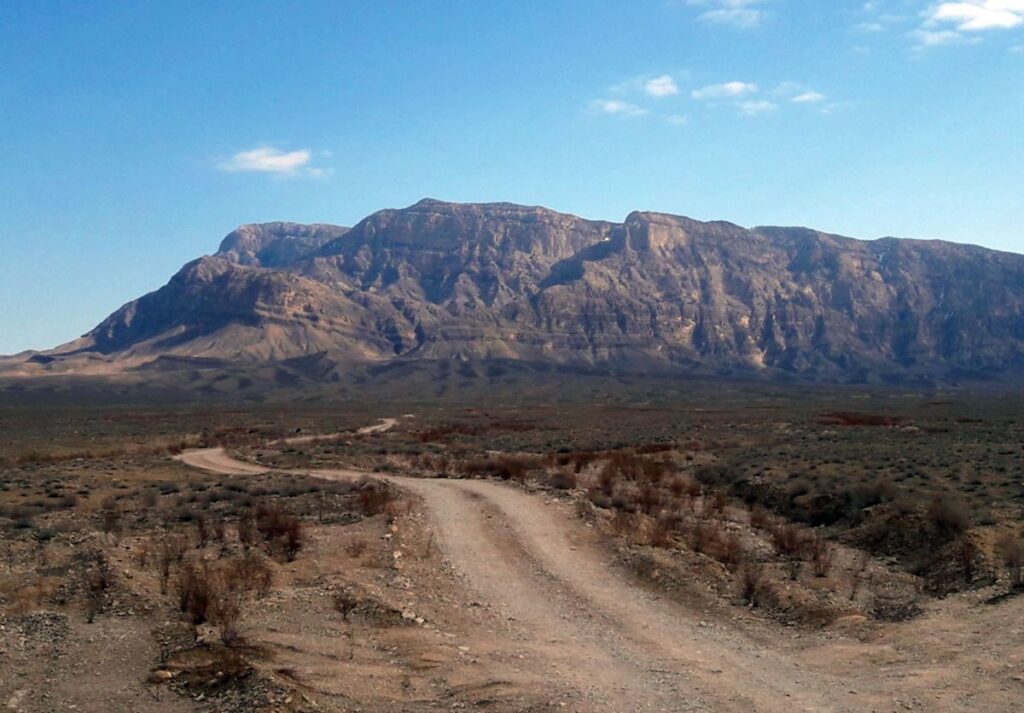
The government of Turkmenistan has announced plans to designate the Bolshoy and Maly Balkhan mountain ranges as protected areas. A new nature reserve is currently being established, with its core zone centered on Bolshoy Balkhan and additional wildlife sanctuaries to be located on Maly Balkhan and the Yuzhny Ustyurt plateau.

Ecosystem Under Pressure

Concerns about preserving the unique Balkhan ecosystem date back to the 19th century. The first official discussions arose in 1832 following Grigory Karelin’s expedition to the Caspian Sea. By 1836, cartographers had documented the eastern Caspian coastline, the ancient Amu Darya riverbed, and the Bolshoy Balkhan ridge.

Zoologists such as Mikhail Laptev (1920s-1930s) and Gheldy Shukurov (1940s) later highlighted the ecological value of this “mountain island in the desert,” a view supported by contemporary scientists who continue to stress its conservation importance.

For decades, the slopes of the Balkhans have served as seasonal pastures for small livestock from May to October. This overgrazing has degraded natural ecosystems and reduced biodiversity. The new reserve aims to reverse this trend by limiting cattle grazing to foothills and surrounding pastures.

The Natural Wealth of the Balkhans

The Balkhan region features a striking mix of desert plains and mountain-steppe terrain. Its highest peak is Mount Arlan, which rises to 1,880 meters. The area is home to two species of amphibians, 28 species of reptiles, 174 species of birds, and 45 species of mammals.

Among the most distinctive species is the gray monitor lizard, the region’s largest lizard, growing up to 1.5 meters in length. The Central Asian leopard once roamed these mountains but has since migrated to the Ustyurt Plateau. In its absence, populations of wolves and jackals have increased.

Other rare animals found in the area include the Turkmen corsac fox, manul (Pallas’s cat), banded gerbil, rock marten, and Severtsov’s jerboa.

Maly Balkhan, with its unique topography and the renowned Chalsuv spring, famous for its distinctive taste, reaches a height of 780 meters. In earlier decades, saigas would migrate here from Kazakhstan during winter, though such migrations have not occurred in recent years.

Part of a Broader Conservation Push

The creation of the Balkhan Reserve is part of Turkmenistan’s National Forest Program (2021-2025). The initiative also includes preparations for establishing the Zengibaba Reserve in Dashoguz velayat and expanding the Amudarya State Reserve. Additional protected areas are planned for Lebap velayat, particularly on the Tallymerdzhen Plain, which is home to the rare sandpiper.