• KGS/USD = 0.01144 0%
  • KZT/USD = 0.00211 0%
  • TJS/USD = 0.10460 0.19%
  • UZS/USD = 0.00008 0%
  • TMT/USD = 0.28490 0%
  • KGS/USD = 0.01144 0%
  • KZT/USD = 0.00211 0%
  • TJS/USD = 0.10460 0.19%
  • UZS/USD = 0.00008 0%
  • TMT/USD = 0.28490 0%
  • KGS/USD = 0.01144 0%
  • KZT/USD = 0.00211 0%
  • TJS/USD = 0.10460 0.19%
  • UZS/USD = 0.00008 0%
  • TMT/USD = 0.28490 0%
  • KGS/USD = 0.01144 0%
  • KZT/USD = 0.00211 0%
  • TJS/USD = 0.10460 0.19%
  • UZS/USD = 0.00008 0%
  • TMT/USD = 0.28490 0%
  • KGS/USD = 0.01144 0%
  • KZT/USD = 0.00211 0%
  • TJS/USD = 0.10460 0.19%
  • UZS/USD = 0.00008 0%
  • TMT/USD = 0.28490 0%
  • KGS/USD = 0.01144 0%
  • KZT/USD = 0.00211 0%
  • TJS/USD = 0.10460 0.19%
  • UZS/USD = 0.00008 0%
  • TMT/USD = 0.28490 0%
  • KGS/USD = 0.01144 0%
  • KZT/USD = 0.00211 0%
  • TJS/USD = 0.10460 0.19%
  • UZS/USD = 0.00008 0%
  • TMT/USD = 0.28490 0%
  • KGS/USD = 0.01144 0%
  • KZT/USD = 0.00211 0%
  • TJS/USD = 0.10460 0.19%
  • UZS/USD = 0.00008 0%
  • TMT/USD = 0.28490 0%

Mirziyoyev: Violence Against Women and Children Will Not Be Tolerated in Uzbekistan

President Shavkat Mirziyoyev has announced tougher measures against violence toward women and children, and unveiled new economic and education programs aimed at expanding opportunities for women across Uzbekistan.

Speaking on March 6 at a ceremony in Tashkent marking International Women’s Day, the president referred to a decree he signed on March 3 that strengthens the country’s response to domestic violence. According to remarks reported by Uzbek media and the presidential press service, the decree introduces a stricter system for addressing harassment and violence against women and minors.

Mirziyoyev said Uzbekistan has adopted the creation of an uncompromising environment against violence as a strategic goal.

“Anyone who raises a hand against women or children will either leave Uzbekistan or be forced to live according to the law,” he said during the event held at the Kuksaroy residence.

Mirziyoyev also stated that the decree includes tougher penalties for certain crimes against minors. According to his remarks, in some cases crimes involving pedophilia will now carry life imprisonment. He noted that legal experts had raised objections during discussions but said he insisted on including the punishment in the decree.

In addition to legal measures, Mirziyoyev outlined several initiatives focused on education, employment, and rehabilitation programs for women.

According to statements made during the event, women serving sentences in correctional facilities will be given the opportunity to apply to universities and study remotely. Officials said many female inmates currently have only secondary education and lack professional skills, while some have expressed interest in pursuing higher education.

To address this, the government plans to launch a program called “New Life,” which will provide vocational training for women in prisons. Participants will study for three to six months in professional training programs and receive certificates. Those who wish to enter universities will be able to take entrance exams inside correctional institutions. Women admitted to universities on a contract basis will be eligible for interest-free loans, repayable after completing their sentences and securing employment.

The government also plans to expand economic support for women nationwide. According to Mirziyoyev’s speech, 166,000 women will receive training in modern professions and entrepreneurship this year, while another 100,000 will study information technology skills.

A separate initiative called “Daromadli Ayol” (“Profitable Woman”) will support home-based businesses. With the help of experienced entrepreneurs, the program aims to create employment for 50,000 women in areas such as handicrafts, poultry farming, beekeeping, and household agriculture.

Officials also said that under the “Hamroh” program, around 1 trillion UZS (about $82,440,000) will be allocated to finance 3,000 business projects led by women.

Overall, the government aims to help 1.5 million women generate income this year, including 400,000 who are expected to enter business activities. More than 25 trillion UZS (about $2,060,950,000) in financial resources will be directed toward these initiatives.

OTS Faces Security Test from Turkey to Central Asia

Iran’s widening war has now reached the institutional space linking Turkey, the South Caucasus, and Central Asia. Turkey said on March 4 that NATO air defenses destroyed an Iranian ballistic missile entering Turkish airspace, while Azerbaijan said the next day that four Iranian drones crossed into Nakhchivan, injuring four people, and damaging civilian infrastructure at the exclave’s airport. Iran denied targeting Nakhchivan; in the Turkish case, the missile’s intended target has not been fully clear in public reporting. Even so, the combined effect was unmistakable. By March 7, the Organization of Turkic States (OTS) had become more than a bystander to a Middle Eastern war that had earlier seemed outside its main agenda.

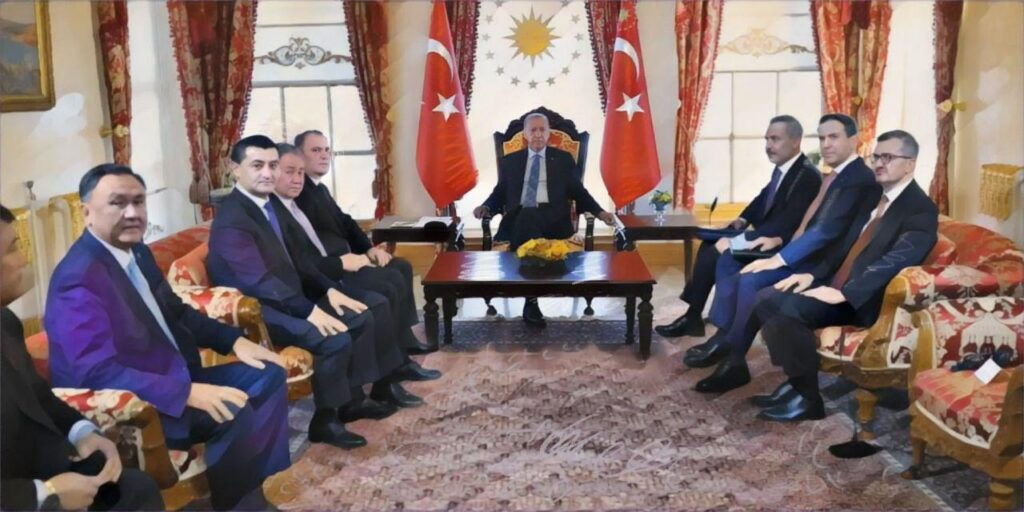
This is what gave the OTS foreign ministers’ meeting in Istanbul its significance. The Turkish Foreign Ministry announced on March 6 that the informal meeting of the OTS Council of Foreign Ministers would be held in Istanbul on March 7, with Foreign Minister Hakan Fidan hosting. After the meeting, the ministers adopted a joint statement declaring that threats to the security of any OTS member are a matter of concern for the whole organization. That language does not make the OTS a military alliance. It does, however, show the organization moving more openly into collective political-security signaling when member states come under attack.

Why Nakhchivan Matters

Nakhchivan is central to the logic of this story. The exclave is an integral part of Azerbaijan, but is separated from the rest of the country. It borders Armenia, Iran, and Turkey, making it significant out of proportion to its size. A military strike there is not a routine border incident. It reaches one of the most sensitive nodes in the wider Turkic political space: it is a meeting point for Azerbaijani sovereignty, Turkish strategic concern, and Iranian proximity.

Until recently, Nakhchivan’s special status and borders were anchored in the 1921 Moscow and Kars treaties, which gave Turkey and Soviet Russia a formal say over the exclave’s autonomy and, it could be argued, its external security. But last year, Baku folded Nakhchivan more tightly into Azerbaijan’s domestic legal order by removing those references (along with other changes) from the constitution of the exclave, which has suddenly become a target in a much wider regional confrontation.

Baku’s response to the Iranian attack showed that it saw the incident in political as well as tactical terms. President Ilham Aliyev said Azerbaijan would prepare retaliatory measures. Reuters later reported that Azerbaijan had ordered the evacuation of its diplomats from Iran, citing safety concerns. This is understandable, particularly in light of the January 27, 2023, incident when an armed attacker entered Azerbaijan’s embassy in Tehran and opened fire, killing the head of the embassy’s security and wounding two other staff. Baku called this a terrorist attack, evacuated most of its diplomatic personnel, and suspended embassy operations. Azerbaijani officials also said the March 5 attack on Nakhchivan violated international law, rejecting any implication that it could have been a technical mishap.

The stakes widened further after that. On March 7, Azerbaijan said that it had foiled several sabotage plots linked to Iran’s Islamic Revolutionary Guard Corps (hardly being the first of their kind), including an alleged plan to attack the Baku-Tbilisi-Ceyhan (BTC) pipeline, which was, according to one Indian report, subsequently attacked by a drone in Georgia. Reuters reported that other targets in Azerbaijan included the Israeli embassy, an Ashkenazi Jewish synagogue, and a leader of Azerbaijan’s Mountain Jews community. Beyond this, once infrastructure such as the BTC enters the picture, questions arise concerning corridor security, energy transit, and regional economic exposure.

What the OTS Response Means

Central Asia enters the story more clearly with that in mind. No Central Asian OTS member was directly struck. But the March 7 joint statement said that threats to any OTS member’s security concern the entire organization. It warned that continued hostilities could disrupt trade routes, energy markets, food security, and migratory flows. Central Asia’s exposure to threat is not directly from military engagement but indirectly through OTS member-state security, regional stability, and the wider consequences of conflict.

The OTS secretariat, for its part, moved quickly. On March 5, the secretary general condemned the UAV attacks on civilian facilities in Nakhchivan, saying they had been carried out from the territory of Iran. He also called for restraint and for avoiding further deterioration in the regional situation. The OTS’s own institutional center thus already elevated the issue beyond bilateral diplomacy before the ministers assembled in Istanbul. It necessarily became an OTS matter, not just a Baku–Tehran confrontation.

The ministers’ joint statement on March 7 gave that instinct a clearer political form. The text declared that any threats to the security of member states concern the entire organization. It condemned attacks targeting Turkey and Nakhchivan, including civilian facilities, and it expressed support for the sovereignty, territorial integrity, and security of Turkey and Azerbaijan. These formulations create a collective political frame for what might otherwise have remained two separate national incidents. They show that the OTS is willing to speak in the language of solidarity when violence reaches one of its members.

At the same time, the ministers emphasized restraint, diplomacy, and a return to negotiations. The OTS did not evoke a military response but answered by widening the political scope of the problem. This is still an institutional development worth noting. The organization is not becoming like NATO, but it is becoming more explicit about the security implications of regional instability for its member states.

The Next Test

That brings Central Asia onto the stage. The March 7 statement does not create any formal security obligations for the Central Asian states, but it does establish a precedent. If threats to one member’s security concern the whole organization, then future crises involving transport corridors, border violence, or attacks on critical infrastructure will be harder to treat as purely local matters. The expectation of organization-wide consultation has now been created.

The immediate question is whether the Iran-related incidents stop here or widen further. Turkey’s missile episode and Nakhchivan’s drone strike may still prove to be limited spillover events rather than the beginning of a sustained pattern. How quickly a new Supreme Leader is selected in Iran will make a difference here. But the institutional threshold has already shifted: The OTS has publicly stated, during ongoing military hostilities, that member-state security concerns are collective concerns. That statement will outlast the news cycle.

For that reason, the most important result of the Istanbul meeting may not be any operational step taken today. It may be that the OTS has defined its own political horizon somewhat more broadly than before. The organization now finds itself speaking about attacks, sovereignty, corridor vulnerability, and regional instability in one connected register. The next test will show whether that language remains episodic solidarity or develops into more regular coordination from Turkey to Central Asia.

From Fairy Tales to Oxford: The Academic Path of Meruyert Bizhanova

Education can change the course of a person’s life, shaping dreams and opening new horizons. The story of Meruyert Bizhanova, a young scholar from Kazakhstan who entered a doctoral program at the University of Oxford at the age of 24, is a striking example of how curiosity, determination, and mentorship can lead to remarkable achievements.

A Passion for Learning from an Early Age

Bizhanova’s love for learning began in early childhood. She recalls that by the time she was five years old, she had already read every fairy tale available in her school library. Reading stories and writing short narratives fascinated her, and books soon became her closest companions.

Her academic development later flourished at Nazarbayev University, where supportive professors encouraged her intellectual curiosity and motivated her to pursue opportunities abroad. She particularly acknowledges the influence of mentors such as Vice-Provost Loretta O’Donnell and professors Tursonjan Tokay, Thomas Duke, Warren Rocco, and Marilyn Plumlee. According to Bizhanova, these mentors taught her the importance of discipline, dedication, and sincerity in academic work.

Graduate Studies in the United States

After completing her undergraduate education, Bizhanova decided to continue her academic journey internationally. She chose the University of Pennsylvania for her master’s studies, aiming to gain globally recognized academic training and deepen her research in the field of higher education.

The University of Pennsylvania is widely known for its strong academic tradition in higher education policy and leadership, which closely aligns with her research interests. During her master’s program in educational leadership, Bizhanova studied international education policy, governance of higher education systems, research methodology, and leadership strategies.

Beyond classroom learning, the university provided opportunities for internships, research collaborations, professional networking, and career development. Studying at one of the world’s leading universities also gave her access to a global academic community and opened new professional possibilities.

Image: personal archive

Why Oxford?

For Bizhanova, the University of Oxford had long symbolized academic excellence. From childhood, she had heard of it as one of the most prestigious universities in the world. Admission to Oxford’s doctoral programs is highly competitive, and thousands of candidates apply each year, but only a small number are admitted. For example, the DPhil in Education, which Bizhanova is studying for, has approximately 200 applications per year, out of which around 38 students are selected. 

Being accepted into Oxford’s doctoral program, Bizhanova says, is both an honor and a responsibility. When considering where to pursue her PhD, she realized that several Oxford scholars were conducting research closely related to her own academic interests. Her professors at the University of Pennsylvania were also familiar with these scholars and encouraged her to apply, recognizing Oxford as one of the leading centers for research on higher education.

Researching the Future of Universities

Bizhanova’s doctoral research focuses on universities in post-Soviet countries and how they attempt to balance teaching responsibilities with the development of scientific research. Many universities in this region inherited complex institutional traditions and governance structures from the Soviet era. Today, however, they face increasing pressure to meet international standards for research universities while maintaining high-quality teaching.

Her research investigates the institutional, cultural, and historical factors that influence this transformation. It also explores the strategies universities use to overcome these challenges, as well as the role of public policy, funding mechanisms, and academic culture. The goal of her work is to propose practical recommendations that could help universities in the region build sustainable research ecosystems and strengthen academic excellence.

The Oxford Research Environment

According to Bizhanova, one of the greatest advantages of studying at Oxford is the opportunity to work with globally recognized scholars. Professors at the university are leading experts in their respective fields and actively contribute to the development of new academic ideas and methodologies. While they maintain high expectations and rigorous academic standards, they also provide valuable guidance to doctoral students.

Bizhanova notes that the intellectual environment at Oxford is both challenging and highly supportive.

Learning in a Global Community

Oxford’s international academic environment allows Bizhanova to interact with researchers from different countries and academic traditions. These exchanges broaden her perspective and expose her to diverse research approaches and methodologies.

Her research also examines the challenges faced by research universities in Central Asia, particularly within the post-Soviet context. She studies how historical legacies affect universities’ research capacity and explores strategies that could strengthen academic development across the region.

Image: personal archive

Applying Knowledge at Home

Despite her international academic experience, Bizhanova emphasizes her commitment to contributing to the development of higher education in Kazakhstan.

She hopes that the knowledge and experience she gains abroad will help universities in Kazakhstan and neighboring countries transition toward stronger research-oriented models. Traditionally, many universities in the region have focused primarily on teaching. Today, however, they must also expand their research missions and play a more active role in society.

Bizhanova’s research aims to help institutions integrate research into their central mission, improve academic quality, and establish sustainable research systems.

Looking Ahead

Bizhanova believes that Kazakhstan’s education system is progressing in the right direction. Students are increasingly receiving high-quality training and developing strong English-language skills, allowing them to participate more actively in the global academic community.

At the same time, she stresses the importance of providing greater support, both financial and institutional, for young researchers.

“The future of science depends on investing in the next generation,” she says.

Bizhanova’s academic journey from a young girl captivated by fairy tales to a doctoral researcher at Oxford illustrates the transformative power of education and the growing global presence of scholars from Kazakhstan.

On International Women’s Day, Shakhnoza Mirziyoyeva Names Uzbekistan’s Female Athletes an “Inspiration”

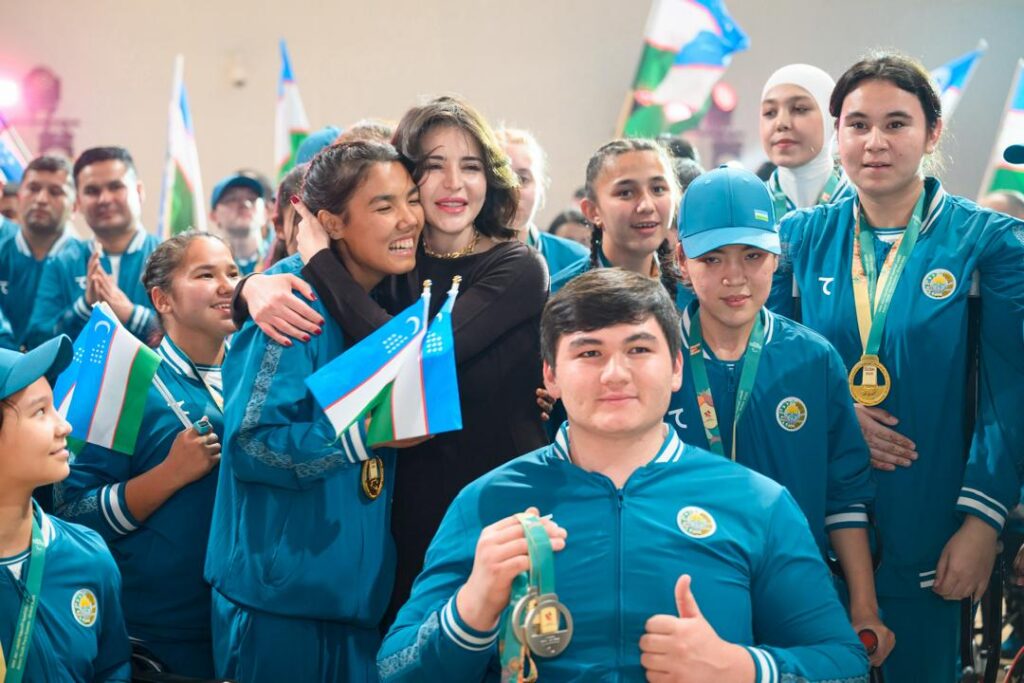
For International Women’s Day on 8 March, Shakhnoza Mirziyoyeva, First Deputy Director of Uzbekistan’s National Agency for Social Protection, has shared comments with The Times of Central Asia in which she gives particular praise to the country’s sportswomen.

Mirziyoyeva said: “As we celebrate International Women’s Day, I would like to praise Uzbekistan’s female athletes for inspiring more girls and women and giving them the confidence to pursue their dreams.”

Fitness and active pursuits are increasingly at the forefront of government policy, as the country’s Soglom inson – soglom millat (“Healthy Person, Healthy Nation”) initiative – introduced by Mirziyoyeva’s father, President Shavkat Mirziyoyev – gains momentum.

Mirziyoyeva added that sport enables women and girls to become leaders, namechecking Olympic gold medalist judoka Diyora Keldiyorova and taekwondo athlete Svetlana Osipova among those who promote active lifestyles.

Mirziyoyeva was involved in establishing the Association of Adaptive Sports in Uzbekistan – a platform to unify and develop Uzbek parasports, and create opportunities for athletes with disabilities. She is First Deputy Chairperson of Uzbekistan’s Paralympic Committee, whose athletes are currently competing at the 2026 Paralympic Winter Games Milano Cortina.

“To the female athletes currently competing in Milano Cortina, your perseverance is an inspiration to us all,” her message to The Times of Central Asia continues, mentioning long-jumper Asila Mirzayorova and taekwondo athlete Guljonoy Naimova as Uzbek competitors carrying the country’s hopes at the Paralympics.

“May your performances in Italy continue to build a legacy of inclusion and excellence that inspires generations to come – not only in Uzbekistan, but around the world.”

Shakhnoza Mirziyoyeva’s message comes at the start of a standout year for Uzbek sports. The country’s football team will make its first appearance at a FIFA World Cup at the tournament in North America this summer. Samarkand will host the World Triathlon Championship Series on 25-26 April, then the 46th Chess Olympiad in September. The World Aquatics Swimming World Cup comes to Tashkent in October.

Kazakhstan Says Iranian President’s Statement is Step to Easing Mideast Tensions

Kazakhstan has welcomed a statement by Iranian President Masoud Pezeshkian about ending Iranian missile and drone attacks on neighboring countries, though some Gulf Arab states reported continuing attacks on Saturday.

President Kassym-Jomart Tokayev of Kazakhstan noted the statement by Pezeshkian, “who conveyed the decision of the Interim Governing Council to renounce attacks on neighboring countries,” said Aibek Smadiyarov, spokesman for Kazakhstan’s presidency.

Tokayev “considers this an important step aimed at easing tensions in the Middle East,” Smadiyarov said.

In a video message, Pezeshkian apologized “on my own behalf” for Iranian attacks on neighboring countries, including Azerbaijan, where two drones struck near an airport and a school. The Iranian president said Iran should not attack those countries unless they attack Iran.

Iran has been governed by an interim council since Supreme Leader Ali Hosseini Khamenei was killed in an air strike at the start of the war a week ago. U.S. and Israeli forces have kept up intense bombardments since then and President Donald Trump is demanding that the Iranian government unconditionally surrender. Pezeshkian rejected Trump’s demand in his message on Saturday.

Azerbaijan Orders its Diplomats to Leave Iran after Drone Attacks

Azerbaijan said on Friday that it is evacuating staff from its embassy in Tehran as well as its consulate in the Iranian city of Tabriz, one day after accusing Iran of drone attacks on its territory.

Azerbaijani Foreign Minister Jeyhun Bayramov said an order has been issued to evacuate the diplomatic missions in Iran because of safety concerns, the state news agency Azertac reported. Bayramov spoke at a briefing in Baku with Moldovan counterpart Mihai Popşoi.

Azerbaijan has also submitted a report to the International Civil Aviation Organization, a United Nations body, about the attack on the airport in the exclave of Nakhchivan, according to another outlet, the Azerbaijani Press Agency, or APA.

Another Iranian drone landed near a school in Nakhchivan. Several civilians were injured in the attacks. Iran has told Azerbaijan that it is investigating.

While the Azerbaijani military is on high alert, the government said social media reports that it had deployed heavy weapons along the border with Iran were false. Also, some cargo trucks are now crossing the border between Azerbaijan and Iran after a suspension because of the drone attacks.

Azerbaijan has thanked dozens of countries, including some in Central Asia, for expressions of support following the attacks.