• KGS/USD = 0.01144 0%
  • KZT/USD = 0.00192 -0%
  • TJS/USD = 0.10879 0.28%
  • UZS/USD = 0.00008 0%
  • TMT/USD = 0.28490 -0.28%
  • KGS/USD = 0.01144 0%
  • KZT/USD = 0.00192 -0%
  • TJS/USD = 0.10879 0.28%
  • UZS/USD = 0.00008 0%
  • TMT/USD = 0.28490 -0.28%
  • KGS/USD = 0.01144 0%
  • KZT/USD = 0.00192 -0%
  • TJS/USD = 0.10879 0.28%
  • UZS/USD = 0.00008 0%
  • TMT/USD = 0.28490 -0.28%
  • KGS/USD = 0.01144 0%
  • KZT/USD = 0.00192 -0%
  • TJS/USD = 0.10879 0.28%
  • UZS/USD = 0.00008 0%
  • TMT/USD = 0.28490 -0.28%
  • KGS/USD = 0.01144 0%
  • KZT/USD = 0.00192 -0%
  • TJS/USD = 0.10879 0.28%
  • UZS/USD = 0.00008 0%
  • TMT/USD = 0.28490 -0.28%
  • KGS/USD = 0.01144 0%
  • KZT/USD = 0.00192 -0%
  • TJS/USD = 0.10879 0.28%
  • UZS/USD = 0.00008 0%
  • TMT/USD = 0.28490 -0.28%
  • KGS/USD = 0.01144 0%
  • KZT/USD = 0.00192 -0%
  • TJS/USD = 0.10879 0.28%
  • UZS/USD = 0.00008 0%
  • TMT/USD = 0.28490 -0.28%
  • KGS/USD = 0.01144 0%
  • KZT/USD = 0.00192 -0%
  • TJS/USD = 0.10879 0.28%
  • UZS/USD = 0.00008 0%
  • TMT/USD = 0.28490 -0.28%
12 December 2025

Tajikistan Launches Program to Reintegrate Convicted Extremists into Society

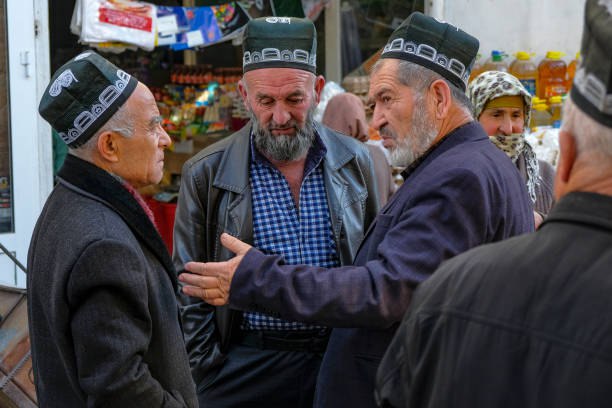
Tajik authorities have launched a state-backed program aimed at reintegrating citizens convicted of extremism and terrorism into peaceful civilian life. The initiative, which will run from 2025 to 2029, seeks to reduce the likelihood of re-engagement with radical movements and support the return of these individuals to society.

New State Initiative: Goals and Budget

According to official documents, the program is set to receive 38.5 million Tajikistani somoni (approximately $3.6 million) in funding. Nearly half of the funds will come from the state budget, with the remainder provided through international grants and extra-budgetary sources.

The initiative includes a comprehensive set of measures: physical and psychological rehabilitation, vocational training, employment support, and involvement in patriotic and cultural activities. These components are designed to assist former prisoners in adjusting to life outside correctional facilities. Upon release, participants will be closely monitored to prevent any return to extremist ideologies.

Implementation and oversight will be managed by local authorities and specialized agencies under the Ministry of Justice, which is tasked with submitting regular progress reports to the government.

Understanding Pathways to Radicalization

The drivers of radicalization in Central Asia are complex and multifaceted. Rustam Azizi, a specialist in countering violent extremism, told Asia-Plus that economic hardship alone does not account for why some individuals are drawn to extremist groups such as ISIS, Ansarullah, or the Taliban.

“Economic difficulty doesn’t automatically lead to radicalization, other negative outcomes like crime or social withdrawal are also possible,” Azizi explained. “Moreover, real-life cases show that not all recruits come from impoverished backgrounds.”

Migration, while often discussed as a risk factor, does not directly cause radicalization, according to Azizi. Rather, it can create an environment where individuals are more exposed to recruitment efforts, particularly among youths aged 18 to 26. Azizi identifies three main categories of individuals most susceptible to radicalization:

1. Identity crisis: Often from secular, modernized, or mixed-background families, these individuals turn to religion as a way to find belonging, purpose, or self-worth. Frequently recent converts or newly observant Muslims, they may express a sentiment such as: “I may not be a good Tajik, but I am a very good Muslim.”

2. Individuals with criminal tendencies: For this group, terrorist organizations offer a platform to continue illicit activities under the cover of religious struggle. Notable examples include Abu Khalid Kulobi (Nusrat Nazarov) and Abu Usama Noraki (Tojiddin Nazarov), both of whom were involved in drug trafficking before joining ISIS.

3. Marginalized citizens: Representing the largest group, these individuals often come from remote areas and have limited access to education and economic opportunity. Lacking formal religious training, they are especially susceptible to simplistic, binary religious narratives—such as Muslims versus infidels, halal versus haram, jihad versus martyrdom—and are particularly vulnerable to recruitment.

It is this demographic that the new government program primarily targets, with an emphasis on prevention, education, and structured support after incarceration. Authorities believe these efforts will promote national stability and help curb the threat posed by radical movements.

Kyrgyzstan’s UN Mission Opens Environmental Art Exhibition in New York

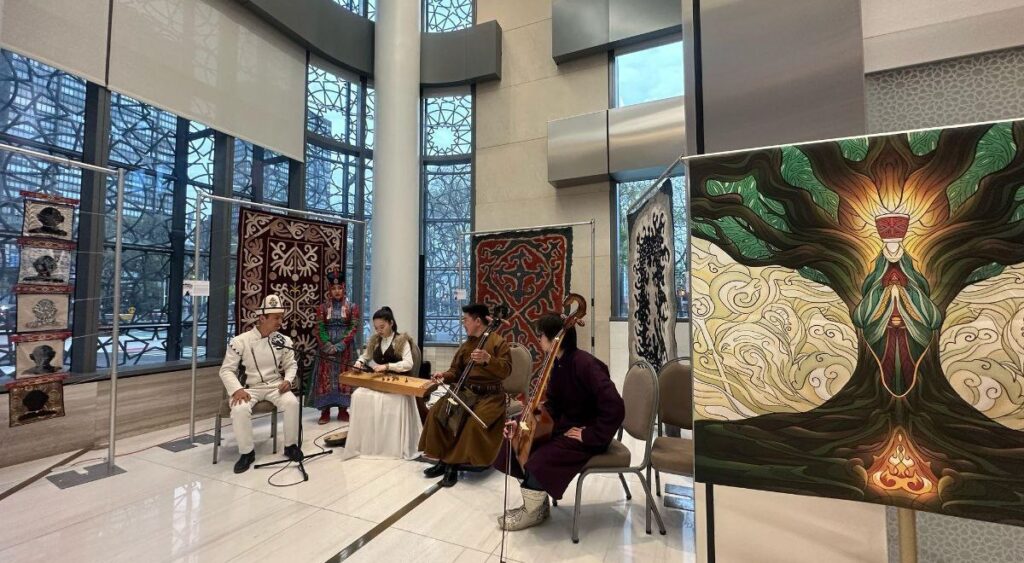
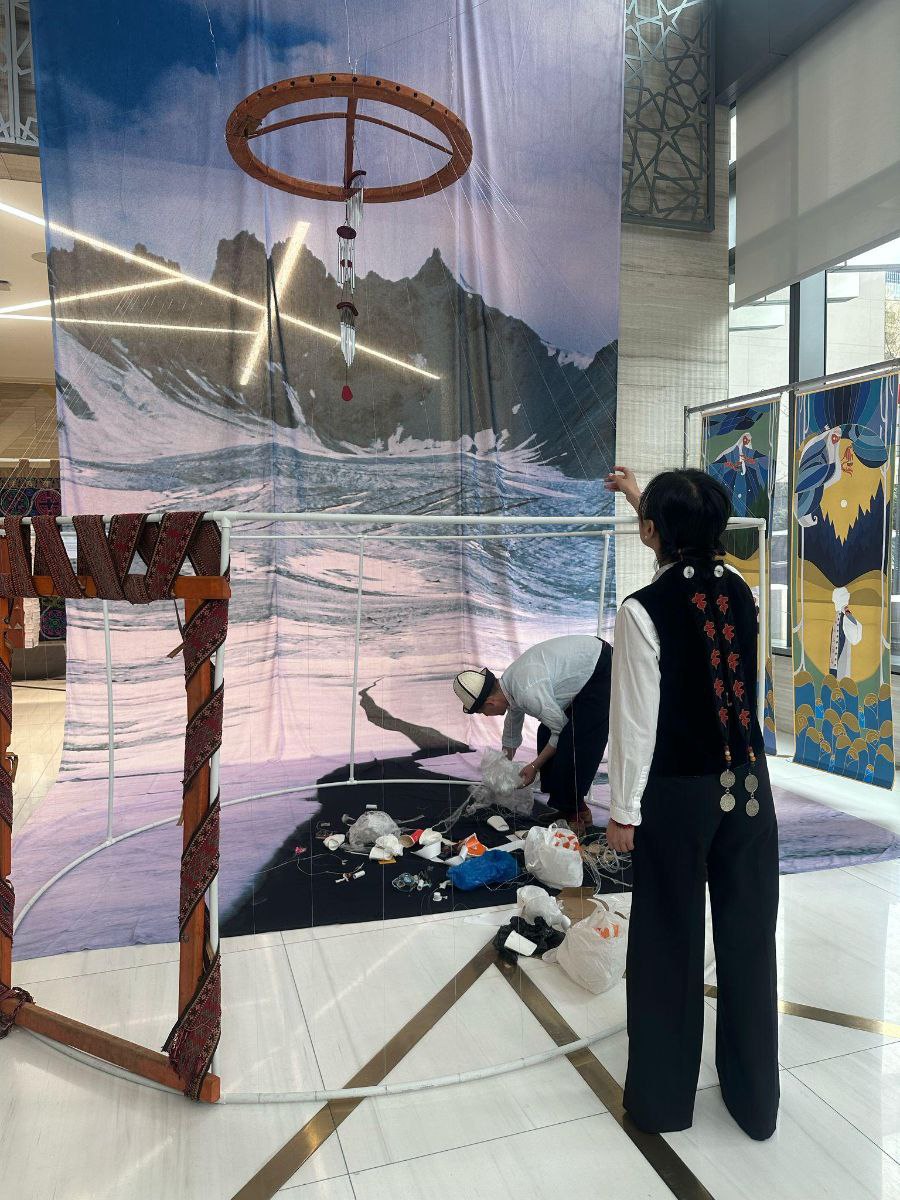
In honor of International Mother Earth Day, the Permanent Mission of the Kyrgyz Republic to the United Nations has opened an art exhibition in New York, highlighting the planet’s environmental challenges.

The exhibition features works by young Kyrgyz artists that explore the intricate relationship between climate change, human development, and the natural world. Through a mix of paintings and installations, the artists aim to emphasize the environmental threats affecting global stability.

@mfa.gov.kg

Speaking at the opening, Aida Kasymalieva, Kyrgyzstan’s Permanent Representative to the UN, underscored the urgent need for intergenerational dialogue and collective responsibility in tackling environmental degradation. “Humanity must realize its shared duty to nature and future generations,” she said, calling for stronger efforts to reduce pollution, curb biodiversity loss, and increase funding for green initiatives.

“This exhibition supports the Kyrgyz Republic’s broader commitment to environmental sustainability both nationally and internationally,” the Kyrgyz Foreign Ministry stated in a press release. “Kyrgyzstan is actively implementing programs to preserve mountain ecosystems, protect biodiversity, and transition to a green economy.”

@mfa.gov.kg

Kyrgyzstan has long sought to draw international attention to the unique vulnerabilities of mountain regions. Since the early 2000s, the country has positioned itself as a global advocate for highland communities, particularly in the context of climate resilience and sustainable development.

Tokayev Warns of Rising Extremism and Erosion of Global Norms at Assembly Speech

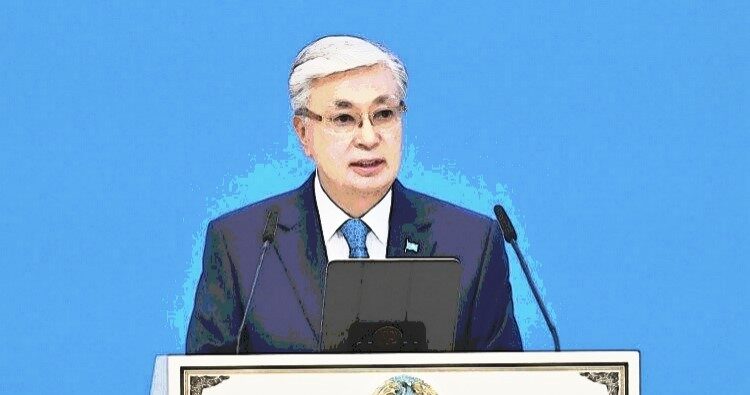
President Kassym-Jomart Tokayev has warned of a global resurgence of extremist ideologies and populist rhetoric, citing a crisis of confidence that has weakened international law and institutions. Speaking at the 34th session of the Assembly of the People of Kazakhstan (APK), Tokayev addressed both foreign and domestic challenges facing the country, while emphasizing the importance of national unity and interethnic harmony.

“We have become a more modern and advanced society. This evolution places new demands on our model of social harmony. Methods that worked yesterday may no longer be applicable today,” Tokayev said in his address, urging a critical review of past achievements and failures to avoid regression.

Highlighting Kazakhstan’s foundational principles, Tokayev reaffirmed that “consent, tolerance, and friendship” are not mere slogans but integral to daily life. “The politicization of interethnic and interfaith relations is unacceptable. The state guarantees justice and equal opportunity for all citizens, regardless of ethnicity, religion, or social status,” he stressed.

He also condemned attempts to impose language norms in personal and public communication. “Everyone is equal before the law. We will decisively suppress any provocation aimed at undermining interethnic harmony, no matter the source,” Tokayev stated. He accused some foreign-funded organizations, bloggers, and former citizens living abroad of deliberately inciting discord under the guise of promoting human rights and freedom of speech.

According to Tokayev, recent revelations concerning the operations of some foreign NGOs exposed their “cynicism, greed, and indifference” to Kazakhstan’s welfare.

On foreign policy, Tokayev reaffirmed Kazakhstan’s strategic alliance with Russia and historical ties with China. He expressed concern over the global retreat into extremism and the weakening of key institutions. “There is a return to extremist ideologies and populism, a surge in radical rhetoric, and an erosion of international law. In this context, Kazakhstan continues to advocate for adherence to and reform of the UN Charter,” he said.

Tokayev stressed the need for global unity, compromise, and mutual understanding to prevent chaos. “For some, ethnic diversity may be a source of risk and mistrust. For us, it is a national asset and strategic advantage,” he said. “Unity, dialogue, mutual trust, and civic responsibility are essential pillars for the sustainable progress of our nation.”

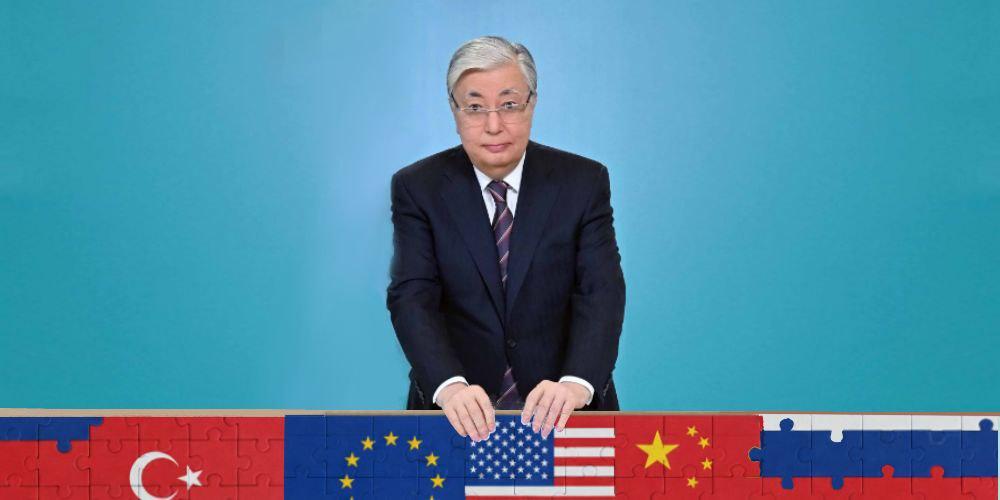
How Tokayev’s Kazakhstan Bridges Global Powers

Amid the ongoing reshaping of the global order, Kazakhstan is seeking to enhance its role as an emerging middle power. Preserving strong relations with all key geopolitical actors, strengthening its position as a de facto leader in Central Asia, and developing closer ties with other influential states on the world stage appear to be Astana’s top foreign policy priorities.

The largest Central Asian state is one of the few countries that maintains good relations with geopolitical rivals such as China and the United States, as well as Russia and the European Union. At the same time, Astana is actively developing closer ties with the Turkey-led Organization of Turkic States, while firmly upholding its longstanding commitment to international law.

It is, therefore, no surprise that, during the recently held EU- Central Asia summit in Samarkand, Kazakhstan, along with Turkmenistan and Uzbekistan, backed two UN resolution from the 1980s that reject the unilaterally-declared independence of the Turkish Republic of Northern Cyprus and deem all secessionist actions there legally invalid. Such a policy perfectly aligns with Kazakhstan President’s Kassym-Jomart Tokayev’s 2022 statement, in which he affirmed Astana’s non-recognition of Taiwan, Kosovo, South Ossetia, or Abkhazia, and the entities he described as quasi-states, namely Luhansk and Donetsk.

“In general, it has been calculated that if the right of nations to self-determination is actually realized throughout the globe, then instead of the 193 states that are now members of the UN, more than 500 or 600 states will emerge on Earth. Of course, it will be chaos,” Tokayev stressed.

In other words, Kazakhstan upholds the principle of territorial integrity for all UN-member states, a stance similar to China’s policy. Despite their history of often supporting the right to self-determination over the principle of territorial integrity, Russia and the West do not seem to oppose Tokayev’s approach.

As a result, the President of Kazakhstan remains one of the few world leaders who can attend the May 9 Victory Day parade in Moscow, regularly meet with EU officials, and participate in China-led initiatives. As the first Central Asian leader to speak with newly elected U.S. President Donald Trump in December 2024, Tokayev is also signaling his intention to deepen relations with the United States.

All these actions demonstrate that, for Kazakhstan under Tokayev, the well-known multi-vector foreign policy remains without an alternative at this point. Although it is Nursultan Nazarbayev, Kazakhstan’s first president, who initiated this approach, it is Tokayev who has been actively implementing it since he came to power in 2019. That, however, does not mean that “multivectorism” has become Astana’s official ideology. It is rather a tool the energy-rich nation’s policymakers are using to improve their country’s position in the international arena.

Nowhere is that more obvious than at the Astana International Forum – an annual summit taking place in Kazakhstan’s capital – where leaders from diverse countries, often with differing goals and values, come together to discuss global challenges, foster dialogue, and seek common ground. The fact that this year Astana will host politicians from nations such as Albania, Croatia, and North Macedonia, suggests that Kazakhstan intends to place greater focus on the Balkans in its foreign policy.

Moreover, the presence of International Renewable Energy Agency (IRENA) Director-General Francesco La Camera, along with Mohamed Jameel Al Ramahi, CEO of the UAE-based green energy giant Masdar, indicates that the further development of the green energy corridor – linking Central Asia and Europe – will be among Astana’s top economic priorities. In parallel, Kazakhstan, supported by various European and international financial institutions, is expected to continue developing the Trans-Caspian International Transport Route, also known as the Middle Corridor – a route beginning in Southeast Asia, running through Kazakhstan, the Caspian Sea, Azerbaijan and Georgia, and on to Europe.

Since this project connects China and Europe via Kazakhstan, Astana is positioned to serve as a key transit country. As such, it is no surprise that the largest Central Asian state is seeking to expand economic cooperation with both Beijing and the EU. While Tokayev attended the EU- Central Asia summit in Uzbekistan this month, he is also expected to host the Central Asia-China summit later this year and participate in the Shanghai Cooperation Organization meeting.

Simultaneously, Kazakhstan remains a member of the Russian-led Eurasian Economic Union (EAEU) and has stated that the country does not intend to “blindly follow” Western sanctions against Russia if they harm Kazakhstan’s economy. The Kremlin undoubtedly appreciates such a policy, which is why Russian Prime Minister Mikhail Mishustin recently stressed that Moscow “sincerely values brotherly, good-neighborly, allied relations between Russia and Kazakhstan.”

As a very pragmatic leader, Tokayev, therefore, has managed to strike a careful balance between major world powers, securing Kazakhstan’s role in the transforming global order. He seems focused on advancing his country’s economic interests through a multilateral approach, without aligning too closely with any one geopolitical actor – whether it be Russia, China, the European Union, or the United States.

For now, this policy has proven successful. However, the ongoing trade war between China and the United States could pose a significant challenge for Astana. In the coming months and years, Kazakhstan, under Tokayev, will likely need to find a way to carefully navigate between China – its neighbor and the largest economic partner – and the United States, the world’s foremost superpower.

Altynai Osmo’s New Show in New York: Restoring Female Narratives

In the heart of Tribeca in New York, the Sapar Contemporary Art Gallery has launched a new exhibition, Beneath the Earth and Above the Clouds, which brings Central Asian narratives to the forefront.

This dual show – which runs until May 15, 2025 – features Altynai Osmo and Aya Shalkar, two artists who have been devoted to exploring female narratives in the region, and do this through works that are both steeped into tradition, and modern and vibrant at the same time.

The Times of Central Asia spoke with Altynai Osmo, a multimedia artist from Kyrgyzstan whose work weaves the threads of nomadic heritage with contemporary expression.

Born in Bishkek and nurtured by the serene shores of Lake Issyk-Kul, Osmo’s artistic journey is deeply rooted in the traditions of her homeland. A graduate of Central Saint Martins in London, she seamlessly blends mediums — textiles, metals, video, and installation — to explore themes of identity, matriarchy, and the evolving role of women in Central Asian societies.

Her works such as Blessing Yurt, a red fringed costume inspired by the Kyrgyz nomadic traditional dwelling, not only pay homage to ancestral practices but also challenges present-day socio-political narratives.

Speaking with TCA, Osmo reflects on the layers of meaning in her new series, her enduring engagement with mythology and matriarchy, and how her practice bridges personal memory and collective history.
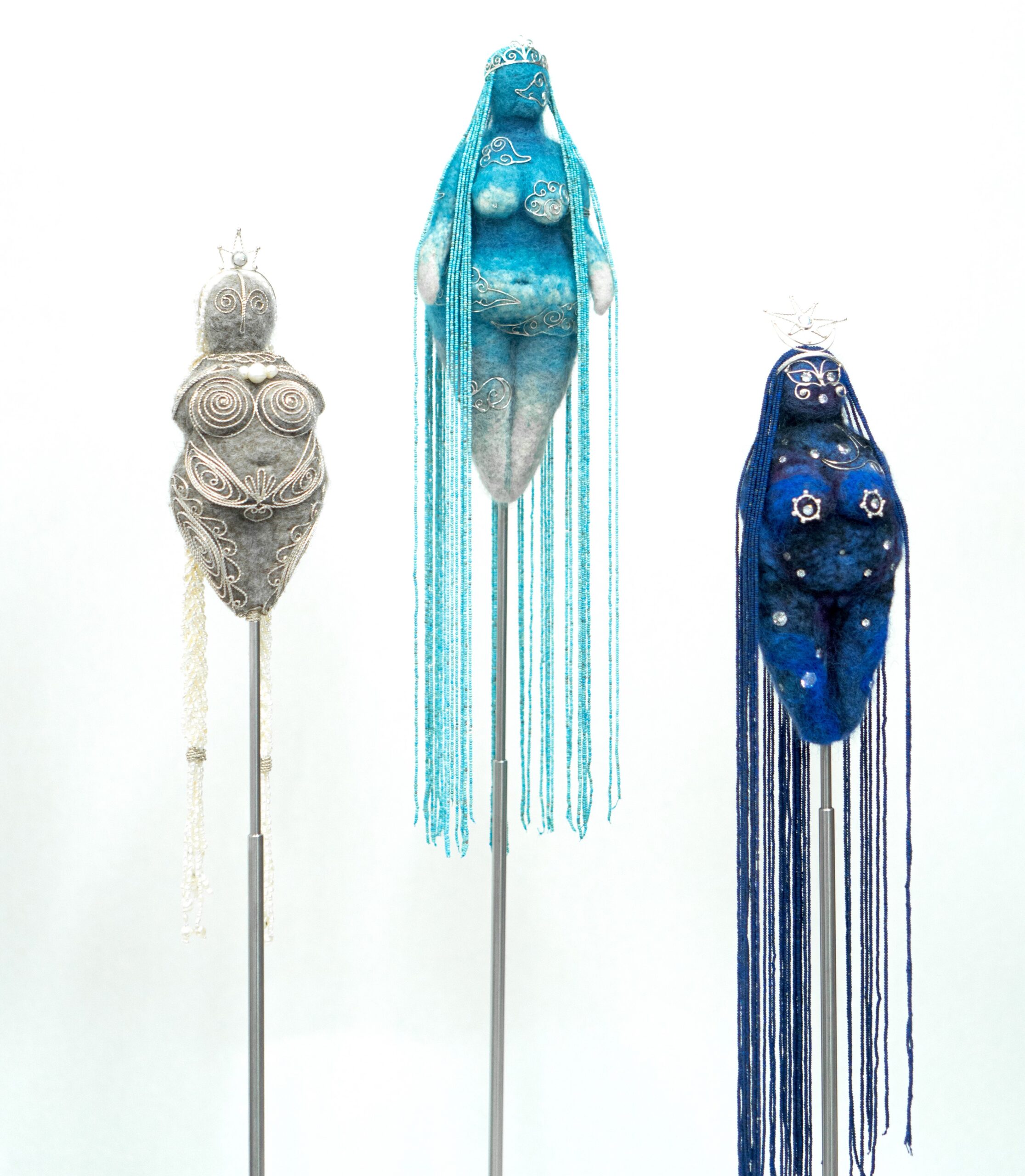
Image courtesy of Altynai Osmo/Sapar Contemporary Art Gallery

TCA: Can you tell me about how your previous practice led to this new series for the show?

My previous work has always involved exploring the intersections of feminine identity, cultural memory, and inherited spirituality in Central Asia, particularly in Kyrgyzstan. This new series evolved naturally from that foundation. It reflects a more layered and intentional engagement with Central Asian history, mythology and matriarchal histories — particularly the symbolic and spiritual dimensions that have often been erased, distorted and forgotten.

The materials and narratives I use now draw more explicitly from the Kyrgyz epic, Manas, ancestral craftsmanship, and belief systems like Tengrism, allowing me to express deeper reflections on women’s roles across time.

TCA: Your Kyrk Kyz series reinterprets the legendary warrior women of Central Asia. How does this mythology resonate with contemporary Kyrgyz identity and gender roles?

The Kyrk Kyz legend, with its origin in female strength and collective action, presents a striking contrast to the more patriarchal norms that dominate present-day Kyrgyz/Central Asian society. Revisiting these stories reminds us that women were once seen as the protectors of land, lineage, and cultural continuity. By reimagining these warriors through my art, I want to challenge modern gender expectations and inspire a reconnection to a more empowering view of womanhood that is already rooted in our collective past.

Image courtesy of Altynai Osmo/Sapar Contemporary Art Gallery

TCA: The use of felt in your masks ties your work to nomadic traditions. How does the choice of materials reinforce the themes of your work?

Felt is not just a material; it’s a carrier of memory and tradition. It’s historically linked to the lives of Kyrgyz nomadic women who created everything from boz ui — yurt covers — to shyrdak carpets, clothing, and saddlecloths. By working with felt, shyryk stitch embroidery, and meaningful oimo symbols found in heirloom shyrdaks, I’m paying homage to women’s labor and artistry while embedding stories of female resilience into the physical structure of my work. These materials allow me to bridge generations and honor women as masters, creators, and custodians of both culture and meaning.

TCA: The etymological link between “Kyrgyz” and “Kyrk Kyz” is intriguing. How do you see this linguistic history shaping national and cultural narratives?

This link is powerful; it positions women not just as participants in national history, but as its origin. By reviving the interpretation of Kyrgyz as Kyrk Kyz — “Forty Girls” — I hope to shift how we understand our nation’s beginnings. It encourages us to recognize matriarchal roots in our heritage and to reclaim stories that validate women as leaders, warriors, and originators, rather than passive figures shaped by male dominance.

Image courtesy of Altynai Osmo/Sapar Contemporary Art Gallery

TCA: Your depiction of Umai Ene connects fertility, motherhood, and protection. How does this figure challenge or affirm modern perceptions of womanhood in Central Asia?

Umai is a goddess of Earth and fertility in Tengrism. Rather than framing women solely through the lens of domesticity, she embodies sacred power — nurturer, protector, and cosmic force. In today’s context, this depiction is both affirming and confrontational. It validates roles traditionally assigned to women, like caregiving, but it elevates them to a divine status, demanding they be seen as sources of life and strength, not servitude or limitation.

TCA: Tengrism plays a role in your work. How do you balance spiritual heritage with contemporary artistic expression?

Tengrism offers a philosophical and spiritual foundation that I interpret through a contemporary lens. I’m not trying to recreate the past, but to bring ancient wisdom into dialogue with the present. This balance allows me to address both personal and societal aspects, reflecting the inner search for meaning alongside the collective need for harmony, equilibrium, and respect for nature and feminine energy. I try to express this through modern techniques, mixed media, and symbolic juxtapositions.

Image courtesy of Altynai Osmo/Sapar Contemporary Art Gallery

TCA: Your artworks explore dualities — earthly vs. divine, tradition vs. transformation. How do you navigate these contrasts in your creative process?

Rather than seeing these as binaries, I see them as layered realms that constantly inform one another. In my work, the earthly is divine, and tradition holds the seeds of transformation. I navigate these through symbolic layering — mixing ancient techniques with modern forms, myth with lived experience, feminine forms with cosmic symbols. This tension creates space for complexity and fluidity, reflecting how identity, especially female identity, cannot be confined to one plane or time.

TCA: Central Asian histories are often male-dominated. What does reclaiming female figures through your art mean to you?

By reclaiming figures, I’m not inventing new stories, I’m restoring often forgotten and overlooked ones. It’s about celebrating and honoring women, equity, and visibility. It’s an act of cultural repair, giving voice to the silenced and reviving ancestral memory. This reclamation also becomes deeply personal; it affirms my own presence and that of countless other women in cultural spaces where we’ve historically been pushed to be invisible.

In our Central Asian patriarchal society, and particularly in nomadic cultures, there is a longstanding tradition of remembering the names of seven fathers — a way of honoring our male ancestors. I have always questioned why there is no similar recognition and celebration of our female ancestors. In my art, it is deeply important for me to equally honor, remember, and celebrate our female ancestors — the foremothers who have profoundly shaped the world we live in today.

Image courtesy of Altynai Osmo/Sapar Contemporary Art Gallery

TCA: How does the political and cultural landscape of Kyrgyzstan influence your engagement with historical and spiritual themes?

The current cultural climate in Kyrgyzstan is marked by growing conservatism, gender inequality, and rising violence against women. In such a context, personally for me, exploring female-centered history and spirituality becomes an act of defiance. It’s not just art — it’s a form of resistance against the erasure of progressive, inclusive narratives. My work is shaped by this tension; it calls for reflection and reclamation at a time when women’s freedoms and rights are increasingly under threat.

TCA: Your work suggests that mythology still holds power today. Do you see it as a tool for activism?

Absolutely. Mythology is almost like a powerful cultural script. When we revisit these myths and reframe them through a feminist lens, we expose new possibilities for identity and belonging. Myth becomes a tool for reimagining the future by reconnecting to empowering pasts. It invites people to question dominant narratives and to find strength in stories that reflect their truth.

Image courtesy of Altynai Osmo/Sapar Contemporary Art Gallery

TCA: What role does personal memory play in your reconstructions of cultural history?

Personal memory is the thread that connects me to collective memory. My childhood, the upbringing and stories of my mother and grandmothers passed down through oral traditions, the indigenous Kyrgyz rituals embedded in everyday life, and the ordinary yet extraordinary women I’ve encountered — all inform how I interpret historical and spiritual symbols and narratives.

My great-grandmother Shakil, grandmothers Koken and Selkin, Nancy, Anne, and my mother Dinara have each played a deeply personal role in shaping my worldview — one that I continually explore and reconstruct through creative expression. By weaving personal memory into mythic and cultural histories, I make them intimate and alive, grounding collective pasts in emotional, lived experience.

TCA: Has engaging with your audience — locally or internationally — shifted your perspective on the themes you explore?

Definitely. International audiences often find universal resonance in these themes of reclaiming suppressed identities, of women reconnecting with power, of spiritual grounding. Meanwhile, local engagement reminds me of the urgency of this work, how vital it is for Kyrgyz women and communities to see their heritage reflected with pride and depth. These interactions constantly reshape my perspective and push my work in new directions.

TCA: What future projects are you working on that continue your exploration of myth and identity?

I have several ideas and projects ahead, but the one I’m most focused on is the research I’m conducting on the Kyrgyz epic of Manas. This is the most significant project I’m preparing to delve into in my art for the years to come. It’s about deepening my exploration of the symbolic spaces where history, myth, ecology, and cultural identity converge, continuing the journey of uncovering what is at risk of being forgotten.

Image courtesy of Altynai Osmo/Sapar Contemporary Art Gallery

Beneath the Earth and Above the Clouds, featuring the work of Altynai Osmo and Aya Shalkar, will be on display at the Sapar Contemporary Art Gallery New York until May 15, 2025.

Meloni Postpones Central Asia Trip After Pope Dies

Italian Prime Minister Giorgia Meloni has postponed a visit to Central Asia this week because of the death of Pope Francis.

The Italian news agency ANSA said Meloni’s trip to Kazakhstan and Uzbekistan was originally scheduled for Friday to Sunday but will be rescheduled.

Kazakhstan previously said Meloni would visit the country this coming weekend at the invitation of President Kassym-Jomart Tokayev and that Astana would host the first-ever Central Asia–Italy summit on Sunday.

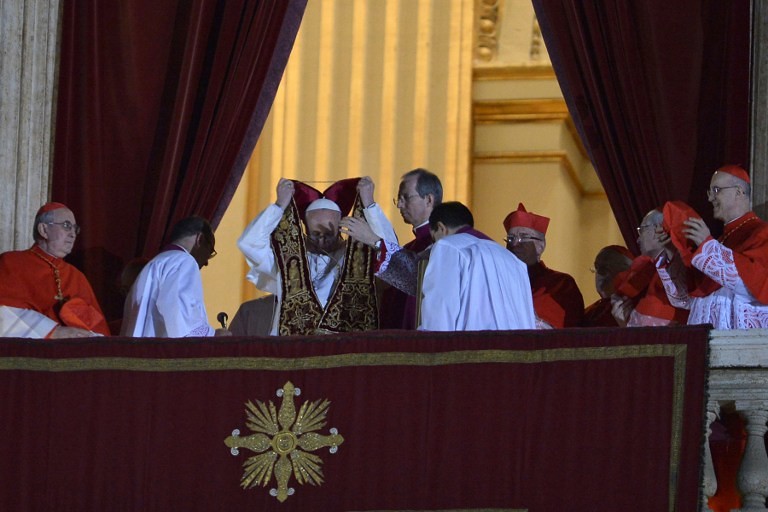
Francis died on Monday at age 88 and his funeral will be held on Saturday.