• KGS/USD = 0.01144 0%
  • KZT/USD = 0.00194 -0%
  • TJS/USD = 0.10834 -0.09%
  • UZS/USD = 0.00008 0%
  • TMT/USD = 0.28490 0%
  • KGS/USD = 0.01144 0%
  • KZT/USD = 0.00194 -0%
  • TJS/USD = 0.10834 -0.09%
  • UZS/USD = 0.00008 0%
  • TMT/USD = 0.28490 0%
  • KGS/USD = 0.01144 0%
  • KZT/USD = 0.00194 -0%
  • TJS/USD = 0.10834 -0.09%
  • UZS/USD = 0.00008 0%
  • TMT/USD = 0.28490 0%
  • KGS/USD = 0.01144 0%
  • KZT/USD = 0.00194 -0%
  • TJS/USD = 0.10834 -0.09%
  • UZS/USD = 0.00008 0%
  • TMT/USD = 0.28490 0%
  • KGS/USD = 0.01144 0%
  • KZT/USD = 0.00194 -0%
  • TJS/USD = 0.10834 -0.09%
  • UZS/USD = 0.00008 0%
  • TMT/USD = 0.28490 0%
  • KGS/USD = 0.01144 0%
  • KZT/USD = 0.00194 -0%
  • TJS/USD = 0.10834 -0.09%
  • UZS/USD = 0.00008 0%
  • TMT/USD = 0.28490 0%
  • KGS/USD = 0.01144 0%
  • KZT/USD = 0.00194 -0%
  • TJS/USD = 0.10834 -0.09%
  • UZS/USD = 0.00008 0%
  • TMT/USD = 0.28490 0%
  • KGS/USD = 0.01144 0%
  • KZT/USD = 0.00194 -0%
  • TJS/USD = 0.10834 -0.09%
  • UZS/USD = 0.00008 0%
  • TMT/USD = 0.28490 0%
10 December 2025

NASA’s Oldest Active Astronaut, Two Russian Cosmonauts, Land in Kazakhstan

Accompanied by two Russian cosmonauts, NASA astronaut Donald Pettit marked his 70th birthday on Sunday with a parachute-supported landing on the steppes of Kazakhstan after a journey back to Earth from the International Space Station.

A Soyuz MS-26 spacecraft carrying Pettit, as well as cosmonauts Alexey Ovchinin and Ivan Vagner, touched down at 6:20 a.m. local time southeast of Zhezkazgan, a city in Kazakhstan’s central Ulytau region. The three men had launched from the Russia-operated Baikonur Cosmodrome in Kazakhstan and docked at the station on Sept. 11 last year, spending a total of 220 days in space.

“Rehabilitation and a meeting with loved ones lie ahead!” Roscosmos, the Russian space agency, said on Telegram.

Photographs and video of the landing showed Pettit giving a thumbs-up as support team members carried him away from the spacecraft. Ovchinin and Vagner were shown wrapped in blankets and smiling broadly.

Pettit, Ovchinin and Vagner orbited the Earth 3,520 times and traveled 93.3 million miles during their mission, according to NASA.

It was Pettit’s fourth spaceflight and he has spent a total of 590 days in orbit. Ovchinin, also a four-time spaceflight traveler, has spent just five days longer than Pettit in space. Vagner has logged 416 days in space on his two trips.

While American John Glenn became the oldest person to go to space in 1998 at age 77, Pettit is NASA’s oldest active astronaut.

During his time on the space station, Pettit researched how to enhance in-orbit metal 3D printing capabilities, advance water sanitization technologies, explore plant growth under varying water conditions, and investigate fire behavior in microgravity, NASA said. His photography also attracted followers back on Earth.

“Mother Earth, I am coming home,” Pettit posted on X on Saturday.

Swiss Bank Investigated Over Ties to Central Asian Elites

Swiss bank Reyl, part of Intesa Sanpaolo Group, is under investigation by Switzerland’s financial regulator FINMA for allegedly failing to prevent money laundering and mishandling accounts belonging to high-risk clients, including relatives of prominent former Central Asian leaders. The investigation stems from confidential correspondence reviewed by the Organized Crime and Corruption Reporting Project (OCCRP) and Le Monde.

High-Risk Clients from Central Asia

Among the individuals named are the daughters of the former presidents of Uzbekistan and Kazakhstan. OCCRP also identified the bank’s connections with the son-in-law of a powerful Central Asian leader.

One such client is Lola Karimova, daughter of the late Uzbek president Islam Karimov, and her husband, Timur Tillyaev. The couple, known for their lavish lifestyle, relocated to Geneva by 2013. In 2012, Swiss regulators warned another financial institution, Fidurhône, that the couple posed a high compliance risk. By 2014, Fidurhône was instructed to sever ties with them after account balances surged to 190 million Swiss francs. The bank faced the threat of losing its license for non-compliance, and one partner was fined for failing to report suspicious transactions.

In 2020, Tillyaev’s company became a client of Reyl, which was followed by the opening of his personal account. By late 2023, one of these accounts held 83 million francs (approximately $97 million). In January 2024, FINMA requested full disclosure of all Reyl accounts linked to Uzbekistan, including Tillyaev’s. The bank stated it was re-evaluating its relationship with him due to reputational concerns amid renewed media focus on his sister-in-law, Gulnara Karimova.

The eldest daughter of Islam Karimov, Gulnara Karimova was once a prominent public figure in Uzbekistan, known for her ventures in business, fashion, and music under the name Googoosha. She also served in diplomatic roles. Her fall from grace began in 2014 with her house arrest, followed by a series of legal proceedings after her father’s death in 2016. In 2017, she was sentenced to nine years for corruption, which was later increased to over 13 years.

Kazakhstan Connection

Kazakhstan’s former president Nursultan Nazarbayev, who ruled for nearly three decades, oversaw the emergence of a wealthy inner circle. OCCRP has previously reported that he established private foundations controlling assets worth approximately $8 billion.

His daughter, Dinara Kulibayeva, moved to Switzerland in 2007 and entrusted Reyl with managing part of her wealth. For years, bank CEO François Reyl personally oversaw her accounts. However, in 2023, FINMA launched an inquiry into the origin of the large deposits in her accounts. In May 2024, the bank was ordered to provide comprehensive documentation on her financial holdings and those of her Luxembourg-based company, which had secured a €25 million loan from Reyl to purchase real estate in France.

The investigation was prompted by a suspicious activity report filed by Reyl and the opening of a criminal case in Switzerland. A lawyer representing Kulibayeva stated she had fully cooperated with authorities and that her wealth derives from shares in Halyk Bank, one of Kazakhstan’s largest financial institutions. The bank confirmed that her accounts were funded through dividend payments. Although her accounts were frozen in 2023, Swiss authorities permitted the release of 650,000 francs in May for personal expenses.

Dinara Kulibayeva and her husband, Timur Kulibayev, were ranked 673rd on Forbes‘ 2025 billionaire list, with an estimated net worth of $5.3 billion. They are the majority shareholders in Halyk Bank and hold substantial assets in Kazakhstan’s oil and gas sector.

Kyrgyzstan Establishes Ecological Corridor to Protect Snow Leopards and Biodiversity

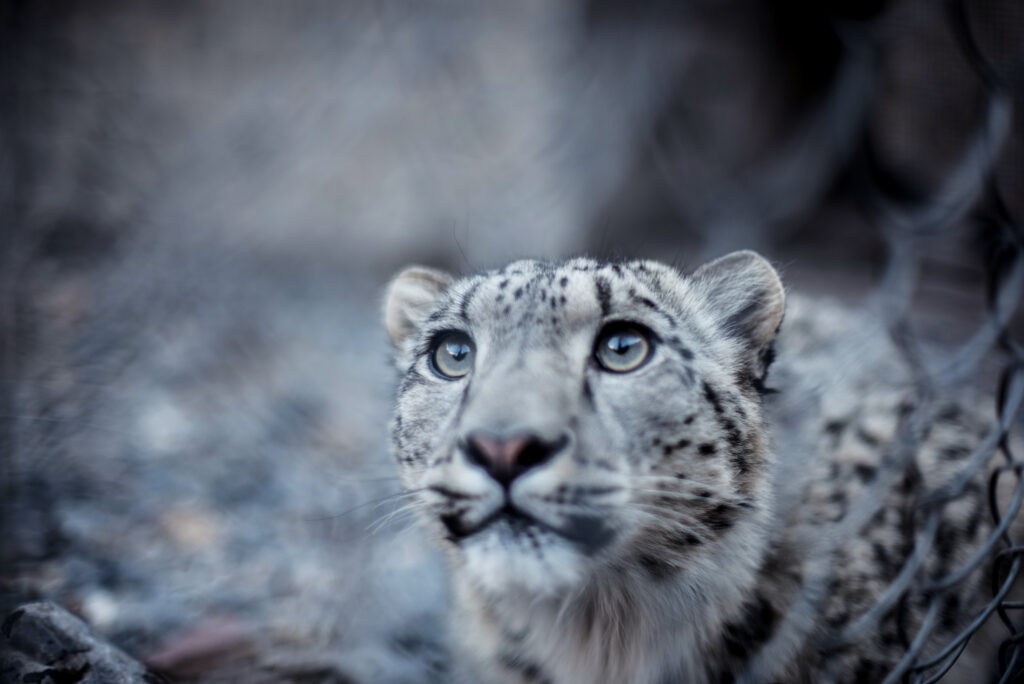
Kyrgyzstan has created the Ak Ilbirs (Snow Leopard) Ecological Corridor in the northeastern Issyk-Kul region, a major step in safeguarding rare wildlife and preserving the country’s rich biodiversity.

The corridor encompasses over 792,000 hectares, linking several protected areas: the Khan-Tengri State Nature Park, the Sarychat-Eertash Nature Reserve, and the Naryn Nature Reserve. It is designed to serve as a safe habitat for the snow leopard and other endangered species, while promoting the sustainable management of natural resources.

Image: mnr.gov.kg

Key Objectives

The Ak Ilbirs Ecological Corridor aims to:

  • Conserve wild animal populations, including the endangered snow leopard
  • Protect diverse ecosystems and their biological richness
  • Safeguard rare and threatened plant and animal species

To preserve the integrity of the corridor, strict prohibitions have been introduced. These include a ban on the introduction of non-native species, the use of pesticides, radioactive waste disposal, and any other activities that could harm the ecosystem.

At the same time, the corridor supports legal and environmentally responsible activities, such as scientific research, reforestation, forest management, and population regulation of certain wildlife species.

National and Global Significance

The initiative marks a significant advancement in Kyrgyzstan’s environmental policy. Notably, the corridor strengthens efforts to protect the snow leopard, a species regarded as an indicator of the stability and health of mountainous ecosystems.

In December 2023, President Sadyr Japarov signed a decree recognizing the snow leopard as a national symbol of the Kyrgyz Republic. The species is classified as rare or endangered across 12 countries.

Kyrgyzstan has also played a leading role in international snow leopard conservation. At the 79th session of the UN General Assembly, the country introduced the resolution establishing October 23 as International Snow Leopard Day, backed by other range states including Bhutan, China, India, Nepal, Mongolia, Kazakhstan, Pakistan, Russia, Tajikistan, and Uzbekistan.

According to the Population Assessment of the World’s Snow Leopards, conducted between 2020 and 2024 under the Global Snow Leopard and Ecosystem Protection Program (GSLEP), Kyrgyzstan is estimated to have an average snow leopard population of 285.

How Orthodox Christians Celebrate Easter in Central Asia and Around the World

In 2025, Orthodox Christians will celebrate Easter on April 20. This central event in the Orthodox liturgical calendar is marked with solemnity and joy across Orthodox-majority countries such as Russia, Belarus, Georgia, Bulgaria, Greece, Romania, and others. In Central Asia, Orthodox Christian communities also observe the holiday, maintaining centuries-old traditions despite being religious minorities.

Kazakhstan

On the night of April 20, Easter services will be held in all Orthodox churches across Kazakhstan. According to the Semirechensk Metropolitanate, the Holy Fire from Jerusalem will be brought to the Ascension Cathedral in Almaty, where Metropolitan Alexander will lead the liturgy and Easter procession. The service will begin at 23:30 and will be broadcast live on the Metropolitanate’s official YouTube channel. A ceremonial arrival of the Holy Fire is scheduled for 17:00 on Easter Sunday at the cathedral.

Uzbekistan

In Uzbekistan, the focal point of Easter celebrations is the Holy Dormition Cathedral in Tashkent. Each year, Metropolitan Vikenty of Tashkent and Uzbekistan brings the Holy Fire from Jerusalem. In 2024, he celebrated Easter Matins with Bishop Savvatiy of Bishkek and Kyrgyzstan. Earlier that year, Vikenty made another pilgrimage to the Holy Land to receive the flame.

Tajikistan

In Dushanbe, Easter is traditionally celebrated at St. Nicholas Cathedral. In 2024, dozens of worshipers, including members of the Russian diplomatic mission and the ambassador, attended the festive liturgy. Following the service, a traditional procession took place, and parishioners received blessings along with kulich (traditional Easter bread) and other Easter treats.

Turkmenistan

Turkmenistan is home to approximately 485,000 Orthodox Christians, around 9% of the population. The Russian Orthodox Church operates through 12 churches organized under a Patriarchal benefice. While official celebrations are relatively modest, traditional Easter practices are still observed, particularly in urban centers.

Russia

In Russia, Easter remains the most significant church holiday. Services begin on Saturday evening with a midnight vigil, followed by festive Matins and the Divine Liturgy. The faithful greet one another with “Christ is risen!” and respond “Truly risen!” In the morning, families gather around tables adorned with kulichi, paskha (a cheese dessert), and colored eggs, which are traditionally used for “egg battles.”

Easter Traditions Worldwide

Because Orthodox churches use the Julian calendar and most Western churches follow the Gregorian calendar, Easter dates typically differ. However, in 2025, both calendars align, and Easter will be celebrated on the same day. Traditions vary widely around the world.

In Poland, congregants bring willow branches and blessed food to churches, and festivities continue with “Wet Monday,” a water-splashing custom. Bulgarians dye eggs and enjoy family feasts. In Greece, fireworks mark the midnight celebration, and tables are filled with magiritsa soup and roast lamb.

In France and Germany, the Easter bunny and chocolate eggs dominate the holiday. Italians serve colomba cakes and lamb dishes, while the British favor hot cross buns and organize egg hunts. In Spain and Poland, dyed eggs are used for games and decoration.

In Australia, Easter is celebrated with countryside festivals and egg hunts. Sweden observes a four-day holiday beginning on Good Friday. While the Swedish celebration has largely secularized, the festive table still features eggs and traditional foods.

Across the globe, Easter serves as a celebration of renewal, unity, and hope, regardless of cultural or religious nuances.

Kyrgyzstan Launches $52 Million Environmental Initiative to Combat Natural Disasters

Kyrgyzstan has officially launched RESILAND CA+, a $52 million environmental initiative aimed at restoring degraded landscapes, reducing natural disaster risks, and strengthening regional cooperation in sustainable land management.

Funded primarily by the World Bank, the project targets key ecological threats across several regions, including Osh, Jalal-Abad, Naryn, and Issyk-Kul, with a particular focus on the Kara-Darya River Basin, an area highly vulnerable to mudflows.

According to the Kyrgyz Ministry of Emergency Situations, RESILAND CA+ seeks to mitigate the impact of mudflows, restore forests and soils, and build climate resilience across borders. Kyrgyzstan has recorded more than 900 mudflows over the past 12 years, posing a constant threat to lives and livelihoods, particularly in mountainous and riverine communities.

“This project opens a new chapter in combating land degradation and climate threats in Kyrgyzstan,” said Boobek Azhikeev, Minister of Emergency Situations. “We are not just restoring landscapes, we are protecting the future of our communities”.

The RESILAND CA+ program is financed through a combination of grants and credits from international development partners:

  • $45 million in credit from the International Development Association (IDA)
  • $5 million grant from the PROGREEN global partnership
  • $2.4 million grant from the Korea-World Bank Partnership Facility (KWPF)

Tatiana Proskuryakova, the World Bank’s Regional Director for Central Asia, stressed the broader impact of the initiative: “RESILAND CA+ is not just about the environment, it’s an investment in people’s safety, in the economy, and in international partnerships. Restoring nature helps us prevent future disasters”.

Set to run through 2029, the program is part of a larger Central Asian strategy to manage transboundary landscapes and natural resources collaboratively.

Kazakhstan Proposes Mandatory Home Insurance Against Natural Disasters

Kazakhstan’s Agency for Regulation and Development of the Financial Market (ARDF) has introduced a draft law that would mandate insurance for residential properties against natural disasters. The proposed legislation, now available for public review on the “Open NPAs” portal, aims to establish a nationwide system of financial protection in the event of earthquakes, floods, and wildfires.

A Response to Widespread Risk

According to UNICEF, roughly 75% of Kazakhstan’s territory is vulnerable to natural hazards, yet only 3.2% of the country’s housing stock is currently insured. In Almaty, Kazakhstan’s largest city and a high-risk seismic zone, coverage reaches just 7.7%.

The ARDF argues that compulsory insurance would help reduce fiscal pressure on the state by ensuring that regions most exposed to natural disasters have a legal safety net. The proposed policy would be regionally tiered based on risk level and priced between 1,000 and 20,000 KZT ($2 to $40) annually, roughly equivalent to the current property tax.

Initially, payouts would cover urgent needs, up to 10 million KZT ($20,000), with future provisions extending to repair costs or the purchase of new housing. Subsidies are planned for socially vulnerable populations.

The draft also envisions the creation of a dedicated state insurance organization to collect premiums and disburse compensation. The agency believes this model will accelerate post-disaster housing reconstruction and reduce budgetary strain.

The proposal is open for public discussion until May 12. If adopted, the law is expected to come into effect in 2026.

Drawing Lessons from Turkey

The initiative draws heavily on Turkey’s experience, where a similar system has been in place since 2000. As National Bank analyst Janibek Asylbekov explained, both countries face comparable natural and geographic risks. In Turkey, compulsory insurance covers private homes and apartment buildings, with the state playing a central role through an insurance fund that partners with private firms.

Asylbekov stressed the importance of leveraging digital technologies to streamline registration and payment processes, suggesting integration with routine systems such as utility billing. He also highlighted the need for public outreach, citing Turkey’s collaboration with its Ministry of Education to promote awareness among schoolchildren.

To ensure accessibility, he recommends setting modest initial premiums that vary by region, taking into account local income levels and risk exposure. In Turkey, insurance rates differ based on factors such as property type, age, size, and the number of floors. Discounts are available for policy renewals and for older housing stock.