• KGS/USD = 0.01144 0%
  • KZT/USD = 0.00194 0%
  • TJS/USD = 0.10879 0%
  • UZS/USD = 0.00008 0%
  • TMT/USD = 0.28571 0%
  • KGS/USD = 0.01144 0%
  • KZT/USD = 0.00194 0%
  • TJS/USD = 0.10879 0%
  • UZS/USD = 0.00008 0%
  • TMT/USD = 0.28571 0%
  • KGS/USD = 0.01144 0%
  • KZT/USD = 0.00194 0%
  • TJS/USD = 0.10879 0%
  • UZS/USD = 0.00008 0%
  • TMT/USD = 0.28571 0%
  • KGS/USD = 0.01144 0%
  • KZT/USD = 0.00194 0%
  • TJS/USD = 0.10879 0%
  • UZS/USD = 0.00008 0%
  • TMT/USD = 0.28571 0%
  • KGS/USD = 0.01144 0%
  • KZT/USD = 0.00194 0%
  • TJS/USD = 0.10879 0%
  • UZS/USD = 0.00008 0%
  • TMT/USD = 0.28571 0%
  • KGS/USD = 0.01144 0%
  • KZT/USD = 0.00194 0%
  • TJS/USD = 0.10879 0%
  • UZS/USD = 0.00008 0%
  • TMT/USD = 0.28571 0%
  • KGS/USD = 0.01144 0%
  • KZT/USD = 0.00194 0%
  • TJS/USD = 0.10879 0%
  • UZS/USD = 0.00008 0%
  • TMT/USD = 0.28571 0%
  • KGS/USD = 0.01144 0%
  • KZT/USD = 0.00194 0%
  • TJS/USD = 0.10879 0%
  • UZS/USD = 0.00008 0%
  • TMT/USD = 0.28571 0%
16 December 2025

Essential but Unwelcome: Central Asian Migrants in Russia

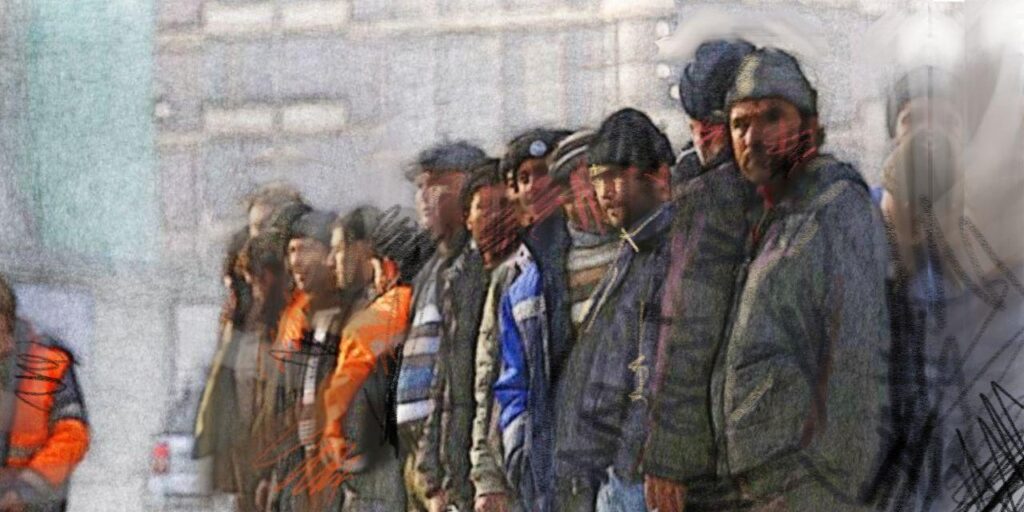
The Crocus City Hall terrorist attack in Moscow on March 22, 2024 triggered strong anti-migrant sentiment in Russian society. Since then, the nation’s authorities have been imposing stricter migration rules. But how does this impact millions of Central Asian labor migrants and their families living and working in Russia?

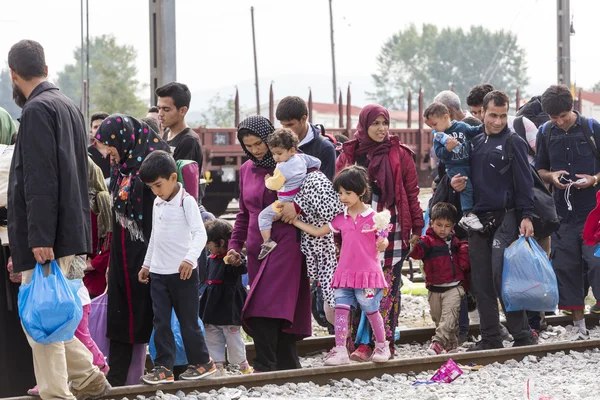
Following the collapse of the Soviet Union in 1991, Russia became a major destination for migrant workers from Central Asia. According to the official Russian statistics, there are currently almost four million citizens of Kazakhstan, Kyrgyzstan, Uzbekistan, Tajikistan, and Turkmenistan living in Russia, along with approximately 670,000 illegal migrants.

Rosstat (the Federal State Statistics Service of the Russian Federation) reports that 260,400 migrants arrived in Russia from January to July this year, with 60% (about 156,200) coming from Central Asian countries. The majority of them are citizens of Tajikistan. In 2023, over one million Tajiks have moved to Russia in search of work.

With a large community of its citizens in Russia, the Tajik government seems to be working to not only improve their legal status in the Russian Federation, but also to coordinate some of their actions, particularly in the field of culture. On April 9, in Dushanbe, a meeting took place between Tajikistan’s Minister of Labor, Migration, and Employment of the Population, Solekhi Kholmakhmadzoda, and leaders and activists of the Tajik diaspora living in Russia.

Tajikistan initiated the summit after Russia began testing migrant children on their knowledge of the Russian language before admitting them to school. Starting April 1, a law came into effect that prevents Russian schools from enrolling migrant children who do not speak Russian or are in Russia illegally. This measure is just the tip of the iceberg in the Kremlin’s plans to regulate the migrant issue in the country.

Alexey Nechaev, the leader of the New People party – one of the handful of the so-called systemic opposition parties in Russia – said on March 19 that “artificial intelligence should be made a new tool for monitoring migrants… It is unfair that Russian citizens are digitized from head to toe, while migrants continue to live with paper documents without any problems,” Nechaev stressed, pointing out that monitoring migrants’ activities through AI could “help keep a closer eye on what foreigners are doing and make it easier to track illegal money flows.”

Last year, the Liberal Democratic Party – another ‘systemic opposition’ group – proposed restricting the rights of migrant workers to bring their families into Russia. This initiative raised concerns in neighboring Kazakhstan. The ambassador of the largest Central Asian nation expressed unease to Moscow about such ambitions, referring to the Eurasian Economic Union (EAEU), the foundation of which, as he highlighted, is based on ensuring the four freedoms – the movement of goods, services, capital, and labor.

Russian reports, however, claim that, as a result of Kazakhstan and Kyrgyzstan’s membership in the EAEU, their citizens living in Russia have a much better status than those from other Central Asian states. Despite that, on April 14, Kyrgyzstan’s Foreign Ministry summoned Russia’s ambassador to demand answers over reports that Moscow police used violence against Kyrgyz nationals during a raid on a bathhouse.

Such a move represents a humiliation for the Kremlin, considering Kyrgyzstan’s heavily dependence on Russia, especially in terms of remittances from Kyrgyz labor migrants living in the Russian Federation. But given the ongoing war in Ukraine and Russia’s isolation from the West, Moscow is not in a position to jeopardize its relations with Bishkek over the migrant issue.

That, however, does not mean Russia will stop quietly passing laws that could, at least to a certain extent, change the status of Kyrgyz, and other Central Asian migrants in the Russian Federation. According to State Duma Speaker Vyacheslav Volodin, the Russian Parliament has initiated and passed 15 laws related to combating illegal migration since 2024. In his view, “It is important that these laws are now effectively enforced.”

Nevertheless, the Kremlin must strike a delicate balance between the growing anti-migrant sentiment in the country and its ambitions to preserve the remnants of its influence in Central Asia. That is why, despite 66% of Russians supporting a ban on wearing niqabs in public places – a measure already implemented in most Central Asian countries – Moscow has remained silent on the issue.

Moreover, the Kremlin is under pressure to stop, or at least significantly reduce, the influx of Central Asian migrants. To strike a balance, the authorities in Russia’s Tatarstan region – the fourth most popular destination for labor workers from Central Asia – reportedly aim to attract young female workers from Africa, Latin America, and Southeast Asia.

Research Associate at Russian Presidential Academy of National Economy and Public Administration, Yulia Florinskaya, however, has claimed that in the coming years the number of foreign workers in Russia will remain the same, with the majority still being citizens of Kyrgyzstan, Uzbekistan, and Tajikistan. Currently, she argues, no other country can compete with them in terms of the number of labor migrants coming to Russia.

Moscow needs migrants to help address the labor shortage, as Russia lacked around 4.8 million workers in 2023. Still, according to a Human Rights Watch report, Central Asian labor migrants in Russia experience “increased xenophobic harassment and violence,” with the Russian Defense Ministry continuing to forcibly recruit them to fight in Ukraine. It is, therefore, no surprise that the number of migrants in Russia declined by 18% in 2024 as compared to 2023.

Migration – be it from Central Asia or other parts of the world – remains both a necessity and a challenge for Russia. As pressure mounts from within, in the coming months and years the Kremlin will have a hard time navigating a complex balancing act between anti-migrant sentiment at home, the country’s economic needs, and its geopolitical interests in Central Asia.

Kyrgyzstan Reports Strong Economic Growth in Early 2025

Kyrgyzstan’s economy continued its upward trajectory in the first quarter of 2025, with GDP expanding by 13.1%, according to Prime Minister Akylbek Japarov. He credited the surge to positive developments across all key sectors prioritized by the government.

The food industry posted remarkable growth of 71%, while the construction sector expanded by 69%. Investments in fixed capital jumped by 90% during the same period.

A detailed economic overview published by the Ministry of Economy and Commerce highlighted that Kyrgyz businesses are adapting rapidly to shifting external conditions. The ministry also pointed to increased domestic demand and investment activity as key drivers of growth.

“From January to March 2025, about 93% of total investments were directed toward mining, processing industries, information and communications, electricity and gas supply, and the construction of housing and educational institutions,” the ministry stated.

The construction sector alone contributed three percentage points to GDP growth. However, services remain the backbone of Kyrgyzstan’s economy, accounting for 4.5 percentage points of overall growth. Within the sector, trade made up 27.4%, transportation services 10.3%, and financial intermediation and insurance services another 10.3%.

Annual inflation stood just below 7% in the first quarter, with average prices for consumer goods rising by 3.5% during the reporting period.

Putin Briefs Tokayev on U.S.-Russia Talks About Possible Ukraine Deal

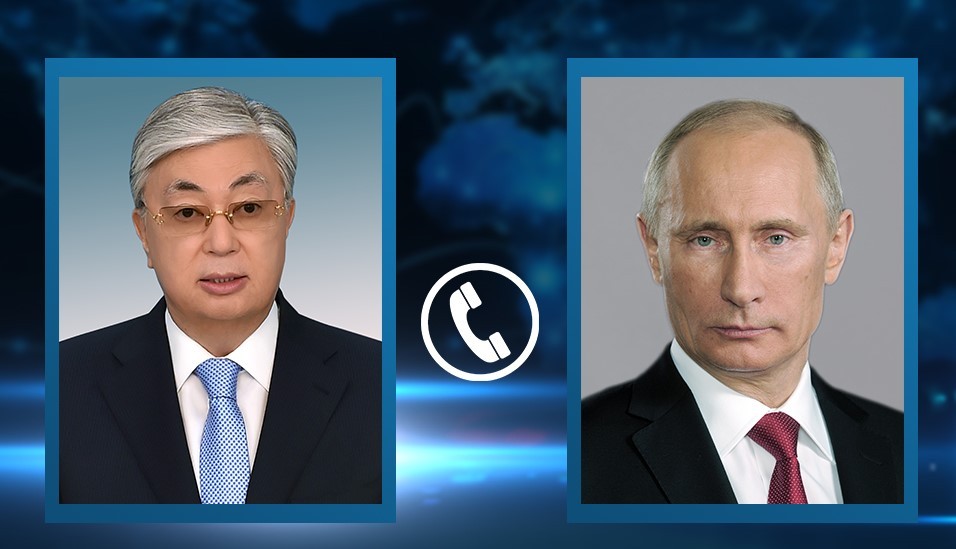
Russian President Vladimir Putin has updated Kazakh President Kassym-Jomart Tokayev on U.S.-Russian talks, which have focused in recent weeks on trying to reach a settlement in the war in Ukraine.

Putin and Tokayev spoke by telephone on Thursday, according to the offices of the two leaders.

In the conversation, Putin “shared his assessments of the progress achieved in the dialogue between Russia and the United States,” the Kremlin said without providing details. It said the two men also discussed preparations for the May 9 commemoration in Moscow of victory over Nazi Germany in World War II, adding that Tokayev is expected to attend.

Kazakhstan’s presidency said that Putin and Tokayev talked about topics including joint energy projects and “exchanged views on current international issues,” a possible reference to talks on the Ukraine war.

U.S. envoy Steve Witkoff discussed Ukraine with Putin in St. Petersburg last week. American and Russian officials also negotiated in Saudi Arabia in February, in the first face-to-face meeting between the two countries since Russia launched a full-scale invasion of Ukraine three years earlier.

Ukraine and its European allies fear the United States favors Russian negotiating positions, while Russia has ramped up accusations that some European countries are undermining any progress toward a settlement. The two sides remain far apart on key issues and U.S. President Donald Trump has expressed frustration over a conflict that he had said he would quickly resolve.

Kazakhstan and other Central Asian countries have tried to maintain a publicly neutral stance in the conflict. Tokayev, in particular, has emphasized the need for dialogue and welcomed a lengthy call last month between Putin and Trump.

Another international priority for Kazakhstan is how to navigate Trump administration tariffs, and the government plans to send a delegation to Washington to negotiate.

Only Turkmen Names Allowed

Ethnic minorities in Turkmenistan are reportedly being told they must give their newborn children tradition Turkmen names.

The process of “Turkmenization” has been underway in Turkmenistan for many years, but until recently it had not affected the proper names of non-Turkmen citizens.

According to a recent report from Radio Free Europe/Radio Liberty’s Turkmen service, known locally as Azatlyk, officials in the eastern Lebap Province were previously urging the Uzbek and Tajik communities in the province to give their newborns Turkmen names. Now this is no longer a suggestion, but a requirement.

Lebap borders Uzbekistan. Many Uzbeks and Tajiks lived in this area long before Soviet mapmakers finally drew borders that after the collapse of the USSR in late 1991 became the frontier of Turkmenistan and Uzbekistan.

Turkmenistan for Turkmen

stat.gov.tm

The credibility of official statistics from the Turkmen government has been called into question many times over the years, and the size and ethnic make-up of the population are no exception. According to the most recent census figures (released in 2023), Turkmenistan’s population is just over seven million people, though the real figure is almost certainly less than that, and could be as low as four or five million.

Turkmenistan has been experiencing significant economic problems for some ten years, and many citizens have left the country. For example, as of December 2024, more than 205,000 Turkmen citizens are officially registered as living In Turkey, and that figure could be three times higher or more, including those Turkmen citizens who are illegally residing there.

The census released by the Turkmen authorities lists the populations of 14 specific ethnic minority groups. Roughly one million Turkmen citizens are ethnic minorities. The top three are Uzbeks, numbering 642,476, Russians, 114,447, and Baluch, 87,503.

These figures might be lower soon, however, at least officially. Authorities in Lebap are also reportedly recommending people from non-Turkmen groups give their nationality as Turkmen in their documents. Being an ethnic Turkmen matters when seeking employment in Turkmenistan, so there is an added incentive for minorities to claim they are Turkmen in official documents.

Turkmenistan would not be the first country in Central Asia to have rules on naming newborns. Authorities in Tajikistan banned children from being given foreign names some eight years ago. The Language and Terminology Committee of Tajikistan’s Academy of Science produced a list of more than 3,000 approved Tajik names for children; however, that rule applies only to ethnic Tajiks. Minority groups in Tajikistan are free to name their children as they wish.

Azatlyk reports that the authorities are also warning ethnic Turkmen about giving their children non-Turkmen names. Turkish names were becoming popular among Turkmen in Turkmenistan, and some Turkmen families living near Uzbekistan were giving their children Uzbek names.

The difficulties in obtaining information from Turkmenistan make it difficult to know if the naming policy being enforced in Lebap exists in other parts of the country. Turkmenistan’s government has, to the greatest extent possible, sealed the country off from the outside world, and independent verification of information on what is happening inside Turkmenistan is almost impossible. But it is likely this policy of the mandatory use of Turkmen first names is, or soon will be, enacted across the predominantly desert state.

Plenty of Precedent

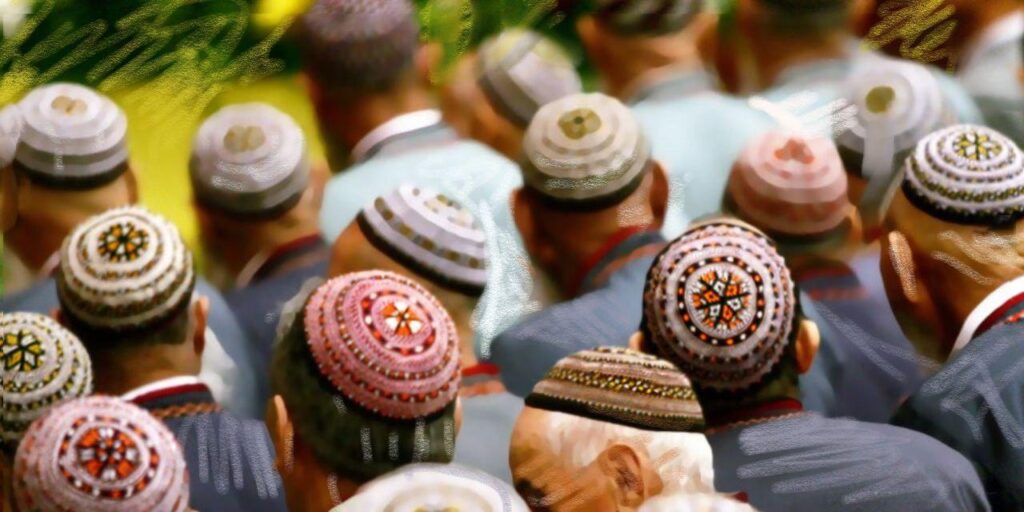
The policy of Turkmenization has been around for a long time. Around 25 years ago, the Turkmen authorities started requiring that all schoolgirls dress in Turkmen national attire. Those who failed to do so were not allowed to attend school.

The dress code for schoolgirls came into effect under Turkmenistan’s first president, Saparmurat Niyazov. Niyazov closed many hospitals and told Turkmen citizens to use traditional Turkmen cures such as tea to treat their ailments. Niyazov banned ballet on the grounds it was not “in line with the national mentality.” Niyazov said the Turkmens’ unique traditions prevented him from introducing political reforms and moving toward a democratic system.

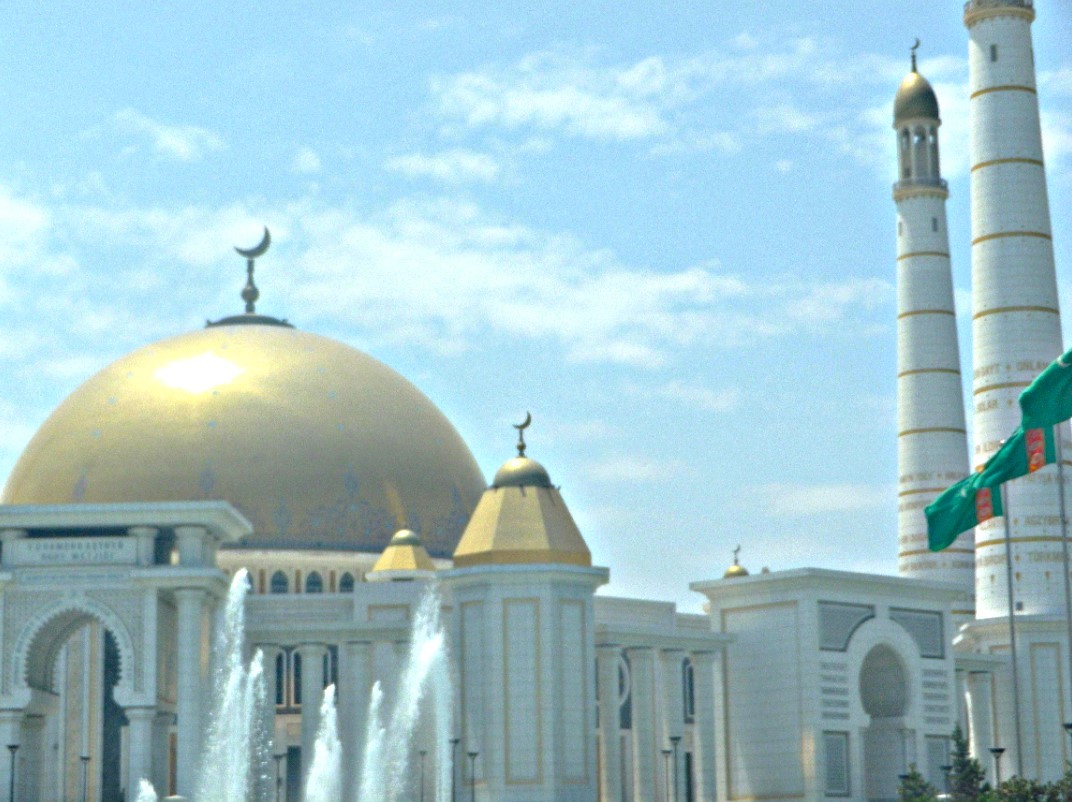
And Niyazov wrote the Ruhnama (Book of the Soul), a book that purported to lay out the proper conduct for Turkmen and was required reading for the country’s citizens. In the last years in which Niyazov was alive (he died in December 2006), the book was taught in schools. Niyazov’s mausoleum has inscriptions from the Koran and the Ruhnama on the walls.

Niyazov Mausoleum, Gypyak; image: TCA, Stephen M. Bland

Nearly 20 years later, the policy of Turkmenization is still being practiced and expanded. Turkmen women must wear traditional Turkmen attire in workplaces. In May 2023, authorities banned playing Uzbek music at weddings, insisting only Turkmen music be played at such celebrations, especially songs allegedly written by the former President, currently Chairman of the People’s Council, Gurbanguly Berdimuhamedov.

Everything in Turkmenistan must be, or at least appear to be Turkmen, and for ethnic minorities that means adopting Turkmen customs, and now, apparently, Turkmen names as well.

Lithuania to Review Migration Policy Toward Central Asian Countries

Lithuania is preparing to revise its migration policy toward citizens from Central Asian nations, citing growing concerns over radicalization risks. Prime Minister Gintautas Paluckas announced the potential changes following a meeting with President Gitanas Nausėda, according to local media reports.

“Unfortunately, it seems we need to recognize that people from some countries are more likely to become radicalized,” Paluckas told reporters. “We should consider adjusting our immigration policy and focus on bringing in skilled workers from countries that are closer to us culturally.”

His remarks came shortly after the head of Lithuania’s State Security Department, Darius Jauniškis, revealed that approximately ten individuals from Central Asian countries had recently been denied entry over alleged ties to terrorist groups and concerns regarding radicalization. Jauniškis also warned of a broader trend, noting a rising risk of radicalization among migrants from both Central and South Asia.

Paluckas added that Lithuania currently maintains numerous visa centers in countries whose cultural values may not align with those of Lithuania. “We are looking ahead and planning to update our migration policy so that it better reflects cultural closeness,” he said.

Migration Trends from Central Asia

Lithuania has experienced a significant increase in migration from Central Asia in recent years, prompting authorities to heighten security oversight. According to Lithuanian intelligence, the number of migrants from the region in 2024 was 14 times higher than in 2021.

Despite this sharp rise, former Prime Minister Ingrida Šimonytė has urged caution in interpreting the figures, noting that the total number of migrants remains relatively small and not a cause for alarm. She attributed the increase in part to labor shortages, particularly after many Ukrainian men were conscripted for military service amid the ongoing war.

As of October 2024, approximately 10,600 Uzbek nationals were residing in Lithuania, up from fewer than 1,000 in early 2022. Uzbeks now constitute the fourth-largest foreign community in the country. The number of Tajik citizens also rose significantly, from 5,700 to 7,200 in the first nine months of 2024 alone.

In Türkiye, Uzbek Man Faces Deportation After Photographing Woman Without Consent

An Uzbek man who photographed a Turkish woman in the Istanbul metro without her permission is in the process of being deported.

Uzbekistan’s consulate in Istanbul said on Thursday that the man was arrested on April 13 after taking “unauthorized” photos of the woman, who then reported the alleged violation of her privacy to law enforcement authorities.

The man’s work permit was revoked and he is being subjected to “forced deportation measures,” said the consulate, which intervened in order to prevent a criminal investigation.

“According to Turkish law, photographing or videotaping another person, especially women, without their consent is strictly prohibited and may result in criminal prosecution,” the consulate said. It urged Uzbek citizens to follow local laws and said photographing or recording video of “strangers without their permission or causing them discomfort may result in serious action being taken against you.”

Article 134 of Türkiye´s penal code provides for a punishment of up to several years in prison for violating the privacy of another person, including by disseminating images and sounds related to the personal life of the affected individual.

ER&GUN&ER, an Istanbul-based law firm, says the country has “robust” laws to address privacy violations in the digital environment. It refers to a 2011 sex tape case and a 2016 political party data breach as high-profile cases involving such violations.

“Taking pictures itself is not illegal in Turkey, but there are specific regulations that must be observed,” says Manolya Travel Agency, which is based in Istanbul. “While taking pictures, it is crucial to respect the privacy of individuals and refrain from capturing images of people without their explicit permission. This rule applies regardless of whether the person in the camera frame is a Turkish citizen or a foreign tourist.”