• KGS/USD = 0.01143 -0%
  • KZT/USD = 0.00192 -0%
  • TJS/USD = 0.10820 0.19%
  • UZS/USD = 0.00008 0%
  • TMT/USD = 0.28575 0%
  • KGS/USD = 0.01143 -0%
  • KZT/USD = 0.00192 -0%
  • TJS/USD = 0.10820 0.19%
  • UZS/USD = 0.00008 0%
  • TMT/USD = 0.28575 0%
  • KGS/USD = 0.01143 -0%
  • KZT/USD = 0.00192 -0%
  • TJS/USD = 0.10820 0.19%
  • UZS/USD = 0.00008 0%
  • TMT/USD = 0.28575 0%
  • KGS/USD = 0.01143 -0%
  • KZT/USD = 0.00192 -0%
  • TJS/USD = 0.10820 0.19%
  • UZS/USD = 0.00008 0%
  • TMT/USD = 0.28575 0%
  • KGS/USD = 0.01143 -0%
  • KZT/USD = 0.00192 -0%
  • TJS/USD = 0.10820 0.19%
  • UZS/USD = 0.00008 0%
  • TMT/USD = 0.28575 0%
  • KGS/USD = 0.01143 -0%
  • KZT/USD = 0.00192 -0%
  • TJS/USD = 0.10820 0.19%
  • UZS/USD = 0.00008 0%
  • TMT/USD = 0.28575 0%
  • KGS/USD = 0.01143 -0%
  • KZT/USD = 0.00192 -0%
  • TJS/USD = 0.10820 0.19%
  • UZS/USD = 0.00008 0%
  • TMT/USD = 0.28575 0%
  • KGS/USD = 0.01143 -0%
  • KZT/USD = 0.00192 -0%
  • TJS/USD = 0.10820 0.19%
  • UZS/USD = 0.00008 0%
  • TMT/USD = 0.28575 0%
13 December 2025

The Ruthless History of the Great Game in Central Asia

In the so-called New Great Game, Central Asia is no longer a mere backdrop; with its strategic location, massive oil and gas reserves, and newfound deposits of critical raw materials, it’s a key player. In stark contrast to events in the 19th century, this time, Central Asia finds itself courted by four great powers – China, the EU, the U.S., and Russia – instead of caught in the crosshairs of conquest. The region finds itself with agency.

However, the original Great Game was anything but fair play. Comprising vast steppes, nomadic horsemen, descendants of Genghis Khan’s Great Horde, and a lone nation of Persians, during the 19th century, the once-thriving Silk Road states became entangled in a high-stakes battle of expansion and espionage between Britain and Russia. Afghanistan became the buffer zone, while the rest of the region fell under Russian control, vanishing behind what became known as the “Iron Curtain” for almost a century.

The term “Great Game” was first coined by British intelligence officer Arthur Conolly in the 19th century, during his travels through the fiercely contested region between the Caucasus and the Khyber. He used it in a letter to describe the geopolitical chessboard unfolding before him. While Conolly introduced the idea, it was Rudyard Kipling who made it famous in his 1904 novel Kim, depicting the contest as the epic power clash between Tsarist Russia and the British Empire over India.

Conolly’s reports impressed both Calcutta and London, highlighting Afghanistan’s strategic importance. Britain pledged to win over Afghan leaders — through diplomacy, if possible, and by force, if necessary.

The Afghan rulers found themselves caught in a barrage of imperial ambition, as the British and Russian Empires played on their vulnerabilities to serve their own strategic goals. Former Ambassador Sergio Romano summed it up perfectly in I Luoghi della Storia: “The Afghans spent much of the 19th century locked in a diplomatic and military chess match with the great powers — the infamous ‘Great Game,’ where the key move was turning the Russians against the Brits and the Brits against the Russians.”

The Great Game can be said to have been initiated on January 12, 1830, when Lord Ellenborough, President of the Board of Control for India, instructed Lord William Bentinck, the Governor-General, to create a new trade route to the Emirate of Bukhara. Britain aimed to dominate Afghanistan, turning it into a protectorate, while using the Ottoman Empire, Persian Empire, Khanate of Khiva, and Emirate of Bukhara as buffer states.

This strategy was designed to safeguard India and key British sea trade routes, blocking Russia from accessing the Persian Gulf or the Indian Ocean. Russia countered by proposing Afghanistan as a neutral zone. The ensuing conflicts included the disastrous First Anglo-Afghan War (1838), the First Anglo-Sikh War (1845), the Second Anglo-Sikh War (1848), the Second Anglo-Afghan War (1878), and Russia’s annexation of Kokand.

At the start of the Central Asian power struggle, both Britain and Russia had scant knowledge of the region’s people, terrain, or climate. The Great Game revolved around gathering intelligence, charting routes, identifying the families controlling the land, and mapping uncharted territories. Undercover agents produced maps while monitoring Russian troop movements, just as the Russians kept tabs on British activities. The contest was as much about information as it was about influence.

Stoddart and Connolly; image: Davide Mauro

The mastermind behind the phrase and policy of the Great Game, Arthur Conolly, along with his colleague Charles Stoddard, stood at the heart of high-stakes intelligence efforts that ignited intense and dramatic events.

Taking power in Bukhara in 1827, Emir Nasrullah Khan cemented his reputation as the most ruthless of the Mangit Khans. His reign was marked by bloodshed, including the execution of twenty-eight close family members, among them three of his daughters, whom he killed to preserve their virginity. Nasrullah showed no hesitation in eliminating dissent, famously splitting a courtier in half with an axe over a minor irritation. Enforcing Sharia law with brutal zeal, having his men randomly quiz citizens on Quranic verses and meting out merciless punishments for mistakes, he sank further into infamy by encouraging impoverished families to sell their children to satisfy his depraved desires.
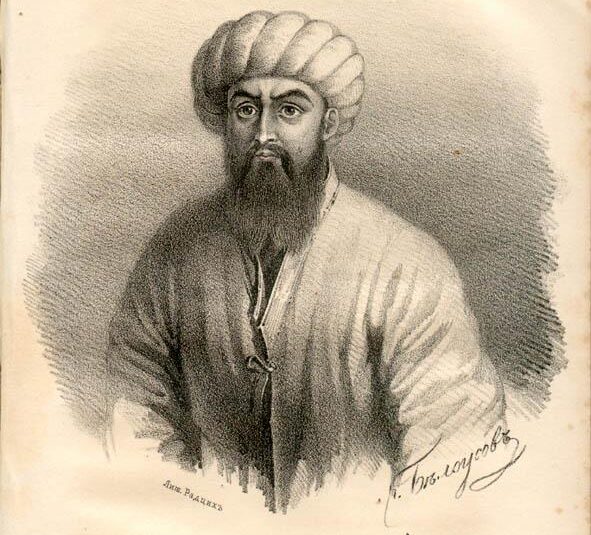
Nasrullah Khan

During the height of the Great Game, Colonel Charles Stoddart entered the court of the Bukharan Emir. His mission was both clear and ambitious. First, he sought to convince the Emir to release Russian slaves, cutting off the Tsar’s excuse for annexing Bukhara. Second, he aimed to secure a treaty of friendship with Britain. The secrecy surrounding the Bukharan court was legendary. However, Alexander Burnes — an explorer and cousin of poet Robert Burns — had documented one crucial detail: only Muslims were permitted to ride horses within the city walls.

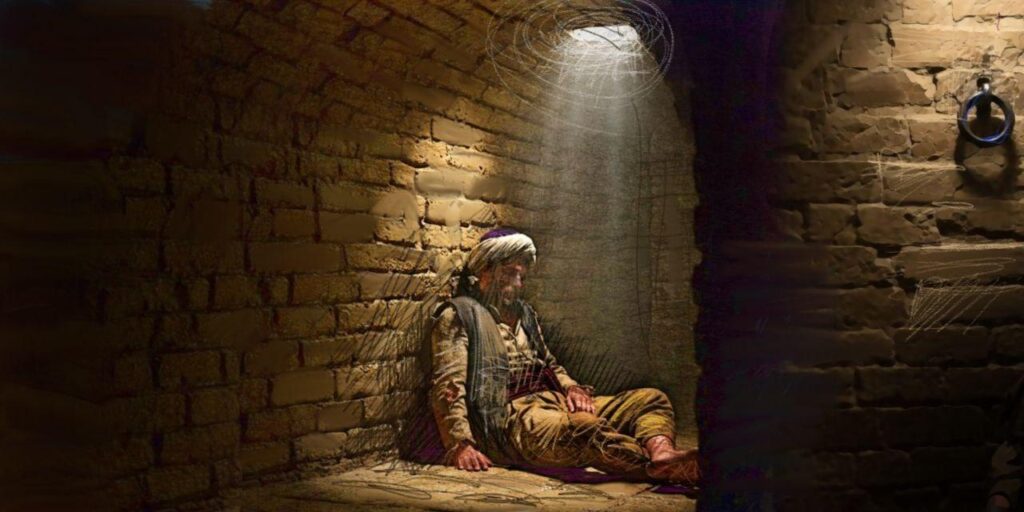
Stoddart sealed his fate with his arrogance and missteps. Staying mounted on his horse, bringing no gifts, and refusing to bow, he struck out at an attendant trying to prompt his deference. Adding insult to injury, his letter of introduction lacked the Queen’s signature. To make matters worse, Nasrullah had just received a damning dispatch from the Emir of Herat, accusing Stoddart of espionage and calling for his execution. What followed was a grim descent into the Emirate’s infamous dungeon, the Bug Pit — a diseased cesspool riddled with scorpions, rats, and specially bred vermin that thrived in the city’s filth.
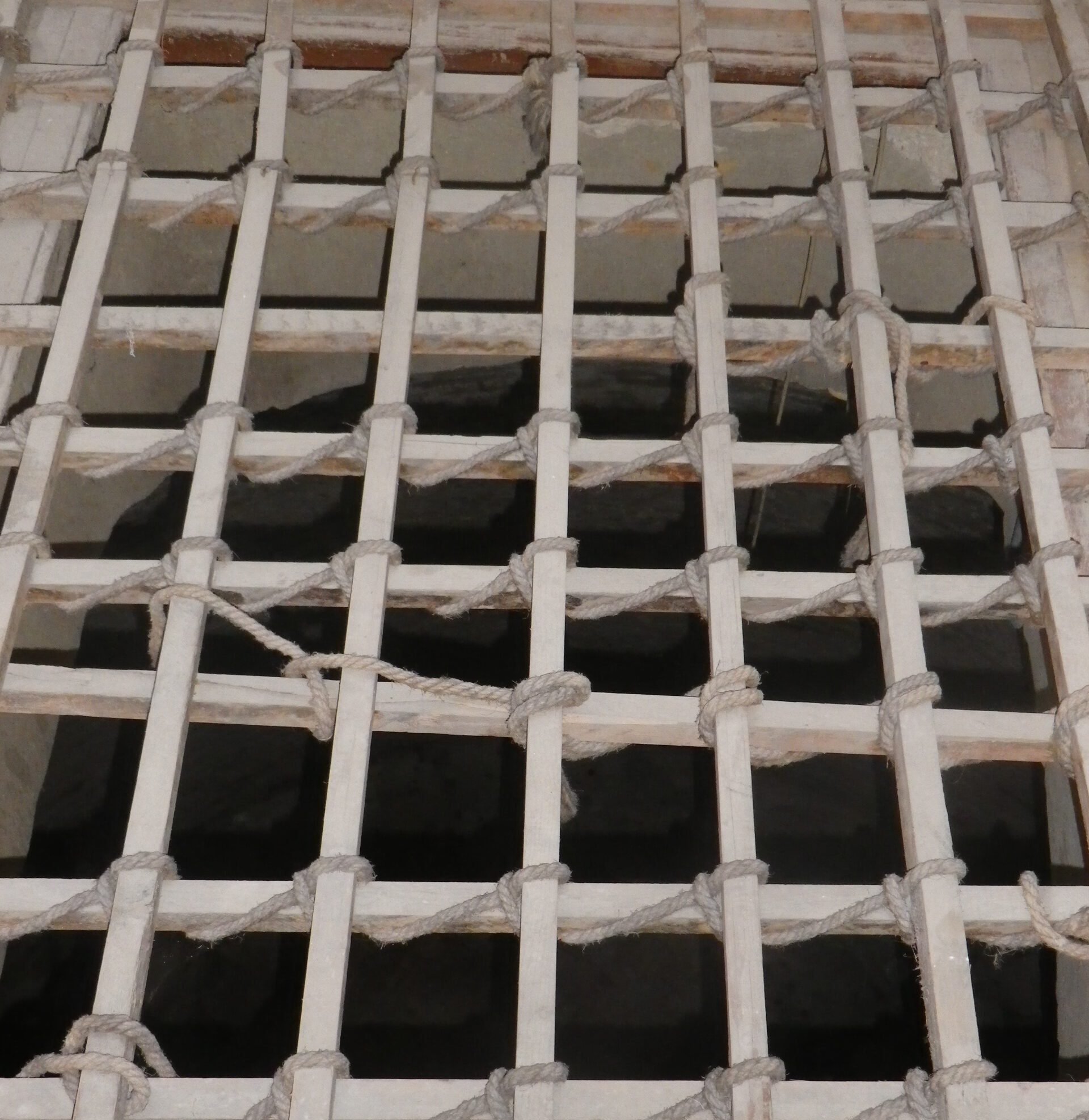
The Bug Pit; image: TCA, Stephen M. Bland

The British, the Turkish Sultans, and the rulers of Khiva and Kokand all demanded Stoddart’s release; even the Russians joined in — but none of it worked. When British forces captured Kabul in July 1839, the Emir, gripped by fear of invasion, issued Stoddart a brutal ultimatum: convert to Islam or die. Battered, desperate, and out of options, Stoddart gave in. After being bathed and circumcised, he moved into the chief of police’s home, gaining a sliver of freedom. He began praying at the Kalon Mosque and even managed to sneak letters back home to Norwich. “This Ameer is mad,” he wrote to his family.

With the British showing no intention of advancing on Bukhara and his letter to Queen Victoria left unanswered, Nasrullah subjected Stoddart to a year of imprisonment in and out of the dreaded Bug Pit on a whim. Captain Arthur Conolly, a fervent Evangelical Christian, was the most incensed by Stoddart’s treatment. Fueled by a vision of uniting the region under the British flag, abolishing slavery, and “civilizing” the locals, Conolly believed he could outmaneuver Russian influence by persuading local rulers to align with Britain. At thirty-three and nursing a broken heart after being jilted, he channeled his zeal into this ambitious mission.

With Stoddart’s cause boosting his appeal, Conolly dismissed Burnes’ sharp remark that only the “wand of a Prospero” could unify Central Asia. His bold plan ultimately won approval from his cousin, William MacNaughton, the British envoy in Kabul. Tragically, a year later, MacNaughton stood by as Alexander Burnes, Britain’s foremost expert on the region, was brutally torn apart. MacNaughton met an equally gruesome end, his torso displayed on a meat hook in the heart of Kabul, while his severed limbs and head were paraded triumphantly through the streets.

In September 1840, Conolly set out for Khiva. Although he was well received, he left without assurances and was firmly cautioned against visiting Bukhara. Moving onward to Kokand, he found hospitality but no treaty and yet another warning to steer clear of Bukhara. During this time, he received letters from Stoddart, who wrote, “the favor of the Ameer is increased towards me these days. I believe you will be well treated here.”

Conolly reached Bukhara in November 1841, nearly three years after Stoddart had been imprisoned. Nasrullah’s spies had been shadowing his every move for weeks, intrigued by his visits to their fiercest enemies. Despite this, the infamous Butcher of Bukhara played it safe, greeting Conolly warmly and pressing him for the Queen’s long-awaited reply. Conolly reassured him that the message would arrive soon, speaking with the authority of the sovereign’s representative.

While Stoddart and Conolly endured house arrest, a long-awaited message arrived — not from the Queen, but from Lord Palmerston. It confirmed the Emir’s correspondence had been received and passed not to the Queen but to the Governor General of India. This insult enraged Nasrullah, and tensions escalated further when another message from Herat accused Captain “Khan Ali” of espionage. Conolly soon found himself thrown into the infamous Bug Pit, tasting its horrors for the first time. Stoddart, meanwhile, had likely lost track of how many times he’d been imprisoned.

The Zindon, where Stoddart and Conolly were imprisoned; image: TCA, Stephen M. Bland

The Governor General of India finally wrote to demand the release of Stoddart and Conolly, referring to them as “private travelers” — diplomatic code for agents the British refused to acknowledge. Paired with the humiliating British retreat in Afghanistan, this convinced Nasrullah that he could act without consequence.

Fresh from crushing the Khanate of Kokand, brimming from the violence of his triumph, Nasrullah hauled his captives Stoddart and Conolly to the Registan on June 24, 1842, four agonizing years into their imprisonment. Forced to dig their own graves in front of a captivated crowd, the starving, mutilated officers — scarred and with flesh chewed from their bones — clung to each other, sobbing. Drummers pounded a somber dirge as their hands were tied, and they were shoved to their knees. Stoddart, a convert to Islam, likely earned the grim privilege of having his throat slit.

Conolly, however, was given a final taunt. He was promised mercy if he converted to Islam by Nasrullah’s executioner, the so-called “Shadow of God.” He rejected the offer with resolve, exclaiming, “Colonel Stoddart has been a Muslim for three years, and you have killed him. I will not become one, and I am ready to die.” His head was severed moments later. The pair’s bodies were dumped into an unmarked grave beneath the Registan.

With no news of the doomed officers forthcoming, their friends gathered funds and dispatched Joseph Wolff, a peculiar clergyman, to uncover their fate. Arriving in Bukhara in 1845, Wolff narrowly escaped their fate not by wit or force but by sheer absurdity. His full canonical robes amused the Emir so thoroughly that Nasrullah spared his life, even inviting his “musical band of Hindoos” to serenade Wolff with “God Save the Queen.” Nasrullah Khan would rule undisturbed for another 15 years, meeting his end not by the sword but peacefully in his sleep.

The Great Game drew to a close in the early 20th century, brought on by pivotal international shifts. The Russian Empire, drained by the costly Russo-Japanese War (1904–1906), lacked the resources to sustain its Central Asian ambitions. Tsar Nicholas II faced mounting financial and military constraints, halting Russian momentum. The Anglo-Russian Convention of August 31, 1907, marked the official end of a nearly a century-long rivalry. With Afghanistan secured as a British protectorate, it brought respite to the geopolitical chess game between the two empires.

The Great Game ended without a victor, leaving behind shattered economies, silenced political movements, countless lost lives, and a chilling legacy.
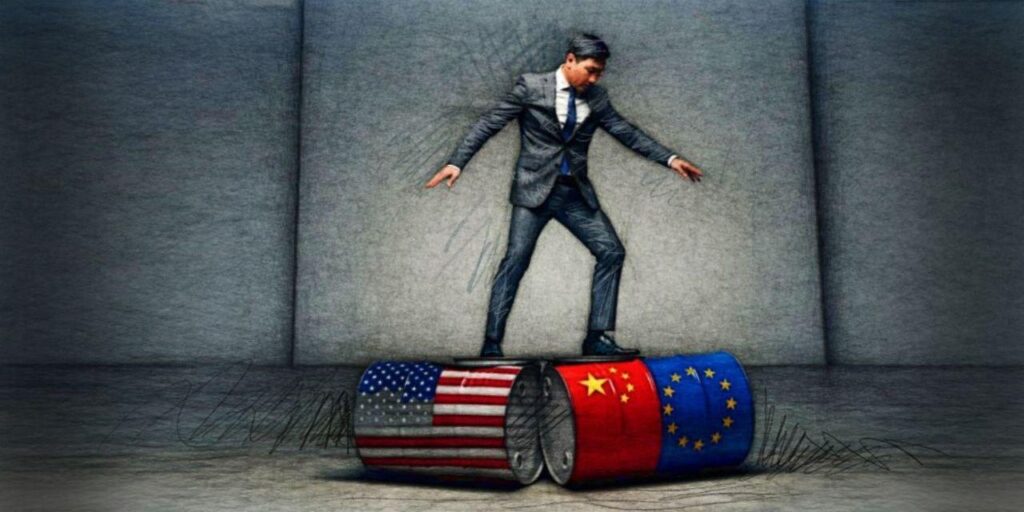

A New Great Game: Multipolar Competition in Central Asia

At a time when the European Union, China, and Turkey are seeking to strengthen their presence in Central Asia, the United States administration is consumed with bilaterally implementing a seismic shift in its trade policy with the entire world. Although this region of post-Soviet space is widely seen as a new front of rivalry between Washington and Beijing, in many aspects, American influence in Kazakhstan, Kyrgyzstan, Uzbekistan, Tajikistan, and Turkmenistan lags far behind that of other actors.

Culture (soft power) has always played an important role in the foreign policy of every great power. The Soviet Union was no exception. As a result, even today, Russian, rather than English, is still the lingua franca in Central Asia, although Moscow, following its invasion of Ukraine, has had a hard time preserving remnants of its former dominance in the region.

Russian cinema, however, maintains a notable presence in most, if not all, Central Asian states. While Hollywood movies have a strong global presence, Russian films in Central Asia often act as a link between Western content and the region’s cultural traditions. Millions of Central Asian migrants working in Russia also serve as a bridge between their nations and the Russian Federation, facilitating cultural exchange, economic ties, and the spread of the Russian language.

However, Russia’s fiasco in Ukraine has created space for the EU to assert its influence in a region that has traditionally been in Moscow’s geopolitical orbit. Nevertheless, although Kazakhstan, Kyrgyzstan, are Tajikistan are members of the Russian-led Collective Security Treaty Organization, they have remained neutral in the Ukraine conflict.

For Central Asian nations, the EU serves as a counterweight they can use to balance their relations with Moscow. The EU, however, faces strong economic competition from China. With a trade volume of $94.8 billion with Central Asian states, Beijing is positioning itself as the major economic power operating in the five regional nations.

Although the European Union’s influence in Central Asia is expected to continue to grow in the coming years, if investment trends from recent years persist, the balance in the region will likely tilt towards China, which will increase its presence and influence at the expense of Russia. But where does the United States fit into this dynamic?

Even though the U.S. is the largest economy in the world, with which almost everyone wants to engage, American bilateral trade with the region has never been particularly strong, with the exception of Kazakhstan. Interestingly enough, it is Astana that is expected to suffer the most among Central Asian actors due to U.S. President Donald Trump’s decision to impose tariffs – 27% on Kazakhstan compared to 10% on all other nations in the region.

Exceptions may be made for Kazakhstan’s critical minerals, however, which are now the third largest in the world based on a recent discovery, with reports suggesting that some goods, including “certain minerals that are not available in the United States,” as well as energy, will not be subject to the tariffs. According to Kazakhstan’s Ministry of Trade and Integration, the core of the country’s exports to the U.S. consists of crude oil, uranium, silver, ferroalloys, and other minerals, which account for 92% of shipments.

In spite of this, the Kazakh Government is reportedly initiating consultations with the Trump administration to discuss the possibility of exempting Kazakhstan from additional tariffs, which means that Astana is very unlikely to follow the EU’s approach and respond to Trump’s move in a retaliatory fashion. Some experts, however, argue that Trump’s tariff policy could result in Kazakhstan, as well as other regional states, becoming more dependent on China for trade.

The verdict is still out on whether the new U.S. tariff policy will push Central Asia deeper into Beijing’s geoeconomic orbit. However, Kazakhstan’s President Kassym-Jomart Tokayev has repeatedly stated that Astana is seeking to replace the Great Game – a rivalry between the 19th-century British and Russian empires over influence in Central Asia – with “Great Gain for all in the heart of Eurasia”.

But while in the 19th century there were two major rivals, this time it remains unclear who could be Beijing’s major opponent in Central Asia. The U.S. under Trump has demonstrated less of a desire to influence the region and the rest of the world, as indicated through the practical shuttering of USAID.

In Ukraine, Trump has also aimed to pull back resources while staying committed on the condition of gaining access. However, in energy-rich Central Asia, Washington seems to behave rather ambivalently.

It is the European Union, rather than the United States, that is eyeing Central Asia’s critical minerals, while Turkey, mainly through the Organization of Turkic States, is also attempting to strengthen its role. China is doing this largely through economic means, which is why some authors claim that Beijing has emerged as the “primary Eurasian power in the new age of multipolarity that is upon us.”

The United States, on the other hand, seems to have chosen a new path, focusing on pragmatic, non-ideological diplomacy in the region. The Trump administration, unlike most of its predecessors, is unlikely to pressure regional actors to follow Western values, human rights, and various principles of liberal democracy, which could yet make the U.S. a desirable partner.

Thus, in the long-term, the United States might emerge as China’s rival in the so-called New Great Game in Central Asia. For the time being, however, the region will likely remain in a multipolar competition for influence.

After Player’s Death, Kyrgyzstan Debates How to Make Kok Boru Safer

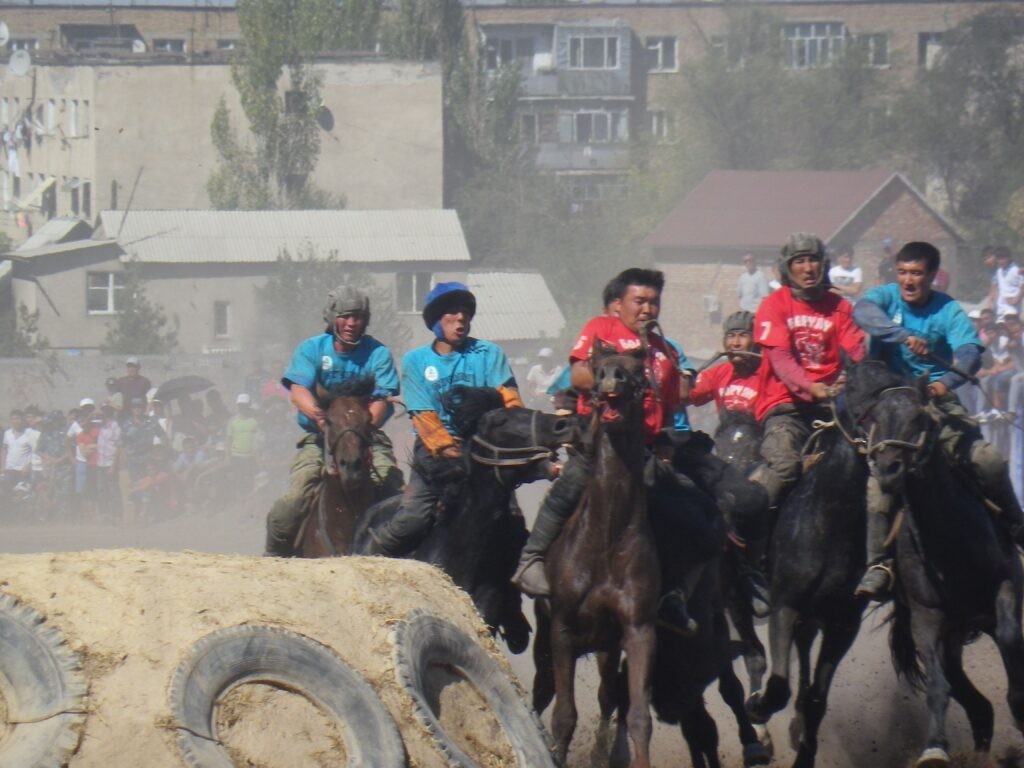
The death last month in Kyrgyzstan of a player of kok boru, a traditional game in which horse riders try to maneuver a headless goat carcass into an opposing team’s goal, has led to discussion in the parliament about whether a rough sport that is a source of regional pride should be made safer for man and horse alike.

Mirlan Srazhdinov, a 45-year-old team captain, died during a game of kok boru at an equestrian stadium on the outskirts of Bishkek, Kyrgyzstan’s capital, on March 12. A video that circulated on various online platforms purportedly shows the accident in which Srazhdinov appears to bend down to the side of his horse – and then falls to the ground after another horse and rider crash into him next to a barrier on the side of the sandy playing area.

The accident alarmed some lawmakers who view kok boru as an emblem of cultural identity in Kyrgyzstan and elsewhere in Central Asia, acknowledging that the sometimes chaotic scrums on the dusty field have caused harm to contestants but rejecting the idea of banning the game altogether. Kok boru, which is recognized by UNESCO, has a wider following in the region. Kazakhstan, for example, has a variant known as kokpar, and it is known as buzkashi in Afghanistan. The game featured in the World Nomad Games in Kazakhstan last year, using a mould as a modern replacement for the carcass.

Srazhdinov had suffered a brain injury and multiple fractures, including one at the base of his skull, the 24.kg news agency reported, citing Bishkek’s Emergency Medicine Center. The player who collided with him was placed in pre-trial detention for two months, and the referee was placed under house arrest. Both have been charged in connection with the death of the team captain.

At a parliamentary session, lawmaker Balbak Tulobaev said accidents can happen in any sport and that kok boru should continue to be played with some adjustments to reduce the chance of injury.

“There are forces that want to ban the game of kok boru because of this. But we must not allow this,” Tulobaev said last week, according to the Kloop news organization. Parliamentarian Ilimbek Kubanychbekov agreed, though he also said changes were necessary because players were getting hurt.

Deputy Akkulu Berdiev had concerns about the perils of play near the taikazan, or goal where the goat carcass (or mould) is thrown. He said riders have suffered spinal and other injuries in this area, and horses haven’t been spared either. The taikazan is a raised circular structure with a hollowed out part in the middle.

A manual of the rules of kok boru indicates that is very much a contact sport:

“To increase interest in the game, forceful techniques are allowed, used by both horses and players, but not violating the rules of the game – player can accidentally hit others by a horse (not strike), players can push each other with their torsos and chests without touching each other’s hands. But it is strictly forbidden to run over a player who is picking up a goat carcass from the ground,” the manual says.

A study in a 2024 issue of the Annals of Dental Speciality, an international medical journal, which looked at the case of a 20-year-old Kyrgyz kok boru player who suffered a cheekbone fracture in a fall, alluded to the sensitivities surrounding cultural activities that can carry risk for their participants.

“Increased awareness of the risks associated with traditional sports and the creation of preventive plans will help to lower the incidence of such injuries,” the study said.

Future Nostalgia: Alexander Ugay’s Parisian Debut at NIKA Project Space

Have you ever had that feeling of “Future Nostalgia” – as Dua Lipa would put it – when looking at old sci-fi movies that imagined a future that never came to pass? The fact that this future didn’t materialise might be as might be seen as both a blessing and a disappointment, as artist Alexander Ugay has us reflecting upon with his Parisian debut.

Born in Kazakhstan to a Korean family deported under Stalin’s regime, Ugay’s work is heavily inspired by his own experience and is layered with echoes of ancestral trauma, the faded promise of Soviet modernity, and the flickering ghost of a future once imagined but that never fully came to fruition.

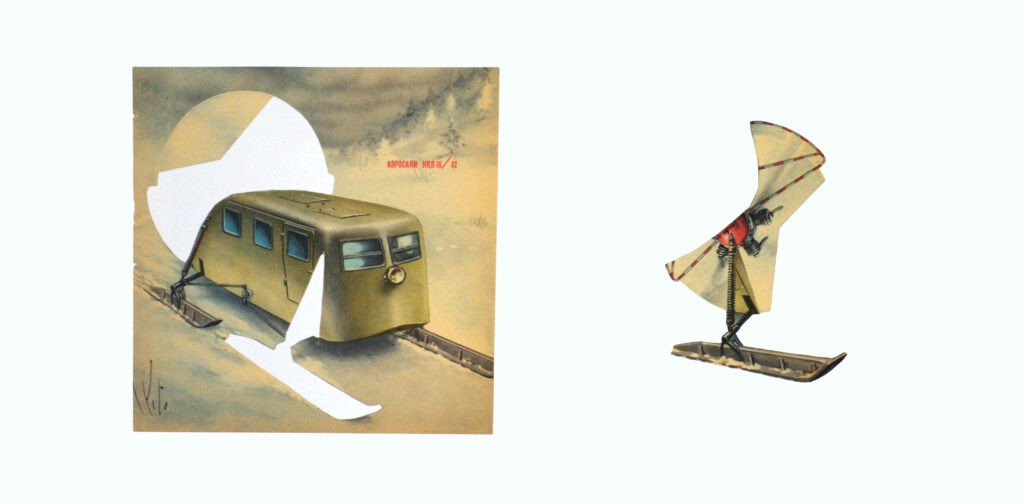
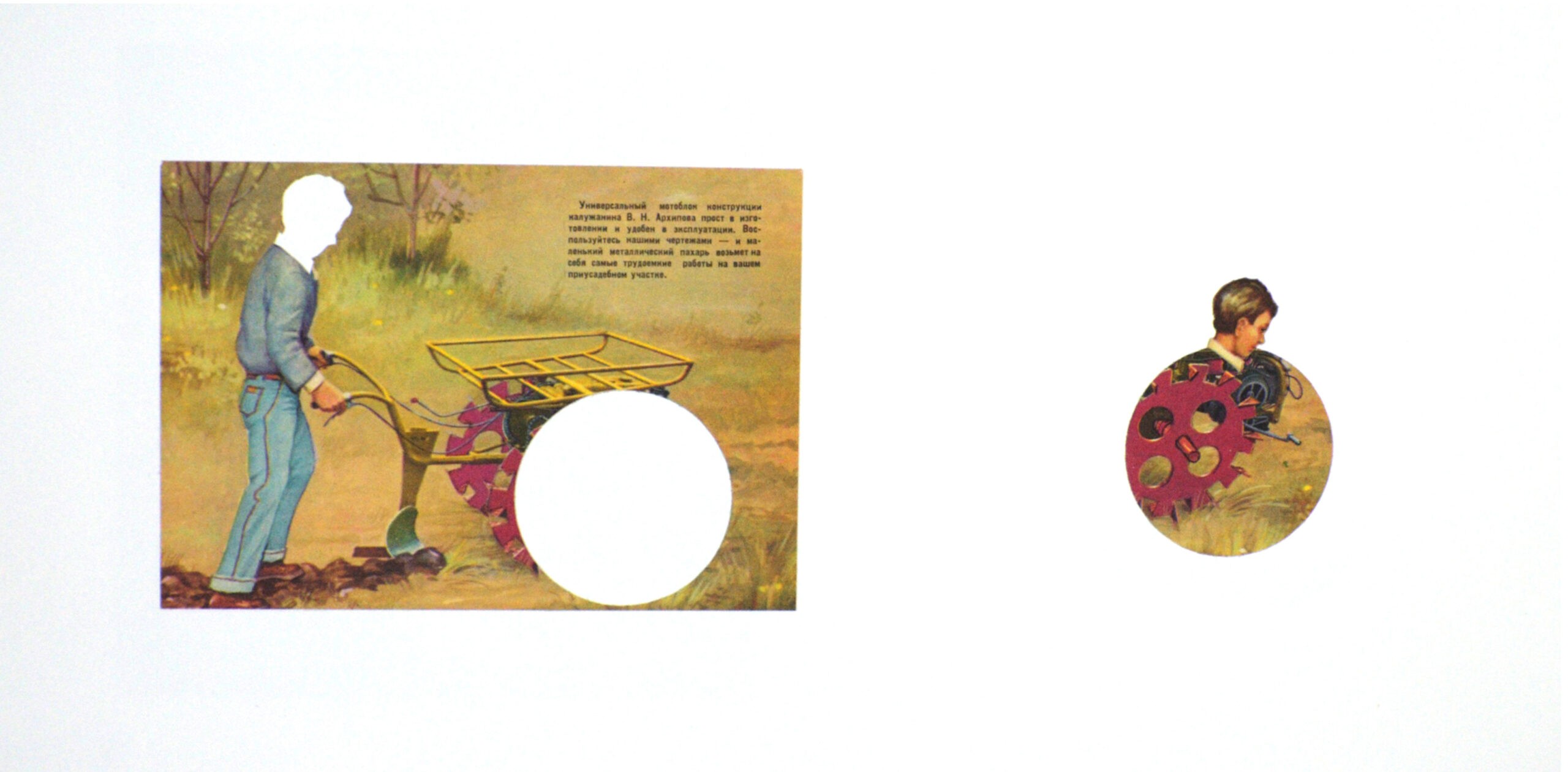
A child of engineers and inventors, Ugay grew up among circuits and cyanotypes, and in his art, he uses materials such as 8mm film and VHS tape. With this vintage spirit, his body of work looks at the past to speak of the present, and posits a critique of the techno-utopianism of the Soviet 1970s, as much as today’s AI-driven image culture.

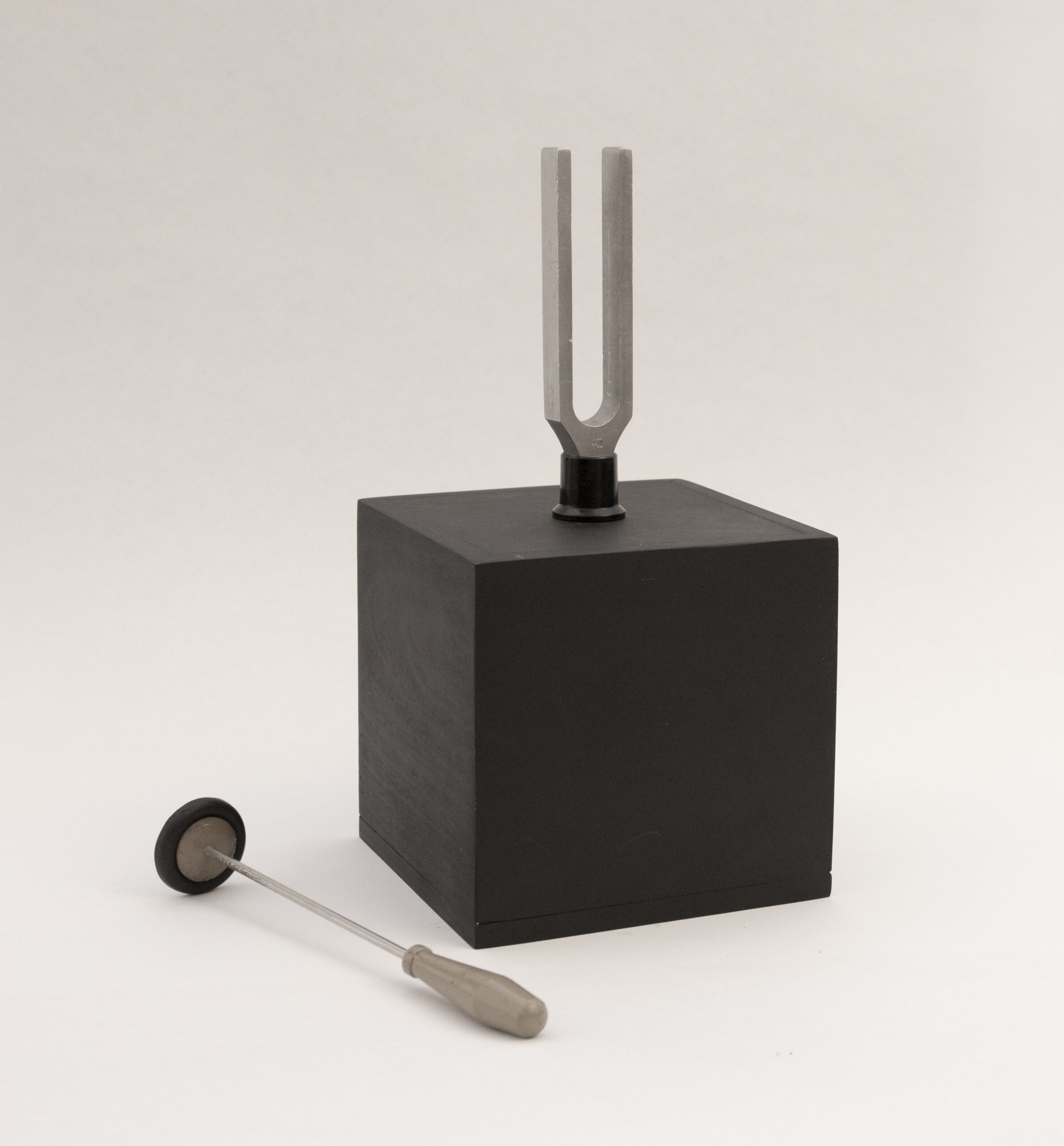
In his new show, More than Dreams, Less than Things, at NIKA Project Space Paris, Ugay looks at the origins of image-making both literally and philosophically. Inspired by Ibn al-Haytham’s Book of Optics, the artist reanimates the ancient camera obscura, letting light seep through the book’s pages to birth abstract images: faded records of a presence.

The exhibition, which opened on March 16, explores the tension between technological progress and the way this can be disrupted by the power of imagination and poetry – eminently human things – by looking at the intersection of photography, technology, and diasporic memory.

His show, curated by Elena Sorokina, situates an emergence of Central Asian narratives coming more and more to the forefront of the international art and cultural world of Europe. Through the lens of Soviet futurism, Ugay explores a broader vision of seeing in an age where so much remains invisible.

TCA spoke with Ugay about the way he approaches his art, his sources, and how he conceives images not as finished objects but as processes — mutable, unstable, and deeply human.

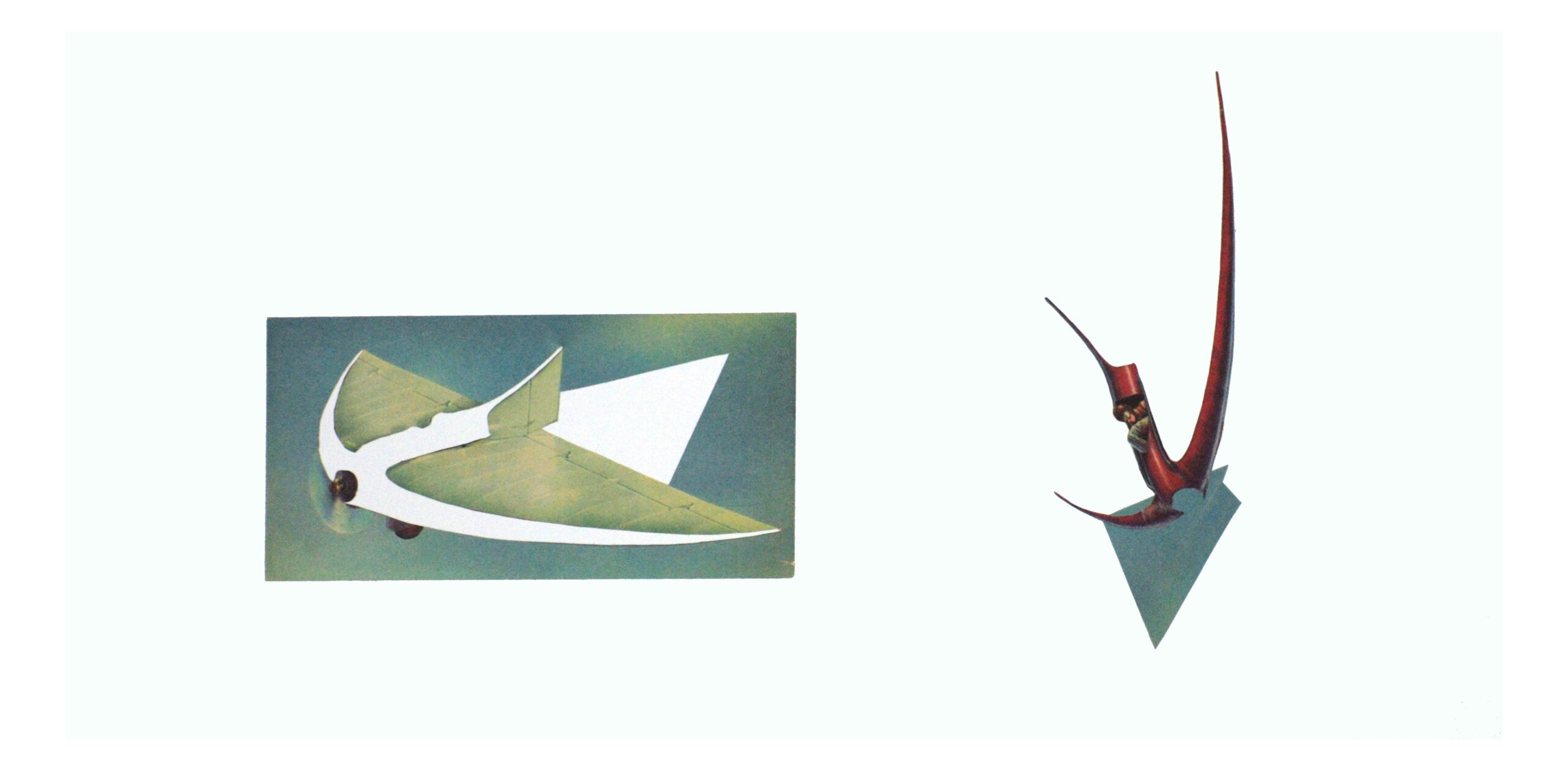
03_Alexander Ugay, More than Dreams, Less than Things. Courtesy of the artist

TCA: Where does the title for your new show, More than Dreams, Less than Things, come from?

The title came about after reading Henri Bergson’s book, Matter and Memory. I really liked the idea that an image is not only the relationship between absence and presence but also intensity and density. This idea made up for my dissatisfaction with the notion of resolution in photography.

The title, in this case, is not just a definition of the image but a key to understanding its substantive basis. The image is the surface of the ‘grand contract’ between necessity and freedom, memory and matter, entropy and being.

TCA: In More than Dreams, Less than Things, you use the camera obscura technique. How does this historical process relate to your exploration of the materiality of images in this exhibition?

Light and the way of its optical focusing remain unchanged; in this sense, the camera obscura differs little from modern optical systems. What is important is the corpuscular-wave dualism, which, in the language of computer technology, allows light to be both hardware energy and software information at the same time.

It softens binary oppositions of virtual and material through transition to states of forcefields, intensities, and intuition. The camera obscura, in this case, is not only a technical device but a field of tension. As hardware, it transforms energy into information. As software, the camera forms a certain quality of information, a unique ratio of the figurative, abstract, and symbolic.

Alexander Ugay. Courtesy of the artist

TCA: Can you trace the beginning of your interest in antiquated futuristic machines, which you find mostly depicted in scientific magazines from the 1970s-80s?

The interest arose most naturally [as] my father was an engineer and inventor. From early childhood, I spent time in his workshop, where there were many interesting objects and constructions in addition to magazines.

It should be noted that the pretensions and intents were not nostalgic or futuristic. Most of the materials and technology were available in one way or another. All things invented or made were paired with practical applications and actually used in everyday life.

It seems to me that it was in that decade that ideology locked people into an unsettling present where the traumatic, uncomfortable past was pushed to the margins of history, and the future was determined by the inevitability of communism. Therefore, the phenomenon of mass interest in invention at that time can be seen as a symptom, as a reaction to the impossibility of working through the past and the lack of alternative spaces for the future.

Alexander Ugay, More than Dreams, Less than Things. Courtesy of the artist

TCA: The exhibition draws on Ibn al-Haytham’s Book of Optics. How did this text inform your approach to combining light, geometry, and abstract imagery in your work?

Alhazen combined the extra-missionary concept of vision (the eye emits visual rays that probe reality) proposed by Euclid with the intra-missionary concept (reality is grasped by the eye through projection on the retina), thus creating the modern theory of vision. If the act of perception/interpretation changes reality itself, then indexical tactility and mimetic grasping is a process of computability and rendering.

Reality then appears as a kind of interface or informational surface of an inaccessible depth.

The Book of Optics established clarity, sharpness, and similarity as the principles that have guided the development of optics and optical media over the last thousand years. All these properties certainly remain relevant in our time, but often not as criteria of truth, but of computability.

Alexander Ugay. Book of Optics. Courtesy of NIKA Project Space

TCA: In your new works, you explore both the work of German theoretician Heisenberg – especially his uncertainty principle – and psychoanalyst Lacan’s theory of the signifier. How do these converge in your photographic practice?

According to the uncertainty principle, it is impossible to measure the position of a particle and its momentum at the same time. Similarly, in psychoanalysis, the object of desire (particle) never coincides with the desire itself (impulse).

Continuing the line of structural similarity, we can say that the unconscious, phantasm, thinking itself have a wave nature while the act of observation, interpretation or choice collapses all potentialities into one single possible option.

The photographic image is a collapsing of the wave function, given the fact that radical improvements in resolution, light sensitivity, and processing algorithms are ‘displacing’ the wave nature from optical media.

In this new project, I’m interested in photography not as a concept of a window or a mirror to memory but as a possible indication of a connection with the information lost after collapse.

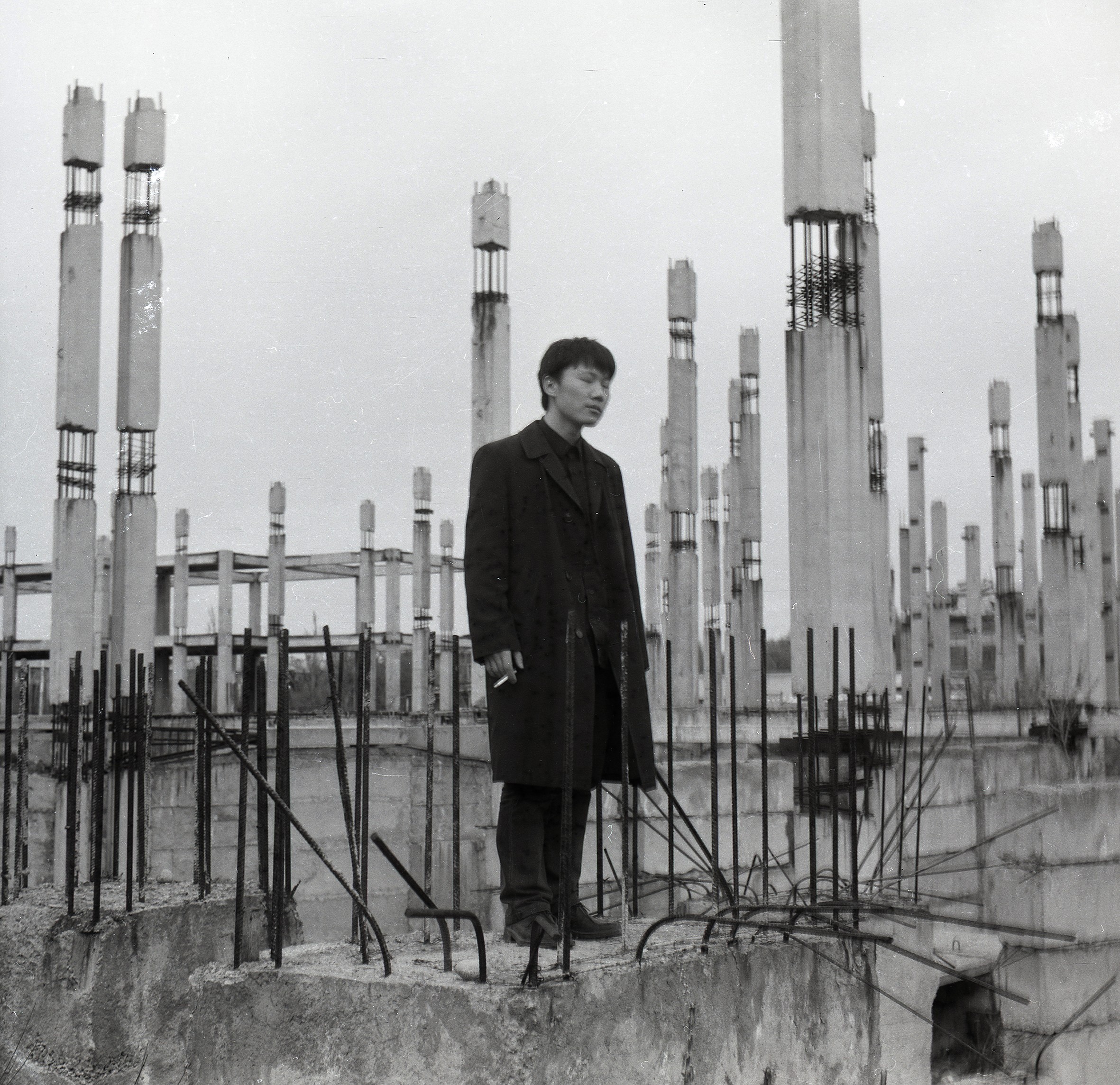
Alexander Ugay. Portrait, courtesy of the artist

TCA: The underpinning of the exhibition is heavily charged theoretically, but does your Korean-Kazakh background directly influence your approach to art as a tool for reflecting diasporic memory?

The 1937 deportation of Koreans from the Far East to Central Asia divided time into history and memory, while the collapse of the USSR split memory into accusatory and justificatory.

Since all key assembly points, such as language, tradition, land, and ideology have been alienated or lost, the diasporic memory of the post-Soviet is ambivalent about national identity.  It interrupts the silence of memory, usually not as a voice of the lost but as a defensive reaction in the form of resentment or imperial consciousness.

In my practice, I often turn to post-memory, reinvention, and generation.  This allows the lost to gain matter and the material to peel off perpendicular to the arrow of time. Materiality acts as a kind of conduit/invention. The silence of memory passes into the silence of the object, which releases images that lead us along the path of unknown return.


Alexander Ugay’s More than Dreams, Less than Things solo exhibition, curated by Elena Sorokina, will be on display at NIKA Project Space Paris until May 17, 2025.

Binance to Assist Kyrgyzstan in Developing Blockchain Infrastructure and Crypto Assets

Kyrgyzstan’s National Investment Agency has signed a Memorandum of Cooperation with Changpeng Zhao, founder of Binance, the world’s largest cryptocurrency exchange by trading volume. According to the agency, Binance will assist Kyrgyzstan in several key areas, including the development of blockchain infrastructure and the creation of a national cryptocurrency reserve.

The partnership will also focus on training young professionals, government employees, and specialists in blockchain technologies, virtual asset management, and cybersecurity. In addition, Binance will provide support in establishing a management system for virtual assets and blockchain technology in Kyrgyzstan source.

While public interest in cryptocurrencies continues to grow in Kyrgyzstan, the market remains poorly regulated. Earlier this year, the Ministry of Economy and Commerce proposed legislation to create licensed crypto banks that would offer regulated banking services related to digital assets. The ministry stressed the need to integrate crypto assets into the national financial system, citing the rapid advancement of digital technology and the economic potential of legalizing cryptocurrency transactions. The introduction of crypto banks is expected to increase transaction volumes, boost tax revenues, and create new jobs in the fintech sector, positioning Kyrgyzstan as a regional hub for financial innovation.

In a separate move to stabilize the sector, Kyrgyzstan’s Cabinet of Ministers significantly raised the minimum authorized capital required for crypto exchanges, from 100 million KGS to 10 billion KGS, a hundredfold increase. The Ministry of Economy and Commerce, which initiated the reform, stated that the measure is designed to ensure the financial stability of crypto platforms, safeguard user interests, and foster a transparent and secure virtual assets market. Existing exchanges have until January 1, 2026, to comply with the new capital requirements.

China’s Jiangsu Province and Soho Holding Group to Build Multifunctional Center in Astana

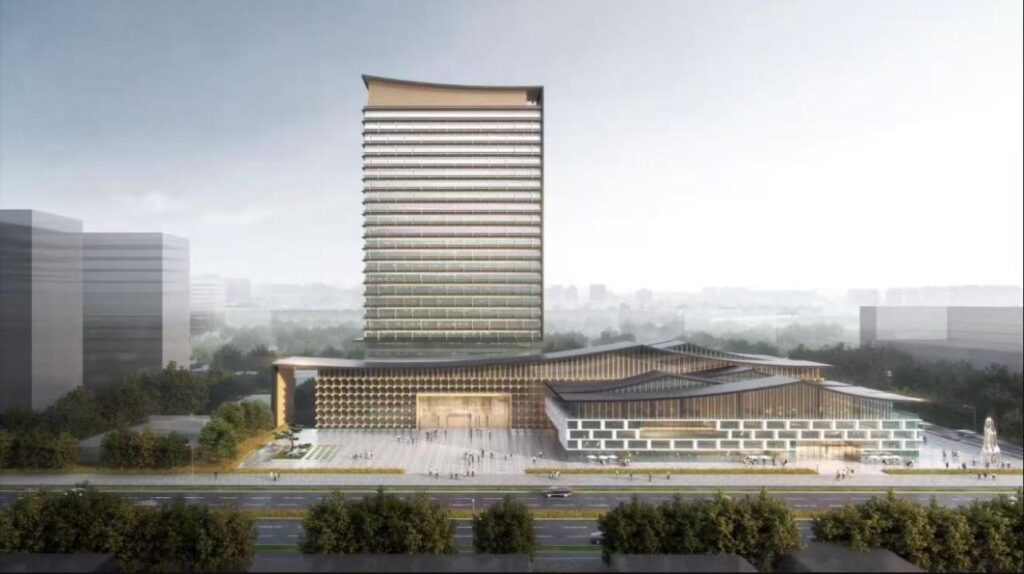
Kazakhstan’s Minister of Trade and Integration, Arman Shakkaliyev, visited China on April 3, where he met with officials from Jiangsu Province and representatives of Jiangsu Soho Holding Group in Nanjing, the province’s capital. During the meeting, the Chinese side presented design concepts for a planned multifunctional center to be built in Kazakhstan’s capital, Astana, in 2026.

According to the trade ministry, the future center will strengthen Kazakh-Chinese trade and business relations. It will serve as a venue for showcasing Chinese and Kazakh goods, hosting business negotiations, registering trade transactions, and providing consulting services. The complex will also include a trade pavilion, a cultural center, and an office for Jiangsu Soho Holding Group.

The sides also discussed plans to hold a Jiangsu Province goods exhibition in Astana from June 11 to 13, to coincide with the upcoming Central Asia-China summit. As part of his visit, Shakkaliyev toured the Central Asia-Jiangsu Trade Center and the National Pavilion of Kazakhstan in Nanjing, which opened in September 2024. The trade center is a multifunctional platform promoting exports from Kazakhstan, Uzbekistan, Tajikistan, and Turkmenistan, and is designed to increase Central Asian access to the Chinese market.

Shakkaliyev also held talks with Eurasia Construction Capital Co. Ltd, which is planning to launch an investment project in Kazakhstan’s Atyrau region to establish a private special economic zone (SEZ) or industrial park. The initial investment is estimated at $100 million. Seven major Chinese companies, specializing in petrochemical products, renewable energy, and construction materials, have expressed interest in participating in the SEZ. The minister affirmed the government’s full support for the initiative, highlighting its potential to develop high value-added production in Kazakhstan.