• KGS/USD = 0.01144 0%
  • KZT/USD = 0.00213 0%
  • TJS/USD = 0.10456 0.19%
  • UZS/USD = 0.00008 0%
  • TMT/USD = 0.28490 0%
  • KGS/USD = 0.01144 0%
  • KZT/USD = 0.00213 0%
  • TJS/USD = 0.10456 0.19%
  • UZS/USD = 0.00008 0%
  • TMT/USD = 0.28490 0%
  • KGS/USD = 0.01144 0%
  • KZT/USD = 0.00213 0%
  • TJS/USD = 0.10456 0.19%
  • UZS/USD = 0.00008 0%
  • TMT/USD = 0.28490 0%
  • KGS/USD = 0.01144 0%
  • KZT/USD = 0.00213 0%
  • TJS/USD = 0.10456 0.19%
  • UZS/USD = 0.00008 0%
  • TMT/USD = 0.28490 0%
  • KGS/USD = 0.01144 0%
  • KZT/USD = 0.00213 0%
  • TJS/USD = 0.10456 0.19%
  • UZS/USD = 0.00008 0%
  • TMT/USD = 0.28490 0%
  • KGS/USD = 0.01144 0%
  • KZT/USD = 0.00213 0%
  • TJS/USD = 0.10456 0.19%
  • UZS/USD = 0.00008 0%
  • TMT/USD = 0.28490 0%
  • KGS/USD = 0.01144 0%
  • KZT/USD = 0.00213 0%
  • TJS/USD = 0.10456 0.19%
  • UZS/USD = 0.00008 0%
  • TMT/USD = 0.28490 0%
  • KGS/USD = 0.01144 0%
  • KZT/USD = 0.00213 0%
  • TJS/USD = 0.10456 0.19%
  • UZS/USD = 0.00008 0%
  • TMT/USD = 0.28490 0%

Kazakhstan and Kyrgyzstan Aim to Increase Trade to $3 Billion

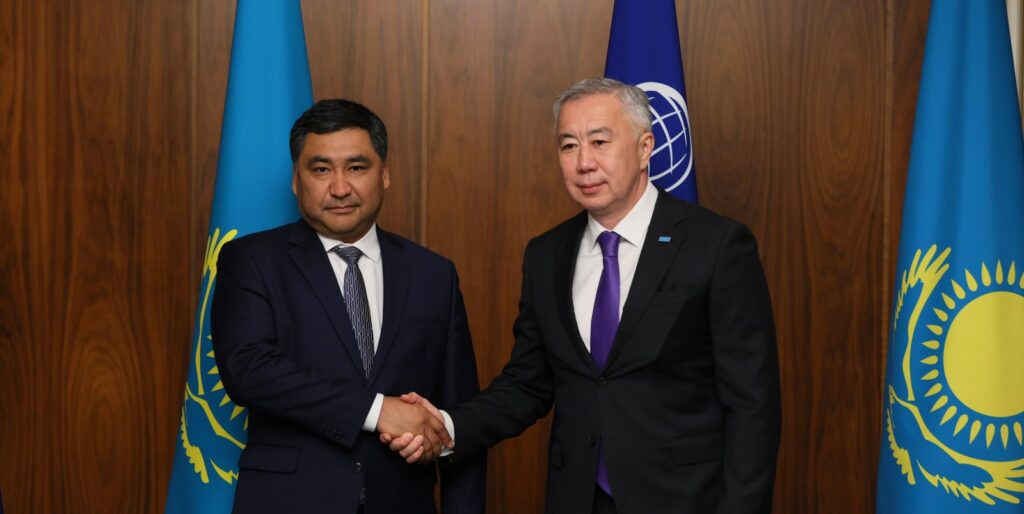
Kazakhstan and Kyrgyzstan have reaffirmed their commitment to significantly boost bilateral trade, aiming to reach $3 billion annually by 2030. The pledge was made during a meeting between Daniyar Amangeldiyev, First Deputy Chairman of Kyrgyzstan’s Cabinet of Ministers, and Serik Zhumangarin, Kazakhstan’s Deputy Prime Minister and Minister of National Economy, on the sidelines of the Astana International Forum on May 30.

In 2024, trade between the two countries totaled $1.7 billion. The new target reflects a strategic initiative set by the presidents of both nations to deepen economic integration.

Roadmap for Trade Expansion

At the meeting, officials discussed a draft roadmap to accelerate bilateral trade. Zhumangarin noted that Kazakhstan is prepared to increase its exports to Kyrgyzstan by more than $260 million, with a focus on petrochemicals, food products, and metallurgy.

In the first quarter of 2025, trade between the two countries reached $435.1 million, a 25.2% increase compared to the same period in 2024. Kazakhstan’s exports stood at $341.9 million, while imports from Kyrgyzstan totaled $93.3 million.

Agriculture: A Key Growth Sector

Agricultural products now account for 20% of bilateral trade, and this figure continues to rise. In Q1 2025, trade in agricultural goods surged by 40.7%. Kazakhstan exported 3,400 tons of grain and 10,900 tons of flour to Kyrgyzstan during this period.

In a notable development, Kazakhstan has approved Kyrgyzstan’s proposal to establish a “green-light” corridor at the border, ensuring the unhindered passage of early-season fruits and vegetables from Kyrgyzstan.

Major Logistics Hub to Boost Connectivity

A flagship joint project is the creation of an Industrial Trade and Logistics Complex at the Kazakhstan-Kyrgyzstan border. Located near the Karasu and Ak-Tilek checkpoints, the hub is poised to become one of Central Asia’s largest cargo distribution centers, supporting the consolidation, processing, and transit of goods.

Land has already been allocated for the project: 50 hectares on the Kazakh side and 40 hectares on the Kyrgyz side. An investor has been identified, and work on a master plan and feasibility study is currently underway.

To support this initiative, Kazakhstan has established the Alatau industrial zone in the Zhambyl region. The zone will host facilities for agricultural processing, as well as the production of consumer goods and building materials.

Infrastructure Connectivity: Almaty-Issyk-Kul Highway Project

The meeting also touched on the long-anticipated construction of an alternative highway linking Almaty, Kazakhstan’s largest city, with Lake Issyk-Kul, one of Kyrgyzstan’s most popular tourist destinations. The project is expected to enhance regional connectivity and stimulate tourism and trade between the two countries.

Tajik Students Gain Expanded Access to Internships and Training in the UK

Educational cooperation between Tajikistan and the United Kingdom is reaching new milestones, with fresh opportunities emerging for Tajik students to study and gain professional experience in the UK. On May 31, representatives of Tajikistan’s State Agency “Center for International Programs” held talks with leadership at the University of Greenwich to discuss avenues for academic collaboration and student support initiatives.

Building Bridges in Higher Education

The meeting took place within the framework of Tajikistan’s broader strategy to internationalize its education and science sectors. According to the Ministry of Education and Science, discussions focused on improving access for Tajik citizens to high-quality education, facilitating professional internships, and exploring financial assistance mechanisms.

Particular emphasis was placed on fields such as economics, finance, and management. University of Greenwich officials highlighted their partnerships with major financial institutions, which enable students to gain practical experience and enhance their competitiveness in global labor markets.

Greenwich: A Gateway to Global Careers

As part of the talks, the two sides explored the possibility of offering scholarships to Tajik students through national and international funding schemes. An agreement was reached to continue discussions and expand academic exchange programs. Experts see this initiative as a significant step in strengthening bilateral educational ties and opening new horizons for Tajik youth.

Strengthening Tajik-UK Educational Ties

Tajik-UK educational cooperation has grown steadily in recent years. Since 2018, more than 30 Tajik students have received Chevening Scholarships to pursue master’s degrees at top British universities. The program, funded by the UK government, remains a key pillar of bilateral academic exchange.

In 2022, the British Council resumed operations in Dushanbe, boosting collaboration on English language education and teacher training. Joint projects with the Tajik Ministry of Education aim to modernize teaching methods and improve educational outcomes.

Tajik universities, such as Rudaki Tajik National University, are also forging partnerships with British institutions like the University of Central Lancashire, including dual degree programs and collaborative research. STEM education is a growing area of focus: in 2023, British-supported robotics and programming courses were launched for Tajik schoolchildren.

Regional Context: Broader British Engagement in Central Asia

The UK is expanding its educational footprint across Central Asia. In Turkmenistan, British experts have supported teacher training and curriculum modernization. In the 2024/25 academic year, 12 Turkmen nationals received Chevening Scholarships. The British Council continues to roll out digital education initiatives, such as the Digital Learning project, in the region.

In May 2025, Turkmenistan also participated in the World Education Forum in London, joining delegates from over 100 countries to discuss global trends and priorities in education.

Ukraine’s Drone Attack: Russian Region Bordering Kazakhstan Cited as Possible Staging Point

Much remains publicly unknown about how Ukraine pulled off a complex drone attack that targeted several Russian air bases, but some initial, unconfirmed Russian reports say the drones were assembled at a rented warehouse in Chelyabinsk, a Russian city in a region that borders Kazakhstan.

When asked about the reports, a spokesman for Kazakhstan’s Ministry of Foreign Affairs said at a briefing on Monday that he was aware of them and could not confirm speculation that Ukraine may have smuggled the drone components into Russia from neighboring Kazakhstan.

“I am not an expert in military affairs. Of course, I saw these reports this morning, of course, anonymous Telegram channels are spreading them, there is no official confirmation of this, so I cannot confirm it. I will leave this to the realm of theory for our experts,” ministry spokesman Aibek Smatdiyarov said in remarks reported by media in Kazakhstan.

The Russian sources said they geolocated the warehouse in Chelyabinsk by studying photos that purportedly show the drones and their containers as well as the interior of the rented building where they were assembled. The photos were published by Ukrainian media. Additional unconfirmed reports say Russian investigators have questioned several truck drivers who said they drove from Chelyabinsk and were duped into delivering the drones to their target areas.

The Russian reports have not been confirmed by officials in either Ukraine or Russia.

The pro-Russian War on Fakes channel on Telegram said it was “worth noting” that the Chelyabinsk region borders Kazakhstan and that there was a possibility that the drone parts could have been smuggled into Russia from there. It did not offer any direct evidence to support its speculation.

International media analysts have described the War on Fakes channel as a disseminator of disinformation, though Russian military bloggers on the war between Russia and Ukraine are closely monitored because they sometimes offer more information than that provided by the Kremlin and other official channels. Some international observers of the war circulated the Chelyabinsk report on social media.

Ukrainian President Volodymyr Zelenskyy has said the “office” of the drone operation was next to a regional headquarters of the FSB, the Russian security agency. He did not identify the region.

The border between Russia and Kazakhstan is about 7,600 kilometers, making it one of the longest borders in the world. The two countries have a robust trade relationship. Kazakhstan and other Central Asian countries have tried to project a neutral stance in the war between Russia and Ukraine.

Ukraine’s security service, known by its acronym SBU, said on Telegram that it hit “34% of strategic cruise missile carriers at the main airfields of the Russian Federation” and that it will provide details about the operation “a little later.”

Russia’s Ministry of Defense said attacks on military airfields in the Ivanovo, Ryazan, and Amur regions were repelled.

“In the Murmansk and Irkutsk regions, as a result of the launch of FPV drones from the territory located in the immediate vicinity of airfields, several units of aircraft caught fire,” the ministry said.

Drone footage appeared to show fire and smoke rising from some of the military planes that were struck by drones. Another video taken by a bystander showed a drone purportedly taking off from the top of a truck, lending credibility to reports that Ukraine activated drones that had been installed inside vehicles in Russia, drastically reducing the distance to their targets.

Kazakhstan Second Only to Russia in CIS for Gasoline Purchasing Power

Kazakhstan ranks 36th out of 124 countries in a global gasoline affordability index based on average monthly earnings, according to recent data from Numbeo and analysis by Energyprom.kz. The study assesses how many liters of gasoline a person can buy with an average monthly salary and compares this indicator across the Commonwealth of Independent States (CIS) and globally.

Kazakhstan Among CIS Leaders in Fuel Affordability

According to the report, the average Kazakhstani can purchase approximately 1,100 liters of gasoline per month based on their salary. This places Kazakhstan second among CIS countries, trailing only Russia, where the average salary covers about 1,140 liters, ranking 34th worldwide. Belarus follows with 801.3 liters, then Azerbaijan (677.9 liters), Kyrgyzstan (483.9 liters), Moldova (476.6 liters), Uzbekistan (461.3 liters), Armenia (450.3 liters), Ukraine (341.4 liters), and Tajikistan (223.8 liters).

Globally, Libya leads with a staggering 10,100 liters, followed by Kuwait (8,900 liters) and Qatar (6,600 liters). In contrast, Syria ranks last, where the average salary can buy just 22.1 liters. Cuba (28.5 liters) and Côte d’Ivoire (112.3 liters) also rank among the lowest.

Global Gasoline Prices: Kazakhstan Remains Among the Most Affordable

Kazakhstan is also one of the countries with the lowest fuel prices, around $0.50 per liter. Cheaper fuel is found in Libya ($0.03), Egypt and Algeria ($0.30), Kuwait ($0.40), and Malaysia ($0.50). By comparison, the most expensive gasoline is in Hong Kong at $3.10 per liter, followed by Iceland ($2.40), and Singapore, the Netherlands, and Switzerland (all around $2.20).

Price Trends in Kazakhstan

In April 2025, gasoline prices in Kazakhstan rose by 0.4% compared to the previous month and by 2.2% year-on-year. Prices for premium grades, AI-95/96 and AI-98, increased by 0.1% month-over-month, while AI-92 rose by 0.4%.

On an annual basis, AI-92 increased by 1.8%, AI-98 by 3.2%, and AI-95/96 by 4.3%. The Zhambyl region saw the highest monthly increase at 1%, followed by the Abai and Turkestan regions and Shymkent (all at 0.8%). North Kazakhstan recorded the smallest increase (0.1%), while prices remained unchanged in Aktobe, Ulytau, and Almaty. The West Kazakhstan region saw a slight price decline of 0.1%.

Year-on-year, the highest price growth was observed in West Kazakhstan (4.8%), Aktobe (4.1%), and Shymkent (3.1%). The most modest increases were recorded in Almaty (0.9%), Akmola (1.1%), and Zhetysu (1.7%).

Production, Pricing, and Export Data

In April 2025, the average price per liter of AI-92 was 205 KZT ($0.40), AI-95/96 stood at 264 KZT ($0.52), and AI-98 at 299 KZT ($0.59). The highest AI-92 prices were in Petropavlovsk ($0.41), and the lowest in Atyrau ($0.38). Taldykorgan had the most expensive AI-95/96 ($0.54), while Atyrau offered the lowest ($0.48). AI-98 was priciest in Almaty ($0.62) and cheapest in Aktobe ($0.56).

In the first two months of 2025, domestic producers met 99.99% of the nation’s gasoline demand. Kazakhstan produced 1.1 million tons of gasoline, a 20.8% year-on-year increase. Imports totaled only 101.8 tons, down 8.1%. The country exported 6,700 tons of gasoline during this period, all to Uzbekistan. Supplies to the domestic market rose by 20%, also reaching 1.1 million tons.

Women’s Leadership Takes Center Stage at Tashkent Law Spring

A standout panel session on women’s leadership took place during the IV International Legal Forum “Tashkent Law Spring” on May 30 at the InterContinental Tashkent Hotel. Hosted by ACWA Power, a major investor in Uzbekistan’s energy sector with $15 billion in local projects, the session explored practical approaches to empowering women in traditionally male-dominated industries, including law, energy, and public service.

A Platform for Legal Reform and Gender Dialogue

Now in its fourth year, Tashkent Law Spring has become a key event for legal professionals across Central Asia. The 2025 forum drew over 200 participants, including lawyers, judges, academics, and policy experts, with a focus on strengthening Uzbekistan’s legal landscape. Among the many sessions, the ACWA Power panel on women’s leadership stood out for its cross-sector insights and actionable recommendations.

Saudi Vision 2030: Progress in Workforce Gender Inclusion

Hager Altwegieri, Board Secretary at ACWA Power and an expert in governance and sustainability, shared Saudi Arabia’s progress under Vision 2030. “In 2016, women’s workforce participation stood at 22.8%. Today, it is at 36%,” she said. “We surpassed our original 30% target and are now aiming for 40% by 2030.”

Altwegieri emphasized the importance of setting measurable goals and ensuring institutional accountability. She cited a government-backed childcare support program as an example of how targeted policies can reduce barriers for working mothers.

Mentorship and Infrastructure as Enablers

Altwegieri also highlighted the value of mentorship and career readiness support for women entering the workforce. “Women often need help with CV writing and interview preparation,” she said. “Mentorship plays a crucial role in this journey.” She underscored the importance of respecting cultural traditions, quoting an Arabic proverb: “A mother is a school. If you prepare her well, you prepare a nation for prosperity.”

Digital Safety: A New Front in Gender Equality

Kamola Alieva, PhD in Law and a gender equality expert at Tashkent State University of Law, addressed the risks posed by digital tools in professional environments. “Digitalization is changing how we work, but it also exposes women to new forms of harassment,” she warned. Inappropriate messages, digital exclusion, and misuse of personal data are increasingly common threats, especially in male-dominated workplaces. Alieva called for legal frameworks that define digital misconduct and protect employee data with gender-sensitive safeguards.

The Investment Case for Inclusion

Anar Nurbayeva, Gender Advisor and Principal at the European Bank for Reconstruction and Development (EBRD), discussed the bank’s inclusive investment strategies. “Gender and economic inclusion is one of our top three priorities,” she said, noting EBRD’s collaboration with ACWA Power and Schrodinger College to promote renewable energy careers among women. “It’s about both fair HR policies and building future-ready skills,” she added.

Challenges in Intellectual Property for Women Entrepreneurs

Madina Tursunova, Chair of the Association of Patent Representatives of Uzbekistan, outlined the hurdles women face in protecting intellectual property (IP). “IP enforcement is costly and complex,” she said, noting a societal bias that discourages women from innovating. Tursunova advocated for more training in business skills, arguing that support must go beyond financial aid to include leadership development for women entrepreneurs.

Energy Equity as a Justice Imperative

Aziza Umarova, Head of the Delivery Unit at the Agency for Strategic Reforms under the President of Uzbekistan, highlighted energy access as a social justice issue. “While Austria reports just eight minutes of blackout per year, some Uzbek schools experience six daily blackouts,” she said. Her team created a geo-portal to map essential services in schools and hospitals across the country.

Umarova called for more women in decision-making roles in the energy sector, arguing they bring inclusive and community-focused solutions. “We need women who understand regulation and innovation,” she said, citing India’s rural solar lamp initiative as an example of grassroots innovation with transformative impact.

Human Capital and Measurable Progress

Altwegieri returned to discuss ACWA Power’s approach to tracking gender representation. “In 2020-21, we appointed our first female board member. We now monitor gender metrics at the board level as part of our Human Capital Strategy,” she said. These metrics are tied to national policy goals and reviewed by top leadership to ensure accountability.

Embedding Gender Equality in HR Policies

Olga Pak, Head of Human Resources and Corporate Culture at ACWA Power Uzbekistan, described how the company embeds gender equality across all HR processes, from recruitment and promotion to compensation. “We’ve institutionalized gender parity,” she said. The company also enforces strict anti-harassment policies, creating a safer, more inclusive work environment.

Cross-Sector Collaboration and Collective Action

The panel exemplified how legal, business, and public sectors can work together to advance gender equality. Speakers from international development banks, energy firms, academia, and government shared a common message: women’s voices must be integrated into all levels of decision-making.

Education, Quotas, and Startup Support

During the Q&A session, speakers addressed how to support women’s entry into law and energy careers. Alieva emphasized the need to teach gender equality and digital safety in schools. Nurbayeva highlighted clear career pathways from education to employment. Tursunova noted the empowering effect of women-led startups.

The topic of quotas also surfaced. Umarova supported their temporary use to increase representation. “We need at least 30% of ministers and governors to be women,” she said. Altwegieri added that such targets must come with clear accountability mechanisms to ensure impact.

As gender inclusion continues to gain traction across sectors, the panel hosted by ACWA Power underscored that advancing women’s leadership is not only a moral imperative but also a strategic advantage for sustainable development in Central Asia.

Italy Courts Central Asia: Trade, Transit, and Tech Take Center Stage

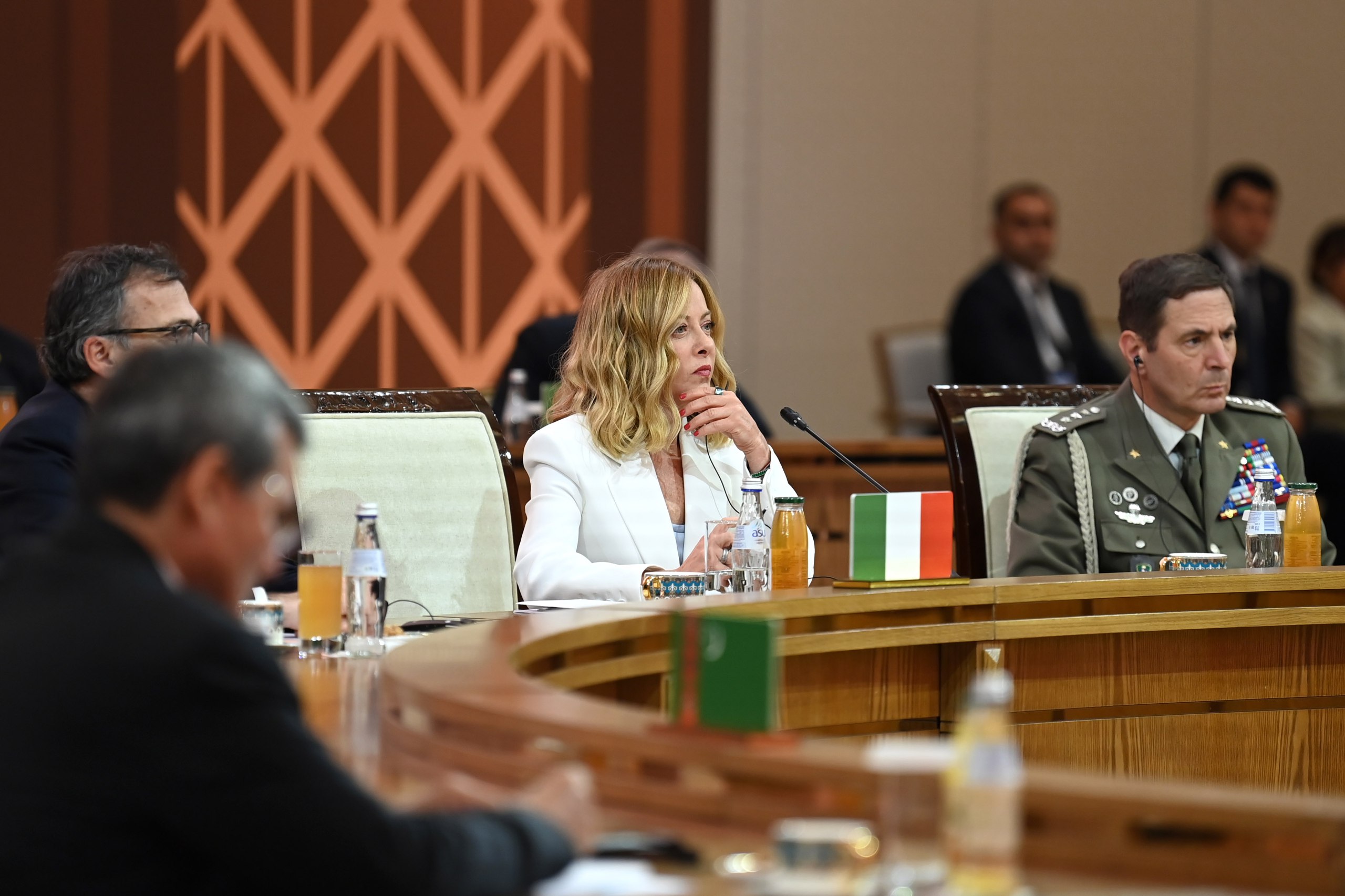
The inaugural Central Asia-Italy Summit, held on May 30, 2025, in Astana, marked a significant step in international diplomacy. It established a new framework for dialogue between the European Union and Kazakhstan, Kyrgyzstan, Uzbekistan, Tajikistan, and Turkmenistan. The participation of the leaders of all five Central Asian nations alongside Italian Prime Minister Giorgia Meloni underscores the region’s growing strategic and economic relevance.

Bilateral Meetings

Ahead of the summit, extended talks took place between Kazakh President Kassym-Jomart Tokayev and Italian Prime Minister Giorgia Meloni. Tokayev emphasized the depth and stability of bilateral ties, describing Italy as a key strategic partner. Trade between the two nations grew by 24% in 2024, reaching $20 billion. Italy is Kazakhstan’s third-largest trading partner and a major investor, with approximately $7.6 billion invested over the past two decades. Over 270 Italian companies currently operate in Kazakhstan.

@akorda

Meloni praised the relationship as “exceptional,” highlighting Italy’s interest in expanding cooperation across trade, energy, and humanitarian domains. A pivotal outcome of the meeting was the signing of a Joint Statement on Strengthening Strategic Partnerships.

@akorda

Additional agreements included:

  • Security and Migration – Readmission agreement;
  • Resources and Critical Materials – Cooperation on strategic mineral extraction;
  • Investment and Industrial Development – Agreements involving Samruk-Kazyna, Maire Tecnimont, and Ansaldo;
  • Water Management and Ecology – Memorandum with the Italian engineering association OICE;
  • Finance and Project Lending – Agreements with Cassa Depositi e Prestiti and SACE SpA;
  • Energy and Exports – Agreements with Samruk-Energo and Kazakh Invest.

President Tokayev also met with Turkmen President Serdar Berdimuhamedov, emphasizing cultural and economic ties and expressing hope for the realization of joint projects.

@akorda

Kazakhstan’s Proposals

Tokayev outlined proposals for expanding economic, technological, and humanitarian cooperation with Italy. He called for the development of logistics infrastructure and proposed establishing an Italian trading house in Almaty and launching the “Businessmen Plus Italy” platform.

Tokayev highlighted Kazakhstan’s readiness to boost oil exports, already over 30 million tons in 2023, a 27% increase from the previous year, and expand exports of over 100 goods valued at $1 billion, particularly non-resource items. He also proposed increased cooperation in agro-industry and emphasized aligning certification standards with the EU.

Kazakhstan invited Italian firms to participate in rare earth exploration under a model of “investment and technology in exchange for strategic raw materials.” Joint ventures in textiles, furniture, pharmaceuticals, and machinery were also encouraged.

Tokayev stressed decarbonization as a national priority and praised Italian investments in renewable energy. He proposed collaboration on green hydrogen and ammonia production and urged Italy to engage with the Global Biofuels Alliance.

@akorda

In education and research, Tokayev invited Italian technical universities to open branches in Kazakhstan, noting that 4,000 Kazakhstani students currently study in Italy. He proposed joint efforts in AI and innovation, including participation in the new Central Asia-EU Innovation Campus at the Astana Hub.

Transport infrastructure also featured prominently. Tokayev advocated for integrating the Trans-Caspian International Transport Route (TMTR) with the EU’s Global Gateway, calling it a modern Silk Road. Container traffic on the Kazakh section rose by 62% in 2023 to 4.5 million tons, with plans to double that figure within three years.

He also proposed declaring 2026 the Year of Cultural Rapprochement between Central Asia and Italy, with a series of humanitarian events to foster intercultural dialogue.

Pragmatic Multilevel Diplomacy

The summit reflects a broader geopolitical trend: increased competition among global powers – China, Russia, Turkey, the EU, and the U.S., for influence in Central Asia. Italy’s non-confrontational, economically pragmatic stance makes it an appealing partner for the region.

A joint declaration reaffirmed commitments to political dialogue and cooperation in infrastructure, logistics, energy, and high technology. The parties pledged to support SME-focused investment projects and emphasized green energy and critical raw materials.

@akorda

Key outcomes also included support for TMTR as a sustainable multimodal corridor and commitments to water security, climate action, and environmental projects, including pilot initiatives to restore the Aral Sea. Roundtables on water and energy are planned for 2026-2027.

Meloni expressed support for regional tech and education initiatives, including youth exchanges, vocational training, and joint scientific programs.

Kyrgyzstan offered to host the next summit in 2027, while Italy will hold the fourth Foreign Ministers’ Conference in spring 2026.

@akorda

This new summit format mirrors others such as the U.S. C5+1 and Central Asia-Germany platforms, reflecting the region’s desire for structured engagement with external partners. Ultimately, Central Asia’s ability to act cohesively will determine the success of such initiatives.

The Central Asia-Italy Summit affirmed the region’s growing diplomatic maturity and Italy’s role as a constructive European partner. Amid rising global fragmentation, these forums offer valuable mechanisms for promoting balance, modernization, and sustainable development.