• KGS/USD = 0.01144 0%
  • KZT/USD = 0.00193 -0%
  • TJS/USD = 0.10811 -0.28%
  • UZS/USD = 0.00008 0%
  • TMT/USD = 0.28490 0%
  • KGS/USD = 0.01144 0%
  • KZT/USD = 0.00193 -0%
  • TJS/USD = 0.10811 -0.28%
  • UZS/USD = 0.00008 0%
  • TMT/USD = 0.28490 0%
  • KGS/USD = 0.01144 0%
  • KZT/USD = 0.00193 -0%
  • TJS/USD = 0.10811 -0.28%
  • UZS/USD = 0.00008 0%
  • TMT/USD = 0.28490 0%
  • KGS/USD = 0.01144 0%
  • KZT/USD = 0.00193 -0%
  • TJS/USD = 0.10811 -0.28%
  • UZS/USD = 0.00008 0%
  • TMT/USD = 0.28490 0%
  • KGS/USD = 0.01144 0%
  • KZT/USD = 0.00193 -0%
  • TJS/USD = 0.10811 -0.28%
  • UZS/USD = 0.00008 0%
  • TMT/USD = 0.28490 0%
  • KGS/USD = 0.01144 0%
  • KZT/USD = 0.00193 -0%
  • TJS/USD = 0.10811 -0.28%
  • UZS/USD = 0.00008 0%
  • TMT/USD = 0.28490 0%
  • KGS/USD = 0.01144 0%
  • KZT/USD = 0.00193 -0%
  • TJS/USD = 0.10811 -0.28%
  • UZS/USD = 0.00008 0%
  • TMT/USD = 0.28490 0%
  • KGS/USD = 0.01144 0%
  • KZT/USD = 0.00193 -0%
  • TJS/USD = 0.10811 -0.28%
  • UZS/USD = 0.00008 0%
  • TMT/USD = 0.28490 0%
10 December 2025

Kyrgyz-Tajik Villages to Be Relocated as Part of Border Resolution

Kyrgyz President Sadyr Japarov recently spoke with the Kabar news agency about progress in resolving the Kyrgyz-Tajik border dispute. He also addressed plans for the relocation of villages and homes situated in the checkerboard-like border areas.

Progress Toward Resolution

Japarov provided an update on the status of negotiations, commenting: “The border issue is almost resolved. Right now, both sides are working on documenting the agreement. After this, the intergovernmental commissions will sign the documents, followed by the foreign ministers. Then, the parliaments of both countries will ratify the agreement. Finally, the presidents of Kyrgyzstan and Tajikistan will sign it, and the process will conclude with an exchange of notes.”

Japarov noted, however, that the process would take time to finalize. “It will take another 1-2 years to carry out demarcation work before the issue is fully settled. The most important thing is that we have reached a bilateral agreement,” he said.

Addressing Checkerboard Villages

When asked about the fairness of the border resolution, Japarov highlighted the balanced nature of the agreement:

“In border disputes, it’s impossible to consider only one side’s interests. Decisions are made by considering the needs of both countries. For instance, some disputed sections of the border were split equally. In cases where houses were mixed, like in checkerboard villages, we resolved these issues too.”

To address these mixed-border settlements, Japarov explained that families whose homes fall on the other side of the border will be relocated. Tajik families residing on Kyrgyz land will be moved by Tajikistan, and Kyrgyz families on Tajik land will be relocated by Kyrgyzstan. “We will build new homes for them elsewhere, considering the size of their land,” Japarov assured.

Peaceful Resolution a Priority

Japarov emphasized the importance of resolving the dispute through peaceful and cooperative means. He underscored that resolving border issues would improve border management, avoid future tensions, and build trust between the two nations. Once the demarcation process began, Japarov promised full transparency and regular updates for the public.

Historical Context

Tensions along the Kyrgyz-Tajik border have been ongoing for decades, with significant disputes intensifying in the late 2000s and early 2010s. In these areas, infrastructure complications have exacerbated the problem. Both countries began constructing alternate roads to avoid crossing into each other’s territory, but rugged terrain and limited financial resources have slowed progress.

One of the most challenging areas is the road connecting Batken to the Kyrgyz village of Ak-Sai and the Tajik enclave of Vorukh. This road weaves through Kyrgyz and Tajik territory several times, and in some sections, the road itself serves as the border.

Kazakhstan and the UAE Are Building a Geoeconomic Powerhouse Spanning Asia and the Gulf

Kazakhstan President Kassym-Jomart Tokayev’s recent mid-January visit to the United Arab Emirates (UAE), to attend the Abu Dhabi Sustainability Week (ADSW) Summit, underscores the strategic importance both nations place on their bilateral ties. ADSW is a prominent global platform dedicated to accelerating sustainable development and promoting international cooperation on the global environmental agenda. The 2025 summit — with the theme, “Nexus of Next: Supercharging Sustainable Progress” — was designed specifically to explore advanced technologies such as artificial intelligence, renewable energy, and innovative sustainability solutions.

As leader of the most dynamic of the Central Asian economies, President Tokayev’s presence signaled his country’s ambition to play a more prominent role in addressing environmental challenges at an international level. In his keynote speech, Tokayev addressed environmental issues that are particularly critical for Kazakhstan, including desertification, biodiversity loss, water scarcity, and food security. He emphasized his country’s multifaceted approach to these challenges, which includes digital technologies, large-scale infrastructure projects, and the development of nuclear energy as a low-carbon solution.

Kazakhstan has recently launched initiatives, such as expanding solar and wind farms and implementing advanced irrigation systems to combat desertification. Tokayev also highlighted Kazakhstan’s commitment to meeting its renewable energy targets, aiming to generate 15% of its electricity from renewables by 2030, in partnership with global leaders in green technology.

Overall, the ADSW Summit provided a platform for Kazakhstan to engage with international partners, share its vision for sustainable development, and explore collaborative opportunities to address global environmental challenges. Kazakhstan’s efforts include the development of the Mohammed bin Rashid Al Maktoum Solar Park, which will have a capacity of 5,000 megawatts (MW) by 2030, and participation in the Space-D programme, which enhances operational performance through nano-satellites.

In particular, President Tokayev met with UAE President Sheikh Mohamed bin Zayed Al Nahyan to discuss bilateral relations. The two leaders agreed to focus on a specific economic agenda — focused on trade, investment, and sustainable development — to create positive bilateral trade dynamics. Their Joint Declaration on Strategic Investment Projects in these fields was also highlighted.

Kazakhstan and the UAE have developed a dynamic and multifaceted partnership over the past three decades. Since establishing diplomatic relations in 1993, the UAE has become Kazakhstan’s leading strategic partner in the Arab world. Early cooperation focused on trade and investment but has since expanded to include sectors such as petrochemicals, energy, transport, logistics, agriculture, and aerospace. Key milestones include the establishment of direct flight routes between the two countries and the signing of long-term investment agreements in the mid-2000s.

Tokayev noted that direct investment from the UAE into Kazakhstan more than doubled from 2023 to 2024, placing the country among the top ten largest foreign investors in Kazakhstan. A focal point of their discussion was the goal of increasing bilateral trade turnover to $1 billion. In this context, the Dubai International Chamber has established a representative office in Kazakhstan to boost trade and investment opportunities further still.

For several years, the UAE has been expanding its cooperation with the Greater Caspian Sea region, including Azerbaijan as well as Central Asia. The UAE’s renewable-energy company Masdar has established or will establish renewable energy projects — mainly wind energy — in Azerbaijan, Kazakhstan, and Uzbekistan. It is foreseen that much of the generated electricity may be exported to Europe via subsea cables across the bottom of the Caspian Sea and the Black Sea.

Likewise, the Abu Dhabi National Oil Company (ADNOC) is cooperating in the petrochemical sector in Azerbaijan’s offshore as well as in Kazakhstan and Turkmenistan. This cooperation includes the construction of value-added industries that will enable these countries to export refined petrochemical products.

The growing relationship between Kazakhstan and the UAE is thus representative of a broader strategic geoeconomic alignment. Kazakhstan’s vast natural resources and strategic location in Central Asia, in particular, offer the UAE significant opportunities. The UAE is a global hub for trade and innovation, and it benefits from being a “third party” that offers another vector of partnership to countries concerned about Chinese and Russian geoeconomic and strategic influence in the region.

The UAE’s bilateral agreement with Kazakhstan on investment cooperation in data centers and artificial-intelligence projects in Kazakhstan will assist in the development of the Trans-Caspian International Transport Route (TITR, also called the “Middle Corridor“) that will help to create new export markets for Central Asia. The strengthening of ties between Kazakhstan and the UAE provides potentially all Central Asian countries with increased access to global markets through the UAE’s advanced logistics networks. It likewise offers a model for other Central Asian nations seeking to diversify their international relationships.

The expanding relationship between Kazakhstan and the UAE highlights the emergence of a broad geoeconomic “meta-region” that will stretch from the Arabian Peninsula through the South Caucasus and across the Caspian Sea into Central Asia. If the present regime in Tehran collapses, then Iran (and possibly Iraq) could be included in this restructured economic space. Such a development would contribute to global geopolitical stability over the next two decades, which will be increasingly turbulent.

Kazakhstan’s role as a resource-rich, strategically positioned state complements the UAE’s capabilities as a global logistics and innovation hub. This partnership demonstrates how targeted investments in energy, technology, and infrastructure can create mutual benefits while reshaping regional dynamics. The UAE’s diversification strategy aligns seamlessly with Kazakhstan’s ambitions to enhance its international connectivity and reduce economic dependencies on traditional partners. Kazakhstan will not be the only country in the Greater Caspian Sea region to undergo such a reorientation with the addition of a geoeconomic “vector” to the Arabian Peninsula.

Kazakhstan Restricts Poultry Imports from U.S. and Germany Due to Avian Flu

Kazakhstan has temporarily suspended the import of poultry products from Delaware and South Carolina in the United States, as well as from the German state of Baden-Württemberg, due to outbreaks of avian flu in these regions. The decision was announced by Kazakhstan’s authorities and is based on data from the World Organization for Animal Health.

The ban covers a broad range of items, including live poultry, hatching eggs, down and feathers, poultry meat, and any poultry products that have not been heat-treated at a minimum temperature of 70°C. Additionally, the restrictions apply to feed and feed additives (excluding those derived from plants or produced through chemical or microbiological synthesis), hunting trophies from game birds that have not undergone taxidermy treatment, and used equipment for poultry farming, slaughter, and processing.

The measures concerning Baden-Württemberg took effect on January 20. These steps follow earlier restrictions imposed on January 14, when Kazakhstan banned livestock imports from Germany due to an outbreak of foot-and-mouth disease in the Brandenburg region.

Kazakhstan’s veterinary authorities continue to monitor the global epizootic situation closely in order to respond swiftly to any threats posed by the spread of dangerous animal diseases.

Kyrgyz Businesses and Government Meet to Discuss New Tax Initiative

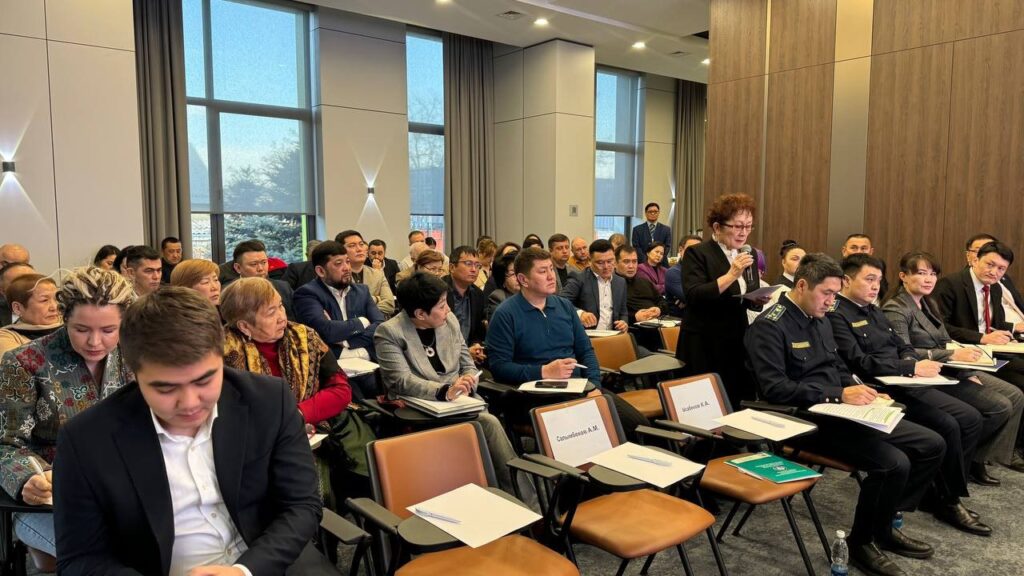
Government officials, members of parliament, and entrepreneurs gathered at one of Kyrgyzstan’s largest business associations to discuss pressing issues affecting the country’s business environment, including taxation and efforts to streamline processes for entrepreneurs.

The primary focus of the meeting was the introduction of the electronic bills of lading (EBL) system. The Times of Central Asia has previously reported on the challenges businesses face with this new system. The State Tax Service (STS) has pledged to revise the EBL system by the end of the month to address concerns raised by the business community.

Almambet Shykmamatov, head of the STS, acknowledged that authorities had rushed the implementation of the EBL system without adequately considering the interests of businesses.

“We understand that the market is a complex system that cannot be changed overnight. We are committed to dialogue and compromise. Our goal is not only to regulate but also to support businesses. That’s why continuous engagement with the business community is essential,” Shykmamatov stated.

Beyond electronic bills of lading, entrepreneurs raised concerns over the lack of preventive measures in Kyrgyzstan’s system of fines. Akzhol Isayev, general director of Dordoi Security, highlighted that unlike Russia and Kazakhstan, which have legal provisions for issuing warnings, Kyrgyzstan imposes penalties without warnings.

“Kyrgyzstan has 11 articles with fines, but none that provide for warnings,” Isayev explained. He also noted that some fines, which can reach as high as one million KGS (approximately $12,000), often lead to business closures or encourage corruption.

Shykmamatov admitted that excessive tax pressure can harm the business environment. Consequently, participants decided to establish a working group to review and reform the system of penalties, aiming for a more business-friendly approach.

Sergei Ponomarev, president of the Association of Markets, Trade, and Services Enterprises, emphasized that protecting private property is critical for attracting investment. However, he warned that businesses in Kyrgyzstan are hesitant to invest in real estate due to legal uncertainties.

“An entrepreneur might honestly purchase property, invest in it, and create jobs, only to later discover that the land was acquired illegally 30 years ago. This uncertainty makes businesses afraid to commit to long-term projects,” Ponomarev said.

To address this issue, the business community has proposed the introduction of a statute of limitations for real estate transactions.

“It’s encouraging when the state not only listens to our problems but also offers constructive solutions. I am confident that this approach will improve the investment climate and raise the standard of living for our citizens,” Ponomarev added.

The STS noted that similar meetings have been held with representatives of logistics companies, the Chamber of Commerce and Industry, and the American Chamber of Commerce in Kyrgyzstan.

Kazakhstan Ships First Batch of Kashagan Oil to Baku

Kazakhstan has shipped its first batch of oil from the Kashagan field to the Azerbaijani port of Baku, marking a significant step in the country’s efforts to diversify its export routes. The shipment was confirmed by the national oil company KazMunayGas (KMG).

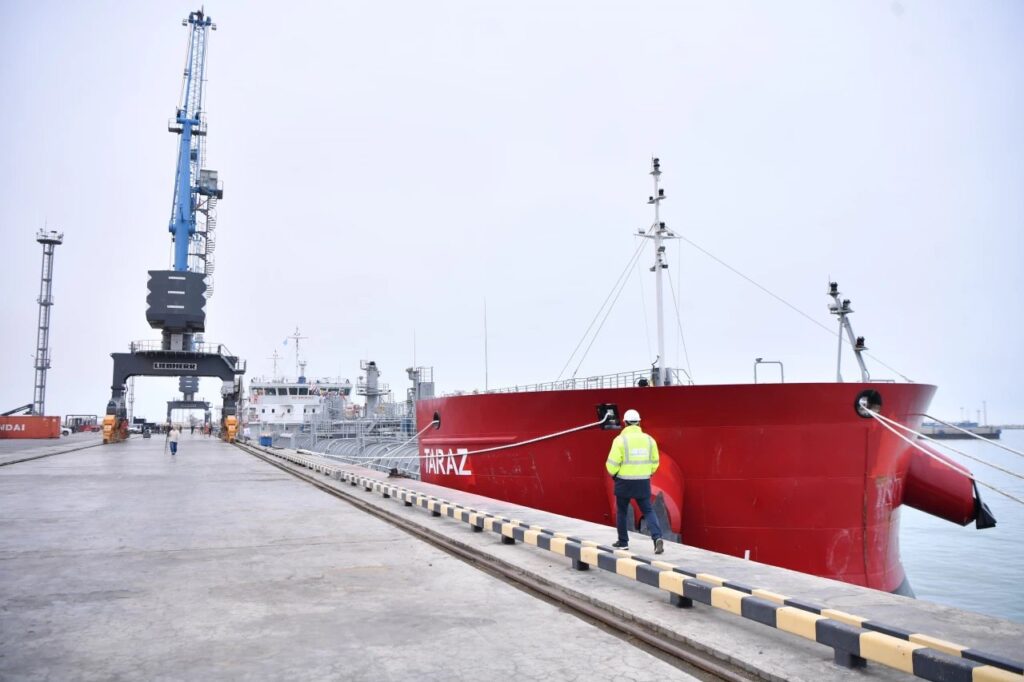
The tanker Taraz, carrying Kashagan oil, departed from the port of Aktau and is en route to Azerbaijan. Upon arrival in Baku, the oil will be transported via the Baku-Tbilisi-Ceyhan (BTC) pipeline system to the Mediterranean Sea. The export operation is being carried out by KMG Kashagan B.V., a subsidiary of JSC NC KazMunayGas, which manages Kazakhstan’s share in the North Caspian Production Sharing Agreement (PSA).

This initiative aligns with Kazakh President Kassym-Jomart Tokayev’s directive for KazMunayGas to develop alternative hydrocarbon export routes. The shipment also advances the development of the Trans-Caspian International Transportation Route, a vital corridor for Kazakhstan’s oil exports.

In 2022, KazMunayGas and Azerbaijan’s state oil company SOCAR signed a general agreement to enable the transit of Kazakh oil. In March 2024, the two parties finalized plans for a phased increase in deliveries through Azerbaijan. Under the agreement, annual transit volumes are expected to reach 2.2 million tons.

KMG Kashagan B.V., which holds a 16.88% stake in the North Caspian PSA, represents Kazakhstan’s interests in the North Caspian Project (NCP). The company is responsible for the exploration and production of hydrocarbons in the Caspian Sea, as well as the independent transportation and sale of its production share under the PSA’s terms.

Energy analysts highlight that diversifying export routes will help Kazakhstan reduce its reliance on traditional oil supply corridors, thereby increasing flexibility and resilience in the face of global market volatility.

CNN Report on Ibn Sina Sparks Central Asian Nationality Debate

A recent CNN report referring to the scholar Ibn Sina as an Uzbek scientist has ignited controversy in Central Asia, particularly in Tajikistan. Tajikistan’s Minister of Culture, Matlubakhon Sattoriyon, strongly criticized the report, calling it a “distortion of reality.”

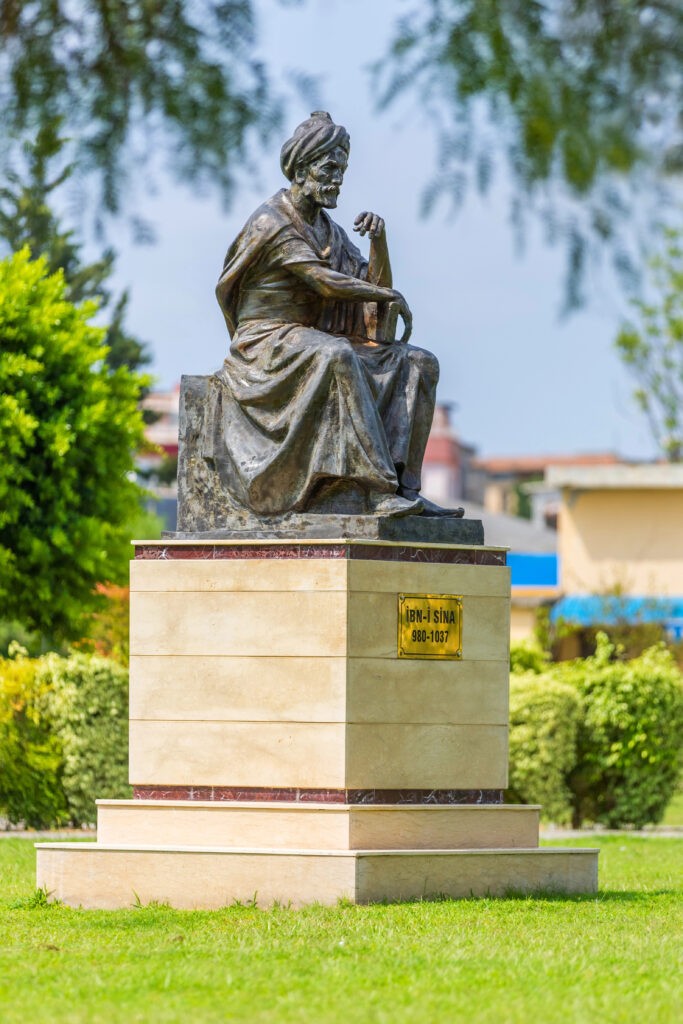
Ibn Sina, known as Avicenna in the West, was a polymath who made groundbreaking contributions to medicine, logic, physics, mathematics, and other sciences. Born in 980 in the village of Afshona near Bukhara, an area now part of Uzbekistan, he died in 1037. Over his lifetime, he authored more than 450 works, with about 240 surviving to this day. His most renowned book, The Canon of Medicine (Tib qonunlari), served as a standard medical text in Europe and the Islamic world for centuries.

While the Ibn Sina segment was actually created not by CNN itself but by the Center of Islamic Civilization in Uzbekistan, Sattoriyon accused CNN of disregarding historical facts and described the report as another example of what she called the “appropriation” of Tajik’s scientific and literary heritage. “This is an insult not only to the Tajik people but also to the history and culture of Persian literature worldwide,” she said. The minister urged Tajik scientists and intellectuals to counter such claims with evidence, though she also dismissed CNN’s report as “just a TV channel’s material with no historical basis,” pointing out that it does not reflect Uzbekistan’s official stance.

In Uzbekistan, reactions to the controversy varied. Sherzodkhon Kudratkhuja, Rector of the University of Journalism and Mass Communications, acknowledged the shared history of Uzbekistan and Tajikistan and called for moderation. “At a time when Central Asia is strengthening its unity, we must all approach such issues carefully,” Kudratkhuja said. He emphasized that Ibn Sina is commonly described as a scholar born in Bukhara, a region now within Uzbekistan’s borders, but suggested that he should be seen as a figure representing the entire Central Asian region.

Bobur Bekmurodov, Chairman of Uzbekistan’s “Yuksalish” movement, expressed disappointment with Tajikistan’s criticism. “The legacy of figures like Ibn Sina belongs to the entire region and the world,” Bekmurodov said. He urged Central Asian nations to focus on shared challenges such as climate change, economic growth, and security rather than divisive historical disputes.

Azamat Ziyo, Director of the Institute of History at Uzbekistan’s Academy of Sciences, echoed calls for regional unity. “There is no written evidence about the nationality of many historical figures in Central Asia, including Ibn Sina. What matters is their contribution to science and humanity, not their nationality,” he stated.

Ziyo also appealed to politicians to avoid interfering in historical scholarship. “The science of history is the business of historians. We should rely on objective, source-based research rather than political interpretations,” he said. He emphasized the importance of collaboration among historians from Uzbekistan, Tajikistan, Kazakhstan, Kyrgyzstan, and Turkmenistan to address shared historical legacies.

Drawing on his 40 years of research into the history of Central Asian statehood, Ziyo explained the complexity of national identities in the region. “During the reign of the Timurids, when our region reached its peak of development, historical sources often referred to the people of [Central Asia] and Iran as a mix of ‘Turks and Tajiks.’ For many iconic figures, such as Abdurahman Jami, Abu Nasr Farabi, Mahmud Kashgari, Zakhiriddin Muhammad Babur, or Alisher Navoi, there are no definitive records about their nationalities. The same is true for Ibn Sina.”

Ziyo invited the region’s historians to convene in Uzbekistan to foster dialogue and cooperation. “Our ancestors often stood together against invaders and shared a common history. Let us, as scholars, come together to address our shared challenges instead of arguing over nationality,” he urged.