• KGS/USD = 0.01144 0%
  • KZT/USD = 0.00192 -0%
  • TJS/USD = 0.10849 0.37%
  • UZS/USD = 0.00008 0%
  • TMT/USD = 0.28571 0.28%
  • KGS/USD = 0.01144 0%
  • KZT/USD = 0.00192 -0%
  • TJS/USD = 0.10849 0.37%
  • UZS/USD = 0.00008 0%
  • TMT/USD = 0.28571 0.28%
  • KGS/USD = 0.01144 0%
  • KZT/USD = 0.00192 -0%
  • TJS/USD = 0.10849 0.37%
  • UZS/USD = 0.00008 0%
  • TMT/USD = 0.28571 0.28%
  • KGS/USD = 0.01144 0%
  • KZT/USD = 0.00192 -0%
  • TJS/USD = 0.10849 0.37%
  • UZS/USD = 0.00008 0%
  • TMT/USD = 0.28571 0.28%
  • KGS/USD = 0.01144 0%
  • KZT/USD = 0.00192 -0%
  • TJS/USD = 0.10849 0.37%
  • UZS/USD = 0.00008 0%
  • TMT/USD = 0.28571 0.28%
  • KGS/USD = 0.01144 0%
  • KZT/USD = 0.00192 -0%
  • TJS/USD = 0.10849 0.37%
  • UZS/USD = 0.00008 0%
  • TMT/USD = 0.28571 0.28%
  • KGS/USD = 0.01144 0%
  • KZT/USD = 0.00192 -0%
  • TJS/USD = 0.10849 0.37%
  • UZS/USD = 0.00008 0%
  • TMT/USD = 0.28571 0.28%
  • KGS/USD = 0.01144 0%
  • KZT/USD = 0.00192 -0%
  • TJS/USD = 0.10849 0.37%
  • UZS/USD = 0.00008 0%
  • TMT/USD = 0.28571 0.28%
11 December 2025

Kyrgyz Businesses React With Cautious Optimism To Tax Amnesty

The Kyrgyz government has announced a tax amnesty aimed at easing the financial burden on businesses and reducing the workload of the State Tax Service (STS). However, local entrepreneurs have received the initiative with cautious optimism.

As part of the amnesty, President Sadyr Japarov has decreed the exemption of taxes on agricultural land, the cancellation of private vehicle taxes for citizens, and the write-off of all tax debts accrued before January 1, 2022.

The initiative has been met with mostly positive reactions from Kyrgyzstan’s business community. Entrepreneurs noted that many small and medium-sized enterprises in the country are burdened with significant debts to the state. They believe this measure has the potential to improve the business climate – provided the government maintains a stable and predictable tax policy.

“Such decisions were likely made to support entrepreneurs during a challenging economic period, stimulate economic activity, and improve the overall state of business in the country. It could also be part of a broader strategy to foster trust between the government and the business community,” the JIA Business Association, one of Kyrgyzstan’s largest business groups, told the Times of Central Asia.

By writing off debts, the JIA representatives said, the government will significantly ease the financial strain on businesses across various sectors. This would allow many entrepreneurs to focus on recovery and growth, particularly after the economic setbacks caused by the COVID-19 pandemic.

Despite these positives, the association expressed concerns over the fairness of the tax amnesty.

“We hope that the amnesty will also include those businesses that were declared debtors by court decisions, but remain unable to pay their debts to this day. Additionally, there are social businesses – such as those in education and healthcare – that are registered as non-profit organizations but still face tax burdens. Including these entities in the amnesty would ensure greater fairness and also ease the workload of the tax service,” a JIA spokesperson explained.

However, under the presidential decree, businesses or individuals with tax debts resulting from court rulings are not eligible for the amnesty.

The Kyrgyz presidential administration estimates that the amnesty will result in the write-off of approximately 11 billion KGS (around $126 million) in tax debts for over 20,000 businesses. But while this decision is welcomed by many, it has drawn criticism from some quarters.

Market representatives argue that the amnesty may be unpopular among diligent taxpayers who have consistently fulfilled their tax obligations and do not owe the state. Nonetheless, they acknowledged that the government’s decision demonstrates a willingness to be flexible. This includes addressing other concerns, such as issues surrounding the introduction of electronic commodity invoices, which have been controversial among entrepreneurs.

“In the past three years, there has been significant progress in reforming tax administration. We anticipate further reforms, such as limiting the application of electronic goods invoices (ETNs) to specific types of goods or simplifying their use for small and medium-sized businesses. Efforts to improve digital tools for businesses, streamline tax administration, and increase public and business awareness of tax policies are also critical. Stability in tax policy will help entrepreneurs plan investments with greater confidence and grow their businesses more effectively,” the JIA added.

Kazakh President Proposes Solutions to Climate Threats at Abu Dhabi Summit

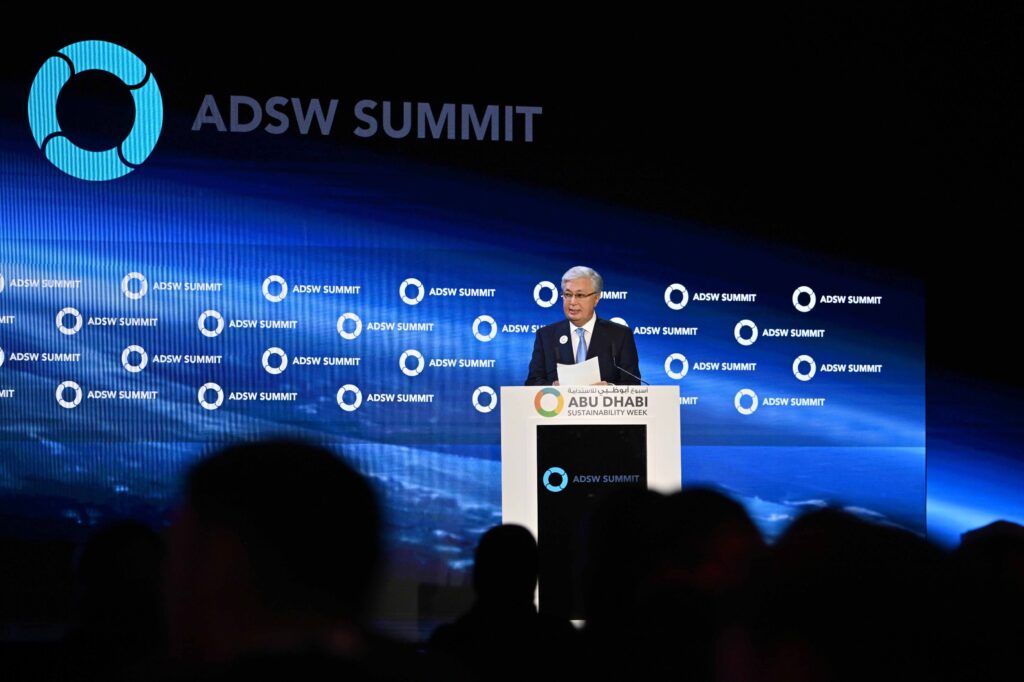
Kazakh President Kassym-Jomart Tokayev participated in the Abu Dhabi Sustainability Week summit, where global leaders and experts convened to address pressing challenges in sustainable development.

In his address, Tokayev highlighted the urgent threats posed by climate change, desertification, biodiversity loss, and food insecurity – issues exacerbated by geopolitical tensions and disruptions to global supply chains.

Kazakhstan’s Strategy for Sustainability

Tokayev presented Kazakhstan’s roadmap for tackling these challenges, focusing on digitalization, major infrastructure projects, and nuclear energy. Noting that global energy systems account for 75% of greenhouse gas emissions, he underscored Kazakhstan’s commitment to green energy development. The country is collaborating with international partners, including Masdar, Total, and Eni, to implement projects to generate 43 GW of renewable energy. Additionally, Tokayev highlighted the strategic importance of constructing Kazakhstan’s first nuclear power plant, an initiative supported through a national referendum.

Regional Connectivity and Transport Infrastructure

Addressing the role of transportation in sustainable development, Tokayev emphasized Kazakhstan’s position as a key transit hub in Eurasia. He called for further development of the Trans-Caspian International Transport Corridor to enhance regional connectivity and strengthen global supply chains. Sustainable transport infrastructure, he argued, is essential for driving economic growth across the region.

Climate and Food Security in Central Asia

Tokayev devoted significant attention to the challenges facing Central Asia, particularly the impact of global warming on ecosystems and agriculture. He proposed the introduction of water-saving technologies, the modernization of irrigation systems, and the application of artificial intelligence to better manage water resources.

On food security, Tokayev outlined Kazakhstan’s plan to advance sustainable agricultural practices and technologies, aiming to mitigate climate risks while ensuring reliable food supplies.

A Global Paradigm Shift

Tokayev called on the international community to adopt a new development paradigm based on green finance, the transfer of climate-friendly technologies, and the integration of artificial intelligence with environmental priorities. He emphasized that aligning these strategies could significantly boost global GDP by 2030 while addressing environmental challenges.

Summit Collaboration and Hope for the Future

The Kazakh President concluded his speech by expressing optimism that the summit could serve as a turning point in harmonizing global priorities for sustainable development.

The event featured participation from other prominent leaders, including Uzbek President Shavkat Mirziyoyev, Rwandan President Paul Kagame, Finnish Prime Minister Petteri Orpo, Malaysian Prime Minister Anwar Ibrahim, and President of the International Union for Conservation of Nature Razan Al Mubarak. Together, the dignitaries reinforced the need for global cooperation in confronting environmental and economic challenges.

Foreign Online Marketplaces to Be Registered in Kazakhstan

Kazakhstan’s Minister of Trade and Integration, Arman Shakkaliyev, has proposed introducing regulations requiring foreign online marketplaces operating in the country to register on a dedicated electronic platform. The proposal was discussed during a government meeting on e-commerce development held on January 14.

As outlined by Shakkaliyev, the mandatory conditions for these platforms would include:

  • Compliance with product safety standards;
  • Measures to combat counterfeit products;
  • Protection of consumer rights and personal data; and
  • Adherence to tax and customs transparency requirements.

Addressing Consumer Complaints

The proposed measures aim to address a growing number of complaints from Kazakh citizens about foreign online trading platforms. Many of these platforms operate outside of Kazakhstan’s jurisdiction, making it difficult – if not impossible – for customers to return or exchange goods due to geographic distances. Furthermore, goods purchased through foreign marketplaces often lack certification in Kazakhstan, raising concerns over product safety and quality.

The Rise of E-Commerce in Kazakhstan

In 2023, purchases on foreign online marketplaces in Kazakhstan totaled $1.3 billion, accounting for about 20% of the country’s total online sales. The sector continues to grow, with new foreign platforms entering the market. Notably, Russian marketplaces Ozon and Wildberries plan to establish three fulfillment centers in Astana and Almaty in 2024, with a combined area of 291,000 square meters.

Kazakhstan’s e-commerce industry has witnessed rapid growth in recent years. According to the Ministry of Trade and Integration, e-commerce transactions from January to November 2024 amounted to approximately 3.2 trillion KZT (over $6 billion), representing 14.5% of the total retail trade and creating over 300,000 jobs.

The government aims to increase e-commerce’s share in total retail trade to 18.5% by 2029.

Comparative Trends and Local Initiatives

The Times of Central Asia previously reported that in 2023, Kazakhstan’s e-commerce volume exceeded 2.2 trillion KZT ($4.8 billion), accounting for 13% of all retail trade – an increase of 0.5% compared to the previous year.

In addition to regulating foreign platforms, Kazakhstan is fostering its domestic e-commerce sector. Recently, a new local online marketplace, Teez, was launched, with investments totaling $50 million. Teez boasts its own infrastructure, further strengthening the country’s digital economy.

Tajikistan Leads Central Asia in Energy Transition Index

Tajikistan has secured the top position among Central Asian countries in the World Economic Forum’s (WEF) annual Energy Transition Index (ETI). Ranking 71st out of 120 nations, Tajikistan achieved a score of 53.6.

This performance places Tajikistan ahead of its regional neighbors, including Kyrgyzstan, which ranked 80th with a score of 52.7, and Kazakhstan, which came in 98th with 50.1. Uzbekistan and Turkmenistan were not included in the ranking.

The ETI evaluates global energy systems based on two primary criteria: Energy system efficiency (60% weighting); and readiness for a sustainable energy transition (40% weighting).

Key factors influencing scores include energy affordability, sustainability, innovation, infrastructure, policy support, and investment activity.

While Tajikistan’s score of 53.6 was slightly below the global average of 56.5, it outperformed many other nations in Central Asia. Globally, Northern European countries dominated the rankings. Sweden led the index with 78.4 points, followed by Denmark (75.2) and Finland (74.5).

Among the Commonwealth of Independent States (CIS) and Caspian countries, Azerbaijan ranked highest, securing 38th place with a score of 60.3.

The Times of Central Asia previously reported on Tajikistan’s decision to rejoin Central Asia’s unified energy system. Originally established in 1960, the system interconnected the power networks of Uzbekistan, southern Kyrgyzstan, northern Tajikistan, and southern Kazakhstan’s Shymkent region. These systems were linked by 110- and 220-kilovolt power lines and operated independently of the Soviet Union’s central energy network.

Tajikistan’s leadership in the Energy Transition Index reflects its ongoing commitment to energy sustainability and regional collaboration.

Uzbekistan to Launch VIP Air Taxi Service in Partnership with UAE’s JETEX

During President Shavkat Mirziyoyev’s official visit to the United Arab Emirates on January 13, Uzbekistan’s Ministry of Transport signed a memorandum of cooperation with JETEX, a leading UAE-based aviation services company.

The agreement, signed by Uzbekistan’s Minister of Transport Ilkhom Makhkamov and JETEX founder Adel Mardini, sets the stage for ambitious projects in Uzbekistan’s civil aviation sector.

One of the cornerstone initiatives involves JETEX providing Fixed Base Operator (FBO) services for VIP and CIP (Commercially Important Passenger) customers at Tashkent-East Airport through a public-private partnership. This project will also include the repair, sale, and maintenance of small aircraft, along with the launch of VIP air taxi services. These efforts aim to strengthen Uzbekistan’s tourism industry and elevate the travel experience for high-end customers.

According to officials, the project is expected to improve the quality of passenger services and enhance Tashkent’s reputation as an attractive and prestigious destination. Moreover, it is anticipated to generate over 200 jobs in Uzbekistan’s business aviation sector, contributing to the nation’s economic growth.

Founded in 2005, JETEX has become a global leader in business aviation services, with operations in over 50 locations across the Middle East, Europe, Asia-Pacific, Africa, and the Americas. The company’s expertise in Fixed Base Operator services ensures reliable and sustainable growth in the business aviation sector.

Fixed Base Operators (FBOs) provide essential airport services such as aircraft refueling, parking, hangar maintenance, repair, charter sales, and other aviation-related services. These facilities cater to private and business aviation, ensuring high-quality services for operators and passengers.

The partnership with JETEX marks a significant step forward in modernizing Uzbekistan’s aviation infrastructure and expanding its footprint in the global business aviation market.

Fossil-Fuel Rich UAE Drives Central Asia’s Green Energy Transition

Central Asian nations, especially Kazakhstan and Uzbekistan, are seeking to develop closer ties with the oil-rich United Arab Emirates. What they need from the Gulf state is not fossil fuels, but renewable energy technology and investment in their green energy sectors.

Despite being a significant oil-exporter, the UAE has managed in recent years to position itself as a regional leader in solar energy and photovoltaic solar projects. As a result, it now has global aspirations in the renewable energy industry. The Gulf country, through its semi-government-owned company, Masdar, has already invested billions of dollars in the construction of wind farms and solar plants all over the world – from the Bahamas and Barbados to Australia, as well as several African and European nations. Central Asia is no exception.

In the region, the green energy giant is particularly active in Uzbekistan and Kazakhstan. It is, therefore, no surprise that, on January 14, two regional leaders, Shavkat Mirziyoyev and Kassym-Jomart Tokayev, were major guests at the Abu Dhabi Sustainability Week, a global platform focused on accelerating sustainability efforts.

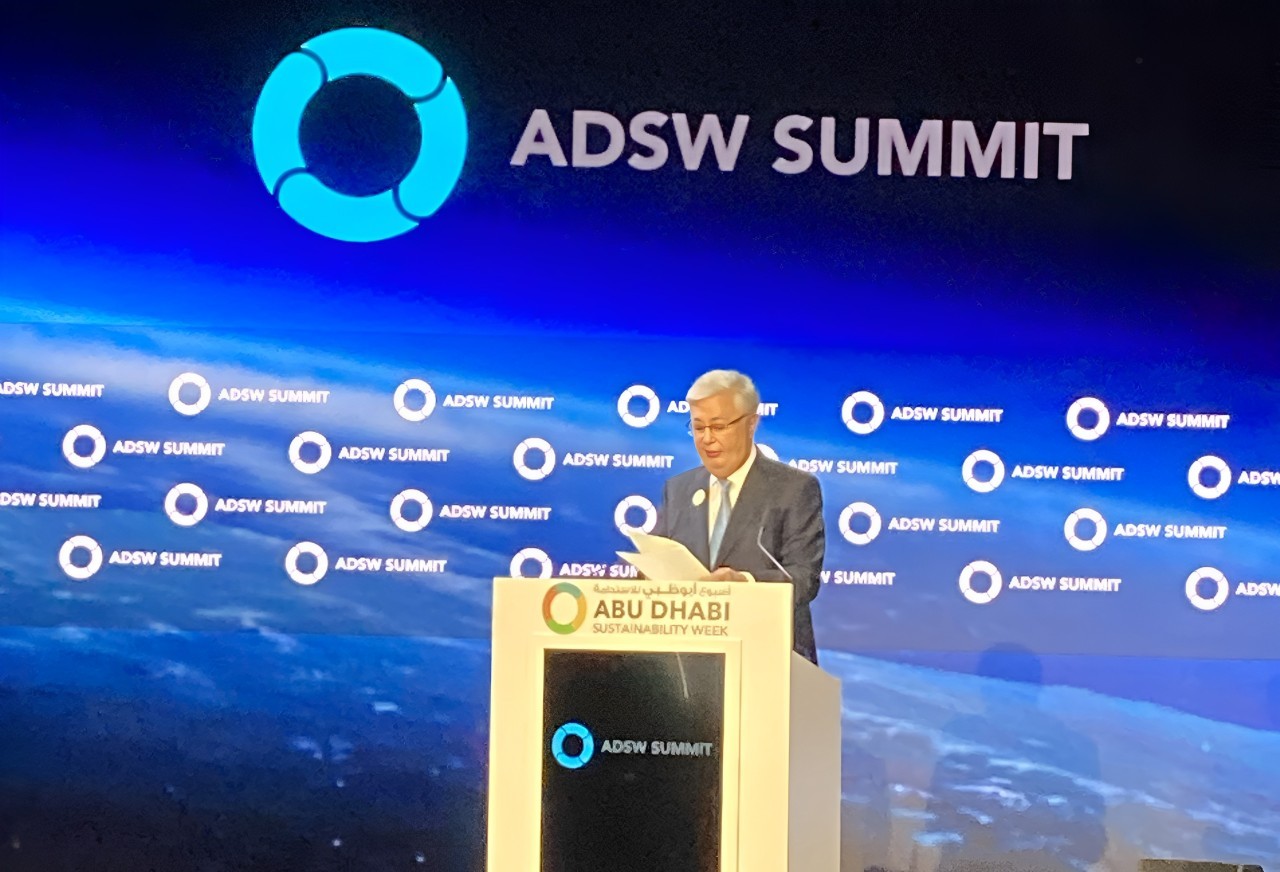
President Tokayev of Kazakhstan speaking at the Abu Dhabi Sustainability Week; image: TCA, Nikola Mikovic

Their visit to the UAE signals a strong push for a green energy transition at home. For Tashkent and Astana, cooperation with Abu Dhabi in the field of green energy can help them to achieve their ambitious goals and reduce reliance on fossil fuels, despite both being significant producers of natural gas and oil.

“Together with our foreign partners, we are currently implementing more than 50 large energy projects worth a total of $26 billion,” Mirziyoyev stressed, pointing out that by 2030, the share of renewable energy sources in the country will reach 54%.

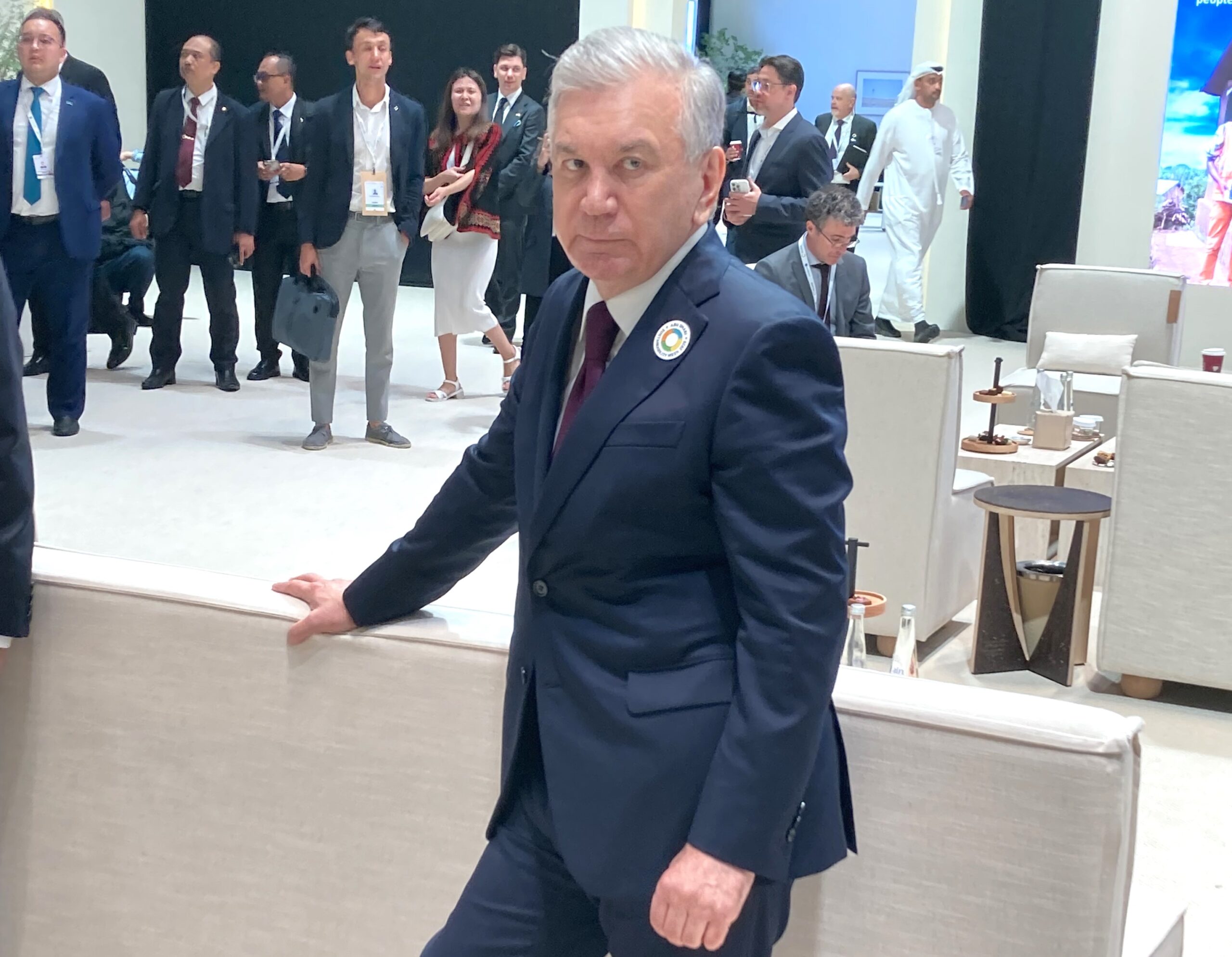
President of Uzbekistan, Shavkat Mirziyoyev backstage at the Abu Dhabi Sustainability Week; image: TCA, Nikola Mikovic

In his view, Central Asia should turn into a “center of green economy.” The Director-General of the International Renewable Energy Agency (IRENA), Francesco La Camera, seems to share this stance.

“Central Asia can play a stronger and leading role in the global energy transition. I’m confident this new partnership can accelerate the pipeline of renewable energy projects and drive green industrialization,” La Camera said at the 15th session of the IRENA Assembly, held in the UAE capital two days prior to the meetings Mirziyoyev and Tokayev had with the UAE’s leaders.

According to the Uzbek President, Tashkent is interested in jointly realizing the potential of Central Asia in solar, wind, and hydro energy, as well as in developing the production of green hydrogen. Fully aware of the Central Asian state’s green energy potential, Masdar is committed to investing $2 billion in Tashkent’s clean energy projects with a total capacity of more than two gigawatts. In the most populated Central Asian nation, the UAE’s semi-state-owned company is already involved in the construction of both solar plants and wind farms.

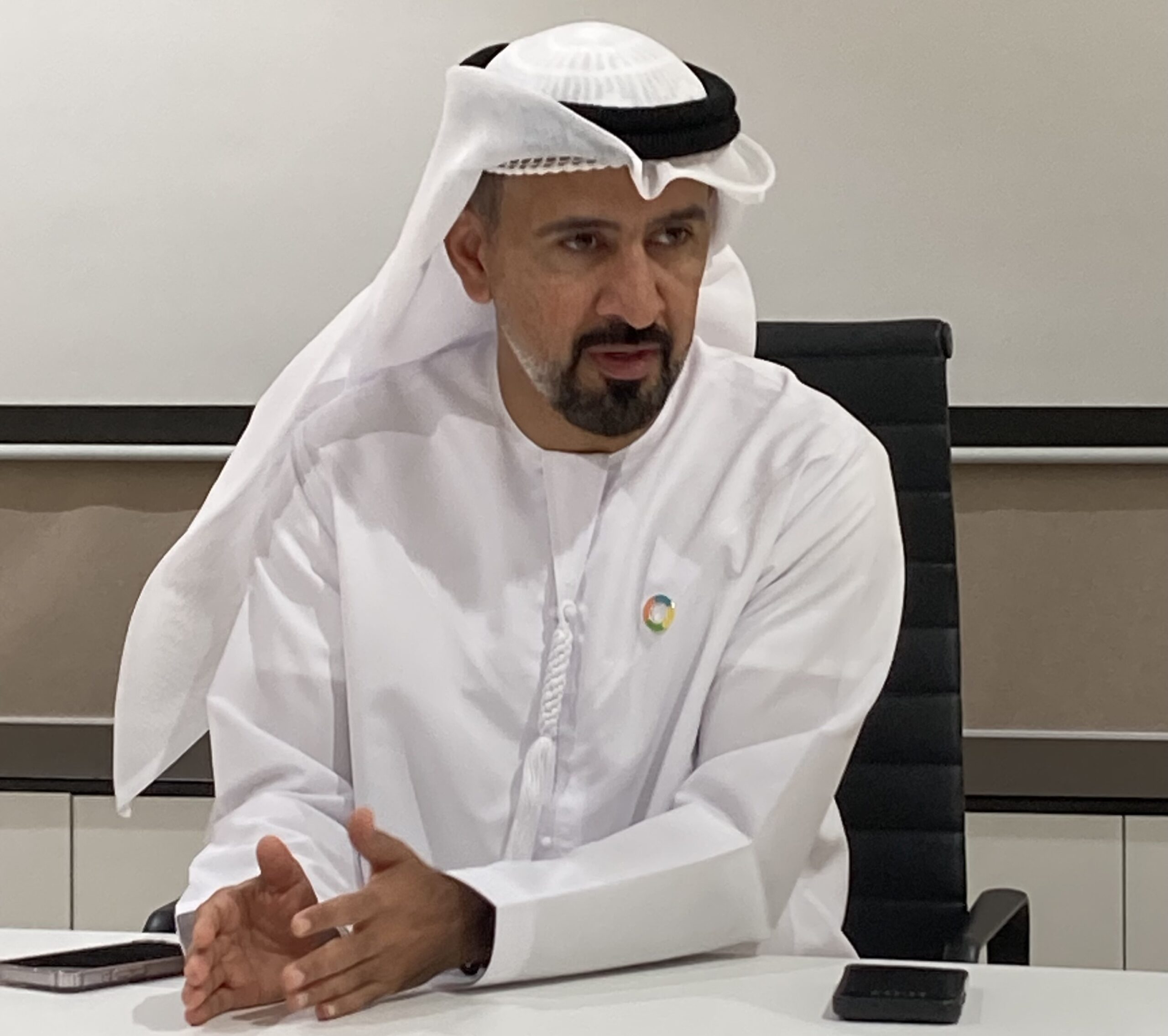
Abdulaziz Alobaidli, Masdar’s Chief Operating Officer, at the Abu Dhabi Sustainability Week; image: TCA, Nikola Mikovic

“We were the first foreign investor in Uzbekistan’s renewable energy market in 2019. It is amazing to see how much progress the country has made over the past five years,” Abdulaziz Alobaidli, Masadar’s Chief Operating Officer told The Times of Central Asia.

In his view, clear regulations are now in place in Uzbekistan, and the government is demonstrating its serious commitment to developing the green energy sector. In neighboring Kazakhstan, the authorities are also aiming to strengthen the green economy and play an important role in ensuring the availability of crucial raw materials globally.

“Kazakhstan seeks to secure a diversified supply of critical raw materials for world markets, as they are indispensable to achieving the world’s net zero targets,” Tokayev stressed in Abu Dhabi, pointing out that it is imperative for Astana’s international partners, including Masdar, to invest in green energy projects.

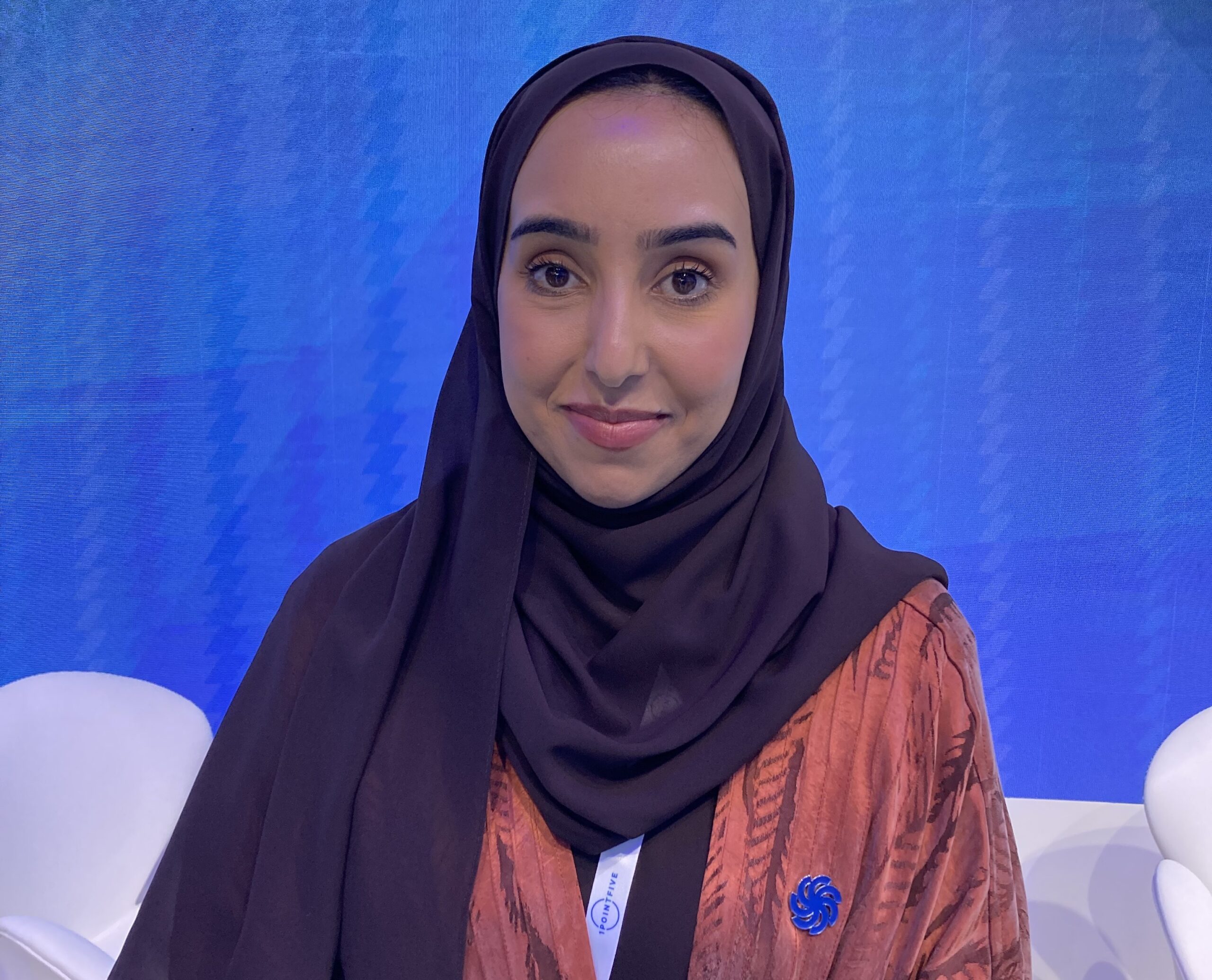
Maryam Al Mazrouei, Masdar’s Head of Business Development in charge of the CIS at the Abu Dhabi Sustainability Week; image: TCA, Nikoa Mikovic

Indeed, at the COP29 summit held in the Azerbaijani capital Baku in November 2024, the UAE’s green energy corporation and the Kazakh authorities signed a $1.4 billion deal on the construction of a 1GW wind farm in the largest Central Asian nation. When completed, the facility is expected to provide green electricity to approximately 300,000 homes in the south of the country.

Prior to the green energy summit in Abu Dhabi, Kazakhstan’s Energy Ministry’s officials participated in the IRENA Assembly, which suggests that Astana is serious in its ambitions to generate 15% of its total energy from renewable sources by 2030. The United Arab Emirates is undoubtedly willing to help Kazakhstan achieve its goals.

“The county has a huge potential for the development of both solar and energy sectors,” Maryam Al Mazrouei, Masdar’s Head of Business Development in charge of the Commonwealth of Independent States told The Times of Central Asia.

As she explains, the company is currently focused on the implementation of the 1 GW wind farm project in Kazakhstan’s Zhambyl Region, while in the future it might engage in the construction of solar photovoltaic plants in the former Soviet republic. But that’s not the end of Masdar’s ambitions in the region.

“We are at the very early stage of development of green energy projects in Kyrgyzstan and Tajikistan. We are discussing with their governments the possible construction of two 200-megawatt solar plants,” Al Mazrouei said, whilst emphasizing that no agreements have been signed yet.

The problem, however, is that, unlike Uzbekistan and Kazakhstan, the three remaining Central Asian states – Turkmenistan, Kyrgyzstan and Tajikistan – have yet to establish the necessary framework and regulations to attract foreign corporations willing to invest in the development in their vast green energy potential. In the meantime, they could learn from the experiences of Astana and Tashkent.