• KGS/USD = 0.01144 0%
  • KZT/USD = 0.00213 0%
  • TJS/USD = 0.10456 0.19%
  • UZS/USD = 0.00008 0%
  • TMT/USD = 0.28490 0%
  • KGS/USD = 0.01144 0%
  • KZT/USD = 0.00213 0%
  • TJS/USD = 0.10456 0.19%
  • UZS/USD = 0.00008 0%
  • TMT/USD = 0.28490 0%
  • KGS/USD = 0.01144 0%
  • KZT/USD = 0.00213 0%
  • TJS/USD = 0.10456 0.19%
  • UZS/USD = 0.00008 0%
  • TMT/USD = 0.28490 0%
  • KGS/USD = 0.01144 0%
  • KZT/USD = 0.00213 0%
  • TJS/USD = 0.10456 0.19%
  • UZS/USD = 0.00008 0%
  • TMT/USD = 0.28490 0%
  • KGS/USD = 0.01144 0%
  • KZT/USD = 0.00213 0%
  • TJS/USD = 0.10456 0.19%
  • UZS/USD = 0.00008 0%
  • TMT/USD = 0.28490 0%
  • KGS/USD = 0.01144 0%
  • KZT/USD = 0.00213 0%
  • TJS/USD = 0.10456 0.19%
  • UZS/USD = 0.00008 0%
  • TMT/USD = 0.28490 0%
  • KGS/USD = 0.01144 0%
  • KZT/USD = 0.00213 0%
  • TJS/USD = 0.10456 0.19%
  • UZS/USD = 0.00008 0%
  • TMT/USD = 0.28490 0%
  • KGS/USD = 0.01144 0%
  • KZT/USD = 0.00213 0%
  • TJS/USD = 0.10456 0.19%
  • UZS/USD = 0.00008 0%
  • TMT/USD = 0.28490 0%

Central Asia’s Billionaires Make Forbes Rich List in 2025

Forbes has released its annual list of the world’s billionaires for 2025, featuring a record 3,028 individuals, 247 more than last year. Their combined wealth has surged to $16.1 trillion, nearly $2 trillion more than in 2024. The United States leads the list with 902 billionaires, followed by China with 516 (including Hong Kong), and India with 205. Rankings were based on stock prices and exchange rates as of March 7, 2025.

Elon Musk, CEO of Tesla and SpaceX, once again tops the list with an estimated net worth of $342 billion, nearly double his fortune from the previous year. Meta CEO Mark Zuckerberg ranks second with $216 billion, while Amazon founder Jeff Bezos remains in third with $215 billion.

Billionaires with Central Asian Ties

Among the global elite is Alisher Usmanov, a billionaire with Uzbek roots. Ranked 125th, his net worth is estimated at $16.7 billion. Usmanov holds stakes in the steel and mining conglomerate Metalloinvest, as well as investments in Xiaomi and various telecom, mining, and media companies. Though he currently resides in Tashkent, Usmanov holds Russian citizenship and remains under U.S., U.K., and EU sanctions imposed following Russia’s invasion of Ukraine.

Kazakhstan’s Wealthiest on the List

Kazakhstan is well represented on this year’s list. Vyacheslav Kim, chairman of Kaspi Bank, ranks 464th with a net worth of $7.1 billion. Timur Turlov, CEO of Freedom Holding, follows at 605th with $5.8 billion. Vladimir Kim, another prominent Kazakh businessman, is ranked 620th with $5.7 billion.

Dinara Kulibayeva and Timur Kulibayev, ranked jointly at 673, hold an estimated fortune of $5.3 billion. Kulibayeva, daughter of former president Nursultan Nazarbayev, and her husband are majority shareholders in Halyk Bank and have extensive investments in the oil and gas sector. Kulibayev also founded Altyn Alma, an investment firm that later became Almex LLP.

Another Kazakh billionaire, Bulat Utemuratov, is ranked 979th with an estimated fortune of $3.7 billion.

Bishkek Activists Demand Comeback for City’s Scrapped Trolleybuses

As Bishkek prepares to introduce its first fleet of electric buses, local activists are mounting a legal campaign to save the city’s trolleybus system from complete dismantlement.

Municipality’s Modernization Push

The first two electric buses from China’s Anhui Ankai Automobile Co. have already arrived in Bishkek and will soon begin operating on city routes. In total, the city has procured 120 electric buses, with the remaining 118 expected to be delivered by May, according to Daiyrbek Orunbekov, head of information policy at the President’s Office.

Orunbekov said the new vehicles will replace outdated public transport and help improve the capital’s environmental conditions.

“City streets used to be clogged with shuttle buses, and the roads were in disarray. Now modern buses are replacing minibuses. Last year, the roads were reconstructed and old trolleybus lines dismantled. Some residents were initially unhappy, but electric buses, more spacious and comfortable, are now on the routes,” he explained.

A Contested Phase-Out

Despite these upgrades, the decision to remove trolleybus lines has sparked a backlash. Bishkek residents and activists have sued the mayor’s office, arguing that officials acted without proper authorization in dismantling the network. All trolleybus lines in Bishkek were removed in a short period. Of the remaining fleet, 100 trolleybuses, many still under loan repayment, were transferred to Osh, six to Naryn, and 42 remain parked on the outskirts of the capital.

Meanwhile, Kyrgyz MP Ulan Bishimbayev has announced that the authorities plan to retrofit some of the old trolleybuses with batteries to convert them into electric buses. One pilot project is already underway.

“We invited specialists who confirmed it was possible. One trolleybus is being remodeled in pilot mode and should be launched within 10 days,” Bishimbayev said.

Legal Battle and Environmental Concerns

The next court hearing on the trolleybus issue is scheduled for April 9 at the Bishkek City Court. Activists argue that trolleybuses, powered by a network of 19 existing substations, remain one of the most sustainable forms of transport.

“Trolleybus wires are a consumable material that needs replacement every 20 years. The challenge of restoring them is manageable. What matters are the substations, and they are still intact,” activist Bermet Borubayeva told The Times of Central Asia.

She also questioned the narrative that the old system was outdated.

“A representative from the president’s staff claimed the trolleybuses were outdated and would be replaced with electric buses. But that’s misleading. The trolleybuses bought with a €23.5 million European Bank for Reconstruction and Development (EBRD) loan just six years ago are still modern, with a service life of 20 years,” she said.

Borubayeva also pointed out that the batteries used in electric buses typically last only 5-10 years and pose environmental risks when recycled.

According to earlier electrification plans approved by European lenders, Bishkek was expected to combine trolleybus and electric bus networks. However, city authorities have opted for a different course.

Kazakhstan Launches Digital Highway Assistance Service

Kazakhstan has introduced a new digital service enabling drivers to notify fellow motorists about emergency situations on the road, an initiative designed to foster mutual assistance and reduce traffic incidents.

Using a mobile application, drivers can input the license plate number of a vehicle they observe in trouble and send an anonymous alert to its owner. The system covers common scenarios such as a flat tire, an open window, a car blocking the road, activated alarms, or situations where another vehicle has collided with a parked car. The list of alert types may expand over time, and all messages are sent anonymously and free of charge to both sender and recipient.

“If you notice that a car has been left with an open window or is blocking the driveway, all you have to do is enter the license plate number and select the situation. The driver will receive an anonymous notification,” said Zhaslan Madiev, Minister of Digital Development, Innovation and Aerospace Industry. “We expect that this service will become a tool of mutual support and civil responsibility among drivers and will lead to the minimization of emergency situations on the roads.”

The initiative was developed in collaboration with the Ministry of Internal Affairs. The two institutions also plan to integrate augmented reality and computer vision technologies into Kazakhstan’s driver licensing procedures.

Expanding Digital Public Services

Kazakhstan continues to expand its portfolio of digital services in the transportation sector. According to Arman Kenzhegaliev, Chairman of the state corporation Government for Citizens, the country delivered 3 million vehicle-related services in the past year, including digital signing of sale and purchase agreements, expedited production of registration plates, and online auto insurance issuance.

“We plan to launch a platform for document processing, introduce biometric identification, and implement a service to check vehicle history,” said Kenzhegaliev.

In 2024, Kazakhstan expects to provide 341 million public services, 91% of them remotely. Currently, 92% of all public services are accessible online.

Digital ID Cards and Data Protection

By the end of April, Kazakhstan will roll out a digital alternative to physical identity cards. The new system, which has already undergone testing, allows citizens to verify their identity through the eGov platform, upload a photo and signature, pay online, and receive an SMS once the document is ready.

To protect personal data, a new government-run data access control service has been launched. Citizens will now receive notifications when someone attempts to access their personal data and can block unauthorized attempts in real time.

As previously reported by The Times of Central Asia, Kazakhstan is also investing in infrastructure to support the introduction of artificial intelligence systems, with international partners, including those from Singapore, contributing to the development of data centers and digital frameworks across the country.

Tajikistan’s Green Deal: EBRD Launches Sustainability Pilot Projects

On April 1, the European Bank for Reconstruction and Development (EBRD) inaugurated two demonstration sites under the Tajikistan Green Economy Financing Facility (GEFF II) in the town of Bokhtar. The initiative promotes innovation in sustainable energy and agriculture, backed by funding from South Korea, Austria, and the Green Climate Fund. The total program budget is $50 million.

Bringing Energy Efficiency to Life

The first site, located at the MoDO Khumo branch in Bokhtar, features a hybrid solar photovoltaic system combining solar panels with energy storage. This technology ensures a stable power supply even during periods of low solar activity. Real-time data on electricity generation and consumption is displayed in the customer area, helping to raise public awareness of sustainable energy practices.

The second site, at the Tanzila dekhkan farm in Vakhsh district, showcases how green technologies can boost crop yields and reduce environmental impact. The installation includes:

  • Drip irrigation systems that save up to 70% of water;
  • Solar panels for off-grid electricity;
  • Biogas units using organic waste;
  • Vertical farming in compact spaces.

These solutions aim to enhance agricultural productivity and improve farmers’ incomes.

Strategic Development with the EBRD

GEFF II also prioritizes gender equality, offering targeted support to women entrepreneurs seeking green financing for sustainable business ventures.

The demonstration sites form part of the EBRD’s broader strategy to promote sustainable development across Tajikistan. Additional pilot locations are planned to showcase further environmentally friendly technologies.

EBRD’s Broader Footprint in Tajikistan

Established in 1991, the EBRD provides financial and technical support to nearly 40 countries for economic and structural reforms. In Tajikistan, the bank remains a key investor, having committed over €1 billion across 183 projects.

Notable EBRD-supported initiatives include:

These investments are helping Tajikistan build climate resilience, modernize infrastructure, and create sustainable pathways for regional development.

Kazakh Villages Voluntarily Embrace Alcohol-Free Lifestyle

An increasing number of villages across Kazakhstan are voluntarily banning the sale of alcohol, reflecting a grassroots movement aimed at improving public health, safety, and the wellbeing of future generations.

Prosecutor General Berik Asylov highlighted the trend on his official X (formerly Twitter) account, describing it as a conscious decision made by ordinary citizens, not a top-down directive.

“When citizens take responsibility, reality itself changes,” he wrote, emphasizing that the initiative stems from the community level.

Bottom-Up Initiative, Top-Level Support

One notable example comes from a village in the Mangistau region, where residents released a video declaring their collective decision to stop selling alcohol. Similar efforts have emerged in Akmola, Zhambyl, Karaganda, Atyrau, and other regions. While still relatively isolated, these cases are increasing, Asylov noted, with the number of “dry” villages steadily growing.

The movement is often driven by local community councils and elders, supported by the prosecutor’s office, police, and akimats (local government offices), which help implement preventive measures and maintain order.

Entrepreneurs have also played a key role. Responding to requests from fellow villagers, many voluntarily removed alcohol from their shelves. Contrary to concerns, these businesses did not suffer losses, residents began purchasing more nutritious food and products for children instead.

Visible Impact on Communities

According to Asylov, the results are already apparent: crime rates are dropping, domestic violence is decreasing, and more young people are choosing sports and healthier lifestyles over alcohol.

“This is a real-life demonstration of the principle of ‘Law and Order’, not enforced by fear, but built on trust; not through punishment, but through personal choice,” he said.

Official Data Reflects the Trend

Law enforcement statistics support this development. In the first quarter of 2025, the number of crimes committed under the influence of alcohol declined nationwide, a direct outcome of such community-led initiatives.

In Aktobe region, 33 villages across nine of the region’s twelve districts have officially stopped selling alcohol, according to local media.
In Turkestan region, 61 more villages have taken similar steps, according to Murat Kabdenov, head of the regional police department.

Meanwhile, the village of Sunkar in Almaty region stands out for its complete elimination of alcohol from daily life, not just retail outlets.

A Vision for the Future

Prosecutor General Asylov reaffirmed that the General Prosecutor’s Office supports any community-driven initiative that promotes social harmony, respect for the law, and a shared vision for a better future.

“People value trust, stability, and peace. They inspire each other through personal example,” he concluded.

Controversies and Rejections: What Future Awaits the CSTO?

Armenia has officially refused to contribute financially to the Collective Security Treaty Organization (CSTO), a bloc tasked with ensuring the independence, territorial integrity, and sovereignty of its member states. Meanwhile, the organization’s Secretary General, Imangali Tasmagambetov, has come under scrutiny for remarks he made related to the ongoing conflict between Russia and Ukraine.

Shifting Alliances and Regional Tensions

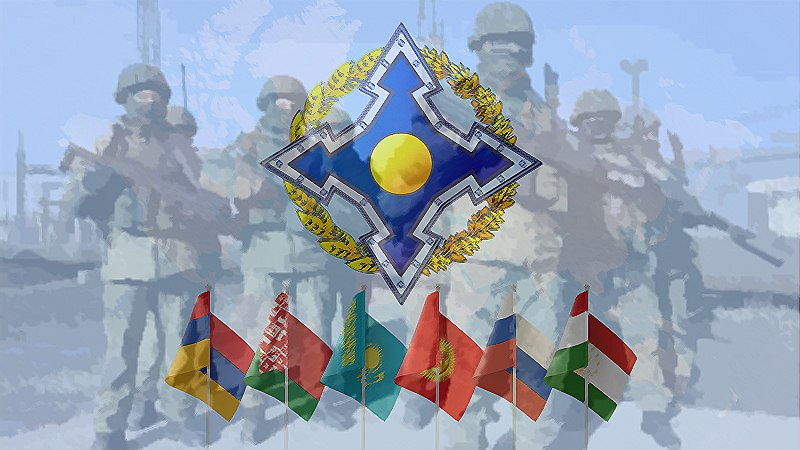
Founded in 1992, the CSTO comprises Russia, Kazakhstan, Kyrgyzstan, Belarus, Tajikistan, and Armenia. Georgia, Azerbaijan, and Uzbekistan have withdrawn from the organization at various times.

While the CSTO regularly conducts joint military exercises and cooperates on counter-terrorism and anti-narcotics efforts, the war in Ukraine has exposed internal divisions and challenged the bloc’s cohesion.

Tasmagambetov Responds to Criticism

In March, Secretary General Tasmagambetov raised eyebrows in an interview with a Russian outlet, warning that any deployment of EU troops to Ukraine could escalate regional tensions. He stated that the CSTO would be ready to provide assistance “within the framework of the organization’s charter and subject to approval by all member states.”

The remarks sparked a backlash, particularly on social media in Kazakhstan, where some users accused Tasmagambetov, the former prime minister, of adopting a pro-Russian stance. Responding in late March, Tasmagambetov recorded a rare video message clarifying his position.

“How can one calmly react to baseless claims that I would send my compatriots to war?” he asked. “There will always be those who distort my words. I have always remained loyal to my people; the interests of our country have always come first.” Tasmagambetov went on to urge viewers to think critically about information shared online.

This controversy follows an earlier statement by Aibek Smadiarov, spokesperson for Kazakhstan’s Ministry of Foreign Affairs, who said in October 2022 that the CSTO had no plans to involve itself in the Ukraine conflict. “The CSTO’s jurisdiction is limited to the internationally recognized territories of its member states,” Smadiarov stated.

Kazakhstan, meanwhile, is reviewing a report by a Ukrainian institution that said about 661 Kazakh citizens have fought for Russia since it launched a full-scale invasion of Ukraine in February 2022. The I Want To Live center, which is run by the Ukrainian security services and assists with surrender requests from soldiers fighting for Russia, published a list of what it said were the Kazakh nationals. Of the 661, at least 78 have been killed, according to the center. Without providing details, it said it received the list from its own sources within the Russian military.

Kazakh media quoted Igor Lepekha, Kazakhstan’s deputy interior minister of internal affairs, as saying the numbers have to be checked because it is unclear whether they are reliable. Kazakhstan bans mercenary activities in foreign conflicts and has opened a number of related investigations in the last few years. Last year, a court in Kazakhstan sentenced a Kazakh national to more than six years in jail for fighting with Russia’s Wagner Group in Ukraine.

Armenia Pulls Back

Adding to the bloc’s instability, Armenia recently announced that it would no longer finance the CSTO. The Armenian Ministry of Foreign Affairs confirmed the decision, citing its refusal to sign the 2024 budget agreement.

Yerevan has long criticized the CSTO for its lack of support during the Armenia-Azerbaijan conflict. Tensions escalated further when the Armenian parliament passed a bill signaling the country’s intent to join the European Union.

Political analyst Gaziz Abishev suggests that Armenia’s financial withdrawal may be part of broader efforts to normalize relations with Azerbaijan. “By halting payments, Armenia is signaling that it no longer requires territorial guarantees from its CSTO partners. This leaves room for a peace deal,” Abishev noted.

A Look Back: CSTO’s Kazakhstan Mission

Despite the current turmoil, the CSTO’s mission in Kazakhstan in January 2022 remains one of its most effective operations. Initially triggered by protests over gas price hikes, the crisis escalated into violent clashes and the seizure of government buildings.

On January 5, President Kassym-Jomart Tokayev requested CSTO assistance, and within days, troops from Russia, Kyrgyzstan, Armenia, Tajikistan, and Belarus were deployed to secure strategic sites while Kazakhstani forces restored order.

Often criticized for being a “paper tiger” and a “zombie” alliance, it remains to be seen whether the CSTO can be an effective force in a time of geoploitical strife as NATO increasingly falters.