• KGS/USD = 0.01144 0%
  • KZT/USD = 0.00194 0%
  • TJS/USD = 0.10879 -0.18%
  • UZS/USD = 0.00008 0%
  • TMT/USD = 0.28490 0%
  • KGS/USD = 0.01144 0%
  • KZT/USD = 0.00194 0%
  • TJS/USD = 0.10879 -0.18%
  • UZS/USD = 0.00008 0%
  • TMT/USD = 0.28490 0%
  • KGS/USD = 0.01144 0%
  • KZT/USD = 0.00194 0%
  • TJS/USD = 0.10879 -0.18%
  • UZS/USD = 0.00008 0%
  • TMT/USD = 0.28490 0%
  • KGS/USD = 0.01144 0%
  • KZT/USD = 0.00194 0%
  • TJS/USD = 0.10879 -0.18%
  • UZS/USD = 0.00008 0%
  • TMT/USD = 0.28490 0%
  • KGS/USD = 0.01144 0%
  • KZT/USD = 0.00194 0%
  • TJS/USD = 0.10879 -0.18%
  • UZS/USD = 0.00008 0%
  • TMT/USD = 0.28490 0%
  • KGS/USD = 0.01144 0%
  • KZT/USD = 0.00194 0%
  • TJS/USD = 0.10879 -0.18%
  • UZS/USD = 0.00008 0%
  • TMT/USD = 0.28490 0%
  • KGS/USD = 0.01144 0%
  • KZT/USD = 0.00194 0%
  • TJS/USD = 0.10879 -0.18%
  • UZS/USD = 0.00008 0%
  • TMT/USD = 0.28490 0%
  • KGS/USD = 0.01144 0%
  • KZT/USD = 0.00194 0%
  • TJS/USD = 0.10879 -0.18%
  • UZS/USD = 0.00008 0%
  • TMT/USD = 0.28490 0%
15 December 2025

Redefining Diplomacy: Kazakhstan’s Strategic Shift in Relations With Afghanistan

On September 9, 2024, President Kassym-Jomart Tokayev signed a decree dismissing Alimkhan Yesengeldiyev from the position of Kazakhstan’s Ambassador to Afghanistan. Yesengeldiyev has been at the post since April 2018. Local media have not yet reported on the appointment of a new ambassador.

Previously, Astana has made bold diplomatic steps towards normalizing relations with Afghanistan under Taliban rule. For instance, Kazakhstan accredited Taliban diplomats in April 2023, and removed the Taliban from its list of banned organizations in December 2023. On August 21 of this year, Kazakhstan accredited the head of the Afghan diplomatic mission as charge d’affaires in the country.

Astana continues to increase trade, economic, and humanitarian cooperation with the de facto authorities, and has actively engaged in various international platforms for initiatives in Afghanistan.

Moreover, President Tokayev outlined Kazakhstan’s position on the situation in Afghanistan just a month after the Taliban seized Kabul, when the world was still in shock. “Kazakhstan sees the future Afghanistan as a truly independent and united state living in peace with itself and its neighbors,” he stated. “At this crucial historical moment, the multinational people of Afghanistan should not be left alone in the face of unprecedented difficulties.”

By changing the head of its diplomatic mission in Kabul, it appears that the authorities in Kazakhstan intend to qualitatively improve the state of their relations with the Taliban. The eventual appointment of a new head of the Kazakh embassy will symbolize a new page in relations. In all likelihood, according to recognized international practice, a diplomat will be presented to the Taliban not in the rank of Ambassador Extraordinary and Plenipotentiary but as the Charge d’Affaires of Kazakhstan. This will preserve the principle of parity and be understandable given international disputes surrounding recognition of the Taliban. Overall, Kazakhstan’s foreign policy steps have always been characterized by consistency and an unwavering focus on international law.

It seems that the world as a whole is now acclimatizing to the idea of pragmatic dialog with the authorities in Kabul, with whom it is necessary to maintain constant bilateral and multilateral diplomatic contacts.

On September 27, at the official request of the British government, the embassy of the former Islamic Republic of Afghanistan in London will officially cease operations. The embassy building will not be handed over to the Taliban or any other political representation. The embassy in Oslo representing the former government in Afghanistan has also ceased functions since September 12 at the request of the authorities there. Neither the British nor the Norwegian authorities are currently commenting on the situation.

A few days ago, Deutsche Welle reported that the German Foreign Ministry has accepted the Taliban’s application to recognize their consulate general in Munich as the sole center for providing consular services in Germany.

In July, the Taliban Foreign Ministry declared that documents issued by 14 Afghan missions abroad are illegitimate. They were located in Britain, Berlin and Bonn in Germany, Belgium, Switzerland, Austria, France, Italy, Greece, Poland, Australia, Sweden, Canada, and Norway. Currently, the Taliban recognizes only five Afghan diplomatic missions in Europe as legitimate, those in the Netherlands, Spain, Bulgaria, Czechia, and the consulate in Munich.

The steps taken by London, Oslo, and Berlin have nothing to do with the mechanism of unilateral recognition of the Taliban regime, but indirectly have a positive impact on its image. Seyed Rasul Mousavi, head of the West Asia Department of the Iranian Foreign Ministry, assesses these European steps as the beginning of rapprochement with the Taliban. First, Afghan missions will be removed from the grasp of the anti-Taliban opposition, and then, after some time, they will reopen to provide consular services in coordination with the Taliban.

Diplomatic missions currently operating in Afghanistan represent the embassies of Azerbaijan, the European Union, Indonesia, Iran, Kazakhstan, Qatar, China, Kyrgyzstan, Pakistan, Russia, Tajikistan, Turkey, Turkmenistan, Turkey, Uzbekistan, Japan, as well as a technical group representing India, and the official representatives from the Italian intelligence services.

Only six missions are headed by Ambassadors Extraordinary and Plenipotentiary: the embassies of Azerbaijan, China, Russia, Turkmenistan, Uzbekistan, and Japan. (Until recently, Kazakhstan was also numbered here). It is important to note that these ambassadors presented their credentials to the republican authorities before the Taliban came to power, the sole exception being the Chinese ambassador, who was received by the Taliban on September 13, 2023.

The missions of the European Union, Indonesia, Iran, Qatar, Iran, Kyrgyzstan, Pakistan, Tajikistan, Qatar, and Turkey are headed by charge d’affaires ad interim of these countries. The Indian mission is fronted by the head of the technical team, and the Italian mission is headed by the official representative of the special services. Thus, at present, the foreign diplomatic corps in Kabul is represented by only one ambassador accredited by the Islamic Emirate — the Chinese ambassador.

Diplomatic sources report that embassies for Egypt, Spain, Italy, Malaysia, the UAE, and Saudi Arabia may also soon start work in Afghanistan.

Kazakhstan’s dealings with the Taliban are indicative of President Tokayev’s multi-vector foreign policy, which has seen Astana pursue a balanced approach, ensuring the best interests of the state whilst positioning the nation as an increasingly important land-bridge between East and West in a time of global uncertainty. Described by Ariel Cohen, a Nonresident Senior Fellow at the Eurasia Center of the Atlantic Council as “visionary [and pioneering,” this pragmatic outlook has led to Kazakhstan’s emergence as a Middle Power, both in terms of trade and diplomacy.
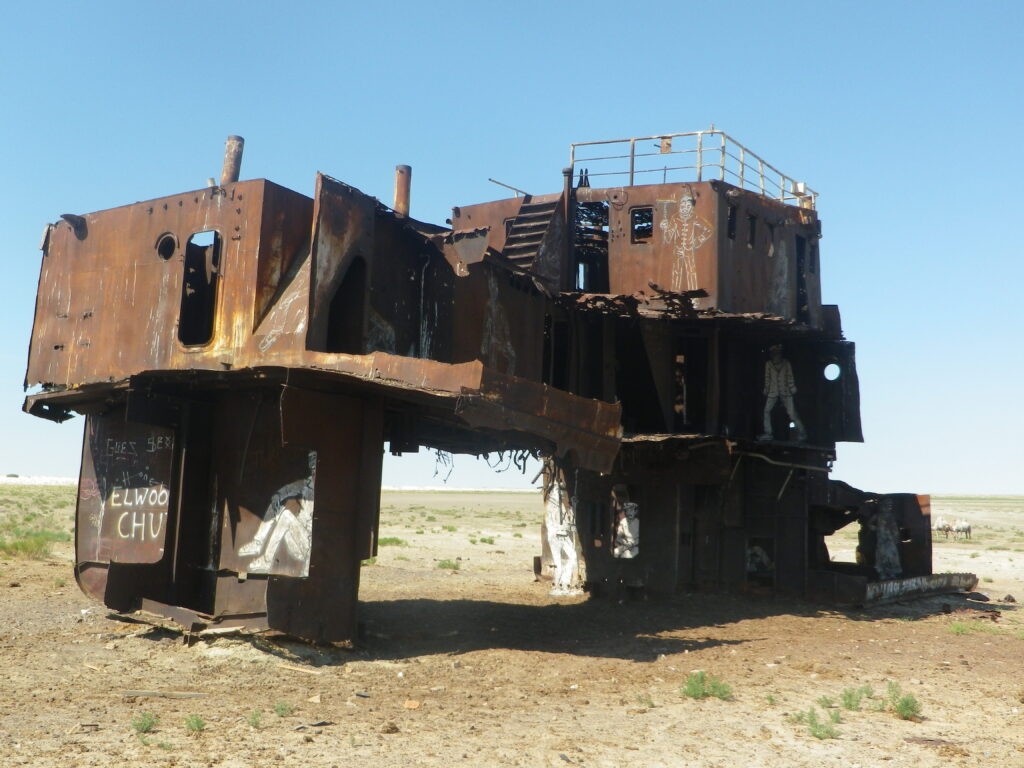

Kazakhstan Chairs International Fund for Saving the Aral Sea

Since the beginning of 2024, 1.9 billion cubic meters of water have been sent to the North Aral Sea, raising its volume to 22 billion cubic meters.

This announcement was made by Kazakhstan’s Minister of Water Resources and Irrigation Nurzhan Nurzhigitov  at the first meeting of the Board of the International Fund for Saving the Aral Sea (IFAS) on September 18, attended by delegations from  Kazakhstan, Tajikistan, Turkmenistan, Uzbekistan, and Kyrgyzstan ( as an observer country).

The IFAS was established in 1993 to unite efforts by participating countries to mitigate the negative impact of the Aral Sea’s desertification on the natural environment and the region’s population.

Discussions focused on progress on two large-scale projects: a program to assist the Aral Sea basin countries, and the Regional Environmental Protection Program for Sustainable Development in Central Asia, which aims to develop the principles of green economy and adaptation to climate change.

The meeting commended Kazakhstan’s commitment to working in close cooperation with other Central Asian states on preserving the Aral Sea and approved plans for work to be undertaken by the IFAS under President Kassym-Jomart Tokayev chairmanship from 2024-’26.

“At the height of this year’s irrigation period, up to 80 cubic meters of water per second flowed into the sea along the Syr Darya River, compared to only six cubic meters per second last year. In recent years, the volume of water in the North Aral Sea has been decreasing, but since the beginning of 2024, it has increased again and reached 22 billion cubic meters,” stated Nurzhigitov. ” To ensure a further increase –  we are strengthening water diplomacy and developing the second phase of the North Aral Sea conservation project.”

The North Aral Sea, the portion of the former Aral Sea fed by the Syr Darya River, split from the South Aral Sea in 1987–’88 when water levels dropped due to water diversion for agricultural use.

According to the Kazakh Ministry of Water Resources, 75% of the flow of the Syr Darya River comes from Kyrgyzstan, 20% from Uzbekistan, and 5% from Kazakhstan.

Trade Volume Between Kyrgyzstan and China Reaches $11 Billion

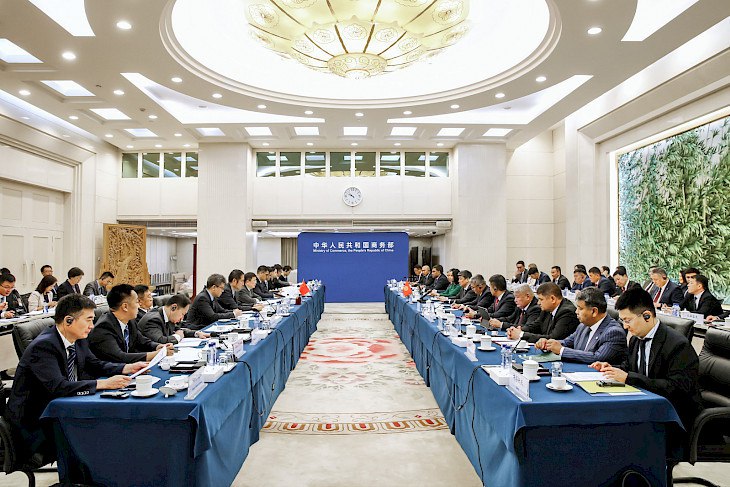
Trade turnover between Kyrgyzstan and China for the first seven months of 2024 reached approximately $11 billion, as reported by the Deputy Chairman of the Cabinet of Ministers of Kyrgyzstan, Bakyt Torobayev, in Beijing.

Torobayev emphasized that the foundation for successful cooperation was laid during the meetings between Kyrgyz President Sadyr Japarov and Chinese President Xi Jinping. In 2023, the volume of trade turnover between the countries reached $20 billion, 32% more than in 2022.

Torobayev also noted that important steps to strengthen cooperation continue. In particular, the project to build a railroad connecting China, Kyrgyzstan, and Uzbekistan is moving forward. Another significant event was the opening of the simplified border crossing point “Bedel” on the Kyrgyz-Chinese border, which indicates the beginning of a new stage in bilateral relations.

Cooperation between Kyrgyzstan and China covers trade, energy, and infrastructure spheres. In addition, China is actively investing in hydropower and implementing programs to improve Kyrgyzstan’s infrastructure. These projects are expected to contribute to sustainable economic growth.

ADB to Finance Upgrade of Barskoon–Karakol Section of Issyk-Kul Ring Road in Kyrgyzstan

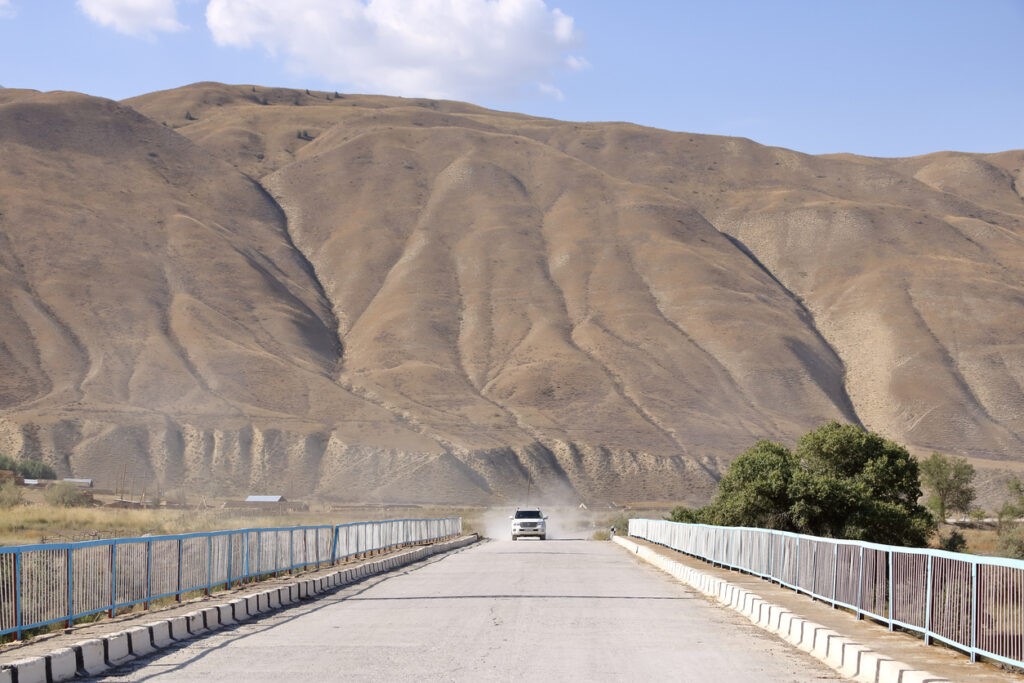
The Asian Development Bank (ADB) announced on September 19 that it had approved $109.5 million in financing to renovate the highway around Lake Issyk-Kul. The lake is one of the most popular tourist destinations in Kyrgyzstan, and a strategic location that connects to neighboring Central Asian countries.

ADB’s Issyk-Kul Ring Road Improvement Project will construct 75.2 kilometers of the road traversing the Barskoon to Karakol section of the Issyk-Kul Ring Road, which connects the Central Asia Regional Economic Cooperation (CAREC) Corridor 1. The project will widen the two-lane roadway to four lanes to meet increasing traffic demand, while incorporating climate-adaptation measures into the road design and construction materials. Rest areas, bus stops, streetlights, and safer access for pedestrians will also be constructed.

The ADB funding comprises an $87 million concessional loan and a $22.5 million grant from the Asian Development Fund.

ADB Principal Transport Specialist Oyunchimeg Erdene commented: “The Barskoon–Karakol road section [on the southern shore of Lake Issyk-Kul] is the remaining portion of the Issyk-Kul Ring Road for improvement. Completing this will mean eliminating congestion and boosting tourism that will support the growth of businesses in the area.”

Kyrgyzstan’s Deputy Minister of Transport, Beknazar Bazaraliev, earlier said that the rehabilitation of the Issyk-Kul Ring Road is to be completed in 2028.

The rehabilitation of the 440 km long Issyk-Kul Ring Road was divided into several parts and is financed by the government and international financial organizations.

CSTO to Finalize Tajik-Afghan Border Security Plan by End of Year

The program by the Collective Security Treaty Organization (CSTO) to strengthen the Tajik-Afghan border will be adopted by the end of 2024, the Secretary-General of the CSTO, Imangali Tasmagambetov, announced.

“Continuous work is underway to develop and implement specific measures to strengthen our security space. The most striking example is the CSTO Targeted Interstate Program to Strengthen the Tajik-Afghan Border, scheduled for adoption this year,” he said.

According to him, the CSTO is characterized by open and honest discussions of all current issues, without exception, in the mode of constructive and “soft” alliance and decision-making strictly in compliance with the principle of consensus. “And in terms of fundamental issues of mutual support and collective security, we act exclusively consolidated,” Tasmagambetov said.

“Our common task for the foreseeable future is to strengthen the role and significance of the organization in the changing system of international relations while maintaining a commitment to established principles and priorities and at the same time corresponding to the modern context of regional and global security,” he added.

The first decision to strengthen the Tajikistan-Afghanistan border was made in 2013. The program itself consists of three stages, the first of which is designed for five years. The state border between Tajikistan and Afghanistan is part of the southern border of the so-called CIS and post-Soviet territory. The total length of its border is 1374.2 km, of which 1184.4 km is a river border and 189.8 km is an island border.

Kyrgyzstan Asks IAEA for $45 Million for Nuclear Waste Remediation

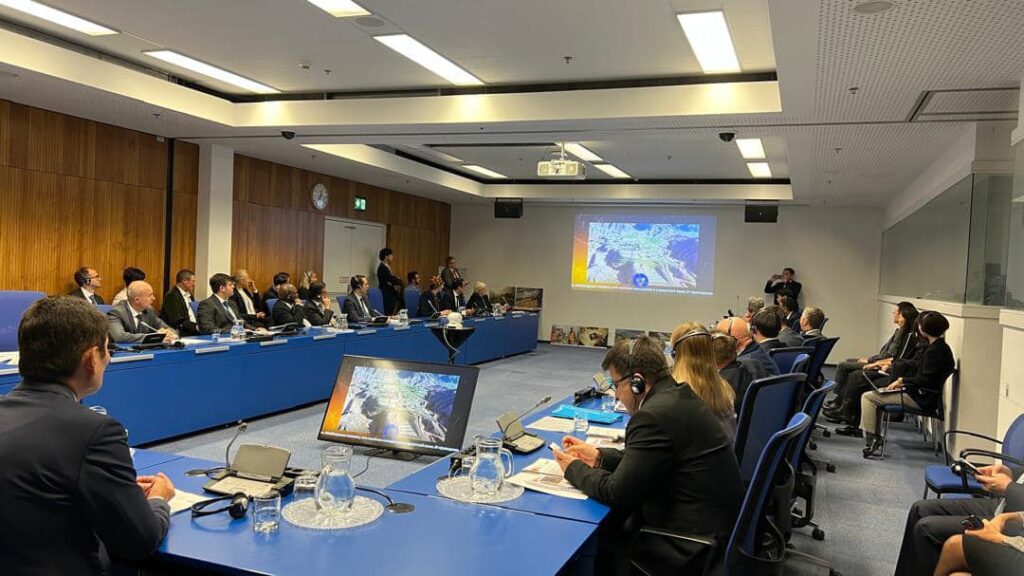
Kyrgyzstan’s Deputy Minister of Emergency Situations, Azamat Mambetov, has asked for support from Central Asian countries at the International Atomic Energy Agency’s General Session in Vienna, Austria. The 68th session of the IAEA General Conference is taking place from September 16 to 20, 2024. An official from the Kyrgyz Republic Ministry of Emergency Situations made a speech that called for attention to be paid to the importance of ensuring environmental safety in the region.

“In his speech, Azamat Mambetov emphasized the importance of the problem of radiation safety in Central Asia and called for the intensification of international efforts to reclaim uranium tailings in the region,” the Ministry of Emergency Situations stated.

The IAEA adopted a resolution on “The Role of the International Community in Preventing Radiation Threats in Central Asia.” A strategic master plan was developed to reclaim uranium sites in the region and create a special account for environmental remediation in Kyrgyzstan, Uzbekistan, and Tajikistan.

The Deputy Minister of Emergency Situations of Kyrgyzstan informed IAEA members about the process of completing the reclamation of two nuclear waste sites in the country’s south. This has allowed about 80,000 people in that area to live safely.

The Kyrgyz Ministry of Emergency Situations stressed that it is grateful to all countries and international organizations that have made a significant contribution to the environmental rehabilitation of the tailing dumps left over from Soviet-era uranium mining in Central Asia. However, approximately another $45 million is needed to implement the Strategic Master Plan fully.

According to the Kyrgyz Ministry of Emergency Situations, there are currently 92 toxic and radioactive waste dumps in the country. Of these, 23 tailings contain uranium elements, while the rest contain radioactive rock residues, heavy metals, and cyanide.