As China’s international influence expands, it is refining its approach to global engagement by combining economic strength with crafted instruments of soft power. While in the past China primarily relied on Confucius Institutes and educational exchange programs to promote cultural understanding and strengthen people-to-people connections, its strategy has evolved into a more diverse and multidimensional framework.
In recent years, Beijing has expanded its soft power tools to include Luban Workshops, which transfer technical skills and vocational expertise, and medical cooperation initiatives that enhance China’s reputation as a reliable development partner. These efforts have allowed China to project an image of a country that not only builds infrastructure and invests in markets, but also contributes to human capital and social welfare across the developing world.
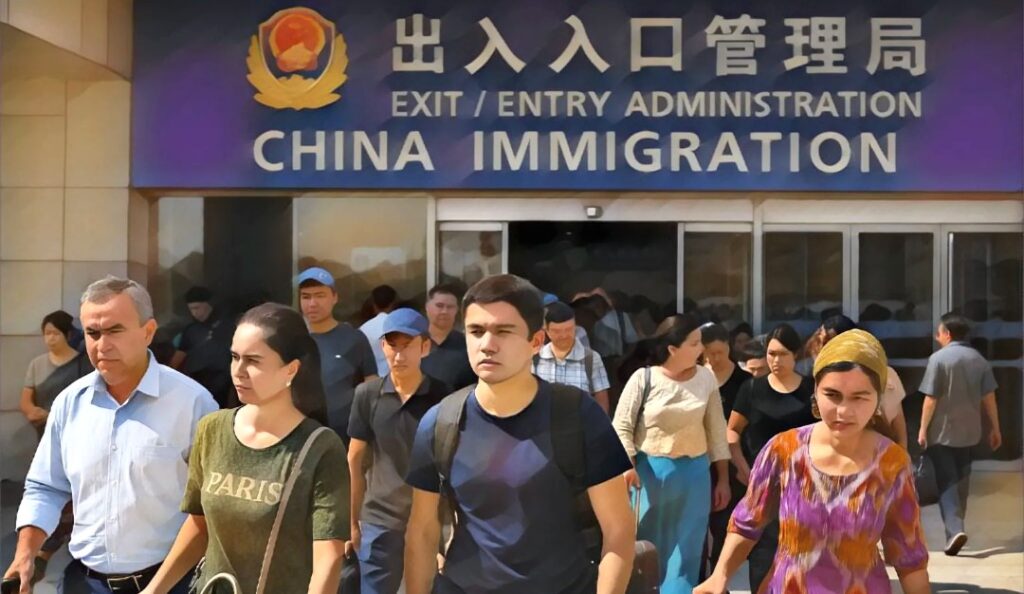
A newer element in this evolving strategy is visa diplomacy. In a global environment where mobility and connectivity shape international relationships, easing travel restrictions has become a subtle yet effective way to deepen engagement.
As of mid-2025, China has signed or implemented visa-free or unilateral visa exemption agreements with 75 countries, covering tourism, business, family visits, and transit travel. This list includes key Central Asian partners such as Kazakhstan and Uzbekistan, both of which maintain mutual visa exemption agreements with Beijing.
The expansion of China’s visa diplomacy brings significant benefits for both China and its Central Asian partners, particularly Kazakhstan and Uzbekistan. For Beijing, this initiative advances two major objectives, strengthening its economy and enhancing its soft power.
On the economic side, visa-free agreements allow China to attract a larger and more diverse group of international visitors, expanding its tourism market beyond traditional regions. While travelers from Europe, Asia, and North America remain the most frequent visitors, there has been a noticeable increase in arrivals from Central Asia.
This trend is already visible in official figures, as in 2024 China recorded 20.1 million foreign entries under visa-free arrangements, representing 74.6 percent of total arrivals and marking a growth of more than 112 percent compared with 2023.
Visa-free diplomacy also supports China’s broader development goals by making tourism one of the essential drivers of economic growth and a reliable source of revenue. In 2025, China’s tourism sector, including both domestic and international travel, is expected to contribute a record 13.7 trillion yuan to the national economy.
This figure exceeds pre-pandemic levels by more than ten percent and sustains approximately 83 million jobs. As China expands its visa agreements with Central Asian countries, it aims to attract more visitors from the region, increase tourism income, and deepen regional economic ties.
Beyond its economic value, visa-free diplomacy enhances China’s soft power across Central Asia. By facilitating more frequent travel and cultural interaction, China has the opportunity to build a more positive image among Central Asian societies and to strengthen long-term people-to-people relations.
These exchanges can create familiarity and trust, which are essential elements of sustainable diplomacy. When combined with other soft power tools such as educational programs, technical cooperation, and media outreach, visa diplomacy helps China build a balanced approach that complements its economic influence with greater social and cultural engagement in the region.
For Central Asian countries such as Kazakhstan and Uzbekistan, mutual visa exemption agreements also generate important economic benefits and align well with their goals of expanding and diversifying the tourism sector. Visa-free access serves as a strong incentive for Chinese tourists, who rank among the world’s highest spenders on international travel.
Their presence provides a direct boost to local economies through increased spending on accommodation, restaurants, transportation, and local goods. There has already been a visible rise in the number of Chinese tourists visiting Uzbekistan. The visa-free arrangement is expected to further strengthen tourism flows from China to the Central Asian region. Building on the new visa-free policy, Uzbekistan aims to attract one million Chinese tourists in the medium term.
Beyond tourism, simplified travel regulations also create new opportunities for trade and investment. Easier mobility encourages Chinese entrepreneurs and investors to explore Central Asia, identify potential ventures, and establish business operations. Over time, these interactions can help attract greater levels of investment, deepen economic integration, and strengthen China’s role as a strategic economic partner in the region.
Against the backdrop of China’s growing economic influence in Central Asia, visa-free agreements play an important role in strengthening people-to-people engagement across the region. This approach complements Beijing’s long-standing focus on government and elite-level relations by fostering broader social and cultural connections.
Through expanded mobility, China seeks to build familiarity and trust among Central Asian societies, allowing individuals to experience its culture, development, and economic progress firsthand. Over time, this engagement can help ease public concerns about China’s increasing presence in the region and reshape perceptions by highlighting the potential benefits of Chinese investment and cooperation. By encouraging more direct human interaction, China aims to cultivate a more balanced and positive narrative around its role in Central Asia.