• KGS/USD = 0.01144 0%
  • KZT/USD = 0.00196 -0%
  • TJS/USD = 0.10899 -0%
  • UZS/USD = 0.00008 -0%
  • TMT/USD = 0.28490 0%
  • KGS/USD = 0.01144 0%
  • KZT/USD = 0.00196 -0%
  • TJS/USD = 0.10899 -0%
  • UZS/USD = 0.00008 -0%
  • TMT/USD = 0.28490 0%
  • KGS/USD = 0.01144 0%
  • KZT/USD = 0.00196 -0%
  • TJS/USD = 0.10899 -0%
  • UZS/USD = 0.00008 -0%
  • TMT/USD = 0.28490 0%
  • KGS/USD = 0.01144 0%
  • KZT/USD = 0.00196 -0%
  • TJS/USD = 0.10899 -0%
  • UZS/USD = 0.00008 -0%
  • TMT/USD = 0.28490 0%
  • KGS/USD = 0.01144 0%
  • KZT/USD = 0.00196 -0%
  • TJS/USD = 0.10899 -0%
  • UZS/USD = 0.00008 -0%
  • TMT/USD = 0.28490 0%
  • KGS/USD = 0.01144 0%
  • KZT/USD = 0.00196 -0%
  • TJS/USD = 0.10899 -0%
  • UZS/USD = 0.00008 -0%
  • TMT/USD = 0.28490 0%
  • KGS/USD = 0.01144 0%
  • KZT/USD = 0.00196 -0%
  • TJS/USD = 0.10899 -0%
  • UZS/USD = 0.00008 -0%
  • TMT/USD = 0.28490 0%
  • KGS/USD = 0.01144 0%
  • KZT/USD = 0.00196 -0%
  • TJS/USD = 0.10899 -0%
  • UZS/USD = 0.00008 -0%
  • TMT/USD = 0.28490 0%
08 December 2025

Tajikistan Promises Toil and Trouble for Witchcraft Clients

Tajikistan is widening the war on warlocks.

The Tajik government has previously announced hard labor, heavy fines and other tough penalties for people convicted of fortune-telling, sorcery and witchcraft. Now it is targeting their customers.

Legal measures are being taken against more than 150 people suspected of paying soothsayers to commit “criminal acts,” the Ministry of Internal Affairs said on Wednesday.

The ministry did not provide details about the legal action, but said it will collect the data and photographs of people who go to fortune-tellers and sorcerers.

For years, Tajikistan has warned that fortune-tellers and the like are fraudsters seeking to bilk customers out of their money. There appear to be deeper concerns that deeply rooted beliefs revolving around the supernatural are a threat to stability.

Alarming human rights groups, the government has also banned clothing deemed to be foreign to Tajik culture, a purported reference to Islamic clothing such as the hijab. Tajikistan´s efforts to regulate religious expression are part of a bigger campaign against extremism, though critics fear such controls could end up pushing some people toward radicalism.

Moldova To Open Embassy in Kazakhstan

The government of Moldova has approved plans to open its first embassy in Kazakhstan’s capital of Astana.

The opening of the embassy is intended to expand Moldova’s diplomatic presence in Central Asia, and strengthen economic and cultural ties with Kazakhstan. Kazakhstan is an important regional economic player, with rich energy resources and a significant Moldovan diaspora.

According to the Moldovan Foreign Ministry, about 20,000 Moldovan citizens living in Kazakhstan currently have to seek consular assistance from the Moldovan diplomatic mission in Russia.

The ministry said that Kazakhstan is a promising market and an essential partner for attracting investments and developing bilateral trade. The opening of the embassy is expected to contribute to a more active political dialog, and create new opportunities for economic cooperation between the countries.

The decision also aligns with Moldova’s National Development Plan 2025-2027, which aims to expand its diplomatic and consular network worldwide. The country seeks to diversify its trade portfolio, particularly in the European Union or the EU’s immediate neighborhood.

Kazakhstan and Tajikistan to Cooperate Over Rare-Earth Metals

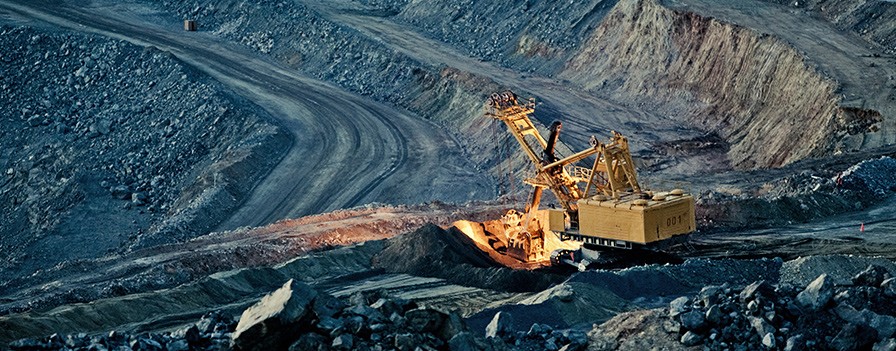
Kazakhstan’s national atomic company, Kazatomprom, the world’s largest producer of uranium, has announced a new strategic partnership with Tajikistan’s TajRedMet (Tajik Rare Metals) in the mining and processing of uranium and rare and rare-earth metals.

According to the parties’ agreement, the companies will collaborate in exploring, mining, and processing uranium and other rare and rare-earth metals, conducting research and development work, introducing innovative technologies, and training personnel.

Meirzhan Yussupov, CEO of Kazatomprom, commented: “This step is of great importance for strengthening the partnership between our companies. Although it is too early to talk about specific results, we are focused on promising joint projects in the uranium industry and rare and rare-earth metals, which can significantly benefit Kazakhstan and Tajikistan.”

As part of the agreement, TajRedMet representatives will soon visit Kazakhstan to inspect Kazatomprom’s production facilities and assess the potential for further cooperation in more detail.

According to an IAEA research paper, Tajikistan has significant mineral resources awaiting development, including rare metals, earth elements, and uranium. Several countries have expressed interest in the development of Tajikistan’s uranium resources. Russia was considering assisting Tajikistan in developing its uranium resources, as well as assisting in geological prospecting, with the aim of involvement in the subsequent extraction and possible processing of uranium. China’s Guangdong Corporation has also expressed an interest in participating in projects to develop Tajik uranium deposits. The Tajik government has also agreed to allow Indian companies to explore for uranium mineralization.

In his address to parliament in December 2023, Tajik President Emomali Rahmon ordered the government to focus on mining lithium, tungsten, nickel, and antimony, and develop a program for processing these metals domestically into finished products.

Kazakhstan Bans Apple Imports as Big Harvest Expected This Year

On August 27, the government of Kazakhstan imposed a temporary ban on importing apples into Kazakhstan by motor transport until the end of the year. The ban does not apply to imports from fellow members of the Eurasian Economic Union — Armenia, Belarus, Kyrgyzstan, and Russia.

The Kazakh Ministry of Agriculture explained that this year’s total apple harvest is projected to be 300,000 tons. This higher than average volume was achieved thanks to government support measures provided in previous years to cultivate apple orchards. In 2024, new apple orchards will have reached full fruiting capacities, and yields will increase by 18%, which will fully meet the needs of the domestic market.

Kazakhstan is the birthplace of apples — particularly the famous aport apples, which grow in the Almaty region. Translated from Kazakh, Almaty means “place of abundance of apples.”

Aport apples are distinguished by their large size, distinct smell, and succulent nature. One of the prominent landmarks in Almaty, the first sight to greet visitors to the Kok-Tobe Mountain, which looms over the city, is a granite statue of an apple with water gushing from its core.

In 1970, there were 3.8 million aport trees in Kazakhstan, but by 1984, only 1.4 million remained. In 2012, scientific research began on the revival and rejuvenation of the variety, including establishing an experimental garden of aport grafted onto Sievers apple trees. In 2023, Kazakh scholars harvested the first fruits weighing 400–500g.

U.S. Think Tank Calls on American Politicians to Make Uzbekistan a Valued Partner

Daniel Runde, a senior vice-president at the Washington, D.C.-based think tank the Center for Strategic and International Studies (CSIS), has called on American politicians to strengthen the U.S.’s relations with Uzbekistan.

He believes that Uzbekistan, a key partner for the United States in Central Asia, deserves more attention from the West. With Russia’s invasion of Ukraine and growing competition with China, the U.S. could strengthen ties with Uzbekistan to promote regional stability and counterbalance Russian and Chinese influence.

“Uzbekistan seeks more engagement with the United States through bilateral efforts and the “C5+1” (the five Central Asian countries plus the United States) diplomatic platform. We might never become Uzbekistan’s best friend. However, we could become better and more reliable friends. Uzbekistan has five bordering countries, and at one point in the early 2000s, it considered the United States its ‘sixth neighbor,’” Runde mentioned. “When the U.S. government was active in Afghanistan, we supported Uzbekistan’s efforts to develop its economy and invest in its security. With our disengagement from Afghanistan, we need to look at Uzbekistan as the valued partner that it could be and re-engage. We should work towards the day that Uzbekistan considers the United States its ‘sixth neighbor’ again.”

According to Runde, there are several goals that the US could assist Uzbekistan in achieving. While some are significantly more difficult to handle, others are relatively straightforward:

1) Uzbekistan wants U.S. support to join the World Trade Organization (WTO), a goal it has pursued for almost 30 years. The U.S. has provided some technical help, and during a recent visit, U.S. Trade Representative Katherine Tai reaffirmed America’s support. For further progress, Uzbekistan could benefit from greater involvement from U.S. institutions like the Development Finance Corporation (DFC), Export-Import Bank (EXIM), and U.S. Trade and Development Agency (USTDA) to strengthen trade ties with the U.S.

2) Uzbekistan and other Central Asian countries want the U.S. to repeal the Jackson-Vanik Amendment, which restricts regular trade with them. This amendment, initially targeting Soviet-era policies, is now outdated and seen as disrespectful, as it treats these nations as if they are still part of the Soviet Union. Repealing it would show that the U.S. respects their independence and is ready to treat them as equal partners. “Jackson-Vanik now restricts normal trade relations with several existing and former nonmarket economies, including Uzbekistan. For countries like Uzbekistan, Jackson-Vanik is a sign of disrespect that encourages them to take their business to China, Russia, Turkey, or the Gulf,” Runde argues.

3) He notes that many developing countries, including Uzbekistan, would like to see Congress successfully renew the Generalized System of Preferences (GSP), a trade preference program. “The GSP benefited many developing countries by providing duty-free treatment for their products. With the absence of this program, trade volumes between Uzbekistan and the United States have not been as impressive as they might have been. Compare U.S. trade with Uzbekistan and Uzbekistan’s trade with China, Russia, or the EU. The lapse of the U.S. GSP has had a real impact on our influence in places like Uzbekistan.” As explained by Runde, in countries like Uzbekistan, not renewing the U.S. GSP program signals that the U.S. doesn’t care about them. Without this program, Uzbekistan is more likely to trade with China or Europe.

4) “One way or the other, it is in the United States’ interest to be seen as helping Uzbekistan sort out its logistics and connectivity issues,” Runde states. Uzbekistan is a quickly growing country with an enormous industrial base and abundant mineral reserves. Strengthening U.S. ties with Uzbekistan and Central Asia is beneficial, regardless of U.S. elections.

5) The U.S. could have had a Bilateral Investment Treaty (BIT) with Uzbekistan. Still, it was delayed due to issues in 2005 when the Uzbek government crushed riots in a regional city and retaliated by kicking the U.S. out of the “K2” military base used for the Afghan War. From Runde’s point of view, a new administration might revive and complete the BIT.

Turkmenistan and Tatarstan Discuss Trade and Debt Issues

On August 27, at a meeting of the Turkmenistan-Tatarstan joint working group on trade-economic, scientific-technical, and cultural cooperation in Kazan (Republic of Tatarstan, Russian Federation), it was announced that Turkmenistan and Tatarstan’s ‘s trade turnover has increased by 13.4%, amounting to $52.3 million, largely due to the import of products to Turkmenistan. However, the Turkmen Minister of Finance and Economy, Serdar Joraev, stated that this is still two times lower than 2019’s numbers.

Deputy Prime Minister and Minister of Industry and Trade of Tatarstan, Oleg Korobchenko confirmed the overall decline in trade turnover, with both parties calling for a joint solution.

During the meeting, the participants discussed Turkmenistan’s debt, which arose due to problems with inter-bank settlements. Whilst both parties stated that this issue is under control and being resolved with the participation of the Central Banks of Turkmenistan and Russia, the total amount of debt remains unreported.

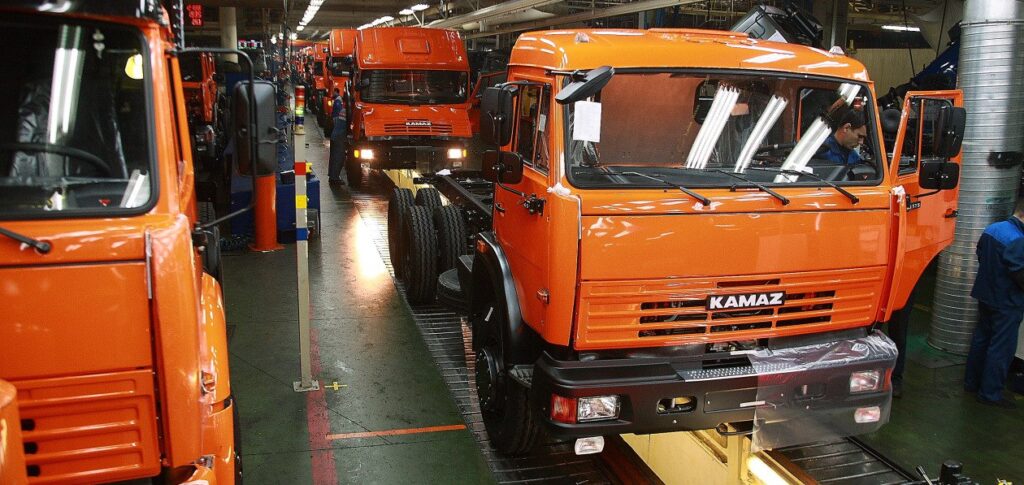
Tatarstan companies in the fields of mechanical engineering and oil refining supply equipment and goods in Turkmenistan. In 2020, 852 Kamaz trucks, the second high-speed A145E marine motor ship, and more than $8 million worth of medicines and medical supplies were delivered to Turkmenistan from Tatarstan.