• KGS/USD = 0.01144 0%
  • KZT/USD = 0.00212 0%
  • TJS/USD = 0.10456 0.19%
  • UZS/USD = 0.00008 0%
  • TMT/USD = 0.28490 0%
  • KGS/USD = 0.01144 0%
  • KZT/USD = 0.00212 0%
  • TJS/USD = 0.10456 0.19%
  • UZS/USD = 0.00008 0%
  • TMT/USD = 0.28490 0%
  • KGS/USD = 0.01144 0%
  • KZT/USD = 0.00212 0%
  • TJS/USD = 0.10456 0.19%
  • UZS/USD = 0.00008 0%
  • TMT/USD = 0.28490 0%
  • KGS/USD = 0.01144 0%
  • KZT/USD = 0.00212 0%
  • TJS/USD = 0.10456 0.19%
  • UZS/USD = 0.00008 0%
  • TMT/USD = 0.28490 0%
  • KGS/USD = 0.01144 0%
  • KZT/USD = 0.00212 0%
  • TJS/USD = 0.10456 0.19%
  • UZS/USD = 0.00008 0%
  • TMT/USD = 0.28490 0%
  • KGS/USD = 0.01144 0%
  • KZT/USD = 0.00212 0%
  • TJS/USD = 0.10456 0.19%
  • UZS/USD = 0.00008 0%
  • TMT/USD = 0.28490 0%
  • KGS/USD = 0.01144 0%
  • KZT/USD = 0.00212 0%
  • TJS/USD = 0.10456 0.19%
  • UZS/USD = 0.00008 0%
  • TMT/USD = 0.28490 0%
  • KGS/USD = 0.01144 0%
  • KZT/USD = 0.00212 0%
  • TJS/USD = 0.10456 0.19%
  • UZS/USD = 0.00008 0%
  • TMT/USD = 0.28490 0%

Kazakhstan Tops Central Asia with Region’s Highest Pensions

Kazakhstan leads Central Asia in pension payments, with the highest average pension in the region, according to Kaktus.media. Kazakh citizens receive an average of approximately 89,275 KZT ($175.30) per month, as reported by the region’s statistical agencies.

Kyrgyzstan holds second place, with an average pension of 9,379 KGS ($108) at the end of 2023. Uzbekistan follows with an average of 1.2 million UZS ($93.40), while Turkmenistan ranks fourth, offering an average of 300 TMT ($85.60). Tajikistan reports the lowest pension payments in the region, where pensioners receive just an average of 370 TJS ($33.80) per month.

Kazakhstan has also announced measures to further support its pensioners. Beginning January 1, 2025, the country will implement an annual indexation of solidarity pensions by 8.5%. Additionally, basic pensions and social benefits will increase by 6.5% annually, a move designed to improve the welfare of retirees.

Solid Waste Recycling Plant Under Construction in Bishkek

Bishkek municipality has announced progress on the construction of a solid waste recycling plant at the city’s sanitary landfill, supported by a Chinese investor. Concrete foundations are being poured, and equipment and components for the facility have begun arriving from China. Currently, over 180 Chinese workers and engineers are active at the site.

On March 29, Kyrgyzstan’s Cabinet of Ministers and the Chinese investor signed an agreement for the plant’s construction. The facility will generate electricity by incinerating municipal solid waste. In its initial phase, the plant is expected to process 1,000 tons of waste daily, with plans to increase capacity to 3,000 tons per day. The project’s total investment amounts to approximately $95 million, with construction slated for completion in December 2025.

Addressing a Growing Problem

Solid waste disposal has long been a critical issue in Kyrgyzstan, particularly in Bishkek, the nation’s largest city. According to the 24.kg news agency, the per capita production of waste is rising. Almaz Oskonbaev, an official from the Ministry of Natural Resources, Ecology, and Technical Supervision, reported that 1.792 million tons of solid waste were collected nationwide in 2023, a significant increase from 1.177 million tons in 2019. This equates to approximately 279 kilograms of garbage per person annually.

Bishkek’s sanitary landfill currently receives around 200 tons of waste daily from the city and its suburbs, according to landfill director Nurlan Jumaliev.

A New Landfill to Complement Recycling Efforts

In a bid to improve waste management, Bishkek inaugurated a new sanitary landfill on October 31, 2023. Supported by the European Bank for Reconstruction and Development (EBRD) and the European Union (EU), this facility complies with both national and EU environmental standards. With a storage capacity of 1.9 million cubic meters, it is expected to accommodate the city’s waste disposal needs for at least a decade.

The construction of the recycling plant represents a significant step forward in addressing Bishkek’s mounting waste challenges while contributing to sustainable energy production.

Tajik Migrants Embrace Free English Courses to Pursue Jobs in Europe

Tajikistan has launched a free English online course for migrant workers aiming for employment in Europe and the Commonwealth of Independent States (CIS). The course, developed in partnership with the International Organization for Migration (IOM) and the Smarthub educational platform, is part of the UK Seasonal Worker Program. This initiative provides participants with an opportunity to enhance their language skills at no cost.

According to the IOM, over 200 participants have already completed the program. The curriculum covers essential communication skills, ranging from basic phrases and personal introductions to professional vocabulary necessary for workplace interactions.

This initiative comes as Tajikistan explores alternative destinations for labor migration, prompted by stricter migration rules in Russia and Western sanctions limiting access to its labor market. Increasing numbers of Tajik workers are finding employment in Germany, Poland, the Baltic States, Romania, and the United Kingdom. In 2023, approximately 1,000 Tajik citizens traveled to the UK for seasonal agricultural work, including fruit and vegetable harvesting.

Turkmenistan to Boost Gas Exports to Neighbor Uzbekistan

Uzbekistan has agreed to purchase more natural gas from Turkmenistan, though the amount of additional gas and the price remain unclear.

Uzbek President Shavkat Mirziyoyev spoke by phone with the chairman of Turkmenistan’s Halk Maslahaty (People’s Council) and leader of the country Gurbanguly Berdimuhamedov on December 5 to discuss the deal. According to Turkmen state news, Berdimuhamedov “agreed to the increase” of Turkmen gas to Uzbekistan, and it would not be surprising if Berdimuhamedov was quietly dancing in celebration on the other end of the line.


Anxious to Sell

Turkmenistan has the fourth largest gas reserves in the world, some 17.5 trillion cubic meters, at least. To put that in perspective, the 27 countries of the European Union, combined, used 350 billion cubic meters of gas in 2022, meaning Turkmenistan has enough gas to meet all the EU’s gas needs, at current levels, for 50 years.

Unfortunately, more than 33 years after becoming independent, Turkmenistan still does not have many customers for its gas.

There is China, which buys the most Turkmen gas, some 35 billion cubic meters (bcm), Uzbekistan, which in recent years has been purchasing 1.5-2 bcm annually from Turkmenistan, and Azerbaijan, which gets 1-1.5 bcm of Turkmen gas via a swap arrangement involving Iran.

Turkmenistan’s only successful recent export deal is with Iraq for 10 bcm, which involves a swap arrangement with Iran that will require maintenance work and repairs on Turkmenistan’s and Iran’s pipelines.

Turkmenistan just lost Russia as a customer after the contract for Russia to purchase up to 5.5 bcm of Turkmen gas expired at the end of June 2024. The expiration of the agreement with Russia meant Turkmenistan lost its second biggest buyer, but that might now turn out to be good news for Uzbekistan.


Anxious to Buy

The jump in the number of people and accompanying expansion of service infrastructure have combined with Uzbekistan’s gross failure to increase domestic gas output to make Uzbekistan a net gas importer.

In late January 2023, Uzbek media reported the country produced some 51.7 bcm of gas in 2022 and said plans called for increasing that to 56.3 bcm in 2023. Instead, gas production fell to 46.7 bcm in 2023, and it is set to decrease further in 2024.

Uzbekistan signed its first contract for Turkmen gas in December 2022. That deal was for 1.5 bcm annually, but in August 2023, the two countries agreed to boost that to 2 bcm.

However, that was not enough to fill Uzbekistan’s growing gas consumption needs.

In June 2023, Uzbekistan signed a two-year agreement to import up to 2.8 bcm of gas from Russia, but by March 2024, reports showed Uzbekistan looking to increase Russian gas imports to 11 bcm starting in 2026.

It looks like some of the 5.5 bcm Turkmenistan was until recently selling to Russia will instead be sent to Uzbekistan, so for Turkmenistan, the gas deal with Uzbekistan only recovers some of the revenue lost with the expiration of the contract with Russia.

Russia did not need the gas it was importing from Turkmenistan and was probably selling that gas to Uzbekistan since 2023 while technical work was done on reversing the flow of pipelines that previously carried Central Asian gas, including Uzbek gas. Now that the reversal of direction is completed or nearly completed, parts of that pipeline network will bring gas from Russia to Uzbekistan.

Turkmen gas should, however, be cheaper than Russian gas for Uzbekistan. Turkmenistan was reportedly selling gas to Russia for $110 per 1,000 cubic meters. Uzbekistan is buying Russian gas for $160 per 1,000 cubic meters.


From Gas to Liquids

The price for the gas was not disclosed in reports, but Uzbekistan is likely to get a reasonable deal, as the other main topic of discussions between Mirziyoyev and Berdimuhamedov was water.

Most of Turkmenistan’s water sources either pass by or run through Uzbekistan before reaching Turkmenistan.

Central Asia is already dealing with the effects of climate change; decreased precipitation, record high temperatures in summer and accompanying drought. Compounding the problem, the Taliban have started construction of a canal that will siphon off a large amount of water from the Amu Darya, one of Central Asia’s great rivers.

Uzbekistan and Turkmenistan have been taking water from the Amu Darya for their canal systems for use in agricultural fields for decades. Now Afghanistan intends to do the same, using its share of Amu Darya water that has never been claimed before due to the protracted conflict there.

Turkmenistan is the downstream country, the end of the line for water from transboundary rivers, and will be more dependent than ever on the good graces of neighbor Uzbekistan to ensure enough water makes it way to Turkmenistan.


The Start of Something Bigger?

The Turkmen-Uzbek gas deal is good for both countries and for Uzbekistan could be the best solution to its increasing problems in meeting the country’s gas needs.

Turkmenistan does not have very many friends or gas customers, and Uzbekistan is both, so the basis for one day boosting Turkmen gas exports to Uzbekistan is already there.

Mysterious Caspian Sea Shipwreck Discovered Near Aktau

Fishermen on the Kazakhstani port of Aktau, on the Caspian Sea, have reported the discovery of a mysterious shipwreck approximately 1.5 kilometers from Cape Melovoy. The outline of the vessel, estimated to be about 70 meters long and 15 meters wide, became visible due to the shallowing of the water in the area.

The location of the wreck has been identified at 43°0′0″ north latitude and 51°0′0″ east longitude. Satellite imagery available through Google Maps corroborates the fishermen’s accounts. A representative of a logistics company that monitors vessel traffic suggested that the wreck appears to be relatively recent.

While the discovery has generated significant local interest, no official investigation or underwater survey has been conducted yet. Bahramzhan Novruzov, an instructor at the Typhoon diving center, confirmed plans to explore the site in May 2025.

The origin, condition, and potential significance of the wreck remain unclear. Further analysis will be necessary to determine whether the vessel holds historical, commercial, or other value.

This discovery adds to a series of recent findings in the Caspian Sea, where falling water levels have exposed numerous wrecks. In Tupkaragan Bay, for example, the remnants of dozens of vessels have surfaced, revealing what some have called a “ship graveyard.”

Additionally, divers from the Russian Geographical Society have been investigating the Caspian seabed for vessels dating back to the era of Peter the Great, seeking to pinpoint their exact locations.

Underwater surveys planned for next year are expected to shed light on the mystery surrounding the Aktau wreck and contribute to the growing body of knowledge about the maritime history of the Caspian Sea.

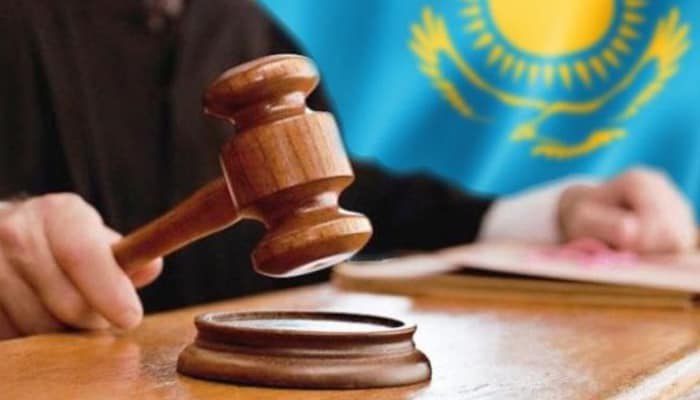
Kazakhstan’s Path to Judicial Reform and Transparency

Kazakhstan is implementing reforms to enhance judicial independence, modernize its institutions, and address contemporary challenges according to Aslambek Mergaliev, Chairman of the Supreme Court of Kazakhstan, who detailed these initiatives aimed at strengthening the rule of law and increasing transparency in the judicial system.

Strengthening Judicial Independence

Central to these reforms is ensuring judges’ independence by depoliticizing their roles and holding them accountable only to the law. Judges are prohibited from affiliating with political parties, and personnel matters have been fully transferred to the Supreme Judicial Council. Key advancements include transparent selection procedures for judges and the introduction of new professional standards.

A pivotal guarantee of independence is the new funding model, which allocates at least 6.5% of the state apparatus budget to the judiciary, reducing financial dependence on other government branches.

Judges’ professional performance is now evaluated by their peers, supported by the “Electronic File of a Judge,” an automated service designed to minimize bias. Additionally, the authority to approve special operational and investigative measures against judges has been transferred to the Prosecutor General.

Introduction of Administrative Justice

Kazakhstan established an administrative justice system in 2021, primarily aimed at protecting citizens’ rights and improving public administration. This system has significantly increased the number of cases involving housing, tax, and land disputes, reflecting growing public trust in the judiciary. The percentage of court decisions in favor of citizens has risen from 15% to over 60%.

Jury trials have also expanded, with the number of cases tried by jury more than doubling in recent years.

Digital Transformation of the Judiciary

Kazakhstan is leveraging digital technology to modernize its judicial processes, earning the country 4th place among 47 nations in reviews conducted by the European Commission for the Efficiency of Justice (CEPEJ) on the judicial systems of Council of Europe member states. Tools such as Digital Analytics of Judicial Practice and a robotic assistant help reduce judges’ workloads, predict case outcomes, and optimize adjudication.

Additionally, the Supreme Court has initiated the broader use of electronic surveillance as an alternative to detention, favoring house arrest with electronic bracelets.

International Recognition

At the IX Congress of Judges in October 2024, President Kassym-Jomart Tokayev engaged with representatives from CEPEJ and the International Association for Court Administration (IACA) to discuss the progress of judicial reforms. Special emphasis was placed on expanding cooperation in human rights protection.

The Union of Judges of Kazakhstan has established partnerships with organizations such as UNDP, OSCE, the Council of Europe, USAID, and the International Bar Association, among others.

Future Steps

Looking ahead to 2025, Kazakhstan plans to establish three courts of cassation and introduce a “continuous cassation” system. The Supreme Court will prioritize ensuring uniformity in judicial practice, with cases reviewed only at the initiative of the highest judicial authority.