• KGS/USD = 0.01143 -0%
  • KZT/USD = 0.00192 -0%
  • TJS/USD = 0.10820 0.19%
  • UZS/USD = 0.00008 0%
  • TMT/USD = 0.28575 0%
  • KGS/USD = 0.01143 -0%
  • KZT/USD = 0.00192 -0%
  • TJS/USD = 0.10820 0.19%
  • UZS/USD = 0.00008 0%
  • TMT/USD = 0.28575 0%
  • KGS/USD = 0.01143 -0%
  • KZT/USD = 0.00192 -0%
  • TJS/USD = 0.10820 0.19%
  • UZS/USD = 0.00008 0%
  • TMT/USD = 0.28575 0%
  • KGS/USD = 0.01143 -0%
  • KZT/USD = 0.00192 -0%
  • TJS/USD = 0.10820 0.19%
  • UZS/USD = 0.00008 0%
  • TMT/USD = 0.28575 0%
  • KGS/USD = 0.01143 -0%
  • KZT/USD = 0.00192 -0%
  • TJS/USD = 0.10820 0.19%
  • UZS/USD = 0.00008 0%
  • TMT/USD = 0.28575 0%
  • KGS/USD = 0.01143 -0%
  • KZT/USD = 0.00192 -0%
  • TJS/USD = 0.10820 0.19%
  • UZS/USD = 0.00008 0%
  • TMT/USD = 0.28575 0%
  • KGS/USD = 0.01143 -0%
  • KZT/USD = 0.00192 -0%
  • TJS/USD = 0.10820 0.19%
  • UZS/USD = 0.00008 0%
  • TMT/USD = 0.28575 0%
  • KGS/USD = 0.01143 -0%
  • KZT/USD = 0.00192 -0%
  • TJS/USD = 0.10820 0.19%
  • UZS/USD = 0.00008 0%
  • TMT/USD = 0.28575 0%
13 December 2025

Kazakhstan Resolves Dispute with Stati Amid Allegations of Litigation Profiteering

Kazakhstan’s government and representatives of the Stati family have reached an agreement to cease all legal proceedings regarding the case (Republic of Kazakhstan v. Ascom Group SA) with approval from major creditors, including an offshore  investment vehicle of the Stati parties called Tristan Oil Ltd. The Stati side includes the family, as well as investors in Argentem Creek Partners (the investment manager of funds that lent money to Tristan Oil), and other possible shareholders. While the agreement comes after a fourteen-year dispute over oil and gas assets in Kazakhstan, its precise details remain confidential.

Daniel Chapman, CEO of Argentem Creek Partners, was quoted in the Ministry of Justice statement as saying: “We support the framework agreement and commend President Tokayev’s decision to create a Fair Kazakhstan as part of his admirable reforms. With the settlement of this dispute, Kazakhstan is honoring international treaty obligations and, thereby, opening its doors to increased investment and heightening its economic growth potential. We welcome this new era for Kazakhstan.”

Kazakhstan’s Minister of Justice, Azamat Yeskarayev said the agreement “was made in view of the public interest and does not involve the spending of budgetary funds,” and added: “We believe that this move will have a positive effect on attracting new investments in our country and on the growth of the economy.”


A brief history of the dispute

In 1999, Tristan Oil Ltd., an offshore company, was granted exploration and production rights at the Borankol oil field and the Tolkyn gas field located in the Mangistau region of Kazakhstan through the acquisition of Kazpolmunai LLP and Tolkynneftegaz LLP in the same year. Additionally, Tristan Oil Ltd. made investments towards the construction of a modern liquefied gas processing plant to become operational by the end of the 2000s.

In 2010, assets of the Stati family were nationalized with the authorities citing their unlicensed activities, and were transferred to the trust management of KazMunayGas JSC structures. Moldovan businessmen decried the seizure as violating provisions of the Energy Charter Treaty, filed lawsuits claiming illegal seizure of their property, and began a legal battle in international jurisdictions that lasted for fourteen years. This event became a core component of the Republic of Kazakhstan v. Ascom Group SA case involving Tristan Oil Ltd.

Kazakhstan’s representatives claimed that Stati’s creditor, Argentem Creek Partners, had conspired to enforce a tainted award. However, the lawsuit was dismissed by the Supreme Court of Sweden in a final June 2023 decision awarding $497.6 million to Stati parties. The court’s decision mandated the Kazakhstan Government to disburse the initial instalment of approximately $76 million to the Stati family, along with accrued interest based on six-month U.S. Government bond rates, starting from April 2009. Additionally, the ruling included an allocation of $1.5 million to cover legal expenses.

Despite the final and binding decision in Sweden, the legal battle showed no signs of abating, with cases continuing in England, the U.S., the Netherlands, Luxembourg, Belgium and Italy.  The Ministry of Justice of Kazakhstan appeared intent on prolonging these cases. For example, on 9 August 2023, they filed a demand for a jury trial in the U.S. District of Columbia based on resurrected fraud claims.

Beyond the financial implications, Kazakhstan suffered reputational harm due to the case’s high-profile, which drew attention to foreign investment risks. This situation posed a challenge to Kazakhstan’s pursuit of Permanent Normal Trade Relations (PNTR) with the U.S., particularly given the involvement of U.S. pension funds in Argentum Creek. PNTR offers favorable trade terms that could greatly enhance foreign investment and trade between the two nations.


Scrutiny falls on Nazarbayev-era appointees

According to a source interviewed by the TCA, who served in Kazakhstan’s previous government under Nursultan Nazarbayev, the former president gave an order to deal with the Moldovan businessmen to Karim Massimov, who was at the time the country’s prime minister and later became the chairman of the National Security Committee.

Massimov involved his close ally, Marat Beketayev, the deputy minister of justice from 2007 to 2016 and the minister of justice from then until his dismissal from the position in January 2022. Beketayev oversaw the international arbitration which involved both the prosecution of the Stati family and the legal defense of Kazakhstan in various international jurisdictions.

The Beketayev-led Ministry of Justice appeared to embark on a legal strategy that sought to outspend their opponent. The Stati’s legal defense budget could never match a state’s immense funds, and the strategy was presumably that by continuing and expanding the litigation, Stati and its creditors would eventually run out of capital.

In May 2024, journalists made an unsuccessful attempt to get answers from the Ministry of Justice about the spending issue. The Ministry’s spokesperson only mentioned the country’s total 2024 budget for international cases, which was a third of what it was under Beketayev before his abrupt departure from the post. In March 2024, Azat Peruashev, a member of the Mazhilis (the lower house of Kazakhstan’s parliament) and the head of the Aq Jol faction suggested that Kazakhstan’s expenditures on the legal proceedings in the Stati case were indeed exorbitant: “The decision of the Stockholm arbitration court on Kazakhstan’s payment of $544 million to the Statis has not been cancelled. Meanwhile, according to some media reports, Kazakhstan has spent twice as much on these legal battles as the amount claimed by the Statis.”

Former minister Beketayev was arrested in October 2023 at an airport while trying to flee Kazakhstan, according to the country’s Prosecutor General. The pending criminal trial and a flurry of Telegram channel posts suggest that Beketayev’s motive in pursuing the Stati case despite these high expenses was “litigation profiteering”.


Involvement of a suspicious consulting company

In dealing with the Stati case, former minister Beketayev turned to Bauyrzhan Baibek, a connection through the alumni association of the government’s Bolashak scholarship program. Baibek’s father, Kydyrgali Baibek, was Nazarbayev’s classmate. This relationship is often cited as the reason for Bauryrzhan Baibek’s meteoric rise from chief of the Presidential Administration’s protocol office to deputy leader of the Nur Otan party, then headed by Nazarbayev himself. From this position, Baibek became the mayor of Almaty, the wealthiest city in the country and in Central Asia. After the violent protests in January 2022, he left the country and is rumored to currently be residing in Northern Cyprus.

Baibek’s second wife, Zhanar Rakhmetova, owns a consulting firm called Bolashak Consulting Group, who was contracted to defend the interests of Kazakhstan in international courts in the Stati case as well as others.

Kazakhstan’s Respublika outlet reported that Beketayev “received from contractors involved in the legal battle with the Moldovan Stati businessmen a decent ‘bonus’ of allegedly $300,000 a year.” A recent update from Kazakhstan’s Anti-Corruption Agency reported that the pre-trial investigation of Beketayev had been completed although no details were provided. He is suspected of embezzling public funds “on an especially large scale”, as well as fraud and illegal participation in business activities, with the damages estimated at over KZT1 billion (around $2.1 million).

Kazakhstan appears to have ended its engagement with Bolashak Consulting after Beketayev was dismissed from his role as the Minister of Justice in January 2022.

Given the damages being sought against Beketayev, one of the most important questions related to the Stati case remains how much the Kazakhstan Government has spent to fight it. More details are likely to emerge after the start of Beketayev’s trial. Despite periodic rumors that a criminal case is being opened against Beketayev’s possible accomplice Bauyrzhan Baibek, there has been no official confirmation.

Several widely-known international firms were contracted by Bolashak Consulting.


A positive step forward

What is clear is that the main losers now are those who wanted the Stati case to continue. While the leadership of ‘Old Kazakhstan’ created the problem, its reputational costs and accrued damages landed on the shoulders of the new leadership. The new authorities will hope that their successful efforts to correct the country’s course will bring in foreign funds and further increase the confidence of potential investors.


South Korea Launches $4 Million Railway Project in Tajikistan

As reported by Asia-Plus, the Ministry of Transport of Tajikistan and the Korea International Cooperation Agency (KOICA) have signed a memorandum of negotiations on the $4 million economical and technical development of the Jaloliddin Balkhi–Nizhniy Pyanj railway project.

“The main goal of this project is to enter the market of South Asian countries—Afghanistan, Pakistan, India,” stated Azim Ibrahim, Minister of Transport of Tajikistan after explaining and that the railway will ensure the development of regional trade, help maintain the condition of roads, and reduce the burden and intensity of traffic on the streets.

“If the project is successfully implemented, Tajikistan will become an attractive railway transit country,” he continued. “And the increase in the volume of cargo and product transportation with neighbouring countries will prove very beneficial for Tajikistan and other countries in the region.”

Acting Ambassador of South Korea to the Republic of Tajikistan, Kim Jeon Sik, hailed the project as another step towards the country’s progressive future and said that with direct access to the sea,  Tajikistan had the potential to become the main link in international cargo transportation.

He closed by expressing his hope that South Korea’s first railway construction project in Central Asia would be completed within three years.

Uzbekistan Pushed to Clean Up Cities Amid Air Pollution Protests

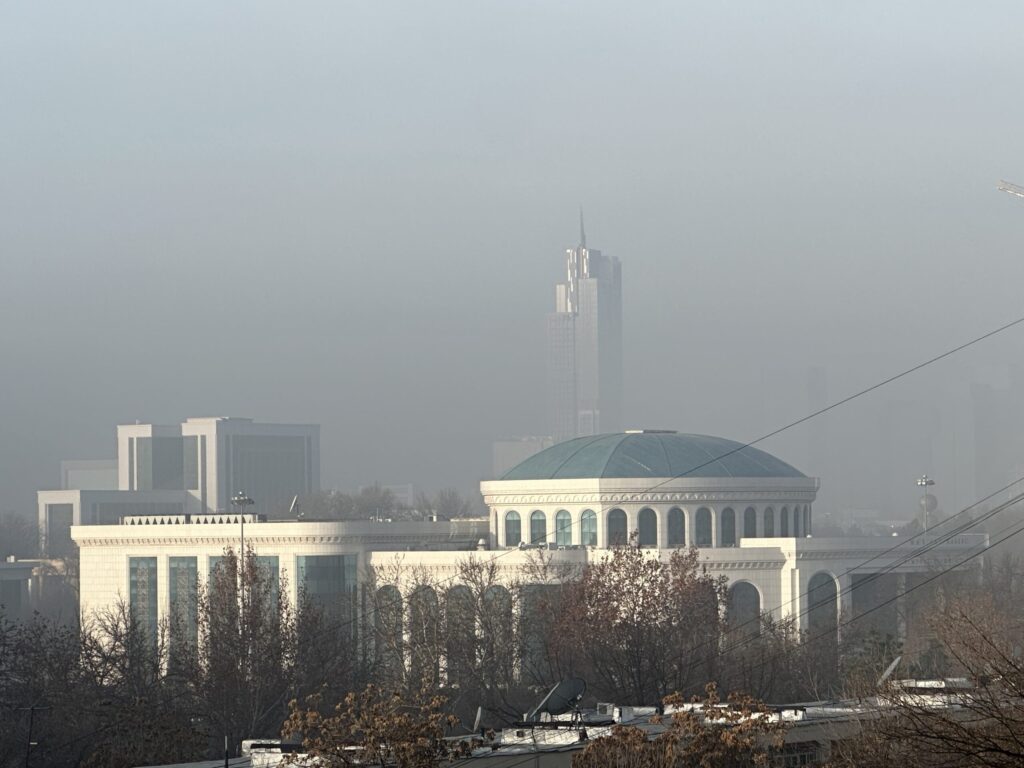
Uzbekistan’s capital Tashkent continues to suffer from high levels of air pollution. According to the IQAir portal, on the morning of August 2 the concentration of PM 2.5 (fine particles in the air) in the city was 5.4 times higher than the WHO base indicator.

Protest groups have been holding flash mobs in Tashkent this summer. One participant, Temurkhan Jahangir, believes that the main factor for the city’s dangerous air is the government’s poor urban planning policy. “The urban development strategy, implemented at the expense of urban densification, was a complete mistake from the start. It is foolish to sell land in the city center and build more buildings between multi-story buildings,” he said.

According to the Ministry of Ecology, about 49,000 trees have been illegally cut down in the Tashkent region recently, which has also had a negative impact on air quality.

At a meeting on January 29, the country’s president Shavkat Mirziyoyev spoke about ecological problems. In particular he criticized the implementation of construction projects that don’t consider environmental protection. He instructed the ministry to develop a “master plan” for each city and district of Uzbekistan, for local governors to improve the ecological situation by the end of the year.

“On average, 730,000 motor vehicles move in Tashkent every day. In addition, 160,000 to 300,000 motor vehicles enter from the regions. Engines using A-80 gasoline, which does not meet international standards, emit harmful emissions into the atmosphere, exceeding the norm,” the Ministry of Ecology says.

Mirziyoyev has also tasked the ministry with comprehensively abandoning A-80 gasoline from 2025 onwards, and developing sustainable public transport. He added that encouraging the population to switch to electric cars must be introduced to support green energy, prevent environmental problems, and reduce harmful emissions.

Kazakhstan Prepares for the Second Phase of North Aral Sea Restoration

On August 1, Kazakhstan’s minister for water resources and irrigation, Nurzhan Nurzhigitov, chaired a meeting on preparations for the second phase of the North Aral Sea restoration project.

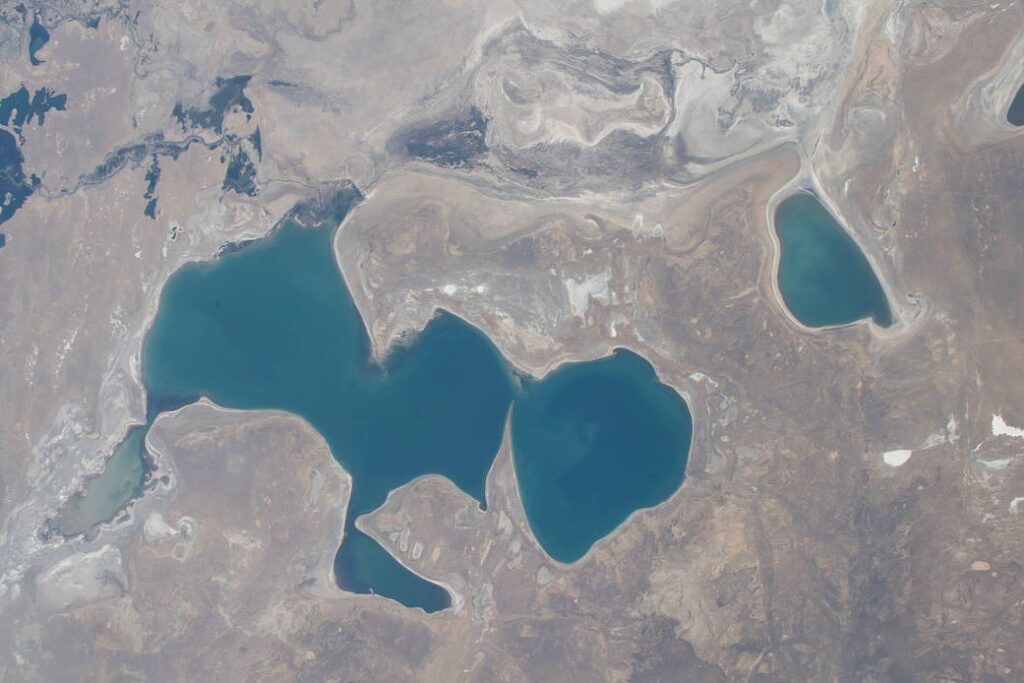
The North Aral Sea is the portion of the former Aral Sea fed by the Syr Darya River. It split from the South Aral Sea in 1987–1988, when water levels dropped due to water diversion for agricultural use.

The meeting reviewed the preparation of a feasibility study for the project.

The project consists of three components. The first component improves conditions for fisheries and the aquatic environment in and near the sea, and stabilizes wetlands in the Syr Darya River delta.

The second component supports sustainable economic, social, and environmental activities in Kazakhstan’s Kyzylorda region by developing fisheries, livestock farming, tourism, and forest planting.

The third component plans to improve water management systems in the Aral-Syr Darya basin.

Nurzhigitov commented: “The project being prepared is a continuation of a large-scale project to regulate the Syr Darya River bed and preserve the North Aral Sea, which was implemented between 2002 and 2010 and positively affected the entire Aral Sea region. The second phase covers many different areas — from the stable provision of the North Aral Sea with water to developing economic and social projects.”

High Water in Kyrgyzstan’s Toktogul Reservoir Forecast to Boost Electricity Generation

On August 2, the volume of water in the reservoir of Kyrgyzstan’s Toktogul hydroelectric power plant reached 11.922 billion cubic meters, which according to the plant’s operator Electric Stations OJSC, is almost one billion cubic meters more than that recorded on August 1, 2023.

Located on the Naryn River, which feeds the Syr Darya River that flows to Kazakhstan and Uzbekistan, Toktogul HPP is the largest power plant in Kyrgyzstan and generates some 40% of the country’s electricity.

The Toktogul reservoir currently receives 840 cubic meters of water per second and releases 475 cubic meters per second. The released water is used to generate electricity and then flows to downstream countries where it is used for irrigation.

The reservoir has a maximum capacity of 19.5 billion cubic meters, with an average volume is 17.3 billion cubic meters, and the “dead” level at which the power plant would stop operating is 5.5 billion cubic meters.

As reported by 24.kg news agency, Electric Stations OJSC expects  the volume of water in the Toktogul reservoir to reach 12.5 billion cubic meters at the beginning of the next heating season (October 1, 2024) and at the end of  2024/25 season, fall to around  7.9 billion cubic meters.

Toktogul HPP comprises four hydroelectric units with a total generating capacity of 1320 MW and on completion of the modernization of hydroelectric unit #1, later this year, the capacity will increase by 60 MW and reach 1380 MW.

In recent years, because Kyrgyzstan has been unable to produce enough electricity to meet the country’s growing demand, electricity has been imported from neighbouring states.


EU’s Borrell Reaffirms European Commitment to Cooperation with Kazakhstan

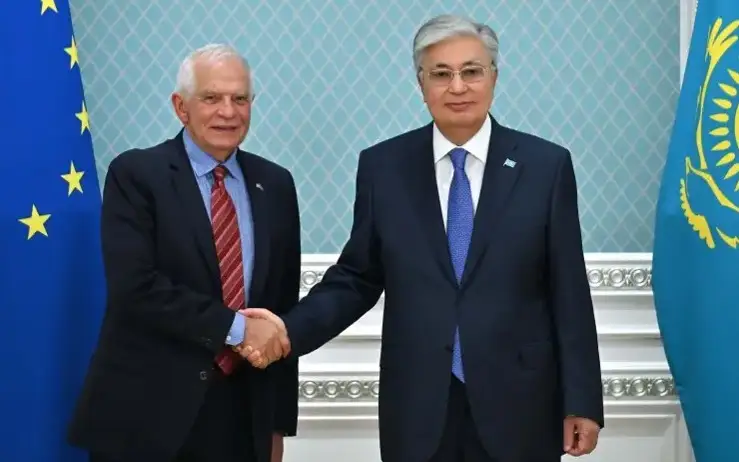
On August 1, the high representative of the European Union for foreign affairs and security policy, Josep Borrell, visited Astana and met with Kazakhstan’s President Kassym-Jomart Tokayev, and Foreign Minister Murat Nurtleu.

Explaining the purpose of the visit, Borell said “as my mandate as a representative of the European Union ends in three months, it was very important for me to come here to Astana to reaffirm the strong interest and commitment of the European Union to strengthen cooperation with Central Asia in general and with Kazakhstan in particular as the strongest country in the region.”

“I used to say that four years ago, when I came to Brussels, Central Asia was a little bit in the middle of nowhere – and now, you are in the middle of everything…Everything that matters between Europe and Asia goes through you”, he added.

The EU High Representative also said, “Under the leadership of President Tokayev, Kazakhstan has embarked on the path of the wide range of political and economic reforms that we support”. Stressing Kazakhstan’s strategic geographical position as a bridge between Europe and Asia, Borrell noted that the EU is Kazakhstan’s number one trade partner, representing more than one-third of all Kazakh exports, and the biggest investor in the country.

Borrell’s meeting with President Tokayev covered progress of the Enhanced Partnership and Cooperation Agreement between Kazakhstan and the EU, a comprehensive accord aimed at enhancing political, economic, and social collaboration between the EU and Kazakhstan.

Tokayev commended the high-level dialogue between Kazakhstan and the EU, notably the productive visit of European Council President, Charles Michel, and talks with the President of the European Commission, Ursula von der Leyen. “I think we reached many common views as far as our cooperation is concerned,” Tokayev said. He also lauded a memorandum signed by the Government of Kazakhstan and Ursula von der Leyen on the development of green hydrogen on November 7, 2022, during the COP27 climate conference in Sharm El-Sheikh, calling it “a very concrete step forward in terms of mutual cooperation”.

Borrell commented that they had “discussed key political and economic reforms in Kazakhstan and topics of mutual interest in the challenging geopolitical context. We appreciate Kazakhstan’s principled support to the UN Charter and commitment to international law.”

Borrell also met with the Minister of Foreign Affairs of Kazakhstan Murat Nurtleu. Speaking about the Ukraine war, Borrel stated: “We encourage you to take further steps in order to make this war reach an end, and to use your influence for that.” Also on the agenda were cooperation in transport and logistics, digitalization, civil aviation, agriculture, use of critical raw materials, and energy.

According to Kazakhstan’s Foreign Ministry, the European Union is Kazakhstan’s leading trading and investment partner, accounting for more than 30% of Kazakhstan’s foreign trade and investments. In 2023, trade between Kazakhstan and the EU amounted to $41.4 billion. In January-May 2024, bilateral trade reached $20.2 billion, showing a 14.1% increase compared to the same period last year ($17.7 billion). The volume of European investments in Kazakhstan’s economy since 2005 has amounted to $180 billion.

Kazakhstan was the first country in Central Asia to sign a memorandum of understanding with the EU on critical raw materials in 2022.