• KGS/USD = 0.01144 0%
  • KZT/USD = 0.00192 -0%
  • TJS/USD = 0.10849 0.37%
  • UZS/USD = 0.00008 0%
  • TMT/USD = 0.28571 0.28%
  • KGS/USD = 0.01144 0%
  • KZT/USD = 0.00192 -0%
  • TJS/USD = 0.10849 0.37%
  • UZS/USD = 0.00008 0%
  • TMT/USD = 0.28571 0.28%
  • KGS/USD = 0.01144 0%
  • KZT/USD = 0.00192 -0%
  • TJS/USD = 0.10849 0.37%
  • UZS/USD = 0.00008 0%
  • TMT/USD = 0.28571 0.28%
  • KGS/USD = 0.01144 0%
  • KZT/USD = 0.00192 -0%
  • TJS/USD = 0.10849 0.37%
  • UZS/USD = 0.00008 0%
  • TMT/USD = 0.28571 0.28%
  • KGS/USD = 0.01144 0%
  • KZT/USD = 0.00192 -0%
  • TJS/USD = 0.10849 0.37%
  • UZS/USD = 0.00008 0%
  • TMT/USD = 0.28571 0.28%
  • KGS/USD = 0.01144 0%
  • KZT/USD = 0.00192 -0%
  • TJS/USD = 0.10849 0.37%
  • UZS/USD = 0.00008 0%
  • TMT/USD = 0.28571 0.28%
  • KGS/USD = 0.01144 0%
  • KZT/USD = 0.00192 -0%
  • TJS/USD = 0.10849 0.37%
  • UZS/USD = 0.00008 0%
  • TMT/USD = 0.28571 0.28%
  • KGS/USD = 0.01144 0%
  • KZT/USD = 0.00192 -0%
  • TJS/USD = 0.10849 0.37%
  • UZS/USD = 0.00008 0%
  • TMT/USD = 0.28571 0.28%
11 December 2025

Tajikistan Teacher-Student Assault Case Referred to Court

The case of a teacher accused of assaulting a student, which sparked significant public debate in Tajikistan, has been formally referred to court. The Ministry of Education and Science has stated it will not abandon the teacher and will continue to monitor developments closely.

The criminal case involves Farkhod Nazarov, a teacher accused of slapping an 11th-grade student. The case has been transferred to the Levakant City Court. In an interview with Asia-Plus, Nazarov confirmed that he has reviewed the case materials at the prosecutor’s office.

“They gave me the case file, and I read it. The sequence of events was laid out clearly, and the staff were professional. They said the case would be sent to court,” Nazarov said.

While a court date has not been set, the hearing is expected to take place in November. Nazarov has not yet hired legal representation.

Unofficial sources report that the case falls under Article 174 of the Criminal Code of the Republic of Tajikistan, “Failure to fulfill obligations to educate and raise a minor.” The article carries penalties ranging from a fine of $5,672 to $8,103 or imprisonment for one to two years.

“Yes, I admit that I hit the student, but it was not without reason. I simply do not have the means to pay the fine,” Nazarov previously stated.

The family of the student involved, Mehmed Bozorov, has not responded to media inquiries and has yet to comment on the case’s transfer to court.

The Ministry of Education and Science has confirmed that Minister Rakhim Saidzoda is personally overseeing the case. The ministry emphasized that while it is not interfering in the judicial process, it will continue to support Nazarov.

The incident drew national attention after a video surfaced on social media on September 30, showing Bozorov losing consciousness. According to Bozorov, the incident occurred on September 6 at School No. 4 in the village of Bokhturobod. He claims he was struck on the back of the head by the teacher and subsequently hospitalized for two weeks.

The Levakant education department has presented a different account, stating that Bozorov had shown disrespect, provoking an emotional reaction from the teacher. The department also reported that no serious injuries were documented.

The case has generated widespread public discourse, with many teachers and public figures voicing support for Nazarov and calling for a systemic review of student-teacher relations in Tajikistan’s schools.

Uzbekistan’s Abdukodir Khusanov Judged Asia’s Joint Most Valuable Footballer

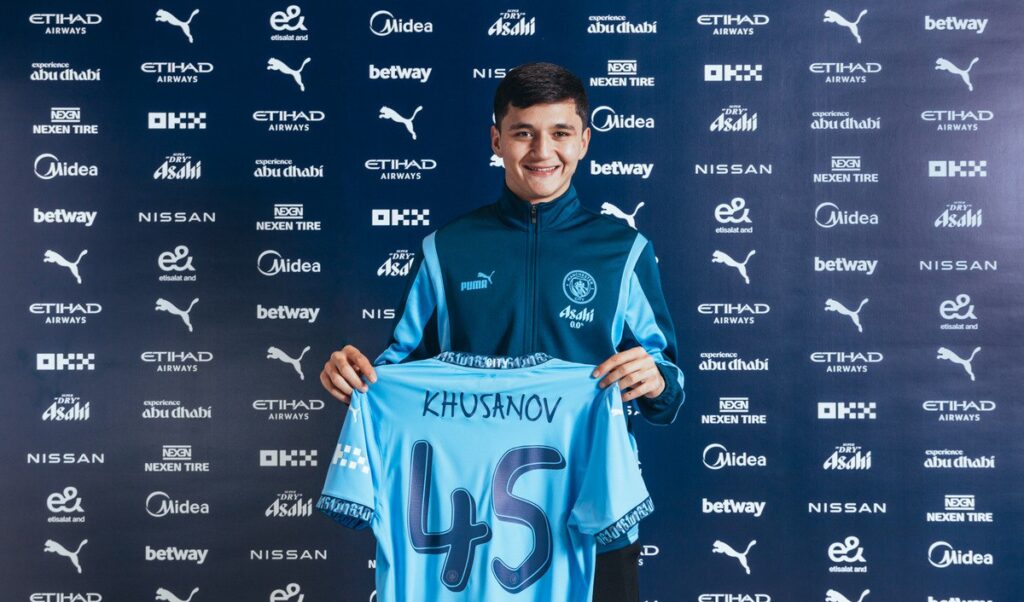
At just 21 years old, Uzbek defender Abdukodir Khusanov has been named as Asia’s joint most expensive footballer, with a current market valuation of €35 million, according to Transfermarkt’s latest update.

This places him on par with Brighton’s Japanese winger Kaoru Mitoma, whose value was recently revised down from €40 million to €35 million. Bayern Munich’s Kim Min-jae, a South Korean international, also saw a decrease, from €40 million to €32 million, making Khusanov the continent’s equal top-valued player with Mitoma.

Khusanov’s meteoric rise follows his high-profile transfer to English champions Manchester City earlier this year. The long-term deal, reportedly valued at €40 million, marked a record for an Uzbek player and one of the largest fees ever paid for an Asian footballer.

Manchester City confirmed the signing from French club RC Lens in January. British media reported that the deal includes performance-based bonuses, which could further increase its value. The central defender made 31 appearances for Lens after transferring from Belarusian side Energetik-BGU Minsk in 2023.

Khusanov is the first player from Uzbekistan to play in the English Premier League, a landmark achievement that has garnered widespread attention in his home country. Manchester City officials praised his tactical awareness, composure under pressure, and pace, qualities he demonstrated throughout his Ligue 1 campaign.

Kazakhstan’s Horse Breeding Institute Set to Be Fully Operational by 2026

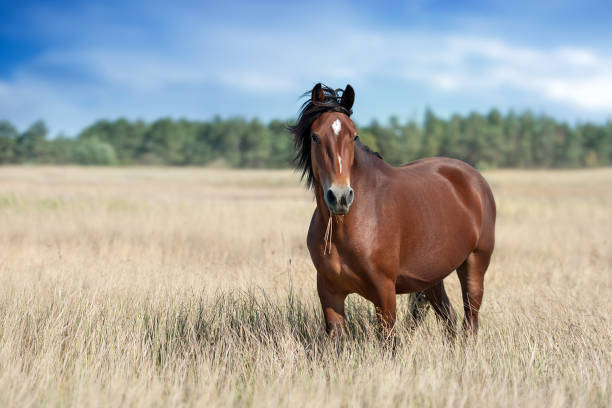
The Research Institute of Horse Breeding in the Aktobe region of western Kazakhstan is expected to become fully operational in 2026. The institute aims to support national livestock breeding and safeguard Kazakhstan’s rich equestrian heritage.

The creation of the institute was first announced in the fall of 2024 during the inaugural Forum of Agricultural Workers. Its objectives include increasing the national horse population, advancing selective breeding of native breeds, and boosting the export of horse products.

The transformation of a former experimental station in Aktobe into a specialized scientific center marked the project’s practical launch. A new facility is currently under construction and will include five laboratories focused on genetic and breeding research. Completion is scheduled for May 2026.

“The main tasks of the institute are to develop exports of horse meat and milk (kumys), promote national sports and sport horse breeding, and create conditions for domestic jockeys to compete internationally,” said Alibek Bazargaliev, chairman of the Kazakh Horse Breeding and Feed Production Research Institute.

The institute’s infrastructure will feature a riding arena, stables, a veterinary station, research labs, and a racetrack, forming a base for research, breeding, and the training of industry professionals.

Although Kazakhstan’s horse population has grown, the share of purebred animals remains below 1%. Of the country’s 4.2 million horses, only about 40,000 belong to recognized breeding lines. This disparity was a driving factor behind the institute’s establishment.

Kazakhstan is home to several unique native breeds, including the Jabe, Adai, Kostanay, Kushum, and Imugaljar. The Jabe, considered the oldest, has been integral to nomadic life for millennia. It is known for its endurance and versatility, making it suitable for riding, labor, and the production of meat and milk.

In 2023, a new law was adopted to preserve domestic breeds. It facilitates the import of foreign sport horses for breeding purposes, increases funding for breeding programs, and provides compensation for producers’ costs.

Kazakhstan is also advancing efforts to restore rare species, including Przewalski’s horse, the Turanian tiger, and the snow leopard.

Japarov Pledges Energy Independence Within 2.5 Years

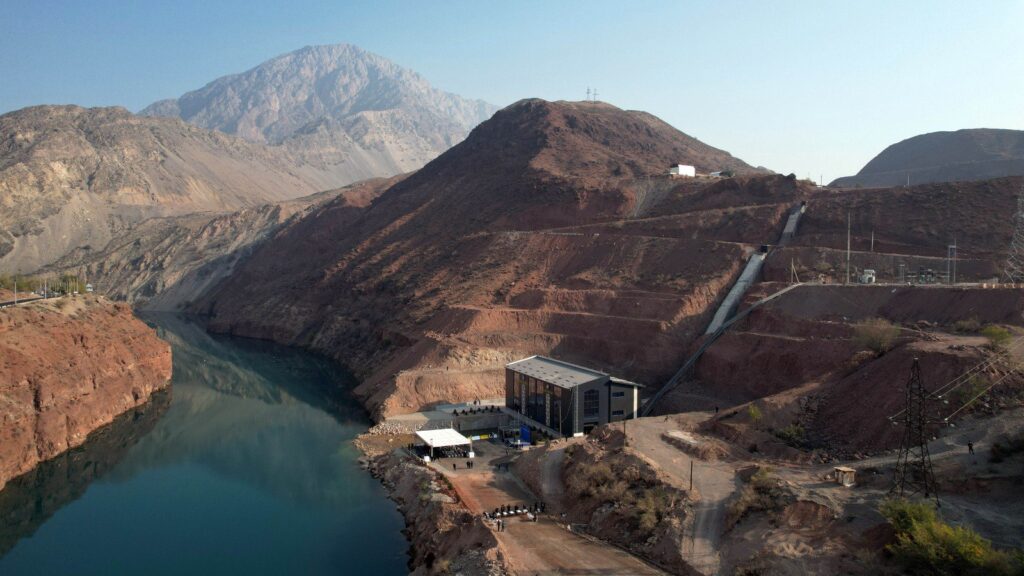
Kyrgyzstan will meet its domestic electricity needs during the winter months within the next two and a half years, President Sadyr Japarov announced during the inauguration of the Kara-Kul Hydropower Plant (HPP) on October 27. The shift will be made possible by the completion of nearly 40 new hydropower plants and a coal-fired power station at the Kara-Keche deposit.

“In two and a half years, we will no longer import electricity during winter. We will have enough domestically produced power,” Japarov stated, urging citizens to remain patient amid ongoing seasonal shortages.

Energy Minister Taalaibek Ibraev recently warned that the upcoming winter could be one of the most challenging in recent memory due to critically low water levels in the Toktogul Reservoir, which supplies around 40% of the country’s electricity.

Kyrgyzstan has long struggled with chronic electricity deficits in winter, as many households rely heavily on electric heating. In 2024, electricity consumption reached 18.3 billion kWh, an increase of 1.1 billion kWh from the previous year. To bridge the shortfall, Kyrgyzstan imported 3.6 billion kWh from Kazakhstan, Turkmenistan, Uzbekistan, and Russia. Additional volumes have been secured for the 2025-2026 winter period.

The newly commissioned Kara-Kul HPP, located on the Kara-Suu River in the southern Jalal-Abad region, is part of a broader national energy strategy. Built at a cost of $25 million, the facility has two generating units with a combined capacity of 18 MW and is expected to produce 104 million kWh annually, offsetting roughly 2.5% of the current winter shortfall.

Japarov emphasized that the project is one component of Kyrgyzstan’s drive for energy independence.

Preparations are also underway for the construction of the Kambarata-1 HPP, set to be the largest hydropower plant in both Kyrgyzstan and Central Asia. The plant will have an installed capacity of 1,860 MW and is expected to generate 5.6 billion kWh annually.

The Kambarata-1 project is being developed in cooperation with Kazakhstan and Uzbekistan, with technical and financial support from the European Union. During the Global Gateway Forum held in Brussels on October 9-10, Kyrgyz Energy Minister Taalaibek Ibraev met with regional counterparts and EU institutions.

Key outcomes from the forum included the signing of €900 million in Memoranda of Understanding between the EU, European Investment Bank (EIB), and the three Central Asian states. A feasibility study, co-financed by the EU and implemented by the World Bank, is also underway.

Additionally, the European Bank for Reconstruction and Development (EBRD) signed MoUs with Kyrgyzstan, Kazakhstan, and Uzbekistan, and is considering an overall financing package of €1.3 billion to support the project.

Kazakhstan Authorities Deliberate Future of Lukoil Assets

Russian oil giant Lukoil has announced plans to divest its international assets, including subsidiaries, amid ongoing Western sanctions.

The company stated the sale is being conducted under a license issued by the U.S. Treasury Department’s Office of Foreign Assets Control (OFAC), which allows Lukoil to wind down its foreign operations in an orderly manner by November 21, 2025. An extension of this deadline may be requested.

“Review of applications from potential buyers has begun,” the company said in an official statement.

According to industry data, Lukoil currently holds stakes in several key Kazakh projects: 5% in Tengizchevroil (TCO), 13.5% in Karachaganak Petroleum Operating B.V., 50% in the Kalamkas-Khazar project (Kalamkas-Khazar Operating joint venture), 49.99% in Al-Farabi Operating (offshore exploration and production), and 12.5% in the Caspian Pipeline Consortium (CPC).

While analysts suggest CPC operations are unlikely to be affected by U.S. restrictions, Kazakhstan may witness a significant redistribution of oil sector investments.

Despite this, Kazakh authorities remain cautious in making definitive assessments. Nurlan Zhakupov, head of the Samruk-Kazyna sovereign wealth fund, stated that discussions are ongoing with both domestic and international advisors regarding Lukoil’s shares in Kazakh ventures.

“A great deal of complex work is being carried out with relevant consultants, including international ones, on how KazMunayGas can navigate the current situation. Lukoil has major projects in Kazakhstan, so this is a complex and multifaceted issue,” Zhakupov said.

Deputy Minister of Energy Sanzhar Zharkeshov emphasized that any decisions regarding the acquisition of Lukoil’s shares fall under the purview of the national oil company KazMunayGas.

“Lukoil is KazMunayGas’s partner. They are jointly involved in Kalamkas, Khazar, and other projects. At this stage, the Ministry of Energy is not addressing the buyout or shareholder restructuring, this is a matter for KazMunayGas as an economic entity,” Zharkeshov said at a press conference.

Energy Minister Yerlan Akkenzhenov added that decisions on potential buyouts have not yet been made.

“This discussion has not yet taken place. The sanctions are still being analyzed, and their full impact on companies and the economy remains to be assessed. I believe a decision will be made soon, within the next few days, before the end of this week,” Akkenzhenov stated.

The Times of Central Asia has previously reported on the broader effects of U.S. and EU sanctions on economies across Central Asia.

Central Asia Loses 14 Million Tons of Crops Annually Due to Poor Storage Infrastructure

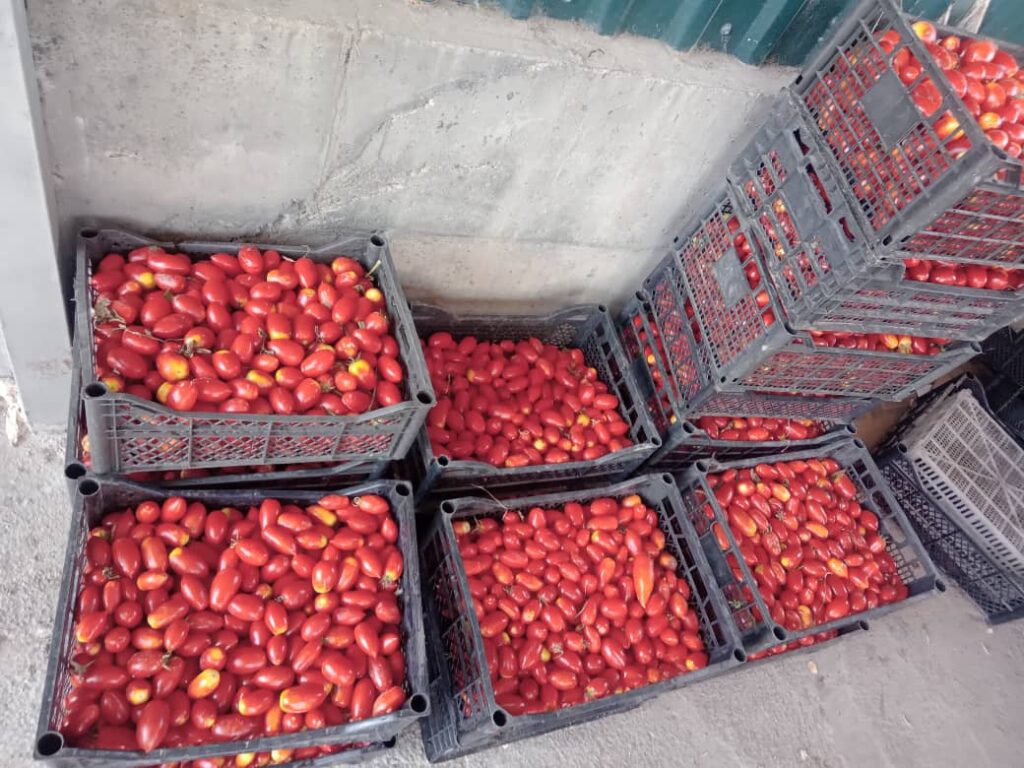
Each year, approximately 14 million tons of agricultural products are lost across Central Asia due to inadequate storage infrastructure, according to a recent analytical report from the Eurasian Development Bank (EDB).

In Kyrgyzstan, Tajikistan, and Uzbekistan, so-called “dry warehouses” remain the norm. A significant share of produce is stored in facilities lacking the conditions necessary for long-term preservation. As a result, large volumes of crops spoil annually, especially during seasonal peaks.

The EDB notes that Eurasian countries are entering a new logistics phase. The rapid growth of e-commerce and retail expansion is generating unprecedented demand for modern warehouse infrastructure. According to the bank’s projections, total demand for warehouse space in the region will double by 2040, surpassing 120 million square meters.

Between 2020 and 2024, the region’s total warehouse space increased from 48 to 58 million square meters. Russia remains the dominant player, with around 53 million square meters of commercial and logistics space. Central Asian countries, however, continue to lag far behind.

Crop losses peak during the autumn harvest and spring sales of residual stock. During these times, buffer storage and efficient transport logistics are critical. Without these, “farmers are forced to sell surpluses at the lowest price or throw them away,” EDB analysts warn.

Experts identify the warehouse sector as a key driver of trade growth in Eurasia. Realizing this potential, however, will require coordinated action among governments, businesses, and international institutions. The report emphasizes the need for a unified institutional environment to enhance investment appeal and market transparency.

“The region, which has long remained on the periphery of global logistics flows, is now shaping a new map of Eurasian logistics. In the coming years, the market will remain highly dynamic: more than 20 million square meters of new warehouse space is planned for commissioning, including 1.6 million square meters in Central Asian countries,” the report states.

Kyrgyzstan serves as a case in point. In 2020, amid the COVID-19 pandemic, agriculture was the country’s only growing sector. Yet farmers struggled with oversupply, cabbage, in particular, had to be fed to livestock or discarded due to a lack of buyers and storage facilities. A similar situation unfolded with potatoes.