• KGS/USD = 0.01144 0%
  • KZT/USD = 0.00209 0%
  • TJS/USD = 0.10617 1.05%
  • UZS/USD = 0.00008 0%
  • TMT/USD = 0.28490 0%
  • KGS/USD = 0.01144 0%
  • KZT/USD = 0.00209 0%
  • TJS/USD = 0.10617 1.05%
  • UZS/USD = 0.00008 0%
  • TMT/USD = 0.28490 0%
  • KGS/USD = 0.01144 0%
  • KZT/USD = 0.00209 0%
  • TJS/USD = 0.10617 1.05%
  • UZS/USD = 0.00008 0%
  • TMT/USD = 0.28490 0%
  • KGS/USD = 0.01144 0%
  • KZT/USD = 0.00209 0%
  • TJS/USD = 0.10617 1.05%
  • UZS/USD = 0.00008 0%
  • TMT/USD = 0.28490 0%
  • KGS/USD = 0.01144 0%
  • KZT/USD = 0.00209 0%
  • TJS/USD = 0.10617 1.05%
  • UZS/USD = 0.00008 0%
  • TMT/USD = 0.28490 0%
  • KGS/USD = 0.01144 0%
  • KZT/USD = 0.00209 0%
  • TJS/USD = 0.10617 1.05%
  • UZS/USD = 0.00008 0%
  • TMT/USD = 0.28490 0%
  • KGS/USD = 0.01144 0%
  • KZT/USD = 0.00209 0%
  • TJS/USD = 0.10617 1.05%
  • UZS/USD = 0.00008 0%
  • TMT/USD = 0.28490 0%
  • KGS/USD = 0.01144 0%
  • KZT/USD = 0.00209 0%
  • TJS/USD = 0.10617 1.05%
  • UZS/USD = 0.00008 0%
  • TMT/USD = 0.28490 0%

Kazakhstan Moves to Require Content Creators and Online Course Authors to Confirm Qualifications

Kazakhstan is preparing new legislative measures that would tighten requirements for content creators and authors of online courses who publish educational content. Under the proposed rules, such materials would have to include confirmation of the author’s relevant education or professional qualifications.

The initiative is outlined in an official response by Prime Minister Olzhas Bektenov to a parliamentary inquiry regarding the regulation of online educational content.

According to Bektenov, a draft law on online platforms and mass media has already been developed, along with amendments to the Code of Administrative Offenses. The proposed legislation would require users of online platforms who distribute educational courses or training materials in a specific field to disclose information confirming their qualifications, including details of a diploma or certificate.

The government also plans to introduce administrative liability for online platforms operating in Kazakhstan that fail to comply with authorized bodies’ orders to remove illegal content. Authorities note that existing legislation already provides for advertising and selling unregistered medicines and prescription drugs.

Bektenov stated that state bodies continuously monitor social networks and cooperate with the administrations of major platforms, including Meta and TikTok, to remove prohibited content. According to him, up to 91% of identified violating materials are removed from TikTok.

Oversight is also conducted through the Cyber Surveillance system, which tracks advertisements related to pyramid schemes, online casinos and drug trafficking. Over the past year, authorities identified and blocked more than 13,800 pieces of content promoting drugs, more than 34,700 posts advertising online casinos and over 13,500 materials involving citizens in pyramid schemes. Access to the relevant resources was restricted, and site owners were issued warnings.

The Times of Central Asia previously reported that members of the Senate, the upper house of parliament, had proposed introducing licensing requirements for content creators in response to widespread violations of the ban on advertising online casinos on social networks and messaging platforms.
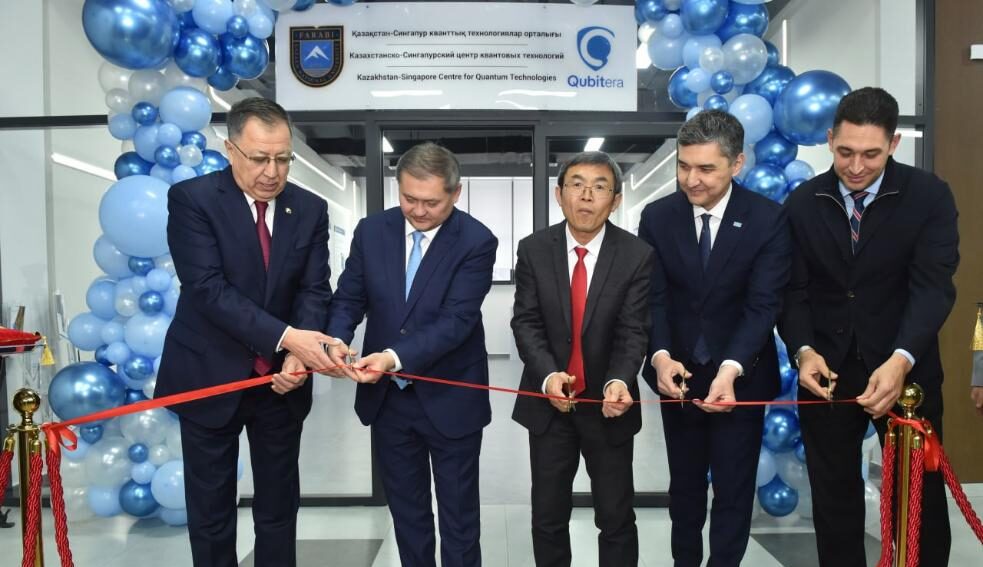

Kazakhstan-Singapore Center for Quantum Technologies Opens at Farabi University

The Kazakhstan-Singapore Center for Quantum Technologies has been inaugurated at Al-Farabi Kazakh National University in Almaty. The project, implemented in partnership with Singapore-based ASTRASEC PTE. LTD and Qubitera LLP, aims to serve as a foundation for developing a national quantum technology ecosystem in Kazakhstan.

According to the Ministry of Science and Higher Education, the center will focus on both fundamental and applied research, the training of researchers, engineers, and technology entrepreneurs, and the development of quantum-secure communication and computing solutions. It also plans to facilitate the transfer of advanced international expertise and support the creation of joint technology startups.

The first phase of the project includes the launch of a laboratory dedicated to quantum cryptography and quantum communications. The facility is equipped with photonic systems and experimental infrastructure intended for research and specialist training.

At the opening ceremony, Minister of Science and Higher Education Sayasat Nurbek said that the world is entering what he described as a “quantum revolution,” noting that traditional silicon-based digital and computing technologies are approaching their practical limits. He stated that the establishment of the center creates new opportunities for the development of Kazakhstan’s scientific and technological capacity.

KazNU Rector and Chairman of the Board Zhanseit Tuimebayev emphasized the importance of integrating academia and industry, describing the center as part of the university’s strategy to transform into a research-oriented institution of international standing. He said cooperation with Singaporean partners would help combine academic expertise with advanced technological experience.

Zhang Yinghua, Chairman of the Board of Directors of ASTRASEC PTE. LTD, described the development of quantum technologies as strategically important for national information security and digital resilience, highlighting quantum communication as a growing global priority.

The inauguration concluded with a roundtable discussion focused on the center’s future development, quantum cybersecurity, industrial partnerships, and intellectual property protection for joint projects.

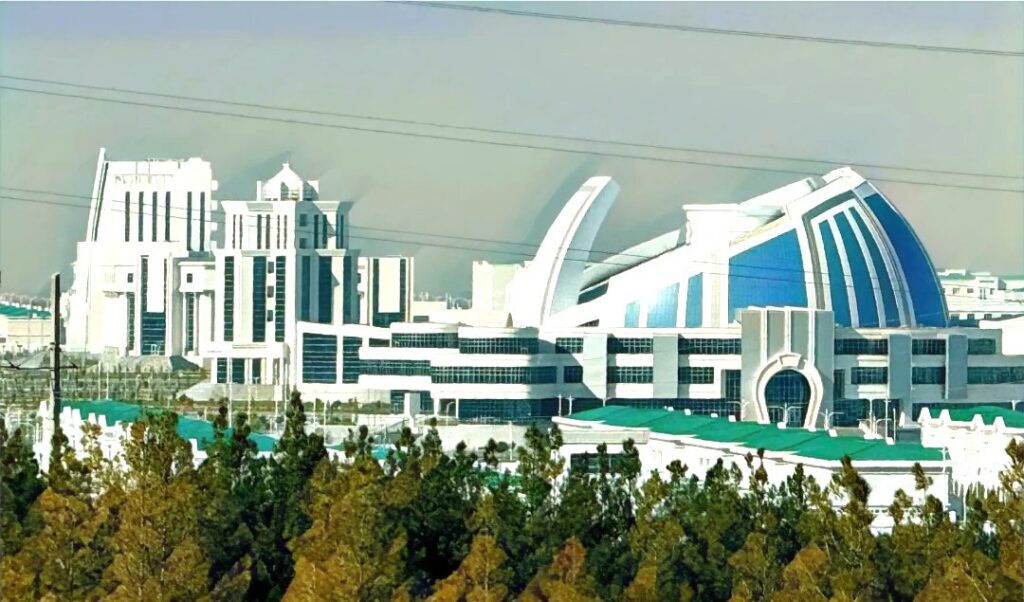
Turkmen Arkadag Without “Unnecessary” People: Crackdown on Residents Without Jobs or Registration Intensifies

The “smart” city of Arkadag, developed at the initiative of Turkmenistan’s National Leader Gurbanguly Berdimuhamedov, has once again become the focus of a campaign to “clean up” its population, according to Turkmen.news. Local officials are reportedly conducting apartment inspections to identify residents who do not hold official employment in the city.

Inspectors are said to be focusing on three main criteria: possession of a local residence permit, confirmed employment in Arkadag, and the degree of kinship with the property owner. The legal basis for these inspections remains unclear, but reports indicate that authorities are taking a strict approach, requiring individuals who do not meet the criteria to vacate their accommodation immediately.

According to informal rules described by sources, a “proper” resident of Arkadag must be employed and registered at their actual place of residence. Only immediate family members, spouses, children, and parents are permitted to live together. Brothers, sisters, and more distant relatives residing in the same apartment may face eviction.

A local source stated that even individuals officially employed in Arkadag but registered in another region may face restrictions. For example, a person who has secured employment in the city but is temporarily staying with a sibling could be required to return to their place of permanent registration and commute daily.

The same restrictions reportedly apply to students. Those enrolled at the International Academy of Horse Breeding and vocational institutions are permitted to reside only in dormitories and may not live with relatives, including close family members.

Legally renting accommodation in Arkadag is described as virtually impossible. Property owners are not issued permits authorizing them to lease apartments, resulting in an informal rental market. As a consequence, renters cannot obtain temporary registration, and no tax payments are made on rental income.

This situation leaves newcomers in what sources describe as a legal vacuum: they may be able to secure employment but lack lawful housing options.

Formally, purchasing an apartment is presented as the only pathway to full residency in the city. Individuals employed in Arkadag may qualify for a mortgage, but strict conditions apply. Authorities reportedly verify that applicants do not hold permanent registration elsewhere. An initial down payment of 10% of the property value, estimated at approximately $2,000-$3,000, is required. In addition, sources allege that intermediaries demand unofficial payments ranging from $2,000 to $4,000 to facilitate mortgage approval.

Similar practices have been reported in Ashgabat in recent years. As previously reported by The Times of Central Asia, ahead of the 30th anniversary of Turkmenistan’s neutrality, inspections targeting visitors from other regions intensified in the capital. Witness accounts at the time described interrogations at checkpoints, alleged physical abuse, and raids at locations where day laborers gather.

Developments in Arkadag suggest that comparable internal migration controls may now be taking shape in the newly built city. Arkadag was conceived as a symbol of modernity and national pride; the reported controls suggest it is also emerging as a laboratory for managing who is permitted to belong.

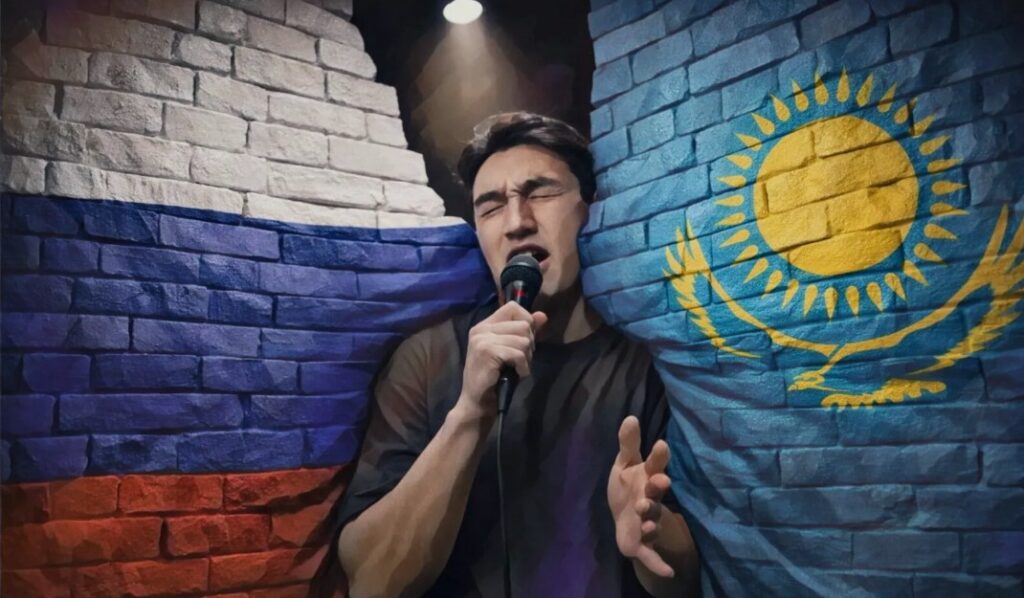
Nurlan Saburov Case Sparks Speculation After Russia Entry Ban and Kazakhstan Security Check

A wave of speculation has followed reports that stand-up comedian Nurlan Saburov, a Kazakh citizen who has worked in Russia for years, has been barred from entering Russia for 50 years.

After returning to Kazakhstan, Saburov became the subject of “verification measures” by the National Security Committee (KNB) following online allegations linking him to a Russian private military formation.

The entry ban prompted widespread discussion in both countries. In Russia, some commentators suggested the decision could be connected to Saburov’s refusal to publicly support Russia’s war in Ukraine. Russian lawmaker Vitaly Milonov, for example, urged the comedian to make a public statement backing Russia, implying that this could help resolve the situation.

In Kazakhstan, the controversy escalated after social media users circulated a video alleging that Saburov had donated enduro motorcycles to a unit described online as the “Wagner Istra Legion.” The authenticity and context of the footage have not been independently verified.

At a parliament briefing on February 11, Deputy Prosecutor General Galymzhan Koigeldiyev declined to comment on Russia’s entry ban and advised those raising allegations to contact the National Security Committee, noting that matters related to mercenary activity fall within the security services’ jurisdiction. Shortly afterward, the Committee confirmed that it had “taken the information into account” and that verification measures were underway.

The article also references comments by Russian designer Artemy Lebedev, who suggested the entry ban could be linked to tensions surrounding the show “What Happened Next,” which briefly moved to the Russian platform VK Video before returning to YouTube. Lebedev described the 50-year ban as excessive and speculated that a minor immigration violation may have been used as grounds. His remarks reflect personal interpretation rather than an official explanation.

According to unnamed sources cited in Russian media, Saburov’s fee for a 25-minute performance exceeds $20,000. Despite the controversy, he continues to perform at private events in Kazakhstan, although such fee estimates are difficult to independently verify.

Separately, debate has intensified in Russia over new restrictions affecting the Telegram messaging platform. Kazakh political scientist Marat Shibutov commented on the issue on his Telegram channel, naming senior Russian officials whom he believes bear responsibility for the decision.

VK is led by CEO Vladimir Kiriyenko, the son of Kremlin official Sergei Kiriyenko. Public reporting has described VK’s development as aligned with state policy promoting domestic digital platforms.

In early February, Russia introduced new restrictions on Telegram, with the Kremlin attributing the measures to alleged legal non-compliance by the platform.

Kyrgyzstan Tests Technologies for Tracking Civilian Drones

Kyrgyz authorities are evaluating new technological solutions to monitor and control civilian drone flights. A Romanian company recently presented its Argonian UTM and Drone Detection service to the State Agency for Civil Aviation of Kyrgyzstan. The system is designed to determine the location of unmanned aerial vehicles (UAVs) and track their flight parameters.

According to the agency, company representatives delivered a detailed presentation outlining the system’s operating principles and technical capabilities. Officials expressed particular interest in functions related to UAV detection and real-time monitoring of key flight parameters.

Following the presentation, a practical demonstration was conducted in an urban area of Bishkek. Four drones were launched simultaneously from different locations in the capital. The system reportedly recorded take-off points, altitude, and flight speed in real time, and mapped the flight paths of each device.

In addition, the Argonian UTM system identified the location of one drone operator, indicating that the device was being controlled from a moving vehicle. The data was shown to participants at the meeting and said to correspond with the drones’ actual flight parameters.

The State Agency for Civil Aviation stated that the solution “ensures effective detection of unmanned aerial vehicles, enables real-time monitoring of key flight parameters, and is of practical interest for improving UAV operational safety.”

Agency representatives described the presentation as positively received, adding that the potential acquisition of the system will be considered as part of broader efforts to enhance drone flight safety and introduce new technical solutions in the country.

Interest in such technologies is increasing amid tighter regulation of UAV operations. Since the beginning of 2026, a new law has required drone owners in Kyrgyzstan to register with the State Agency for Civil Aviation and undergo a medical examination by a psychiatrist. UAV operations are now permitted only with a one-time authorization or an annual permit issued by state authorities.

Hundreds of Central Asian Nationals Have Served in Israeli Army During Gaza War

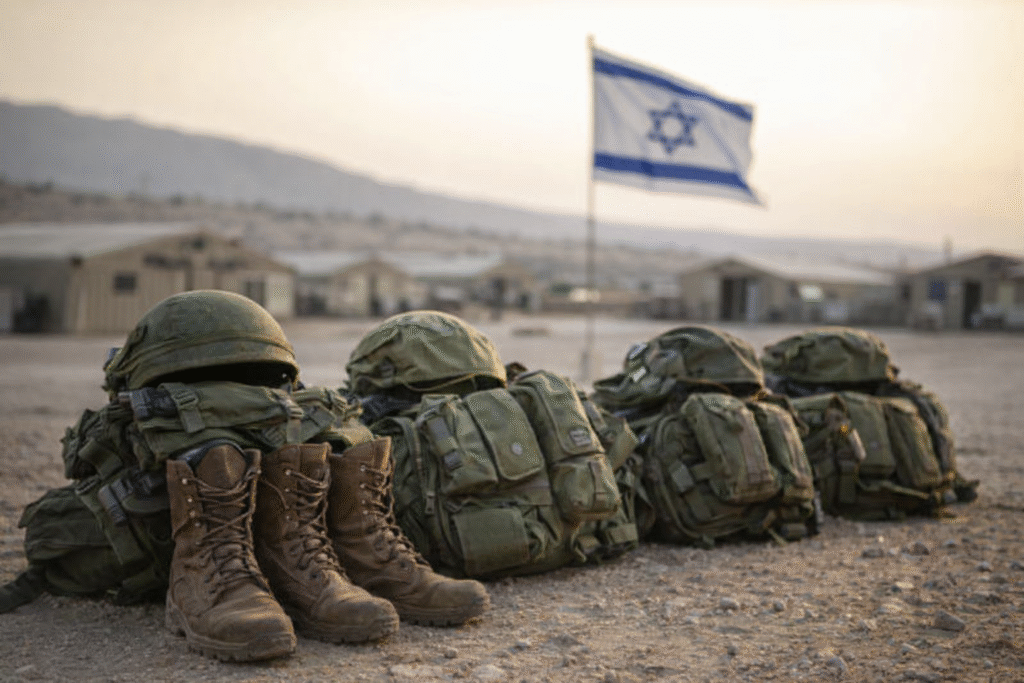
Hundreds of citizens from Central Asia have served in the Israeli military during its ongoing campaign in Gaza, according to an analytical report published by Al Jazeera, which cited official data provided by Israeli sources.

The data, shared with Al Jazeera by Israeli lawyer Elad Man, legal counsel for the organization Hatzlacha, indicates that as of March 2025, thousands of foreign nationals were enlisted in the Israeli army, 17 months after the outbreak of the war in Gaza in October 2023.

Among them were 264 individuals holding Uzbek citizenship, according to the report. The publication noted that these individuals were described as belonging to five different ethnic groups, although their specific backgrounds were not disclosed. It was also stated that they hold Israeli citizenship in addition to Uzbek nationality.

The figures suggest that foreign nationals serve in significant numbers within the Israeli military. Between 12,000 and 13,000 service members are reported to be U.S. citizens, forming the largest group. The data lists 6,127 French nationals, 5,067 Russian citizens, 3,901 Ukrainians, and 1,668 Germans. The Israeli military clarified that individuals with multiple citizenships are counted more than once in the country-by-country breakdown.

In addition to Uzbekistan, other Central Asian states were represented. The report states that 189 citizens of Kazakhstan, 52 citizens of Kyrgyzstan, 31 citizens of Turkmenistan, and eight citizens of Tajikistan were serving in the Israeli armed forces.

Since October 7, 2023, Israel’s military campaign in Gaza has resulted in at least 72,061 deaths, according to figures cited in the report. Human rights organizations have described aspects of the campaign as constituting war crimes and crimes against humanity. Rights groups have sought to identify and pursue legal action against foreign nationals allegedly involved in violations, including individuals who have shared footage from the conflict on social media.

In March 2024, the International Centre of Justice for Palestinians launched the “Global 195” campaign, aimed at holding Israeli and dual-national individuals accountable for alleged crimes committed in Gaza. The initiative seeks to pursue private arrest warrants and initiate proceedings across multiple jurisdictions. For countries that are parties to the Rome Statute of the International Criminal Court, including Palestine, which acceded in 2015, the court may assert jurisdiction in relevant cases.

Israel’s relations with Central Asia have drawn increased attention in recent years. In late 2025, Kazakhstan became the first Muslim-majority country outside the Middle East to join the Abraham Accords framework, while Uzbekistan has maintained longstanding diplomatic and trade ties with Israel. Analysts note that these established relations contrast with the more critical positions adopted by some European countries.