• KGS/USD = 0.01144 0%
  • KZT/USD = 0.00192 -0%
  • TJS/USD = 0.10866 0.18%
  • UZS/USD = 0.00008 0%
  • TMT/USD = 0.28571 0%
  • KGS/USD = 0.01144 0%
  • KZT/USD = 0.00192 -0%
  • TJS/USD = 0.10866 0.18%
  • UZS/USD = 0.00008 0%
  • TMT/USD = 0.28571 0%
  • KGS/USD = 0.01144 0%
  • KZT/USD = 0.00192 -0%
  • TJS/USD = 0.10866 0.18%
  • UZS/USD = 0.00008 0%
  • TMT/USD = 0.28571 0%
  • KGS/USD = 0.01144 0%
  • KZT/USD = 0.00192 -0%
  • TJS/USD = 0.10866 0.18%
  • UZS/USD = 0.00008 0%
  • TMT/USD = 0.28571 0%
  • KGS/USD = 0.01144 0%
  • KZT/USD = 0.00192 -0%
  • TJS/USD = 0.10866 0.18%
  • UZS/USD = 0.00008 0%
  • TMT/USD = 0.28571 0%
  • KGS/USD = 0.01144 0%
  • KZT/USD = 0.00192 -0%
  • TJS/USD = 0.10866 0.18%
  • UZS/USD = 0.00008 0%
  • TMT/USD = 0.28571 0%
  • KGS/USD = 0.01144 0%
  • KZT/USD = 0.00192 -0%
  • TJS/USD = 0.10866 0.18%
  • UZS/USD = 0.00008 0%
  • TMT/USD = 0.28571 0%
  • KGS/USD = 0.01144 0%
  • KZT/USD = 0.00192 -0%
  • TJS/USD = 0.10866 0.18%
  • UZS/USD = 0.00008 0%
  • TMT/USD = 0.28571 0%
12 December 2025

Tajikistan and China Tighten Strategic Partnership

On his state visit to Tajikistan on July 5, Chinese President Xi Jinping confirmed China’s unwavering support of the country’s independence, sovereignty, and territorial integrity, and ready to develop a comprehensive strategic partnership between the two countries, engaged in negotiations with Tajik President Emomali Rahmon in Dushanbe.

Opening the meeting, Rahmon said that for Tajikistan, strengthening a comprehensive strategic partnership with China is a priority, and added that Dushanbe firmly supports the one-China principle and opposes any form of Taiwan independence.

As reported by Rahmon’s press service, the leaders discussed expanding cooperation in trade and economy, as well as Chinese investment in industry, energy, transport, agriculture, digitization of the economy, and artificial intelligence.

Today, over 700 of Tajikistan’s industrial enterprises, including mining and mineral processing, are financed by Chinese capital, and looking ahead, the leaders earmarked the joint production of green technologies, and in particular, electric cars, solar panels and smart electric grids, as promising areas for ​​cooperation.

Following the talks, the Chinese president told journalists that the two sides agreed to focus on high-quality Belt and Road cooperation, promote the synergy of the two countries’ development strategies, and assist each other’s modernization drive.

Xi also announced China’s readiness to increase its importation of quality products from Tajikistan and pledged support for boosting the country’s transit potential.

Later in the day, the Chinese and Tajik presidents attended the inauguration of new parliament and government buildings in Dushanbe, built with China’s support.

As testimony to the strong relationship between the two, Xi Jinping presented President Rahmon with the Friendship Medal of the People’s Republic of China; the first time the award has been received by anyone outside China.




Tokayev Calls For Expanded SCO to Play Greater Role on Global Stage

A meeting entitled “Strengthening Multilateral Dialogue – Striving for Sustainable Peace and Development” was held to conclude the Shanghai Cooperation Organization summit in Astana on July 4.

The meeting was was held in the “SCO Plus” format. and was attended by the leaders of the SCO full member states who participated in the Summit earlier in the day, plus leaders of the organization’s observer countries and dialogue partners. These included the UN Secretary-General António Guterres, presidents Recep Tayyip Erdoğan of Turkey and Ilham Aliyev of Azerbaijan, and the Emir of Qatar, Sheikh Tamim bin Hamad Al Thani.

The SCO Plus session of the Summit took on greater importance this year, amid suggestions that the alliance is primed to expand next year. Countries interested in joining the SCO as full members include Turkey, Qatar and Egypt. 

In his speech at the meeting, Kazakhstan’s President Kassym-Jomart Tokayev emphasized the role that the SCO can play as a stabilizing force in the international arena.

“Today the world is faced with serious challenges caused by unprecedented geopolitical contradictions and growing conflict potential,” said Tokayev. “The international security architecture is under threat, which could lead to dire consequences for all of humanity. In such a fateful period, we are entrusted with a huge responsibility for strengthening peace, stability, and security through collective efforts at the regional and global levels. The Shanghai Cooperation Organization, taking into account its authority, significant economic and human resources, is capable of developing effective solutions to achieve sustainable development goals and overcome modern challenges.” 

Concerning the role of the United Nations, Tokayev said that its potential is far from being exhausted. “Our common task is to strengthen the role of the UN as the main international institution for ensuring global security, capable of effectively confronting the challenges of the 21st century. The voice of the SCO should and will sound louder in the international arena, promoting a consolidated position on various problems of our time,” he emphasized. In his own speech, Gutteres referred to the SCO as “a valuable partner of the United Nations”.

With reference to strengthening trade and economic ties, Tokayev said: “At the current stage, the economies of the SCO member countries are demonstrating high growth rates of 4% to 9%. The share of the SCO states in global GDP is 30% already. Today, the foreign trade of the SCO participating countries exceeds $8 trillion, which is equivalent to a quarter of all world trade.” 

Tokayev emphasized the fact that economic growth in Asia is largely due to the SCO states. On behalf of Kazakhstan, he also welcomed China’s intention to expand access for SCO countries to its market, and increase trade turnover with the SCO member states to $3 trillion.

“It is important for us to fully unleash the colossal economic potential of the SCO. The interaction of the SCO with such integration associations as the EAEU, BRICS and ASEAN opens up broad prospects. A powerful driver for sustainable growth in global trade is further strengthening of transport connectivity. More than 350 thousand kilometers of railways run through the territory of the SCO member states, which account for 2/3 of the world’s freight turnover. Therefore, the SCO space is capable of becoming a Greater Eurasian belt for the development of global trade,” Tokayev concluded.

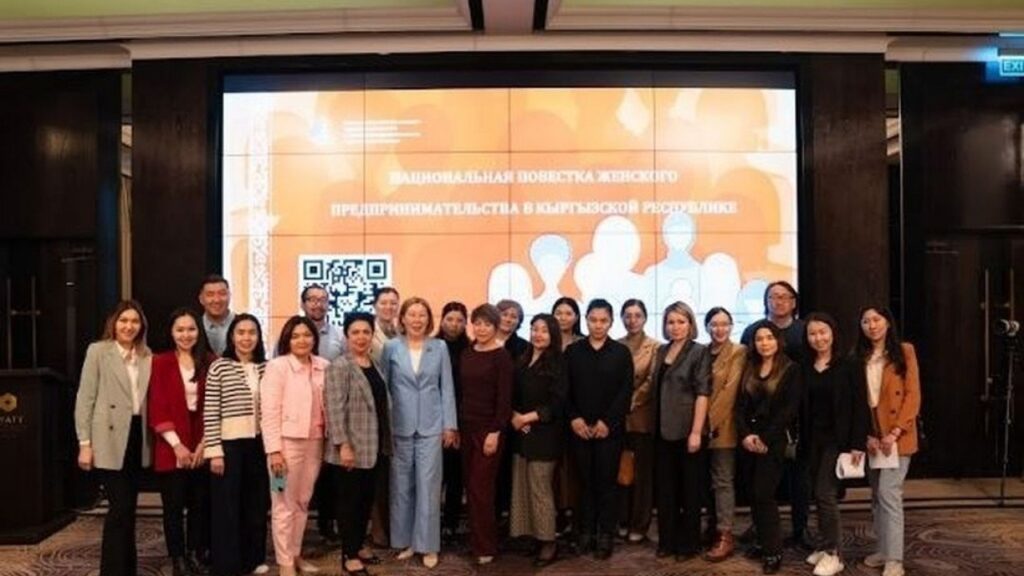
Kyrgyzstan to Support Female Entrepreneurship

A group of Kyrgyz parliamentary deputies have initiated amendments to the draft law “On the Protection of Entrepreneurs’ Rights,” which will bow be supplemented with the words “women’s entrepreneurship.” The amendment states that women make up half of Kyrgyzstan’s population, but their contribution to the economy is far less significant. Citing IMF data, the authors of the amendment stated that female entrepreneurship can contribute up to 27% to the republic’s GDP.

“As experience shows, the level of income from small businesses does not exceed the officially established subsistence minimum, which, unfortunately, does not leave additional funds available for further business development. The data also shows that women entrepreneurs who have better access to assets and can make independent decisions can help reduce poverty,” the bill states.

Representatives of the women’s forum “Kurak,” who contributed to drafting the amendments, proposed introducing the term “woman entrepreneur” into the law and defining this as a legal entity wherein a woman owns at least 51% of the shares. They believe this will enable women to receive preferential financing and access state support.

“Women entrepreneurs often need more time to run a business. After all, they often raise children and run a household in parallel. It is also tough for a woman to get a loan from a bank because the collateral property belongs to men. Moral support from our patriarchal society and the state is also lacking,” human rights activist Ainura Sarynbayeva told The Times of Central Asia. The legislative introduction of the word “woman” and “women’s entrepreneurship” will help further develop women’s businesses, believes Sarynbayeva, adding that commercial banks and international development institutions are already prepared to provide preferential lending.

“Today, there are no countries in Central Asia where the concept of “women’s entrepreneurship” is enshrined in the law. The draft law being promoted in Kyrgyzstan is largely similar to the Azerbaijani law. The authorities there support women businessmen at the state level,” said Sarynbayeva.
According to the latest census, Kyrgyzstan is home to 3.3 million women – half of the country’s population. However, despite various training sessions and courses, only a small percentage of Kyrgyz women participate in economic activities. Human rights activists attribute this state of affairs to the haphazard nature of government support.

The average Kyrgyz businesswoman is 40-50 years old, has a secondary education, is an individual entrepreneur or manages a small or medium-sized business, and has a family and children.

Mixed Results for Kazakhstan in Media Freedom Rankings

Analysts at Ranking.kz have provided an overview of press freedom in Kazakhstan and alleged violations against journalists. According to the International Foundation for the Protection of Freedom of Expression, Әdil sөz, there was a 20.1% decrease in incidents of violations against correspondents last year, with 434 incidents in 2023 and 141 from January to May this year.

Additionally, reports of pre-trial claims or lawsuits against individual journalists or editorial offices declined by 5% in 2023. Despite this, seven court decisions led to various sentences for journalists at the end of 2023. The most common violation was obstruction of legitimate professional activities, with 51 cases, including six violent ones, primarily involving police and state employees. Threats to journalists and editorial offices were also significant, with 44 incidents reported.

Nonviolent attempts to coerce journalists were noted to have decreased slightly. However, despite fewer reported violations, according to Reporters Without Borders, censorship issues have worsened.

Kazakhstan’s press freedom ranking fell from 134th to 142nd in 2024, with a score of 41.11 out of 100. In contrast, Kyrgyzstan ranks highest in Central Asia at 120th, while Turkmenistan remains one of the worst globally in 175th place.

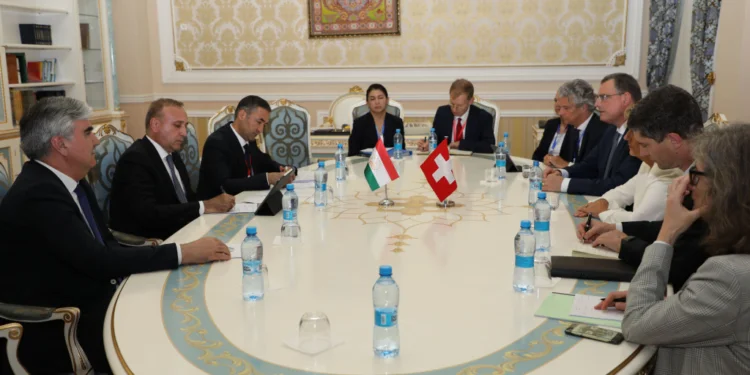
Tajikistan and Switzerland Strengthen Cooperation in Banking

A meeting between representatives of the economic bloc of Tajikistan and Switzerland was held at the International Monetary Fund and the World Bank’s Constituency Group conference.

As reported by Avesta.tj. , the Tajik delegation was headed by First Deputy Prime Minister Hokim Holikzoda, and the Swiss side, by Federal Minister of Finance Karin Keller-Zutter and Chairman of the Swiss National Bank Thomas Jordaan.

Both sides expressed satisfaction with their now long-term cooperation. Over the past 25 years, the Swiss National Bank has significantly contributed to Tajikistan’s development of essential aspects of its banking system, including managing international resources, monetary policy, and operational risk management.

Focused on further cooperation, the agenda included attracting Swiss finance and modern technologies to develop other vital sectors of Tajikistan’s economy.

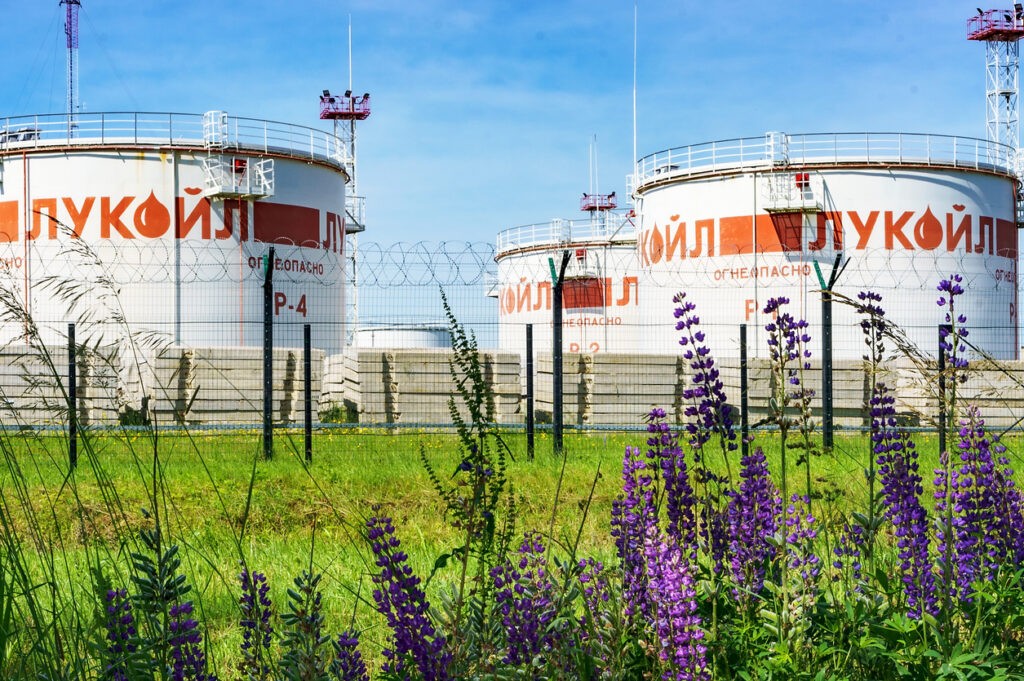
Case Opened Against Subsidiary of Russia’s Lukoil in Uzbekistan

The Committee for the Development of Competition and Consumer Protection of Uzbekistan has initiated a case against Lukoil Overseas Supply and Trading Ltd, a subsidiary of Russia’s Lukoil, the Committee’s press service has reported.

The Committee’s staff state that they identified signs of the manipulation of the price of technical sulfur by Lukoil in their selling of products through exchange trading. As a result, the price of technical sulfur rose between 10 to 50%, meaning the company violated the law “on competition.” Additional information will be made available once the Committee reaches a decision on how it will proceed.

Lukoil Overseas Supply and Trading Ltd was established in April 2010 as part of a marketing campaign for the sale of joint products during the implementation of production sharing agreements in respect to several gas fields. It entered the exchange-trade market for technical sulfur in Uzbekistan in 2015. Today, the company and Uzbekneftegaz dominate the technical sulfur market.