• KGS/USD = 0.01144 0%
  • KZT/USD = 0.00211 0%
  • TJS/USD = 0.10460 0.19%
  • UZS/USD = 0.00008 0%
  • TMT/USD = 0.28490 0%
  • KGS/USD = 0.01144 0%
  • KZT/USD = 0.00211 0%
  • TJS/USD = 0.10460 0.19%
  • UZS/USD = 0.00008 0%
  • TMT/USD = 0.28490 0%
  • KGS/USD = 0.01144 0%
  • KZT/USD = 0.00211 0%
  • TJS/USD = 0.10460 0.19%
  • UZS/USD = 0.00008 0%
  • TMT/USD = 0.28490 0%
  • KGS/USD = 0.01144 0%
  • KZT/USD = 0.00211 0%
  • TJS/USD = 0.10460 0.19%
  • UZS/USD = 0.00008 0%
  • TMT/USD = 0.28490 0%
  • KGS/USD = 0.01144 0%
  • KZT/USD = 0.00211 0%
  • TJS/USD = 0.10460 0.19%
  • UZS/USD = 0.00008 0%
  • TMT/USD = 0.28490 0%
  • KGS/USD = 0.01144 0%
  • KZT/USD = 0.00211 0%
  • TJS/USD = 0.10460 0.19%
  • UZS/USD = 0.00008 0%
  • TMT/USD = 0.28490 0%
  • KGS/USD = 0.01144 0%
  • KZT/USD = 0.00211 0%
  • TJS/USD = 0.10460 0.19%
  • UZS/USD = 0.00008 0%
  • TMT/USD = 0.28490 0%
  • KGS/USD = 0.01144 0%
  • KZT/USD = 0.00211 0%
  • TJS/USD = 0.10460 0.19%
  • UZS/USD = 0.00008 0%
  • TMT/USD = 0.28490 0%

Kazakhstan and Afghanistan Seek to Increase Trade to $3 Billion

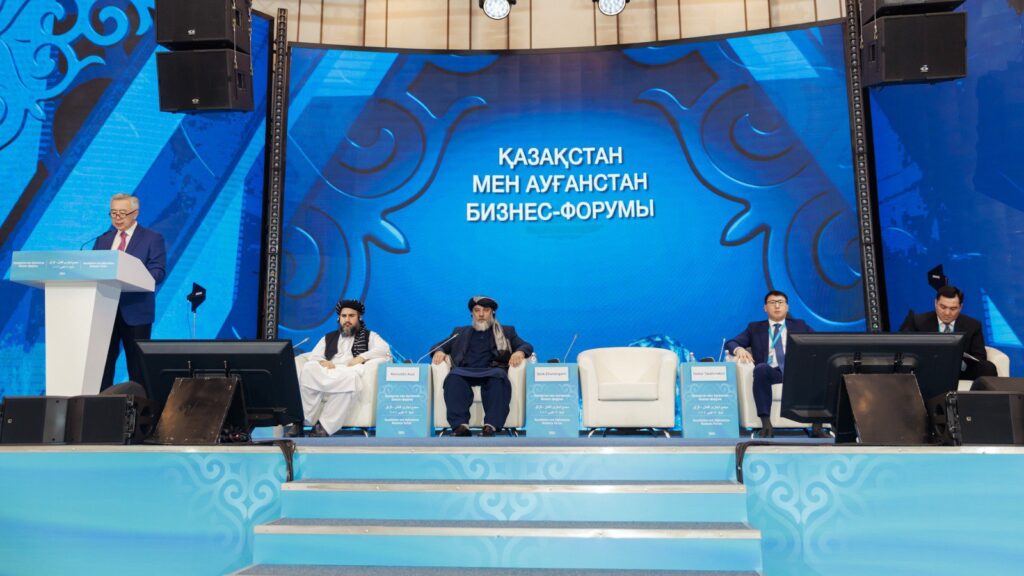
On October 22, Kazakhstan’s Deputy Prime Minister Serik Zhumangarin and Afghanistan’s Minister of Industry and Commerce, Nuriddin Azizi, signed a roadmap to increase Kazakh-Afghan trade turnover to $3 billion at a business forum in Almaty.

This follows Kazakhstan’s removal of the Taliban from its list of terrorist organizations in June as part of an effort to develop trade and economic ties with Afghanistan. The roadmap includes Kazakhstan’s participation in constructing two railway lines in Afghanistan: Turgundi—Herat—Kandahar—Spin Boldak and Mazar-i-Sharif—Harlachi. It also aims to expand the range of goods in bilateral trade, develop cooperation in the chemical industry, and increase the export of Kazakh ammophos materials to Afghanistan.

Additionally, the roadmap includes plans to export both new and used cars manufactured in Kazakhstan, set up service centers in Afghanistan, and build schools in the region. According to Kazakh officials, there is significant potential to increase grain and flour exports to Afghanistan while importing Afghan fruits, vegetables, dried fruits, and other food products. Kazakhstan is also interested in supporting Afghanistan’s economic development and integration into international transport corridors.

In the first half of 2024, the volume of road transit from Afghanistan through Kazakhstan increased by 8%, exceeding 5,000 tons, compared to 10,000 tons last year. Deputy Prime Minister Zhumangarin noted at the forum that a railway corridor connects Kazakhstan and Afghanistan through Turkmenistan and Uzbekistan. Kazakhstan is also interested in using the Trans-Afghan corridor, which runs through the Karachi and Gwadar seaports in Pakistan, to facilitate the transit of Kazakh export cargo to markets in the Middle East and Southeast Asia. The Afghan delegation was offered access to the dry port of Khorgos on the Kazakh-Chinese border to ensure the smooth transit of Afghan goods to China via Kazakhstan.

The business forum in Almaty coincided with Kazakh-Afghan negotiations on the logistics of transporting goods from China to Afghanistan and back through Kazakhstan. The event also featured an exhibition of Afghan food and industrial products.
Turkmenistan to Produce Food Additives from Locally Harvested Gleditsia Pods

In a significant step towards implementing innovations across various economic sectors, Turkmenistan has secured the copyright for galactomannan production technologies developed by the Biotechnology Department of the International Science and Technology Park.

Galactomannans, polysaccharides consisting of D-galactose and D-mannose, are known for their ability to form gels and increase the viscosity of solutions. Thanks to these properties, they are in high demand in the food, agricultural, and printing industries, where they are used as thickeners and structuring agents.

According to Altyn Rakhmanova, head of the biotechnology department of the Academy of Science of Turkmenistan, the development of galactomannan production technologies is part of Turkmenistan’s Biotechnology Development Program for 2024-2028, a vital aspect of which is the creation of feed additives for farm animals from local raw materials.

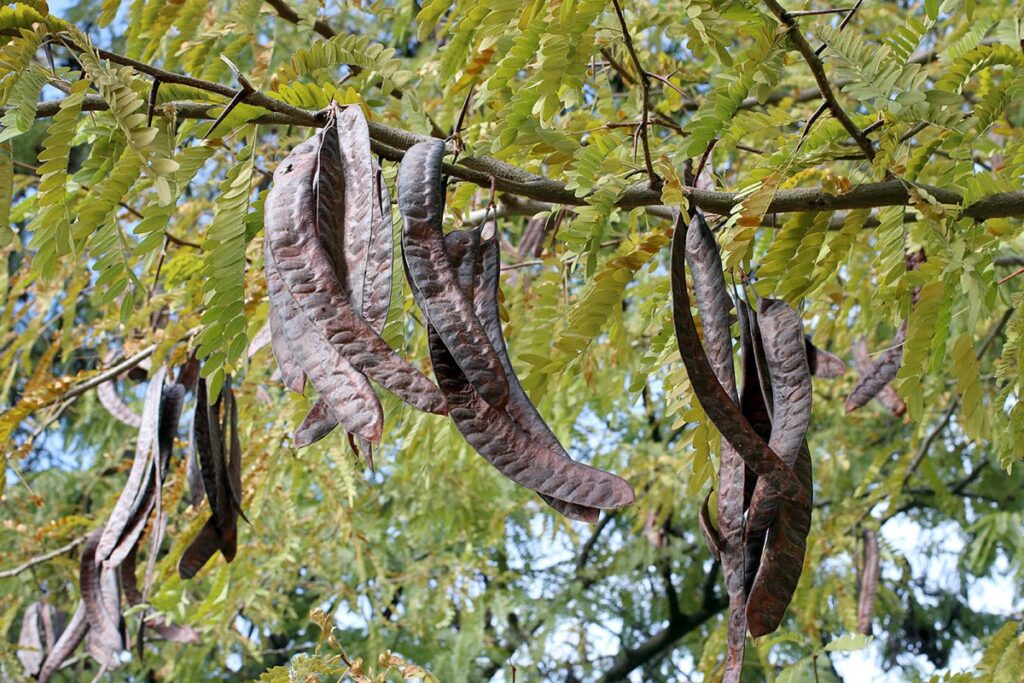
Using galactomannans derived from pods of the Gleditsia triacanthos, a plant grown in Turkmenistan and described by Gurbanguly Berdimuhamedov, the National Leader of the Turkmen people in his book, Medicinal Plants of Turkmenistan, as having multiple valuable properties, helps reduce costs and maximizes the utilization of local resources .

As  detailed in the book, Gleditsia is a honey-bearing plant from which up to 250 kg of honey can be harvested per hectare. An efficient method of galactomannan extraction ensures maximum yield from the raw material, contributing to sustainable and autonomous production, as well as serving as a foundation for further technological advancements in the food and agricultural sectors and the utilization of local natural resources.

As previously  reported by The Times of Central Asia, Turkmen bio-technologists from the Academy of Sciences of Turkmenistan have developed an innovative lactose-based gel designed to rejuvenate and correct age-related skin changes. Other scientific breakthroughs include a therapeutic ointment made from the Maclura, a tree species widespread in the country, which relieves inflammation and aids the healing of wounds,  a cream based on oil extracted from silkworm cocoons for use in cosmetology, and crackers made from extracts from camel thorn.

Kazakhstan and Uzbekistan Prioritize Cooperation Between Regions

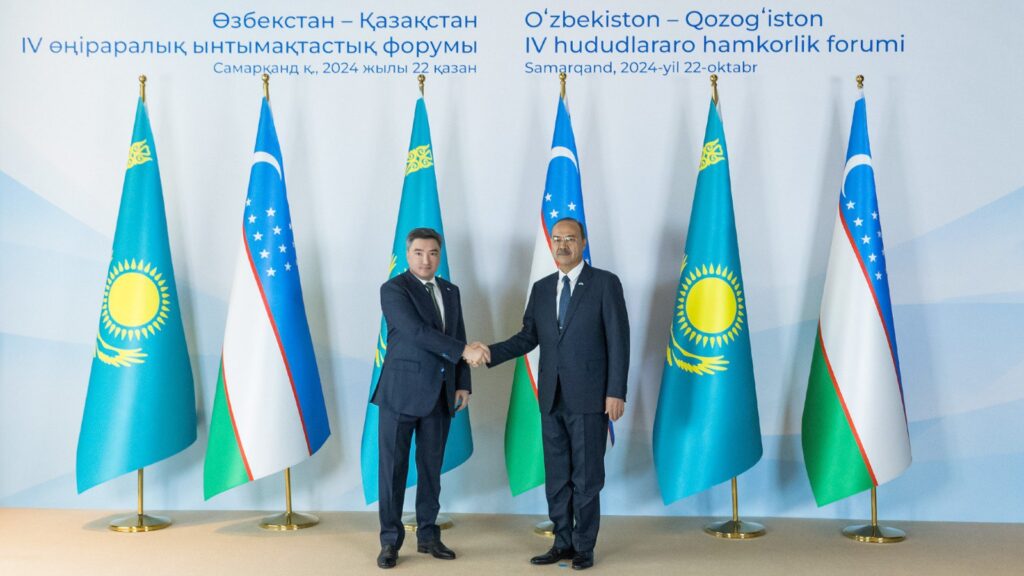
On October 22, the 4th Interregional Forum, “Uzbekistan-Kazakhstan,” was held in Samarkand, Uzbekistan. The forum addressed issues such as increasing bilateral trade turnover, developing industrial cooperation, and enhancing collaboration in the water, energy, transit, and transport sectors.

Speaking at the forum, Uzbekistan’s Prime Minister, Abdulla Aripov, emphasized that developing cooperation between the regions of Uzbekistan and Kazakhstan is a priority in relations between the two countries. Aripov stated that “Over the past seven years, trade turnover between Uzbekistan and Kazakhstan has grown almost 2.5-fold, reaching $4.4 billion last year. Today, more than 1,000 enterprises with Kazakh capital operate in Uzbekistan. Border regions have established direct and close ties with each other — the Republic of Karakalpakstan [in Uzbekistan] with the Mangistau region [in Kazakhstan], the Tashkent region with the Turkestan region, and the Navoi region with the Kyzylorda region. At the same time, this great potential has yet to be realized.”

Kazakhstan’s Prime Minister, Olzhas Bektenov, meanwhile, announced at the forum that Kazakhstan is ready to increase exports to Uzbekistan by over $550 million, offering 40 types of high-value-added Kazakh products. Uzbekistan is Kazakhstan’s main trading partner in Central Asia.

From January-August 2024, bilateral trade amounted to $2.5 billion, with more than 50% of Uzbekistan’s trade passing through Kazakhstan in transit. The forum paid special attention to the development of industrial cooperation, including 74 joint projects with a total investment volume of $3.4 billion and the creation of 14,600 jobs. Of these, 65 enterprises will be established in Kazakhstan, creating 13,600 new jobs.

Examples of Kazakh-Uzbek industrial cooperation include the manufacture of Chevrolet Onix cars in Kostanay (Kazakhstan), a plant for the production of household appliances in Saran (Kazakhstan), sewing, spinning, and weaving factories in the Shymkent and Turkestan regions (Kazakhstan), and the production of autoclaved aerated concrete in Angren (Uzbekistan).

Kazakhstan and Uzbekistan are also working on establishing the International Center for Industrial Cooperation “Central Asia,” which will offer “one-stop shop” for services and tax and customs for entrepreneurs from both countries.

In Uzbekistan, Perpetrators of Domestic Violence Against Children Face Tougher Penalties

Uzbekistan has toughened liability for physical abuse of children within the family, actions which can now result in more stringent criminal penalties. President Shavkat Mirziyoyev signed relevant amendments to the legislation, which came into force after being officially published on the website of the national legislation base.

The amendments affect the Criminal Code and the Code of Administrative Responsibility, introducing stricter sanctions for domestic violence against children. Child abuse is punishable by fines ranging from $590 to $885, or imprisonment of two to three years. In cases of violence against more than one child, the punishment becomes more severe, with perpetrators facing three to five years in prison. The legislative changes were approved by Parliament in July 2024 and approved by the Senate in September.

These measures come as a reaction to increasing cases of child abuse in Uzbekistan. Recently, a woman in Bukhara beat her underage daughters, and a resident of the Shafirkon district was sentenced to three years in prison for abusing her child. Another high-profile case occurred in the Toylok district of Samarkand province, where a man was accused of beating his six-year-old stepson. These cases have attracted significant public attention, prompting the authorities to strengthen legislative measures to protect children from violence perpetrated within family units.

Turkmenistan and Iraq Sign Gas Deal for Seasonal Supply via Iran

On October 19, representatives from Turkmenistan and Iraq signed a significant gas agreement in Baghdad. Under the deal, Iraq will import up to 20 million cubic meters of gas daily, with deliveries routed through Iran via a swap arrangement. The Iraqi government has expressed its intention to begin implementing the contract soon.

The contract shows that Turkmenistan delivers 10 million cubic meters of fuel to Iraq in winter and 20 million cubic meters in summer. Iraqi Electricity Minister Ali Fadel noted that the contract compensates for the same amount of gas in the event of supply problems. Iraq faces severe energy shortages and unstable supplies from Iran. Problems include its debt and difficulties making payments to Iran, which is under US sanctions. Supply from Turkmenistan is expected to moderate this dynamic. In parallel, Iraq plans to sign contracts with other suppliers and invest in its gas projects.

Turkmenistan is also China’s gas supplier and was the largest supplier to China in the first half of 2024, exporting gas worth $5.67 billion. During a recent visit to Iran, Gurbanguly Berdimuhamedov, the former president of Turkmenistan and current chairman of the People’s Council (Halk Maslahaty), announced plans to increase gas supplies to Iran to 40 billion cubic meters annually, further solidifying Turkmenistan’s role as a major energy provider in the region.

Russian Journalist Inessa Papernaya Found Dead in Tashkent Hotel

Russian journalist Inessa Papernaya, known for her work with lenta.ru and profile.ru, was tragically found dead in a hotel in Tashkent, Uzbekistan, on October 20. It has been reported that Papernaya was in Uzbekistan on vacation, and was staying at the Karaman Palace Hotel with a companion, Maxim Radchenko, with whom she was in a long-term relationship, and whom she had traveled with in order to meet his relatives.

According to reports, hotel staff knocked on the door of her room that evening while delivering a package. After receiving no response, they entered the room and discovered the bodies of Papernaya and Radchenko. An Uzbek citizen was subsequently found dead in the bathroom of another room in the hotel.

Preliminary reports attributed the cause of the deaths to poisoning of “unknown origin,” with early suggestions being propagated that gas seeped into the room through the ventilation system after the hotel’s pool was cleaned on October 19-20, leading to the tragic incident.

Following the discovery, authorities sealed off the Karaman Palace Hotel. The General Prosecutor’s Office of Uzbekistan has launched an investigation under Article 186 of the Uzbek Criminal Code, which covers the provision of unsafe services, and a forensic examination has been ordered to determine the precise cause of death.

Relatives of Radchenko have disputed what they have described as several different versions of the deaths which have been put forward. According to Radchenko’s sister, the family were initially told that “he had an epileptic seizure; she ran up to him, slipped, fell, hit herself and died. This is some kind of TV series: how do you fall? What nonsense… Then there was a version about drugs, since their bodies were in the bathroom, that meant they were drug addicts.”

In a further twist challenging the official narrative regarding gas seepage related to the pool being cleaned, Radchenko’s sister has categorically stated that “there is no pool there.” Meanwhile, no websites advertising rooms at the Karaman Palace make any mention of a pool, with some stating outright that this facility is not available.

Hayat Shamsutdinov, press secretary of the General Prosecutor’s Office of Uzbekistan, has confirmed that the bodies will be transported to Moscow for a joint cremation to be held on October 25.