• KGS/USD = 0.01143 -0%
  • KZT/USD = 0.00192 -0%
  • TJS/USD = 0.10820 0.19%
  • UZS/USD = 0.00008 0%
  • TMT/USD = 0.28575 0%
  • KGS/USD = 0.01143 -0%
  • KZT/USD = 0.00192 -0%
  • TJS/USD = 0.10820 0.19%
  • UZS/USD = 0.00008 0%
  • TMT/USD = 0.28575 0%
  • KGS/USD = 0.01143 -0%
  • KZT/USD = 0.00192 -0%
  • TJS/USD = 0.10820 0.19%
  • UZS/USD = 0.00008 0%
  • TMT/USD = 0.28575 0%
  • KGS/USD = 0.01143 -0%
  • KZT/USD = 0.00192 -0%
  • TJS/USD = 0.10820 0.19%
  • UZS/USD = 0.00008 0%
  • TMT/USD = 0.28575 0%
  • KGS/USD = 0.01143 -0%
  • KZT/USD = 0.00192 -0%
  • TJS/USD = 0.10820 0.19%
  • UZS/USD = 0.00008 0%
  • TMT/USD = 0.28575 0%
  • KGS/USD = 0.01143 -0%
  • KZT/USD = 0.00192 -0%
  • TJS/USD = 0.10820 0.19%
  • UZS/USD = 0.00008 0%
  • TMT/USD = 0.28575 0%
  • KGS/USD = 0.01143 -0%
  • KZT/USD = 0.00192 -0%
  • TJS/USD = 0.10820 0.19%
  • UZS/USD = 0.00008 0%
  • TMT/USD = 0.28575 0%
  • KGS/USD = 0.01143 -0%
  • KZT/USD = 0.00192 -0%
  • TJS/USD = 0.10820 0.19%
  • UZS/USD = 0.00008 0%
  • TMT/USD = 0.28575 0%
14 December 2025

Renewable Energy “Key” for Uzbekistan: Interview with IFC Regional Manager

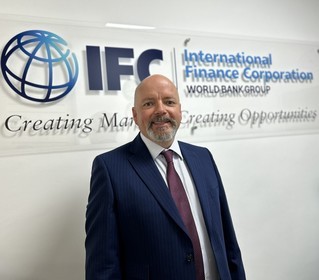
Neil McKain, the IFC regional manager for Uzbekistan and Turkmenistan, says renewable energy sources are helping Uzbekistan reduce natural gas consumption. The country can become a regional leader in renewable energy sources, he told The Times of Central Asia in an interview.


ТСА: To begin, could you give us an overview of the current state of renewable energy in Uzbekistan?

Neil McKain: Uzbekistan has significant renewable energy potential — primarily solar and wind — and is well equipped to fulfill its growing energy needs and transition to a clean energy economy. Renewable energy can help diversify the energy mix and reduce the country’s heavy reliance on natural gas.

The government is focused on increasing the share of renewables in power production by up to 25 GW, or 40% of the country’s overall electricity consumption, by 2030. These efforts support the country’s clean energy transition and address the increasing demand for energy in Uzbekistan’s economy and among its citizens. In this context, the World Bank Group is helping Uzbekistan develop 1,000 MW of solar and 500 MW of wind energy by attracting private sector investments.


ТСА: With these developments, what challenges does Uzbekistan face in transitioning to renewable energy?

McKain: Like many countries, Uzbekistan faces many challenges as it transitions. The government has substantial natural gas reserves, and the economy relies heavily on fossil fuels. Transitioning away from these energy sources can be economically and politically challenging. It requires building public support and raising awareness of the many benefits of renewable energy.

In addition, building the necessary infrastructure, such as solar farms, wind turbines, and an updated electrical grid, requires significant investment, time, and technical expertise. As renewable energy sources are intermittent, developing efficient energy storage solutions will be vital to ensuring a stable energy supply. Also, securing the required capital can take time, as it often involves enormous upfront costs and long-term investment before seeing returns.

Addressing these multifaceted challenges will require coordinated efforts from the government, private sector, and international partners.


ТСА: What is the IFC’s involvement in renewable energy projects in Uzbekistan?

McKain: The IFC is deeply committed to supporting renewable energy in emerging markets, and Uzbekistan is a key country. We’ve been involved in several initiatives, including advising on and financing solar power projects. One of our first projects is a solar plant in the Navoi region, which provides electricity to 31,000 homes. This project was established through a public-private partnership (PPP) between the Uzbek government and Masdar, the United Arab Emirates’ flagship renewable energy company. IFC assisted the government as a transaction adviser in designing and tendering the PPP under its Scaling Solar Program. It is now a significant milestone in the country’s renewable energy journey.

In collaborationwith other lenders, IFC also provided a financing package to support the construction of a 500-megawatt wind farm in the Navoi region, which Masdar is also building. Capable of powering 500,000 homes, it will be the largest facility in Central Asia—and, incidentally, the largest wind farm IFC has ever sponsored.

Together with our state and private sector partners, we are exploring using shallow geothermal energy for heating and cooling buildings. Utilizing this energy source within the country can help reduce reliance on gas and electricity and ease the burden on the grid. We are mapping the licensing and permit processes and the local production and distribution of heat pumps. Additionally, we are exploring regulatory and incentive policies to encourage investments, promote the expansion of surface geothermal solutions, and implement surface geothermal projects in the country.

Finally, just last week a financial package for a 250-megawatt solar photovoltaic plant was signed between the World Bank Group, Masdar, and the government of Uzbekistan. This new solar power plant, to be constructed in the Alat district of the Bukhara region, will provide clean, reliable electricity access to approximately 75,000 households. In addition, the project introduces an innovative battery energy storage system (BESS) component that will help improve the efficiency and flexibility of the power system, providing greater supply security and mitigating the intermittency of renewable generation. The project, in which IFC also acted as a transaction advisor to the government, marks Central Asia’s first renewable energy initiative with an integrated BESS component.


ТСА: Could you tell our readers more about the battery energy storage system technologies?

McKain: One key innovation in the solar energy sector is integrating battery energy storage systems. These systems are crucial for addressing the intermittent nature of solar power, as they store excess energy produced during peak sunlight hours and make it available during periods of low solar generation or high demand. This not only ensures a stable energy supply but also enhances the efficiency of solar plants.

The battery energy storage market is at a critical juncture in its evolution, with prices and technologies expected to become even more favorable over time. The technology is now cost-effective for various on- and off-grid applications in countries worldwide. However, most new project development and associated benefits are concentrated in developed economies.

Although innovative battery storage with solar plants in Uzbekistan is still new, the potential benefits are significant. Battery storage can help stabilize the national grid, reduce reliance on fossil fuels, and provide a more reliable power supply to remote areas. It can also support the country’s goals of reducing greenhouse gas emissions and transitioning to a more sustainable energy system.

For these reasons, supporting energy storage technology is a strategic focus for the government of Uzbekistan as it will extend the reach and uses of renewable energy. By helping to introduce technologies in the energy sector, IFC supports Uzbekistan’s efforts to ramp up its use of renewables, improve energy security, increase grid stability, and expand access to electricity.


ТСА: You mentioned PPP projects; could you elaborate on PPPs in Uzbekistan?

McKain: Public-private partnerships, or PPPs, are essential tools that leverage private sector expertise and resources to help deliver public services or manage public assets. Through our global experience in PPPs, we are assisting governments in identifying, structuring, and procuring PPP projects transparently and competitively.

Since late 2018, Uzbekistan has been building a successful track record in PPPs. The government’s reformist mindset, urgency, and pragmatism in pursuing needed reforms are helping create a series of bankable PPP projects delivered under a robust and transparent PPP framework.

At this point, IFC’s portfolio in PPP Transaction Advisory in Uzbekistan includes projects at various stages of development. It covers the energy, healthcare, and education sectors, with an overall expected mobilization of approximately $700 million. In addition, we have closed several projects in the energy and healthcare sectors, with an overall expected mobilization of roughly $1.8 billion.

But there is still more that can be done. While most current PPP projects are in the energy generation, utilities, and health sectors, the government is now focusing on other vital industries such as education, irrigation, transport, water supply, and wastewater treatment. These sectors have been strained by years of underinvestment, sub-optimal operation and maintenance, and rapid urbanization rates. Still, PPPs can attract much-needed investment and private sector expertise to these sectors. We stand ready to support this by developing, structuring, and implementing PPP projects.


ТСА: Looking ahead, what’s the future of renewable energy in Uzbekistan?

McKain: The prospects are very bright. The government is highly supportive and responsive, implementing reforms to attract foreign investment and liberalize the energy market. This creates a favorable environment for investment in renewable energy in the country. With the government’s proven commitment and implementation of ongoing projects, Uzbekistan is on track to become a regional leader in renewable energy. Moreover, the country’s strategic location and rich natural resources provide a unique opportunity to meet its energy needs and potentially export clean energy. IFC remains firmly committed to facilitating sustainable energy projects. We encourage other investors to explore these opportunities and contribute to the country’s renewable energy future.
Uzbekistan Park Managers Arrested for Mass Distribution of Toys

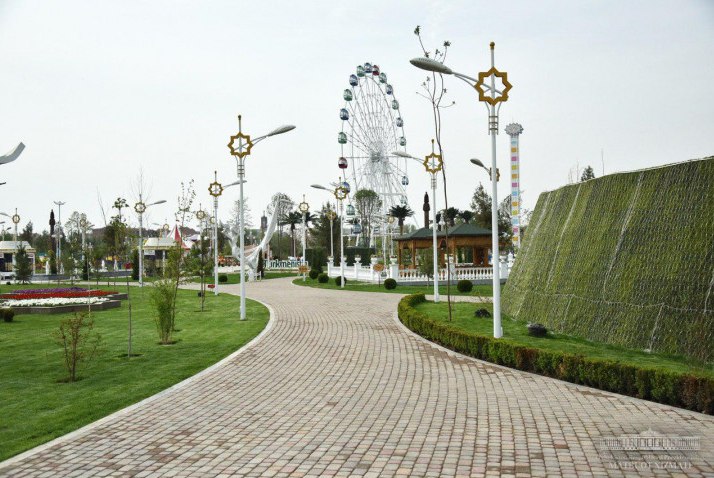
The director, deputy, and head of marketing of the Ashgabat Park in Tashkent have been arrested and detained for 15 days for violating the rules of mass events.  According to Gazeta.uz reports, the arrests were made after some  40,000 people had gathered in the park in the hope of receiving free toys.

The throng had responded to an advertisement circulated on social media announcing the free distribution of 20,000 soft toys and ice cream at noon on 1 June. However, according to the Department of Internal Affairs, the park’s management had been pre- warned and then instructed to cancel the event because of the risks posed by a mass gathering within the park’s territory and the event’s  non-compliance with traffic and citizen safety guidelines.

By failing to comply, the park’s administration created a danger to citizens and traffic jams at the park’s entrance and exit, on some internal routes, and  roads leading to the park.

The Yashnabad District Department of Internal Affairs drew up an administrative protocol against the park director, deputy director, and head of the advertising department, followed by a sentence of 15 days of administrative arrest imposed by  the District Court.

 The Department of Internal Affairs  also published a reminder that according to the requirements of the Cabinet of Ministers resolution of July 29, 2014 (#205),  permission to hold mass events  must be submitted one month in advance.

Turkmenistan Residents Detained for Public Displays of Affection

Police in Turkmenistan have detained couples for holding hands, sitting close together, and public displays of affection.

A young married couple in Turkmenabat, witnessed cuddling in a parked car, were horrified when a policeman threatened to detain them for “undermining moral values.”

In his defence, the man said, “I hugged my wife to calm her down. She was crying as we were discussing where to get enough money for essential medicines.”

Describing what had ensued, he said that the policeman had demanded to see both their passports and marriage certificates. However, after receiving verification that they were married, the policeman continued to harass them in hope of a bribe.

The case is not unusual and in recent weeks, Turkmenabat, the administrative center of the Lepab province, has received reports of many similar incidents in which the city’s police have seen fit to reprimand  couples who hold hands, sit beside each other, kiss, or hug in public places.

Although public  displays of affection are not banned in Turkmenistan, the police in the country’s regions, including the capital Ashgabat and Mary province, have detained young men and women in parks and on the streets for violating “social norms.” In the worst case scenario, “violators” in Mary were handcuffed and forced to attend lectures on moral values at the local police station.

Residents say that restrictions imposed in Turkmenabat  since April, have created a backlash of complaints from  local students and other young people of being ambushed by security forces who appeared to be acting as vice police.

According to several people targeted by the raids, most incidents ended with the police taking monetary bribes from the couples.

Kazakhstan Works with Armenia and Azerbaijan for South Caucasus Peace

By Robert M. Cutler

On May 10–11, Kazakhstan’s President Kassym-Jomart Tokayev hosted peace talks between the Azerbaijani and Armenian foreign ministers. These constructive negotiations were strictly bilateral, with Kazakhstan absent from the room and only providing the venue for the meeting. The event illustrates the dedication by Tokayev and his foreign policy to regional stability and mediation. Kazakhstan has done this sort of thing in the past; it hosted Russia–Turkey–Iran talks over Syria until last year. It was also mentioned as a place for bilateral Russia–Ukraine negotiations, although that idea never materialized.


Armenia’s Future is in the South Caucasus and Asia

Tokayev had offered to provide the venue during his first official visit to Armenia, which took place on April 15 this year. His trip to Armenia may in retrospect be seen as a turning point. Former President Nursultan Nazarbayev had been forced to cancel a visit in 2016, following protests in Yerevan against Astana’s support of Baku in the Karabakh conflict. Armenia’s participation in the new peace efforts, now under way for a couple of years, marks a significant shift after decades of rejecting such cooperation. It offers the prospect of renewed regional relations.

Under Prime Minister Nikol Pashinyan, Armenia has lately been trying to shift its foreign policy, reaching out to Western countries such as France and the U.S. in order to decrease its long-standing dependence on (some would say, vassalage to) Russia. But Armenia is a state in the South Caucasus, not in Europe or America. For this reason, the state’s objective interests (as opposed to those of the far-flung diaspora) are geopolitically compatible with those of Azerbaijan and Turkey, and also of Kazakhstan more distantly.

Astana’s ties with Baku and Ankara, and Azerbaijan’s strengthening of its own ties with Central Asia, reflect strategic manoeuvring in the region. These partnerships enhance Kazakhstan’s and Turkey’s roles in promoting stability and development in the South Caucasus. They consequently offer Armenia a new path to prosperity. Peace with Azerbaijan would lead to the lifting of the Turkish embargo on Armenia and open the possibility of Armenia’s integration into the Trans-Caspian International Trade Route (TITR, “Middle Corridor“). Such an opening would further widen Armenia’s diplomatic vistas and decrease its dependence on Russia.

Turning to Europe and the U.S. can offer some advantages, but Armenia must be cautious of the influence of a bellicosely irredentist Armenian diaspora, whose interests are not first and foremost the well-being of Armenians living in Armenia. Prioritizing regional integration and cooperation with its South Caucasus neighbours and other TITR participants will enable Armenia proper to build a more stable and prosperous future.


Infrastructure and Connectivity Initiatives

With the assistance of the international financial institutions, the European Union and Central Asia are developing the TITR as a critical trade corridor that will also contribute significantly to the prosperity and stability of the countries lying along its route. Azerbaijan and Kazakhstan have long been key players in the promotion and realization of this plan. The Middle Corridor, reminiscent of the ancient Silk Road, offers significant economic opportunities and strategic advantages.

The global support for infrastructure investments and regional initiatives demonstrates the international community’s commitments to connectivity and cooperation in the region. These offer Armenia new economic opportunities. Armenia should conclude a peace agreement with Azerbaijan as quickly as possible, anchoring itself in the South Caucasus, including trans-Caspian and trans–Black Sea economic links, rather than seeking alignment solely with the U.S. and Europe, or which over-depends on them.

Kazakhstan is already taking practical steps in this direction. In Yerevan last April, the Kazakhstani and Armenian delegations signed ten documents, including a trade and economic cooperation roadmap for 2024–2025. This document covered, amongst others, the sectors of aviation, culture, information and communication technologies, migration, sports, and tourism. The two capitals, Astana and Yerevan, also became sister cities.

Tokayev, for his part, indicated that bilateral relations should first of all seek to enhance trade, with special attention to the construction, food, information technology, investment, and transport and logistics sectors. “Kazakhstan is ready to increase exports to Armenia to up to $350 million,” he said; the figure would be an enormous, nearly a ten-fold increase from the $33.4 million reported last year. Road transport between the two, also still quite modest, surged by 20% in 2023 over 2022. The two leaders amended and ratified a 2006 agreement on international road transport between the two countries to boost it further.

Kazakhstan accounts for 70% of foreign direct investment by the Central Asia countries. Azerbaijan, its key partner in the Middle Corridor, enhances regional connectivity and economic cooperation. Turkey, another middle power, also supports regional stability and economic development. All three countries are waiting for peace in order to boost trade and infrastructure development throughout the South Caucasus, benefiting Armenia.


A Path Forward

Azerbaijan and Kazakhstan, as middle powers, are asserting their roles as managers in the global arena, creating possibilities to rejuvenate the international system. Relying on a combination of leadership and multilateralism, their cooperation with international partners can promote a peaceful and prosperous future. The strategic initiatives of Azerbaijan and Kazakhstan in the South Caucasus and Central Asia demonstrate this potential of middle powers to influence global stability and development.

In December 2023, Armenia, as part of a series of mutual goodwill gestures aimed at promoting reconciliation with Azerbaijan, agreed not to block the latter’s candidacy to host the COP29 United Nations climate conference. In the deal, Armenia lifted its veto on Azerbaijan’s application to host COP29 in exchange for becoming a member of the conference’s executive committee. Significantly, the agreement was reached through direct bilateral contacts without third-party intervention.

This step by Armenia toward embracing multilateral cooperation will help to address lingering security uncertainties and foster a peaceful future. The country’s active participation in these efforts is crucial for its own prosperity and security. In addition, by engaging in regional integration mechanisms (and, not least, the TITR as part of the peace with Azerbaijan), Armenia can decrease its dependence on Russia and anchor itself firmly in the South Caucasus, benefiting from trans-Caspian and trans–Black Sea economic links.


Robert M. Cutler has written and consulted on Central Asian affairs for over 30 years. He was a founding member of the Central Eurasian Studies Society’s executive board and founding editor of its Perspectives publication. He has written for Asia Times, Foreign Policy Magazine, The National Interest, Euractiv, Radio Free Europe, National Post (Toronto), and many other outlets. He directs the NATO Association of Canada’s Energy Security Program, where he is also senior fellow.

New Concept Announced for the Development of Oil Refining in Kazakhstan

The Ministry of Energy of Kazakhstan has drafted a new Concept for the development of the country’s oil refining industry until 2050.

The aim of the initiative is to ensure the country’s energy security including a stable balance of production, consumption, and reserves in the domestic market of petroleum products, as well as a 100% supply of the domestic market’s oil products and their future exports.

The previous medium-term Comprehensive Oil-Refining Development Plan provided for the reconstruction and modernization of the capacities of the Atyrau, Pavlodar and Shymkent refineries from 14 million to 17 million tons of motor fuel per year for the domestic market.

The new Concept defines the basic principles and target indicators for the sustainable development of the oil refining industry until 2050, taking into account regional and global challenges, in order to provide the economy with domestic petroleum products, export domestic petroleum products, and increase the industry’s contribution to the country’s GDP.

The ultimate goal of the Concept is to ensure the competitiveness of Kazakhstan’s refineries through sustainable and advanced development, attracting investments and concentrating resources in response to modern regional and global challenges.


New Flights Launched between the Capitals of Qatar and Uzbekistan

On 2 June, Qatar Airways’ first scheduled flight from Doha landed at Tashkent Airport.

According to Uzbekistan’s Ministry of Transport, the airline will initially operate four flights a week between Doha and Tashkent before introducing daily flights.

The opening of regular flights will make a significant contribution to the growth of tourism between the two countries as well as benefitting the development of multifaceted cooperation between the Persian Gulf and Central Asia.

In his presentation at the opening ceremony of the new air service at Tashkent International Airport, reported by Novosti Uzbekistana , Marwan Koleilat Senior Vice President, East Asia & South West Pacific at Qatar Airways, stated:

“Tashkent has become a new point in the geography of our route network. We are confident that this new route will not only strengthen ties between Qatar and Uzbekistan, but will also open doors for business, tourism and cultural exchange. Passenger flights on the route Doha-Tashkent-Doha will be carried out four times a week — on Mondays, Wednesdays, Fridays, and Sundays — on Airbus A320 aircraft. In the future, we are considering both increasing the frequency of flights to Tashkent and launching flights to Bukhara and Samarkand.”